Possession

Possession

Possession Rating

Click if you liked this article

1

This was a wonderfully modern and powerful celebration of opera. The concept of the show grabbed me from the outset and I was excited to see the stories of such powerful women, who are often left out of the history books, be showcased. From the moment you stepped down into the Substation, the room was captivating with very effective lighting and projections.

Ruth Strutt was extraordinary. What a voice! And she had a very strong stage presence. I’m sure that even people who don’t like opera would have enjoyed this display of talent, charisma and professionalism. A show like this is also perfect for people who have never been to the opera before, as the storytelling and art were very accessible in ways that traditional opera may not be. The set was simple but very effectively used with the whole space being considered and maximised. The music, played on piano by Michael Curtain, was flawless.

The show was divided into three acts, one for each Joan of Arc (who needs no introduction), Sappho (who is a Greek poet and often quoted as the first woman to express desire for other women) and Ethel Smyth (who was a composer and key figure in the United Kingdom’s women’s suffragette movement). The factor linking all these women together was their being possessed by something. For Joan of Arc it was the voices in her head (which she believed to be God), for Sappho it was this ‘unnatural’ desire for other women, and for Ethel Smyth it was her music, which was never accepted as mainstream because she was a woman.


Each act started with a key speech from the time or movement that the woman was a part of. There was then an operatic number which told a story about the woman, all the while the translations were shown on the projector behind. I really liked the projections for the Sappho act, they were twisted into a cleverly modern interpretation. My only exposure to opera has been the very long and hard to follow Turandot, and the more accessible La Bohème so it was brilliant to hear opera in English during the Ethel Smyth part of the performance.

The audience were enthralled for the entirety of the performance, with the only down moment being during an instrumental piano piece, Nocturn, from 2 Canons by Ethel Smyth where Strutt left the stage. The room was full as well, which was really lovely to see on a rainy Sunday evening. I only wish that the three distinct stories had been tied together at the end. Perhaps, rather than such a long introduction having a little final word to link the three would have been good as the performance ended rather suddenly.

Overall, this show is a really fantastic first foray for anyone wanting to experience the beauty that is opera in a modern take with an important message.

To book tickets to Possession, please visit https://tickets.qtopiasydney.com.au/Events/Possession.

Spread the word on your favourite platform!

A Bold and Breathtaking Culmination of Art Forms

BiPolar Express

BiPolar Express Rating

Click if you liked this article

6

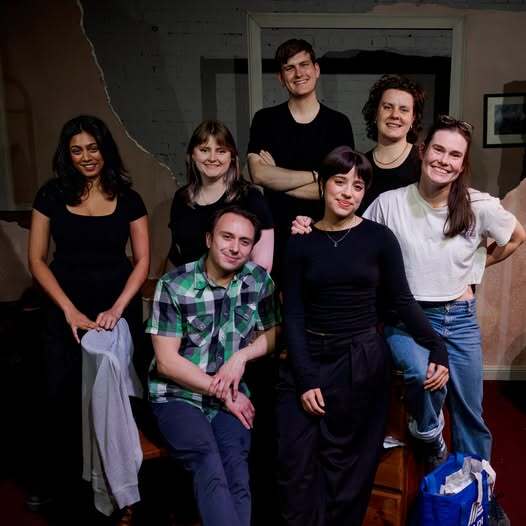
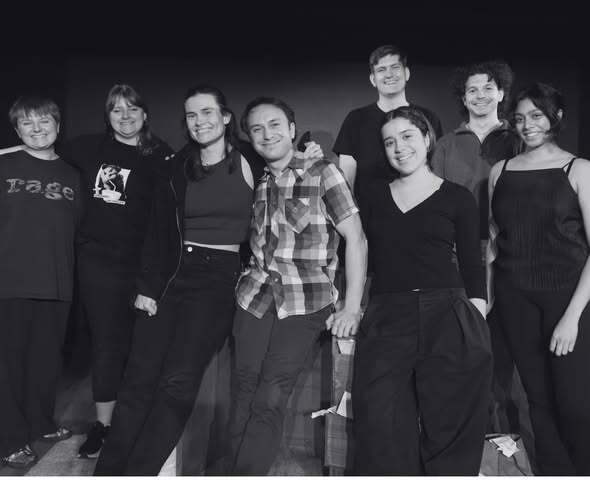
As a community theatre director, I often stress the importance of teamwork and that no player reaches their best without the shared journey and uplifting of every member of the cast, often to eye rolls. However, Bipolar Express is a gleaming example of a powerful ensemble who are the backbone and heart of the story. It’s only now as I sit down to write this, having just read the program, that I ascertained how many creatives were among this ensemble cast including choreographer, Avalon Ormiston, and producer, Phaedra Brown, which doesn’t surprise me considering what a stellar example of full-bodied togetherness that this piece is.

Anton played by writer, Bianca Yeung, is on a train to meet an estranged friend when she has a manic episode. The train is depicted with a simple yet vibrant set consisting of three double floodlights, and cane chairs with the iconic Sydney Transit blue squiggly velvet seats. Anton is desperately trying to remain upright as she sends voice-notes to friend, Mish, not knowing if Mish will be meeting her at the other end.

The ensemble weave and move around her, engaging in conversations that begin as small talk and progress into more interesting musings. Anton has a bouquet of orange flowers that become more disheveled as she unravels. They are the motif that anchors the passage of time. The set is changed with rhythm and poetry by the actors throughout the show.


The story moves between the present train delay and the past story of Mish and Anton. We discover that Mish was the keeper of Anton’s secrets, she was the one with the directives for what to do and when, and she was often the keeper of this part of Anton. We see the complications of these assigned roles between the two, and how it impacts their friendship over time.

To describe and adequately give voice and understanding to a complex mental health diagnosis such as Bipolar would be incredibly difficult in words, that is where the powerful art of movement and dance breathtakingly fill in some of those gaps. For example; the ensemble close in around Anton during a portrayal of exhaustion. She tries to creep out, reach out and even tries to free Mish in these moments, but she is unheard as she is swallowed by “The Others”.

Sound and light design take a huge amount of credit as a device in this piece as well. We are stagnant and trapped along with Anton in the darkness and we are pulled into the jubilance of the bright highs punctuated by poppy, boppy, music.

It is abundantly clear this piece has involved all creatives building, supporting and creating deep intimacy, which in turn made it inevitable that the audience become deeply invested and intertwined.

It’s a bold and breath-taking culmination of art forms that does great justice to shining some light on an important lived experience. I highly recommend supporting this work.

To book tickets to BiPolar Express, please visit https://sydneyfringe.com/events/bipolar-express/.

Photographer: Nat Cartney

Spread the word on your favourite platform!

Selkie

Selkie

Selkie Rating

Click if you liked this article

Finn O’Branagáin’s play, Selkie, uses old Orkney mythology to explore the important themes of domestic violence and coercive control. A Selkie is a creature that lives in the sea in the form of a seal, coming to land and shedding their seal skin to become attractive and seductive humans.

Rónnad (Celeste Cortez Davis) finds herself naked on the beach after losing her seal skin, trapping her on land. She is ‘rescued’ by Séan (Josh Hammond), who takes her in to his home, gives her clothing, and promises to help find her skin. There’s no actual nudity in the play, and it isn’t needed, the idea of a Selkie without her seal skin effectively achieved in other ways.

Trapped in Séan’s care, the two develop an awkward relationship, just like Selkie’s of mythology who are sometimes tricked into marrying humans. Rónnad tries her best to assimilate while missing her life of freedom in the sea, longing to escape. Tensions rise as she fails to meet Séan’s expectations, who both claims to love her idiosyncrasies, but is also angered by them. The symbolism is beautifully woven between real relationships born of entrapment and the Celtic mythology.


It was interesting how there was absolutely no chemistry between the pair. Words of love and affection felt empty and hollow, demonstrating the lack of real connection between the couple despite outward behaviour. While Séan seems infatuated by the idea of Rónnad, he fails to connect with her true self. Rónnad herself struggles to conform, trapped on the land, trying her best to love Séan without losing her own identity. Struggles often experienced by those who suffer abusive relationships.

The play felt a bit too short and could have used a few more scenes to really develop both the dysfunctional relationship and the growing tension between the pair. The lack of time smothered the play’s ability to escalate the emotional abuse more subtly and effectively.

The performances were strong, and I really enjoyed the creative directing in telling the story with minimal set design. I was drawn into their world thanks to well-designed lighting and audio effects. The choice of music to induce emotion was disappointing however, and could have been more effective without lyrics.

Selkie is currently playing at The Old Fitz Theatre as part of the Sydney Fringe Festival.

To book tickets to Selkie, please visit https://www.oldfitztheatre.com.au/selkie.

Photographer: Robert Miniter

Spread the word on your favourite platform!

She Threaded Dangerously

She Threaded Dangerously

She Threaded Dangerously Rating

Click if you liked this article

The small, intimate Old Fitz theatre seemed like the perfect place to premiere She Threaded Dangerously, a bold new play by Simon Thomson and Emma Wright. The story follows four friends in an all-girl’s High School as they navigate the complicated dynamics of friendship, loyalty, and supressed desire, blinding them to the dangers around them.

The ensemble story jumps between each of the four girls as they wrestle with adolescence, sexual desire, and power dynamics, often putting them in conflict with each other. At the centre is a substitute male P.E. teacher some of the girl’s find attractive and dare each other to flirt with. They invite two boys from their twin all-boys school to a private party to drink and flirt, sparking rivalries and division. While skipping class, one of the girl’s meets an adult jogger who calls her an old soul. He strikes up what she believes is just friendly banter that makes her feel seen. Claiming to be a police officer, his manipulative grooming from a position of trust and power is uncomfortably insidious. The male characters balanced each other a little too obviously, with the two younger characters, and two older characters, each a pair of contrasting expressions of masculinity and authority put into conflict with the girls.


The story felt rushed, often moving along at such an exhausting pace it was hard to follow the banter being thrown around between the girls. Sometimes their screaming and yelling was a bit too loud for the tiny Old Fitz theatre and my ears were bleeding. Much like a High School, I guess. While the deeper themes are dark and uncomfortable, the various story threads could have used more depth or be taken in a surprising direction. Once you knew where each story was going it was predictable.

Karrine Kanaan, Alyssa Peters, and Larissa Turton do a great job as the girls, along with Claudia Elbourne, who also directs. Each embodied their characters convincingly, as did the supporting cast of Hamish Alexander, Michael Yore, and Leon Walshe. I particularly liked the sound design by Alexander Lee-Rekers, who created an intense soundscape mixed with music that reinforced the drama and chaos. Laila McCarthy’s set also worked beautifully in the limited space, using only a few carefully selected props and set pieces to craft a variety of locations that leaned into the power of theatrical imagination.

She Threaded Dangerously is an uncomfortable yet important exploration of teenage girls navigating a complex world of desire, power, and friendship, currently playing at the Old Fitz Theatre as part of the Sydney Fringe Festival until the 27th of September.

To book tickets to She Threaded Dangerously, please visit https://www.oldfitztheatre.com.au/she-threaded-dangerously.

Photographer: Karla Elbourne

Spread the word on your favourite platform!

Subscribe to What's The Show

Reviews, show news and what is on, straight to your inbox.