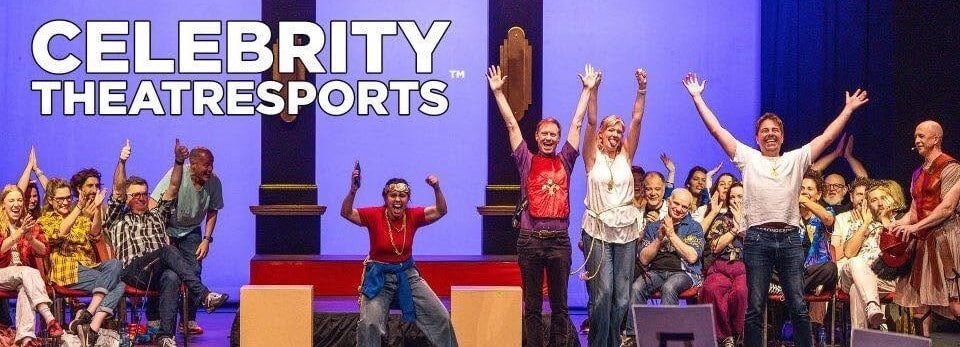
We were warmed up and welcomed by “Jeremy” the twin of Celebrity Theatresports host Jeromaia Detto, at least that’s what Jeremy would have us believe. The theme of the day would be the circus. Jeremy had us practise our crowd hype including our circus animal noises. It was a very effective way to liven the excitement and energy in the room. The fun and passion was contagious and we were ready to be entertained, especially when Benny Davis from Axis of Awesome began to give the atmosphere a soundtrack, and we were introduced to our esteemed judges, hosts and the teams themselves.
I have a passion for Theatresports and I have done quite a few classes with our hosts, Impro Australia. It has been many years but I was excited to see, among the standout celebrities, were people that have celebrity status in my own heart and memories.
The six teams competing for the coveted Theatresports Celebrity Cup were:
The Greatest Show-Ponies (Adam Spencer, Rob Mills, James Galea and Jacqui Bramwell);
The Fairy Flossers (Steve Lynch, Kate Coates, Susan Prior and John Knowles);
Socceroo Sideshow (David Callan, Andrew Redmayne, Amy Tustian and Yarno Rohling);
The Big Top Guns (Ryan Atkins, Charlie Papps, Genevieve Hegney and Jack Scott);
Bunch of Clowns (Sophie Douglas, Daniel Cordeaux, Gary Eck, Felix Williamson and Sophea Op);
and Panda-monium (Linette Voller, Joji Malani, Murray Fahey and Scott Hall-Watson).
Round 1:
The first team was The Big Top Guns, who won my vote for best costumes (fully dressed to the theme). They also had the uber talented Genevieve Hegney, so they were at an advantage. The first game was Expert Double Figures where one player talks and the other lends their arms. The title they were given was “Teaching Tigers To Knit” and it was as hilarious as it sounds, especially Charlie Papps’ quick-thinking as their arms became the centre story.
Next up were The Greatest Show-Ponies taking on Genre Rollercoaster with audience suggestion of “Cleaning Out The Garage”: the genre having to be changed throughout. This team did a great job of keeping the story on track throughout the genre shifts. This was a standout in terms of technique.
Then the Fairy Flossers in all their dazzling pinkness had to take on the Animal Kingdom, which they all embodied well with the scene stealer being an exceptional meerkat played by John Knowles. Notable mention was the brilliant closing line at the end of all the mayhem from Kate Coates that the elephant (played comically by Steve Lynch) “Will never forget that!”
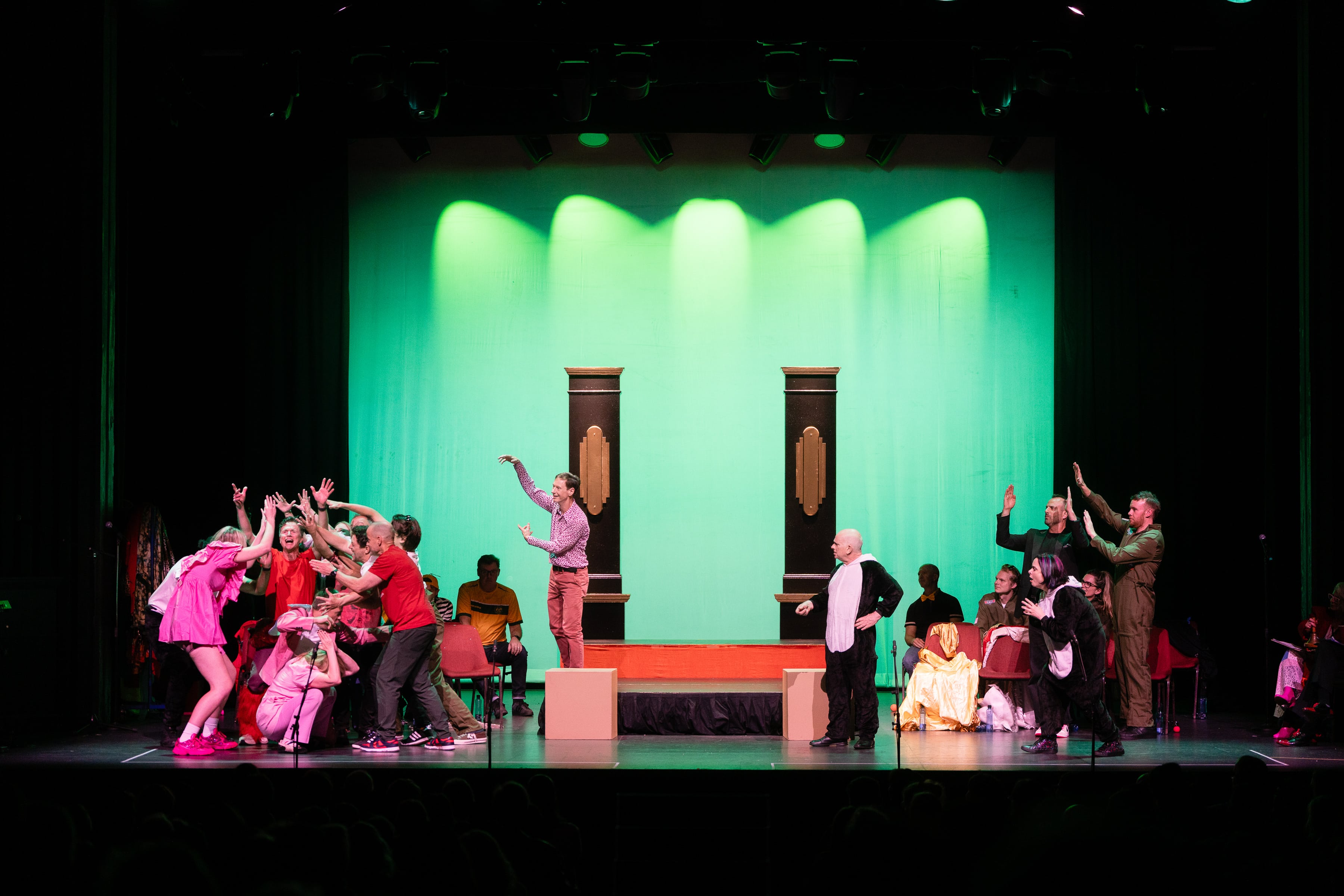
Number 4 was Panda-monium in all their Panda glory, including one Red Panda. They took on a fave of my own, Emotional Replay with the prompt of “Choosing a coffin”. This was a fun ride, culminating in “ecstasy” which was especially well embodied by Joji Malani’s impressive Vogue skills.
Number 5 was A Bunch of Clowns having to create a song entitled “Pickle Ball Is My Passion”, which hit the right notes with a catchy chorus. What some lacked in melody they made up for with hard-hitting lyrics, and Felix Williamson brought it all home with a brilliant finish.
Last, but not least was Socceroo Sideshow (with actual Socceroo Andrew Redmayne) who had the Sit, Stand, Kneel, Lie challenge at the airport. The characterisation with this physical challenge was impressive and it was chaotic fun watching them keep up with each other’s changing positions.
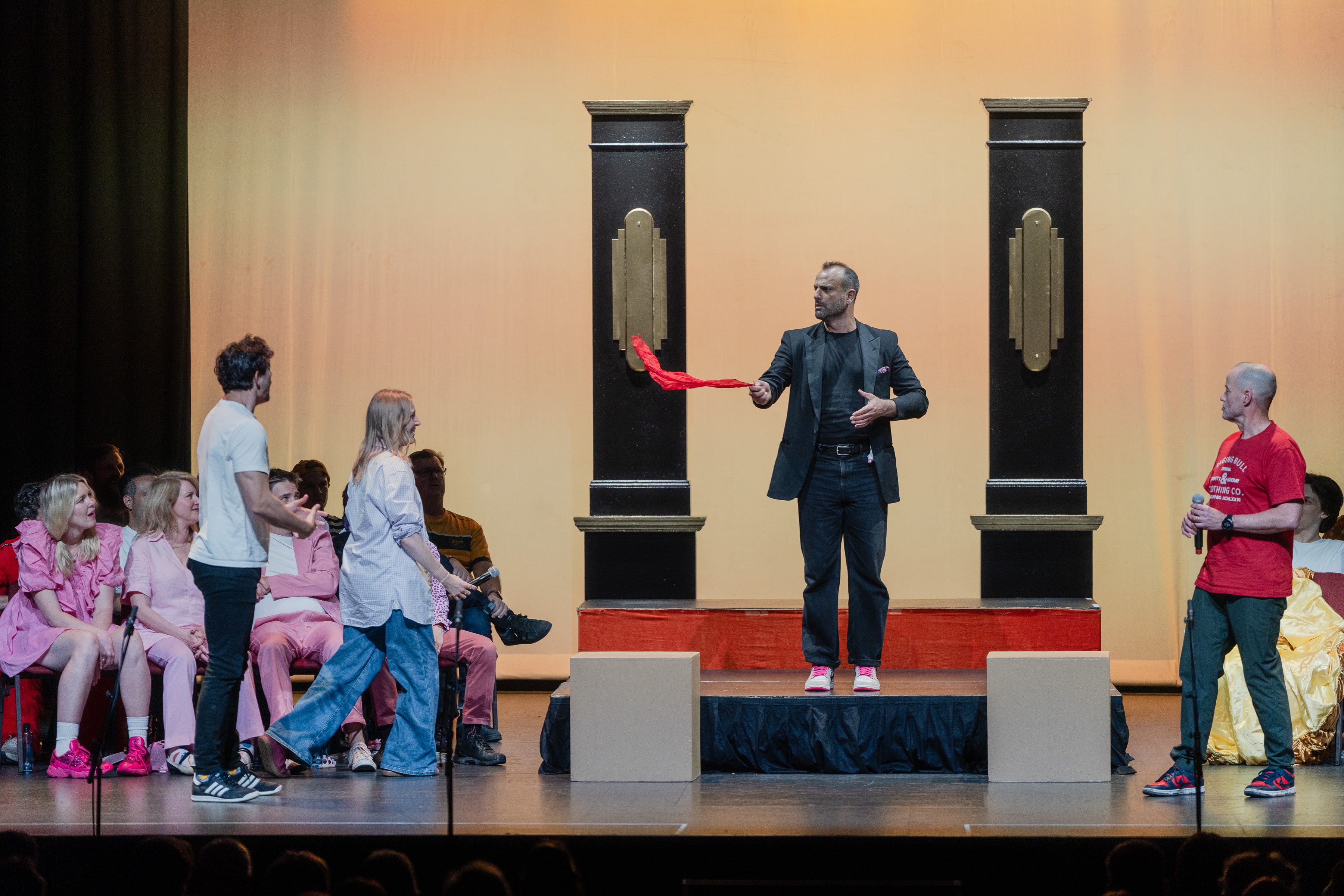
Round 2 was audio challenges from celebrities who were unable to be there.
Panda-monium had a request from Andrew Denton to see a scene with a lion and lion tamer who were afraid of each other. The team responded to this challenge by putting forward that they would do it with the team’s combined knowledge of High School French. It was tres impressive.
The Big Top Guns had a request from James O’Loghlin that they do a scene where someone can’t say the thing they desperately want to say. The team responded by having one character only able to speak in phrases from an audience member’s text message thread. Thus began a very clever family saga with a twist.
The Greatest Show-Ponies received their request from Rove McManus to see a scene in which somebody or something is being saved. The setting given was a Villain’s Lair. The team responded with Number Words, having host Jane Simmons shout out the number of words allowed in each line. With anything from 1 to 27, this was as hilariously challenging as you’d imagine.
Bunch of Clowns received their challenge from Kitty Flanagan, which was a scene where a farmer wants his son to take over, but his son wants to join the circus. The team responded with an American high school soap opera. This one showcased some wonderful teamwork as ideas were quickly thrown about and responded to.
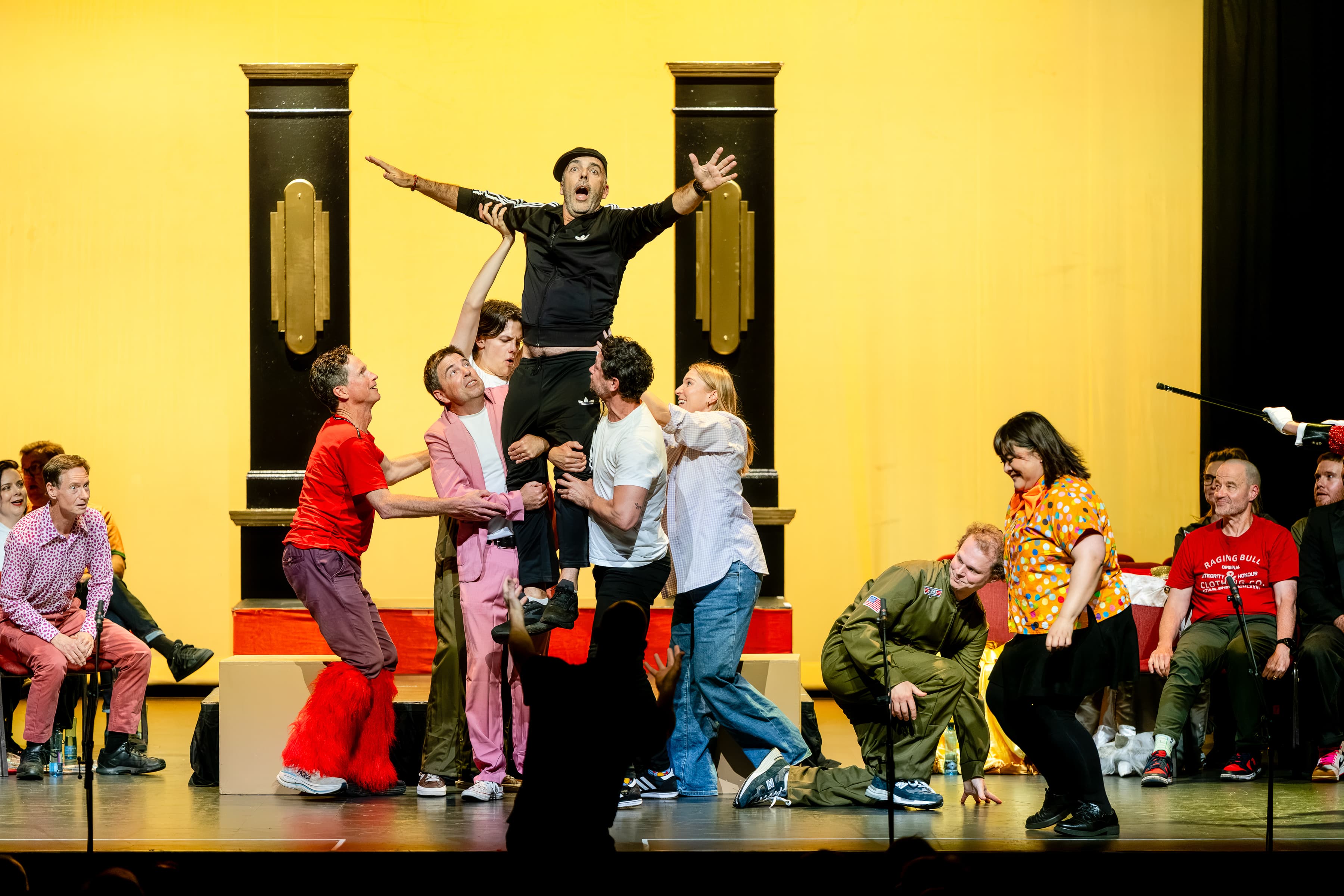
Socceroo Sideshow got their challenge from the Umbilical Brothers which was an under the sea story called Raiders of The Last Air Bubble and they responded with Stunt Doubles, where two players enact the story and then have to swap over with their “stunt double” as dictated by the host and the stunt doubles play it out in slow motion. This was great fun with a special cameo from Millzy (Rob Mills) as the seahorse.
The Fairy Flossers got their challenge from Jonesy and Amanda in the form of two co-workers getting in trouble with a motorbike involved. They responded with a “Sing About It”. They came up with some catchy tunes, highlight being the Ballad of the Bike.
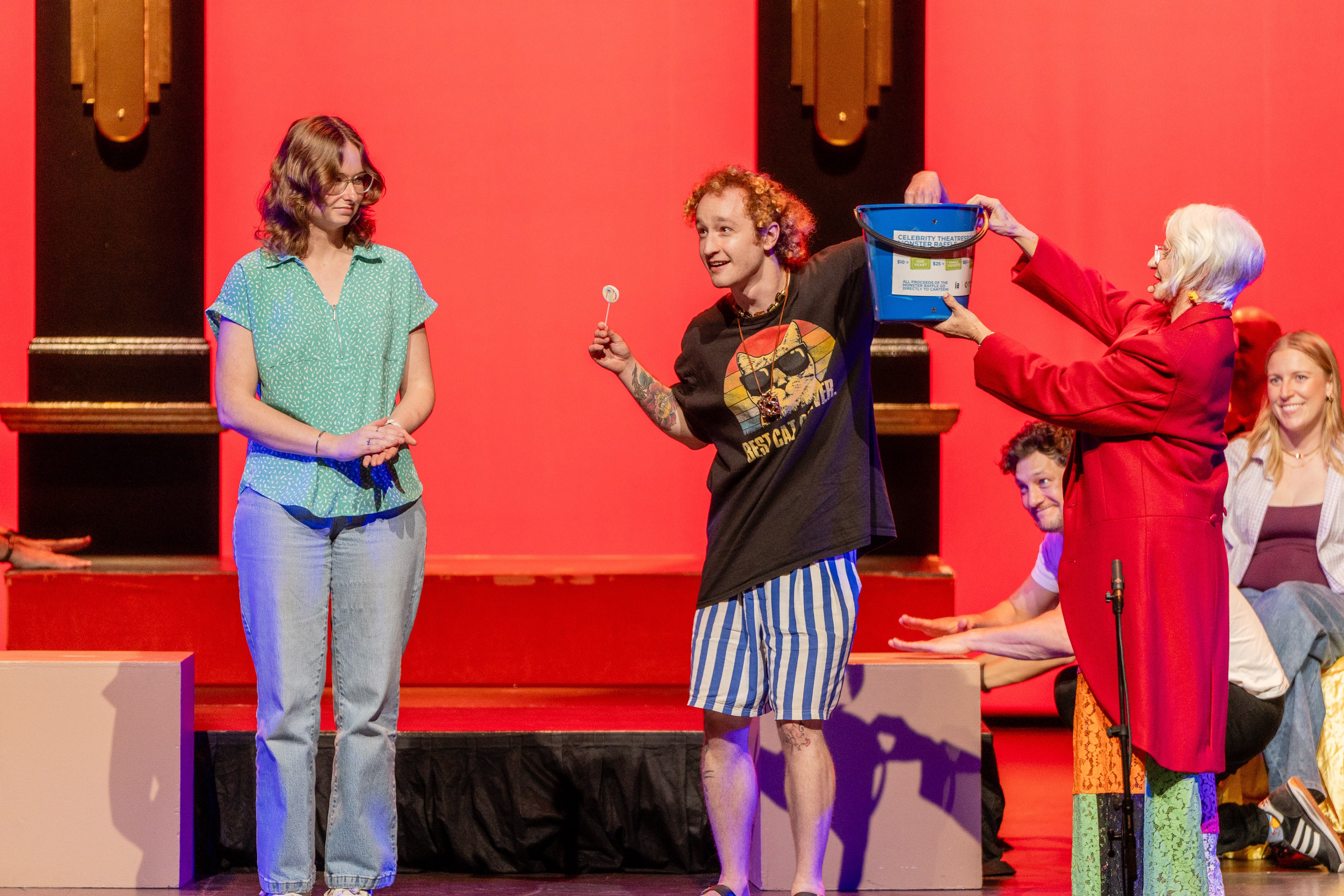
We then had some moving stories from the Canteen representatives, and we were all very emotional after learning more about how much this organisation means for cancer victims and their families.
Round 3 kicked off with The Hat Of Fate.
Fairy Flossers pulled out the prompt “In A Bank Vault” and were challenged to a Character Swap with a plot twist. Steve Lynch stole the show as a petulant teenage girl.
Big Top Guns pulled out “Taylor Swift Fan Club” and were challenged to an Off Broadway musical. It exposed the Swifties and those who drew a Blank Space when it came to her tunes.
Bunch of Clowns pulled “At A Fashion Show” and were challenged to a Shakespeare theme. They did doth handle that well.
The Greatest Show-Ponies pulled “At A Craft Brewery” and were challenged to an Opera, giving Millzy his real moment in the sun. It was a crafty little love story in song.
Panda-monium got “Top Deck on a Tour Bus” and were challenged to the audience providing the sound effects. This got the energy going and was a fun ride for all.
Socceroos got “Group Therapy” and were challenged to a ballet, which was actually rather beautiful.
The two teams revealed for the final round were Panda-monium and Socceroo Sideshow.
Panda-monium decided to use “Epic Quest” as their theme for the final round, and they were challenged to include a bum bag. They worked beautifully as a team and took us on a wonderful, wacky journey with other members of the other teams joining them along the way.
Socceroos decided to use “Film Noir with puppets” with the suggestion of a missing Pikachu. David Callan invited his students on stage to be the puppeteers and they did a fabulous job of following the prompts and uplifting the narrative.
Socceroo Sideshow were the winners overall and all the creatives were invited to the stage. John Knowles then delivered a moving tribute to Michael and Julie, the heart and soul of Impro Australia.
It was a wonderful Sunday afternoon of humour and heart. We all left with big smiles on our faces.
To find out more about Theatresports shows, classes and corporate events, visit www.improaustralia.com.au
Photography by Stephen Reinhardt