Twist of Fate's Halloween Special Blends Horror with Heart

A Twist of Fate: Season 6(66)

A Twist of Fate: Season 6(66) Rating

★★★★★

Click if you liked this article

The latest Halloween instalment of Scary Goats Theatre’s Twilight Zone pastiche is a successful reminder of how strong acting can elevate the simplest of stories and genres.

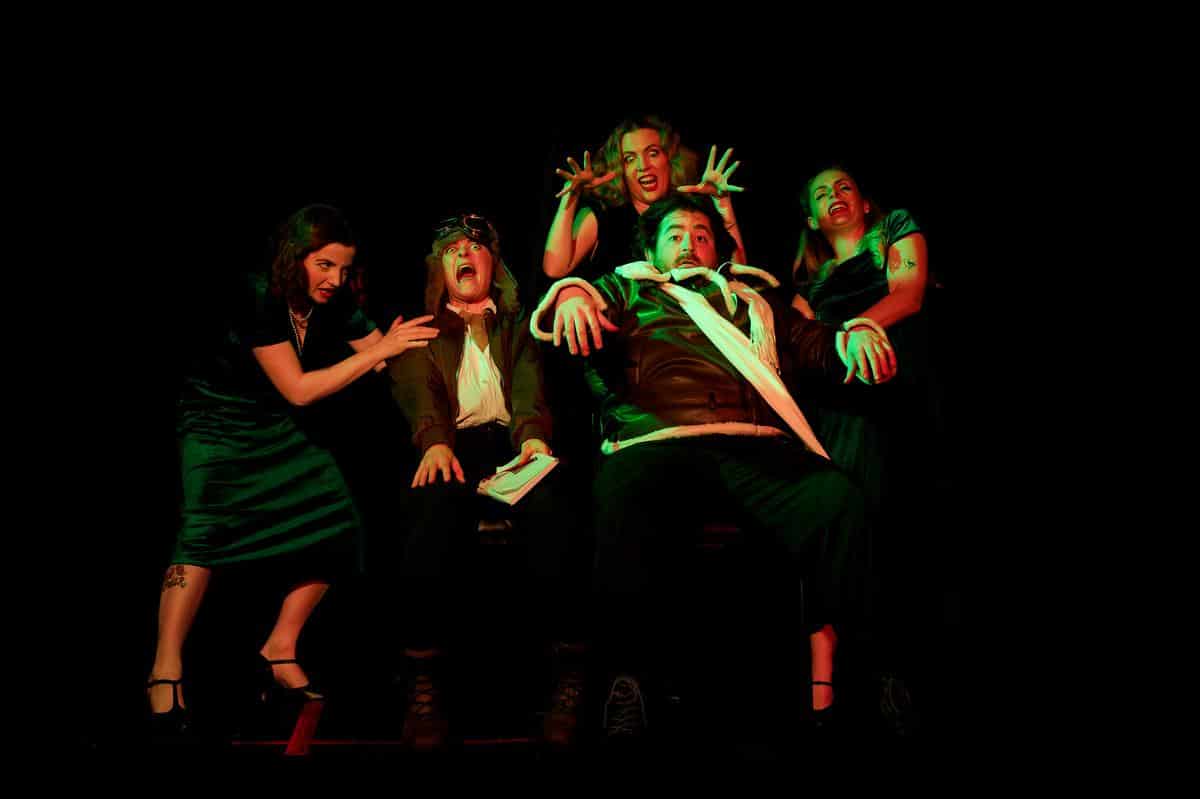
The evening’s first story was Count on It, written by Liliana Braumberger and Chloe Towan. Major Roger Hart is a WWII fighter pilot who is intercepted by three sirens: a strange cross between the Weird Sisters and the Andrews Sisters, who have come to judge whether Hart is as good a soldier as he appears.

The actors’ energy and timing make this an engaging opener to the night’s events. The trio of actresses who play the sirens show remarkable synchronicity as they finish each other’s lines and sing seductive harmonies. Their playful menace made me equally intrigued and intimidated. I do feel, however, that this story could have benefitted from a full-length runtime to properly unpack how Hart’s choices impact the next generation of soldiers.

The second play, The Dollhouse by Jack Bengough, demonstrates a strong emotional throughline that I feel Count on It could have better developed. 13 children have disappeared from the town of Bent, and two agents of the crown have been sent to resolve this bizarre mystery. Their investigation leads them to the home of a strange old woman, where our heroes must sacrifice something of great value to them to save the missing children.

First-time Scary Goats Theatre actors, Jack Farley and Lauren Sewell, effortlessly convinced me of their characters’ years of companionship with likeable line deliveries and subtle gestures. Their believable chemistry made the twist ending, I believe, one of the most poignant twists this anthology has given us so far.
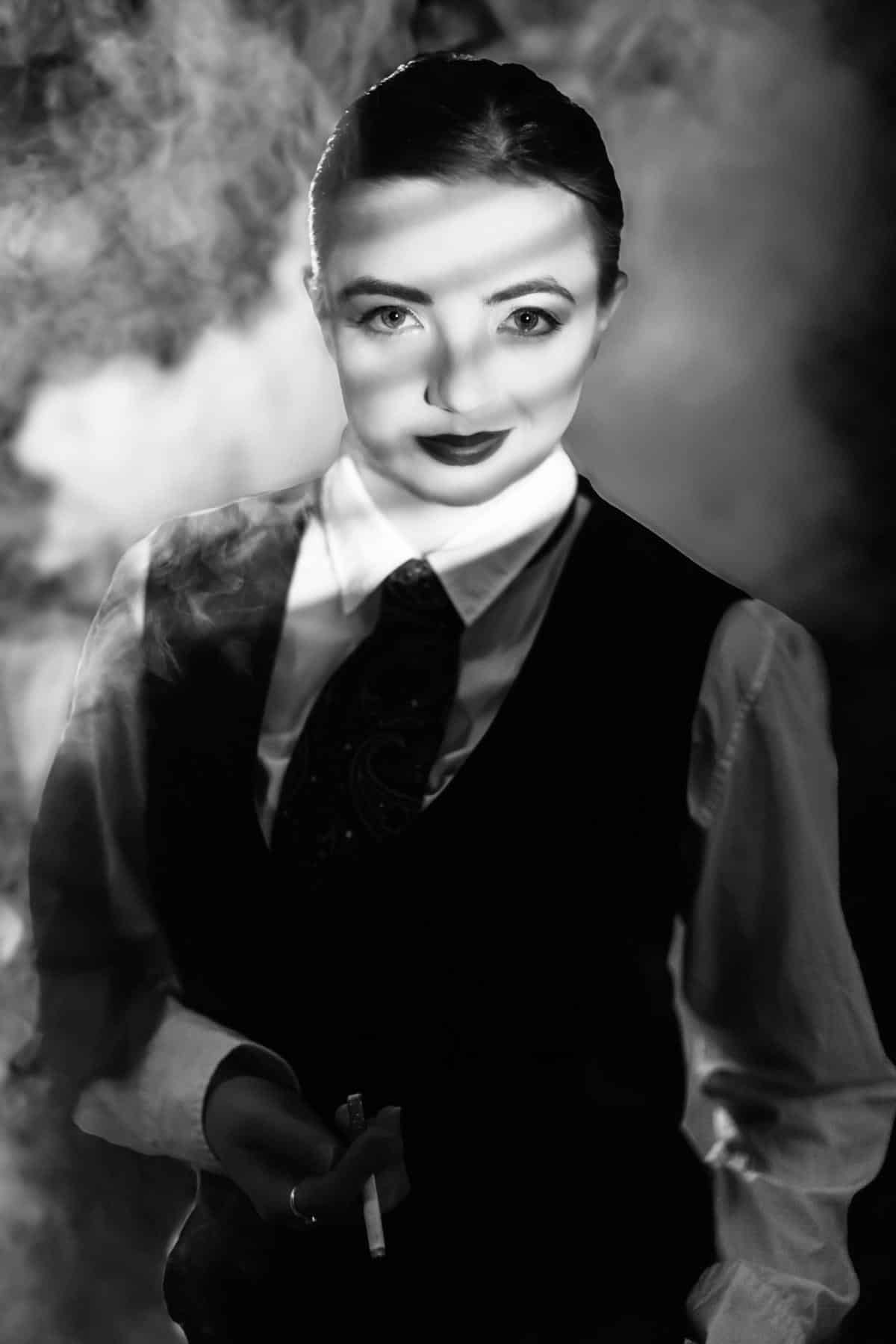
 

Hayley Richards provides great versatility as the old lady, showcasing her skill as an antagonist after mostly starring in heroic and neutral roles. I know personally that Richards is a very experienced actress, so it’s a testament to good direction that her performance doesn’t overshadow the all-important chemistry between Sewell and Farley.

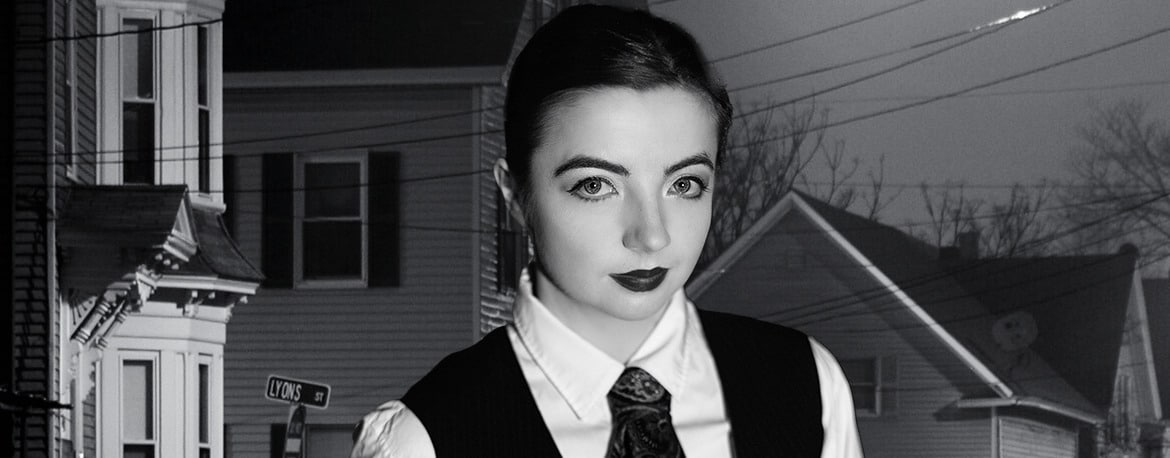
The Itch by Savier D’Arsie Marquez centres around a couple of struggling artists and romantic partners named Joan and Fi. Joan takes a real estate job to support Fi’s dream of touring the country, but it’s not long before the allure of stability and success begin to change Joan into something her partner scarcely recognises, something monstrous.

This is another great example of a compelling central relationship making a story’s twist ending impactful. The script’s witty, sardonic dialogue accurately captures the passive-aggressive verbal jousting with which young couples approach conflict. The conflict between a career vs. a relationship is a time-worn story, but Tayla Harry and Chloe Towan, as Joan and Fi respectively, give these doomed lovers a good amount of nuance.

The play’s final scene is a triumph of Twist of Fate’s ability to balance varied tones. The scene deftly transitions from amusingly hammy physical acting and costume work to an emotionally devastating loss. In a story about the collapse of sincere communication between lovers, supposed monsters become unexpected victims and supposed victims become guilt-stricken tormenters.

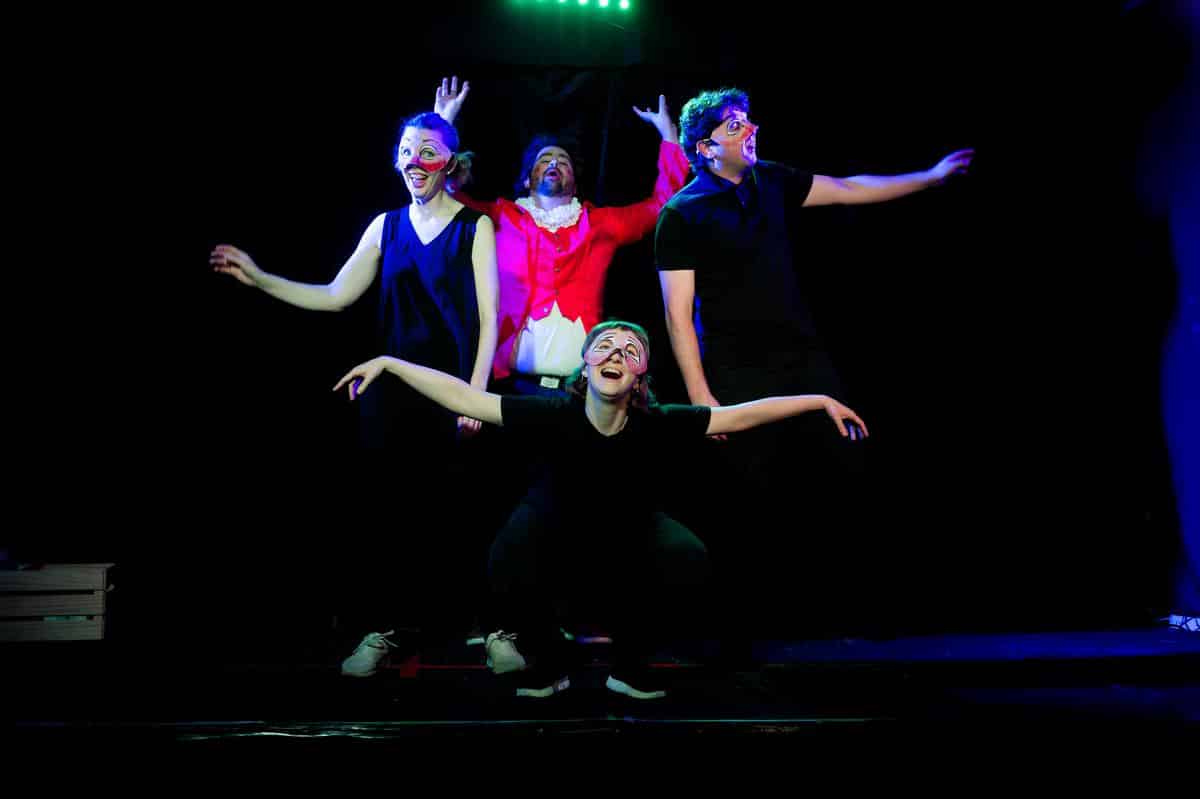
The evening concluded with my personal favourite of the four plays: Soot by Emily Morey. Bing, Bang and Bong are three performance artists who attempt to overcome their crippling perfectionism with the help of an enchanted hand puppet. But what will their pursuit of a groundbreaking show cost them?

Soot is the funniest of the four stories, due to impeccable physical clowning. Bing, Bang and Bong are the most over-the-top theatre brat cliches you can imagine, and Richard Mealey is delightfully outrageous as he tumbles around the stage as a humanised Soot. Fortunately, the comedy doesn’t smother the show’s strong, clear message. The risk of becoming too wrapped up in your imagination is relatable for any creative type and our three lead actors – Liliana Braumberger, Ben Fox and Kate Weston – know when to inject genuine fear and despair into their largely comical characters.

Twist of Fate Season 6(66) is a strong instalment that encapsulates this anthology’s ability to inject familiar genres with a refreshing, human-focused pathos. The four scripts tonight are a perfect balance of laughs and terror. Here’s to another year of Twist of Fate.

To book tickets to A Twist of Fate: Season 6(66), please visit https://www.eventfinda.com.au/2026/a-twist-of-fate-halloween-special/melbourne/carlton.

Photographer: Kieran McNamara, 3 Fates Media
Spread the word on your favourite platform!

Austen Meets Adrenaline: The Wild Ride of Pride and Prejudice: Pemberley Drift!

Pride and Prejudice: Pemberley Drift

Pride and Prejudice: Pemberley Drift Rating

★★★★★

Click if you liked this article

8

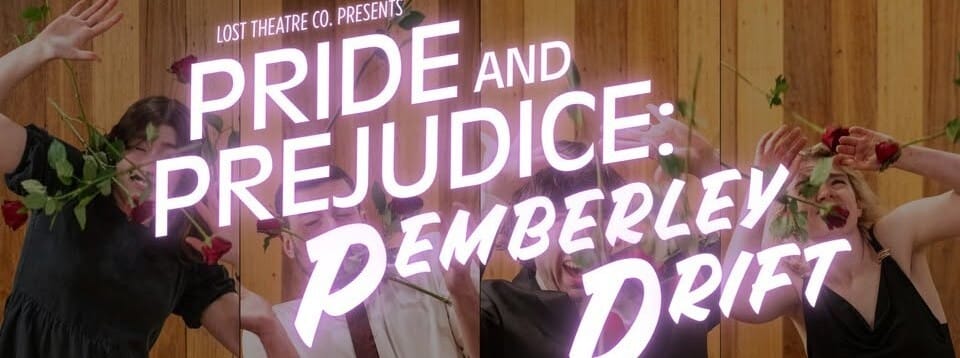
Is it a bird? Is it a plane? No! It’s Pride and Prejudice: Pemberley Drift! A motor-raising, horse-racing, carriage-riding cinematic escapade! Think Pride & Prejudice meets Fast and the Furious. There are horses with funny names. Ladies-in-waiting. Villainous schemes. Undercover informants. And plenty of equine madness to set your screens aflame!

And how, you ask, does this fringe production of movie-going madness begin its beguine?

Well, it all starts with Christopher Nolan, it seems.

For the tale of ‘Pride and Prejudice: Pemberley Drift’, is an unfolding saga borne not of English-pedigree, but at a Universal Studios lot in Hollywood. Where four madcap, cinematic -hungry executives are desperately trying to come up with a quick and easy ‘remake movie’ pitch to soon present to leading filmmaker Christopher Nolan, known for his male-centric, Hollywood Blockbusters.

But seeing as they are in a mad rush, their minds and temperaments go a bit haywire. There is infighting, bickering and squabbling. And, we discover, a bit of a boo-boo blunder, when an email is misread by the corporate brand manager in charge of advertising.

For instead of reading ‘P&P’, meaning ‘Pride and Prejudice’, he misreads it as ‘F&F’, for ‘Fast and the Furious’, and chaos ensues. These two movies are polar-opposites to one another! Two completely different genres! All the revved-up car product placement advertising has gone ahead. Million dollar deals are now set-in-stone. With a view to toppling the competition (Paramount Pictures) and make cinematic, money-making history.


What’s a studio to do when time is ticking?

Create a movie franchise mashup, that’s what!

And what better way to do it? Then on the fly!

Dear lord.

And so, we voyage through a side-splitting hour of slapstick stops-and-starts, including a brilliant opening sequence featuring a held-up globe as planet earth, a raised UNIVERSAL sign, and four actors screeching the famous universal orchestral score, with added cadence at the end.

And pretty soon, we are being treated to a night of pure comedy gold: where Jane Austen meets Vin Diesel, and revved -up horses are named Honda, Jeep, Ferrari, Ford and Chevrolet. Where drifting is-the-new-black in an Austen-esque world: with slo-mo cinematic stickhorses, with grit-infused, gravity-defying riding skills.

In between patches of side-splitting Tinseltown shoptalk, we are introduced to a slew of willy-nilly characters.

Catherine Beaumont, the eldest of 15 siblings, is sent by her worried mother to visit her cousin Fitzwilliam Darcy and his wife Elizabeth (Nee Bennett)at their Pemberley estate for the summer, to see if Catherine can win herself a respectable suitor.

But love is hard to come by, for Catherine, much like her cousin Elizabeth before her, is not so easy to win over. That is, until she meets charming, chief-wrangling stablehand (or is he really?) Ambrose at night while visiting the stables. For which she wagers a competitive ride on a horse-stick - though never ridden a horse. He then lets her down off the horse gracefully, and manages to take her along to an illegal horse-racing game, where horses are wagered and money is made. There, we meet Emma Woodhouse, an equestrian Queen. (Or is she really?) Who trains Catherine on how to be a true Equestrian Drifter. Where horse sticks are used as weapons, with slow-motion, matrix-style action moves. Where Emma, we learn, is really an undercover informant, investigating fraudulent money-laundering from certain Pendlebury land owners. We also work out that and Ambrose is really EK, known around town as an ‘Equestrian King’, who may have something to do with a particular criminal activity as well - organised by his delightfully villainous uncle, Mr. Collins, who we learn, is the grand enemy of Darcy.

As I said, this plot moves quickly, and delightfully so.

This show also has four truly talented actors and writers that nail every role.

Noah Sargent, doubling as the executive ad man and Ambrose (aka EK) is larger-than-life with a Farrell-like quality, true to his convictions and moving the story forward from beginning to end with boundless ease.

Lisa Baker, as innocent, quick-witted Catherine, plays her period role to-a-t, moving the plot along with a charming period-like English accent and prim and proper mannerisms that she brings seamlessly to the audience.

Jay Watts plays multiple roles, including those of Elizabeth Bennett and Emma Woodhouse very well. Yet, I found she shone her best when playing a weathered-down, sarcastically-mouthed Hollywood executive having marriage troubles. To which the audience laughed and found equally hilarious.

But Adam Forgione - by far, was my absolute favourite as Mr. Collins, a bond-like villain with a foreign accent we’ve heard repeatedly through that franchise. Every articulation was precise, every mannerism so underhandedly evil in nature, yet his character’s origins? Elusive and unprintable. Just how we like it.

Largely Austen-eque, with a bit of fury thrown in, alls-well-that-ends well for this high-impact, box-office hit. My love for stick-horses has made a dramatic comeback, as has my absolute delight for bond-like megalomaniacs, complete with prize-winning, patrician-like purring.

Ultimately, this show wins a race of its own - to take my heart over completely.

‹If you’re in the mood for an original, laugh-out-loud, rollercoaster ride of hilarious improv, kitschy period films, horse-hopping stunts and cliched entanglements, then this is a show I’d definitely recommend for audiences this Melbourne fringe season.

To book tickets to Pride and Prejudice: Pemberley Drift, please visit https://www.melbournefringe.com.au/whats-on/events/pride-and-prejudice-pemberley-drift.

Spread the word on your favourite platform!

Proof Of Concept

Proof Of Concept

Proof Of Concept Rating

★★★★★

Click if you liked this article

2

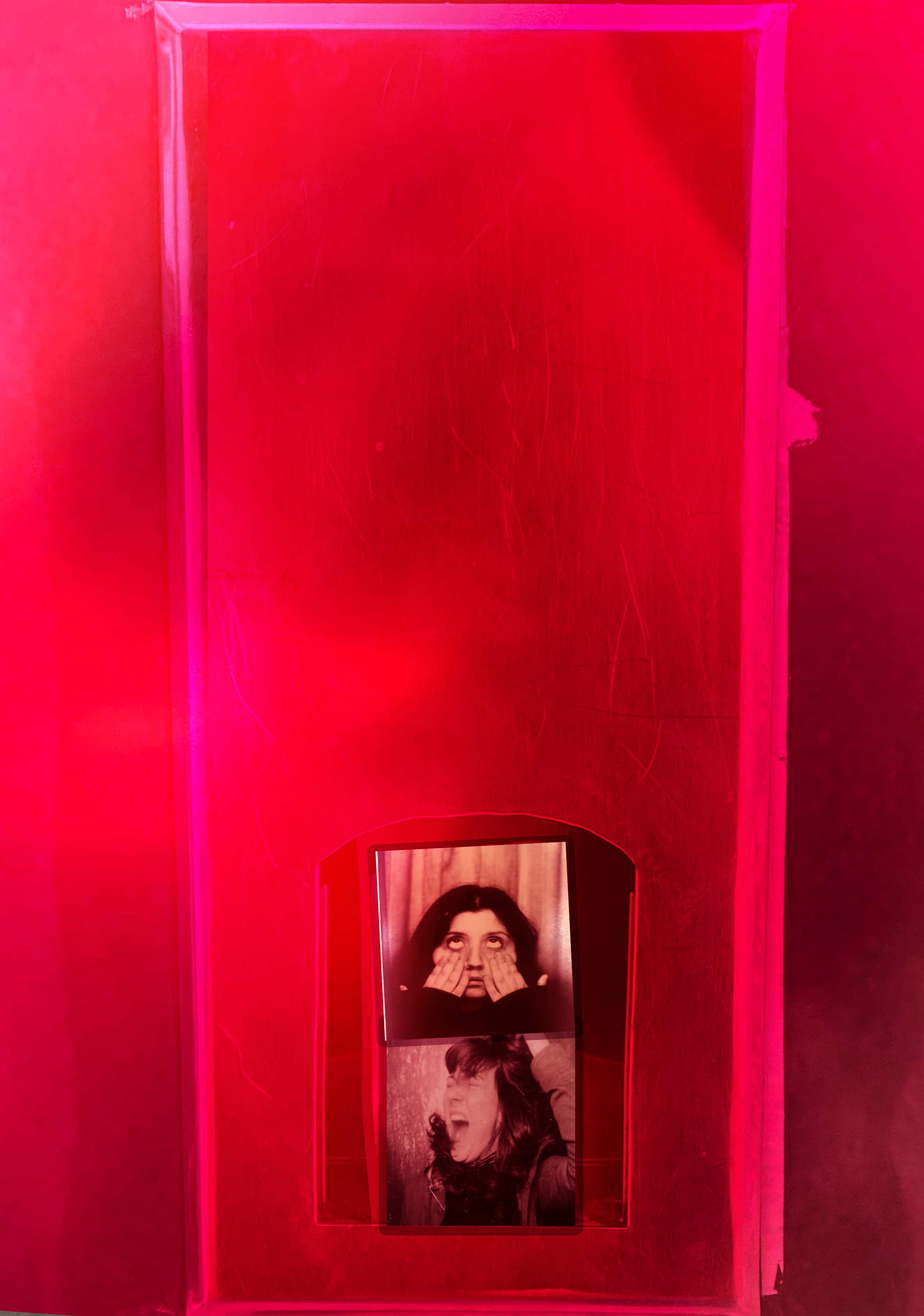
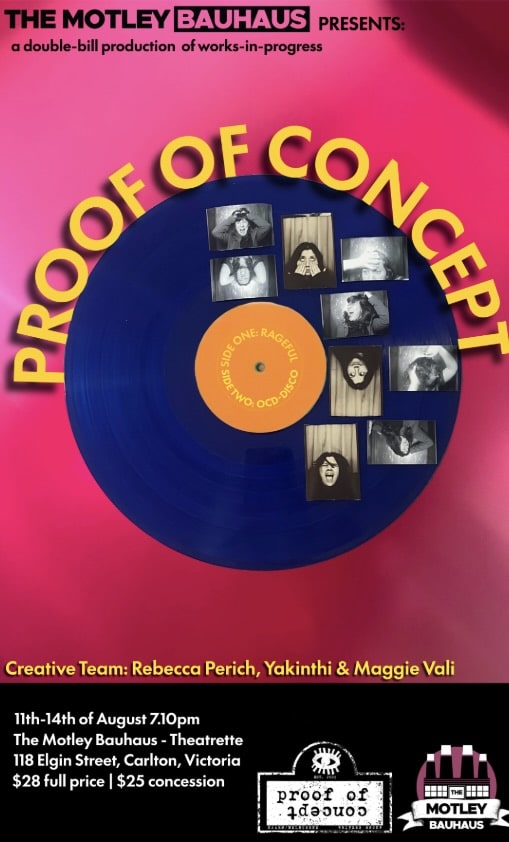
Due to the nature of what these works are meant to be, this review might be a little tight on the finer details. Proof of Concept was presented as part of The Motley Bauhaus’ Netherworld festival, a program deliberately built around discovery, experimentation and unexpected one-off performances.

‘Proof of Concept' is a 60 minute double feature of two short plays, presented as a sort of works-in-progress experiment. ‘RAGEFUL’, written by Rebecca Perich, one-third of the creative team alongside performer/producer Maggie Vali, is a dystopian Black Mirror-esque glimpse into a reality where medical misogyny has gone too far. Women who express themselves and their emotions are sent to “therapy” to be “treated”. In other words, they are Pavlov’d with shock therapy into submission. The latter, OCD-Disco, written by Yakinthi, sees two strangers with OCD thrust into a bizarre race against the clock. Their respective OCD becomes a major driving force for the events of the play, and ultimately becomes a connective element as the action progresses.

As you can probably gather, the overall presentations of ‘RAGEFUL’ and ‘OCD-Disco’ as they currently stand are very much still in their infancy. Cues will go off seemingly at random, lines and blocking feel freshly-walked through, there are bits of dialogue that don’t seem to be enforced by neighbouring sections. It is very much like I’ve walked into their very first tech and dress rehearsal, and they've just recently gone off prompt. That chaos certainly lends a sense of explorative play to each piece, and as such, there is a refreshing level of spontaneity in the performances. Considering the minimal space and resources these two plays are working with, it is rather impressive how much atmosphere is generated by some nifty lighting design and sound usage.


I think my biggest reservations belong on the writing and conceptual side of things. While I believe that there is plenty of fertile soil laid in both, I did find that there was an overall lack of consistency in the materialising of these ideas. RAGEFUL felt like it had way more gas in the tank, but it spent a lot of its already restricted time spinning its wheels, leading us to an ending that felt like it could've continued on. I was particularly confused as to what was meant to be happening in OCD-Disco. I can only assume it was intended to be a finding-friendship-in-unlikely-situations kind of deal, but the action and dialogue was a bit too scattered to make that fully work by its conclusion. Sitting down and delineating more cogent plotlines will greatly benefit these two plays.

The depiction of OCD also felt somewhat stereotypical at times, given the complexity of the disorder. As the work develops, further consideration of how these experiences are represented could add greater nuance and depth to the characters and broaden the scope of the piece.

Overall though, I see Proof of Concept as a spirited attempt at creating sharp, lightning-in-a-bottle theatre, with quite a bit of room for improvement. I would love to see these two pieces get fleshed out more down the line, and the sky really is the limit in terms of possibilities. Certainly a larger space, an abundance of time, and full commitment to these visions will strengthen the muscles. I encourage these three to keep exploring and go as large as possible. I’ll be keeping an eye out for the results.

To book tickets to Proof Of Concept, please visit https://www.eventfinda.com.au/2026/proof-of-concept/melbourne/carlton.

Photographer: Callan Trewenack

Spread the word on your favourite platform!

Too Much Light Makes The Baby Go Blind

30 Neo-Futurist Plays From Too Much Light Makes The Baby Go Blind (30 Plays In 60 Minutes)

30 Neo-Futurist Plays From Too Much Light Makes The Baby Go Blind (30 Plays In 60 Minutes) Rating

★★★★★

Click if you liked this article

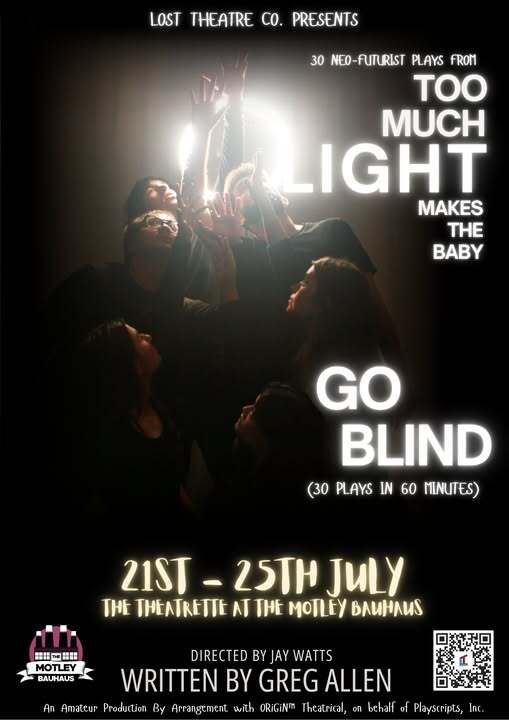
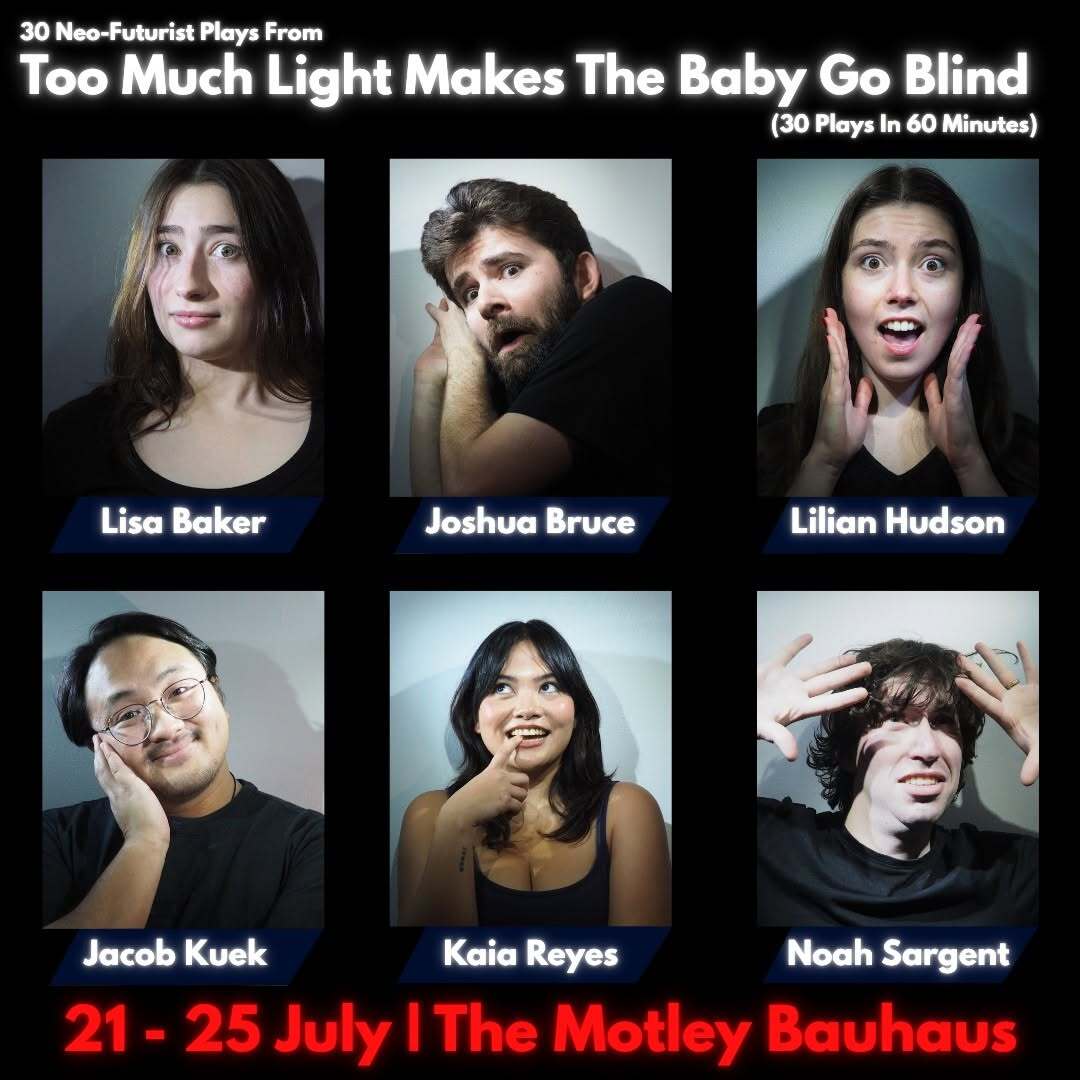
As soon as we walk in, the game begins. The Lost Theatre Co. cast members mill about the theatre and greet us, wearing black T-shirts emblazoned with their (real) first names - Joshua, Lilian, Jacob, Kaia, Noah and Lisa. We each receive a lanyard with a red/green card and a ‘menu’ of thirty short play titles to choose from. The house lights stay up as they get our attention and begin. We have a role, a responsibility and an immediate sense of comradery.

Too Much Light Makes The Baby Go Blind is a proudly absurd meta theatre game. The aim is to perform all thirty plays on the menu within an hour – once the hour is up, that’s all we get; they’ll stop mid-scene if they must. Audience members call out a number to indicate what play we want to see, it’s performed, then it’s on to the next one. It’s the epitome of controlled chaos.

The ensemble’s confidence, chemistry and enthusiasm absolutely carry the show. Even though all the shows are obviously scripted, there’s a constant feeling of spontaneity, like we’ve walked in on actors messing around while on break. This makes it easy to forgive some weaker performances during the micro-plays themselves, though it would’ve been nice to see more range in the genres and characters within the shows. Still, with thirty distinct plays, it’s almost guaranteed nobody will click with everything, and there were definitely more hits than misses.


It’s difficult to comment on the show’s writing. The plays move so fast and there’s so many of them that to single out anything feels like either nitpicking or a matter of personal taste. Plus, the tone is so silly that deeper analysis of themes almost feels like missing the point. Even so, the whole premise raises interesting questions about what ‘counts’ as theatre and how much or little time you need to tell a story. These ideas are highlighted in how the actors use the set. The lack of costumes, the simple props and set pieces strewn around seemingly at random and the constant timer on the wall counting down the hour deliberately make it difficult to fully focus on the plays. This could be a drawback for some, but I like that Jay Watts’ direction kept us focused on the gamification of it all, constantly drawing attention to how we as an audience had a huge part to play in the fun.

Consent and safety were clearly priorities for the troupe, and it was impressive how seamlessly they incorporated these essentials into the show. The lanyards we were given let us show either a green or red card to indicate if we wanted to be interacted with, and we were assured we could flip the card at any time, even while the actors were speaking to us. This did happen once or twice, and they kept their word, stopping immediately and moving on to somebody else. There were content warnings on the menu, but on the other side from the titles so we could be surprised if we wanted to. The instructions they gave to participants were snappy and clear, and they rolled equally well with awkwardness and enthusiasm from the audience. Overall, it’s probably the best handling of audience interaction that I’ve ever seen; whether your card’s green or red, it’s so fun to watch and play along.

Although we didn’t win the game (we got close but had to stop in the middle of the thirtieth play), there wasn’t any sense of disappointment or missing out. If anything, the lack of closure felt appropriate. If you enjoy the fresh frenetic energy of improv, theatre about theatre and/or being involved in the unfolding action, this is definitely the show for you. And if anything about the audience participation seems daunting, don’t worry. You’re in good hands and no matter which plays you do or don’t see, you’re in for a great time.

To book tickets to 30 Neo-Futurist Plays From Too Much Light Makes The Baby Go Blind (30 Plays In 60 Minutes), please visit https://www.losttheatreco.com/.

Spread the word on your favourite platform!

Subscribe to What's The Show

Reviews, show news and what is on, straight to your inbox.