Too

Too

Too Rating

★★★★★

Click if you liked this article

Non-binary people often aren’t taken seriously. They’re a punching bag for bigots, painted as both laughing stocks and corrupters of the young. The structures of most societies and languages are so gendered that alienation is a part of everyday life. Despite cross-cultural evidence throughout history of identities beyond ‘man’ and ‘woman’, we’ve only recently started seeing attempts to research, articulate and understand what being non-binary looks and feels like. Too is far from the first theatre show about being non-binary (especially in Melbourne), but the creators make one choice that gives it another level of impact: it’s a verbatim show. Except for a short intro, all lines spoken onstage are directly quoted from non-binary interview subjects.

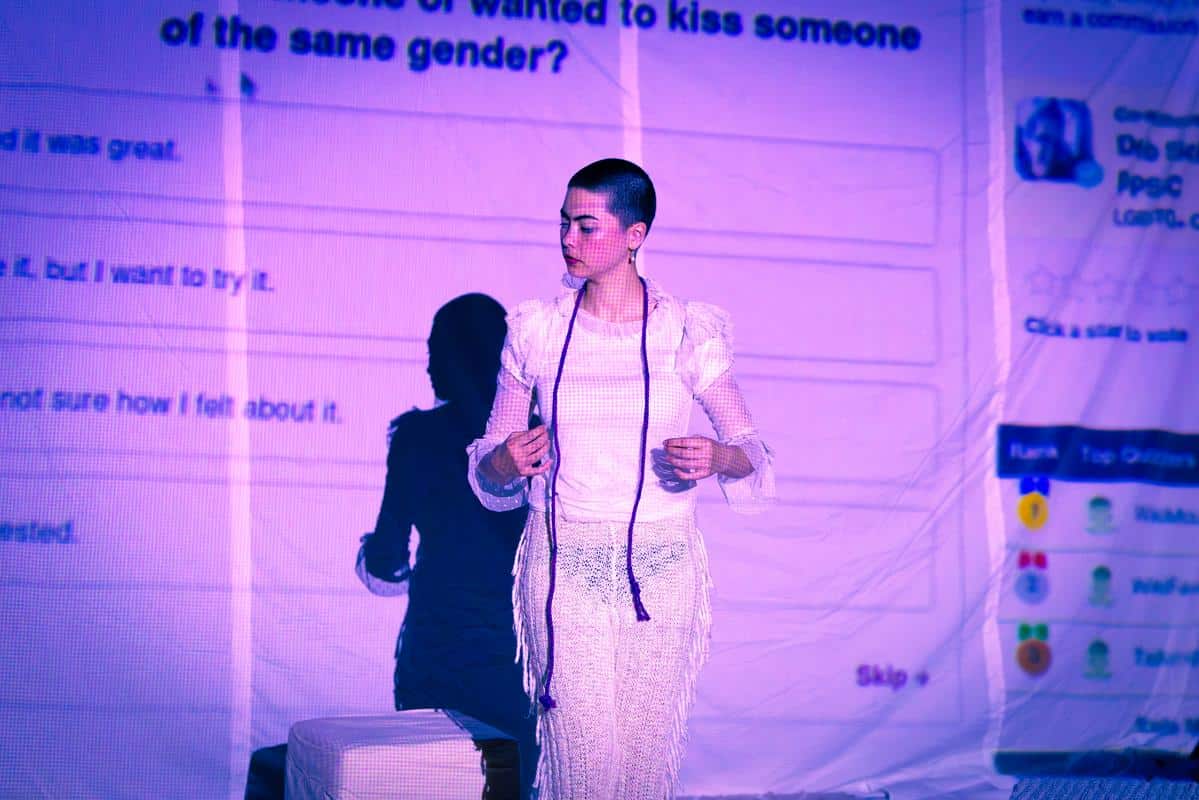
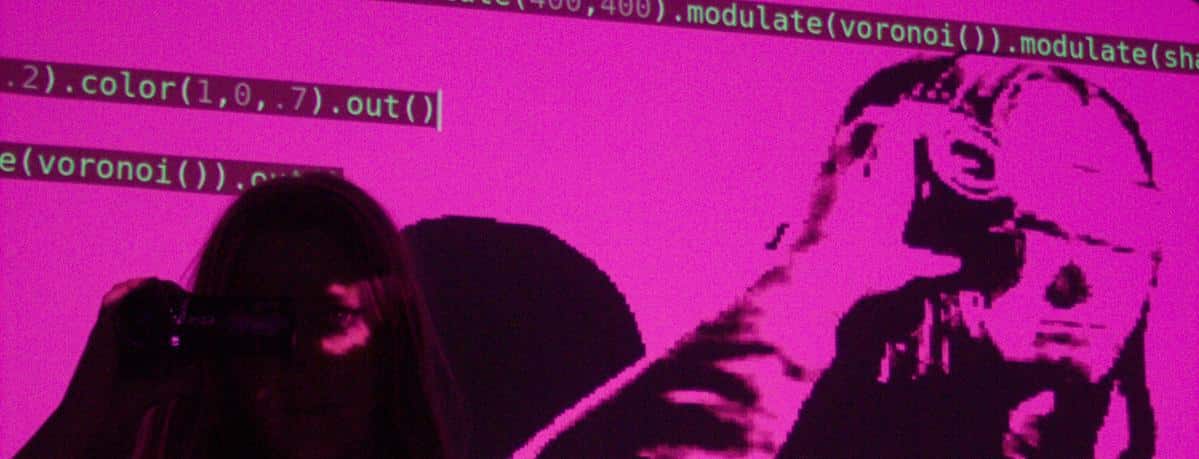
The resulting work by Tip Toe Theatre is appropriately scattered in aesthetic and focus. The actors’ all-white costumes look like they were assembled from whatever they happened to have in their closets. White drapes cover the stage, but not entirely, and they’re used to project live camera footage, distorted graphics and the computer code that warps them in real time. They even explain at the start that one actor has stepped up the last minute and is still reading from their script, but it doesn’t even feel out of place. For me, sometimes the ‘work in progress’ vibes went too far into sloppiness, such as when the camera moved backstage but we could barely see what was happening. The music and dialogue were often so quiet it was hard to hear everything, and I could quibble about some choices in sound and visual effects that took me out of the moment. Still, for the most part the design is a fun, fascinating way to not just tell but show us the experience of having a sense of self that’s constantly under construction. To be a bit glib, it feels authentically ‘enby coded’.
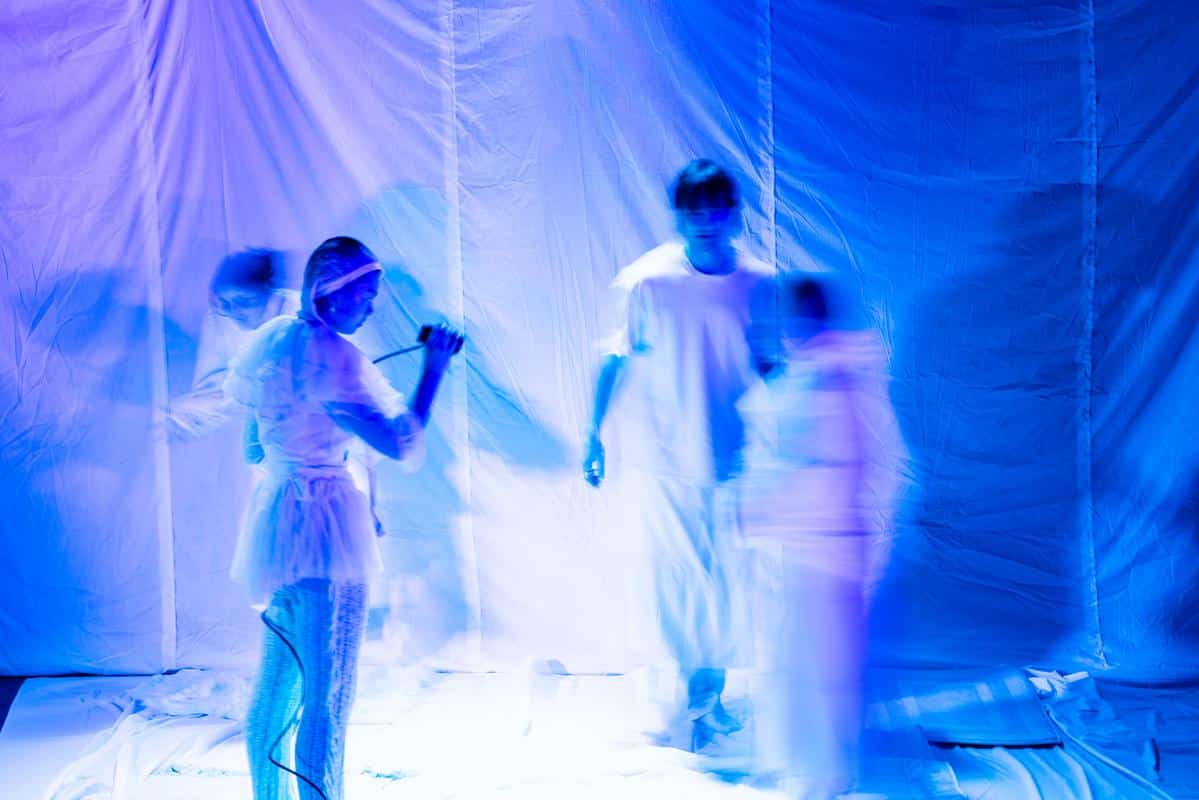
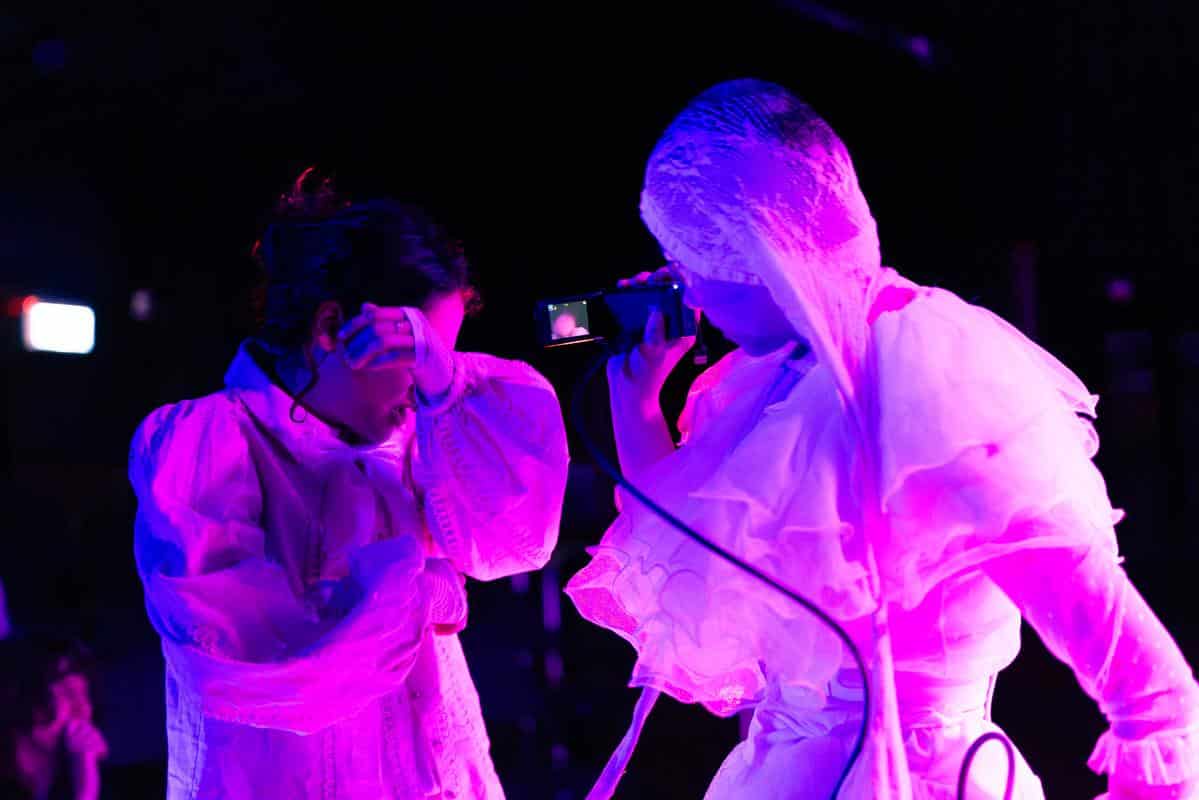
 

If this show were wholly written by a specific author or team, it might have come across as preachy. It’s essentially an hour of interwoven monologues about various topics related to being non-binary, delivered by actors as they create appropriate metaphorical images. The fact that these are authentic testimonies means the play doesn’t come across as didactic, but as people finally getting the chance to express complex, articulate thoughts they’ve been holding onto for a long time. The performances carry this natural feel, as the actors leave in ‘like’s, stammers and strange interjections and impressively deliver the lines as if they are thinking out loud. They are a strong creative team with a strong vision, and they take their purpose seriously while still being playful with the content and audience.

Too is obviously a text-heavy show, and it takes every advantage of that to comprehensively address some very nuanced themes. There’s rich discussion about intersectionality, how being non-binary isn’t just about gender but overlaps with one’s race, sexuality, mental state, family history and life experiences. What I appreciated even more than these topics being brought up was how they were complicated by the cast. While masculinity is often associated with toxicity nowadays, some speakers take comfort in it. While ‘female friendships’ are often seen as uniquely strong and fulfilling, they can also become a gendered trap. Physically, ropes were brought on stage but not only used to convey restraint; they also became symbols of exploration, passivity and bonding. Too is exactly as complicated as it needs to be.

I think the best way I could sum up the effect of this show is to point out that at many moments, I heard various audience members let out a “hmm…”. I’m still wondering what those reactions were expressing in the moment. Comprehension? Sympathy? Empathy? Probably all the above and then some. The very concept of Too is necessary and relevant, and its execution is perfect for the messages it’s trying to convey. It’s uncomfortable, awkward, joyful, bizarre, scrappy and silly – just like being non-binary.

To book tickets to Too, please visit https://www.melbournefringe.com.au/whats-on/events/too.
Spread the word on your favourite platform!

Living The Dream

Living The Dream

Living The Dream Rating

★★★★★

Click if you liked this article

4

Here’s a genre you may not have heard of: ‘suburban gothic’. It’s considered an offshoot of American gothic horror but instead of taking place in creepy castles or Antebellum mansions, the stories are set in, well, suburbia. Rather than external threats, suburban gothic tends towards modern human horrors; small, insular communities far from main cities that encourage if not mandate conformity to a culturally imposed ideal of ‘the good life’. The worst and most absurd consequences of this lifestyle are shown off in Living The Dream: a hilarious, riveting and quintessentially Australian suburban horror play that deconstructs Victorian suburbia with scintillating nuance and insight.

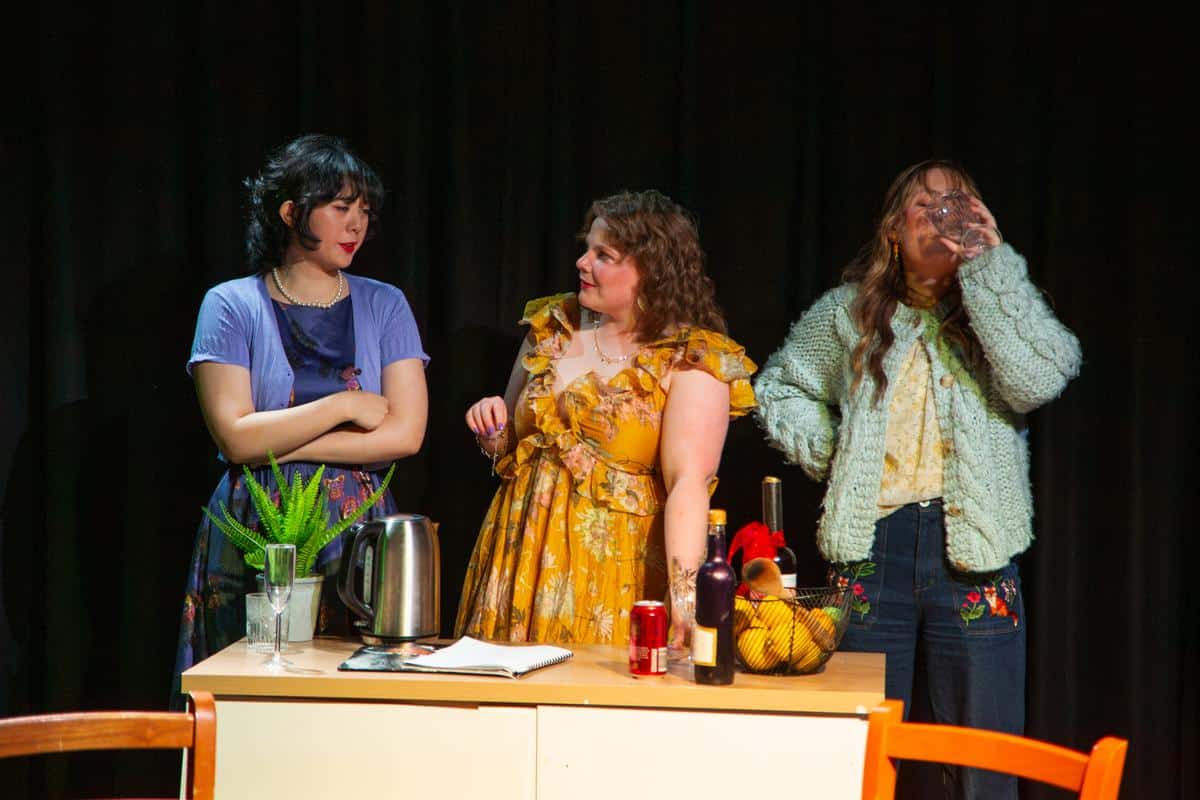
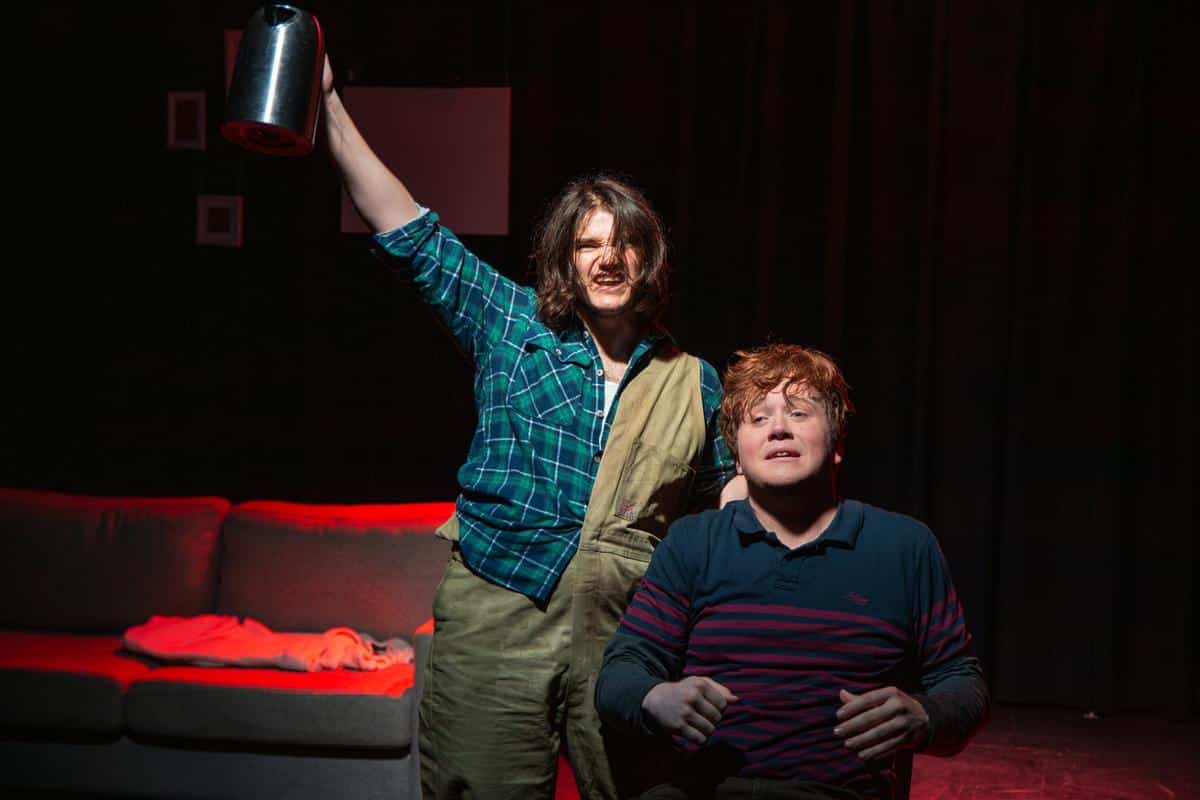
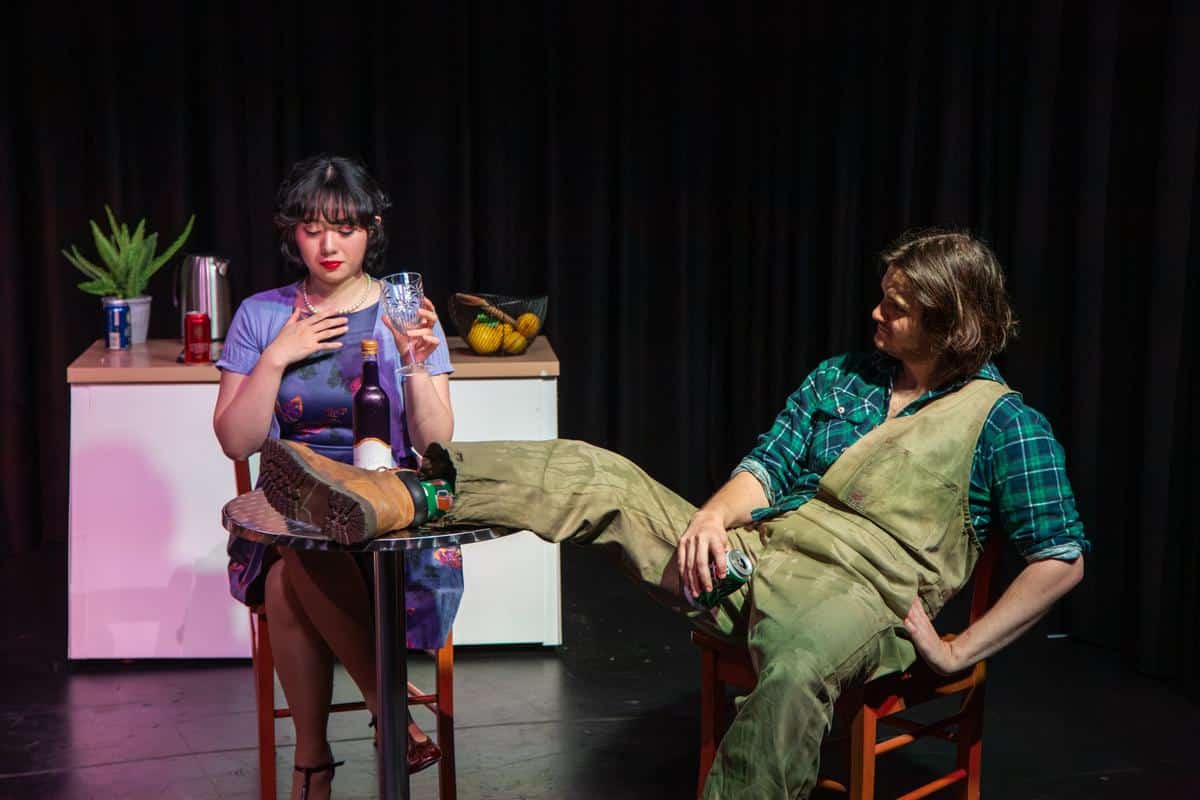
James (Ryan McInerney) has just moved into Arcadia: a pristine Victorian suburb populated by colourful characters. ‘The Boys’ quickly take a shine to him, as Cluey (Ed Wallis) and Damo (Oliver Qubrusi) attempt to bond with him over cricket, drinking and complaining about their wives. James always keeps a little distance, though, especially from Rich (Julian Machin), the de facto, overly smiley leader of the posse. He also bonds with their wives, along with Alison (Dempsey Doyle), the only single woman in town and the most normal-seeming person around. They start a relationship but as the months go by, everything unravels. The neighbours cross more and more boundaries, Alison and James argue about their future, and it becomes clear that James’ past city life is more complicated than he lets on.

Every performance adds depth to stereotypes of Aussie life we’ve all seen. As the leads, McInerney and Doyle have great chemistry, and their cynical characters give much-needed grounding and perspective to a strange world. Cluey and Damo may be degenerate, alcoholic archetypes of toxic masculinity, but they’re also given moments of vulnerability. We don’t excuse their behaviour, but it’s clear that they’re extremely damaged people who, like James, are seeking to find their place in the world. Rich, on the other hand, is much more malevolent, and Machin’s portrayal of him is fantastic to watch. He reminded me a lot of Patrick Bateman, with a façade that falls into the uncanny valley between psychotic and charming.


The characters and performances of ‘the wives’ – Rachel (Bridgette Kucher) and Jill/Joyce (Crystal So) – are just as strong and important. While Kucher perfectly sells the delusion and denial of someone ensconced in a hostile environment, So’s character reaches a terrifying breaking point; even her physicality seems broken, like a marionette being jerked on its strings. It’s clear that the entire cast has given so much energy and thought to who their characters are and how they see the world, and it is an absolute delight to watch them all bounce frenetically off each other.

There are so many details in the show’s design that add to the eeriness of Arcadia, from obvious idiosyncrasies, like characters talking about a beautiful painting when all the audience sees is a blank canvas, to the subtly strange, like everyone changing clothes between scenes except for James. The music accompanying the blackout scene transitions is strange, synthy and becomes more corrupted over time, keeping the energy going and giving a real sense of how things deteriorate even when we aren’t watching. Arcadia feels like its own real yet liminal space between the authentic and the absurd.

While the performances are incredible, they have an amazing story and script to work with. Not a word is wasted, every joke hits with an undercurrent of dread and every scene ends in the most perfectly awkward spot. There’s also a clear understanding of how abuse functions in relationships and communities. While James tries to stay afloat and get Alison out of Arcadia with him, we understand exactly how the community manages to draw them back in with gaslighting, blackmail and boundary crossing. The ending epitomizes all this and leaves so many questions unanswered, but in a way that feels only appropriate. We feel just as confused and trapped as the characters are in the Hell they created.

As a horror comedy, Living The Dream knows exactly what tone it wants to strike and hits it out of the park in every respect. There is so much that it does right that it’s hard to single out any particular aspect of it – it’s a production that just…works. It’s polished, fun, thoughtful, heartbreaking and chilling, and I certainly hope it has a life beyond the Fringe festival. I’d certainly be happy to see it again.

To book tickets to Living The Dream, please visit https://www.melbournefringe.com.au/whats-on/events/living-the-dream.

Photographer: David Cui

Spread the word on your favourite platform!

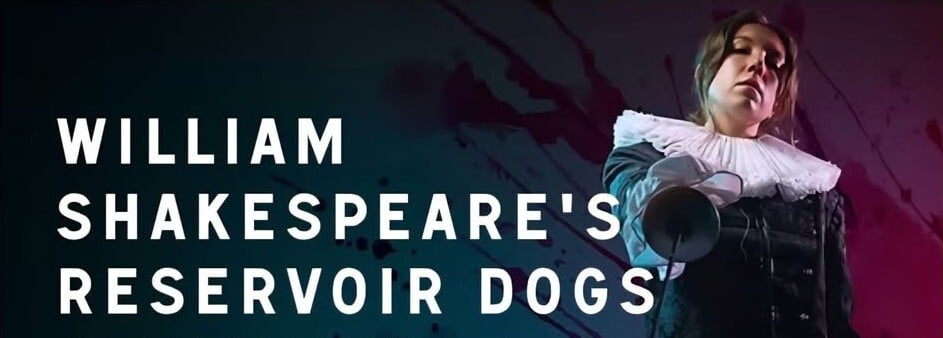
William Shakespeare’s Reservoir Dogs

William Shakespeare's Reservoir Dogs

William Shakespeare’s Reservoir Dogs Rating

★★★★★

Click if you liked this article

4

To quickly address the obvious question: no, you don’t need to have seen Reservoir Dogs to enjoy this show…but it does help. I went to see this show with a friend who had never seen Tarantino’s film, and I hadn’t watched it since 2021, though I brushed up on it before writing this review. We also sat next to someone who had clearly seen the movie recently and was laughing at every gag. So, regardless of your exposure to Shakespeare or Tarantino, you’re in for a great time. The Ghostlight League’s adaptation is a charming, witty show performed by a cast full of chemistry.

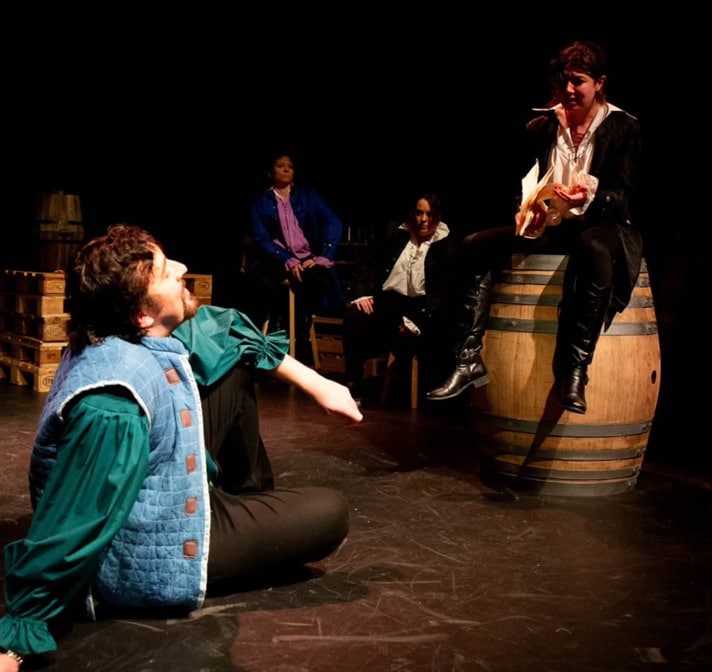
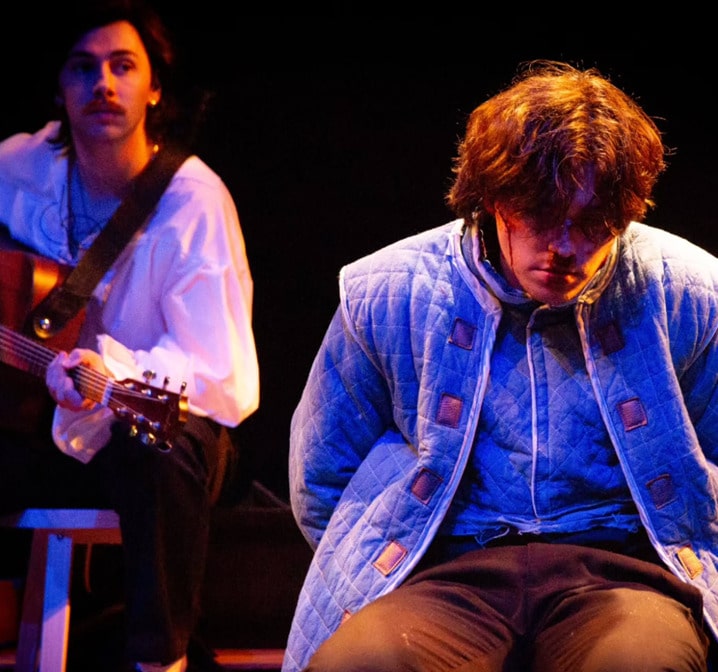
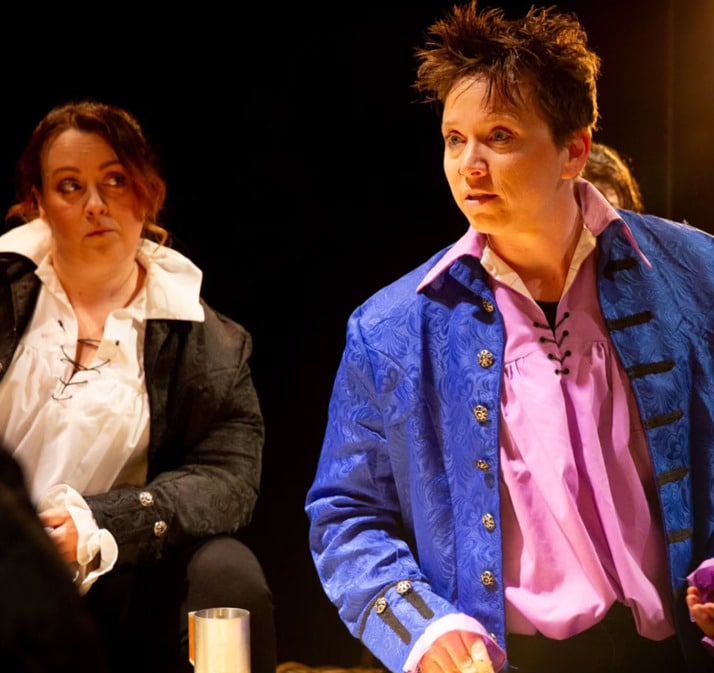
The writer (Steven Hopley) and director (Rob Lloyd) are clearly aware of the tropes they’re adopting and use them to create a rich and layered world. A ‘bardcore’ band plays covers of the original soundtrack, the staging is sparse and the cast is genderbent – it’s ‘hyper Shakespearean’ and proud of it, heightening its conventions for laughs while still entirely ‘committing to the bit’. The script mostly sticks to the original structure and meaning of the film’s dialogue, which makes it fun to hear how Tarantino’s macho banter gets reworded into poetry, with a few real Shakespeare quotes thrown in as easter eggs. The only moments that seemed out of place were some of the more violent scenes; it would be hard and somewhat inappropriate to be just as bloody as the film, but I couldn’t help feeling that some moments could have been gorier and more visceral rather than being played for laughs. Despite this, the intensity, rhythm and borderline homoeroticism of the original story feel right at home in the world of Shakespeare, which is a huge credit to the ambition and skill of the team who married these two distinct styles.


Both film and stage show depend on the rapport of their ensemble cast, and the Theatreworks production really stuck the landing with their actors. Many have worked together before in other companies such as Scary Goats Theatre, and there isn’t a weak link among them. Some highlights include the fraught and physical bond between Sir Orange (Elysia Janssen) and Sir White (Cassandra Hart), Seon Williams’ deft delivery of ‘Elizabethan’ English as Sir Pink, and Corey Glamuzina’s portrayal of Sir Blonde, an effortlessly slimy psychopath. While occasionally some of the English accents made lines harder to parse, the strong physical acting across the board made it easy to get sucked into the story, and every character felt multi-dimensional, no matter how many or few lines they got.

While this adaptation successfully showed the similarities between Shakepeare and Tarantino as storytellers, there’s one key difference at its heart: while Shakespeare mostly wrote about those with legitimized state power (royals, nobles, merchants etc.), Reservoir Dogs lives in the criminal underworld. The slight twist to the play’s ending shows an awareness of this theme and lays bare the potential of adaptations like these. William Shakespeare’s Reservoir Dogs is definitely a novelty and a fun night out, but it also stands on its own as a captivating tragicomedy about power, trust and the blurry lines between ‘good’ and ‘bad’ guys. It’s an ambitious show that has set my own personal standards very high for what adaptations of Shakespeare should be, and I look forward to seeing what this creative team does next, whatever influences they may pull from.

To book tickets to William Shakespeare’s Reservoir Dogs, please visit https://www.theatreworks.org.au/2026/william-shakespeares-reservoir-dogs.

Spread the word on your favourite platform!

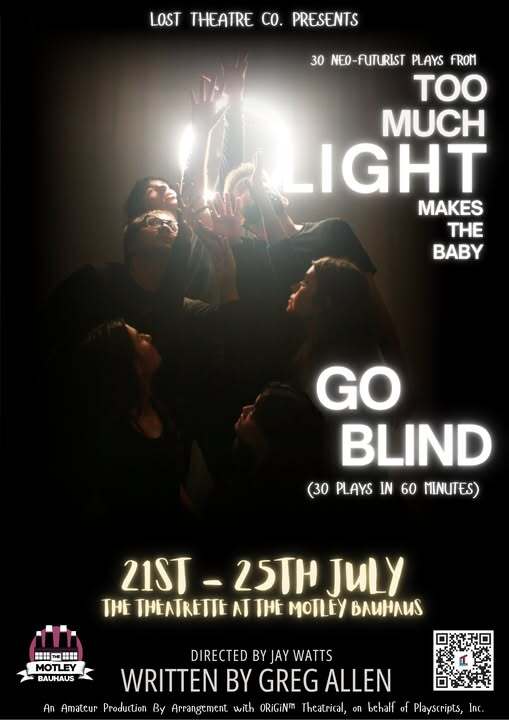
Too Much Light Makes The Baby Go Blind

30 Neo-Futurist Plays From Too Much Light Makes The Baby Go Blind (30 Plays In 60 Minutes)

30 Neo-Futurist Plays From Too Much Light Makes The Baby Go Blind (30 Plays In 60 Minutes) Rating

★★★★★

Click if you liked this article

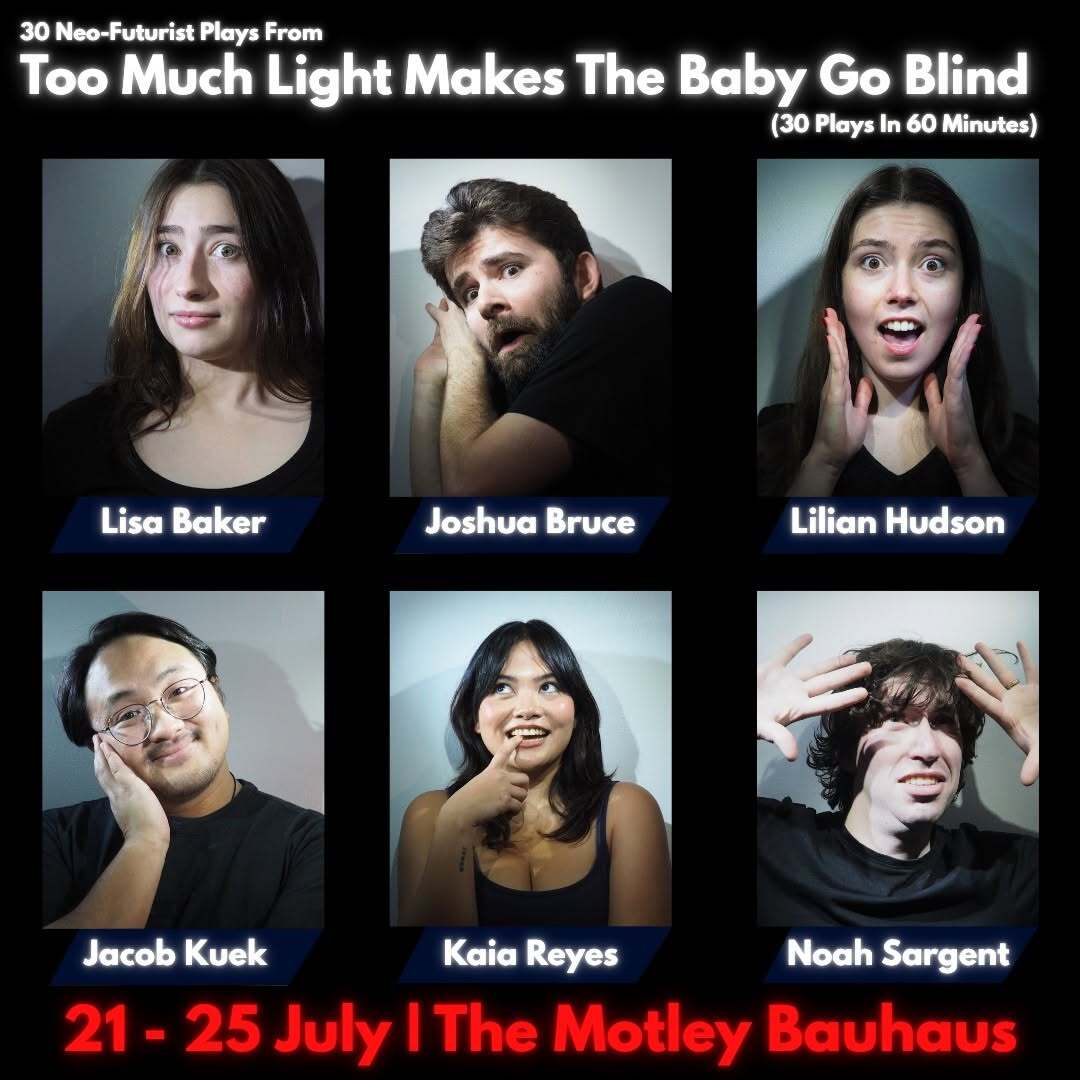
As soon as we walk in, the game begins. The Lost Theatre Co. cast members mill about the theatre and greet us, wearing black T-shirts emblazoned with their (real) first names – Joshua, Lilian, Jacob, Kaia, Noah and Lisa. We each receive a lanyard with a red/green card and a ‘menu’ of thirty short play titles to choose from. The house lights stay up as they get our attention and begin. We have a role, a responsibility and an immediate sense of comradery.

Too Much Light Makes The Baby Go Blind is a proudly absurd meta theatre game. The aim is to perform all thirty plays on the menu within an hour – once the hour is up, that’s all we get; they’ll stop mid-scene if they must. Audience members call out a number to indicate what play we want to see, it’s performed, then it’s on to the next one. It’s the epitome of controlled chaos.

The ensemble’s confidence, chemistry and enthusiasm absolutely carry the show. Even though all the shows are obviously scripted, there’s a constant feeling of spontaneity, like we’ve walked in on actors messing around while on break. This makes it easy to forgive some weaker performances during the micro-plays themselves, though it would’ve been nice to see more range in the genres and characters within the shows. Still, with thirty distinct plays, it’s almost guaranteed nobody will click with everything, and there were definitely more hits than misses.


It’s difficult to comment on the show’s writing. The plays move so fast and there’s so many of them that to single out anything feels like either nitpicking or a matter of personal taste. Plus, the tone is so silly that deeper analysis of themes almost feels like missing the point. Even so, the whole premise raises interesting questions about what ‘counts’ as theatre and how much or little time you need to tell a story. These ideas are highlighted in how the actors use the set. The lack of costumes, the simple props and set pieces strewn around seemingly at random and the constant timer on the wall counting down the hour deliberately make it difficult to fully focus on the plays. This could be a drawback for some, but I like that Jay Watts’ direction kept us focused on the gamification of it all, constantly drawing attention to how we as an audience had a huge part to play in the fun.

Consent and safety were clearly priorities for the troupe, and it was impressive how seamlessly they incorporated these essentials into the show. The lanyards we were given let us show either a green or red card to indicate if we wanted to be interacted with, and we were assured we could flip the card at any time, even while the actors were speaking to us. This did happen once or twice, and they kept their word, stopping immediately and moving on to somebody else. There were content warnings on the menu, but on the other side from the titles so we could be surprised if we wanted to. The instructions they gave to participants were snappy and clear, and they rolled equally well with awkwardness and enthusiasm from the audience. Overall, it’s probably the best handling of audience interaction that I’ve ever seen; whether your card’s green or red, it’s so fun to watch and play along.

Although we didn’t win the game (we got close but had to stop in the middle of the thirtieth play), there wasn’t any sense of disappointment or missing out. If anything, the lack of closure felt appropriate. If you enjoy the fresh frenetic energy of improv, theatre about theatre and/or being involved in the unfolding action, this is definitely the show for you. And if anything about the audience participation seems daunting, don’t worry. You’re in good hands and no matter which plays you do or don’t see, you’re in for a great time.

To book tickets to 30 Neo-Futurist Plays From Too Much Light Makes The Baby Go Blind (30 Plays In 60 Minutes), please visit https://www.losttheatreco.com/.

Spread the word on your favourite platform!

Subscribe to What's The Show

Reviews, show news and what is on, straight to your inbox.