A Thoughtful, Entertaining, And Faithful Rendering Of A Complex Classic

Rosencrantz & Guildenstern Are Dead - Hunter's Hill Theatre

Rosencrantz & Guildenstern Are Dead – Hunter’s Hill Theatre Rating

★★★★★

Click if you liked this article

1

Hunters Hill Theatre’s “Rosencrantz & Guildenstern Are Dead,” Tom Stoppard’s legendary absurdist tragicomedy, delivers a warm and lively take on the tale of two minor Hamlet; characters doomed by fate and their own obscurity. From the outset, the greeting from the Hunters Hill Theatre committee sets an inviting tone, matched by the cheerful note of live music wafting through the space as the audience finds their seats; a particularly thoughtful touch that eased the transition into what would be a lengthy but joyful theatrical experience.

Stoppard’s play pivots around Rosencrantz and Guildenstern, two bewildered courtiers caught on the fringes of Hamlet’s story, who contort through existential wordplay, philosophical meanderings, and a growing awareness of their own lack of agency. The narrative, fragmented and surreal, weaves in and out of Hamlet, placing our protagonists in a landscape where meaning and momentum are perpetually just out of reach. While in theory this absurdist structure invites playful confusion, in practice it can be a genuine challenge for audience members to follow; something I certainly experienced at times.

The sequence of coin tosses, theatre-troupe hijinks, and discussions of fate and free will were made more powerful by the gorgeous old theatre style setting, the reds of the enticing set, the colourful costuming and light design and the interwoven 90s classics as the soundtrack.

Karen Pattinson’s Rosencrantz anchors the show with remarkable vitality, her presence is infectious, and she brings a buoyant, engaging quality to every scene. With a playful physicality, Pattinson makes superb use of the stage, drawing energy from even the most challenging passages and keeping the audience engaged. She manages the lightness and quick wit the role demands, creating a Rosencrantz who is both affable and deeply sympathetic, maintaining momentum even where Stoppard’s existential riddles might otherwise cause the pace to lag.


Jivan Drungrilas as Guildenstern plays the perfect foil to Pattinson’s cheer, rendering their character with brooding skepticism and philosophical weight. The dynamic between the two is the production’s heart; comic timing and tonal balance keep the core relationship feeling alive, dynamic, and frequently funny.

The supporting cast deserves credit for enlivening the margins with punch and humour, particularly during the play’s meta-theatrical moments and ensemble-driven scenes involving the Tragedians. The use of shadow puppetry adds a whimsical element. Their comic timing and character work bring welcome clarity and relief, heightening the absurdity while never losing the sense of fun.

Practical touches, such as the provision of cushions for the chairs, should absolutely be taken up, as the play’s length is both a testament to the ambition of the company and a point of practical consideration for audiences. These small gestures, along with the committee’s warm welcome, reflect the community ethos that makes local theatre so rewarding.

As with any opening night, there were some small hiccups and moments where the pace snagged slightly, but these did little to diminish the overall energy and connection of the cast. The enthusiasm onstage, particularly in the lead performances, quickly won over the audience and supported the more challenging elements of the text.

The direction of Tui Clark and the well-chosen cast really have taken this piece to the next level. The production offers a thoughtful, entertaining, and faithful rendering of a complex classic.

To book tickets to Rosencrantz & Guildenstern Are Dead – Hunter’s Hill Theatre, please visit https://www.huntershilltheatre.com.au/.

Spread the word on your favourite platform!

The School For Scandal

The School For Scandal

The School For Scandal Rating

★★★★★

Click if you liked this article

4

Richard Brinsley Sheridan’s The School for Scandal has endured since 1777 because its satire of gossip, hypocrisy, and vanity never goes out of fashion. Lane Cove Theatre Company’s latest production, directed by Christine Firkin, embraces that timelessness with a minimalist hand — proving that sharp performances can do far more than ornate scenery.

The set never shifted: chairs and a chaise lounge with a plain backdrop lit in washes of pink, purple, green, or blue to signal a change of location. Costumes were simple but distinctive, each character marked by clear colours and silhouettes so the audience could follow the action at a glance. This pared-back aesthetic threw all attention onto Sheridan’s biting wit and the players’ performances.

And what a performance it was. Daisy Cousins stood out as Lady Teazle, bringing both uproarious comic energy and subtle facial nuance; a raised eyebrow from her could puncture a scene. Samuel Chapman’s Joseph Surface matched her precision, playing the schemer with quiet menace and expressive restraint. Together, they showed how much this production relied on nuance as well as volume.


The ensemble also shone in versatility with several performers in multiple roles. Benjamin Walsh balanced rakish charm as Charles Surface with sly gossip as Crabtree. Joyce Sharma shifted nimbly between Snake’s sycophancy, Careless’s looseness, and the reimagined Lady Elizabeth Backbite, keeping each sharply distinct. Most impressive was Phillipa Coleman, moving from the eager prattle of Mrs Candour to the sober honesty of Rowley without a hint of overlap — two utterly different figures brought vividly to life.

Trent Gardiner anchored the play as Sir Peter Teazle, sparring with Cousins in exchanges that veered between exasperation and tenderness. Ciara Briggs lent Lady Sneerwell a cool edge, while Michelle Bellany gave gravitas to the adapted Lady Olivia Surface and her disguises.

Two set-pieces defined the evening. The “auction of ancestors” became a comic highlight when portraits were played by fellow cast members holding frames and I’m wigs and hats, turning satire into playful physical theatre. Later, the famous screen scene — one of Sheridan’s great inventions — was handled with zest: Joseph frantically hiding both Sir Peter in the closet and Lady Teazle behind the screen, the deception stretched to breaking point before it inevitably collapsed.

This performance of School for Scandal shows that spectacle is optional when satire is alive. With wit, inventiveness, and a company able to juggle multiple roles without missing a beat, Sheridan’s centuries-old comedy felt as fresh as ever.

To book tickets to The School For Scandal, please visit https://www.lanecovetheatrecompany.com.au/season-2025.html.

Spread the word on your favourite platform!

Getting Lost to Find What Truly Matters – Lost and Finding

Lost & Finding

Lost & Finding Rating

★★★★★

Click if you liked this article

4

Liminal Production’s “Lost and Finding” is one of those unique theatre experiences which peaked a sense of curiosity, right from the beginning. Unlike other plays, where patrons are seated in the theatre and watch a story, this is immersive storytelling which began from the moment we walked into the Flight Path Theatre in Marrickville. Producer Aaron Cornelius greeted us at the door with a raffle ticket – for what, we did not know, but it did create a sense of excitement! Billed as a fantasy-comedy interactive show, I was aware that audience participation was most likely going to happen. However, for people who aren’t comfortable with this, there are marked seats inside the theatre for those who don’t mind being a part of the show.

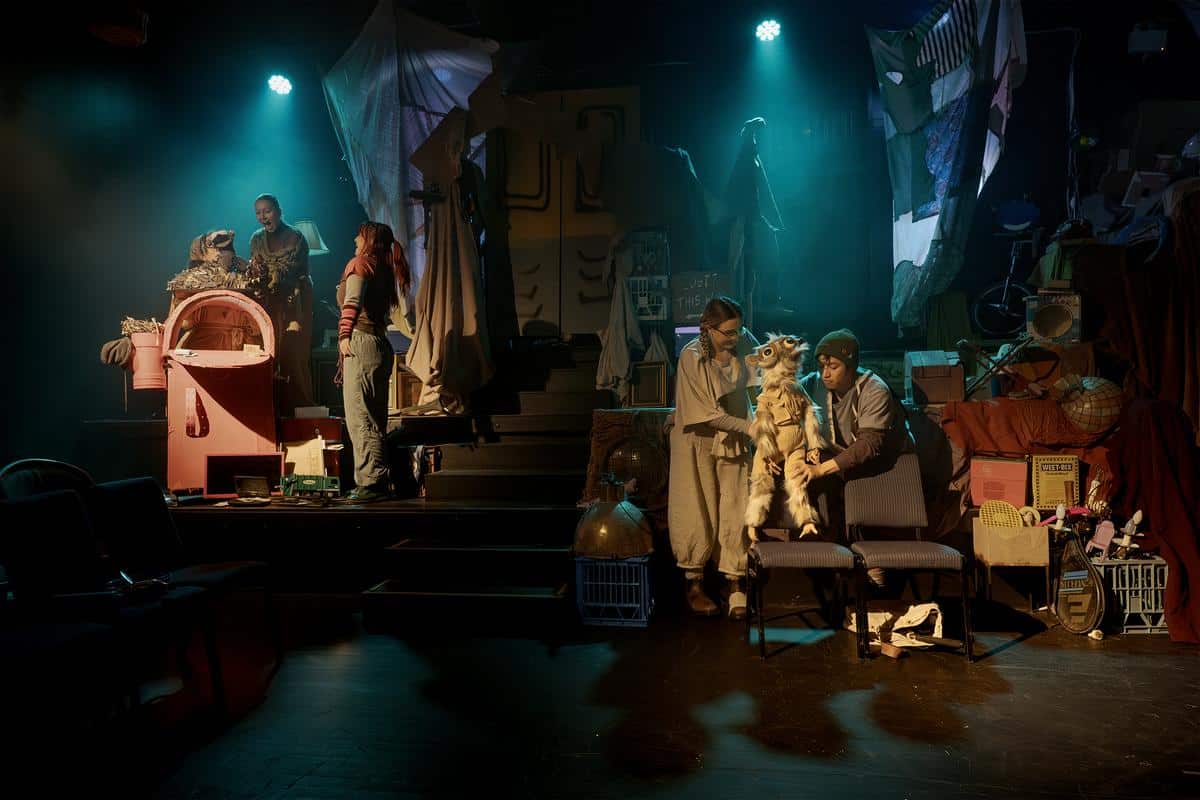
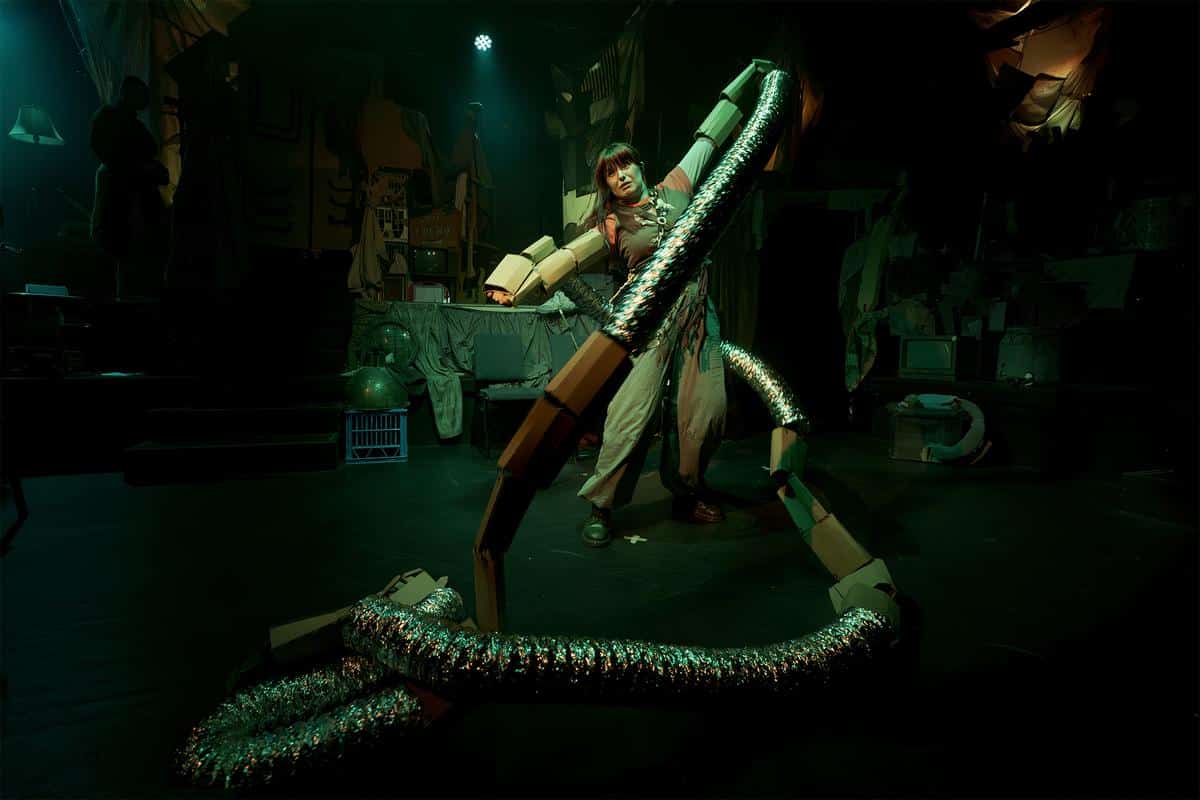
When we entered the theatre, the lighting was dim. Shadows created crevices of the unknown. There was an atmosphere that felt mysterious and ominous. (Lighting design by Caity Cowan) What was this place? Where were we? At first glance, it looked like a garage filled with vintage junk; a hoarder’s room stacked floor to ceiling with things like boxes, sheets, tee shirts, guitars, paintings, milk crates, monitors, sport equipment and suitcases. As the play progressed, it was clear that every placement of this seemingly haphazardly strewn “stuff” was designed and placed with infinite care from the imagination of production designers Hannah Taylor and Paris Bell. The visual effects of the multi-level set was impressive. As a room infused with lost memories, my eyes kept exploring the set throughout the play and I wondered, who were the people whose memories these belonged to? The set also reminded me of The Junk Lady from one of my favourite films, “Labyrinth”.

We follow a confused Cassie, portrayed by Emma Throssell, where she finds herself unexpectedly in this strange space, looking for something, of which she cannot remember. She has literally fallen into a world where she encounters many interesting characters who help and hinder a journey towards discovering what it is that she has lost. Emma’s portrayal of Cassie delivered an outstanding performance that captured the emotional depth and authenticity of the character and I felt myself cheering her on in her quest. In one scene, Cassie had to perform a stand-up routine for an audition. Emma wrote this routine for her character. I felt the awkwardness and nervousness of Cassie as she delivered it, at the same time finding it very funny.


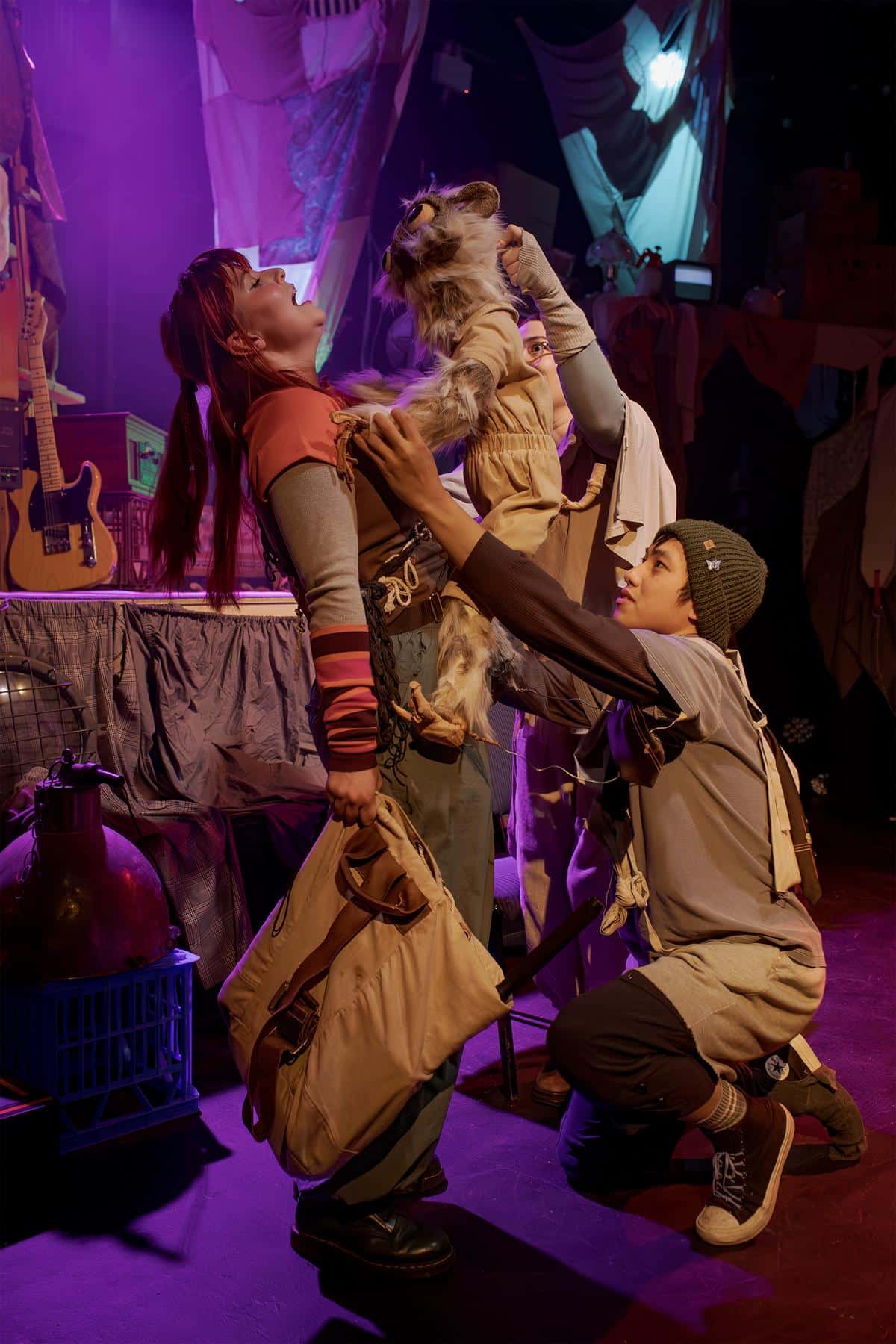
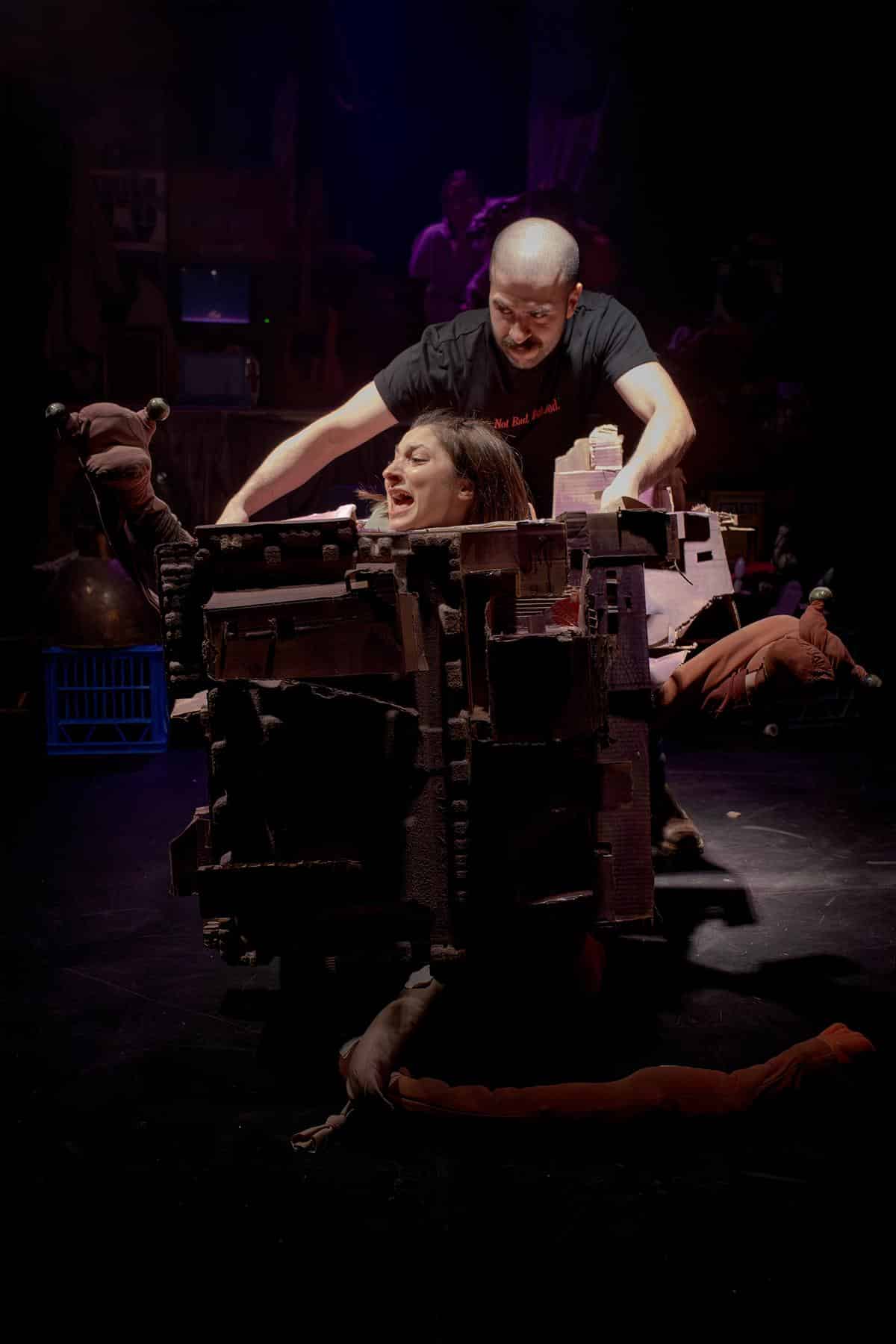
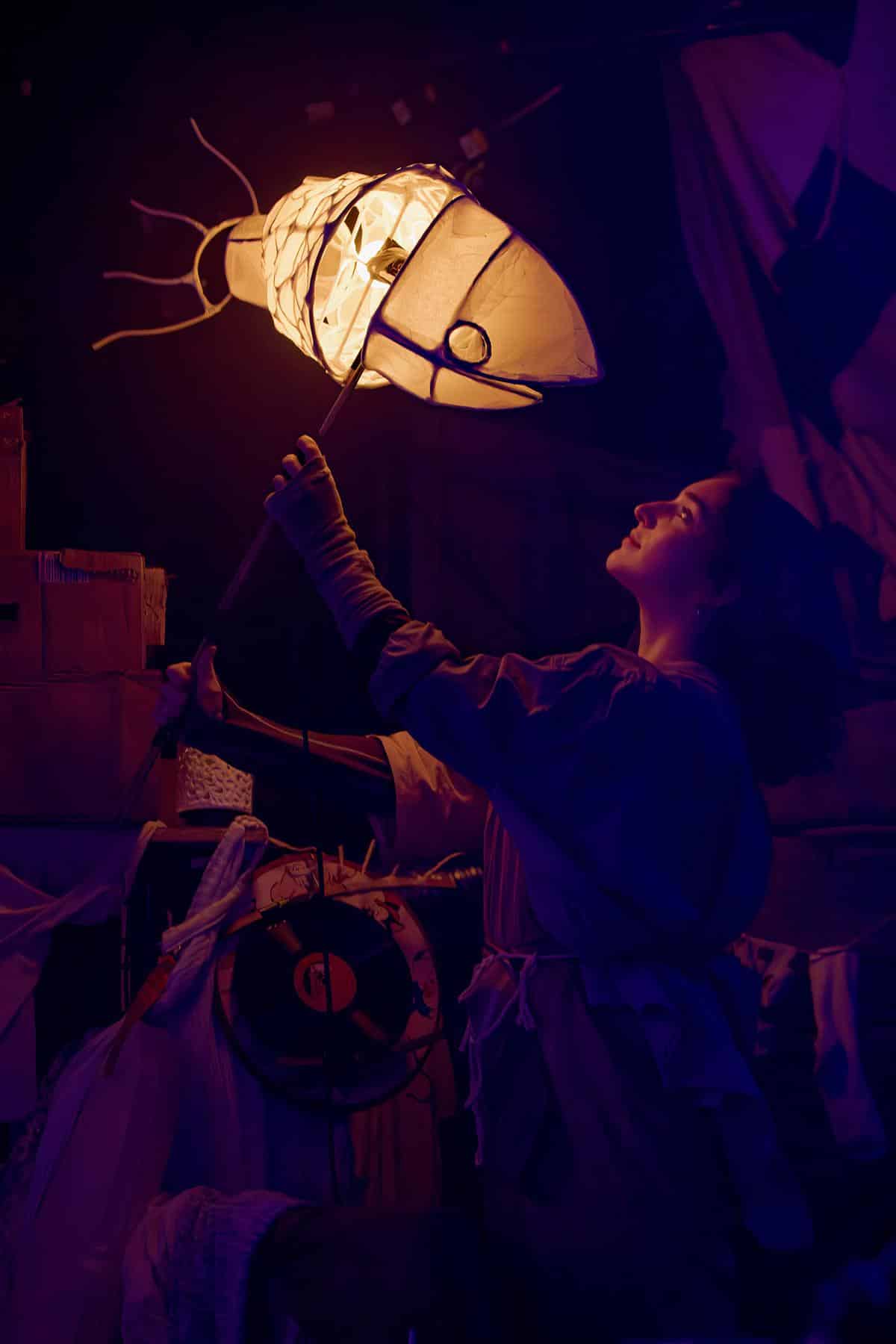
The amazing puppets and puppeteering were a delight to watch! Puppet maker/ director George Wohlfiel created original characters, ones who I could not help but look into their eyes – up at Lizard Wizard, down at the cheeky lizard and particularly at the pigeons Carl and Steve, whose eyes popped out and bobbed as they spoke. Carl had a big personality – a ciggy craving pigeon that made me laugh. His job was akin to a Service NSW customer service worker who was overworked, underpaid and frazzled. There was one puppet called Poppet, with its big eyes and gentle personality who I wanted to take home. Another character, The Dread Pirate Susan, spoke eloquently in poetry, and her name reminded me of The Dread Pirate Roberts from another of my favourite films, “The Princess Bride”. I loved the respectful nod to the two films I’d associated certain characters from, while still maintaining originality.

The puppeteers were polished in their craft and worked together to create convincing movements of their characters for a realistic stage presence. Puppeteers Ashley Chandler, Natanyah Forbes, Jade Fuda, Michael Ho and Renae Valastro did an outstanding job, all the while weaving their own bodies onto the stage with nuance and expression.

Co-sound designers Bryan Ruiz and Ellie Wilson from “Lost and Finding” created a continuous audio environment that added a strong dimension to the production. The dramatic soundscape and subtle sound effects, along with the visuals, encompassed my senses. One scene, which involved a villain speaking, was done with great depth and menace.

Director Emma Van Veen also wrote the play “Lost and Finding”. Her script captured my curiosity from the start and allowed my imagination to stretch to places within the set and far away. There were several sub-plots in the storytelling which were intertwined and were cleverly penned. “Lost and Finding” reminds us of the complexity of our own minds and the limitlessness of our imaginations. This tale of self-discovery, of finding the unexpected was a beautifully woven theatre production which I highly recommend to everyone. Go see it!

I saw the world premiere performance of “Lost and Finding” at the Flight Path Theatre on Friday 15 August 2025.
Flight Path Theatre: 9b 142 Addison Road, Marrickville
Run: 14-23 August 2025
Time: 100 minutes, no interval
Tickets: www.flightpaththeatre.org/whats-on/lost-amp-findings

To book tickets to Lost & Finding, please visit https://www.flightpaththeatre.org/whats-on/lost-amp-findings.

Photographer: Phil Erbacher

Spread the word on your favourite platform!

The Shark Arm Case

Shark Arm Case

Shark Arm Case Rating

★★★★★

Click if you liked this article

1

Sydney has always feared the shark; every Sydneysider’s felt some trepidation when venturing into the waters that surround our beautiful city. But as it turns out, sharks come in human form too. Shark Arm Case, a joint collaboration between Deadhouse Productions and Museums of History NSW, shows just how dangerous and destructive those particular creatures can be.

On 17th April 1935, a fisherman caught a small shark off Coogee Beach. As he reeled in his catch, a four metre tiger shark swallowed the smaller fish. The man then hooked the tiger shark quickly taking it to the Coogee Aquarium Baths, a very popular attraction at the time, where he knew the tiger shark would bring in crowds during the coming Anzac Day weekend. The crowds did indeed arrive to peer at the trapped shark. Horror ensued when the animal suddenly vomited up a human arm. Unsurprisingly, initial impressions were the owner of the arm had been an unfortunate victim of a shark attack given that Sydney had recently experienced a spate of shark attacks. Medical examination, however, showed the arm had not been bitten off; instead it appeared to have been severed by a knife or other sharp instrument. Was the arm’s owner murdered and if so, whodunnit?

Sydney’s Justice & Police Museum near Circular Quay is the perfect setting for an immersive theatre performance depicting the nefarious activities of the city’s 1930s criminal underworld. After police realised they were dealing with a victim of crime rather than a shark attack, the press soon picked up the story. The arm featured a tattoo of two boxers in battle; it was this tattoo and the coverage of the story in the city’s newspapers that drew the attention of Edwin Smith. His brother, Jim, a small-time crook turned police informant (known as a ‘fizgig’), had been missing for weeks. Coincidentally, Jim also had a distinctive tattoo on his forearm of two boxers. Had Jim Smith been murdered? This is the pressing question the performance opens with. The play starts with Jim’s wife Gladys (Madison Chippendale), and another character Mrs M (Karli Evans), in Gladys’ living room. The audience surrounds the two, witnessing Gladys’ harrowing realisation that the victim may well be her husband. In the next scene, we’re introduced to Reginald Holmes (Barret Griffin) and his wife, Inie (Roz Hicks) in their north shore home. Holmes runs a successful boat-building business but is also involved in illegal activity using his speedboats to smuggle drugs and other contraband into Sydney. We hear a heated conversation between Holmes and Patrick Brady, another small-time crook and associate of Holmes. Holmes’ fear of Brady is palpable. What exactly have Brady and Holmes been up to?


Later we move into a larger room where our guide and the Aquarium manager’s wife in a combined role (played by actor Kyla Ward, who is also the show’s writer) fills in the backstory. A screen projection shows the moment the tiger shark purged itself of the tattooed arm – a suitably gory moment in the riveting production that elicited more than a few groans of disgust. Police investigators Frank Mathews and Allmond now take on the case. Our personable guide informs us that Mathews does not like losing a case; he will do whatever it takes to win. But maybe this time Mathews will meet his match, coming up against a lack of convincing evidence and a stubbornly impenetrable criminal underbelly.

The performers are truly the compelling force of this clever production. Driven by powerful dialogue, the play takes us into a fascinating cold case that to this day remains unsolved. Mark Stokes as the feisty Mathews and Sam as his calm offsider, Allmond, are the backbone of the play. A yin and yang duo, both detectives try to solve a case that lacks a crucial piece of evidence: the victim’s body. Kyla Lee Ward as the guide is particularly entertaining. Her commentary provides humour and levity throughout the piece. Ward is also to be commended for her writing. Roz Hicks gives an emotional performance as the long-suffering Mrs Holmes. In fact, it is the women in this story who suffer the most, standing by men who repeatedly let them down through the poor life choices they make. Barret Griffin as Reginald Holmes captures the businessman’s cravenness; he later adeptly transforms into the commanding Clive Evatt KC, who represents Brady at the coroner’s inquest. Mention also goes to Steve Maresca as Jim Smith and Karli Evans as Grace Brady. Kyle Stephens’ lighting design and props managed by Lew McDonnell added just the right atmosphere and mood to each scene.

Deadhouse Productions are certainly keeping Sydney’s criminal history alive through their immersive theatre productions. Judging by the full audience on the night I attended, there is truly an insatiable appetite for true crime stories such as the Shark Arm Case. So, if you fancy yourself a detective and you’re hungry for some unsolved crime, get along to the Justice & Police Museum for a fascinating night out.

To book tickets to Shark Arm Case, please visit https://mhnsw.au/whats-on/events/shark-arm-case/.

Spread the word on your favourite platform!

Subscribe to What's The Show

Reviews, show news and what is on, straight to your inbox.