Sydney Harbour Ensemble presents: Beethoven’s Emperor Rating
★★★★★
Click if you liked this article
2
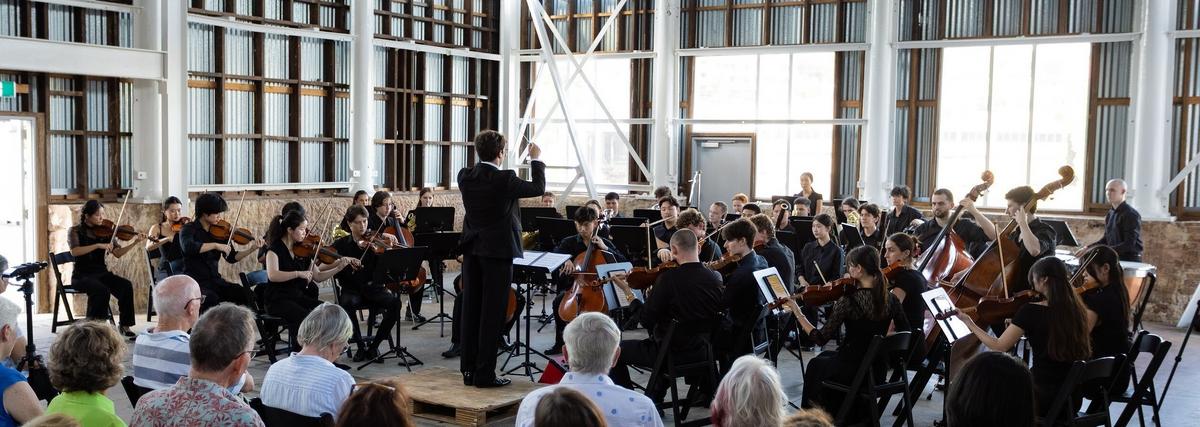
It was an utter joy to experience Sydney Harbour Ensemble perform Beethoven’s Symphony No. 4 and the monumental Emperor Piano Concerto, featuring pianist Joshua Han on Saturday night at the ACO on the Pier.
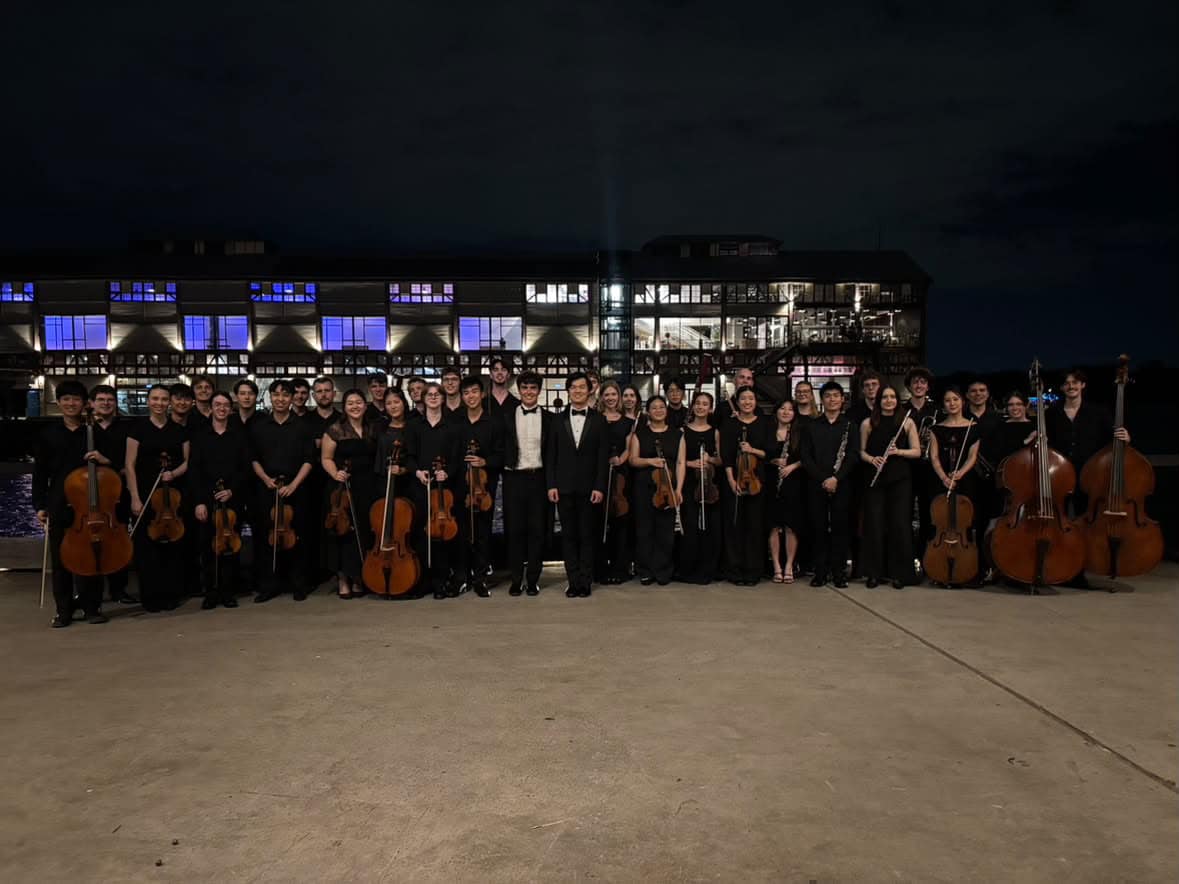
This is Sydney Harbour Ensemble’s third concert in their inaugural year. Their mission is to pair live orchestral music with landmark harbour settings and local history. While focusing on celebrating emerging Sydney talent. This orchestra is certainly packed with talent.
Hearing Beethoven’s Symphony no. 4 in B flat major Opus 60 makes you understand why we still want to hear and play his music today, even though it was composed in 1806, over 200 years ago. Especially when it is played as superbly as it was on Saturday night.
All 36 instrumentalists in the orchestra played with great passion and were strongly connected with each other the entire time. They dazzled with expression, large ranges of dynamics and soared through the very fast passages in the symphony. Their Timpanist, Bryn Wood, has an amazingly expressive face and you could tell he was in his element of utter joy the entire time.
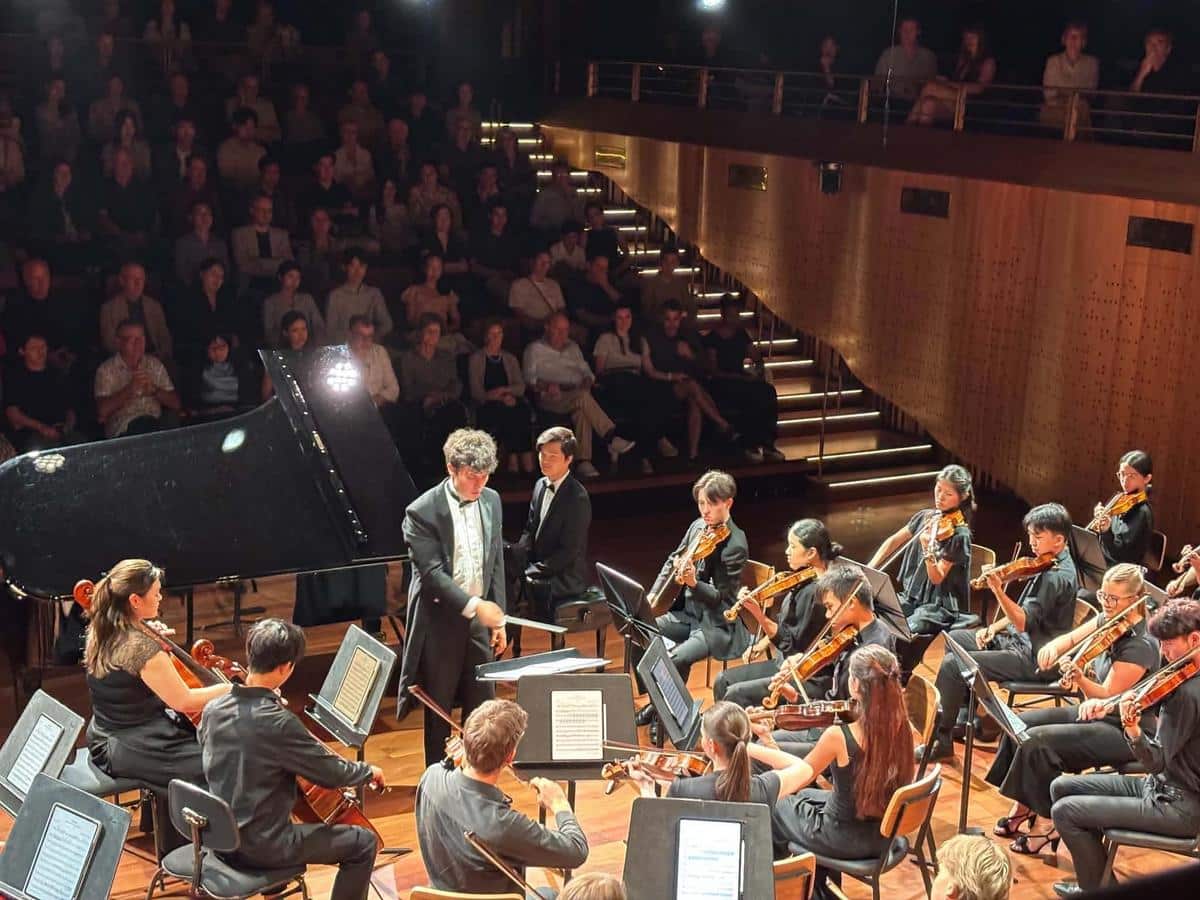
Benjamin Crowe, their artistic director and conductor, held great poise and determination throughout the night. His conducting was very graceful and clear. We felt very safe in his hands… pun intended. I believe he has a big future ahead of him.
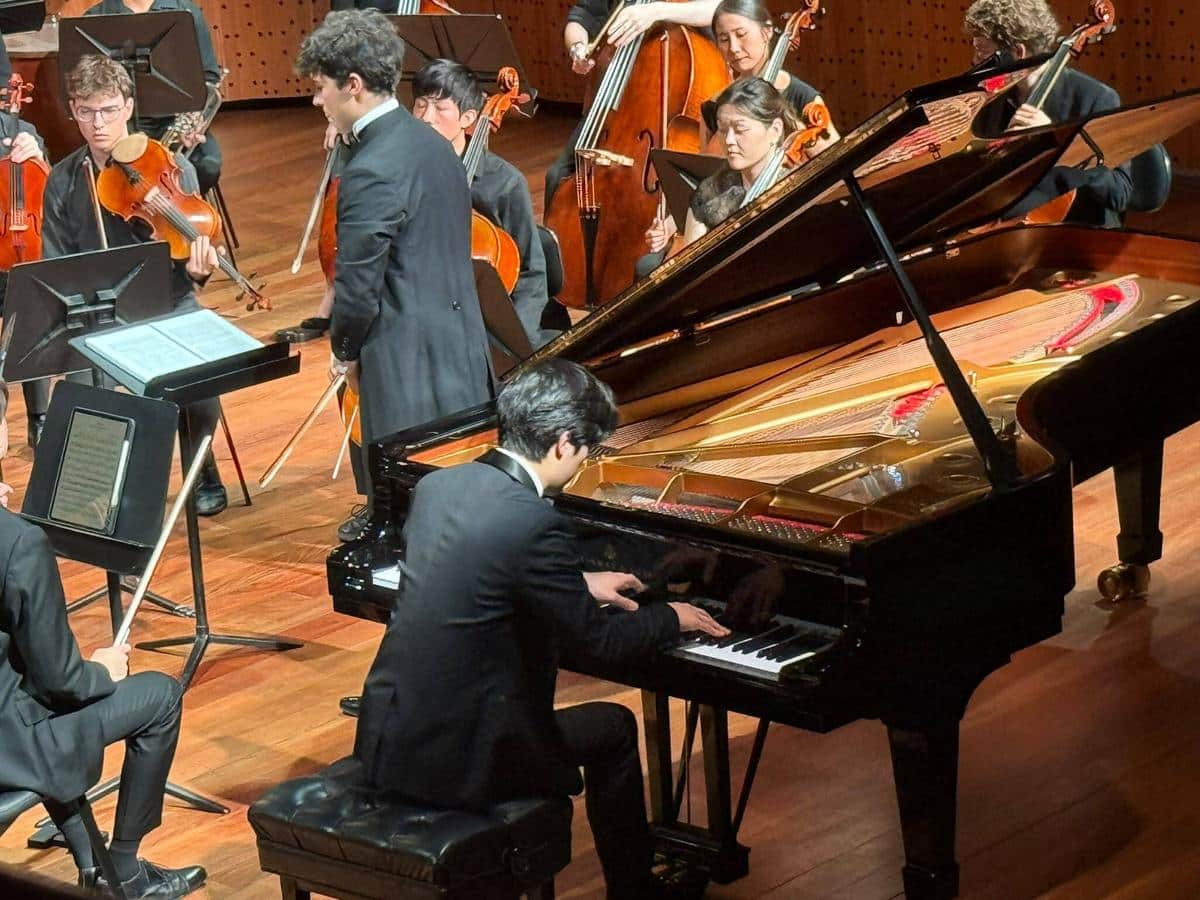
For the second half of the concert, Beethoven’s Emperor Piano Concerto, featuring pianist Joshua Han, was absolutely magical. I could not keep my eyes off Joshua Han the entire time. His fingers gracefully dancing up and down the keys with immense passion. His perfectly quaffed hair moved effortlessly with the music and his face embodied intense emotion that then instantly transferred to fingertips. I am not surprised he has won so many piano competitions locally and internationally. I’m sure there will be many more to come.
The night ended with a well deserved standing ovation by all and we were treated to a beautiful encore by Joshua Han. You could tell all of the orchestral players were just as enamoured by Joshua Han as the audience were. They all looked mesmerised by his playing, now that they were able to watch him for the encore.
I can see many more exciting concerts in this orchestra’s future. I hope they continue to do more of Beethoven’s work as they play them so exquisitely and they have more collaborations with pianist Joshua Han.
Please keep an eye out for more concerts by Sydney Harbour Ensemble, they are not to be missed.
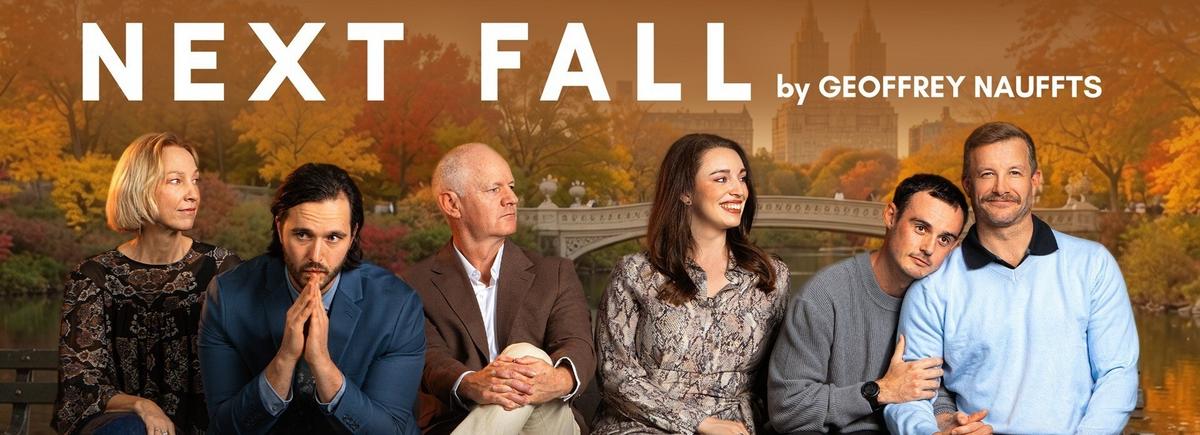
The best plays are ones which sit in my mind, long after the curtain call. The special blend of plays that, the longer they percolate and brew, they deepen. Not only in colour but in depth and substance. This is “Next Fall”, a Boyslikeme Productions play, on now at The Eternity Playhouse in Darlinghurst. Have I really compared “Next Fall” to coffee? Yes, I have – and believe me, I love my coffee strong which is what this play is! “Next Fall”, written by Geoffrey Nauffts, is a layered and emotional piece of theatre and had me thinking not only about the physical aspects of the play, but also about important current themes revolving around love, religion and societal and family expectations.
At the heart of it, is a love story between a couple. Adam and Luke are gay, and they’re in love. If only Life was that harmonious. Set in 2009 in New York City, their relationship unfolds, alternating between the present and flashback scenes of the preceding five years of their relationship. In the opening scene, Holly (Natasha Vickory) and Brandon (Jason Jeffreries) are in a hospital waiting room. They don’t appear to be too familiar or comfortable with each other. Arlene (Sophie
Gregg) enters with a whirlwind of chatter.
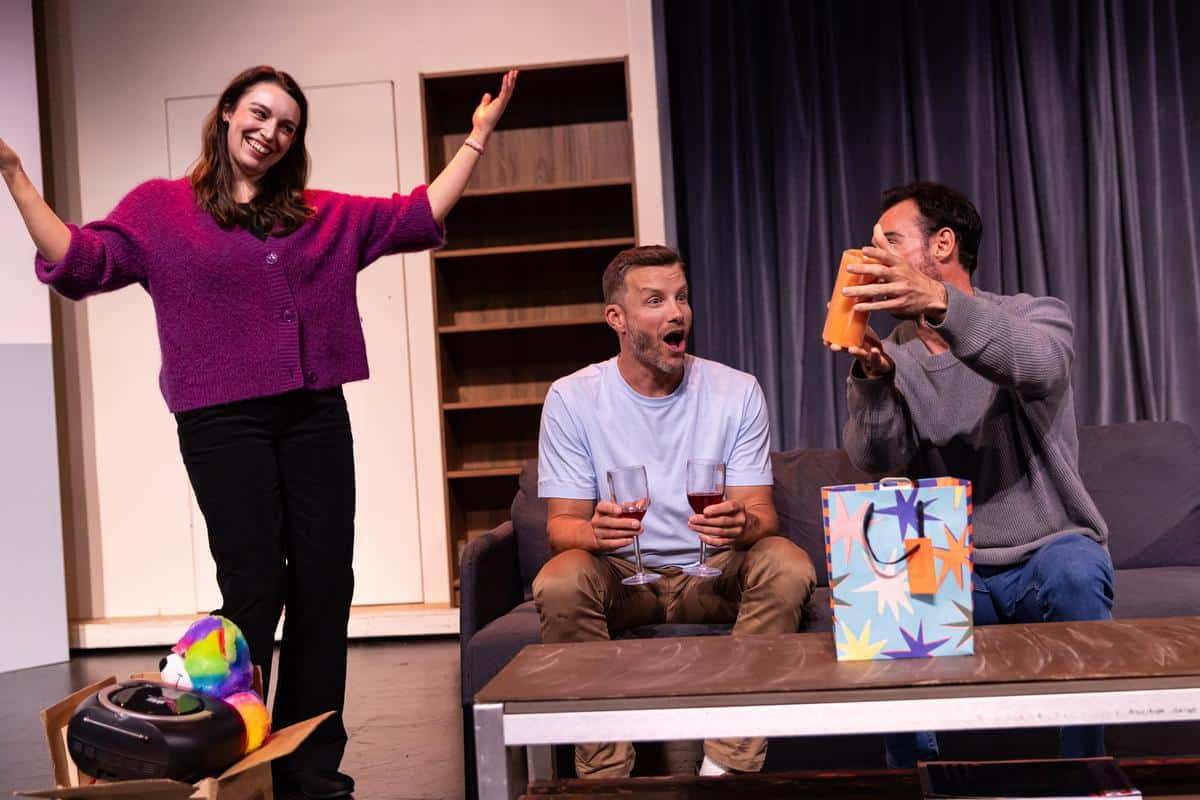
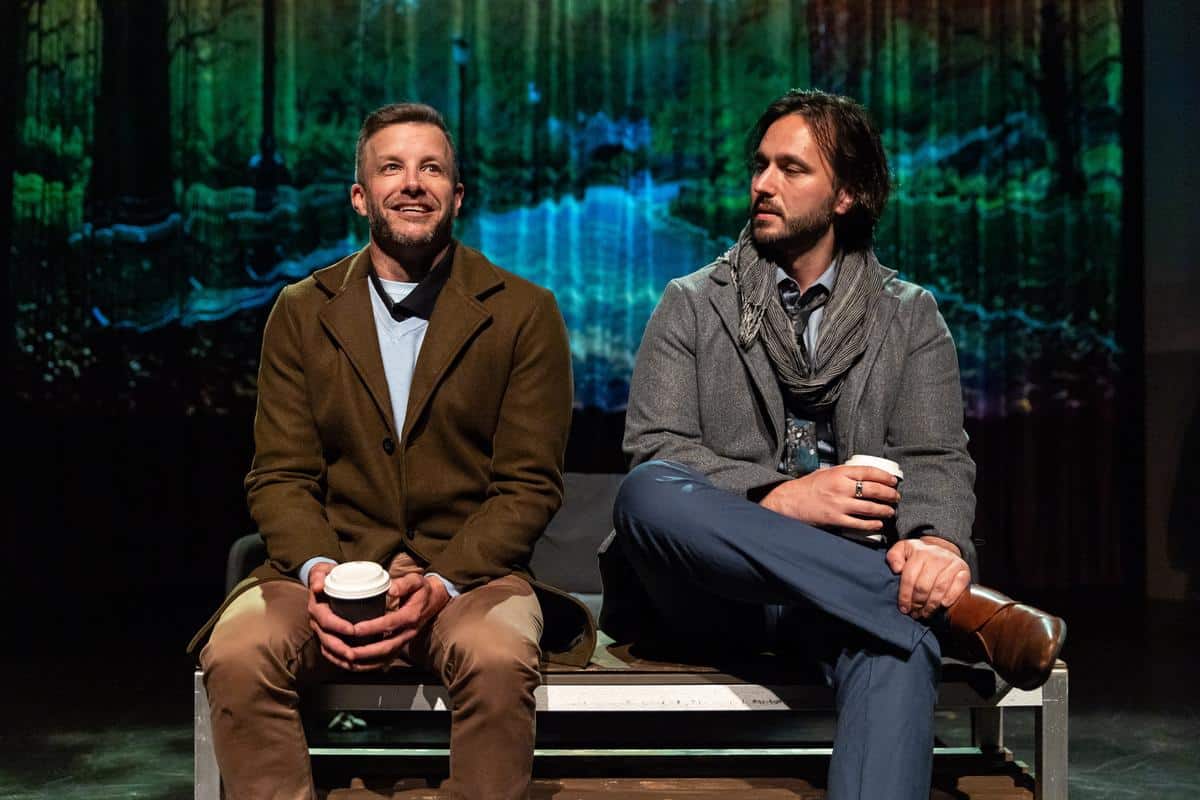
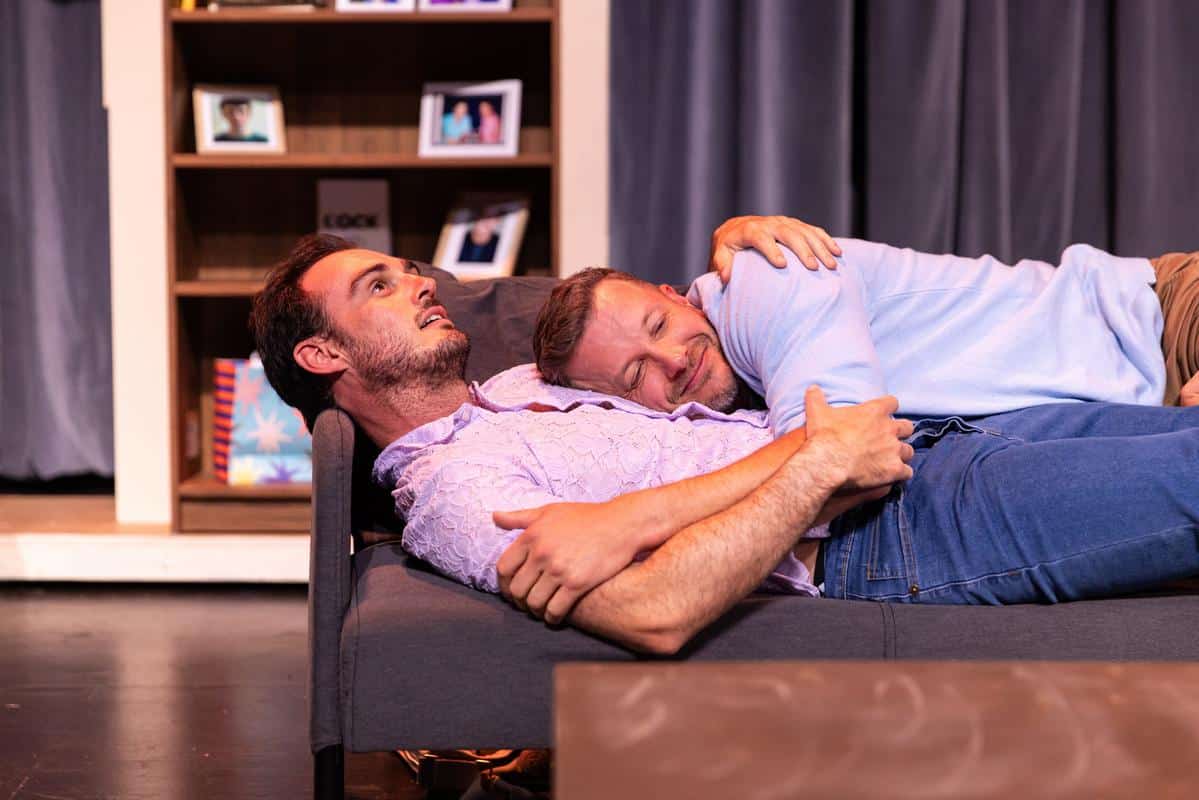
After some time, the audience experiences Adam (Luke Jacobz) and Luke (Conor Fogarty) falling in love, moving in together and their friendship with Holly, a candle shop owner and Adam’s boss. The age gap between the two doesn’t affect them (Adam is older than Luke) but there are two other differences which divide the pair. Luke is deeply religious, and consequently not open and honest with his family about his relationship with Adam. And he is not honest to himself about living his own truth and being comfortable in his own sexuality.
There’s one particular scene which stands out to illustrate this. It’s a simple scene, with Adam and Luke joking around in their apartment. Jacobz and Fogarty show the easiness of their characters, and there is beauty in their connection. They could be any loved up couple in the world. It all crumbles in an instant when Adam, who is agnostic, says one line, delivered by Jacobz with a heartbreaking plea, “I want you to love me more than Him.” The way that Fogarty portrays Luke in the following moment was perfection, and his silence cut like a knife. To me, this was a poignant moment and one which had less to do with sexual orientation, and more to do with faith and upbringing in the church. In any relationship, companionship with religious beliefs will lead to a happily ever after, in the “forever after”.
The play regularly transitions between past and present time periods, the latter in a hospital waiting room. This is indicated by a disconcerting and purposeful electric buzz accompanying a quick flash of light. At times this seemed disjointed and uneven especially after a comedic scene. Kudos to set and lighting designer Casey Moon-Watten for creating this delineation between the past and shocking present.
In scenes where Adam comes face-to-face with Luke’s parents, Arlene and Butch (played by Gerard Carroll), Jacobz’ masterful performance swings between his character being respectful and unsure, to building up to an explosive scene, which stands out as a powerful moment. Carroll delivers a compelling performance as Butch, embodying a stern, traditional man of faith with conviction and a steady dose of homophobia. Another encounter with Butch and Luke deepens the emotional complexity of the story, highlighting Luke’s internal struggle and the bravery required to reveal his true self to his father. The scene poignantly explores the universal theme of seeking parental acceptance and approval, an enduring desire that persists regardless of age.
“Next Fall” skilfully weaves comedic moments throughout the script with witty dialogue lightening the play’s more serious subject matter. The cast embraces this, notably in one scene where Adam finds himself in his apartment alone with Butch. Knowing that Butch is unaware that he is Luke’s partner, yet wanting to be polite and a good host, he offers Butch a cup of tea. The two men end up discussing the ‘dainty’ teacups, with Adam offering a sweetener in the cutest ever honey bear pot. The campness of this scene was golden and had the audience laughing at the clearly uncomfortable Adam.
Producer and Director Darrin Redgate has brought together a talented cast and crew, delivering an insightful blend of drama, humour and pure heartfelt emotion that will leave audiences with a play to remember and think about, long after the curtain falls. “Next Fall” offers a poignant reflection on society’s ongoing struggle for acceptance and harmony. Despite being set 17 years ago, Luke’s reluctance to come out to his parents and the internal pressures he faces within his relationship with Adam, mirror fractures that still exist in today’s social climate. It is both interesting and disheartening for me to see how little progress has been made. I hope that it won’t take another 17 years for society to embrace the true essence of love and kindness, no matter who you are, who you believe in and who you love.
“Next Fall” is unmissable – bring a friend! Season run: 22 October – 7 November 2026 Eternity Playhouse 39 Burton St Darlinghurst Run time: 135 minutes with a 20 minute interval Tickets: www.nextfall.com.au
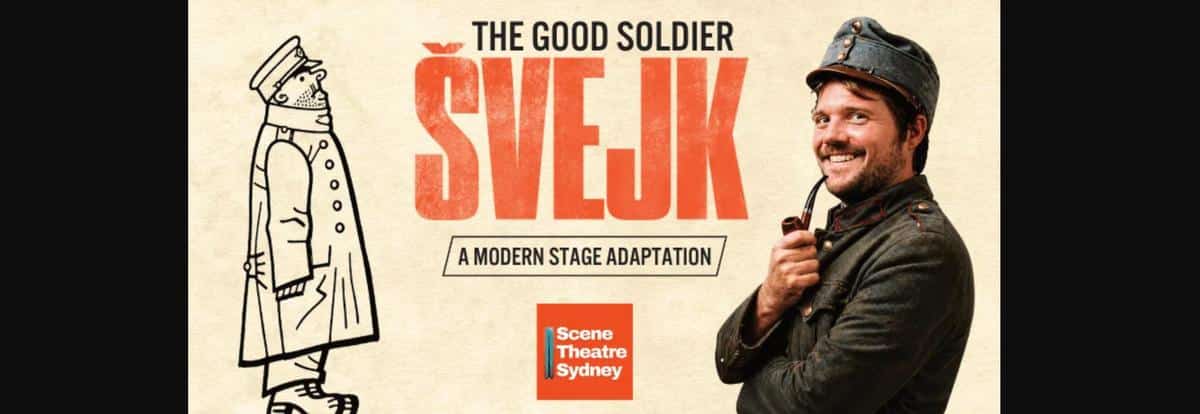
The Castlereagh Boutique Hotel has a fine reputation for producing quirky comedies. ‘The Good Soldier Svejk’, is a brilliant adaptation by Carol Dance of Jaroslav Hasek’s anti-war novel. Hasek was an anarchist, journalist, Bolshevik and satirist. His protagonist, Josef Svejk, a dog-trader, has many topsy-turvy shenanigans, which leaves the audience questioning his true capabilities. Is Svejk merely teasing us with his cheerful, simple-mindedness or is he in fact, a clever operator? Initially, I saw parallels with Private Frank Pike from ‘Dad’s Army’, but Josef is more multi-layered than the caricature-like Pike.
The play opens in 1914, as Franz Ferdinand and his wife have been assassinated in Sarajevo. Enter Josef Svejk who is conscripted by the Austrian Hungarian Army. Josef soon gets thrown in prison and labelled as being insane. Upon release, he complains of debilitating rheumatism and becomes hospitalised. Again, he is released and this time, Svejk finds himself close to the front line. Further misadventures see him captured, under the suspicion of being a Russian deserter (a series of events lead to him wearing a Russian uniform). But the ‘not-so-stupid’ Svejk escapes execution by totally bamboozling his captors.
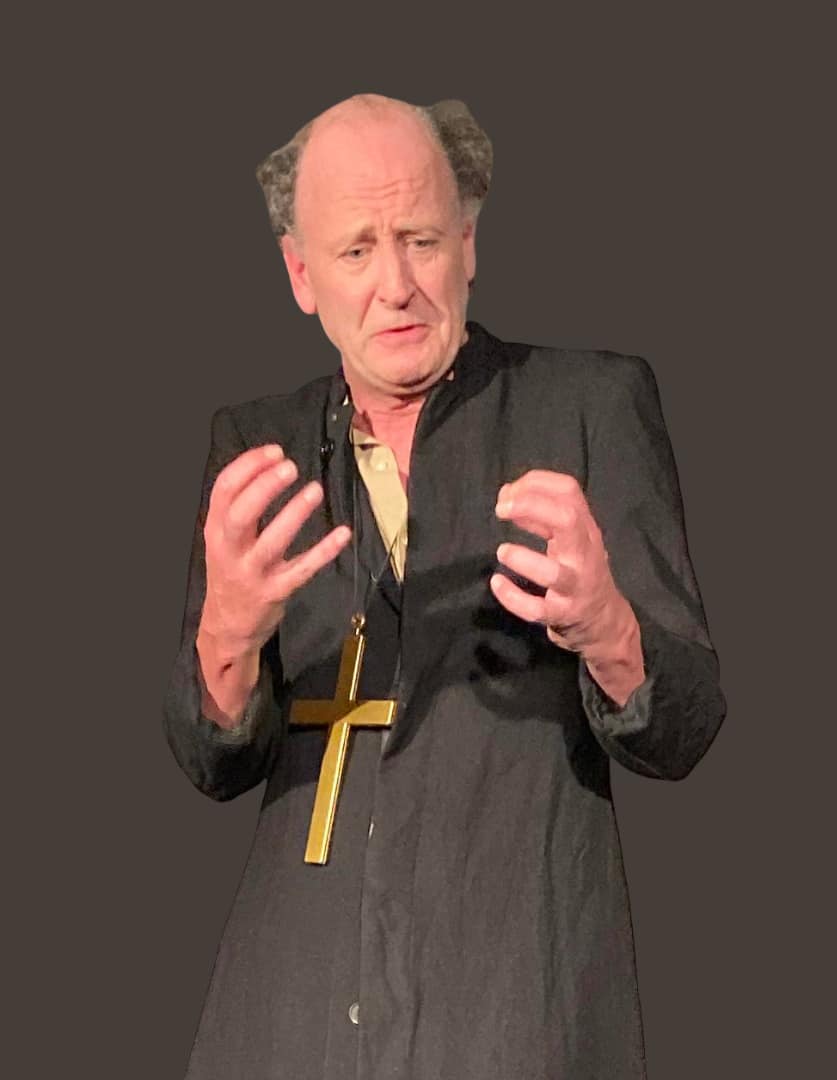
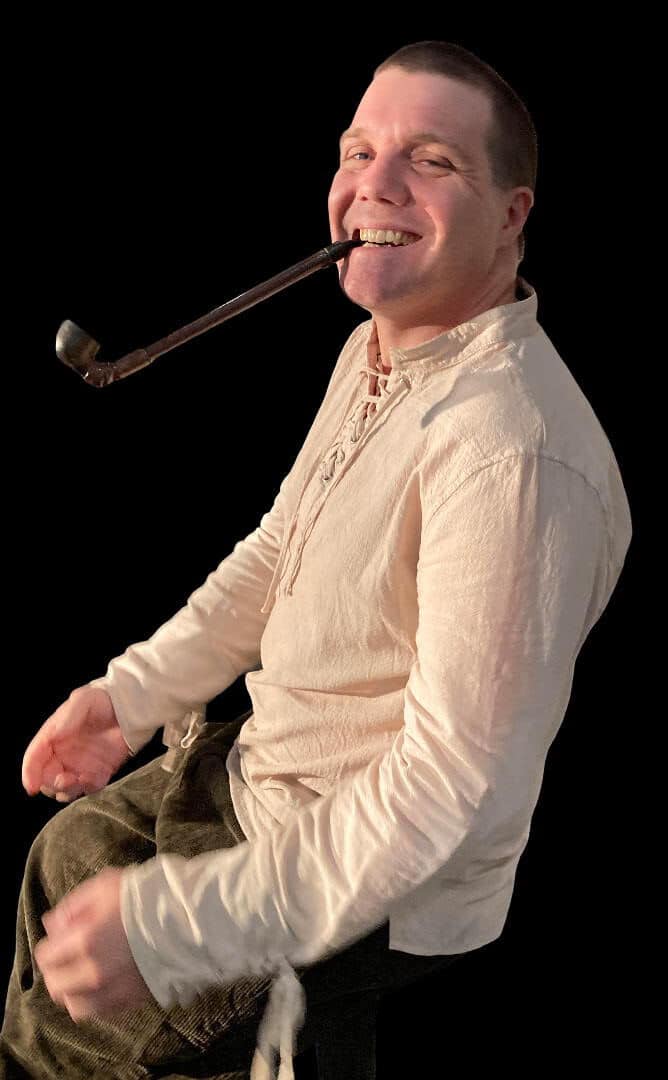
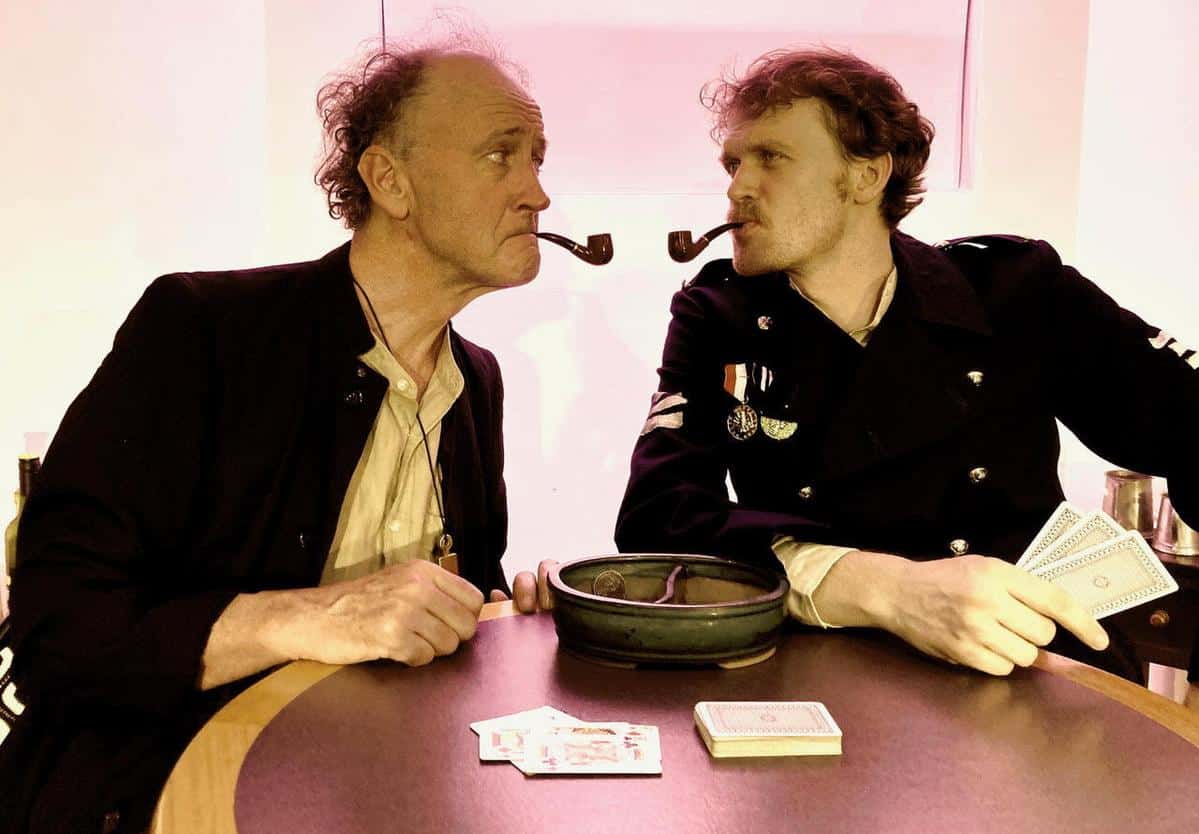
Theo Rule absolutely oozes charisma and playfulness as Josef Svejk. Here’s an actor who knows how to deliver lines with perfect diction. Rule’s voice has the audience entranced. There are lots of witty jokes throughout and Theo gets us giggling. He is joined onstage by Patrick Trumper, who reminds me of Gene Wilder and Ciaran O’Riordan, who turns playing a tongue-out dog, into an art form. Both Trumper and O’Riordan play several roles, each with aplomb. When O’Riordan is not jumping around the stage as a canine, he’s a Doctor, a Lieutenant, A Secret Police Agent and other characters. Trumper also plays many roles, stretching from a Charwoman to a Judge to a Reverend and others. He really enjoys engaging directly with the audience. People in the front row have to be alert! Wigs and costumes get twirled around, as actors come in out of character. It’s such fun to watch.
Towards the end there’s a fabulous dance routine that gets the cast grooving on-stage. This dance, which could be described as Saturday Night Fever meets Pulp Fiction, is choregraphed by Cy Coleman. Applause and again, giggles. Further stretching their acting skills, songs are sung. ‘It’s A Long Way To Tipperary” and “We’ll Meet Again”, are guaranteed to provoke a few tears.
Michele Conyngham has done a wonderful job of directing this hundred-year-old story for Scene Theatre Sydney. Michele has worked extensively in the UK and Australia. I loved how she mingled with the audience afterwards. Nigel Edwards, a world-class composer has added his panache to the production. The Good Soldier Svejk is a Scene Theatre Sydney production. Artistic Director Carol Dance, who introduced the performance, must also receive credit for bringing a truly wonderful independent theatre group into Sydney.
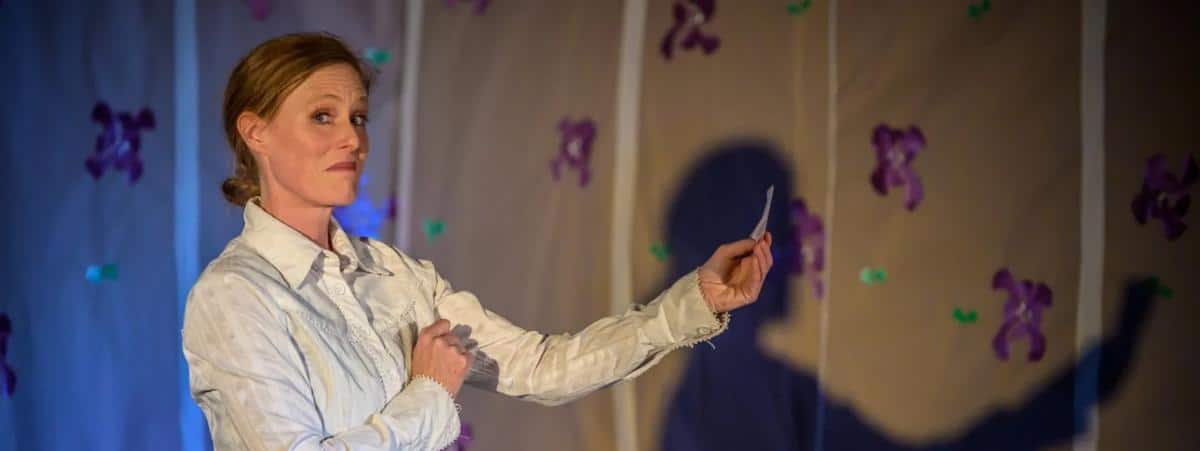
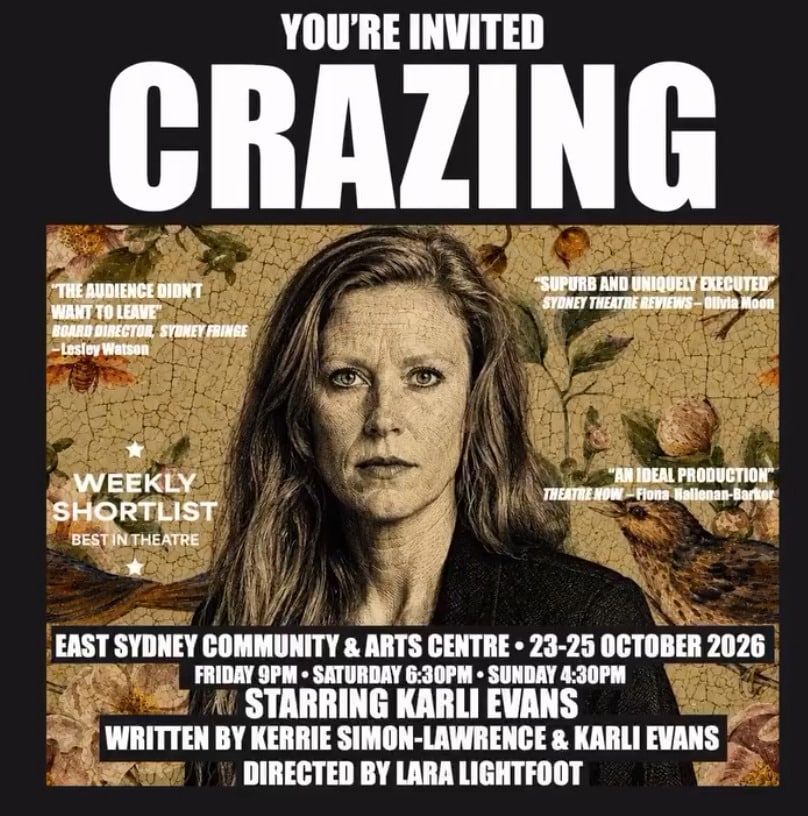
Walking into the theatre space, we heard Helen Reddy’s song booming out, ’oh, yes, I am wise but it’s wisdom more than pain, yes I paid the price but look how much I’ve gained…’ On came Karli Evans initially playing modern Aila Driscoll, a business woman and more macho than the men because it is still a man’s world. Now don’t think this play is only for women, the men in the audience responded instantly recognising the men she was referring to as they have to deal with them as well. However; her character and the following historic female characters presented the physiological and psychological pain of a woman standing up for her rights, ethics, belief and pure love; swimming against the tide and often paying a price.
Oliver Brighton, Tech Director, provided the sound and lighting subtly changing the mood of each character via projection on a scrim. The set, a fading hotel room in the middle of a redevelopment project resisting progress, had torn wallpaper and a basic single bed and chair that provided a refuge for each character. It would cleverly change to reflect different characters and the decor of its era and without giving anything away, clever on-set costume changes reflected the fashion of the time.
Writer and producer Kerrie Simon-Lawrence has crafted an eloquent, humorous and fascinating series of monologues featuring four Australian women from different eras, each grappling with difficult decisions and the social constraints of her time, and directed by Lara Lightfoot. Mary Anne Monroe-Bentley, Molly Fink and Angie Sage are honoured for their stand and place in women’s history and fight for their identity. Karli alters her voice and posture to tell their stories and the audience believed in each change of persona.
With all of that, it is Karli who holds your attention as she switches from being the modern Aila to jump into each of the other women’s characters. The language changed in complexity and emotion and it was a ‘tour de force’ for one actor. She ebbed and flowed as a modern woman frustrated with the business world whilst juggling her attention to her love for her partner as she is challenged with making decisions about work and family.
The characters outline women’s need to make decisions about their bodies, their social status, how to walk through a dark park at night alone and even as a sex worker; why a condom is non-negotiable. The messages are still relevant and the monologue is arresting, emotional and even sometimes wryly humorous. The audience responded and were having discussions as we all exited the theatre. We were left wondering how Aila would manage what her next step might be and her stance as Helen Reddy sang,”I am Woman”.