The Admirable Crichton

The Admirable Crichton

The Admirable Crichton Rating

Click if you liked this article

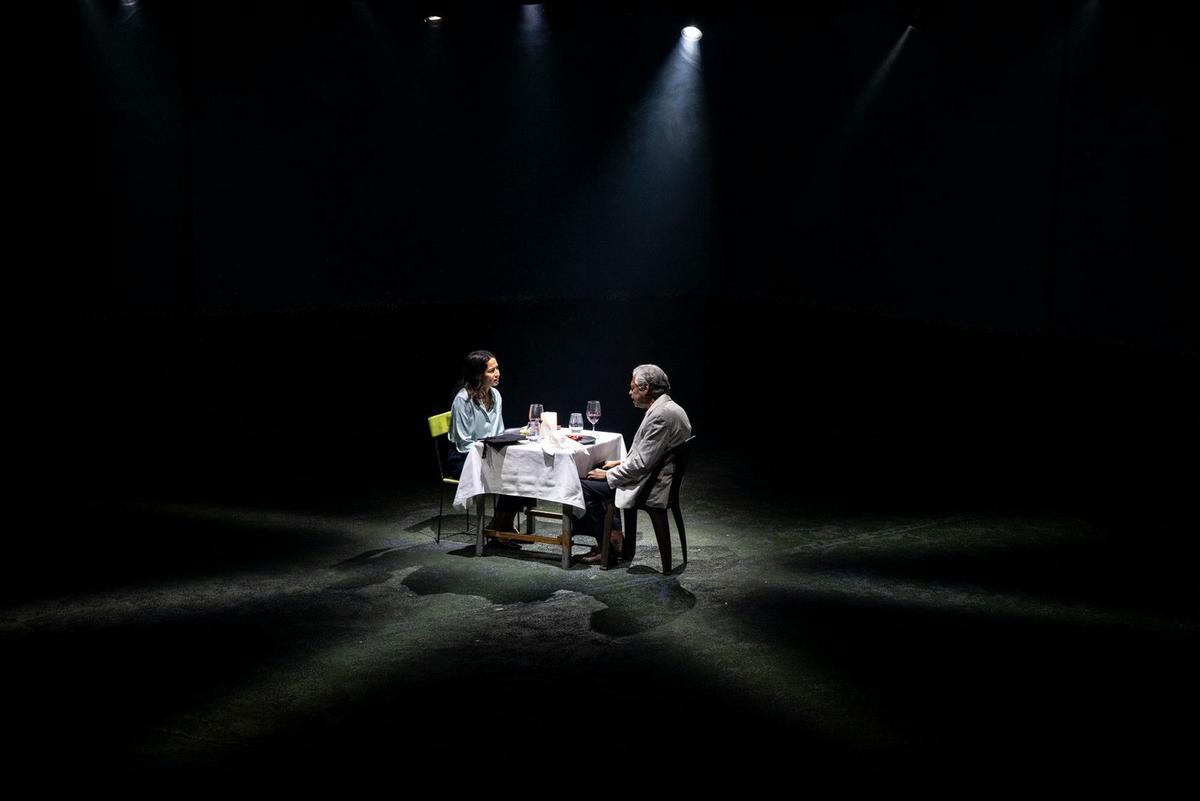
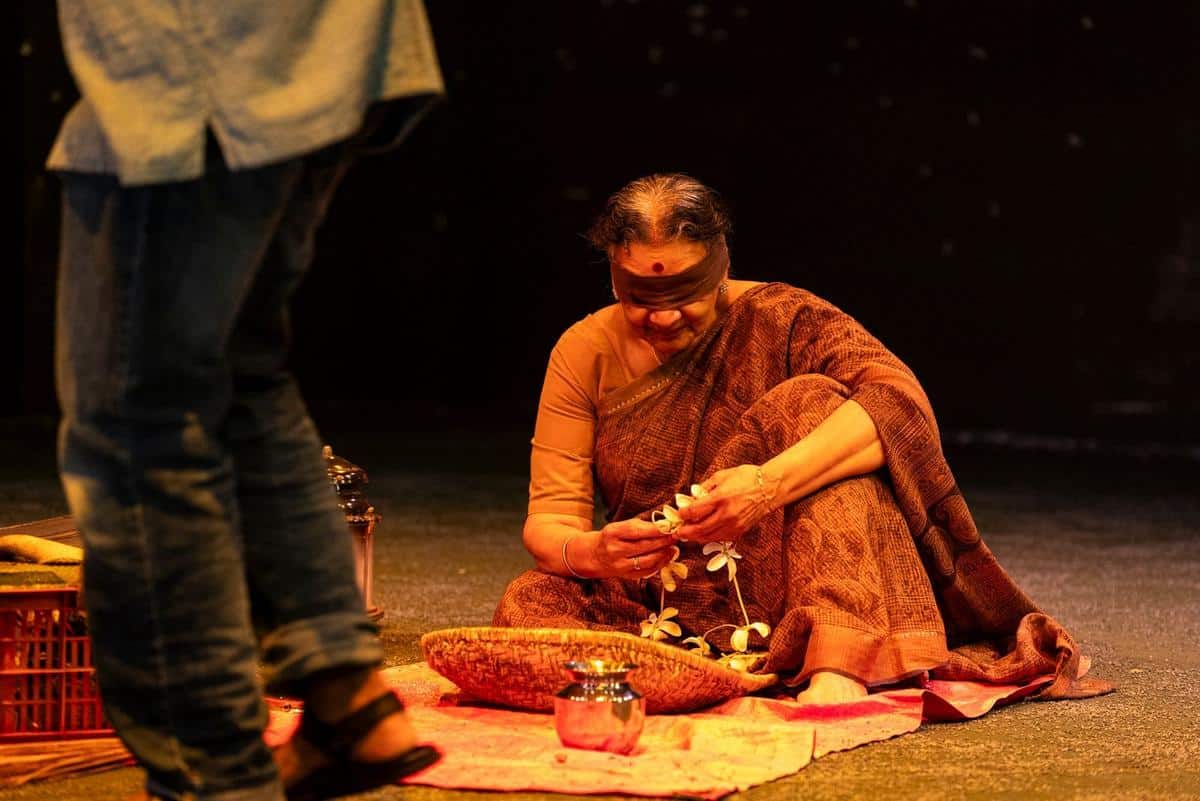
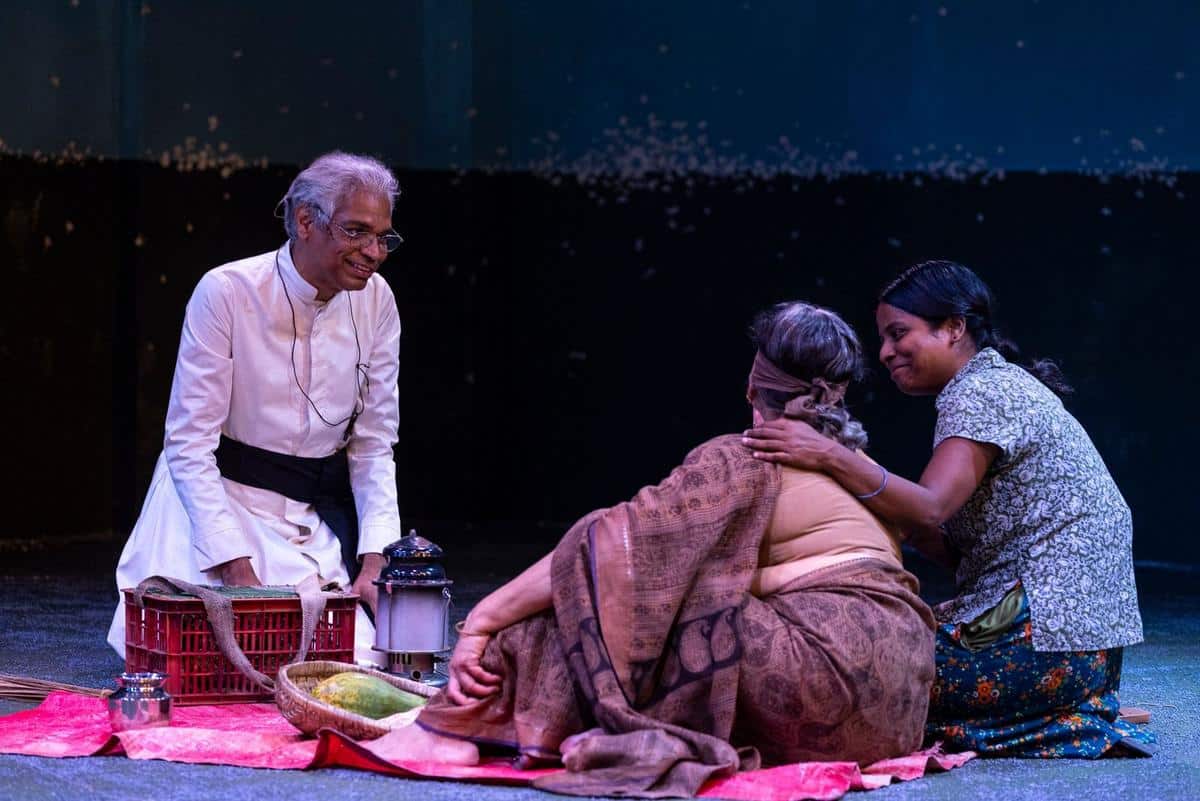
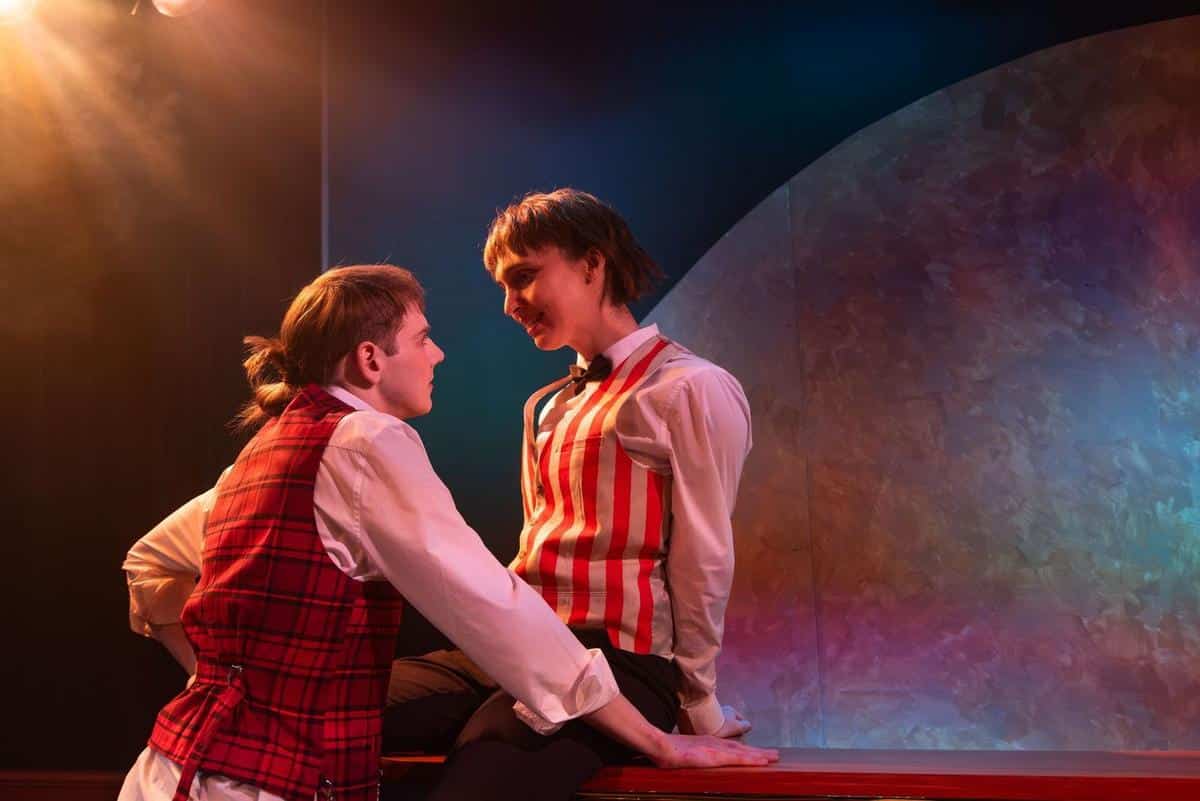
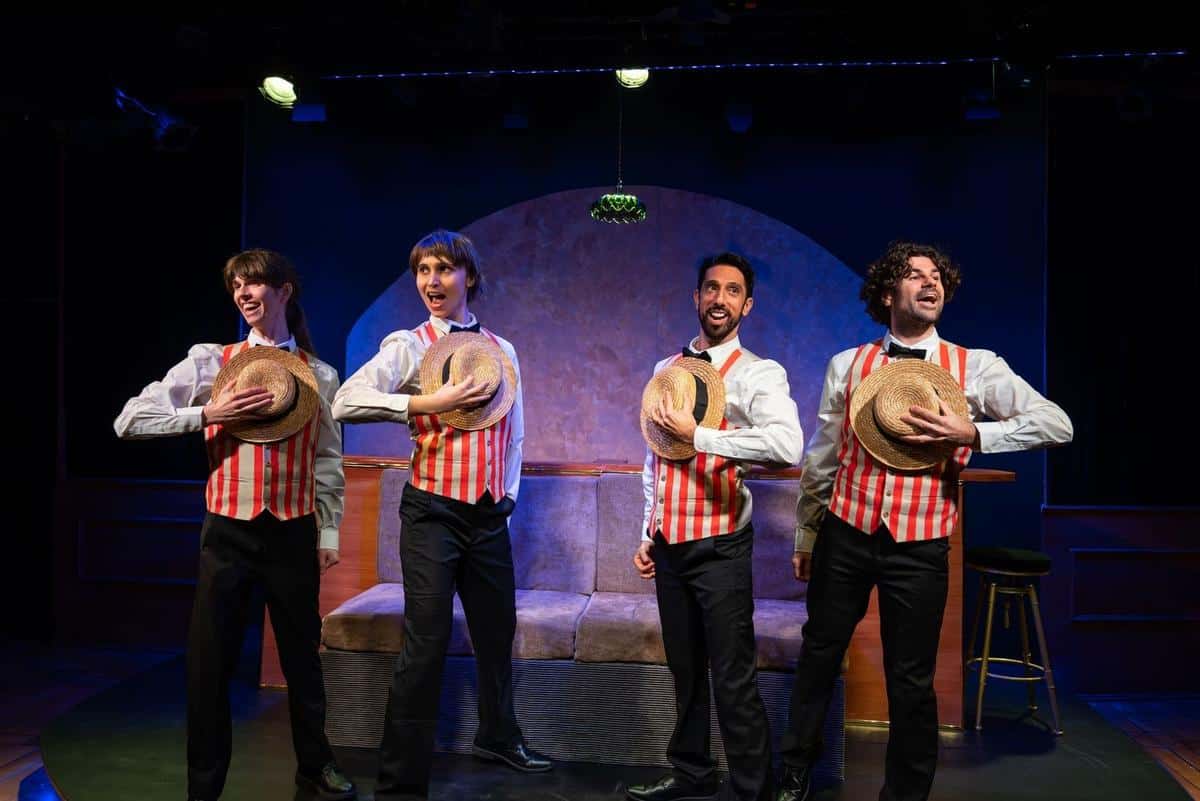
The Admiral Crichton, J.N Barrie’s comedy about social class and division is just as relevant today as it was when first performed in London in 1902, with the 2022 Palm D’or winning film The Triangle of Sadness using Barrie’s story as a framework.

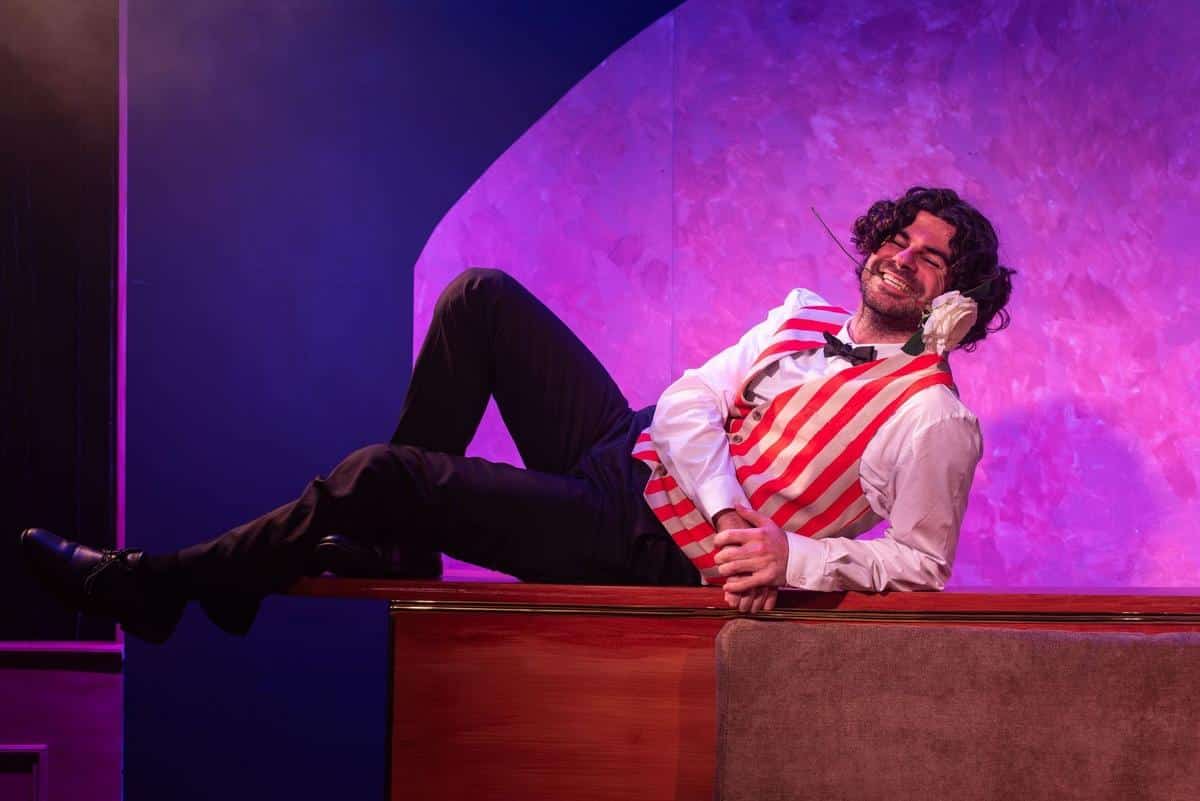
Crichton, played by Andrew Eddey, is the loyal butler to the Earl of Loam (Timothy Bennett), who doesn’t believe in the natural order of class divisions. His fellow aristocrats are embarrassed by his monthly tea parties where servants are treated as equals. Despite the ideology of his socially progressive master, Crichton himself believes that class and rank are the natural conditions of civilisation. When the Loam family along with two of their servants take a pleasure cruise, they find themselves wrecked on a tropical island, where natural capacity towards survival changes the rank of each person in the group. The resourceful and handy Crichton finds himself at the top of the new social order, leading to a range of moral and ethical choices amongst the castaways. You can see where Gilligan’s Island got their ideas from, like being able to build some of the modern luxuries of civilisation out of coconuts and driftwood.


The staging was great, with each environment brought to life by the set design and construction team. All the technical details such as sound and lighting were also superb, so the backstage team did a commendable job to support the performers. The direction by Steven Hopley was strong, bringing the story to life with a natural sense of timing, but I found that some of the humour was lost in the desire to use appropriate accents. The choice of delivery for some of the dialogue was also a little confusing at times, but that could just be a matter of taste. The performers still did a great job with each character. They were all well cast and seemed to be having lots of fun on stage. Andrew Eddy played the eponymous Crichton with an air of calm intelligence and dignity befitting a dedicated butler, while Timothy Bennett perfectly embodied the endearing, socialist-leaning Lord Loam. While I liked all the cast, the particular standouts for me were Amy Tustian as Lady Mary, one of Lord Loam’s three aristocratic daughters who becomes Crichton’s island fling, and Isabelle Serafim, playing the maid Tweeny.

The story has now been explored in all sorts of productions since it was first performed, and while the topic is no longer new or controversial, it’s still a fun evening at the theatre with some great performances and light-hearted comedy that carries with it a message we shouldn’t forget.

The Admirable Crichton is currently playing at the Genesian Theatre in Rozelle until the 16th of May.

To book tickets to The Admirable Crichton, please visit https://genesiantheatre.com.au/events/the-admirable-crichton/.

Spread the word on your favourite platform!

Bags Packed But Nowhere To Hide: Away At The Theatre On Chester

Away by Michael Gow

Away by Michael Gow Rating

Click if you liked this article

5

At the Theatre on Chester, the space itself becomes part of the storytelling. Its cosy intimacy draws the audience in, dissolving the boundary between stage and seats and creating a sense of shared experience that suits Michael Gow’s Away very nicely. Under the sensitive direction of Carla Moore, this is a production that leans fully into the emotional closeness the venue affords.

Away is an easy story to be pulled into, not because it is simple, but because it is so recognisably human. Across three families, Gow’s play explores grief, loss, and the ways we lay both love and burden upon each other.

A simple but effective set – dominated by a cleverly realistic mobile tree – leaves the way clear for attention to focus on a strong cast. The opening scene features the closing moments of a school performance of A Midsummer Night’s Dream – the dancers moving with an endearingly clumsy grace – followed by a sweet exchange between two awkward teens, Tom and Meg. Tom (Lucas Dockrill), clearly has a crush on Meg (Tara Bishop), and is every bit as smooth and graceful about expressing it as you would expect from a teenage boy. It all seems to be going well though, until the parents arrive.

Meg’s parents, Gwen and Jim, are decidedly underwhelmed, driven by Gwen’s apparent determination to seek and find fault at every given opportunity. It’s quickly evident that that the female leads will dominate in this production, with Anna Desjardins doing a wonderful job of portraying the state of barely contained rage and resentment that Gwen seems to live in. The spikey, confrontational energy held in her tight body and twitching hands is at times uncomfortable to sit with, but tremendously effective. Beside this, the apologetically shuffling Jim (Cam Ralph), whose sole mission seems to be to appease his wife – there’s clearly love there, as well as some level of understanding – is somewhat overshadowed.

By contrast, Tom’s parents Harry (Ian Boland) and Vic (Tracey Okeby Lucan) are warm and effusive, evident pride spilling over as they greet their son. A little too effusive, maybe? It’s one of the many threads that weave together to explain motivations, but not for a while.


The scene (and many subsequent scenes) is stolen though, by Karen Pattinson as Coral, the wife of headmaster Roy (Martin Bell). Coral drifts on the edges of scenes like a ghost; there but not there. Roy and Coral lost their son in the Vietnam war, and Coral now alternates between complete dissociation and a series of somewhat ghastly attempts to put a socially acceptable mask on at the urging of her husband, who just wants to move on with life with the woman he used to know. She succeeds, at moments, to look and act somewhat normally, but you can see the effort trembling at the edges of her face before she drifts back into her own world of pain.

Rounding out the stable of strong female leads, Tara Bishop plays Meg with quiet restraint. Meg is chafing at the bonds of expectation that tie her to her mother’s happiness – or rather, lack of it – and the moments where she starts to pull away and challenge the situation land with the subtle authority of a much older actor. She’s one to watch going forward.

Lucas Dockrill’s Tom is worth mentioning as similarly grounded, offering a portrayal of genuine sweetness and vulnerability. His openness is engaging, though there are moments where emotional beats are pushed too quickly, slightly undercutting the character’s natural awkwardness.

Although the premise of the play is that all three families are going away for a holiday over Christmas, the theme of… awayness, for lack of a better word, permeates through every character. Gwen flees into anger to avoid confronting the trauma of her past; Meg longs to escape the crushing responsibility for her mother’s happiness; Roy seeks distance from grief in the pursuit of normality; while Coral retreats into dissociation or fantasy to escape her pain. For the remaining characters, separation of another kind hovers – but I’ll leave the audience to discover that for themselves.

For all its emotional weight, the production is far from relentlessly bleak. A distinctly Australian humour surfaces throughout, with Oscar Baird deserving a special mention for his energetic multi-role performance, including a memorable and unexpectedly arresting banjo solo during the campsite talent show.

As its threads converge, Away ultimately reveals itself as a story not just about leaving, but about coming home – to connection, empathy, and shared understanding. It’s a quietly affecting journey, and a production well worth experiencing.

Season: April 10 – May 2
Buy tickets via: https://www.ticketor.com/theatreonchester/default#buy

To book tickets to Away by Michael Gow , please visit https://www.ticketor.com/theatreonchester/default#buy.

Spread the word on your favourite platform!

About The Production – Three Sisters

Feature-Three Sisters

We recently sat down with the talented cast and crew behind the upcoming production of Three Sisters. This adaptation of Anton Chekhov’s masterpiece captures all the comedic, tragic, and bittersweet moments of life. Meet the ensemble who are pouring their hearts into making this timeless tale resonate as deeply today as it did over a century ago.

About Three Sisters

What is this Production about?

After the death of their parents, something essential is lost in the lives of the Prozorov sisters – direction, purpose, and hope. In a small provincial Russian town, their days pass quietly, filled with memory, longing, and unspoken desire; Irina longs to work and lead a life of independence. The fiery Masha is married to the sweet but unpassionate Kulygin, and privately burns for excitement. And Olga, the eldest, intelligent and loyal, has found herself living a life of subservience; she gives, and gives, and gives. All three look to Moscow as a symbol of the happiness they believe awaits them somewhere along the horizon – their lost paradise. 

In Three Sisters, life unfolds between what is and what might have been. In this fragile space, faith, hope, and love rise like quiet prayers. The balance between laughter and tears is delicate; people talk with the deepest regrets while pouring tea, and dream of better futures while tripping over their own feet. 

Written with humour, nostalgia, and deep compassion, Chekhov’s masterpiece tells a story of the passage of time and the persistence of hope. These characters are not distant figures from another time – they are us today, with all our joy, fear, desperation, desire, loneliness, and silence.

What’s challenging about bringing this script to life?

It’s quite the undertaking for our little company! We are working with the largest cast we’ve had thus far (11 people), using improvisation and Stanislavsky exercises to introduce freedom of movement and spontaneity while also being conscious of the size of the Old Fitz. Our director has carefully cast each of the characters, so we are in that stage of the rehearsal process where we are bringing detail and specificity to our performances whilst also remaining open to one another and trusting such a large ensemble to deliver a stellar piece of work. After all, this is a play that has no leading characters – we are each just a small piece in the grand picture of this play.

Toby

What sort of person is going to love this show?

Those who love Chekhov, and hopefully those who don’t! Every writer has a style and ethos. We hope to create a whole new following of his plays and stage it in a way we believe hasn’t quite been done yet. His unique humour and persistence in the face of adversity is a story that rings true even now – especially now. It’s easy to fall into the trap of making his plays dramatic and serious, but when has life been only that? Our aim is to show it all – from the tragic, to the comedic, to the in-between sweetness where our lives often sit. As one of our characters says: ‘Je suis content. Je suis content.”

What will the audience be thinking about in the car as they drive home after this show?

Hopefully, they’ll be thinking of themselves and who they’re going home to. ‘Three Sisters’ is as relatable now as it was then, 125 years ago. We want the people in the audience to see in each of our characters someone they’ve loved, someone they’ve lost – someone familiar, someone that’s just like them. How much has our need for family and kinship really changed since this play was first staged in 1901?

Another important facet of this family is that they are dreamers. “We will go to Moscow”, “Brother will become a professor”, “I shall work”, “I will be happy”. But, as the story progresses, how many of these beliefs manifest? This is as much of a cautionary tale as it is a family drama. At the risk of sounding cliché, people should leave the theatre thinking “This is my dream. And I MUST achieve it”. Don’t wait like they did. Don’t let life happen to you. What do you want out of your story? At the very least, it should revitalise you, make you want to be a good person.

No pressure.

Call someone out by name: who must come see this production?

Joel Edgerton!!!

As a collective of young, aspiring actors and creatives, his story keeps inspiring us to put out work we want to see on the big and small stages across Sydney and beyond (and the big screen too, one day). The greatest gift we have as a small company is working with each other, surrounding ourselves with like-minded and brave artists. People who have something to say. Likewise, his and his friends’ drive to produce work they believe in and to share stories that perhaps aren’t told very often echoes in our philosophy as well.

And his work! Most notably, his recent feature ‘Train Dreams’ is one we were all moved by. It’s something that immediately draws you in, creating an atmosphere that earns its sprawling moments of silence and tension. It’s about a simple man in a simpler time, with simple ambitions of starting a family and working.

Sound familiar?

Where can patrons purchase tickets to this production?

To book tickets to Three Sisters, please visit https://www.lastwaltzproductions.com/three-sisters.

Thank you so much for sharing your insights today. Break a leg; we are looking forward to Three Sisters filling the Old Fitz with laughter, tears, and plenty to reflect on in the quiet moments of life.

Other production interviews can be viewed in our About The Production Series.

Spread the word on your favourite platform!

Perfect. A Triumph For Easter Weekend

St John Passion

St John Passion Rating

Click if you liked this article

8

75 years ago, the director and Chief Conductor of Sydney Symphony Orchestra was the renowned Eugene Goossens.

Goossens conducted concerts in the Sydney Town Hall, but he had a loftier goal: a grand concert hall at the heart of the city. Goossens lobbied relentlessly, campaigning for a world-class venue. It was his vision that led directly to the creation of the Sydney Opera House.

I imagined the ghost of Goossens, looking down from the gods, in the Sydney Opera House Concert Hall, as Brett Weymark conducted Sydney Philharmonia’s Symphony Chorus and Baroque Orchestra in Bach’s St John Passion.

Brett Weymark championed classical music in Australia long before he was appointed Artistic & Musical Director of Sydney Philharmonia Choirs. His devotion was honoured in 2021, when he was awarded the Medal of the Order of Australia for services to the performing arts through music.

You may have heard Weymark’s work but never known it. He was the conductor for the movie scores of ‘Happy Feet’ and ‘Mad Max: Fury Road.’

Eugene Goossens fled Australia, mired in a sex and occult scandal that ruined his reputation and destroyed is career. Thankfully, Brett Weymark’s reputation as one of Australia’s foremost conductors continues to grow from strength to strength. This year’s Bach’s St John Passion is his latest triumph.

One of the great joys of life is connecting with others through music. Singing in a choir, surrounded by other voices is a magnificent visceral experience.


Do you sing bass or tenor? Sydney Philharmonia Choirs are currently looking for more basses and tenors.

The Acknowledgement of Country was ‘Tarimi Nulay: Long Time Living Here’ by Yorta Yorta composer Deborah Cheetham Fraillon, translated into Gadigal by Matthew Doyle. This work is hauntingly beautiful.

Language is important, and fortunately for those who speak neither Gadigal nor German, programmes were available online and in hard copy. Following the dialogue is key to fully understanding St John Passion. It highlights the callousness of Jesus’s persecutors, and the genius of Bach, hearing the music bouncing with glee as the chorus humiliates Him on the journey to the crucifixion.

The soloists within this oratorio played their respective roles to perfection.

Timothy Reynolds tenor rang through the concert hall as he narrated the action as the Evangelist. Christopher Richardson took the baritone role of Jesus with reverence. Andrew O’Connor portrayed the stress of Pilate dealing with the enraged mob.

Penelope Mills (soprano), Ashlyn Tymms (mezzo-soprano) and Michael Petruccelli’s (tenor) arias shone.

Bach wove together passages from the Gospel of John, extracts from the Gospel of Matthew, Lutheran Chorales, and his own arias based on poetry from contemporary Passion librettos.

Hearing the Sydney Philharmonia’s Symphony Chorus sing Bach’s Passion is a wondrous experience. Every member of the choirs and each player in the Baroque Orchestra is to be commended and congratulated.

A public service announcement: addressed to the lady that stomped in late during Part 1, in what sounded like wooden clogs. She was roundly shushed and hissed for disturbing the audience as she clumped to Box C. If you are delayed and running late, the least you can do is take off your heels / tap shoes / boots and tiptoe quietly to your seat.

St John Passion was a beautiful, liminal performance, created by world-class artists.

To book tickets to St John Passion, please visit https://www.sydneyphilharmonia.com.au/events/bachs-st-john-passion/.

Photographer: Keith Saunders

Spread the word on your favourite platform!