ÁRRU

Hurtigruten Nordic Film Festival Opening Night Reception And Premiere Screening of ÁRRU

Hurtigruten Nordic Film Festival Opening Night Reception And Premiere Screening of ÁRRU Rating

Click if you liked this article

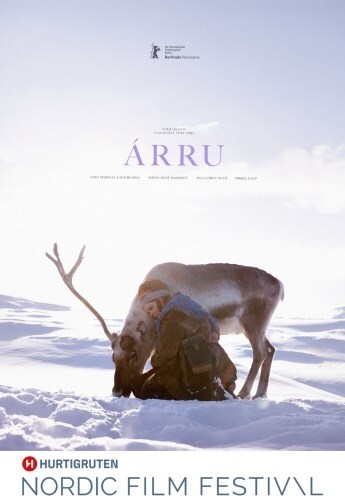
What happens when the person you rely on to save almost everything you know and love also turns out to be a monster? Can you walk away? How do you negotiate the constant challenges to life and culture? Do the young want to carry on the flame? These are some of the core questions in Árru, Elle Sofe Sara’s striking debut feature focusing on the lives and culture of the Sami people that inhabit the Sápmi region of Norway, Sweden, and Finland. What better film to represent the unified yet separate cultures showcased at the 2026 Nordic Film Festival.

Using a mixture of genre styles, from surreal cinema, family drama, to musical, Árru starts in white snows of winter covering a vast, almost empty landscape. After the bloody miscarriage of a reindeer, traditional herder Maia (Sara Mariell Gaup Beaska) buries the tiny body in the snow. Together with her brother Danel (Simon Issát Marainen) and daughter Ailin (Ayla Garen Nutti), they continue the rustic life of the Sami, tending to their reindeer, killing and butchering them for meat and clothing. After the snow retreats for summer, the vast grasslands of summer form the backdrop of the narrative drama. We learn that a mining conglomerate is planning to build a large copper mine, reducing the grazing land available. This will force a mass culling of the reindeer and with it the destruction of Maia’s livelihood and her way of life.
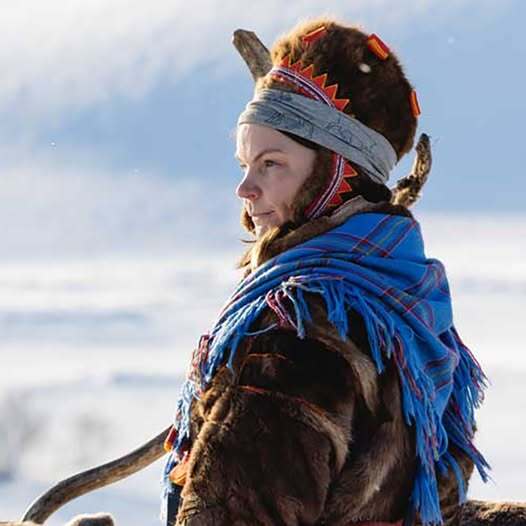


Leading the fight is Maia’s charismatic lawyer brother Lemme (Mikkel Gaup), who successfully campaigned against a similar situation in Canada. As he rallies the community through protest and song, Maia and Danel remain wary around Lemme. This reluctance to embrace their possibly saviour and Lemme’s grip of power over his family and the town threatens Maia’s relationship with Ailin, one of his strongest advocates. The film then slowly reveals Lemme’s real character. First, Ailin discovers that Lemme is not as trustworthy as she first believed, and then a drunken confession by Danel at a celebration of culture reveals a dark past that shatters the community. They need Lemme to save their way of life, but can they still allow him to live amongst them.

Sara uses music and song throughout to connect Maia with her ancestors and home, and is clearly an important life of Sami culture. Musical numbers sometimes break the dramatic flow of the film, but remaining beautiful and interesting. During one of the protests, however, traditional song turns into a music video style dance number that seemed like an odd stylistic choice and a bold contrast to the grounded realism of the drama. But that wasn’t enough to pull me out. The performances were authentic and powerful, especially Simon Issát Marainen, who at first seemed brooding and surly but then when we discover why, draws from us empathy and understanding. And while the dramatic narrative forms the core structure of the film and provides plenty of intrigue and conflict, the most appealing part of the film for me was just spending time with the last remaining indigenous group in Europe.

Árru can be seen as part of the Nordic film festival playing nation wide at Palace Cinemas.

To book tickets to Hurtigruten Nordic Film Festival Opening Night Reception And Premiere Screening of ÁRRU, please visit https://nordicfilmfestival.com.au/films/nor26-arru.
Spread the word on your favourite platform!

The Last Resort

The Last Resort (Paradis)

The Last Resort (Paradis) Rating

Click if you liked this article

1

There is a distinct, intoxicating alchemy to a film festival. To step into a dark theater is to willingly surrender your worldview, trading it for another culture’s lens, another creator’s gaze. This sense of cinematic discovery was palpable at Sydney’s Nordic Film Festival preview of ‘The Last Resort’ (originally titled ‘Paradis’). Directed by Maria Sødahl, this Danish-Norwegian tour de force arrives with the heavy prestige of the Göteborg Film Festival’s 2026 Dragon Award for Best Nordic Film—an honor that, by the time the house lights rise, feels profoundly earned.

On its shimmering surface, Sødahl’s narrative opens as a postcard of contemporary European leisure. We follow a seemingly picture-perfect Danish family as they descend upon an all-inclusive resort in Gran Canaria. The scenery is predictably intoxicating: a sun-drenched coast, an oasis of luxury, and the effortless hospitality of an island sanctuary.

Yet, as the title implies, this “paradise” is a beautifully constructed trap.

With surgical precision, Sødahl peels back the glossy veneer of tourism to expose a rot of socio-political tension. What begins as an intimate holiday drama gradually develops into a razor-sharp psychological and ethical dissection of Western privilege, complicity, and the quiet violence of denial.


The film’s emotional spine rests on the formidable shoulders of Mikkel (Espen Smed, ‘A Fortunate Man’) and Louise (Danica Ćurčić, ‘Unruly’). Both deliver masterclasses in restraint. Initially, they are the archetype of a stable, affluent modern couple. But as the narrative collides with the brutal reality of a local refugee crisis, Smed and Ćurčić brilliantly map the hairline fractures spreading across their characters’ relationship, forcing them—and us—to confront the boundaries of their comfortable empathy.

It is here that ‘The Last Resort’ delivers its most devastating critique, aiming its lens directly at the hypocrisy of modern “performative morality.” Mikkel and Louise at first glance are extremely compassionate and socially aware, yet, when faced with real-life consequences, their actions pivot toward self-protection. Sødahl creates an uncomfortable tension between who these characters *think* they are and what they are actually willing to do when their comfort is leveraged.

In a brilliant narrative counterweight, the children, Sille and Ella, offer a quiet, heartbreaking contrast to the adults. In their uncorrupted gaze, we see that moral apathy is not an innate human trait, but a learned defense mechanism.

Visually, the film is a triumphs of subtext. The cinematography weaponizes the beautiful landscape to reflect the bigger themes of the film. There is a profound eloquence to the framing; frequently, a choice of scenery speaks volumes more than the heavy silences hanging between the actors.

‘The Last Resort’ is not a comfortable watch, nor does it aspire to be. It is an urgent, slow-burning piece of morally complex cinema that refuses to offer easy absolution. Long after the credits roll, it lingers like a fever, demanding that we look into the mirror and ask ourselves: “What would we do if the world’s tragedies arrived at the edge of our sunlounger?”

For lovers of deeply reflective, high-stakes psychological storytelling, this is an absolute masterclass. Do not miss it.

To book tickets to The Last Resort (Paradis), please visit https://nordicfilmfestival.com.au/films/nor26-the-last-resort.

Spread the word on your favourite platform!

Subscribe to What's The Show

Reviews, show news and what is on, straight to your inbox.