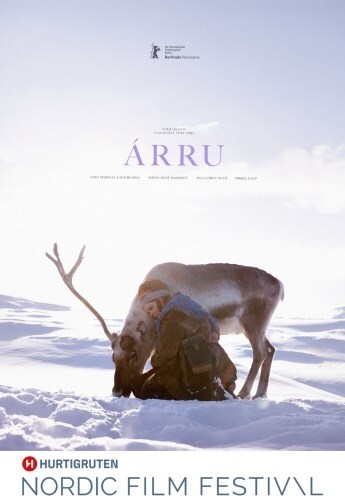
What happens when the person you rely on to save almost everything you know and love also turns out to be a monster? Can you walk away? How do you negotiate the constant challenges to life and culture? Do the young want to carry on the flame? These are some of the core questions in Árru, Elle Sofe Sara’s striking debut feature focusing on the lives and culture of the Sami people that inhabit the Sápmi region of Norway, Sweden, and Finland. What better film to represent the unified yet separate cultures showcased at the 2026 Nordic Film Festival.
Using a mixture of genre styles, from surreal cinema, family drama, to musical, Árru starts in white snows of winter covering a vast, almost empty landscape. After the bloody miscarriage of a reindeer, traditional herder Maia (Sara Mariell Gaup Beaska) buries the tiny body in the snow. Together with her brother Danel (Simon Issát Marainen) and daughter Ailin (Ayla Garen Nutti), they continue the rustic life of the Sami, tending to their reindeer, killing and butchering them for meat and clothing. After the snow retreats for summer, the vast grasslands of summer form the backdrop of the narrative drama. We learn that a mining conglomerate is planning to build a large copper mine, reducing the grazing land available. This will force a mass culling of the reindeer and with it the destruction of Maia’s livelihood and her way of life.
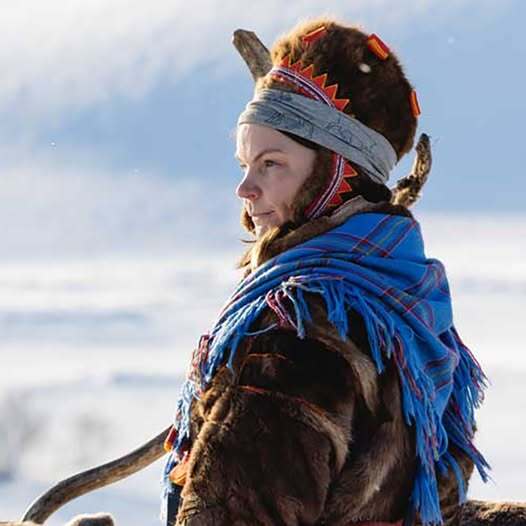
Leading the fight is Maia’s charismatic lawyer brother Lemme (Mikkel Gaup), who successfully campaigned against a similar situation in Canada. As he rallies the community through protest and song, Maia and Danel remain wary around Lemme. This reluctance to embrace their possibly saviour and Lemme’s grip of power over his family and the town threatens Maia’s relationship with Ailin, one of his strongest advocates. The film then slowly reveals Lemme’s real character. First, Ailin discovers that Lemme is not as trustworthy as she first believed, and then a drunken confession by Danel at a celebration of culture reveals a dark past that shatters the community. They need Lemme to save their way of life, but can they still allow him to live amongst them.
Sara uses music and song throughout to connect Maia with her ancestors and home, and is clearly an important life of Sami culture. Musical numbers sometimes break the dramatic flow of the film, but remaining beautiful and interesting. During one of the protests, however, traditional song turns into a music video style dance number that seemed like an odd stylistic choice and a bold contrast to the grounded realism of the drama. But that wasn’t enough to pull me out. The performances were authentic and powerful, especially Simon Issát Marainen, who at first seemed brooding and surly but then when we discover why, draws from us empathy and understanding. And while the dramatic narrative forms the core structure of the film and provides plenty of intrigue and conflict, the most appealing part of the film for me was just spending time with the last remaining indigenous group in Europe.
Árru can be seen as part of the Nordic film festival playing nation wide at Palace Cinemas.
To book tickets to Hurtigruten Nordic Film Festival Opening Night Reception And Premiere Screening of ÁRRU, please visit https://nordicfilmfestival.com.au/films/nor26-arru.