A Fresh, Empowering Take On Shakespeare’s Lesser-known Tragedy: Jovanna Hepburn Illuminates In Timon of Athens

Timon Of Athens

Timon Of Athens Rating

★★★★★

Click if you liked this article

1

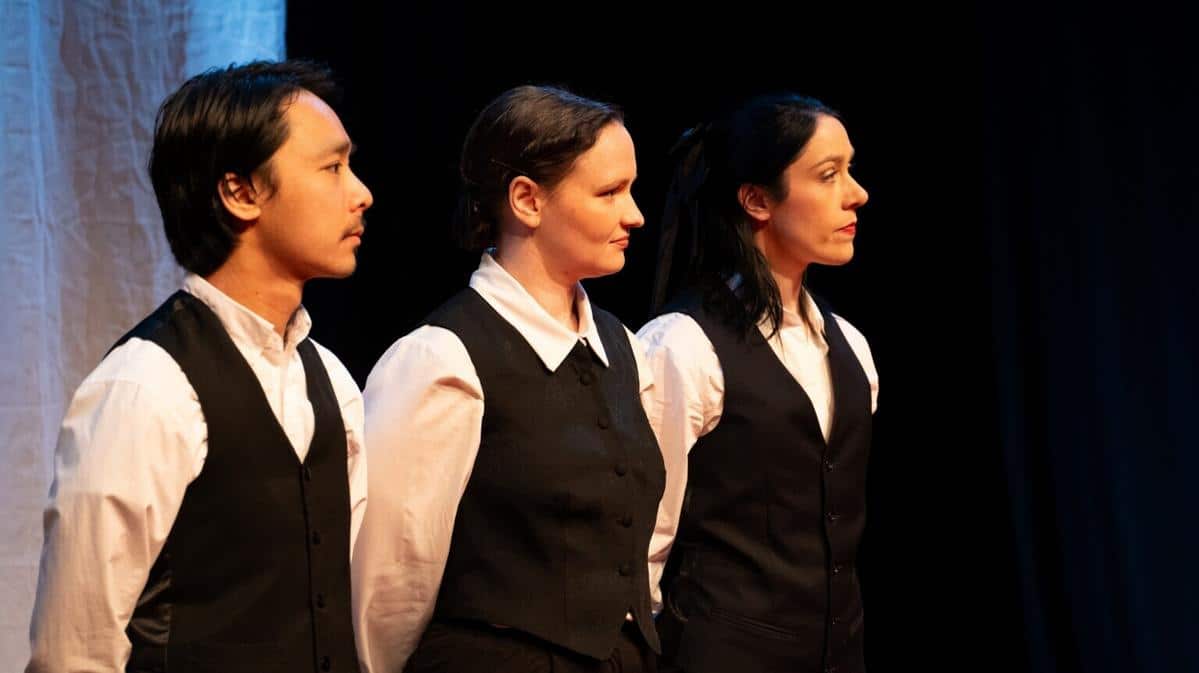
A large, opulent curtain sits upstage centre. Welcoming a long, lustrous dining table enveloped by an ivory tablecloth. Underneath it, a majestic round red carpet, fit for royalty. Staff in uniform stand to order. Staring straight ahead.

As if butter wouldn’t melt in their mouths. As if, we are in the enclosure of a bountiful environment.

Blue lights flicker on and off, ominously. Like thunder from the gods. As they do, staff move forward and back; in different directions.

Signifying perhaps, that there are cracks in these foundations.

At each surge, movements of the staff continue to jerkily bend and twist. Someone lies down on the table, as if resting after a long hard day. As this lonesome figure sleeps, the staff move and swerve closer and closer to the audience. We watch in awe as the rest of the cast emerge from underneath this table like vultures, as they catch money thrown around freely. As they in turn, give out this printed money to us in the audience.

So we can breathe in the opulent energy of Athens. Of the language of its secret benefactor, Timon.

An ultra-generous philanthropist and restaurateur. A public figure for all-things-good. A patron of the arts. A genuine human who loves his community and has great aspirations for his city. His high-octane restaurant serves up bountiful meals to the elite. He doles out money equally to statesmen as he does to bail out petty criminals. From artists to painters to influencers. Everyone in high positions are given Timon’s riches.

So naturally, Timon believes wholeheartedly, that these people appreciate his generosity. That they also mean well. That universally speaking, ‘humans are genuinely loving and appreciative.’ Timon is convinced that to whom he gives, is a blessing he will ‘receive back in kind’.

That camaraderie is everything.
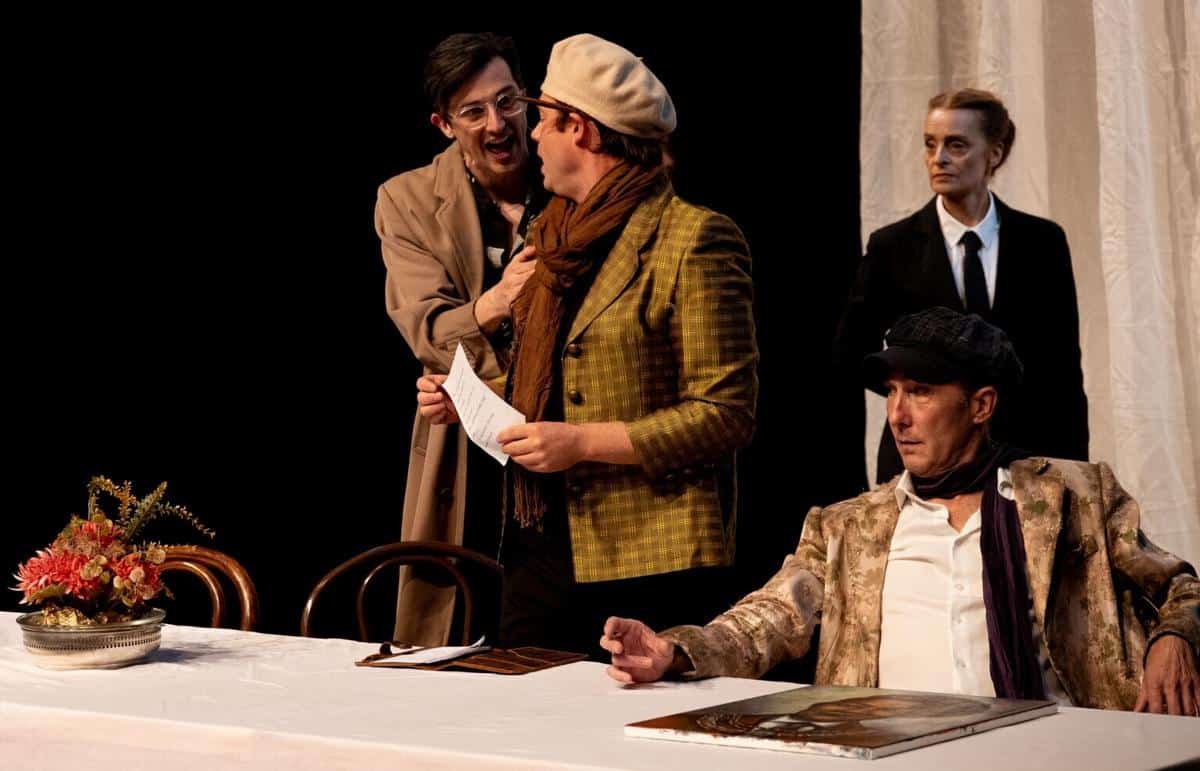
 

And Timon, according to his ‘smoke and mirrors’ circle? Is indeed a gift from the Grecian gods. He’s the gift that keeps on giving. So much so, that Apermantis, the town’s paparazzi photographer, and keen observer of human behaviour, views these gatherings with disdain. Shamelessly calling out these freeloaders to Timon. Warning Timon that they are deceiving him, and in turn, refuses to dine with them.

Timon just laughs this off.

That is, until Timon’s assistant Flavius points out that he has no more money to give anybody. For Timon is in debt. He has accidentally bankrolled the state ‘a little too much’. His funds are being spent by his ‘well-healed friends’ for corruptive means. His flashy restaurant will be no more. His business is in economic crisis.  

Timon’s otherworldly state of Greek god-like generosity? Comes crashing down to earth like a crack of flickering thunder.

Flavius, in a state of distress, suggests that Timon ask his friends to pay him back the monies he gave them (to service the public). Instead of coming to his rescue? His friends are instead repulsed by this act and refuse to dig into their pockets.

What ensues? Is a lesson for Timon. A tuition about division. That when it comes to someone’s generosity in society, humanity can be divided in their actions.

There are the givers, and there are the takers.

How, when it comes to money or kindness - ‘the takers’ will receive, but behind our backs? Be our secret foes, wrestling with resentment. That takers use individuals for their own greed. And that greed, on a higher-level playing field?

Can lead to corruption.

Which is what consumes the mind of Timon as he struggles through this point. So much so, that Timon becomes a recluse, unable to deal with the corrupt minds of his once beloved city.

But more importantly, this story is about how the shocking effects of betrayal, especially from those he believed he could trust - can sometimes have devastating consequences.

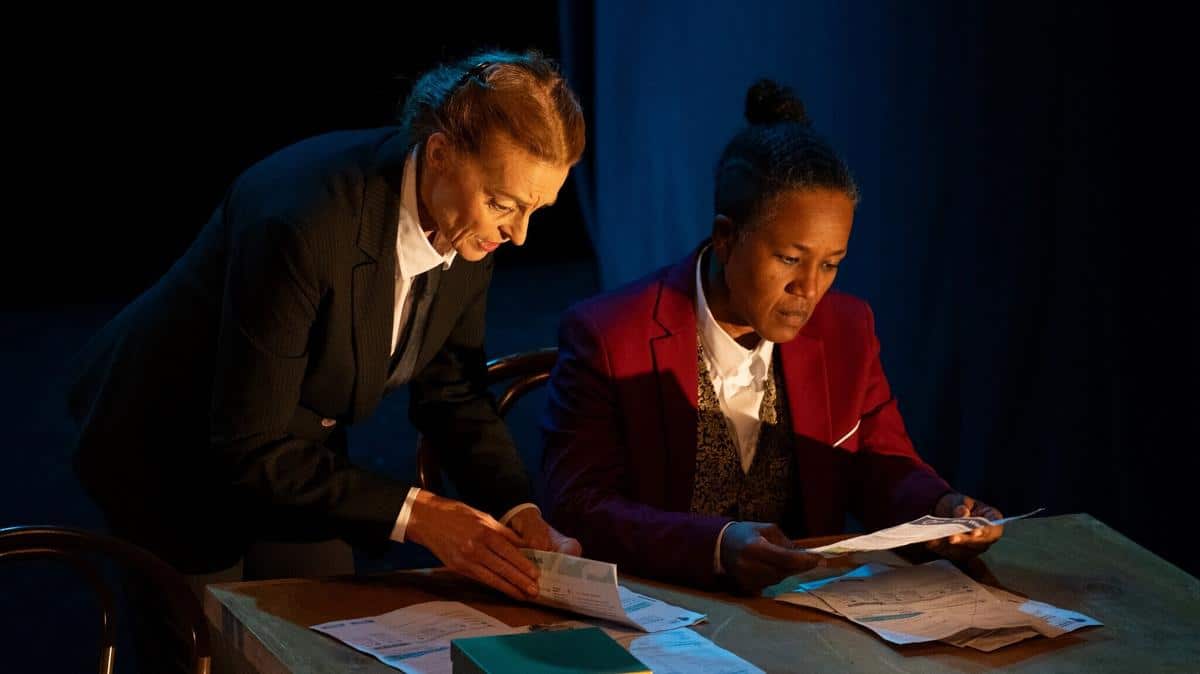
This modern-day version of William Shakespeare and Thomas Middleton’s Timon of Athens is a well-rounded, humorous satire. Introspectively directed by Claire Nicholls and Kevin Hopkins, it is a wine-and-dine fest of music, dance and physical delights. The main roles are non- binary, which I loved, creating a fresh, empowering take on Shakespeare’s iconic works, (which in the past, was largely reserved only for males). And the quality of acting, especially from the seasoned ensemble, was sharp, precise and exciting to watch.

The set design, also created by directors Claire Nicholls and Kevin Hopkins— was minimalistic, yet the colours on stage resembled familiar colours of world leadership. The red, white and blue of the American and Australian flags, to start. Perhaps representing our modern global capitalist systems. The dolling out of $100 Australian dollars to each audience member? Perhaps to immerse us in the folly of money, that often has the potential to weaken our perspective, not strengthen it. Much like those in power in our current climate. They too have the potential to create serious economic disaster, if they have not done so already.

Also equally impressive was the physical movements onstage that tied in seamlessly with the actions. The miming of the three-piece band in the background of Timon’s dinner parties. The rebellion of Timon’s friendship clan turning against him in slow motion via the news. And the military coup that takes place at the end of the play, with slow-motion movements of warfare. An overthrow of a corrupt state, to create order in Athens once again.

There are a few actors in this riveting show worth their weight in gold.

Scott Jackson, as Lucius the poet, deliciously brims with cheeky wit. His crisp consonants elevating the stage alongside his hilarious antics, electrifying outfits, slick physicalities, and oozing Athenian pretentiousness.

Helen Hopkins is sensational as Timon’s most trusted advisor Flavius. She has a focused intensity, commanding firmness, and a tender-yet-sturdy quality to her performance that is riveting to watch.

And finally, Jovanna Hepburn sets the theatre ablaze as Timon. From start to finish, she pillars this production with a force beyond words, exemplifying the heartbeat of excellence for modern Shakespearean works. Her rhythmic resonance booms with every pentameter. Her physicality embodying overflowing emotions of despair. Her stamina and emotional architecture exemplifying the innate qualities needed to bring a history of theatrical greatness to life.

Proudly developed as part of the Prague Shakespeare Company's 2025 Summer Shakespeare Intensive program, Th'UnGuarded Duncan should consider themselves mighty proud to co-present a lessor-known Shakespearean work that hold great relevance to today’s world, for the 2026 Theatreworks season.

To book tickets to Timon Of Athens, please visit https://www.theatreworks.org.au/2026/timon-of-athens.

Photographer: Andrew Cullimore

Spread the word on your favourite platform!

The Ticking of Invisible Clocks: Ageing, Grief, and Dark Humour in Kevin Nemeth’s Crapbox

Crapbox

Crapbox Rating

★★★★★

Click if you liked this article

3

Upon the set of a bedroom scene, to the left of the stage, lies a dark wooden cupboard. Next to it? A white laundry basket. In the centre? A stately wooden bed, framed with curved carvings at its head and foot.

Yet the bedding is plain. Sickly white to be exact.

To the right? A tall lamp with a crimson-lit shade. Next to it? An 18th century King Louis-like chair in beige, with pincushions on its torso.

It is fairly dark, save for a dimmed light shining over the bed. There are four stage lights framing the area. Unnerving electro pop music chimes overhead, of a clock finding itself hard to wind. The music is getting louder and louder, and I am intrigued.

Crapbox is a reflective play in four parts. Four very universal, life-affirming stories of the challenges people face within the umbrella-like spectrum of aging.

Like four parts of a whole, Crapbox highlights the personal toils that may arise within a timeline of decline. Health challenges. Grieving. Loss of hope. The pendulum of the clocks that keep ticking away from us, without the ability to stop it.

But interestingly, this play is about how we cope in the aftermath of this later-life journey. More importantly? Where we sit in the thick of these things. How it weighs so heavily on our minds.

With our personal relationships. With spouses. With complex family dynamics.

It is a storytelling voyage. One which three characters, played by veteran theatre actors Anne Browning, Peter Houghton and Tom Gutteridge, set sail and guide us to hold tight: through the inevitable storms of late-life experiences.

We start with the first play, ‘Early Morning’, where, in their bedroom, a restless couple wake too early and cannot go back to sleep. We learn through their third- person conversation, (cleverly placed by award-winning scriptwriter Kevin Nemeth), that both of their minds are perturbed in waves of disquiet and future-related angst.


As this couple wait for the other to get up and make the morning coffee, we learn that there is an uneasy rhythm winding its way through their thoughts. An invisible clock ticking away at their inner wiring. Fears that are sometimes so big and overwhelming, that they can sometimes remain undefined by logic, regardless of a relationship’s natural rhythm of ‘peaks and valleys’.

The second play, moves us to the title of the show, ‘Crapbox’, in regional Victoria. Where we meet a recent widower, who not only misses his late wife terribly; but has discovered that his aspiring ‘tree change’ home, is haunted by ghosts.

That his new abode that he hoped would uplift him with oodles of nature and quiet, is simply ‘nothing more than an old Crapbox.’ Late at night he hears voices and furniture being moved around. The pressure of this frustrating situation combined with incessant thoughts about his late wife culminates in a very surprising aftermath.

The third play, ‘The Letter’, is a transitional memory piece, where a man speaks overhead about a long-lost letter he found from his late mother. While a woman is stripping a bed onstage and packing up her things in a bedroom, this man is reflecting upon who his mother was as a person. This is somewhat of an observational story: of how a changing perspective can bring on a state of forgiveness and personal transformation. Giving us hope, that even in loss, one can still reflect upon a memory with an open heart in its aftermath.

The final play, ‘Good Daughter’, is a deeply human, humorous piece exploring the messy foibles of ‘assisted dying’. It is a dark piece of irony, told through the eyes of an exasperated daughter, who decides to spare her mother the agony of the complex clutches of dementia, with outrageous complications.

This play is handled with empathy and care through the genius writing by Kevin Nemeth. He masterfully handles each life topic with sprinkles of dark humour, compassion and empathy, focusing not so much on the challenges themselves; but presenting what pathways forward are best for us, in order to survive them.

Veteran actors and real-life partners Peter Houghton and Anne Browning simply shine in this play. Batting the ball back and forth, their scene together is deeply funny and heartbreakingly real. Houghton is exceptional in playing light comedy through angst, while Browning stays true to her path of spousal acceptance, with aplomb.

Tom Gutteridge is deeply moving as the grieving widower. Instead of sitting in a place of deepened sadness, he is a playful storyteller, taking us on a matter-of-fact journey across a fragile emotional landscape.

Anne Browning also closes the play in fine form, playing a brave daughter making an unthinkable decision. Browning packs no punches with the challenging material she is given. Like a duck to water, she embodies a brittle mask but underneath it, her emotional well is infinite.

The transitions between scenes were seamlessly executed by the clever direction of the cast, delivering a multitude of layered meanings; while the combination of lighting design by Harrie Hogan, and sound by Ethan Hunter, were all used to their advantage to create either a lighter or somber mood.

This world premiere of Crapbox, by playwright Kevin Nemeth, was not only thought-provoking but a delight to watch. It was a true collaboration in every sense of the word, with a wonderful team of theatrical creators who embraced this play with heart.

To book tickets to Crapbox, please visit https://www.theatreworks.org.au/2026/crapbox.

Photographer: Dan Rabin

Spread the word on your favourite platform!

La Ronde at Melbourne's Spiegel Haus: A Dazzling Night of Circus, Cabaret and Mischief

La Ronde

La Ronde Rating

★★★★★

Click if you liked this article

1

Melbourne's Spiegel Haus has earned a reputation for delivering spectacular circus and cabaret, and its latest offering, La Ronde, certainly doesn't disappoint.

With just seven performers, this tight international cast delivers an electrifying evening of breathtaking acrobatics, dazzling artistry, outrageous comedy and more than a little cheeky audience interaction. And all in a way that’s glamorous, camp, occasionally provocative and enormous fun.

Performed in the intimate surrounds of the Spiegel Haus, La Ronde brings audiences thrillingly close to some extraordinary physical feats. There are aerialists spinning high above the stage, seemingly impossible balancing acts, trapeze performances, incredible displays of strength and flexibility and plenty of moments that leave you wondering just what the human body is capable of – I mean, how can bodies actually DO that?!

What makes the show particularly enjoyable, though, is the wonderful mix of personalities and performance styles.
Swedish comedian, David Eriksson is an absolute delight, combining physical comedy with lots of mischief, an infectious sense of fun and hilarious audience participation. Australian performers Danik Abishev and Adam Malone are equally engaging, bringing a playful, cheeky energy to their astonishing displays of athleticism. Between them, these three are amazing at working the crowd, ensuring the audience feels very much part of the action rather than simply watching from the sidelines. And the highly responsive audience loves every minute of it.

For sheer artistry, however, Ukrainian aerialist Sergiy Odessa delivers one of the evening's most memorable performances. His breathtaking routine on the aerial pole is almost balletic, combining extraordinary strength and control with a fluidity and grace that makes the whole thing appear effortless. While his stage presence is more reserved than some of his mischievous castmates, his technical brilliance speaks for itself.


The show also features beautiful aerial work from Diane Bondarenko and Zoe Kelly, who offer feats of flexibility and balance that seem to defy gravity (and all the laws governing what hair should be able to do), and the remarkable vocals of Cuban-Spanish singer Dorival Junco, whose impressive vocal range adds another dimension to the evening's entertainment and who accompaniment is a delicious cherry on the very decadent cake.

There is something quite wonderful about watching performers at this level of skill doing what they do best, especially in a venue where you're close enough to appreciate both the physical demands and the artistry involved.

But La Ronde is much more than a showcase of circus talent. It's a celebration of theatricality, sensuality and individuality, with a playful disregard for conventional gender presentation and just enough naughtiness to keep things fun.

The production moves effortlessly between moments of genuine awe and laugh-out-loud comedy, with the cast's enthusiasm and obvious enjoyment proving every bit as infectious as their talent.

By the end of the evening, the audience is cheering, laughing and thoroughly swept up in the spectacle.

For a cast of just seven, La Ronde delivers an astonishing amount of entertainment. It's slick without feeling overly polished, extravagant without needing a huge stage, and a reminder that the most memorable performances combine exceptional talent with personality, humour and a genuine connection with the audience.

It is a fabulous, high-energy night out and another triumph for Melbourne's Spiegel Haus.

La Ronde is playing at Spiegel Haus Melbourne, 217 Lonsdale Street, until 31 January 2027.

To book tickets to La Ronde, please visit https://www.spiegelhausmelb.com/laronde.

Spread the word on your favourite platform!

The Waiting Room

The Waiting Room

The Waiting Room Rating

★★★★★

Click if you liked this article

8

No BAD Theatre Co. have got a great team together for this show, with the welcomes beginning as you come up the stairs. A heartfelt intro from BAFTA award-winning writer and director Mike Bullen put us all in good spirits and ready to go.

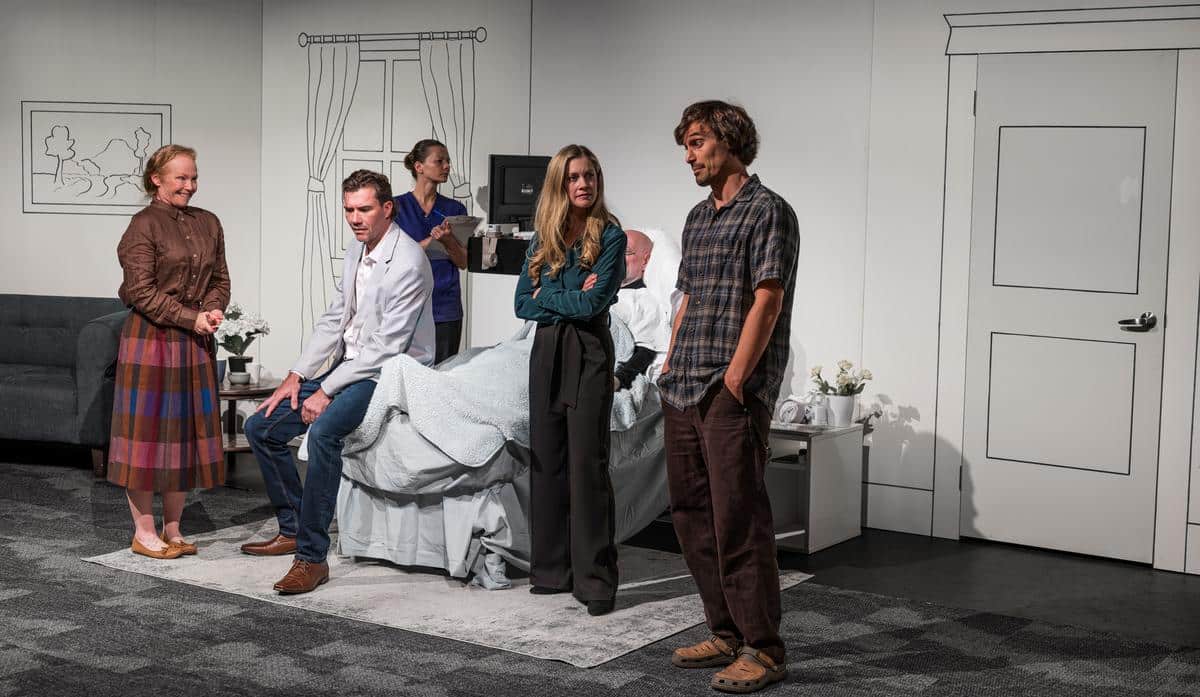
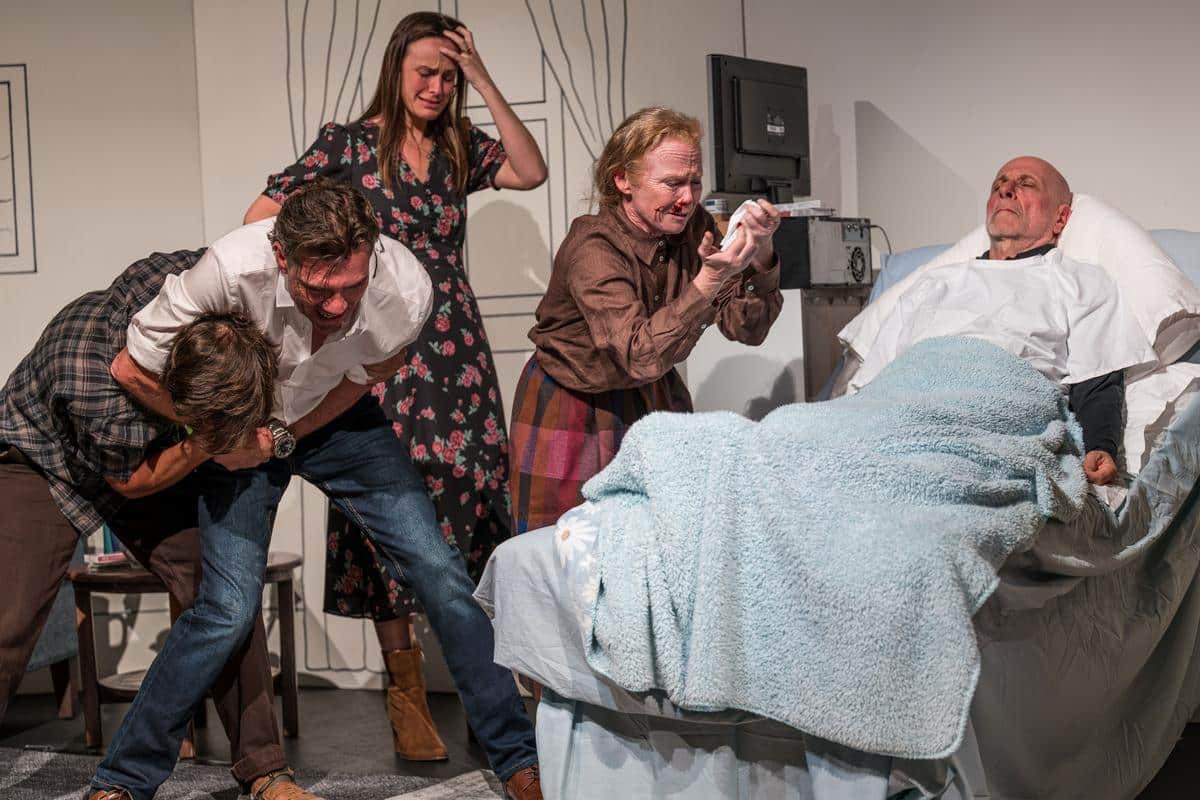
The programme is presented as a service of thanksgiving and celebration for Francis “Frank” Whitby, which is a delightful bit of scene-setting before you even take your seat. Maggie Bullen’s set design, with its drawn background and home decor with hospital additions, is perfect for the Mona Vale Performance Space. The stage limitations have been used as an opportunity to be creative, and it works beautifully with the breaking of the fourth wall that occurs throughout the play.

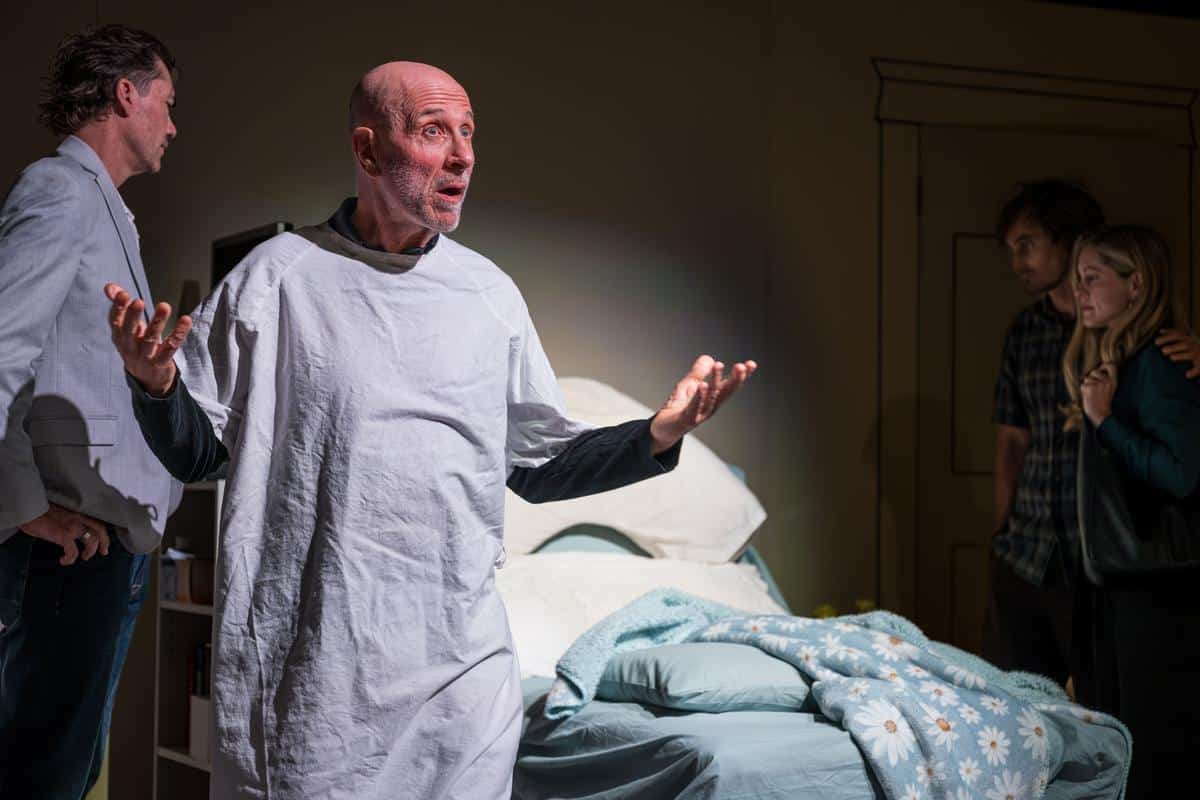
Willow Salgo leads the light and sound design with real competence and imagination, supported by Thomas Van Der Plaat, Tully Poppleton and Sophie Elliott. I’ve had the pleasure of working with Willow and Thomas at Northern Beaches Youth Theatre, so it was a particular delight to see the whole team at work here. The lighting choices are notably clever throughout; the follow spot on Frank as he almost enters the audience is a highlight, drawing us into his perspective in a way that feels both playful and intimate.

We establish that Frank, played by Julian Pulvermacher, is in a coma since his second stroke, and his nurse has called his four children to say their goodbyes. Magda, played by Ewa Sliter Vel Szreter, is caring and attentive to Frank’s needs; sweet in her care of him but firm enough to hold her ground when his children arrive and start jostling for position.

Raelee Hill plays eldest child Jan, who describes herself as the “middle-aged spinster condemned to live at home.” Hill navigates the many layers of this character with remarkable nuance; at first doting, dutiful and pious, then bitter and sharp, and later vulnerable and regretful. Her understated choices consistently draw deeper responses from both the cast and the audience. It is a sophisticated execution of character work.


Youngest brother Carl, played by Milan Pulvermacher, initially presents as abrasive, with Nicole (Cassandra Magrath) gracefully presenting as passive and placatory. As we discover that Carl is struggling with his mental health and career, Milan plays this shift physically; hands in pockets, eyes downcast, the initial bluster deflating. Older brother Larry, played by Chris Sadrinna, then steals the air from the room with his big presence and complete lack of filter. Chris is quick with timing and reactions and finds a naturalism in a character that could easily have been over-exaggerated.

Youngest daughter Meg returns from LA as the most earnest and loving of the siblings. Gillian Alexy plays the emotional depth of this character with a gentleness and vulnerability that makes Frank’s self-confessed favouritism entirely understandable. Nathan, played by Patrick James, arrives as Meg’s gay ex-husband, now an architect liaising with Larry over the house. His character is a comedic injection, but his arc allows him to display some emotional depth as the play comes towards it’s close.

Frank breaks the fourth wall throughout to weave past and present together, filling in gaps and offering a peek behind the curtain at each of his children. Julian Pulvermacher carries this narrative device with ease, making Frank the warm, wry centre around which all the chaos spins.

The comedy is in the irresistible return of these adult siblings to their childhood roles and the question that keeps surfacing: what actually holds a family together when the person at the centre is slipping away? It is a play that asks what really matters in the end, and it asks it with both heart and real wit.

It is wonderful to see No BAD Theatre Co. joining the vibrant community theatre scene on Sydney’s Northern Beaches. Another fabulous work from Mike Bullen, and a genuinely impressive debut for a company with a lot to offer.

Photography: Munnerz Photography
Insta handle: @munnerz_photography

To book tickets to The Waiting Room, please visit https://www.nobadtheatre.org/.

Spread the word on your favourite platform!

Subscribe to What's The Show

Reviews, show news and what is on, straight to your inbox.