The Jazz Room: Sinatra and Armstrong Tribute

The Jazz Room: Sinatra and Armstrong Tribute

The Jazz Room: Sinatra and Armstrong Tribute Rating

★★★★★

Click if you liked this article

2

The music of two of the most influential musicians of all time, Frank Sinatra and Louis Armstrong were celebrated in a soulful and energetic performance by Jake Dennis and his talented live band in The Jazz Room: A Frank Sinatra and Louis Armstrong Tribute.

I was delighted when I found that the show would be held at Freo Social, an entertainment venue that I have always wanted to visit. Although performed in a large space, the ambience created was intimate and chic, complete with candlelights scattered all over the room and on the stage.

Jake did a fantastic job performing some of the most iconic songs by Sinatra and Armstrong. What a Wonderful World, Fly me to the Moon, When You’re Smiling, there’s a reason why these songs have stood the test of time and performers like Jake continue to sing them to this day. His interpretation of the songs paid respect to the enduring legacies of Armstrong and Sinatra while also allowing his own charisma and personality to shine through. Audience members were also encouraged to join Jake in singing these songs.


One particularly effective feature of the show was the inclusion of trivia and personal background between songs. These interludes gave the audience more than a sequence of musical numbers. Anecdotes concerning the lives of Sinatra and Armstrong reminded the audience that these were not merely iconic voices, but complex public figures with fascinating personal histories.

Among the more memorable details was the fact that both Sinatra and Armstrong had each been married four times. Another fascinating fun fact is that the iconic song New York New York was actually first performed by another legend, Liza Minnelli who once lived on the same street as Sinatra. The song My Way, popularised by Sinatra is an adaptation of a French song Comme d’habitude released in 1967. Then two years later Sinatra released the English version of the song.

Overall, The Jazz Room: A Frank Sinatra and Louis Armstrong Tribute was an enjoyable and nostalgic production. Jazz music is that genre of music that can be enjoyed by people of all backgrounds and all ages. Jake Dennis delivered a soulful and energetic performance that honoured two giants of American music, while the inclusion of biographical trivia enriched the experience.

Don’t miss this celebration of two icons whose influence shaped the world of jazz and popular music in this heartfelt live tribute performance.

To book tickets to The Jazz Room: Sinatra and Armstrong Tribute, please visit https://feverup.com/m/588808.
Spread the word on your favourite platform!

Who I'm Doing This For

Who I'm Doing This For

Who I'm Doing This For Rating

★★★★★

Click if you liked this article

3

(Note: This is a review of a play presented as the second half of a double billing. Melbourne Writers’ Theatre is showing Metropolis Monologues across two instalments, and this play is performed after each series of monologues. I will review the monologues separately.)

My experiences with Melbourne Writer’s Theatre’s (MWT) Metropolis Monologue series were very positive. The diversity of style and subject matter, married with some great performances and direction, showed how fresh and fun Melbourne’s independent theatre scene can be. As mentioned, five of the ten monologues are presented on each night, followed by the play that won MWT’s 2026 Amethyst Award. Unfortunately, this second show, Who I’m Doing This For, wasn’t on the same level as the monologues for me.

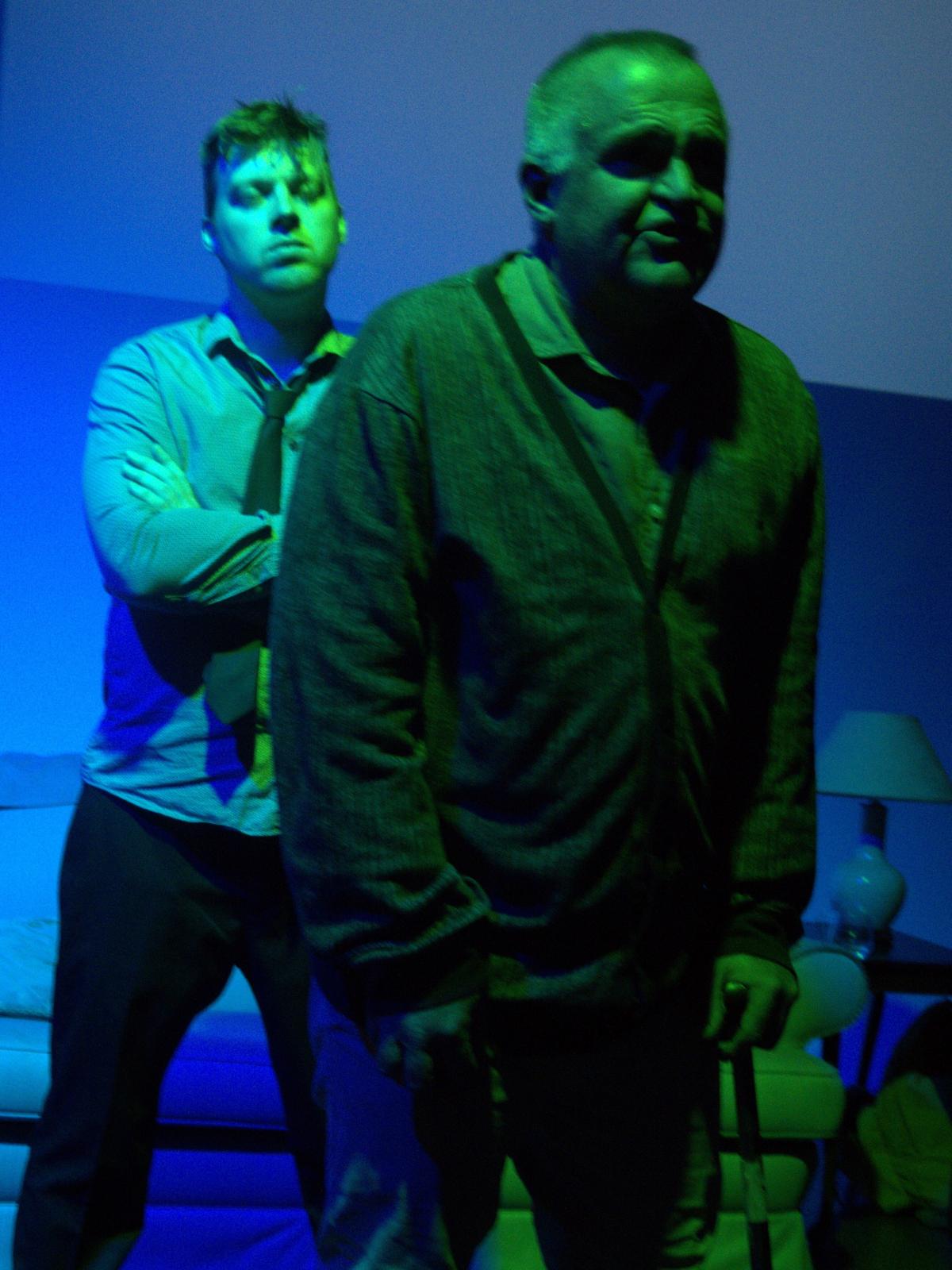
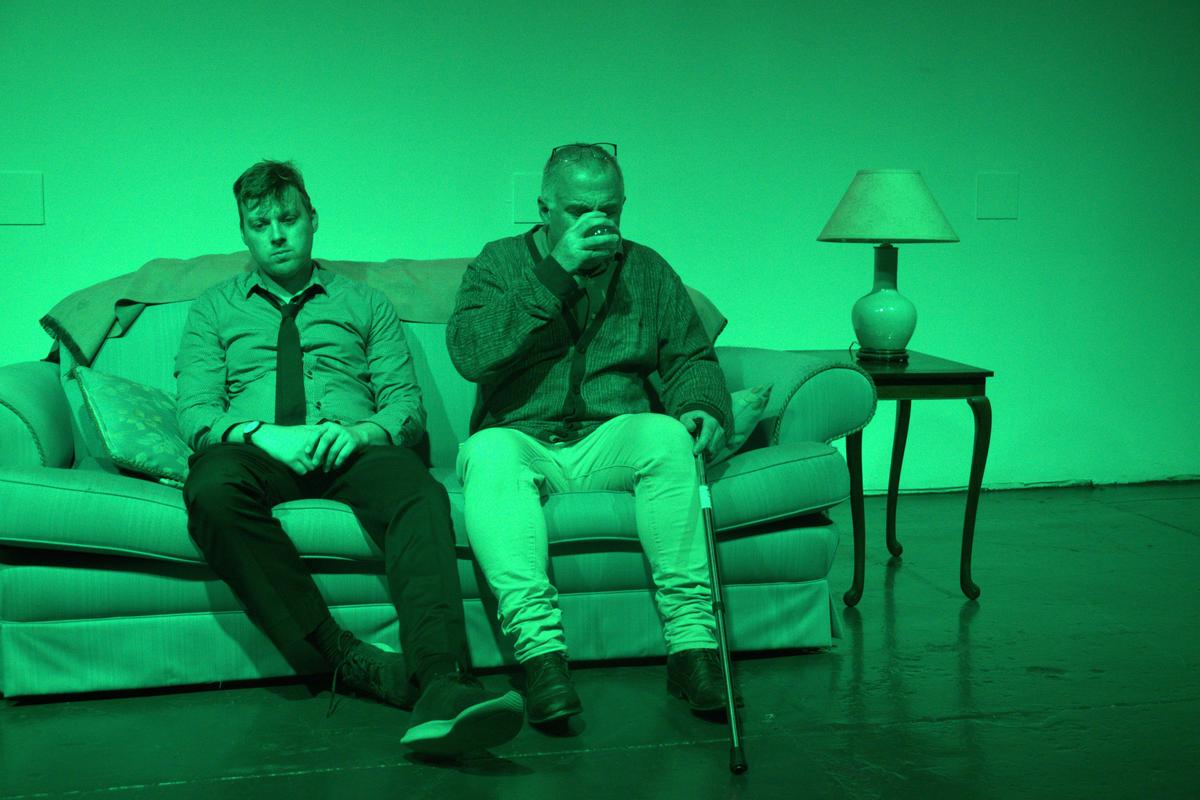
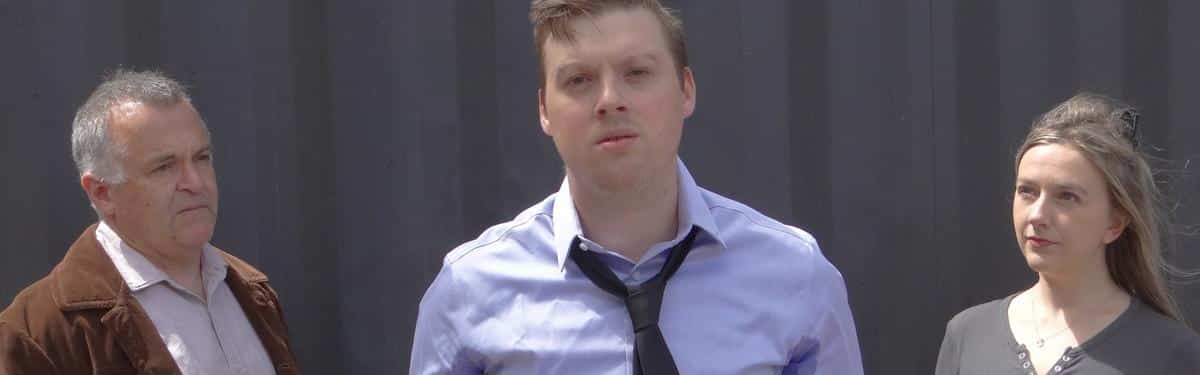
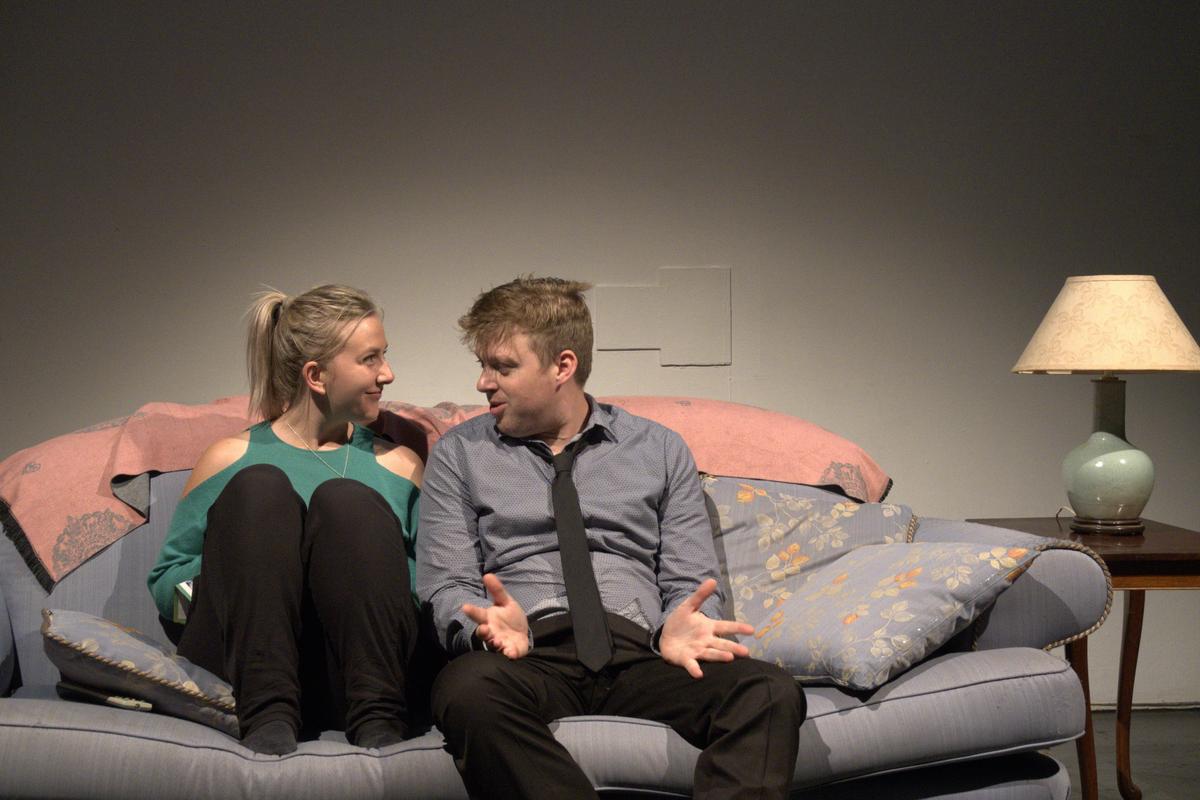
The play, written by Peter Farrar, follows Simon (Lochi Laffin-Vines), a man suffering under the weight of grief. He has recently lost his father (Tony Adams) - an abusive, drug-addicted ex-veteran – after caring for both him and his sickly mother. Shortly after the play begins, we see the toll his depression takes on him; he loses his job, is increasingly unable to connect to his girlfriend Claudia (Emily Farrell) and slips into a nihilism that will drive him to desperate and horrific actions.


The cast are strong performers, and their chemistry is mostly enjoyable to watch. The couple’s playful moments are endearing, the father-son relationship whiplashes thrillingly between awkwardness and mutual rage, and some of the most chilling moments come when the father is simply standing in the background, watching Simon unravel. The lighting is cleverly changed to enhance the mood of certain scenes, and the writing is at its best in the character interactions, such as the snarky quips between Simon and Claudia and the naked narcissism of the father’s abuse tactics. The play is laudably ambitious and asks provocative questions about whether the roots of trauma are personal, familial or systemic.

However, to me, the story and script did not live up to the themes it was trying to tackle. While the dynamic between Simon and his father was strong, Claudia as a character felt like a vessel for Simon to vent to or at, and she seemed much too accepting of Simon’s unreasonableness throughout. This underdevelopment also applies to the radicalization Simon undergoes; plenty of people struggle with trauma and mental illness and don’t make the decision that Simon does, and it’s unclear what external force pushed him down the specific path he takes. Outside influence is an essential component of political radicalization, and its absence makes his anti-capitalist soliloquies feel out of place. The extensive monologuing also states the play’s themes so blatantly that it robs what should be a crazy, thrilling climax of any tension. Too many moments reminded me of the old writers’ aphorism: show, don’t tell.

Who I’m Doing This For has many interesting questions within it about generational trauma, mental illness and personal responsibility. Steven T. Boltz’s direction clearly brought out the best in the actors and team involved, and I think that the play could be very strong in a future revival. But as is, it didn’t have nearly as much polish as the monologues that preceded it, and I would definitely recommend those over this play in its current form.

To book tickets to Who I'm Doing This For, please visit https://melbournewriterstheatre.org.au/.

Photographer: Mina Shafer

Spread the word on your favourite platform!

Till the Stars Come Down

Till the Stars Come Down

Till the Stars Come Down Rating

★★★★★

Click if you liked this article

1

If you’ve ever been lucky enough to have had a ‘perfect moment’ where you wanted to freeze time, to bathe in pure happiness, you will be able to relate to Sylvia in Till the Stars Come Down. In contrast, the feeling of wanting to stay, for fear of what may happen next, may also be relatable. These poles of emotion are strong, and it is in the myriad of this and everything in between, that becomes a tightrope linking a family together.

Directed by Anthony Skuse, and currently performing at KTX on Broadway, Till the Stars Come Down is a play about the complexities of family, grief, loyalties and love. Set in the deindustrialised working-class town Mansfield in the UK, the play takes place over the course of one day.

After a whirlwind romance, Sylvia (Imogen Sage) is marrying Polish immigrant Marek (Zoran Jevtik). Sylvia is one of a trio of sisters, and although each have very different personalities, they appear to be close. There’s a beautifully intimate scene where the sisters are lying on the floor, heads together and chatting, reminding me of either the innocence of making snow angels, or representative of the three of them combining to make a single star. I thought that maybe this was a subtle nod to the play’s title.

Hazel, (played with highly strung perfection by Ainsley McGlynn) is stuck in a job she finds boring, in a marriage where she feels unseen and consequently has a rather sharp tongue which seemed to be frequently aimed at her sister Maggie (Jane Angharad). Hedonistic and quadrupled married (twice to the same man, does that count as four times? “I only married him because he looked at me like I was a potato in a famine.”) lives elsewhere and had left Mansfield abruptly leading to the other sisters feeling somewhat abandoned. Angharad’s portrayal of Maggie was layered, and her lack of self-esteem as well as her desperate confusion in some parts of the play was admirable. Sage’s portrayal of bride Sylvia was sweet. She feels some guilt about moving out of home, having been a companion and career for her widowed father Tony (Peter Eyres).


The first half of the play is female led, and in the opening scene we are introduced to Sylvia’s living room by Hazel’s youngest daughter Sarah (Kira McLennon) zooming onto the stage, laughing with girlish innocence, and playing with a spacecraft. (I noted this may have been another cosmic nod to the play’s title) Hazel’s older daughter Leanne was also there, portrayed with just the right amount of teenage attitude by Amy Goedecke. Aunt Carol, (Jo Briant) arrives, a no-nonsense loveable character full of advice in the form of quick wit. On getting old, she says, “I’d like a bit more of the middle part” and speaks with the wisdom of a woman who has lived a colourful life. Briant was a standout scene stealer, particularly as she got more inebriated at the wedding and danced - the audience loved her!

During the wedding day, things start to become messy as Sylvia’s family reveal their racism and suspicion towards Marek. Hazel’s husband John (James Smithers) is unemployed and a kind offer by self-employed Marek is not received gracefully. An added layer at the table was Sylvia’s father and his estranged brother Peter (Brendan Miles). Tension built due to old resentments from past actions (disagreements during the time of the mining strikes) which billow around them.

Then, the beautiful wedding day descends into total family chaos.

Playwright Beth Steel has successfully written a script which gives a strong voice to all characters in fairly even measures; each have their own depth and inner struggles. The ensemble was cohesive, bringing their own character’s hidden raw emotions to the surface. This drew me into their lives and moved me. Although not an expert on accents, I believe all of the actors’ English East Midlands accents were flawless throughout this performance, kudos for this.

Composer and sound designer Layla Phillips brought the relevant era to the stage with the choice of pop songs and some original moving music throughout the play. Set designer James Smithers created a stage with minimalistic props. The wedding table and setting which appeared to have real food on the actors’ plates, along with the top bars that ran above the table was a highly effective use on the small stage. The intimate KXT Broadway was a good choice to house this play, and the casts’ clever involvement of the audience during one part added that extra bit of immersive sparkle to this production.

I loved Till the Stars Come Down! It is a hard-hitting play which explored many themes and circles back to love, life and ultimately surviving the day. It is a play which will stay with you for a long time - go see it!

Season: March 27 – April 11 2026 at the KXT Theatre Broadway
Run Time: 120 minutes with an interval
www.events.humanitix.com/til-the-stars-come-down

To book tickets to Till the Stars Come Down, please visit https://www.kingsxtheatre.com/till-the-stars-come-down.

Spread the word on your favourite platform!

The Game Is Afoot… And Slightly Off The Rails

Innes Lloyd - The Lost Casebook of Sherlock Holmes

Innes Lloyd - The Lost Casebook of Sherlock Holmes Rating

★★★★★

Click if you liked this article

I had the pleasure of attending The Lost Casebook of Sherlock Holmes by Innes Lloyd last night as part of the Melbourne Comedy festival and it was one of those intimate, slightly chaotic and genuinely enjoyable theatre experiences that remind you what live performance can feel like when it’s happening right in front of you and, occasionally, almost on top of you.

The venue, the Impro Melbourne Theatre, was comfortable but tiny and we were seated so close to the stage I could have comfortably rested my feet on it. My companion described it perfectly, it didn’t feel like watching a play so much as watching people. There’s something disarming (and slightly voyeuristic) about that level of up close and personal proximity. You can see every flicker of expression, every moment of hesitation or delight. At times it made it harder to fully drop into the world of the story, but it also created a kind of immediacy and shared experience that larger productions can’t replicate.

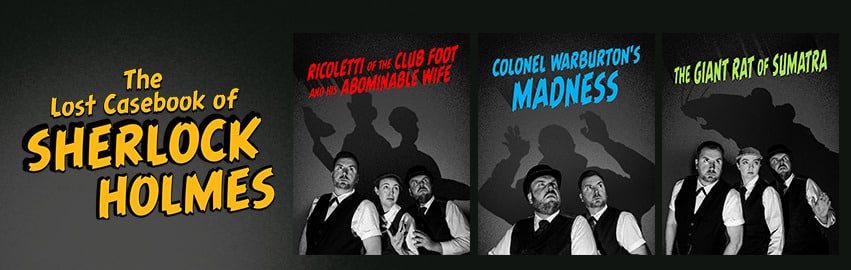
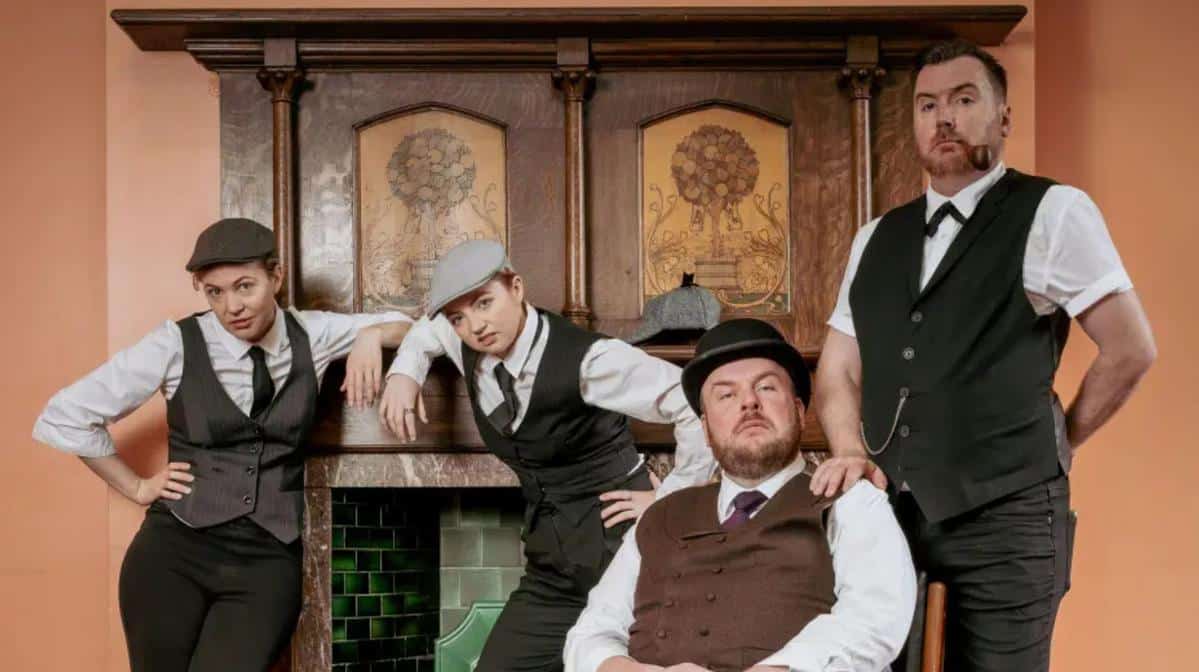
The premise is a clever one: three legendary “lost” Sherlock Holmes case files, mysteries Sir Arthur Conan Doyle himself hinted at across his impressive written works but cases that while connected to existing Sherlock Holmes tales, are entirely improvised – which gives clever improv actors an awful lot of room to play in! From this simple starting point, the four-person cast built a series of unfolding stories, moving fluidly between characters and locations. We met the foul-mouthed Victorian street urchins (the Irregulars), various members of the landed gentry, Dr Watson, Sherlock Holmes himself plus his corpulent brother, Mycroft and bumbling, dim-witted Inspector Lestrade with a particularly memorable foot fetish. There was also a funny thread involving Cluedo that wove its way through the third story, adding another layer of playful absurdity.


What stood out most was the ensemble’s commitment to the form. Improv, at its best, is a kind of high-wire act - a balance between structure and spontaneity, where performers are constantly listening, adapting and building something together in real time. There were a few inevitable fluff-ups (it was opening night), but rather than detracting from the show, these moments often became highlights. The cast leaned into them, supported each other and turned small stumbles into shared jokes, which delighted and deepened the connection with the audience.

That willingness to embrace imperfection is part of what makes improv so engaging to watch. You’re not just seeing a finished product - you’re witnessing the process unfold. There’s a generosity in it - a sense that everyone, performers and audience alike, is in on the same experiment.

The audience appreciated the small facts and trivia woven in about Sherlock Holmes and his creator, Sir Arthur Conan Doyle and are apparently something of an integral part of all Innes Lloyd shows. These touches added a layer of texture and gave the show a gentle nod to its literary roots, even as it gleefully departed from them.

The overall feeling of the performance was one of enthusiasm, wit and genuine enjoyment. The cast clearly put their heart and soul into it and that energy carried the show. Improv is rarely about polished perfection, but rather about play, presence and the joy of watching something take shape in the moment.

All in all, it’s a lively, inventive and warm-hearted night out - especially for anyone who appreciates the unique magic of improv and the thrill of seeing something created right before your eyes.

To book tickets to Innes Lloyd - The Lost Casebook of Sherlock Holmes, please visit https://www.comedyfestival.com.au/browse-shows/holmes-unbound-the-lost-casebook-of-sherlock-holmes.

Spread the word on your favourite platform!

Subscribe to What's The Show

Reviews, show news and what is on, straight to your inbox.