Genre Perfection

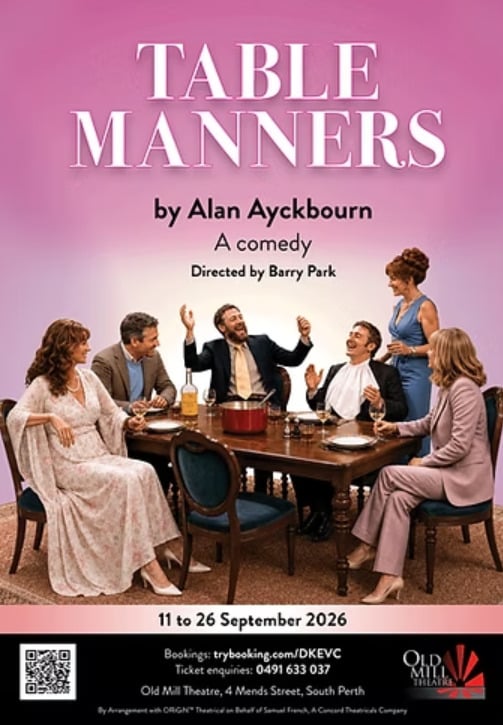
Table Manners

Table Manners Rating

Click if you liked this article

3

The team at Toyota got it right with the Camry, yes, almost certainly a car enthusiast probably finds them bland, but the general consumer sees them as incredibly reliable, comfortable and economical – perfection.

The sweeping magnificent twin lead guitars of ‘Hotel California’ are undoubtedly a masterpiece, yet in terms of pop music, the perfect package is probably the Pomus, Leiber, Stoller song, ‘She’s Not You.’ Pleasantly innocuous on paper, the recorded package with brilliant studio musos and the Jordanaires backing Presley’s soaring tenor voice, turns the ballad into perfection, which leads me to Barry Park’s production of Alan Ayckbourn’s TABLE MANNERS, currently playing at the Old Mill Theatre, South Perth.

Ayckbourn churns these plays out seemingly to order (92 so far). TABLE MANNERS is the first play in a trilogy making up THE NORMAN CONQUESTS, featuring the same characters in different situations. You know what you’re getting with an Ayckbourn play – classic late 20th century English tragicomedy, inevitably skewering the middle class, a genre that has become the go – to staple for theatre groups in the UK and Oz.

Certainly TABLE MANNERS is a very safe choice for the Old Mill, indeed I am told the season was sold out before opening night. Without exception, audience members I talked to on opening night were loving the play. One chap telling me they come often to the Old Mill Theatre for exactly the sort of play Ayckbourne writes.

Whilst the play is very definitely suited to an older, more traditional audience demographic (there were a lot of UK accents in the audience), Barry Park and his team have put together a masterclass in theatre production. Like Toyota’s Camry and Presley’s song, the play may not be to everyone’s taste, however it is meticulously crafted, staged and presented – perfection.

George Boyd, along with Barry and Julie Gordin, have created a startlingly good, clever, clean, effective set and Mark Nicholson as lighting designer got it right – simple and crisp is never as easy as it sounds. 
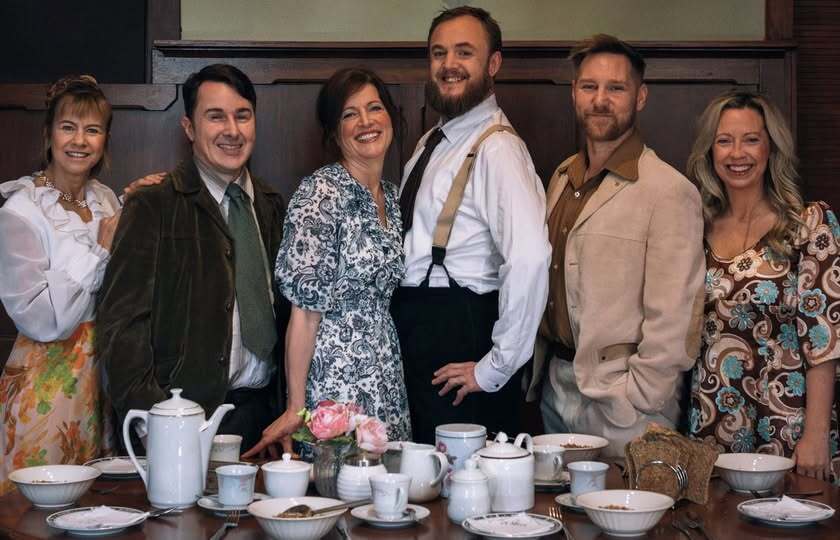
 

Park’s casting is impeccable, as indeed is the blocking – director and actors need to know what they’re doing with backs to the audience – hats off to Samuel Yeo and Ian Staunton for that scene. I found it hard to fault any of the cast – comic timing was excellent, a shirt catching on a chair, a napkin falling to the ground were handled with beautiful aplomb.

Emily Howe plays the frustrated Annie, the only one of her siblings burdened with caring for her mother, (who we never see, but quickly understand is hard work). Emily’s facial and body movements seemed a touch exaggerated in the first act, but otherwise she gives a faultless performance. Alinta Carroll as Sarah spoke so quickly and constantly, during the first act, that I wasn’t sure what she was saying and my head began to spin. I eventually realised she was perfectly in character, as her long suffering husband, Reg, played to perfection by Christopher Hill, dolefully complained. Samuel Yeo as the hapless vet Tom and Ian Staunton as the lecherous Norman (THE NORMAN CONQUESTS!) played marvellous comic foils. The last to appear was Louis Fishwick as Ruth, Norman’s career – obsessed wife, wonderfully believable.

I found the first act a bit tedious and slightly difficult in terms of working out who was who – a script issue rather than anything to do with the actors and I should confess I’m not an Ayckbourn fan. However the second act appealed more and I found myself laughing at several lines, as the characters were exposed. Everyone seemed to gel in that second act, the pace picked up and lines flowed perfectly. But hey, this was opening night, I suspect act one will tighten right up on the second night, these are top notch actors.

Merri Ford has costumed the cast perfectly – I took the era to be late 60s / early 70s and stage management under Andre Beidatsch was seamless. It would also be remiss of me not to mention the well-matched music score written by local composer, Myles Wright.

It really was very satisfying to see such smooth, professional expertise in action. If I was teaching drama, I’d bring my students to this production. Congratulations to everyone involved. Genre perfection.


Greg Ross

To book tickets to Table Manners, please visit https://www.oldmilltheatre.com.au/2026season.

Photographer: Cam Dobie
Spread the word on your favourite platform!

All Things Must Pass: A Play About The Beatles

All Things Must Pass

All Things Must Pass Rating

Click if you liked this article

1

When we think back in history to musicians who have had a profound influence in their industry, and an even greater effect on people who love them, there are a handful of people. George Harrison, John Lennon, Paul McCartney and Ringo Starr were The Beatles, and at the height of their career in the mid to late 1960’s, they caused what was coined, “Beatlemania”.

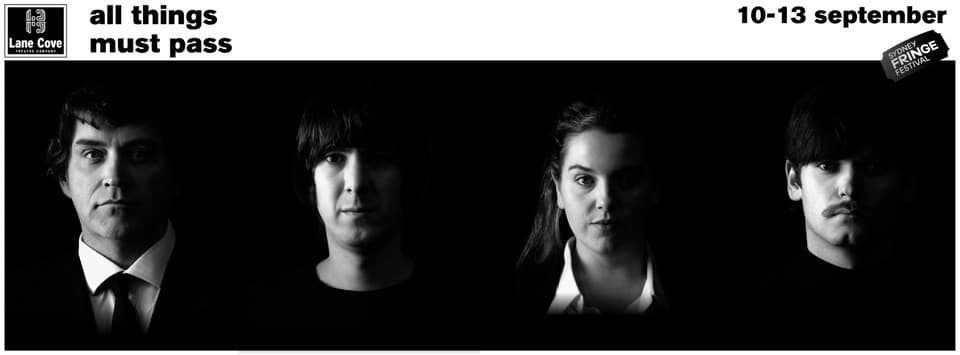
It is during this time when “All Things Must Pass”, a play performed by the Lane Cove Theatre Company, focuses on. Written by David Potter and directed by Luke Derrick, this play takes its name as a nod to one of the solo albums released by George Harrison in 1970. This title makes sense on two fronts. One reason being that the play, although featuring all four Beatles, does have a steady focus on George (Matt Clayton). The other reason I think the title suits, was a bit of a play on words. Following John Lennon’s death, the play examined the aftermath of a friend’s murder, and the grief of the remaining members. Towards the end, George mused, “Life doesn’t conclude, it just stops. What does it mean to us?” thinking that everyone passes and “death is taking off your suit”, so life is one thing that simply passes.

The play opens with George in his living room, silent and upset. It has only been a short while since John Lennon was shot. Ringo, (Blake Nicholas), comes to visit and we quickly see the dynamics of these two friends. Nicholas plays Ringo with natural charm, showing his character’s optimism as his tries to gently cheer up his friend. Paul (Rachel Benedict) arrives and soon they are visited by the memory of John (Clayton Moss).

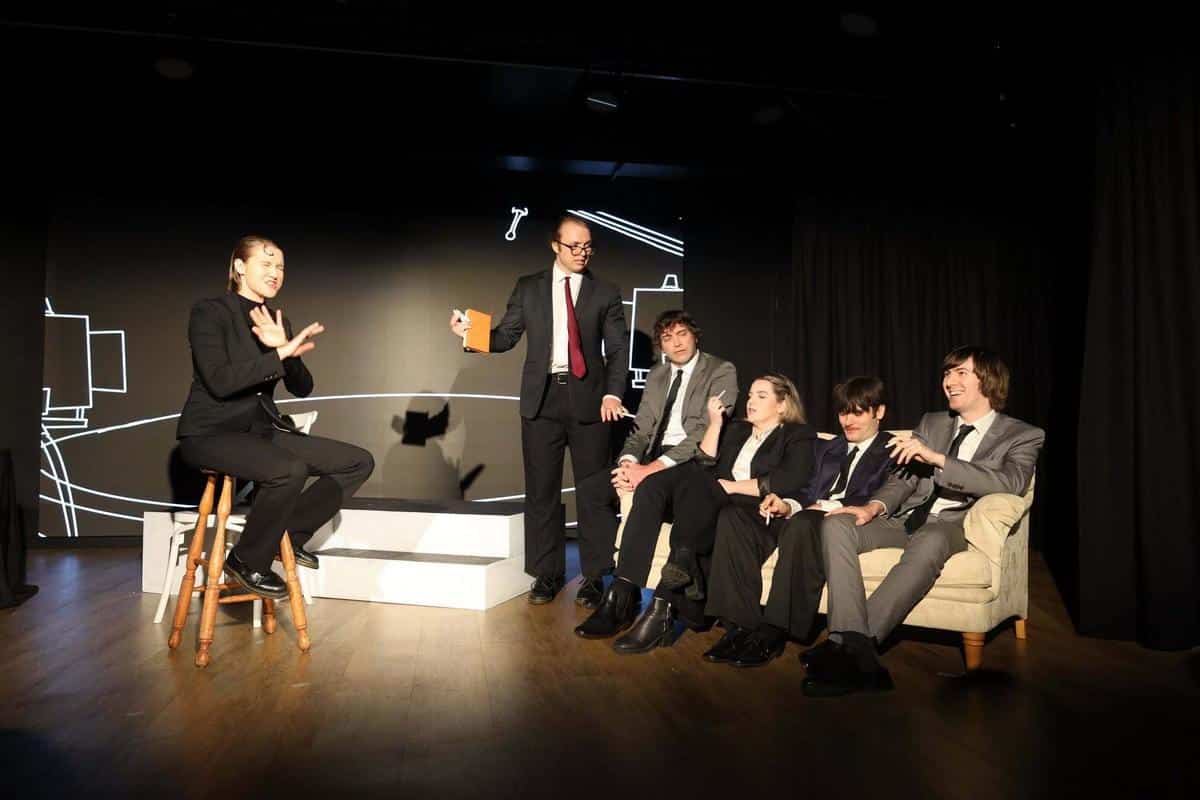
They are soon transported in time back to the 1960’s where all four band members are being interviewed and filmed – bantering on the couch. All four are sitting in a row, squeezed together and completely at ease with each other and with the media. I would say that this scene represented that it was as good as it would get between the band members, and relationships appeared to fracture after this point.

“All Things Must Pass” takes a deeper look into the strained relationships between the four, most notably between Paul and George. It appeared that Benedict’s character Paul was mostly terse and unhappily snarky throughout the entire play, and it may have been purposeful, although this did make him unlikeable. One of his quotes showed arrogance – he snaps at George, “I was the one who made you!” after George brings up that he was unhappy that Paul was suing him. Paul completely refuses to take responsibility for the legal action, blaming his lawyer.


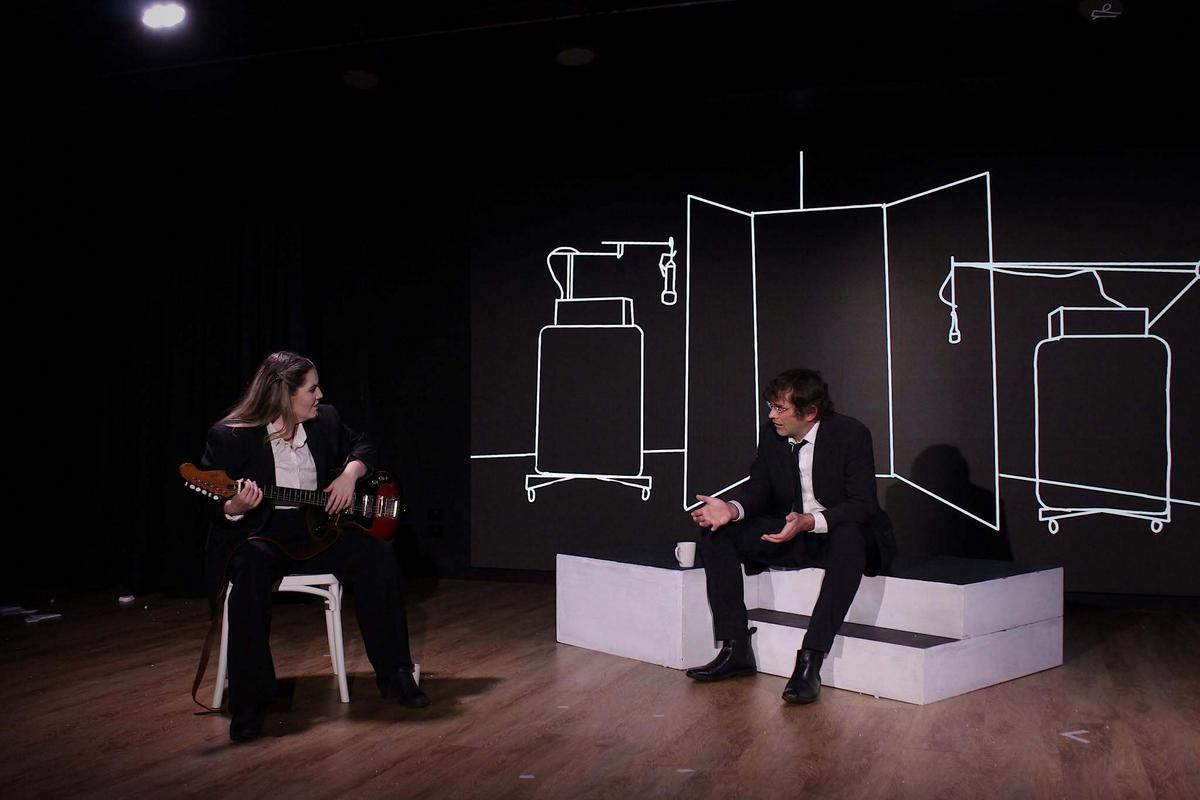
Ringo remained level headed and patient, even playing chess with himself (three games!) as Paul and George recorded in the Abbey Road studios. Nicholas did a great job of portraying Ringo and his laid back character. John, re-joining the three at different times to show the audience what life was like back before he died, appeared later on to take himself away on “trips” (of the pharmaceutical non-legal kind).

Brian Epstein (Nat Jenson) was The Beatles manger and whenever he came onto the stage, he did so in a whirlwind of exuberance, if not a bit over the top. He guided their career and was said to have made their commercial success by putting them into matching suits, securing their record contract and guiding them.

The time periods skipped back and forth throughout the 1960’s and upward, with the intended date projected onto the screen behind the actors. The set was very simple, with a minimalistic look. The screen showed black and white sketches of where they were, sometimes in George’s living room, other tines in the Abbey Road Studio or on a rooftop in London. Costumes were also streamlined. The characters wore suits, with no change of costume.

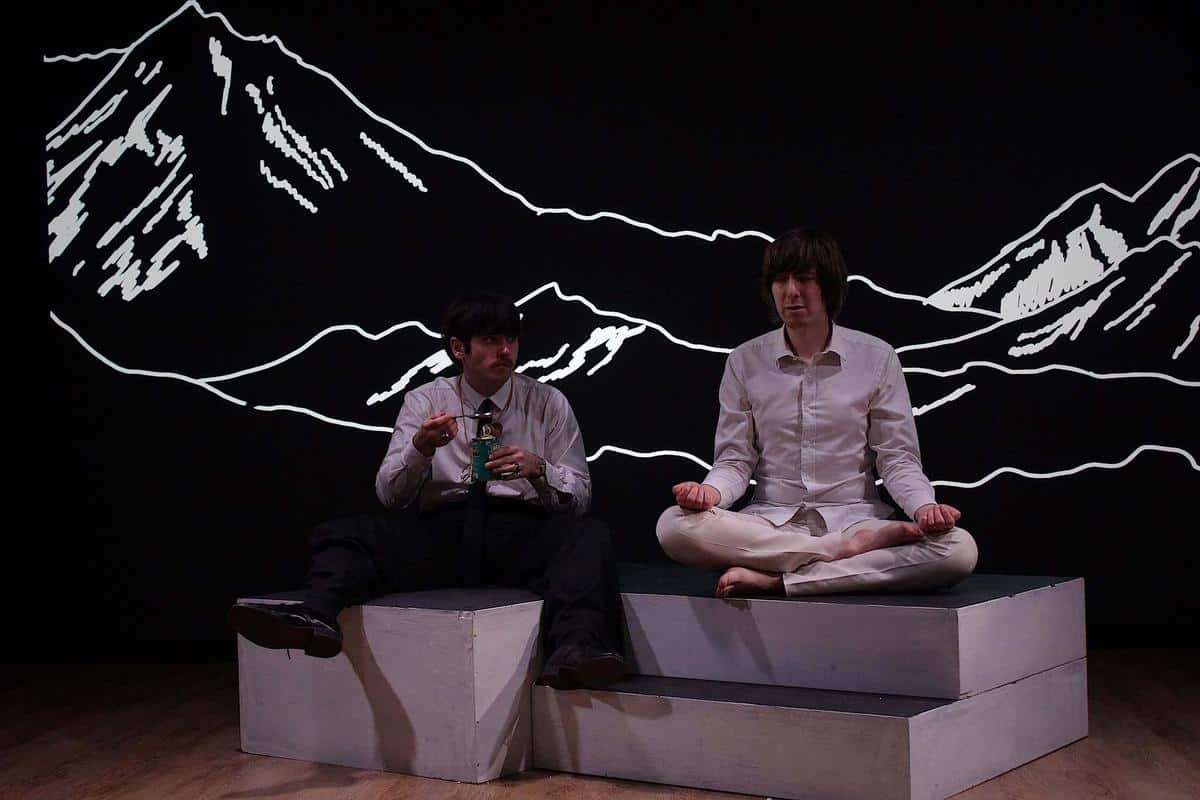
Matt Clayton was a standout in this play. His Liverpool accent never dropped and his portrayal of George Harrison kept the audience riveted. I was impressed by the monologues that George said, which often gave us an insight into his mental health. His way of coping with life after John died was to become immersed in spirituality. In one scene, he was meditating, repeating the “Hare Krishna” mantra over and over, all the while being drowned out by the increasing volume of noise and chaos of the outside world. In this intense scene, it seemed to be a catalyst for the other times where it was mentioned that the screaming and attention of fans were unwelcome. It culminated in George shouting, “Leave me alone with my thoughts! Just let me die!”

Sara Vencalkova and Anastasia Vokhmyakova completed the cast, playing different roles; the reporters, photographers and other characters which added to this story. This is an original play about another side of The Beatles, about being famous, and mostly about friendship, life and grief.

“All Things Must Pass” is in partnership with The Fringe Festival and is on from 10 -13 September 2026 at Pottery Lane Performance Space.

Time: Approximately 100 minutes with a 15 minute interval.

Tickets: www.sydneyfringe.com/events/all-things-must-pass-a-play-about-the-beatles

To book tickets to All Things Must Pass, please visit https://sydneyfringe.com/events/all-things-must-pass-a-play-about-the-beatles/.

Spread the word on your favourite platform!

When the Healers Need Healing: A Tender Journey Through Trauma and Memory

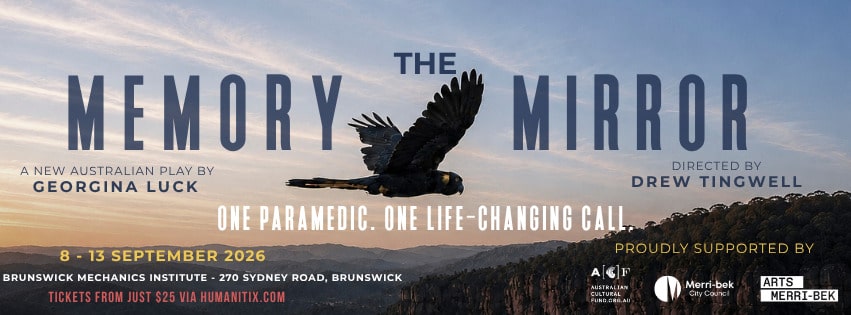
The Memory Mirror

The Memory Mirror Rating

Click if you liked this article

8

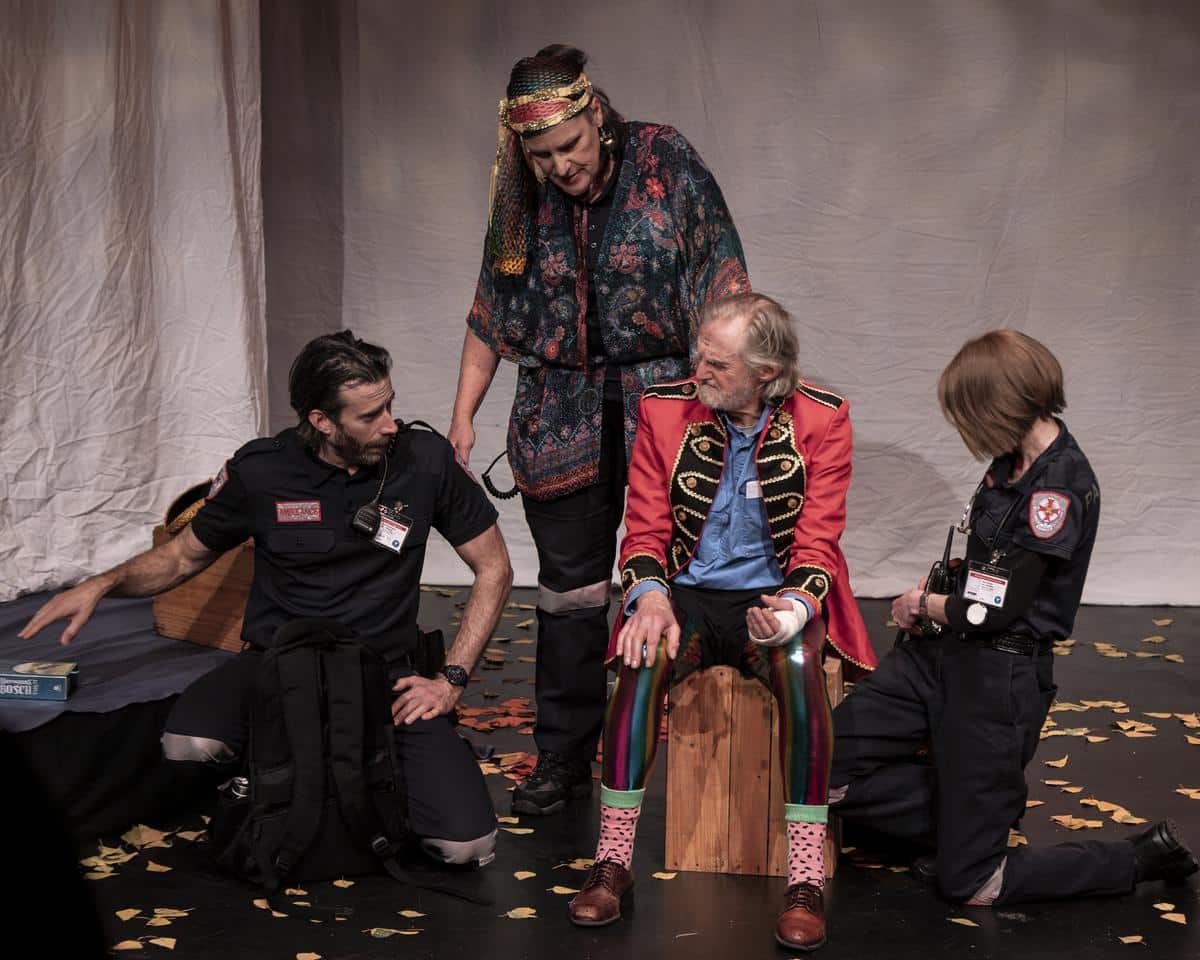
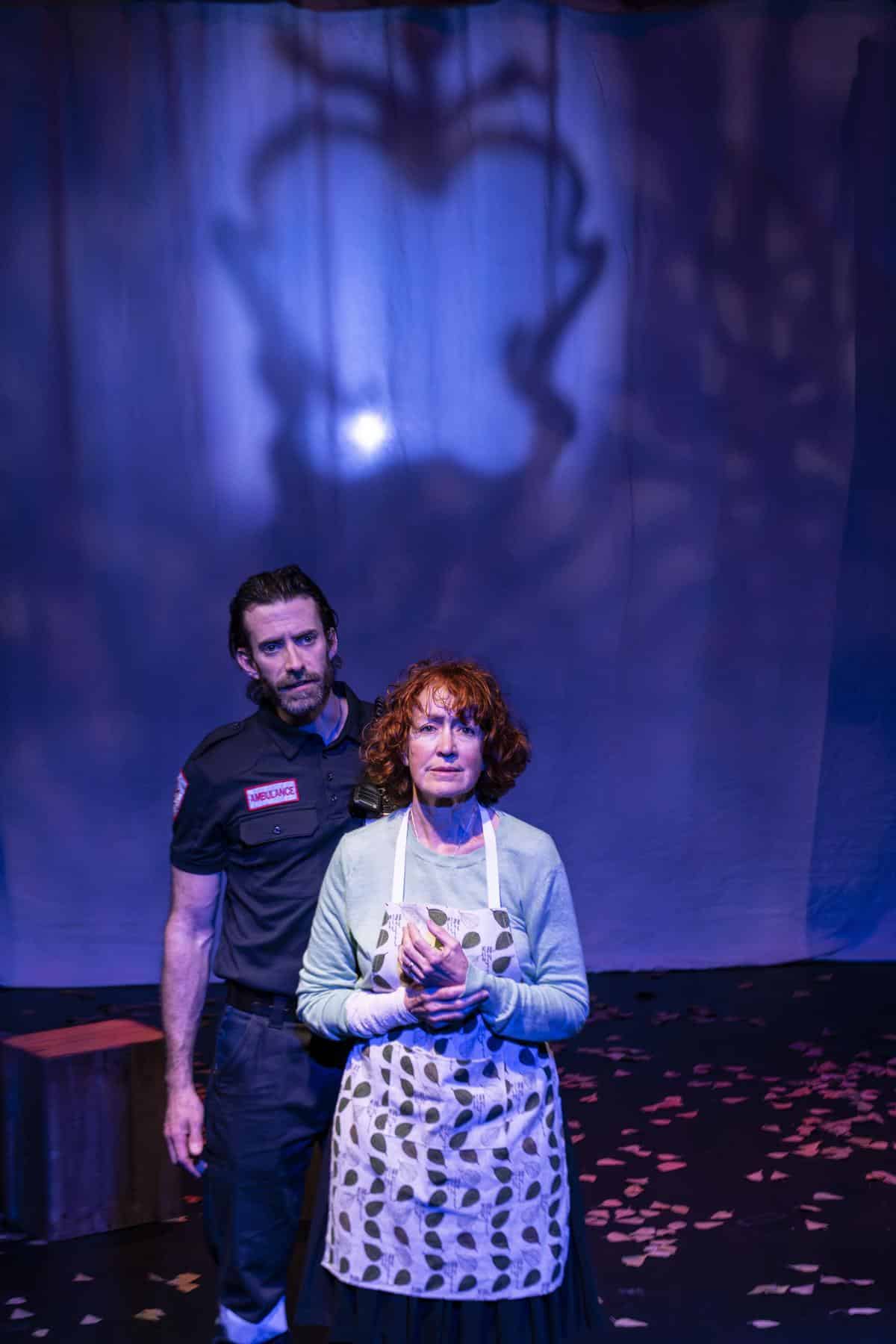
As I sit in my seat, a wave of tranquility fills my soul. I am transported to a place that feels rustic, with dry leaves scattered across the ground, basked in dreamy orange and blue light. Two walls on either side of the stage are layered in natural calico material and sage detailing, setting a countrified scene, with a gorgeous outline of trees peaking through. Teamed with light country music playing in the background, I immerse myself in nature’s sounds, save for a blue emergency light, that flashes on and off to my right.

The location? The lush landscape of the Blue Mountains, at a Mind, Body, Spirit festival, a yearly celebration, where a close-knit mountain community gather together to celebrate their traditional merrymaking.

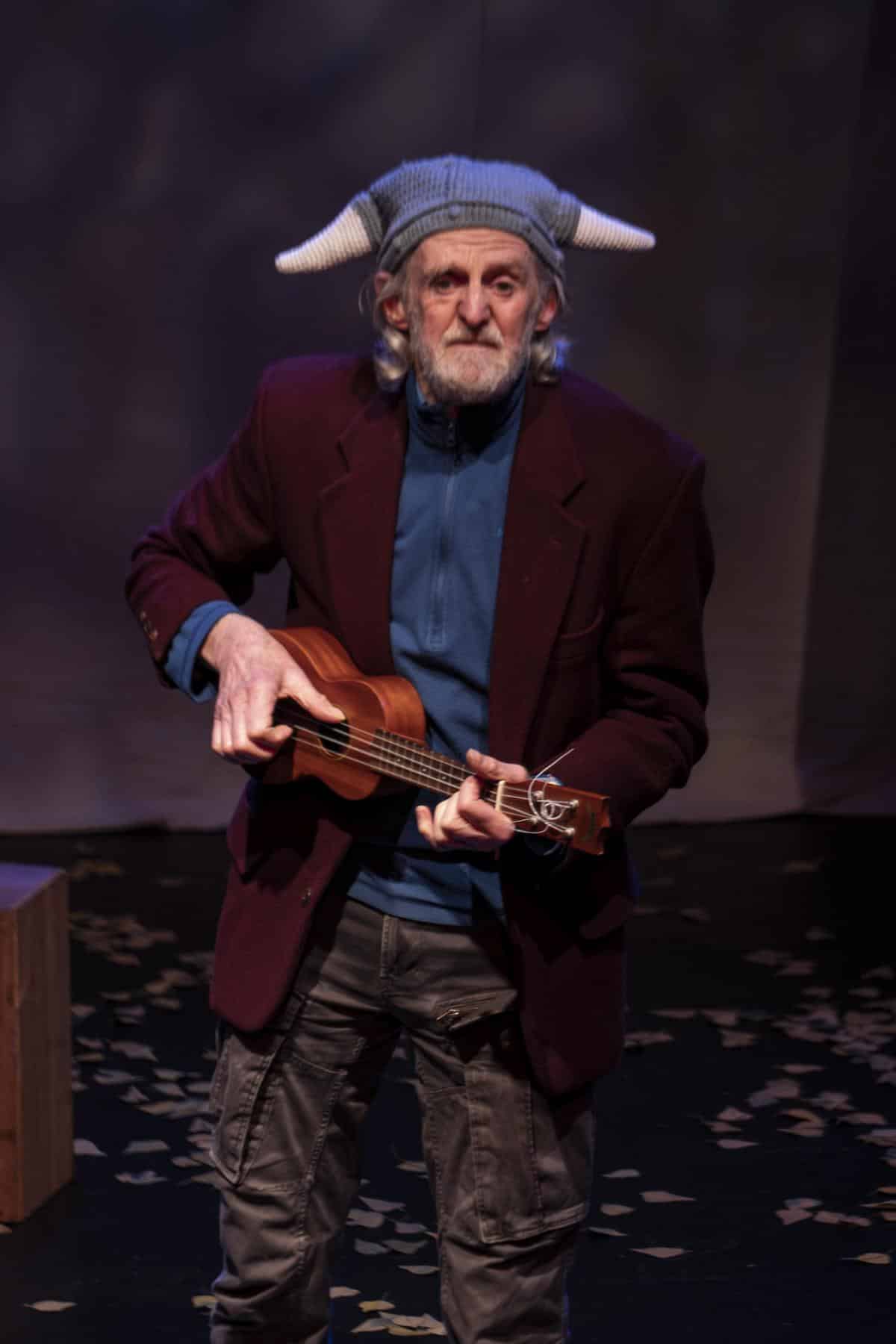
To start, we are introduced to Banjo, the old town larrikin, who draws us in with his humour and entertaining antics. Dressed as a town jester, he promotes the festival’s mystical magic to all and sundry, even us, the audience, are made to clap and participate to become part of the town’s supportive populace. Where we feel the love and support of an entire community.

Yet, under all the ribbing and light-hearted silliness, lies Daniel – the protagonist, a local paramedic who is at his wit’s end, living in survival mode. Years of workplace trauma have taken their toll. He has given years of support to others, but has pent up emotions, clouded judgements and personal demons sitting on his psyche from the past that even he knows he has no more control over.

By a stroke of good fortune, a pair of beloved black cockatoos perched on a branch, Huggin (meaning ‘thought’) and Muggin (meaning ‘memory’), who usually face each other, symbolising balance, are suddenly out of synch. For Muggin is seen by Daniel, to be facing the other direction, away from Huggin. To Daniel and the rest of the townsfolk, this signifies a heavy omen, a mystical plea for help that sets of a chain of events in motion. Yet, it sends Daniel on his own unexpected hero’s journey to healing his inner demons. A vault of his long-buried memories starts to crack open, revealing fragments of trauma he had experienced in the past, down to a specific memory that he sought to erase, which he had spent a lifetime avoiding, and suffering in the process.


In dedicating his life to saving others, this play poses the ultimate universal question regarding these ‘angels on earth’. Who is there to pick up the pieces when they themselves are struggling with trauma and need support?

The answer in this show, is in the healing power of the community they keep. Under the superb direction of Drew Tingwell, this production is brought to life by an extraordinary cast of Australian stage and screen actors who are simply superb.

Notably, Don Bridges as Banjo is the show’s charismatic and eccentric welcome wagon, inviting us into a warm, whimsical mountain environment of open acceptance, with his rogue-ish antics and quick-witted, hilarious timing.

Gabriel Partington, as Daniel, brims with breathtaking emotion throughout the show, perfectly exemplifying the complex roller coaster ride of how suppressed trauma can infiltrate the mind, body and soul. For every nuance, every layer, every physical choice, was flawlessly played, and no doubt, an award-worthy, challenging role to master.

But Margot Knight, simply shines as Mrs. Munro, a wife and mother who balances her life’s complexities with admiration and courage – dedicating her life to her husband and community. Only an actress of her calibre can combine underlying, unimaginable grief with a majestic presence that shines from the inside-out, that invites an audience into her soul so seamlessly and so unapologetically – to feel her character’s unspoken burdens: a journey through the darkness back into the light.

Themes of trauma and the enigma around memory are woven brilliantly throughout this tender work, with flashbacks, memory competitions, and a mythical mirror thrown in, that when looked into, a repressed memory starts to appear. Written and conceived by award-winning playwright Georgina Luck, this world premiere struck me as a beautiful piece of heart-felt theatre that caters to all age groups, and defines the full spectrum of the human experience: including humour, grief, ageing and stress, and how our bodies and minds learn to (rightly or wrongly) adapt and survive through these difficult life transitions.

This show is a must-see for those who believe in something more than what they view in front of them. It is a story of how life can indeed rebalance itself; not by virtue of struggling alone, but with the power of a village behind us. To walk us on through, and bring us back to life.

To book tickets to The Memory Mirror, please visit https://events.humanitix.com/the-memory-mirror.

Spread the word on your favourite platform!

Scenes with Girls: Complex, Contemporary Tragicomedy

Scenes with Girls

Scenes with Girls Rating

Click if you liked this article

1

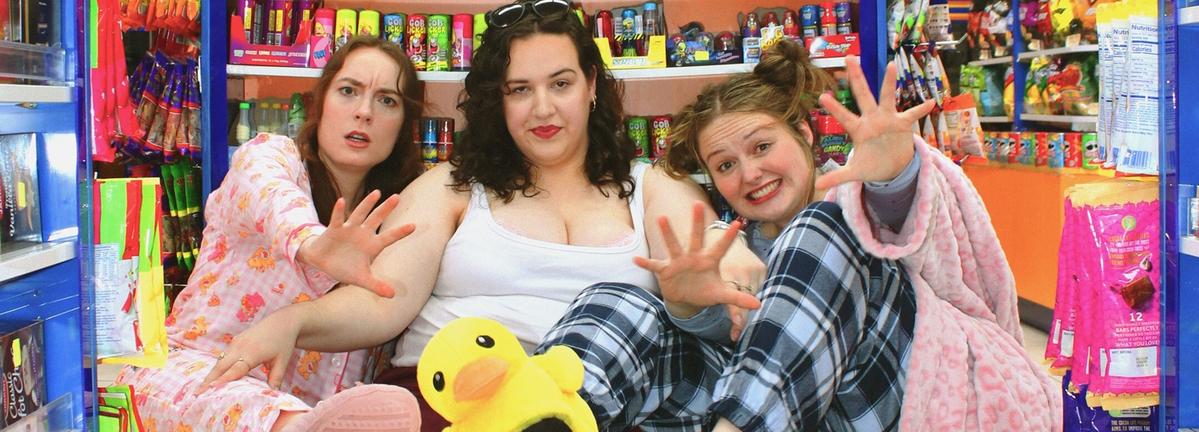
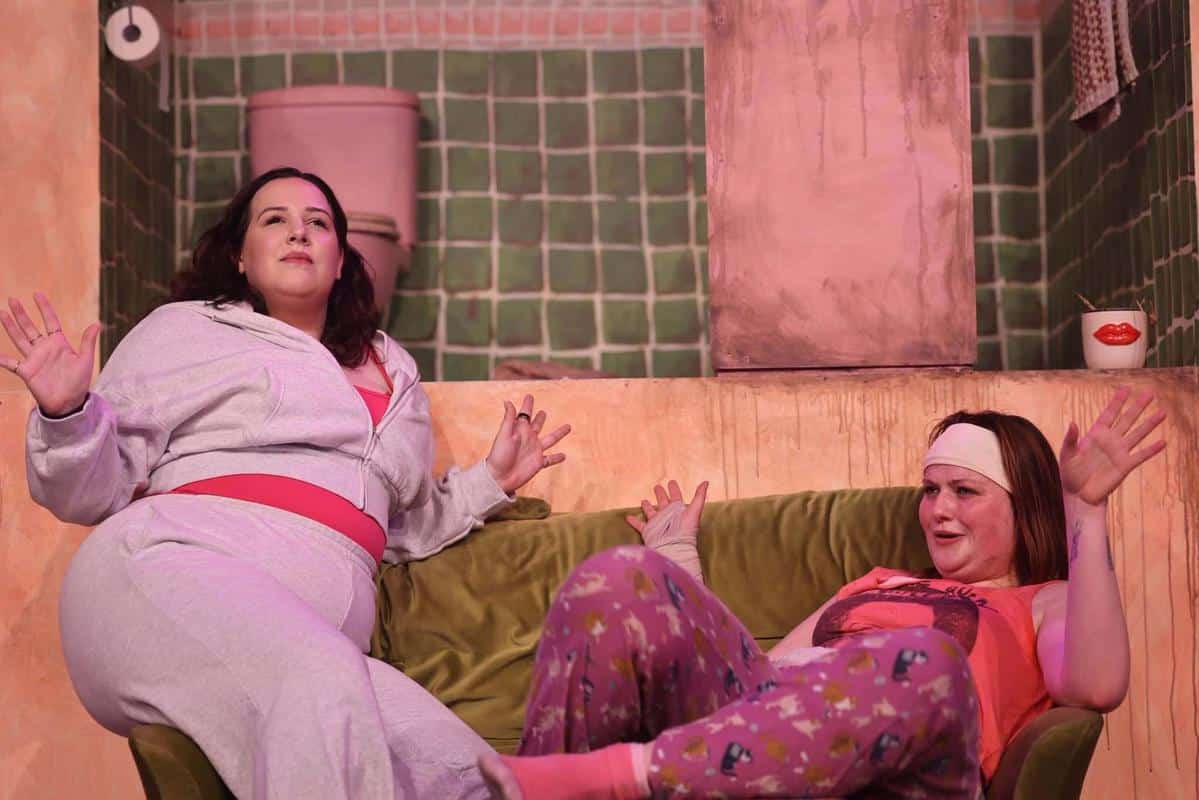
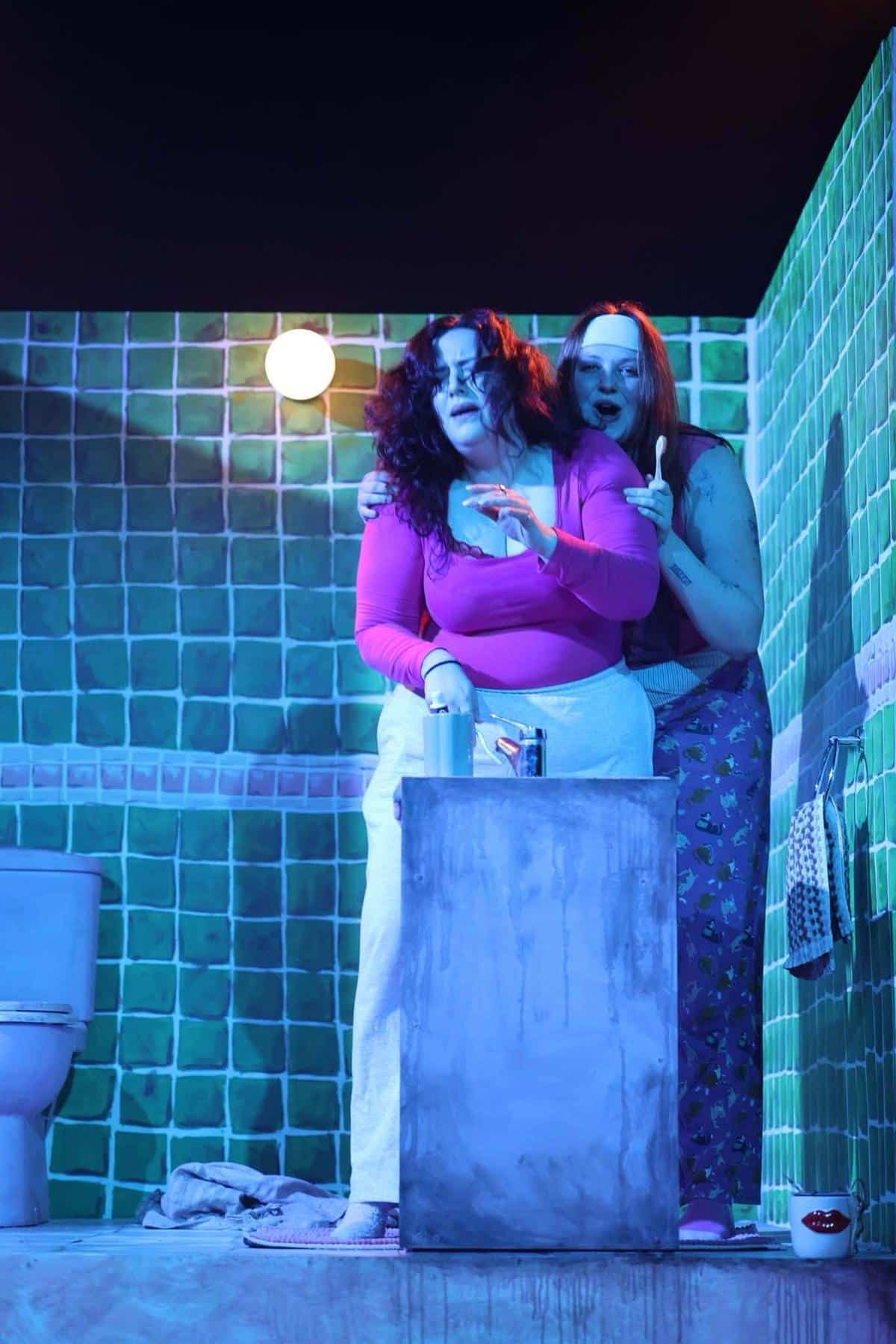
Salad Days Collective return rowdily with Scenes with Girls by Miriam Battye, a story exploring the contradictions of friendship between three younger women, living lives alone, together. Set primarily in the intimate setting of a share-house lounge room and adjoining bathroom, Scenes is a chaotic, compelling and a non-linear romp which traverses the entire emotional spectrum, successfully balancing both light and dark themes throughout. The play is a thoughtful choice, which seems well aligned with the Salad Days Collective, a fast and fiercely evolving creative company, guided by the principle that theatre can’t be polite to be powerful.

A noted playwright and screenwriter, Miriam Battye writes unapologetically and with freedom; In interviews, she acknowledges her tendency to actively complicate her plays, and Scenes with Girls is a likely example of that, perhaps deliberately evasive in parts (what is the actual deal with Fran’s relationship?!) leaving the audience a lot to contemplate and resolve, and the performers plenty of wonderful space to play in. While certain plot points don’t all wrap up clearly or fairly, this adds honesty and texture to the tale; It is fair to say that sometimes friendship is the greatest love story of all, and the path to true love never did run smoothly. Themes and dialogue come from a reality of twenty-something females, yet Scenes with Girls transcends gender and age, boasting belly laughs to boot.

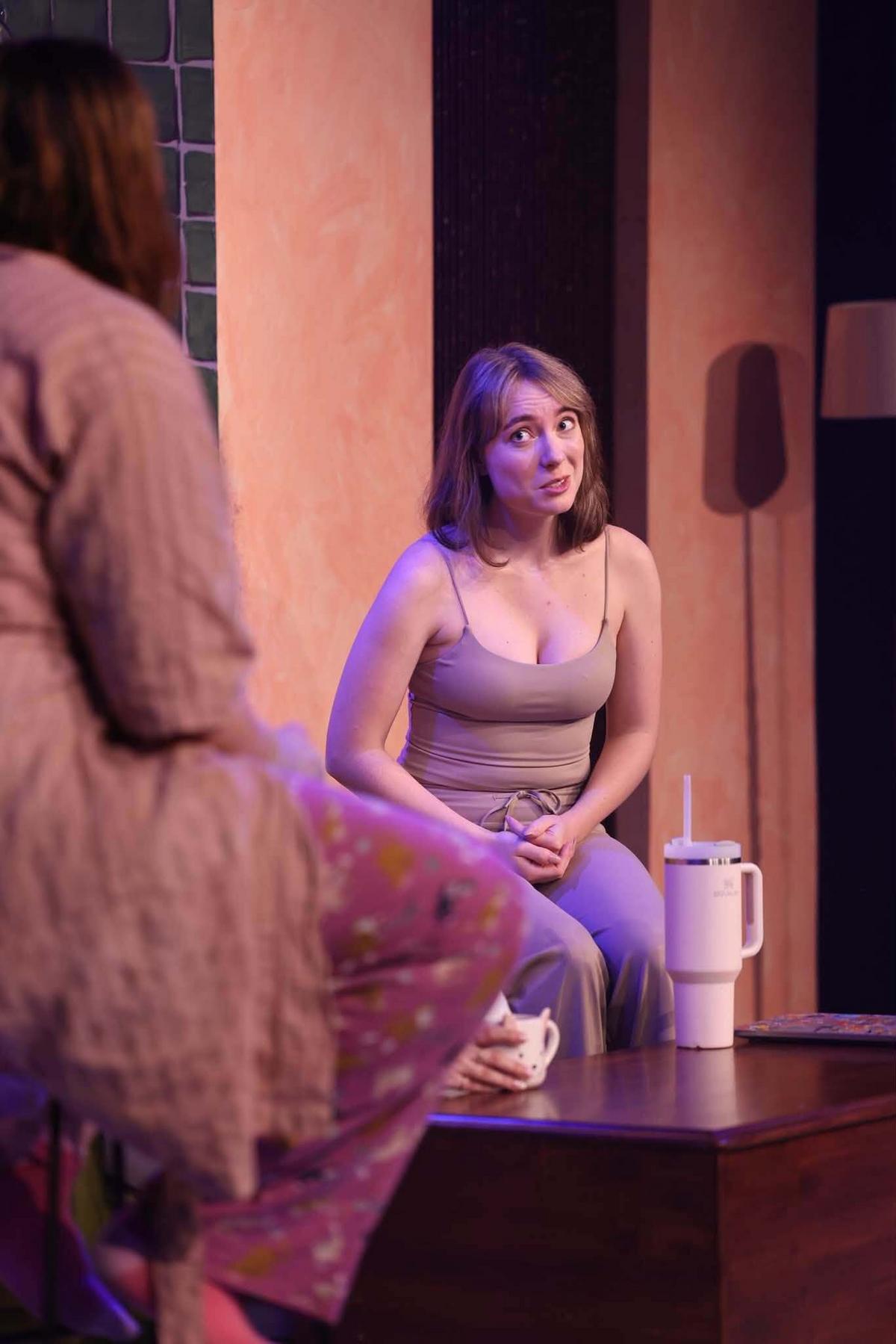
The central performers each bring their own magnetic madness to the stage. Lou and Tosh (Hannah Ward and Jasmine Prasser) are the main protagonists, and regular antagonists here; Fran is certainly part of the story, but she is typically on the outside looking in. It’s not entirely clear how much she deserves that based on the past, but she might do – there are of course different subjectivities and recollections within any friend drama! Hannah Ward and Jasmine Prasser shine on stage, projecting honest emotional connection in their individual ways, committed to their characters, and each other. Lou and Tosh each embody the contradictions of the play itself, which the performers have embodied beautifully – vulnerable yet vicious, funny and fallible, brave but not always. As Fran, Georgina Sawyer brings sympathetic restraint, winning the audience’s loyalty and concern. Fran cares and tries in a world where such qualities can be construed as failings – or is it that she forces things too much?

Director Ruby Sanders and the entire Creative team have done a fine job with Scenes with Girls, putting their guts out on stage with courage, style and humour. I enjoy the girl grunge of the set and mood-making sound and lighting design, operated with impressive precision. Scenes with Girls is altogether a play worth seeing and makes me reflect on the transformative and provocative power of both theatre and friendship. A complex, contemporary tragicomedy that is enthusiastically recommended.

To book tickets to Scenes with Girls , please visit https://queenslandtheatre.com.au/plays/scenes-with-girls.

Spread the word on your favourite platform!

Subscribe to What's The Show

Reviews, show news and what is on, straight to your inbox.