The Game Is Afoot… And Slightly Off The Rails

Innes Lloyd - The Lost Casebook of Sherlock Holmes

Innes Lloyd – The Lost Casebook of Sherlock Holmes Rating

Click if you liked this article

I had the pleasure of attending The Lost Casebook of Sherlock Holmes by Innes Lloyd last night as part of the Melbourne Comedy festival and it was one of those intimate, slightly chaotic and genuinely enjoyable theatre experiences that remind you what live performance can feel like when it’s happening right in front of you and, occasionally, almost on top of you.

The venue, the Impro Melbourne Theatre, was comfortable but tiny and we were seated so close to the stage I could have comfortably rested my feet on it. My companion described it perfectly, it didn’t feel like watching a play so much as watching people. There’s something disarming (and slightly voyeuristic) about that level of up close and personal proximity. You can see every flicker of expression, every moment of hesitation or delight. At times it made it harder to fully drop into the world of the story, but it also created a kind of immediacy and shared experience that larger productions can’t replicate.

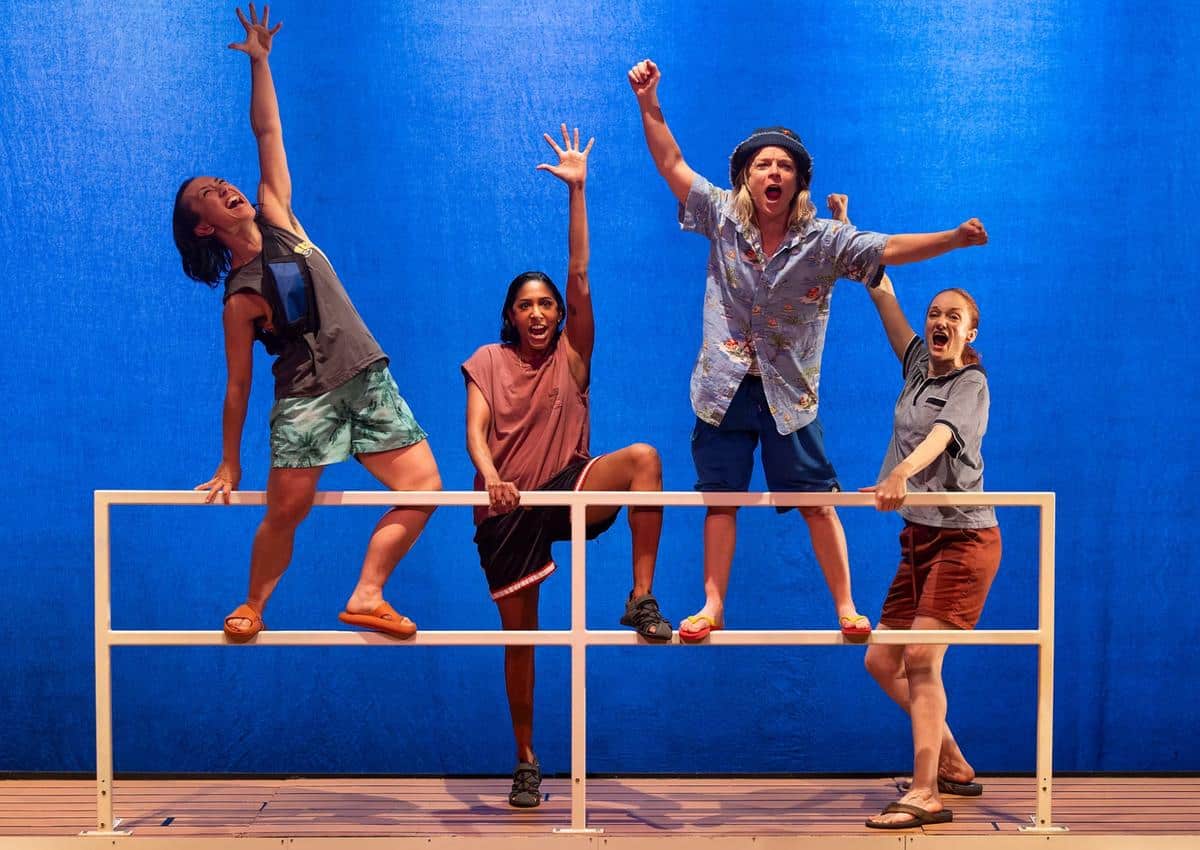
The premise is a clever one: three legendary “lost” Sherlock Holmes case files, mysteries Sir Arthur Conan Doyle himself hinted at across his impressive written works but cases that while connected to existing Sherlock Holmes tales, are entirely improvised – which gives clever improv actors an awful lot of room to play in! From this simple starting point, the four-person cast built a series of unfolding stories, moving fluidly between characters and locations. We met the foul-mouthed Victorian street urchins (the Irregulars), various members of the landed gentry, Dr Watson, Sherlock Holmes himself plus his corpulent brother, Mycroft and bumbling, dim-witted Inspector Lestrade with a particularly memorable foot fetish. There was also a funny thread involving Cluedo that wove its way through the third story, adding another layer of playful absurdity.


What stood out most was the ensemble’s commitment to the form. Improv, at its best, is a kind of high-wire act – a balance between structure and spontaneity, where performers are constantly listening, adapting and building something together in real time. There were a few inevitable fluff-ups (it was opening night), but rather than detracting from the show, these moments often became highlights. The cast leaned into them, supported each other and turned small stumbles into shared jokes, which delighted and deepened the connection with the audience.

That willingness to embrace imperfection is part of what makes improv so engaging to watch. You’re not just seeing a finished product – you’re witnessing the process unfold. There’s a generosity in it – a sense that everyone, performers and audience alike, is in on the same experiment.

The audience appreciated the small facts and trivia woven in about Sherlock Holmes and his creator, Sir Arthur Conan Doyle and are apparently something of an integral part of all Innes Lloyd shows. These touches added a layer of texture and gave the show a gentle nod to its literary roots, even as it gleefully departed from them.

The overall feeling of the performance was one of enthusiasm, wit and genuine enjoyment. The cast clearly put their heart and soul into it and that energy carried the show. Improv is rarely about polished perfection, but rather about play, presence and the joy of watching something take shape in the moment.

All in all, it’s a lively, inventive and warm-hearted night out – especially for anyone who appreciates the unique magic of improv and the thrill of seeing something created right before your eyes.

To book tickets to Innes Lloyd – The Lost Casebook of Sherlock Holmes, please visit https://www.comedyfestival.com.au/browse-shows/holmes-unbound-the-lost-casebook-of-sherlock-holmes.

Spread the word on your favourite platform!

We Laughed, We Cried, We Grooved, We Swooned!

A Transgender Woman On The Internet, Crying

A Transgender Woman On The Internet, Crying Rating

Click if you liked this article

1

Wow. Yesterday was the International Day of Trans Visibility, and what better way to honour such an important occasion than by seeing Cassie Hamilton’s hyperpop musical, “A Transgender Woman on the Internet, Crying”.

I love the Old Fitz, not least because of the complete transformation of the set with every new show. This one was brilliantly done, with stylised graffiti and old skool speakers that pumped out the hyperpop hits. What is “hyperpop”? Thanks, Mouth_Feel, played by Rosie Rai, for answering that question. This is one of many questions raised, asked, and answered in this powerful and vulnerable piece of work; some you never thought to ask, some you should have thought to ask, and some most of us have no right to ask. All are handled with a delicate balance of truth through song, delivered with poignancy and emotion by this incredibly talented cast.

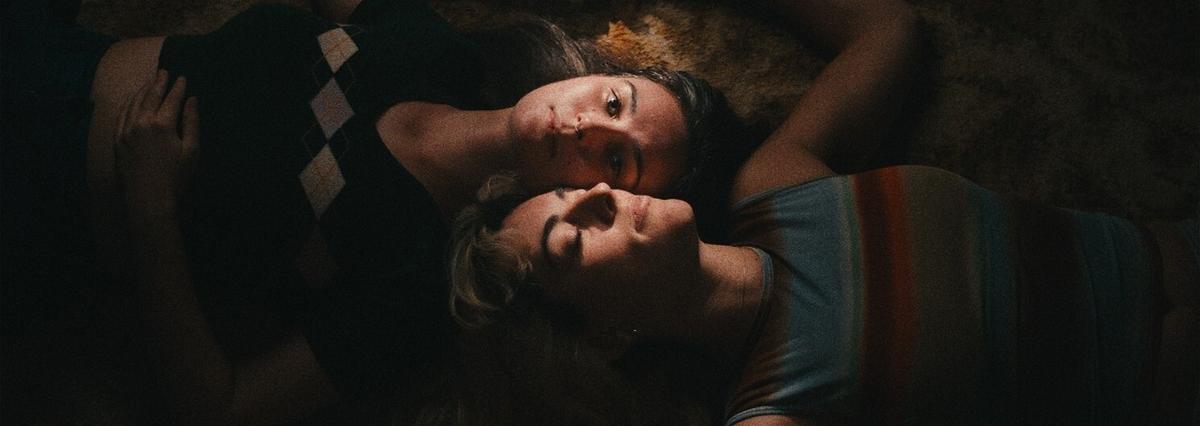
The story centres around Avis O’Hara, aka the DIY Doll, played by the epically talented writer and creator Cassie Hamilton. Avis has built an online platform by leaning into being “the right kind of trans”; with an emphasis on “right”, where those internalised self-hate pathways sometimes end up aligning. I first came across Cassie Hamilton in ATYP’s production of “Converted!” and was excited when this project was announced, eagerly awaiting a Sydney season. Even more so when two of my favourites, Blake Appelqvist (who I’ve been fangirling since Fangirls) and Teo Vergara (stole my heart in Jagged Little Pill), were announced, and it was a pleasure to make the acquaintance of the equally talented Rosie Rai. These four powerhouses bring their own unique authenticity and depth to their characters. Blake plays Corrin Verbeck, a left-tube vlogger who, along with besties Mouth_Feel and Sasha (Vergara), is sick of the toxic messaging by people like Avis and conspires to expose her.

It’s a classic frenemies-to-lovers story, but also a beautiful celebration and deeply moving collective healing and purging of complex trauma for one of the world’s most marginalised and persecuted groups of people. The foursome harmonise beautifully, with vocals (musical direction by Lillian Hearne) and choreography by Dan Ham and Riley Gill that allow each performer to shine.


Jean Tong’s direction is a real asset to the production, grounding and guiding the chaos with a deft hand. Tong allows high energy and spontaneity to flourish while maintaining a sharp pace and a strong emotional through line. There is a kind of guerrilla-theatre quality to the staging that feels entirely appropriate here, and the performers absolutely thrive within it. It is a confident, responsive directorial vision that gives the work room to be both playful and devastating.

The creative team deserves huge credit for the world they’ve built. Ruby Jenkins’ set is grungy, eye-catching, and feels like a playground for the characters to gleefully exist in. Rachel Lee and Nick Moloney’s lighting leans into cliché musical-theatre lighting state, and the work is better for it. Dan Ham’s choreography is crafted not only to capture each character’s movement, but to allow each performer to comfortably move within their abilities and fully relish the dance breaks. The lighting and sound design are engaging and responsive, with one of the most impactful moments coming when the production makes the brilliant choice of pure silence at a significant emotional peak.

The trans joy and journey are loud and proud, as they should be. But this work is also an important commentary on the fast-moving pace of online interaction, how quickly acceptance and encouragement can turn into control and isolation, and then just as easily flip into hatred and the dreaded “cancelling”. It highlights the impact of keyboard warriors and the knife’s edge of finding online belonging while surrendering freedom, autonomy, and authentic self-expression. It shines a dark light on the struggles many face when it comes to cyber culture, particularly in specific communities.

The audience was thoroughly engaged throughout. We laughed, we cried, we grooved, we swooned. This is a truly well-written, beautifully crafted show that is a must-see. I might just need to go along and see it again if I can manage to secure a ticket before they sell out.

To book tickets to A Transgender Woman On The Internet, Crying, please visit https://www.oldfitztheatre.com.au/a-transgender-woman-on-the-internet-crying.

Photographer: Brett Boardman

Spread the word on your favourite platform!

Metropolis Monologues Showcase Two

Metropolis Monologues Showcase Two

Metropolis Monologues Showcase Two Rating

Click if you liked this article

2

(Note: Metropolis Monologues is presented in two groups, and each night the monologues are followed by the play Who I’m Doing This For by Peter Farrar. This is a review of the second group of monologues – I have reviewed the first group and Who I’m Doing This For separately.)

As I mentioned in my first Metropolis Monologues review, the format of five monologues from five writers performed by five actors is enticing to anyone who wants to see fresh indie theatre in Melbourne. Although I enjoyed the first showcase, this second half of the series is where the format really blossomed for me. While both batches had the same director (Karyn Lee Greig), this set of monologues felt more thematically cohesive, since they all revolved around ideas of home and family: where it is, what it means, and how to find it.

In The Good Deed (written by Jeannie Haughton), Monique Kerr plays a beleaguered mother driving the kids home from school, until she sees an old man beside the road who might be in trouble. Kerr’s physicality really shines when she imitates the old man and her children, and this is coupled with writing that perfectly suits those voices. The piece also sets a good tone because the use of lighting and sound effects to establish a suspenseful tone is already more dynamic than in the previous set of monologues. The main character was likeable and full of fun quips, and this led to an ending that felt both heartfelt and earned.

Renovation Ruin’s main set-piece is a battered, graffiti-laden toilet. In Bruce Shearer’s bizarre monologue, Donna de Palma’s character opens the door to a stranger who just wants to use the bathroom, and uses the visitor to pour her heart out about a relationship gone wrong, and the renovation project she’s undertaking to try and exorcise herself. The writing style is evocative and erudite, and de Palma’s organic acting creates a great sense of unease around this character; how much of her behaviour is melodrama, and how much is her actually losing her mind? The ridiculous toilet quickly becomes a clever metaphor for her broken relationship, and the way that the last line ties that symbolism together is absolutely fantastic.


Leisa Whyte’s Deep Breath introduces us to a young man (played by Anthony Pontonio) struggling to find himself. He has taken a break from university to stay in a beach town, and after getting a job as a barista, he starts to wonder if he could stay there for good. Also, he hears voices in his head, which may be anxiety, a superpower, or something in between. Pontonio gives a gorgeous performance here; there are so many subtle physical moments that could just as easily make you laugh as give you heartache. There is a constant sense of something about to snap under his calm veneer, cultivating a character who comes across warm and sympathetic, but also a bit scary. This piece captured what it’s like to feel at home while also longing for one, and more than any other monologue, I wanted to see more of this character after it ended.

In Wakeup Call, when an old woman sees a neighbour’s home being cleared out by her sons, she becomes worried about her own complicity in this woman’s fate, and her own future. Maree Collie’s writing brings some much-needed humanity to a character who could otherwise be a stereotypical ‘crotchety old lady’. Both writer and actor (Clare Larman) handle the fear of growing old and being abandoned with a deft mix of comedy and solemnity (“What will they toss out first: my life or me?”). The easy-going nature of the character made moments where she snapped feel more palpable, but the multiple instances of her observing exactly what was being thrown out of the house did feel somewhat repetitive. Some of the trains of thought that she expressed also felt like they weren’t fully followed through; it was an enjoyable piece and performance – I just felt that it could have made its themes even stronger.

The final piece, Dream Home (written by Louise Hopewell) centres around a woman (played by Charmaine Gorman) who has recently discovered that a woman tragically died years ago in her house. She is haunted less by a ghost and more by the knowledge she now has, and the sense that she is being watched by the dead woman. The writing takes its time, building a sense of intrigue about all characters mentioned and conveying the hesitancy the main character feels about speaking to the dead. Gorman’s performance is fraught with sympathy and confusion; she makes you feel the looming presence of somebody else in the way she speaks, and you feel for the lack of support she’s experiencing. With a silent sequence of lighting a candle, the showcase ends on a quiet, pondering note.

In one way or another, all five monologues see their characters questioning their relationships to their home, family and how they fit into their own lives. While I think both showcases were consistent with each other in terms of the writing and acting, the thematic cohesion in this second set took it from good to great. MWT has created a fantastic format for theatre writers and actors of all levels, and I look forward to seeing it return next year.

To book tickets to Metropolis Monologues Showcase Two, please visit https://melbournewriterstheatre.org.au/.

Photographer: Mina Shafer

Spread the word on your favourite platform!

Metropolis Monologues: Showcase One

Metropolis Monologues Showcase One

Metropolis Monologues Showcase One Rating

Click if you liked this article

1

(Note: Metropolis Monologues is presented in two groups, and each night the monologues are followed by the play Who I’m Doing This For by Peter Farrar. This is a review of the first group of monologues – Who I’m Doing This For and the second group will be reviewed separately.)

Metropolis Monologues is an exciting prospect for anybody interested in fresh, diverse works by fresh, diverse writers. Ten monologue performances are split over two instalments, each lasting ten minutes, each with a totally different self-contained story. This spotlighting of new work is to be expected from Melbourne Writers’ Theatre (MWT), who produce numerous annual initiatives to get new work staged and seen. One would expect a mixed bag with so many scripts involved, and some of the writing and performances did work better for me than others. Overall, though, the work was of very high quality and a great springboard for a talented group of theatre makers.

Metropolis Monologues’ director, Karyn Lee Greig, clearly emphasizes physical action as a path into story and character. The first monologue, Run (written by Jennifer Beasley), makes this obvious, as an Olympic runner prepares for her first race after recovering from an injury. Words like ‘run’ and ‘double-back’ take on new meaning as she flashes back to a traumatic past that she tries her hardest to outrun. Emerson Hansford gives a lot of life to this character, especially when she’s imitating other people, and the near-novelistic writing and punchy ending made for a very strong start to the show.

James Hassett’s The Reckoning is shrouded in mystery, as Stephen Najera’s character castigates an unnamed group of criminals for their complicity in the face of wrongdoing. Najera plays the role with an interesting, slippery edginess, and there are many lines that feel cathartic and sadly relevant. While some people might like the ambiguous writing (who is this person exactly? who is he talking to? what did they do?), I felt that without specifics, the monologue lost quite a bit of the power it could otherwise have had. A clearer arc for the main character could have also made the themes hit harder.


In The Decision (written by Kat Adams), Natasha Broadstock plays an older woman deciding whether to leave her husband. Broadstock plays frustration very well, and it seemed from the audience’s reactions that many people resonated with the description of a marriage that, while not terrible, isn’t very fulfilling or loving either. The back-and-forth did feel a bit one-note and I wish both character and actor were pushed into other emotional territory. The ending, without spoiling it, also felt like a bit of a cop-out to the character’s dilemma.

Louisa’s main character is also in a complex relationship with her husband, but Christine Croyden takes us to another time period entirely. Louisa (played by Sarah Hamilton) is a housewife and mother in the Gold Rush era, and both character and performance were incredibly likeable. Out of all five monologues, this one gave me the greatest sense that I was being spoken to directly, as if I were an old friend chatting with her over the fence. The commentary on gender roles is subtle but ever-present, there is a great balance between light-hearted and tragic moments, and the ending has a fun twist that brings home the themes and character journey perfectly.

The last monologue, The Man Behind The Mask, is also a historical piece, but its themes about accepting difference and disability still ring true today. Alison Knight’s monologue follows a war veteran (played by Asher Griffith-Jones) who was left facially disfigured after combat. Griffith-Jones is perfectly cast for the role; his poise and charisma clearly hide deep wells of fear and anger, and the script is peppered with humour so dark that only the main character finds it funny. While the literal mask that the character switches into before the end doesn’t fit well (which does spoil the emotional climax somewhat), it is immediately followed by the best use of screen projections in the whole show. It was a very moving end to a set of well-crafted performances and texts.

Overall, I enjoyed all five monologues and felt the freedom and joy of the actors and writers as they explored thought-provoking, diverse scripts. It’s great that Melbourne has organizations like MWT providing platforms for small-scale productions of new work, and I’ll definitely be looking out for the names listed above in future shows I go to.

To book tickets to Metropolis Monologues Showcase One, please visit https://melbournewriterstheatre.org.au/.

Photographer: Mina Shafer

Spread the word on your favourite platform!