Tagi o Le Text-Based-Performance-Artist! : Working Class Clown

Working Class Clown

Working Class Clown Rating

Click if you liked this article

1

Mmmmmm… conceptual. Such was the tagline of Tommy Misa’s seventy-five minute exploration into grief and culture, Working Class Clown. And yet, what was immediately impressive about the piece, is that it wasn’t. Not really. The show, although tackling conceptual ideas, used Samoan clowning and a deep and grounded connection to the mundanity of life to traverse those ideas with an empathetic intelligence and humour that made sure it never flew too unreachably high into cerebralism. In the towering industrial theatres of Carriageworks, a stage set with what upon first glance looks like nothing more than a pile of leaves and towering poles is nestled. Against the concrete backdrop, they seem almost out of place as natural objects, which, in many ways, becomes the point.

As the piece opened, Misa’s performance strengths became immediately obvious. Misa moved like a dancer, each micro-adjustment fluid and controlled; a charismatic performer with an easy sensuality that spoke to the argument of the piece. Every emotion, confusion, grief, excitement, happiness, sat firmly in his body as the narrator took us through one of the early Samoan myths of creation. As he joined us in the modern day, we were gifted with the stunningly effective costume design of Katie-Louise and Lilian Nicol-Ford, an oversized blue linen shirt and pants that effortlessly elevated Misa’s physical work on stage. This was accentuated once more by Amber Silk’s lighting design, done so well and concentrating each moment so deliciously that I am officially converted against the lights-up lights-down shows I once championed.

As we moved into the modern day, the piece took on its more grounded, honest edge. We joined Misa in line for Centrelink, and felt both their boredom and desperation as the system once again ignored them. Both we, the audience, and Tommy, the performer, coped with this ignoring of our needs through laughter. In front of our eyes, Tommy became the disinterested government worker, the eastern suburb white friend who can never truly understand what poverty feels like, and the teachers who turned their nose up instead of reaching out with understanding.

Each moment, when scratched just beyond the surface of humour relays a tragic institutional truth about our society, and yet, when faced with the reality of what little those of us who are ignored by the system can do about it, our only choice is to laugh. Laughter, in a sense, was the thesis of the piece. Can we decolonize ourselves through laughter? Can we use it to move through grief? Can we use it to heal?


Another significant throughline of the piece was language. Like many, growing up in primary and high school in Sydney, I was told that most indigenous languages in Australia and the Pacific were either dead, or mostly dead. The hidden underlying message of that wording being, there’s no use bothering to try and save them. Working Class Clown disproved this with a grin and audience participation. As the sole performer on stage, the audience, in many ways, became the secondary character, and our interaction was done almost entirely within the framework of the Samoan language. Through the comedy of the text, and the mass of people learning at the same time, one thought came immediately to my mind: this isn’t that hard. And so I return to comedy as a tool of decolonization.

Perhaps the tragedy of high school and university history classes had told me that imperialism was simply too great a power to ever contend with, but here, in this room of strangers, imperialism showed its delicate white underbelly and revealed to us its weakness of empathy. This also connected us intimately to the culture being explored on stage, and allowed us to almost grieve as a collective, and in turn, provide Misa with the safe space to be as vulnerable as he was.

As a performer, Misa continued to impress. His vocal work was deliberate, and controlled right down to the breath work, which we heard perhaps too much of at the level his mic was set at. Their comedic timing and character work remained a highlight of the show experience, and his subtle shifts into the emotional lowpoints of the script once again proved to me the power of the double-sided coin of comedy and tragedy. Further, the piece sat very culturally inside Sydney, which was a welcome change from the more conceptual shows on the market which are set more inside an “idea” than a place. Towards Misa’s more emotional moments, he did briefly fall into rhythmic traps which leaned more demonstrative than legitimately emotive, however with the content being discussed, I couldn’t truly fault them. It also didn’t stop every emotional moment from giving me full body goosebumps, as we watched legitimate emotions sit just behind the emotional guard of performing.

Lighting also continued to show off, both with moments of individual spotlight, and particularly memorable moments of the lights coming up on us as the audience, forcing us to participate. Another highlight was the voice-message from Gussy, played by Imbi, which was performed beautifully, and gave Misa the break they needed to create the emotional high that would carry them for the rest of the show. However, I must admit my favourite moment, one that brought me fully to tears, was Misa’s retelling of a family in line for housing – which they don’t get – and the gifting of a dandelion from the family’s oldest son to his exhausted mother.

A one-man show is a challenge, it gives you no one to rely on but yourself, and it was here that one of the only two true weaknesses of the show appeared. At a smattering of points throughout the show, Misa began to say something and then rapidly changed direction, which left the sentence not quite making sense. This came to a head as a line drop, which although is not a crime in and of itself, did manifest as a drop in confidence which affected the later half of the show. This, however, I am empathetic about. It is difficult enough to learn a part in an ensemble piece, where there are people on stage that can bail you out. A one-man show is an entirely different beast, and this show was almost half an hour longer than the others I’ve seen this year.

A truly mammoth amount of content for a singular performer. The piece’s second, and truly I believe only other flaw, was that although it made interesting points, the connective tissue between those points was often weak. This problem was much less noticeable in the first half of the piece, but towards the end, as the script tried to fit more and more ideas into itself in dwindling time, the jumps became more and more distinct – which caused confusing pivots between emotional states that didn’t quite make sense. However, each individual idea on its own was well fleshed out and conceptually impressive, even as the larger cohesiveness of the argument began to warp.

Easily the most impressive portion of the show was watching Misa, and then Misa and some brave volunteers from the audience who weren’t wearing wobbly heels like I was, build the world in front of us. This began with Misa building a puppet in real time out of paper, which was used beautifully to represent his child self. However, the second, and more impressive example, was the building of the home. The section began with one of the rawest displays of vulnerability I’ve ever seen on stage, as the lights came up on all of us whilst Misa honestly asked for help to lift the roof onto the poles he’d placed down.

As the home came together, the emotion hidden behind those guardrails of performance crept to the surface, and as the sunset behind the home was created, both Misa and their audience were left in a choked awe (and admittedly misty-eyed). Indeed, it became never-more clear than in that moment that we weren’t just watching a character work through something, but Misa himself process his grief in front of us.

Working Class Clown functions spectacularly as an exploration of grief through comedy and culture, and although it trips on minor faults of performance and argument, as a cohesive experience, it was an incredibly impressive piece of theatre. Each element was well considered and equally well executed, and I left with both a true sense of emotional catharsis, and a deeper understanding of a culture that I hadn’t had the chance to learn much about.

To book tickets to Working Class Clown, please visit https://performancespace.com.au/whats-on/tommy-misa.

Photographer: Joseph Mayers

Spread the word on your favourite platform!

The Weathering

The Weathering

The Weathering Rating

Click if you liked this article

7

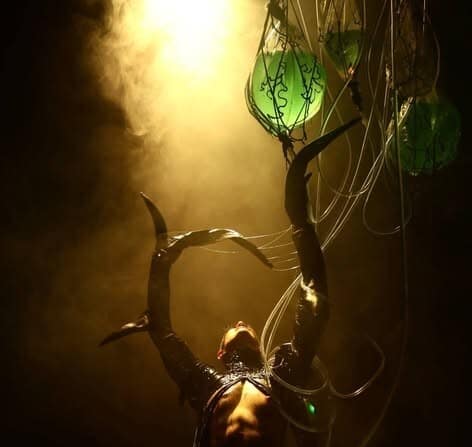
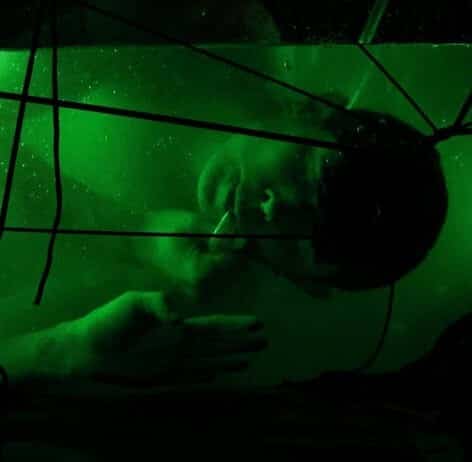
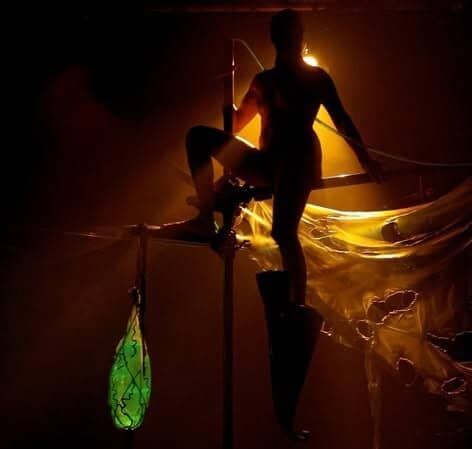
The Weathering is an extraordinary fusion of movement, sound, projection, and puppetry, a bold new work from Fusion Theatre’s inclusive ensemble that resonates long after the final moment fades into darkness. Directed by Darcy McGaw and Jo Raphael, this poetic and deeply human production transforms the urgent realities of climate change into a visceral, sensory experience.

From the first moments, the performers command the stage through their physicality. Their bodies become landscapes, trembling trees, surging waves, shifting winds — embodying both the fragility and ferocity of a planet under pressure. The use of light and darkness creates a haunting rhythm, as projections wash across the stage like passing weather fronts. At times, the performers seem to dissolve into these shifting visuals, blurring the line between human and environment.

The original soundscape adds another layer of emotional texture. Whispers of rain, the low rumble of thunder, and fragments of breath and song create a world that feels at once intimate and immense. The puppetry, too, is quietly powerful — delicate yet evocative, revealing the interconnection between people and nature in ways words alone could never capture.


What makes The Weathering so compelling is the way it seems to capture opposing forces in its grip. It holds space for both helplessness and hope, for the chaos of the storm and the calm that follows. The pacing shifts fluidly between frenzy and stillness, echoing the unpredictable rhythms of the natural world. There are moments of silence that feel deafening, and bursts of movement that feel like the earth itself is speaking.

At its core, this is a show with immense heart. It gives voice to those who are too often excluded from conversations about the climate crisis — voices that are essential, urgent, and profoundly moving. The ensemble’s commitment shines through every gesture, every sound, every flicker of light.

McGaw and Raphael have crafted a work that feels both timely and timeless. The Weathering doesn’t just ask us to think about the world we’re losing — it invites us to feel it, to grieve it, and ultimately, to imagine how we might begin again.

To book tickets to The Weathering , please visit https://www.theatreworks.org.au/2025/the-weathering.

Spread the word on your favourite platform!

A One-Man Cabaret by Mario Acosta-Cevallos

Caminare - The Echo Of My Steps

Caminare – The Echo Of My Steps Rating

Click if you liked this article

1

Caminaré, The echo of my steps.

A ONE-MAN CABARET BY MARIO ACOSTA CEVALLOS

(MELBOURNE FRINGE FESTIVAL, 2025)

For anyone passionate about life’s unique narratives, expressed through human movement or dance, this new Latin cabaret show at Gasworks is for you.

Venezuelan-born Director and Dramaturg, Clary Riven, used, “The fire of Latin dance blended with the soul of cabaret to form a tale of culture, rhythm, pride and pain” to shape this new piece, her motivation being “inclusive stories that connect deeply with audiences.”

Starring World Salsa Champ, Mario Acosta-Cevallos, who created this cabaret, we watch as Mario bares his soul, via his life’s memories, confronting personal revelations and dancing his way through the complicated discovery of ones’ identity, self-doubt, and finally, healing.

Through music and movement, Caminaré reveals episodes of Mario’s past, from his introduction to Latin music growing up in a migrant household, to the glitter of the stage, to embracing his truth as a queer Latino performer, each episode disrupted by one of Mario’s energetic, professional, technically perfect Salsa routines – a joy to watch – some which defined him as Number One, others which didn’t. This drew a clever analogy to the way our lives ebb and flow.

Mario Acosta-Cevallos’ choreographed the show with Laura Anderson, who also produced the show. Laura has worked with some of the industries’ leading artists and companies, across musicals, live music, television and, theatre, her motivation to “push the boundaries of dance as a powerful form of expression.”


The audience sees Mario’s amazing routines that defined him as a winner but more interestingly, we see Mario’s sense of humour, his vulnerability, his competitiveness and ambition, most of all, we see his heart.

Stage manager, Seamus Allan, set the stage like a dressing room or backstage area, including some of Mario’s past glittering costumes and accolades.

Lighting Designer, Tom Vulcan, warmed the stage rosy at times, but mostly in bright red lights, that gave off an intensity when required.

Handsome and physically gifted, looking every bit the leading man, while this star is an openly gay artist, I noticed Mario had as much admiration from multiple ladies in the audience as gentlemen. Many were holding flowers to present to him after the show. After all, Mario is a 10+ time World Salsa Champion, touring internationally and performing on some of the world’s biggest stages, including the acclaimed, ‘In the Heights’.

Mario shows us he has learned life is not always about coming first, rather, it’s a moving feast, a constant buffet of lessons and of growing wiser. He is obviously a giver, a teacher, and a friend to many.

I liked his lines, “Hurt people hurt people” and “Who are you dancing for?”

Also, another dance analogy to life and relationships with, “….the push and the pull.”

The brochure offers, “This show is for everyone who’s ever questioned where they belong – and for those who found the courage to keep moving forward anyway.”

Many of us could learn from that.

• Caminaré – the Echo of my Steps, is playing at Gasworks until 11th October.

To book tickets to Caminare – The Echo Of My Steps, please visit https://www.melbournefringe.com.au/whats-on/events/caminare-the-echo-of-my-steps.

Spread the word on your favourite platform!

Powerful, Passionate, and Fantastic

The Comedy Games with Coach Mon

The Comedy Games with Coach Mon Rating

Click if you liked this article

2

Comedy Games With Coach Mon is now on at the Ivanhoe Library & Cultural Hub’s Yarra-me Djila Theatrette as part of the Melbourne Fringe. Aimed at children age 4 and up, the show is a really fun way to introduce your junior primary and pre-school kids to interactive live theatre. It’s a great antidote to the effects of too much screen time – it’s upbeat, inclusive, funny and interactive. It stimulates the imagination and reminds us how to play. The age appropriate humour is infectious, and a lot of it is supplied organically by the children themselves. I highly recommend it.

The theatrette is cosy, clean and family-friendly. Coach Mon makes your child feel at home by introducing herself to each child and learning their names before the show starts, so I recommend getting there a little early to settle into the space. There is ample parking at the Ivanhoe venue which also has a lovely café and a library on the same level.

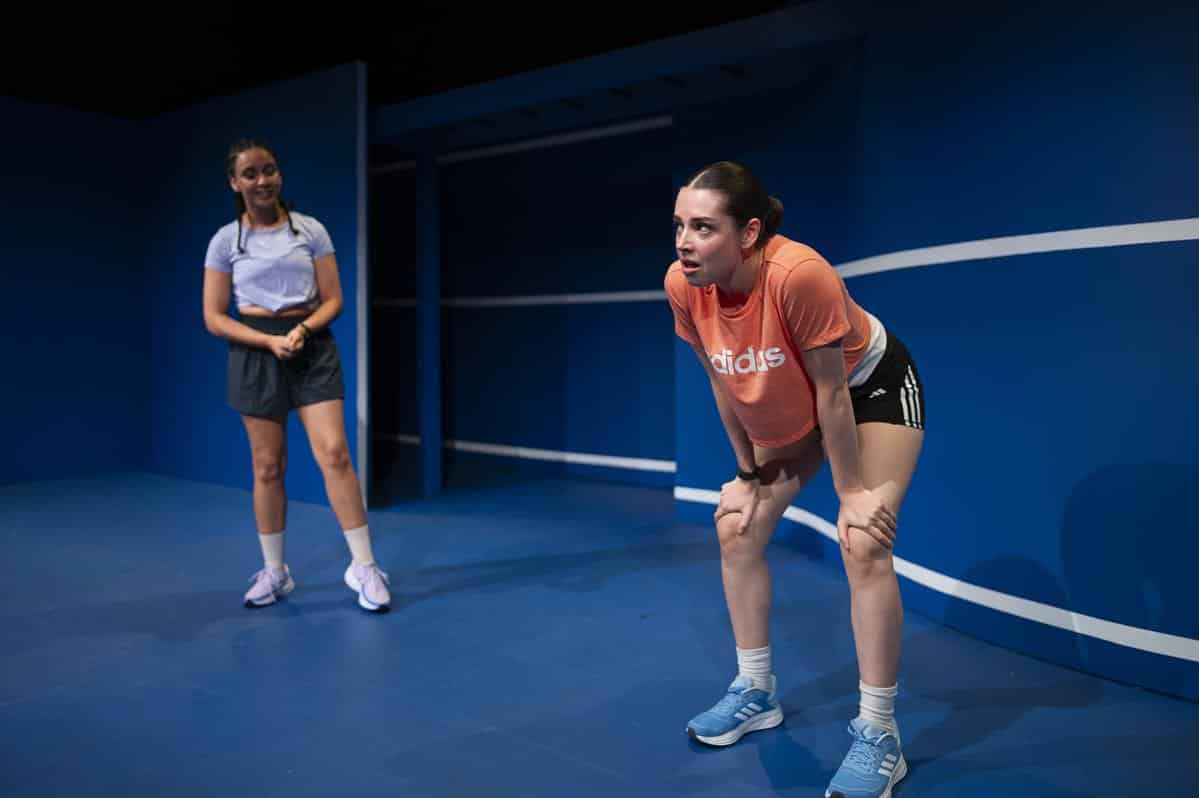
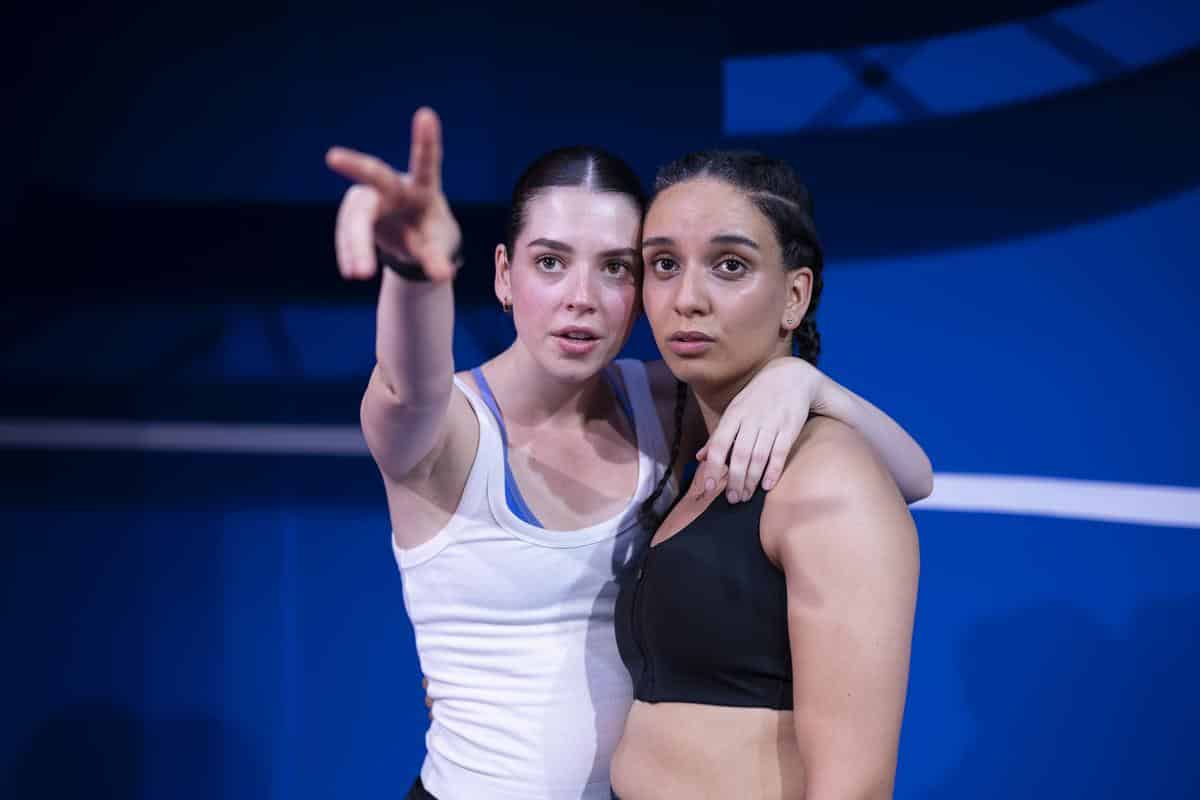
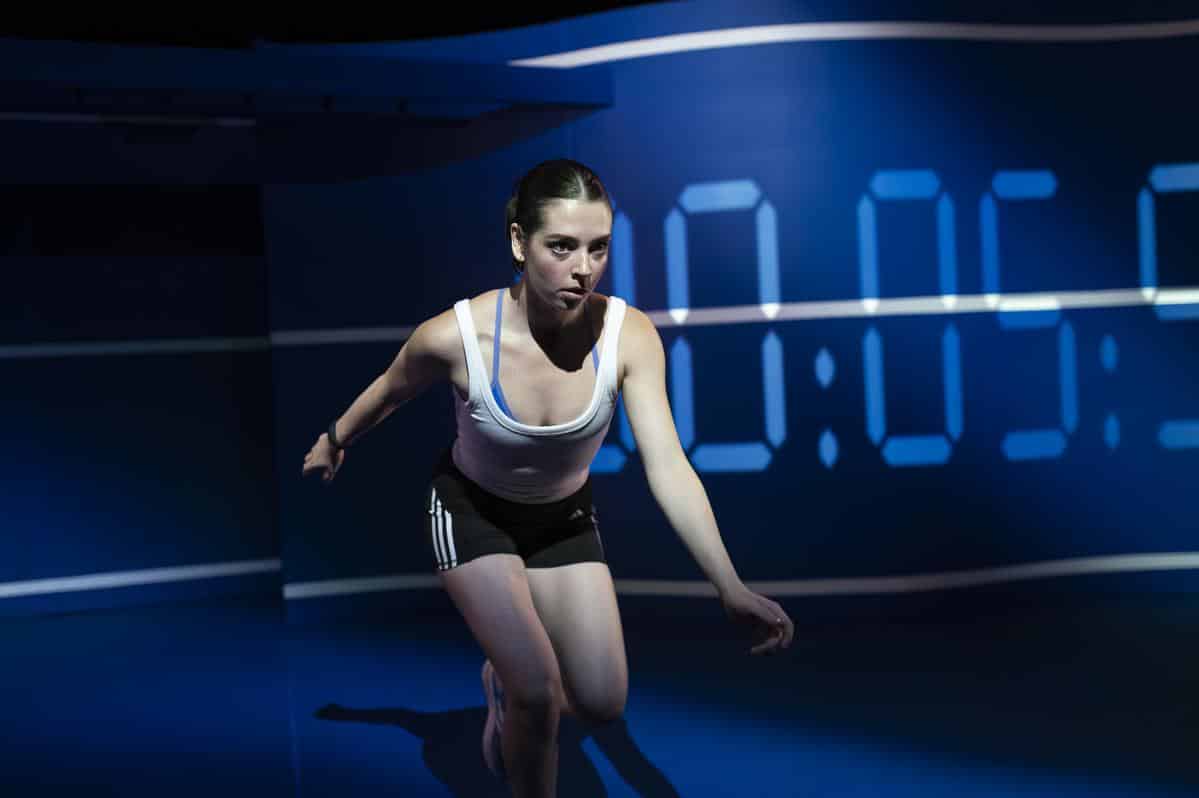
The theme of the show is sports. Coach Mon’s dream is to be a sports coach and she is looking for athletes who are Powerful, Passionate, and Fantastic. There’s a good dose of the ridiculous, which kids love, so we’ll be starting with eyebrow push-ups and weight-lifting with marshmallows on a skewer, for starters. Sometimes Coach Mon might need some coaching herself. Does she really know what hurdles are? Why is she asking for child hurdles – “churdles”? Will she jump over them or fly?


Adults – you will not be bored! Coach Mon knows how to keep the kids’ attention with singing, acrobatics, jokes, miming and clowning-skills, all with a warm connected personality. She knows how to keep them quietly in their seat, if needed, and, conversely, how to get them up and noisy depending on the scene of the show. You’ll be able to relax and enjoy the antics with your child, and possibly even take part in some synchronised swimming!

The fast pace of the show is underscored by well-chosen classical and pop-rock songs. For example, who doesn’t like a slow-mo running race with Chariots of Fire as the soundtrack? I loved that this show was exposing the young ones to really good music from Peer Gynt Suite’s Hall of the Mountain King to Eye of the Tiger. We might know these songs, but it might just be the first time the little ones get to hear it.

After the show, Coach Mon stayed to chat to kids and adults as they were leaving. I had a chat to her too and discovered that Coach Mon is the multi-talented Monique Warren who is an actor, musician, educator, choir director and clown. She grew up singing in the Australian Girls Choir and then stayed on as a choir teacher for 12 years. Her inspiration for the show came out of blue one day while she was teaching an online co-curricular drama class online during COVID lockdown in 2021. Worn out by the sheer boredom she had had enough and walked away from the faces on the computer screen. A minute later, she was back with sports cap on and tennis ball in hand and announced “I’m Coach Mon. Let’s play!”.

Monique Warren’s dream is to build her kids show to be a regular school holiday gig. The joy she gets from doing the show is from bringing people together and that is her passion. It’s a Passion that is Powerful and her show is Fantastic! Go see it before it closes. Let’s play!

To book tickets to The Comedy Games with Coach Mon, please visit https://www.melbournefringe.com.au/whats-on/events/the-comedy-games-with-coach-mon.

Spread the word on your favourite platform!