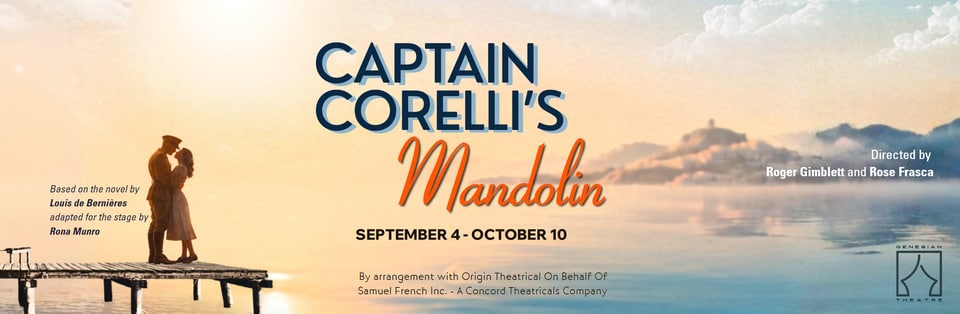
“Captain Corelli’s Mandolin”, originally a novel written by Louis der Bernieres in 1994, was adapted for stage by Rona Munro. The Genesian Theatre Company are no strangers to presenting a diverse genre of plays and has been a staple in Sydney’s theatre scene delighting audiences since its first play in 1945, notably after the war and the time period this play was set. I have tremendous respect for The Genesian Theatre, having seen many of their productions at their previous home in Kent St, inside a church built in 1868, where they had performed for 70 years. Their new era began at their new home in Rozelle in 2025.
“Captain Corelli’s Mandolin” takes the audience back in history to 1941, set during the second world war on a beautiful Greek island, Kefalonia. Opening to a peaceful seaside scene, people are living a happy life, unaware that their lives are about to be changed. Dr Iannis (David Stewart-Hunter) and his daughter Pelagia’s goat (Hope Selim) are breathing in the ocean’s fresh air. The goat proceeds to nibble on his paper while Dr Iannis’ back is turned, and Selim’s wide eyed goat was very amusing as Dr Iannis continued to berate the animal, who clearly did not understand a word he was saying. I wondered if this was a prelude to the following hardships of war, where the oppression and suffering of innocent people fall on deaf ears of those responsible.
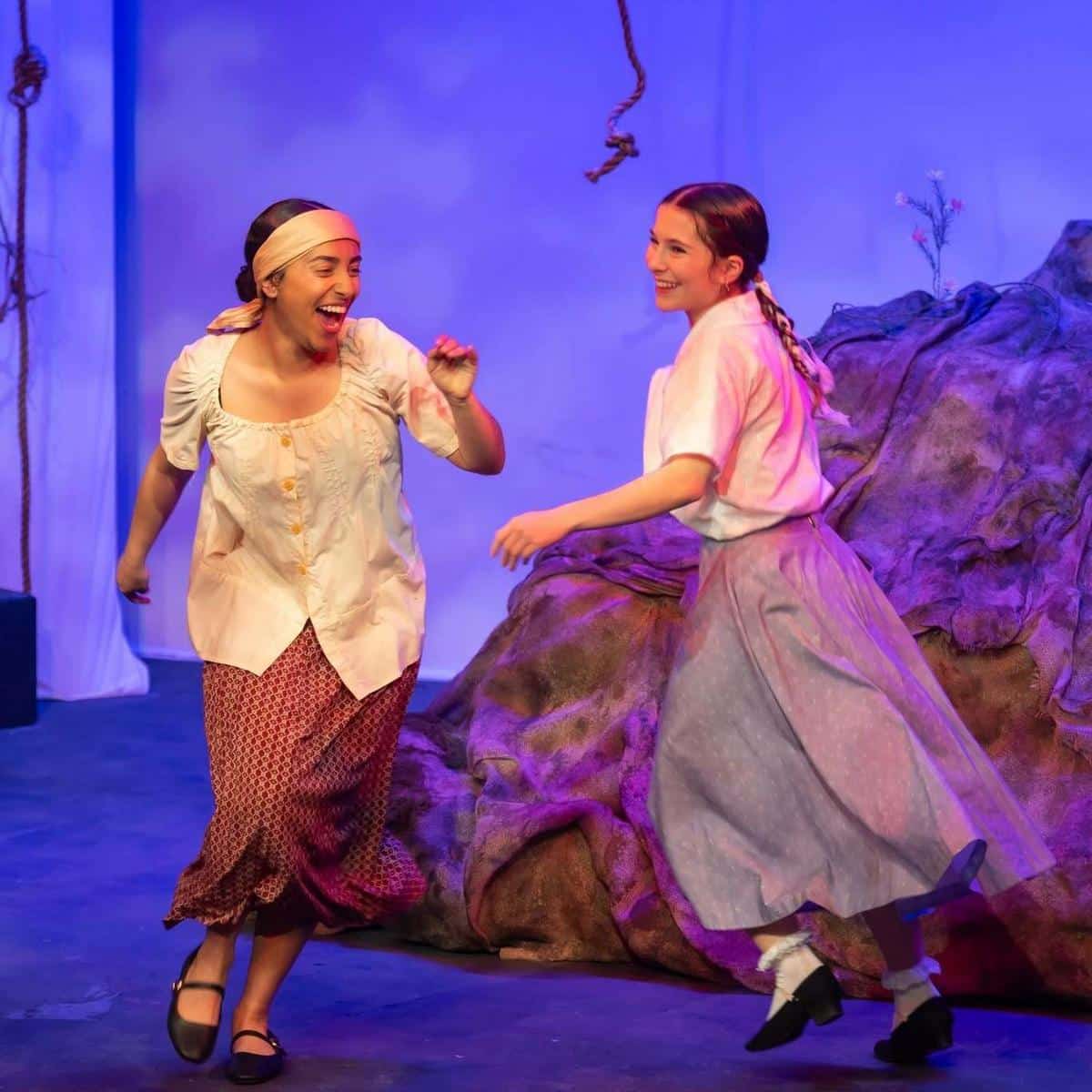
Dr Iannis’s daughter Pelagia (Isabelle Serafim) is engaged to Mandras (Maximillian Choma). Her character is feisty and headstrong; she is a character with strong opinions. The first act builds up to the arrival of Captain Corelli, and lays the historical foundation and significance of the war. It shows traditional Greek life on the island and the importance of family, with scenes showing Mandras’ relationship with Pelagia and with his mother, Drosoula (Phillipa Coleman).
The background to the arrival of Captain Corelli and his soldiers is told through the relationships of the people living on the island and also through the character Carlo (Brodie Chong). Chong’s Brodie addresses the audience directly and through scenes onstage, and tells of his own experiences in the war as an Italian soldier, and his relationship with Francesco (David Newton). There are touching scenes showing simple joys amongst the horrors of fighting in the war, these being with Francesco keeping a pet mouse secretly in his pocket and the importance of companionship between the two soldiers, and with the pet mouse, as well.
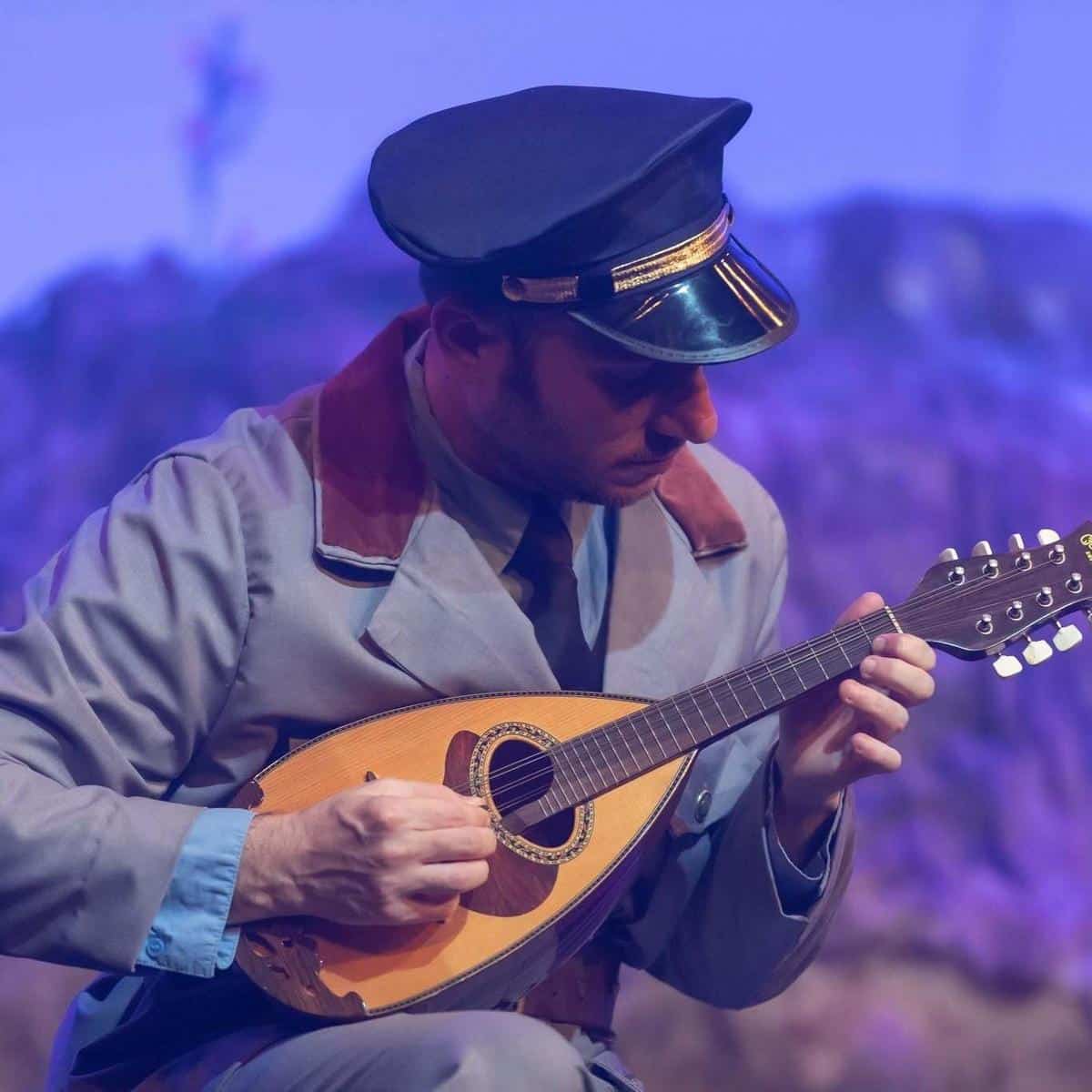
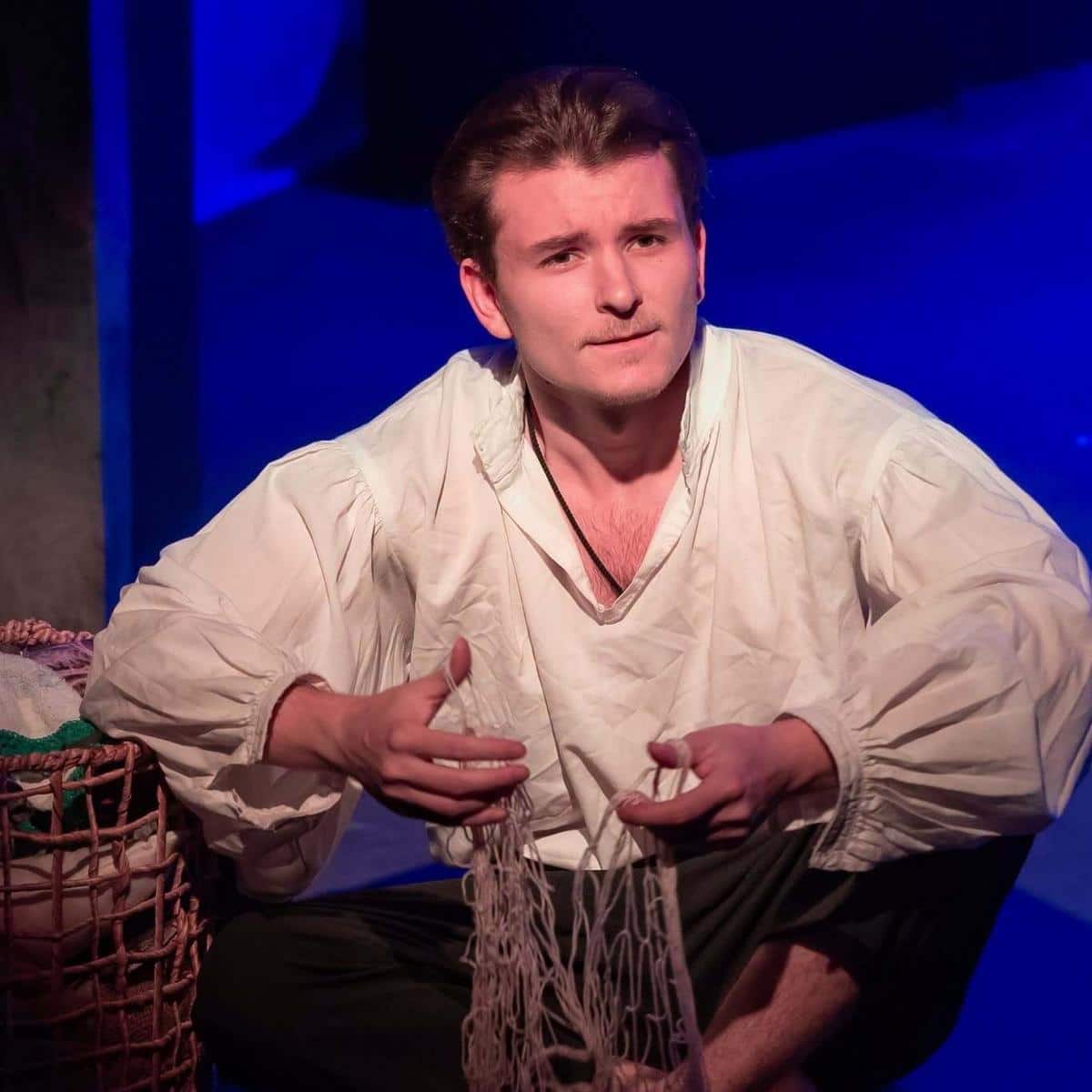
The second act was longer than the first act, which felt like it dragged a little, and moved at a faster pace. It told the story featuring human relationship elements, with Captain Corelli and the Italian soldiers who invaded the island, and were living inside the Greek islander’s houses. Mandras had left Kefalonia to fight in the war. Captain Antonio Corelli (Dimitri Armatas) arrived with a rather easygoing manner, and appeared as a breath of positivity with his love of music and his mandolin, in a time of wartime struggles. Food was scarce and the Greek people were under occupation. At first reluctant and hostile towards Captain Correli, Pelagia begins to soften and eventually a romance begins. This of course brings complications and Stewart-Hunter embodies the caring father role fully as he delivers advice to Pelagia. He warns that although he does like Captain Corelli as a person, she is betrothed to Mandras and by her being with the “enemy” it will likely bring negative judgements and make her a social outcast in their community. One of his lines was poignant and was delivered by Stewart-Hunter perfectly. “Love is a temporary madness. It erupts like a volcano and then it subsides. And when it subsides you have to make a decision. You have to work out whether your roots have been so entwined together that it is inconceivable that you should ever part.”
Captain’s mandolin, which he named Antonio, from the play’s title, had a starring and important role, particularly towards the end which I won’t disclose. Not only was the mandolin a star, but music itself and the power of it to lighten and transport people away, if only for a short while. Well done to the sound and lighting designer Michael Schell, for creating the atmosphere of not only the sounds of the bombs and frightening aspects of wartime in red flashes and strong white headlight lighting, but also for the gentler parts of the play such as the ocean waves, and the understated spotlight on Carlo to highlight his heroism during an important scene. The music chosen throughout the play and during the many scene changes immersed the audience into the 1940’s. The song “Pelagia’s March” was touching and represented the depth of love Captain Correlli had for Pelagia. Kudos to Armatas for playing the mandolin live onstage. I liked how the song he wrote for Pelagia started so simply with a few plucks, and then we were able to hear the full orchestral song later when he became a successful musician.
Susan Carveth’s costume design brought the characters alive out of the page into wartime and showed the traditional Greek culture on the island.
The script was quite wordy and I am sure it was not an easy task to incorporate the complexities of many themes into one play. Well done to the main and supporting cast! Co-Directors Rose Frasca and Roger Gimlett pulled together both the large 24 person cast and crew cohesively to create a serious play showing the frail balance of life on a beautiful Greek island, how families and relationships are forever affected by forces out of their control and the struggles of putting love before loyalty. And music. Always the beauty of music.
Captain Correlli’s Manolin is playing from 4 September – 10 October 2025 at The Genesian Theatre. 2B Gordon St, Rozelle Sydney
Running time: 2.5 hours, including a 20 minute interval
Tickets: www.genesian.sales.ticketsearch.com/sales/salesevent/156354
To book tickets to Captain Corelli’s Mandolin, please visit https://genesiantheatre.com.au/events/captain-corellis-mandolin/.