The Last Witch

The Last Witch

The Last Witch Rating

★★★★★

Click if you liked this article

2

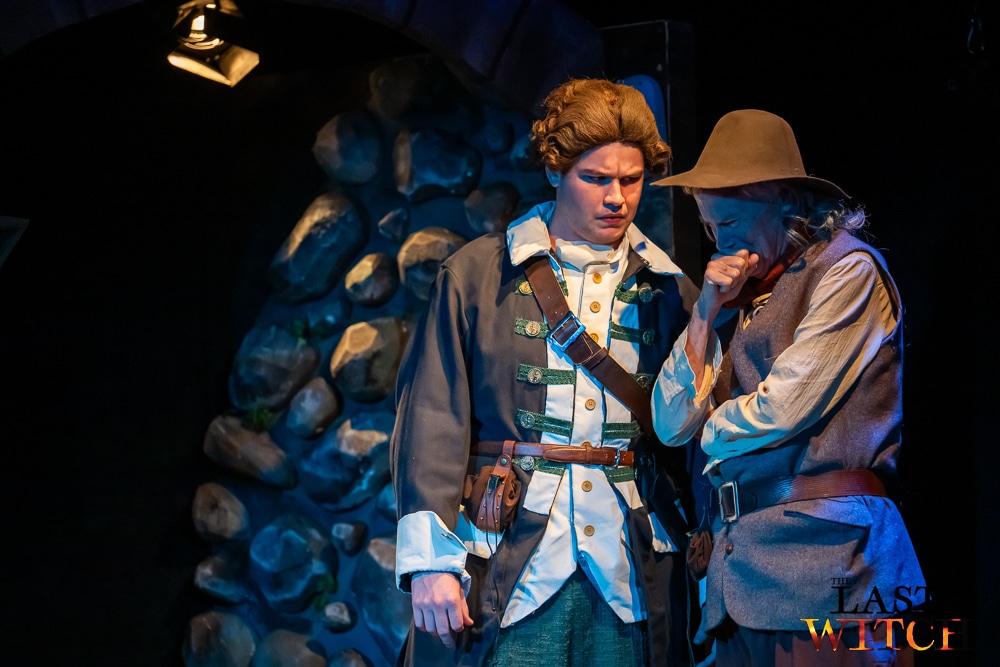
A compelling blend of historical fact and supernatural mystery, Rona Munro’s The Last Witch is a fictionalised account of the last woman to be officially burned for witchcraft in Scotland. Through the fiery clashes between Janet Horne (Paula Searle) and Dornoch’s spiteful new sheriff Captain Ross (Toby Rowe), The Castle Hill Players’ rendition of The Last Witch explores the dynamics of social power between men and women in the 18th century and presents a cautionary tale of what happens when two equally intemperate people with the power to cause harm refuse to back down.

Paula Searle is an electric presence onstage, capturing Janet as both woman and myth through stunning monologues and sometimes shocking interactions with other characters. She has two brilliant moments in Act I that I believe summarise her character; when Captain Ross first visits her cottage to investigate, she easily gains the upper hand in their conversation and evades his questions, acting as though she is about to deny the accusations. She then offers to read his palm and divine his past, a blatant act of witchcraft and a ridiculous escalation of the situation. Later on, in a lovely but misguided moment of emotional connection, Janet comforts Helen and her friend/neighbour Elspeth Begg (Penny Johnson) in their hunger by drugging them with a hallucinogenic herb to make them believe they have access to food. I loved this little show of Janet’s strange ways of caring, and I also loved the (perhaps accidental) nod to a popular Salem witch trials theory.
Janet’s constant contradictions make it almost impossible for the audience to form a solid opinion on her. Is she really a witch? Is she even really all that much smarter than the daughter she derides? Perhaps only Janet could give a definitive answer.
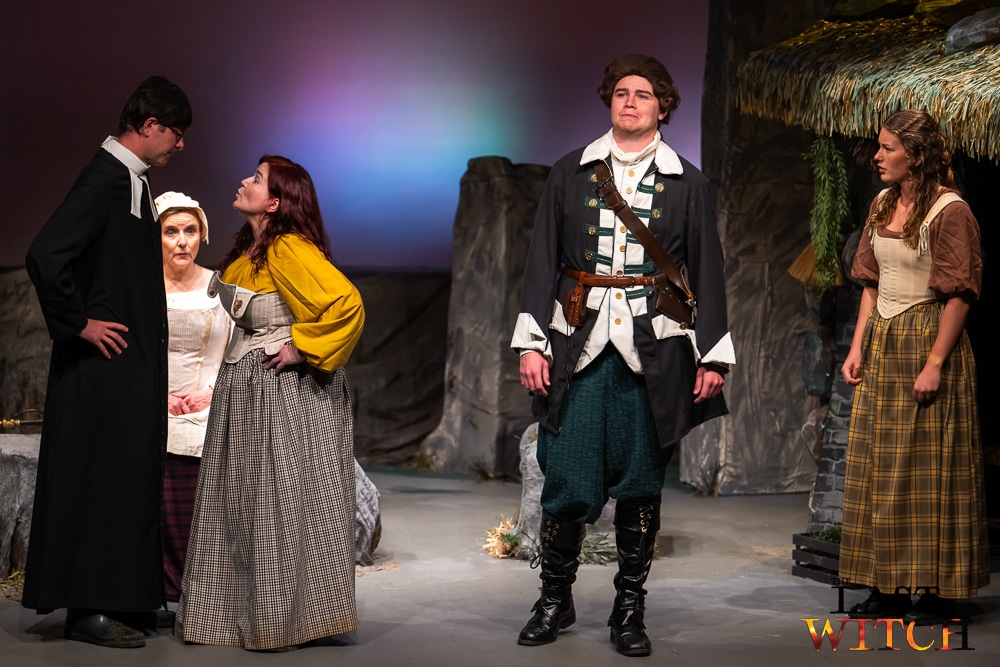
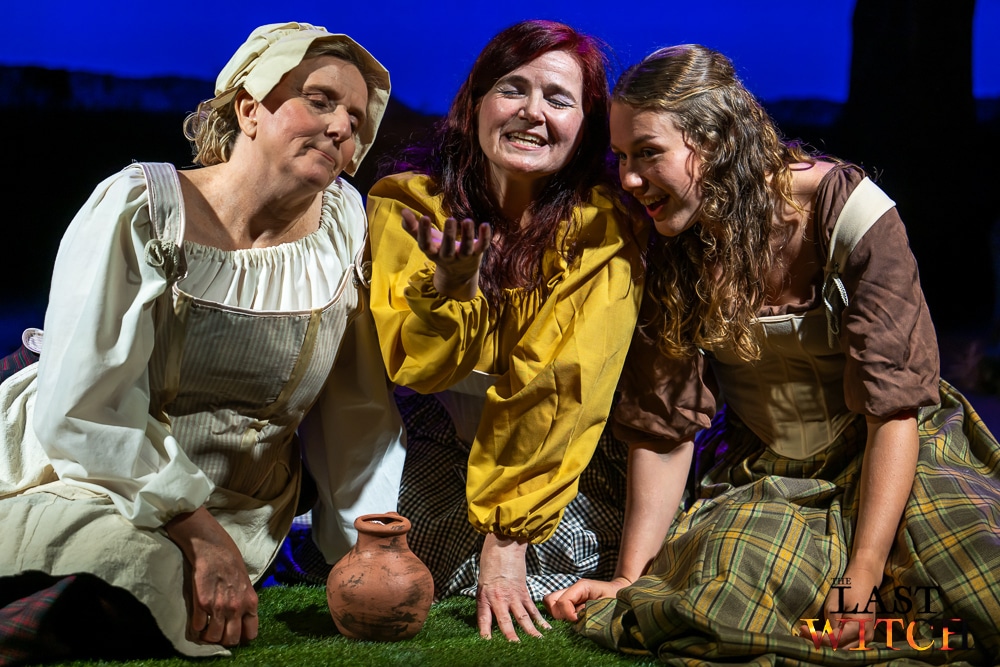


The play’s opening night brought a stunning set design of sprawling grass and weathered stone structures, polishing off the scenes with a perfect use of lighting and sound alongside an admirable commitment to Scottish accents. I particularly enjoyed the slow shifting of an aurora borealis as Janet cast her opening spells, the orange glow of the stones underneath Janet’s stake, and the simplicity of spotlights becoming a full moon for Janet’s daughter Helen (Chloe Overeem) to take her own first steps into magic.

Hidden beneath the sordid tales of seduction, ego, and the haunting presence of what could be the Devil himself, The Last Witch is a simple story of the enduring strength of everyday women. The male characters pop in and out of scenes, delivering powerful sweeping statements that completely change the lives of Janet, Helen, and Elspeth, but the relationships forged from powerlessness between these three women ultimately become powerful enough to stop Captain Ross’ path for vengeance and end the cycle of violence before it sweeps beyond Janet.

To book tickets to The Last Witch, please visit https://paviliontheatre.org.au/the-last-witch/.

Photographer: Chris Lundie

Spread the word on your favourite platform!

Robots On The Rise

R.U.R. (Rossum's Universal Robots)

R.U.R. (Rossum’s Universal Robots) Rating

★★★★★

Click if you liked this article

5

Rossum’s Universal Robots is a science fiction play written by Karel Capek and directed by Robrecht Herfkens. It is a four act play with two intervals, lasting about two and a half hours.

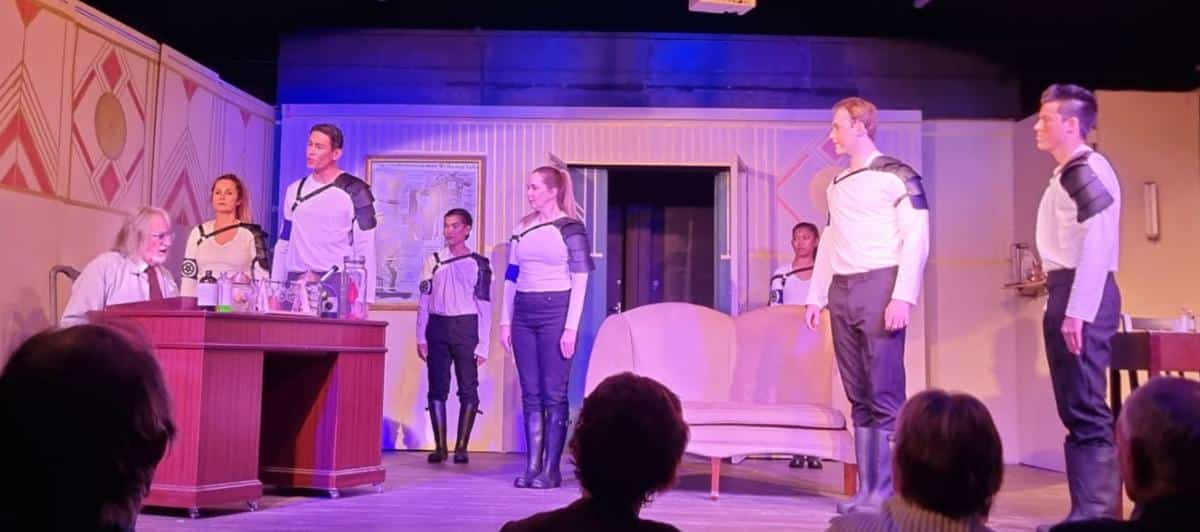
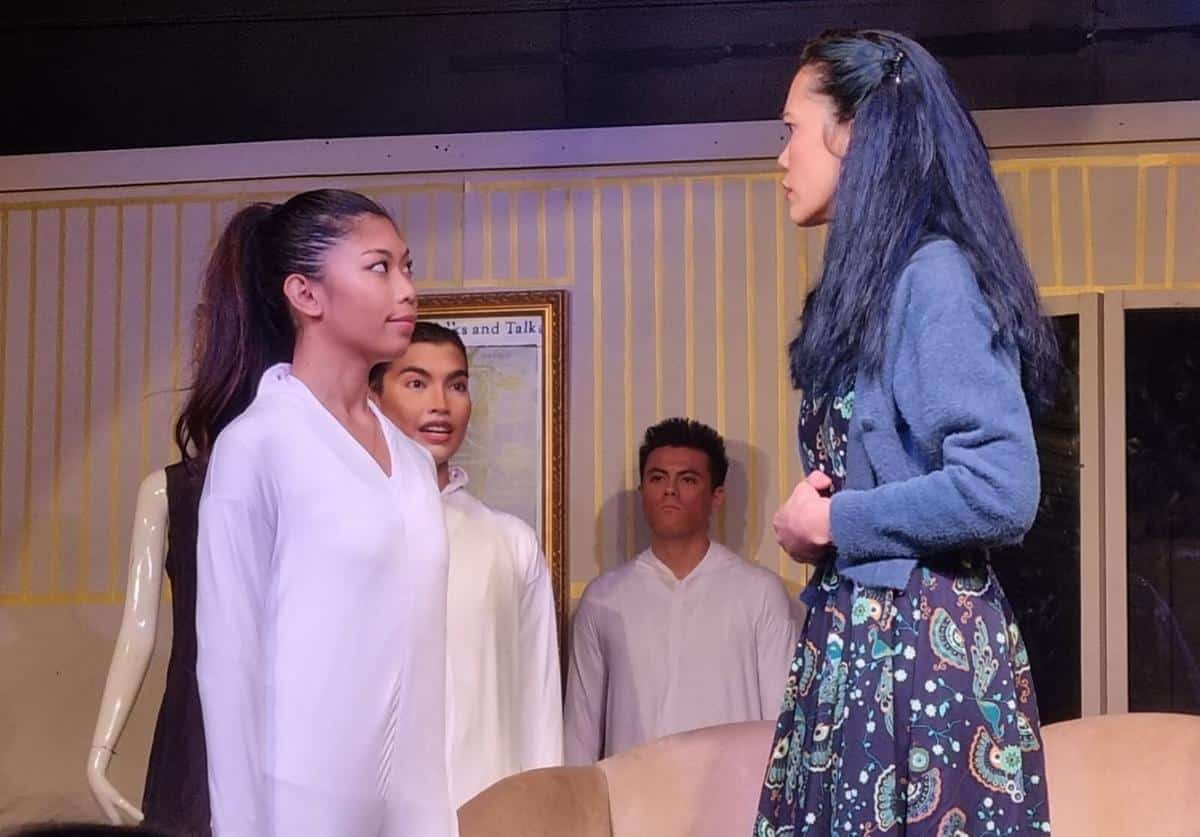
This production is set in the past and the main actors really set the tone of the era. Tod Trotman is amazing at delivering continuous dialogue and does a remarkable job with his mannerisms to capture the era. Candice Preston, who plays Helena Glory, is passionate and does a wonderful job with her expressions. She makes the audience feel included with her dialogue. The production includes a wide cast of all ages and the robots do a magnificent job at making you feel on the edge of your seat as they begin to take over the world. The performance of Radius, played by Stephan Pfister, is unnerving. The actors who play the group of managers continue acting in the background, creating realism to the scene. The way they portray the characters after the interval makes them believably older.


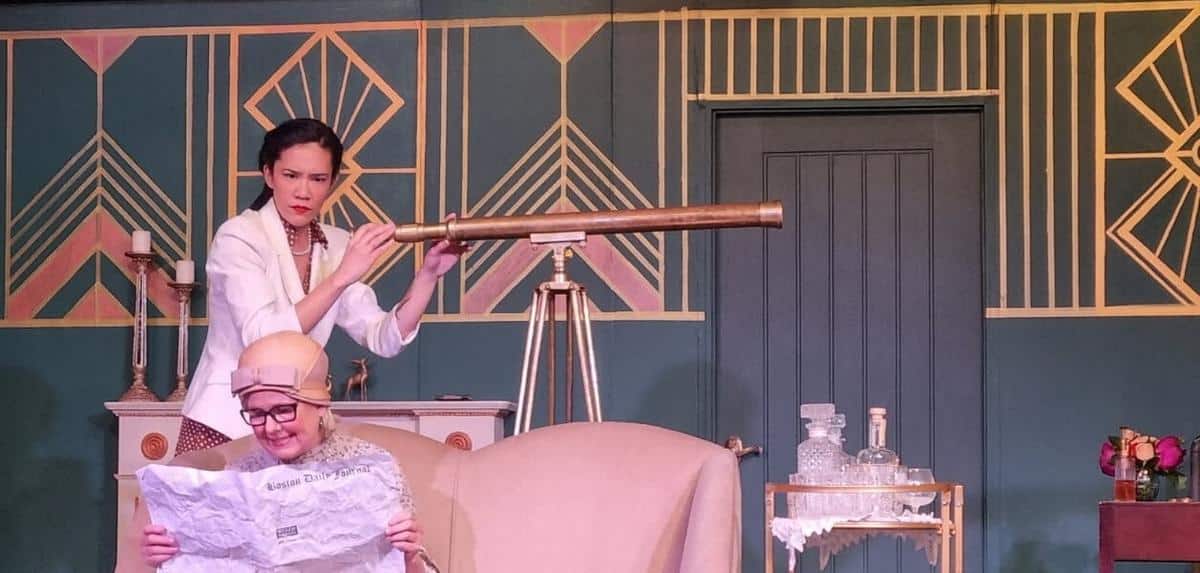
Both the set and costumes also do a wonderful job of setting the era. The set painting is a work of art and in between acts, there are massive changes to the impressive set build, giving the audience plenty to look at. The interior and exterior set is very unique, allowing the audience to view both sets at the same time. Lighting changes are infrequent but effective, especially towards the end, when there is a short strobe light sequence. The costumes are simple but effective. The robots wear simple white jumpsuits and the humans wear dresses and suits. As time passes throughout the performance, the costumes and hair changes reflect the passage of time.

Music is scarce but when it is played, our attention is drawn to it. Sound effects during the performance surround the audience, making us feel included. During the intervals, robotic-like music is played for our entertainment and during the second interval, the theater becomes immersive with the theatre staff dressing up as the robots.

It is very interesting to think about how this play was written in the 1920s but still captures the issues of A.I. that are rising today. I think it was an excellent choice of the theatre to choose this play (and to keep it in the era it was written, as opposed to reimagining it in our future) as the themes are still relatable and it is interesting to see how the robot takeover was envisioned in the past. This is a great show for the science fiction lovers among us.

Rossum’s Universal Robots is playing at Roxy Lane Theatre on May 23rd, 24th, 29th, 30th, 31st and June 4th, 5th, 6th, 7th.

To book tickets to R.U.R. (Rossum’s Universal Robots), please visit https://www.taztix.com.au/event/roxylanetheatre/.

Spread the word on your favourite platform!

Brace Brace: Poignant, Rapid-Fire and Darkly Comedic – A Must See

Brace Brace

Brace Brace Rating

★★★★★

Click if you liked this article

Ray and Syliva meet across a crowded room and instantly fall in love. Within a year, they are married and heading off on the honeymoon of a lifetime, three weeks on a distant beach, twelve hours away.

But somewhere between take-off and landing, everything changes.

Soon after we strap in for Pip Theatre’s latest theatrical journey, we are taken by turbulence; Brace Brace follows the trials and transformation of trauma, avoiding didacticism, but with plenty of lighter moments to lift the mood. This is a story of survival that counts the cost, asking the most compelling of questions: what would I do?

Written by playwright Oli Forsyth, Brace Brace is a tricky script to perform, traversing time and space, boasting clipped, rapid-fire dialogue, full of interjections – handled here with aplomb. The story is thematically balanced, tight and well-paced – the truth and precision of delivery a testament to the production’s thorough preparation. I enjoy the immersive presentation, complete with inflight announcement, airline safety instructions for the program, and nice pictures of the newlyweds in the theatre foyer.


The cast are Henry Solomon as Ray, Amelia Slatter as Sylvia and Matthew Filkins in multiple roles. Each actor shows nice emotional range, giving light and shade amidst distress and resilience; The portrayals are contemplative, sharing shifting perspectives on morality, accountability and moving on. Solomon and Slatter show spontaneous, fluid movement, with nice connection – and at times anguished disconnection – as the honeymooners. The story relays how they met, and the incident that changed their lives on the way to their honeymoon, the initial exhilaration turning to examination as the couple trade places in their reactions; She is initially philosophical but ultimately finds it hard to forget, he is initially more uncomfortable – with the framing of the event, and perceptions around his role in both that and perhaps his role in their relationship more broadly – but then is better able to check his emotional baggage.

Solomon and Slatter beautifully highlight the tension between honouring your own experience and freeing yourself from it – a challenge Ray and Syliva struggle to overcome. Filkins shows good versatility in his roles; His multiple casting works especially well here, where the presence of one character he portrays looms large throughout, despite only a brief physical appearance on stage.

Overall, Brace Brace is thought provoking and rendered with honest emotional weight, seasoned with levity. The fight scenes are well handled in the intimate space, the simple set all that is required to bring the story to life. Poignant, rapid-fire and darkly comedic, Brace Brace is a triumph for director Deidre Grace and the entire Pip Theatre team. A must see.

To book tickets to Brace Brace , please visit https://piptheatre.org/brace-brace/.

Spread the word on your favourite platform!

A Whimsical, Joyful, Surprisingly Current Night Of Musical Theatre

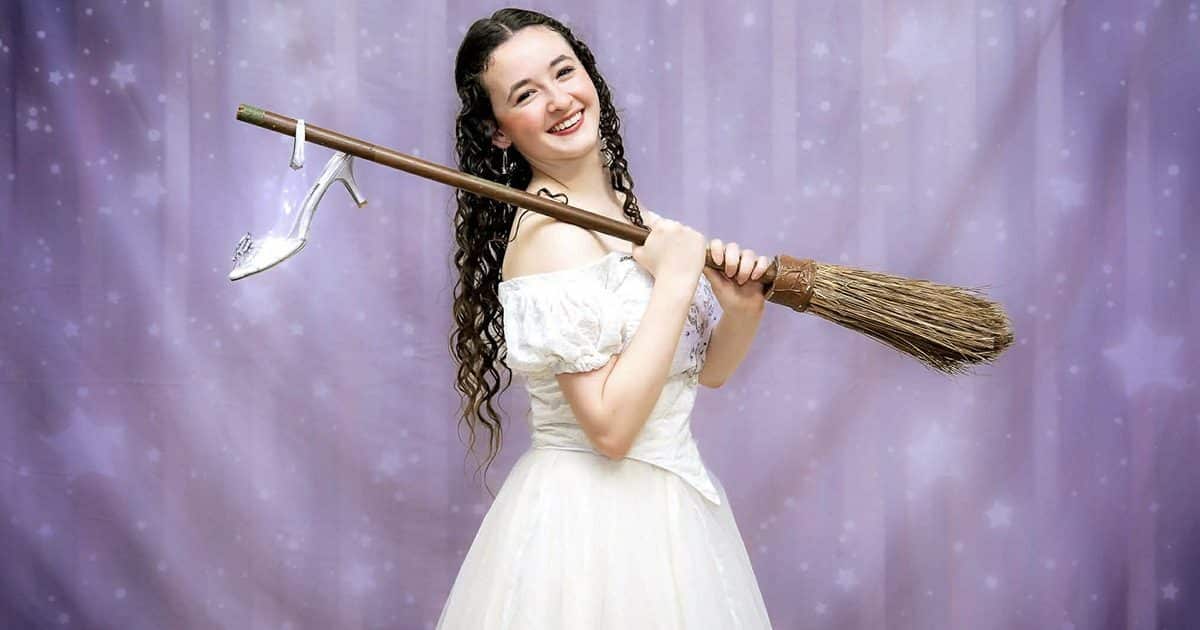
Cinderella

Cinderella Rating

★★★★★

Click if you liked this article

6

The magic of Hills Musical Theatre Company’s Cinderella began as our complimentary programme arrived with a gift voucher for the canteen (and if that isn’t community theatre done right, I don’t know what is).

The set up is cabaret style. You can bring your own snacks and/or purchase from the canteen. We were then shown to our table. I loved the idea of this cabaret style, but in execution it’s a bit tricky. We were seated with others, which is a lovely way to promote the community, but it means you need to be aware of each other and visibility. I recommend you get there early enough to negotiate comfort. I had to move away from the table to properly enjoy act 2.

That small logistical wrinkle aside, this show was fantastic.

The stage itself announces its ambitions immediately. Set design by Hannah Aouchan and Keith Macbeth glitters with fairy-tale intention, and as the ensemble assembles to open the show, lighting design by Max Tibbles and Jeremy Cardew at Latarka bathes the whole scene in something genuinely enchanted. Musical director Gemma Rolph’s orchestra; live, warm, and present, does what only a live pit can do.

Into all of this steps Claire Polczynski as Ella, and she has the voice of an angel. Polczynski grounds this Cinderella in something more than sweetness; there’s a steeliness beneath the warmth, a Cinderella who knows her own worth even when the world around her doesn’t. It sets up the show’s quietly progressive take on the classic.


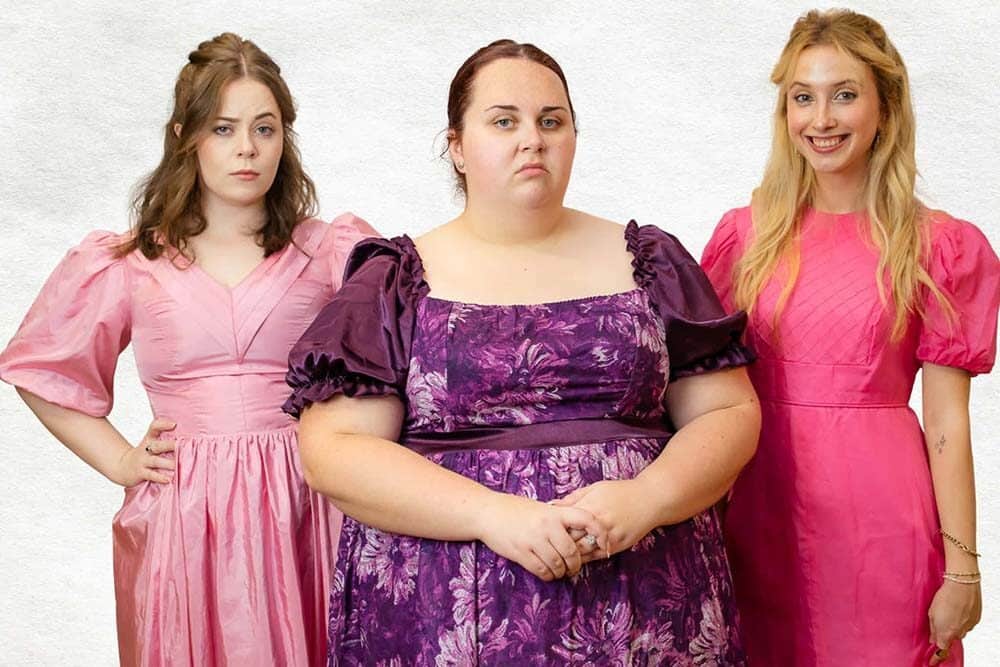
This version leans into political satire that lands with a particular sting of relevance; a royal wedding deployed to distract from poverty and stifle revolution, an advisor with his own nefarious agenda, a prince naive to the divide between haves and have-nots. Deniz Dogan plays Prince Topher with a commanding presence that makes his ignorance sympathetic rather than infuriating, and Sebastian Barons is a convincing, credible puppet-master pulling the strings behind him. Theo Cuelho’s cameos as Lord Pinkleton are enjoyable, and Lachlan Hopkins brings charisma and genuine earnestness to Jean-Michel, a revolutionary whose eye only strays from the cause long enough to find Stepsister Gabrielle’s. The show’s comedic MVP, however, is Josephine Pinto as Crazy Marie; and then, as the Fairy Godmother, Pinto delivers a solo to rival Disney.

Kortana Blissett as the Stepmother deserves her own paragraph. Impressively terrifying and clearly relishing every moment, Blissett finds the comedy in the menace without ever letting you feel entirely safe. Blissett and Annie Beardsley, playing Charlotte (the other Stepsister) are a fun comedic duo.

And the costuming, by Angela East and Emma Stanton, that surrounds all of this is extraordinary. The magical transformation sequences are achieved with such clever ingenuity that they serve as a reminder that community theatre, with the right hands on deck, can eclipse a big budget entirely.

Emily Taylor’s choreography leans into the classic musical theatre register while giving the ensemble room to be genuinely joyful together. This is a large cast spanning a wide age range, and every performer seems to know exactly why they’re there. The show’s youngest scene-stealer, Mackenzie Scott, is all kinds of adorable and already very much at home on the stage (watch this space).

In the interval, the company president spoke about what Hills Musical Theatre Company means to its community, and it wasn’t hard to believe. The values the show celebrates; kindness, generosity, charity, are clearly embodied by the powers that be. That spirit is woven into every corner of the evening, from the canteen voucher to the curtain call.

Cinderella is a whimsical, joyful, surprisingly current night of musical theatre. We’d have happily risked turning into a pumpkin if it had kept going.

To book tickets to Cinderella, please visit https://www.hillsmtc.com/.

Spread the word on your favourite platform!

Subscribe to What's The Show

Reviews, show news and what is on, straight to your inbox.