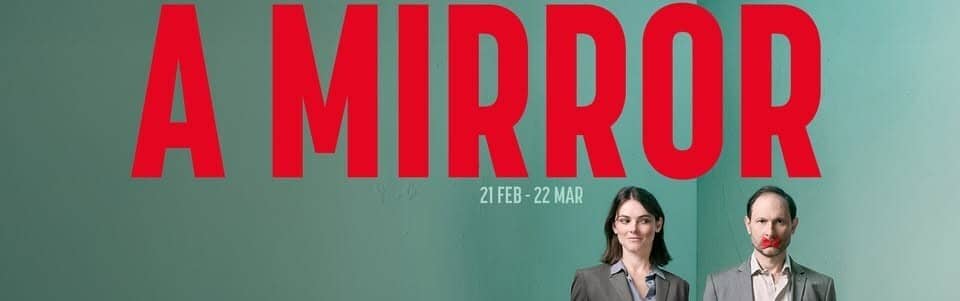
As you enter the theatre for ‘A Mirror’, it feels less like attending a play and more like arriving at a celebration. The foyer hums with anticipation. Ushers hand you a wedding programme, neatly printed with the order of events, inviting you to witness a union. It is a charming touch—until you turn the paper over. There, instead of a sentimental note, is a stark Oath of Allegiance to the Motherland. The shift is immediate and unsettling. You take your seat—slightly more uncomfortable than expected—and as the festivities begin, you sense that you are not merely watching a wedding. You are being watched yourself.
From the outset, Holcroft’s play establishes a world chillingly reminiscent of George Orwell’s ‘1984’. The auditorium becomes part of the dystopia. Eyes seem to linger too long. Applause feels monitored. In this society, a misstep, a wrong look, an insufficiently enthusiastic smile—any of these could betray you. The atmosphere is thick with suspicion.
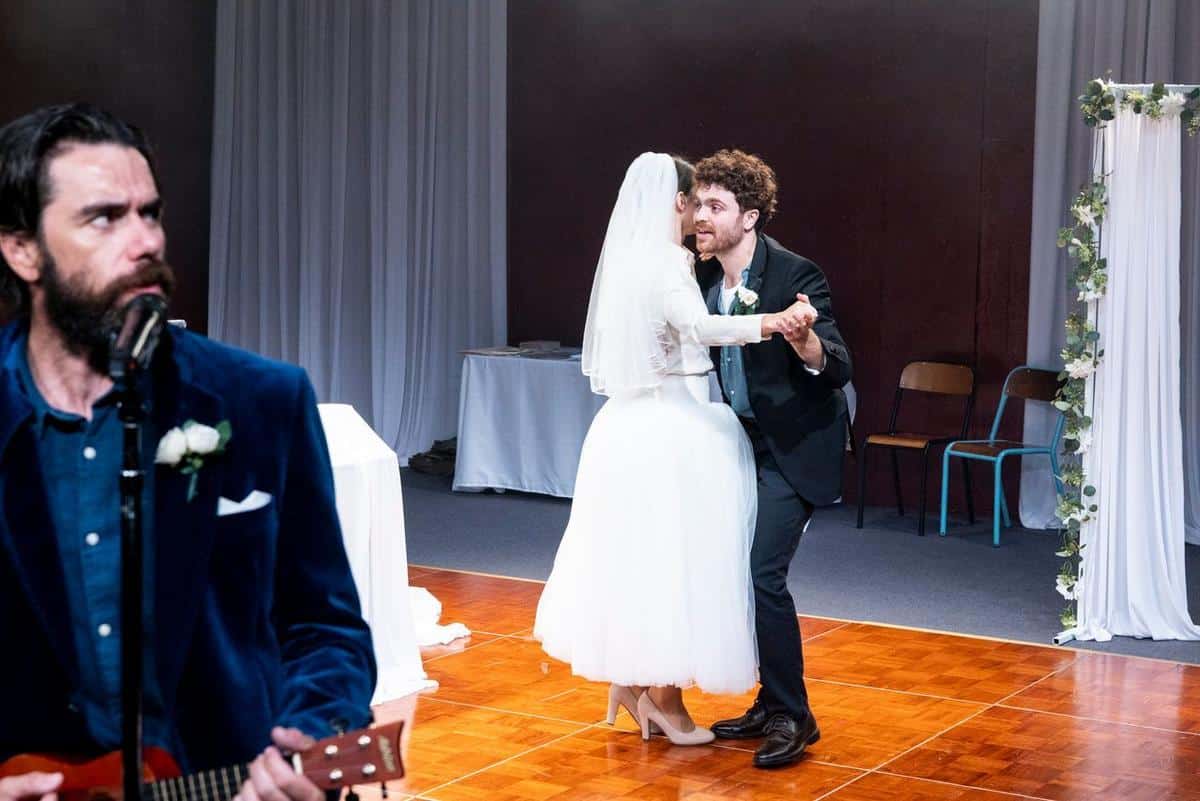
The wedding that frames the narrative is a masterstroke of theatrical irony. Traditionally a symbol of joy and new beginnings, here it is a hollow performance: a carefully constructed fiction designed to appease the authorities. Beneath rehearsed vows and forced laughter lies desperation. The ceremony becomes a metaphor for the wider social order—an elaborate façade maintained for survival. Love is secondary; compliance is everything.
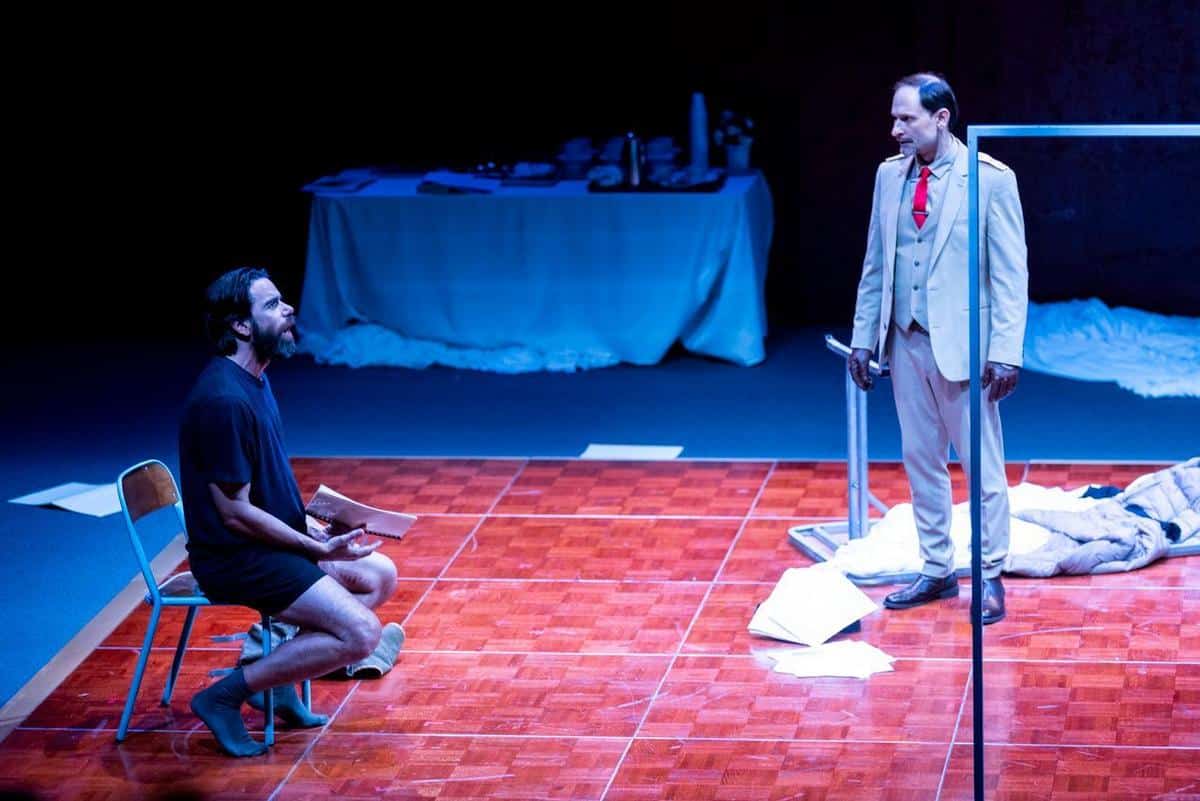
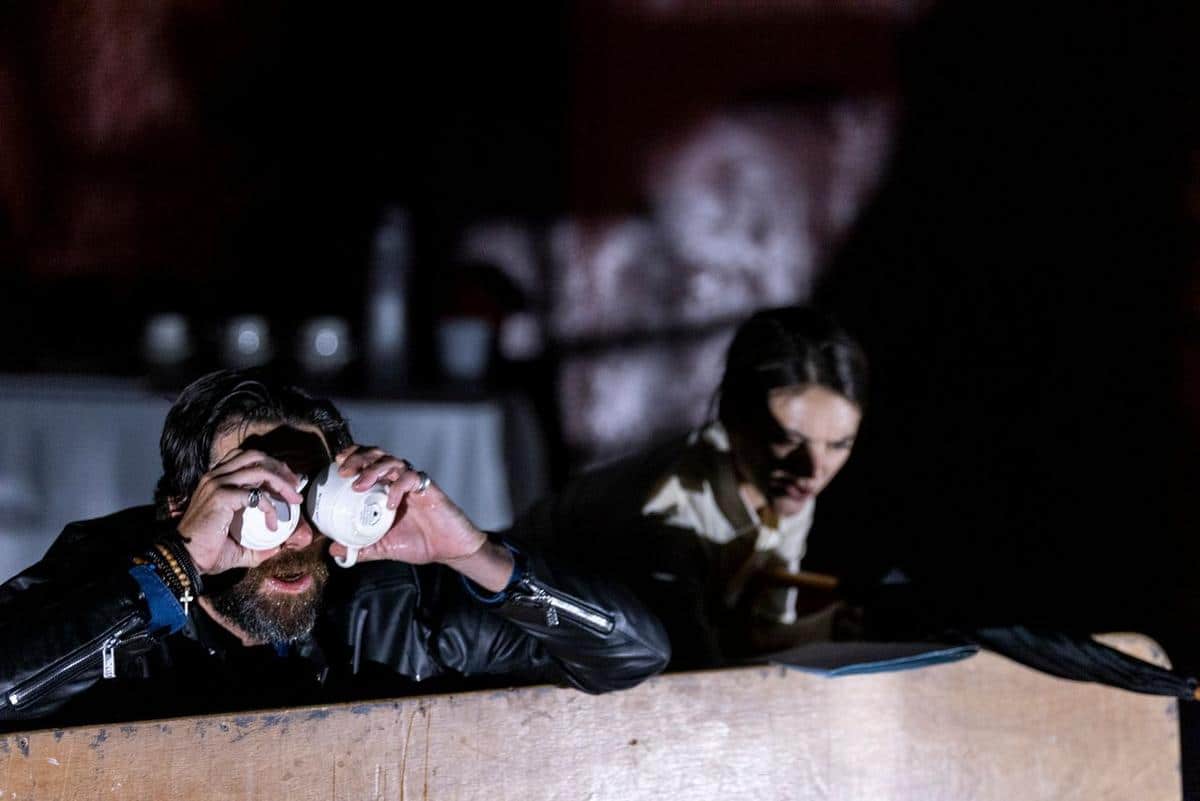
As the story unfolds, we are drawn into the lives of writers coerced into producing patriotic fabrications. They are tasked with rewriting history, inventing heroes, and manufacturing narratives that glorify the regime. Their creativity, once a source of meaning, becomes an instrument of oppression. Through intimidation and propaganda, they are compelled to betray not only the truth but also themselves. Holcroft incisively explores how authoritarian systems corrupt the act of storytelling, transforming art into ammunition.
Yet the weight of the subject matter, combined with the absence of an intermission, makes the production feel deliberately relentless. There is no pause for reflection, no moment to breathe. While this structural choice reinforces the suffocating atmosphere of the regime, it also renders the experience slow at times, even long. The unbroken intensity mirrors the characters’ entrapment, asking the audience to endure the same sustained pressure.
When the lights dim, the impact lingers. The play offers no easy catharsis, no triumphant overthrow. Instead, it leaves the audience with a question that echoes long after departure: would you speak the truth if the price were injury, imprisonment, even death?
In its bitterness, the play achieves a powerful moral clarity. It compels compassion, provokes self‑examination, and reminds us that while regimes built on lies may feel immovable, they persist only as long as individuals choose silence over courage. The truth may not always triumph—but as long as there are people willing to tell it, even at great cost, it can.
To book tickets to A Mirror, please visit https://belvoir.com.au/productions/a-mirror/.
Photographer: Brett Boardman