Worlds Alive 2026

Worlds Alive 2026

Worlds Alive 2026 Rating

Click if you liked this article

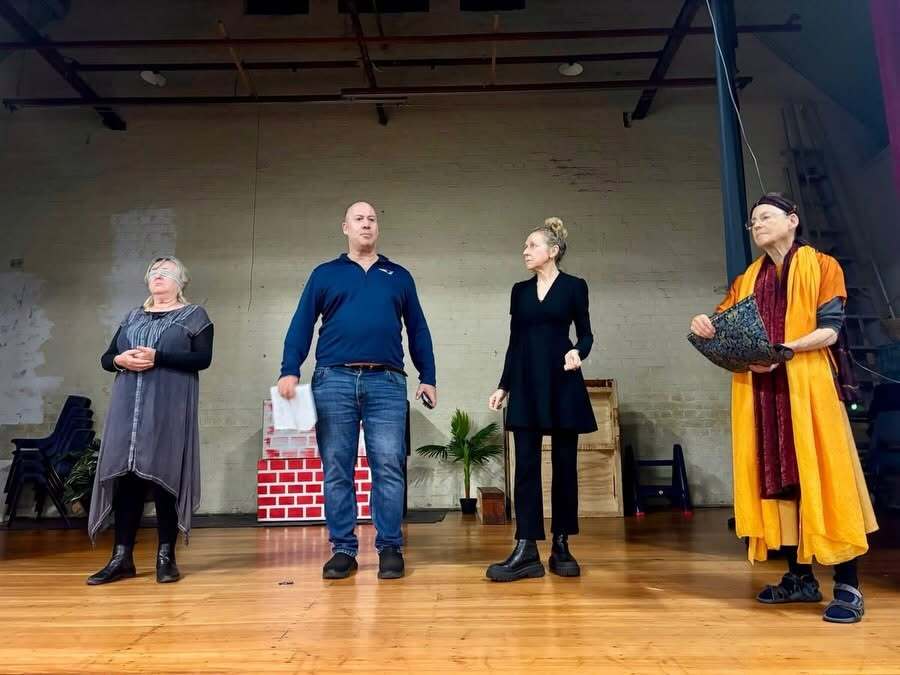
Offering five separate perspectives of oppression, suppression, and corruption across different cultures but with the same result of division and pathos, Worlds Alive presented plays and excerpts as if listening to a radio. In a current world of media and without costumes, a set or lighting, the spotlight was on the beauty or directness of the word. It required concentration and some stamina but was well worth it.

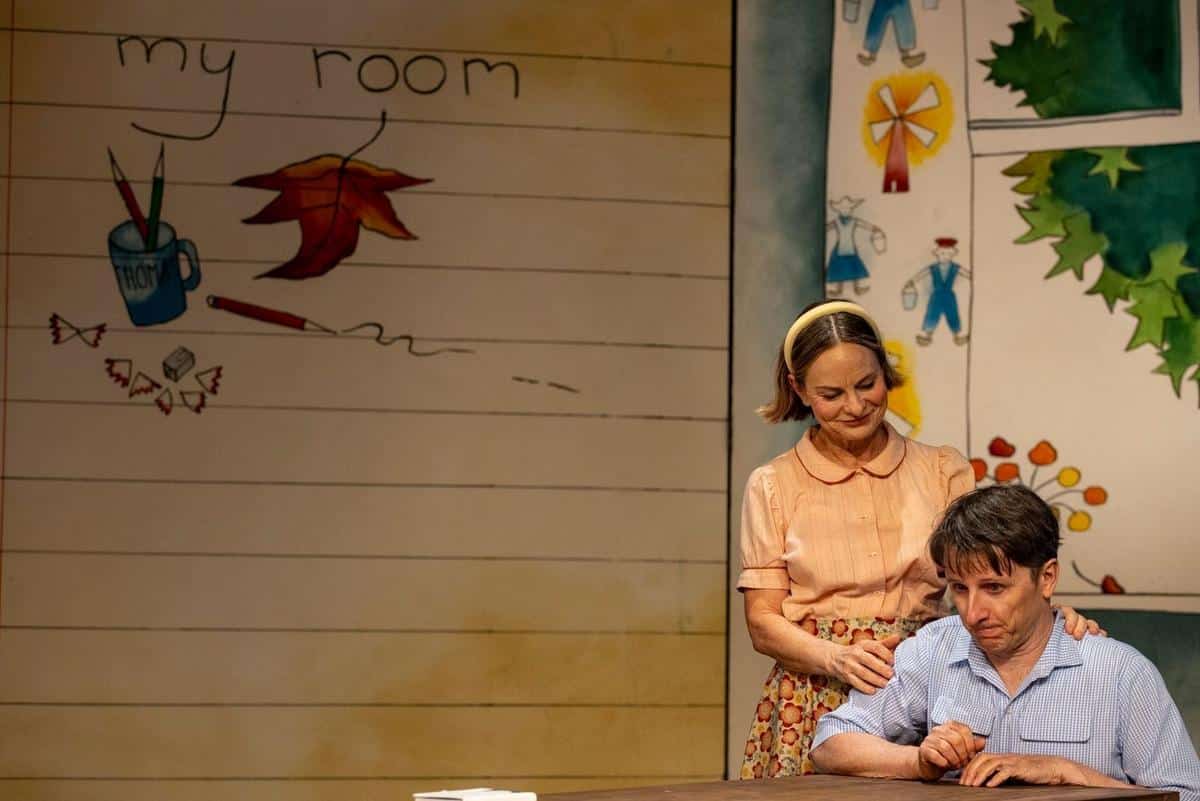
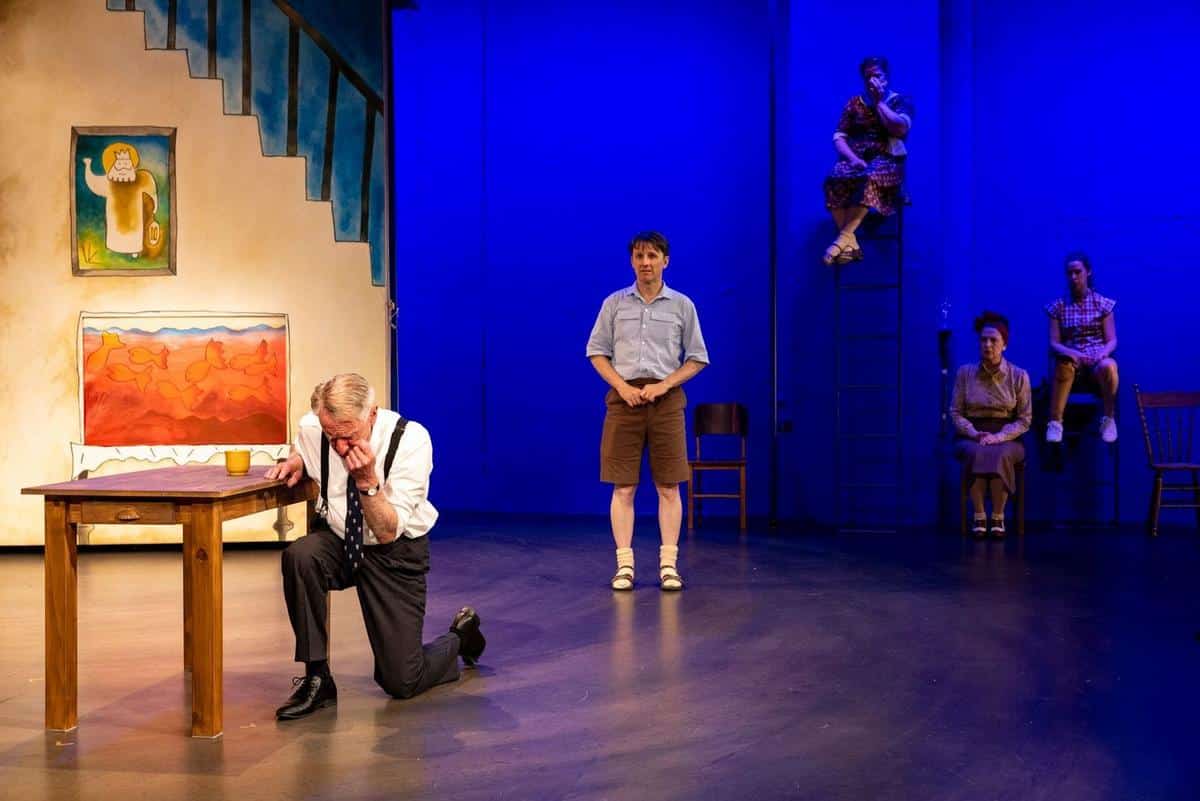
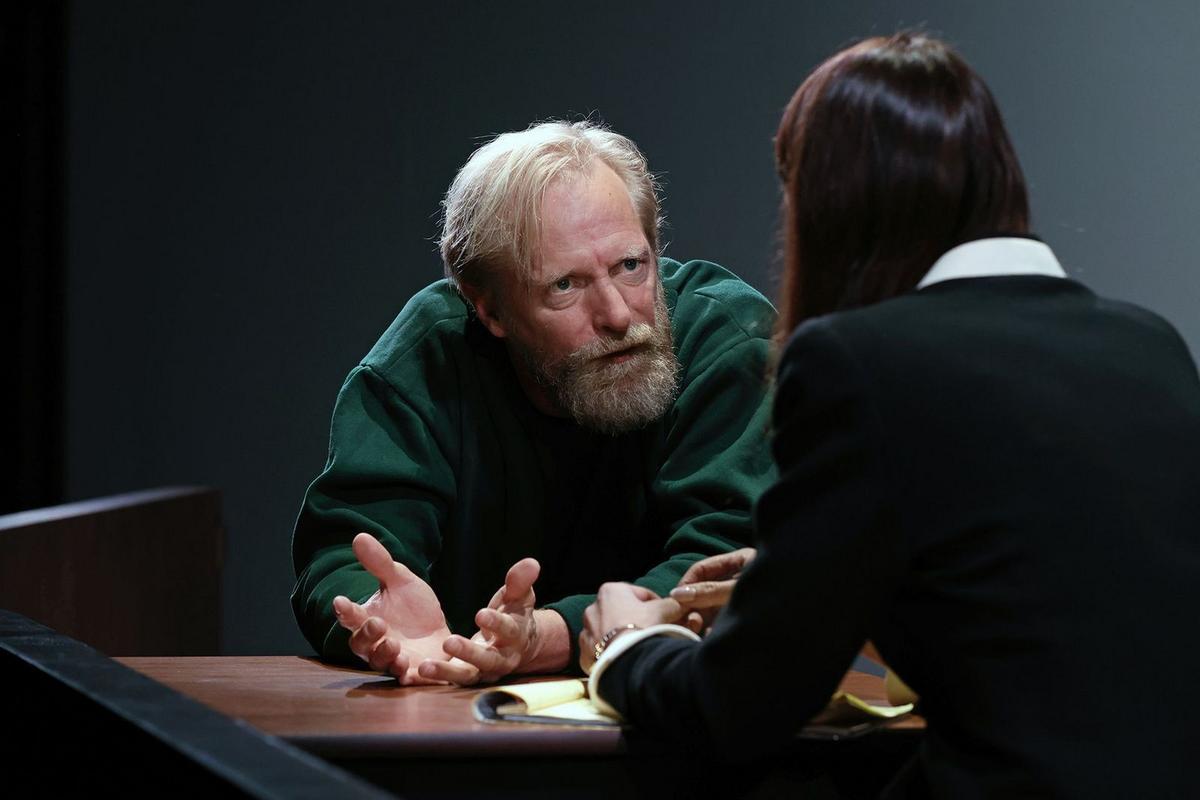
Kunene and the King presented two people from opposing cultures and with past apartheid history hanging overhead. With one person ageing and the other caring for the aged, the audience was hoping for a developing friendship. Despite the antagonism due to a disappointment of the present socio-political environment, eventually deep conversations led to an understanding. Both actors generated a connection with well-rehearsed readings intertwined with the beauty of King Lear but also the foolishness of misunderstanding and ageing. With no set, the language was all the audience had and a powerful message was relayed of how mis-communication results in missing the opportunity for understanding and peace.

Miss Margarita’s Way – it was a hard act to follow the first powerful play. The actor offered a dark comedic vignette of suppression and indoctrination starting with youth. It left people quite rightly nervous of being in her space!


An Evening at the Opera – a couple at war with themselves and with a history of their despotic family ties and corruption, the relationship erupts as the dictator focuses on a macho-style leadership of ‘bread and circuses’ to appear as a benevolent dictator. At the same time, his wife, who has come from a line of family dictators, faces herself literally in the mirror and has to come to terms with who she is and what she has become. With her mother’s ghost offering dutiful female advice from the past, the future looks bleak. The actors each kept the audience uncomfortable enough to recognise the underlying political corruption with the overlay of a marriage and family dynasty.

Night Picture of Rain Sound – a reader questions the symbolism of Romeo and Juliet, offering a different perspective and possible outcome. The actor presented quietly and thoughtfully how we should question what we are supposed to believe, perform or be and for what purpose really?

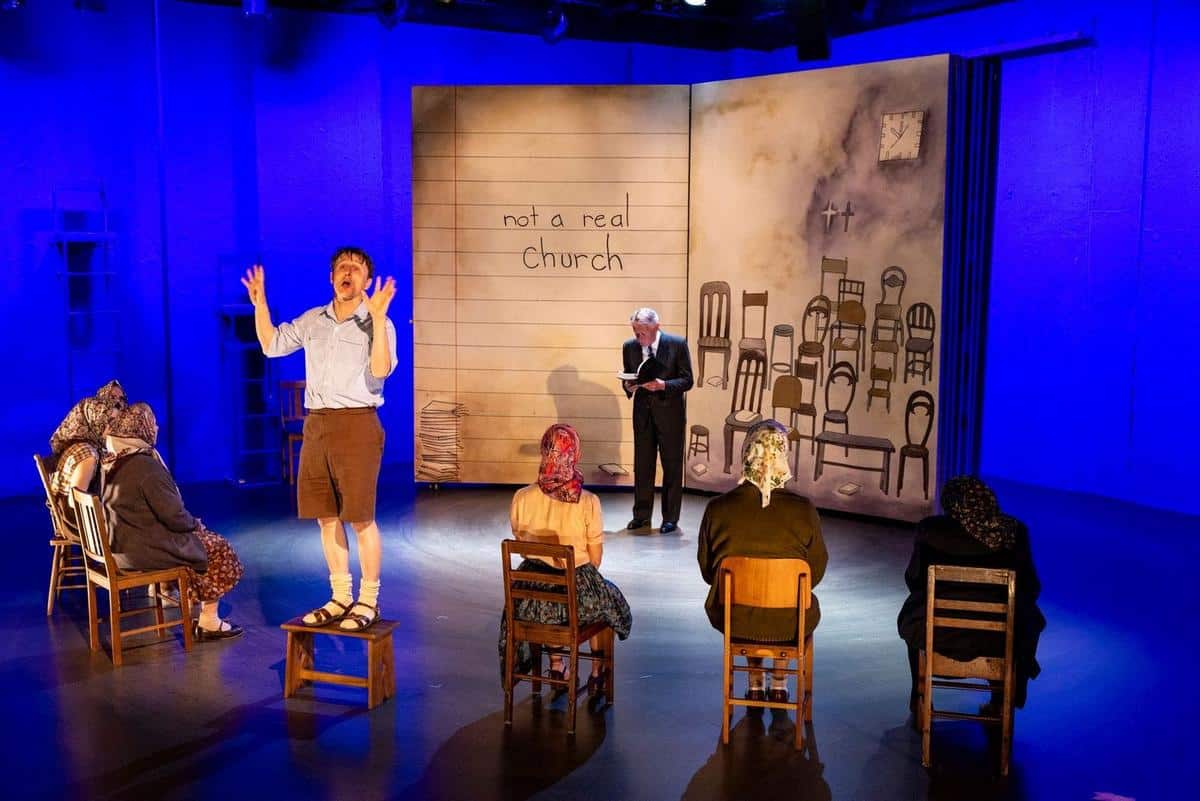
The Struggle of the Naga Tribe – the full ensemble presented as a Greek chorus swapping roles to offer different perspectives. There were the corrupt business developers deliberately misinterpreting and demonstrating the results of economic progress to the benevolent but corrupt government who choose to ignore the impact on a peaceful village. Other voices included the village leader and people recognising too late that they have also been sold a story and that their culture and soul has been sold at a huge price. The actors powerfully presented alternating points of view with a sobering ending of ‘too little, too late’.

The audience listened carefully, absorbing and resonating with the social messages applauding each piece as a separate entity. It was at times bald, poetic and informative and well worth the effort.

To book tickets to Worlds Alive 2026, please visit https://www.scenetheatresydney.net.au/.

Spread the word on your favourite platform!

Monster

Monster

Monster Rating

Click if you liked this article

0

Performance theatre is often most effective in the context of a paired back stage and minimal props. In Monster – Directed by Kim Hardwick – a talented cast give compelling performances and bring Duncan Macmillan’s cracker of a script to life. This is the first time his characters have come to Sydney, and the intimate setting of KXT Theatre in Broadway was the perfectly suited venue to see them play out. Audience members bear witness to the type of theatre in which the flicker of a flame sparked makes a room to hold its breath, and a small box on the dinner table transforms the promise of engagement into a complex and foreboding omen.

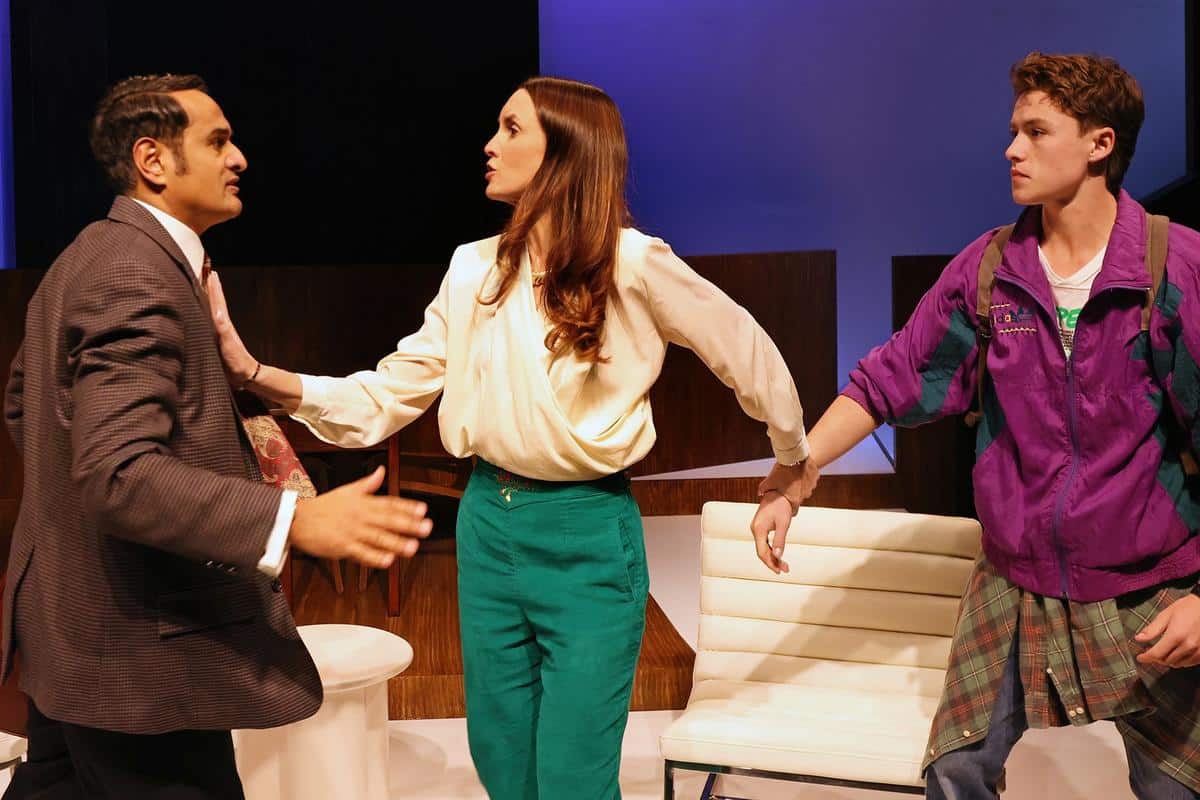
The “Monster” in Macmillan’s play is seemingly clear from the moment that stage lighting illuminates the youngest face of the cast. Campbell Parsons is electrifying as Darryl, a budding psychopath who speaks with convincing intensity about burning buildings, setting off fire extinguishers and playing with knives. Darryl idolises notoriously evil figures like Charles Manson and Jack the Ripper and informs his new teacher Tom (Tony J Black) – or as he calls him – “Agency” that he has aspirations to be just like these people one day. Daryll seems to have an eerie level of unspoken insight into his situation, and Parsons – as an actor – is able to use physicality and tone to accurately command the audience’s attention.

Darryl is a child whose pain has rendered him so incapable of anything productive beyond creating a spectacle of it. He exposes his new teacher’s vulnerabilities with ease; collecting them as ammunition to be inflicted at the right time. Black holds the character of the frustrated teacher well, and when he is regrettably drawn into comments about his race and level of affluence, it is clear that Darryl has successfully projected his own feelings of difference and shame onto his next unwitting victim. Darryl’s feelings seem to be so unbearable that even his Nan is not safe, evident by a moment in which he expresses to Tom that he fantasises about stabbing her in the back when she cooks his dinner each night.

The themes in this play are not for the faint of heart. Mental illness, social class, trauma and despair bounce around the room, as the stellar acting exposes the machinations of truly flawed people. Grey areas in moral culpability are explored, and when new characters enters the stage, they serve only to ask more questions than to answer them.


Tom’s soon to be wife Jodie (Romney Hamilton), as well as Darryl’s Nan ‘Ms Clarke’ or Rita (Linda Nicholls-Gidley), both do justice to the part of people who are trapped and out of their depth. Rita’s constant and fraught attempts to avoid associations with her surname – or to take any accountability for her grandson’s behaviour – are revealing aspects of the script. It is clear that despite being lonely, Rita does not want to be bound to the responsibility with which she is endowed, and she instead chooses to find what little solace she can in her “faith”. Her partner Carl – who only ever appears as a name in this play – is a character that seems to supersede all evil that Darryl mentions he is capable of to Tom.

There are glimmers of hope and humour in the performance and in one scene, Darryl hints of the notion that a child who has been written off as “inherently bad” may perhaps be capable of empathy (or at very least guilt) if someone were to truly care for him. However, what follows this scene adds an even greater depth to the plot, in the idea that people can inflict ferocious pain onto others when their own has gone completely unchecked.

In its intimate exploration of familiar but profound themes, this is a play – and venue – that allows for a communion of thought from an invested audience. The Director and cast treat the subject matter with respect, which means the themes are capable of reaching a thinking and feeling audience. It was – at some stages in this performance – difficult to avoid exchanging furtive glances with audience members on the opposite side, as they navigated their own visceral reactions to the many transfixing moments in the play.

More than ever, it is important that human beings continue to explore the puzzling moral issues within this play. Conversations ignited after this version of Monster are likely to spill out of the theatre bar and onto the streets well after the last scene. Don’t miss out on this one, and be sure to take a good friend or family member to yarn with after the show.

I give this one 4 stars (and a fantastic director)!

To book tickets to Monster , please visit https://www.kingsxtheatre.com/monster.

Photographer: Abraham de Souza

Spread the word on your favourite platform!

The Importance of Being Earnest

The Importance of Being Earnest

The Importance of Being Earnest Rating

Click if you liked this article

1

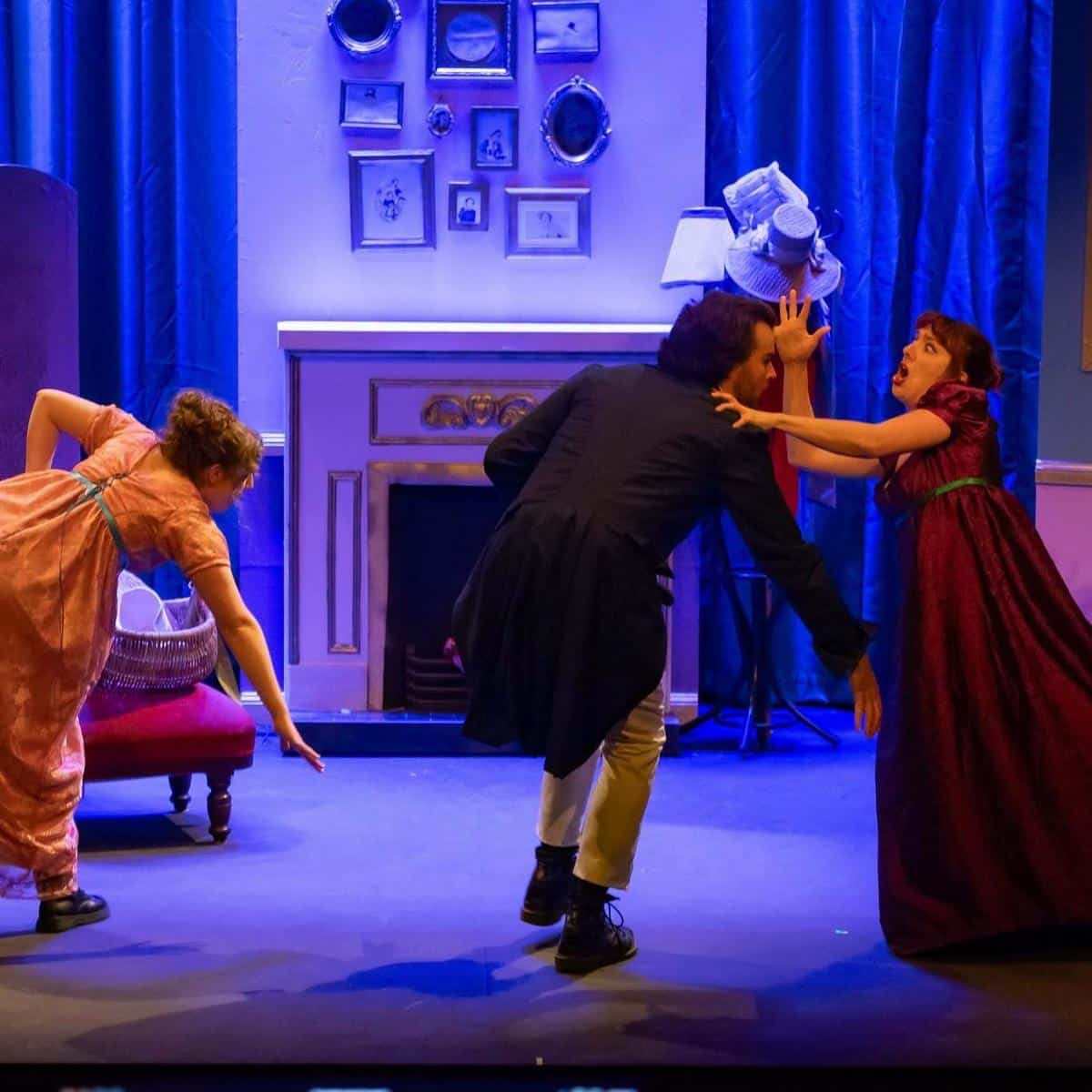
Brendan Jones’ direction for The Guild Theatre’s production of The Importance of Being Earnest takes a deliberately restrained, actor-focused approach to Oscar Wilde’s celebrated comedy of manners. A single adaptable set serves the entire evening, with shifts in furniture, props, and lighting indicating changes of location while maintaining the rhythm of the play. Period costumes establish the late Victorian setting without drawing undue attention to themselves, subtly marking the passage of time while keeping the focus squarely on the performances.

At the centre of the play is Christiane Brawley’s commanding performance as Lady Bracknell, which provides the production with its gravitational force. Brawley resists exaggeration, instead building the character through carefully controlled presence, voice, and movement. Her Lady Bracknell commands the room not through volume but through absolute certainty, delivering Wilde’s lines with the authority of social judgement. Particularly striking is her use of the character’s walking stick, wielded almost like a rapier, slicing through the surrounding absurdities and, in the final act, restoring order to the increasingly chaotic situation.

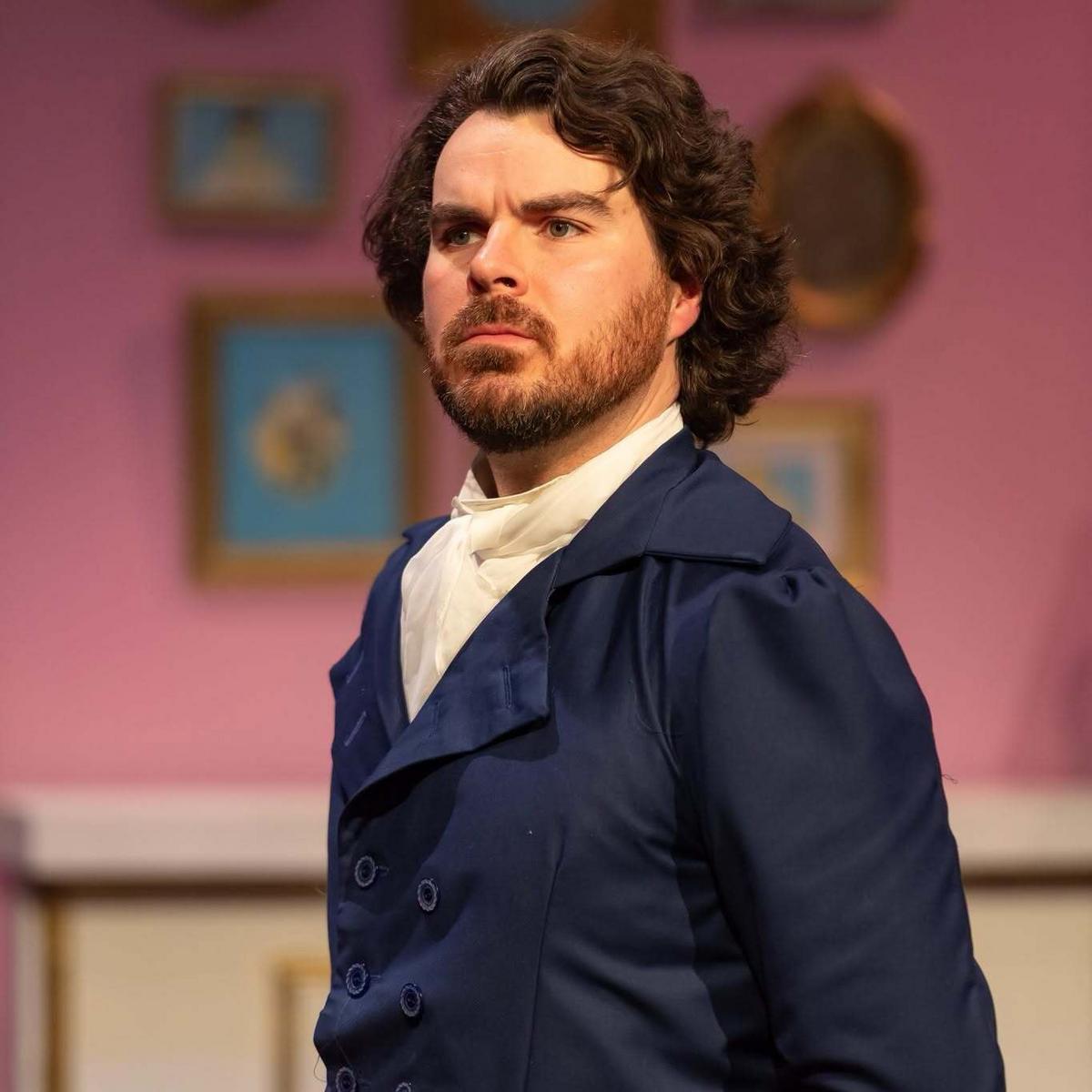
The comic partnership between Jack Worthing and Algernon Moncrieff proves equally strong. Simon Pearce’s Jack projects confidence and control, yet allows the cracks in that composure to appear as the plot tightens around him. The result is a performance in which Jack’s comic energy bursts sideways whenever the carefully maintained façade begins to slip, often expressed through sharply physical reactions. In contrast, Harry Rutner’s Algernon moves through the play with gleeful poise, seemingly delighted to dance along the knife-edge of Wilde’s social absurdities. Their contrasting energies play off each other beautifully, creating a lively tension that drives many of the play’s comic exchanges.


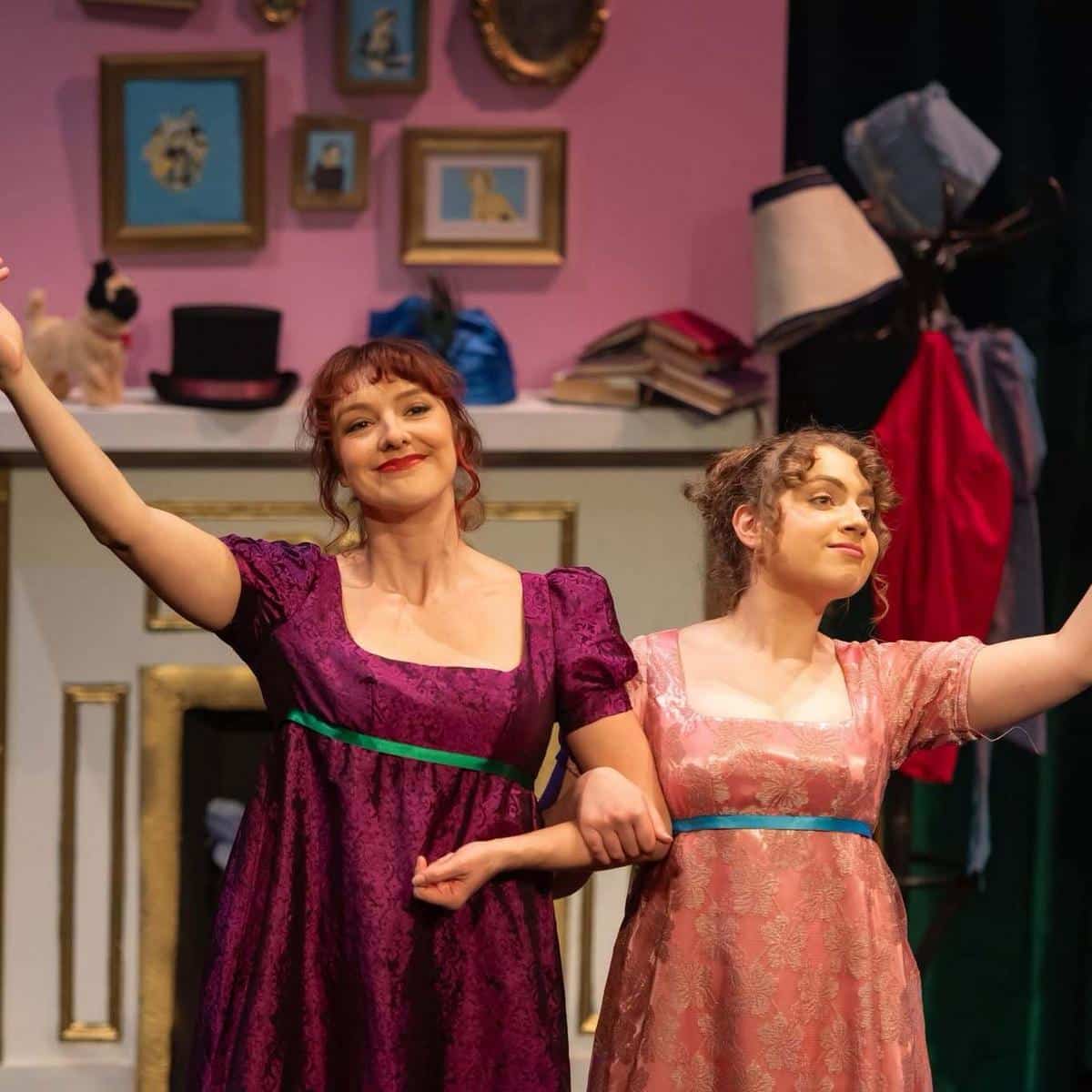
Julia Burns and Isla Harris bring similar clarity to their performances as Gwendolen Fairfax and Cecily Cardew. Both actresses initially lean into the romantic enthusiasm and social niceties expected of their characters, presenting Gwendolen’s polished confidence and Cecily’s imaginative warmth with equal charm. The famous tea scene, however, allows them to demonstrate impressive range as the tone shifts repeatedly within a single encounter. What begins as cordial conversation cools rapidly once the two women realise they are engaged to the same man. The atmosphere turns first cold, then openly combative, with politeness weaponised through smiles, teacups, and carefully chosen words. Burns and Harris navigate these transitions with precision, and the final moment—when the two women instantly unite against the men responsible for the confusion—provides one of the evening’s most satisfying releases of tension.

Leigh Scanlon’s dual performance as Lane and Merriman offers a neatly observed contrast. Lane appears as a figure of calm control, the perfectly composed manservant quietly maintaining order in Algernon’s household, while Merriman carries a dry affability that suggests a man well accustomed to accommodating the oddities of country house life. Scanlon keeps the two characters distinct, highlighting how the servants calmly adapt as the increasingly absurd events of the play unfold around them.

Lyn Lee and Kevin Tanner bring warmth to their roles as Miss Prism and Canon Chasuble, playing their mutual flirtation with straightforward sweetness. That sincerity makes the later revelation of Miss Prism’s role in the play’s central mystery all the more effective, as the gentle respectability of the characters contrasts sharply with the absurdity that ultimately resolves the plot.

Taken as a whole, The Guild Theatre’s production succeeds through the clarity of Brendan Jones’ direction and the strength of its ensemble. By keeping the staging deliberately restrained and allowing the performers to take centre stage, the production lets Wilde’s intricate social comedy unfold with confidence and precision. The result is an evening that captures both the elegance and the absurdity at the heart of the play, and one that reminds audiences why this mischievous comedy continues to reward performance more than a century after its first appearance on the stage.

To book tickets to The Importance of Being Earnest, please visit https://www.guildtheatre.com.au/featured-shows/the-importance-of-being-earnest/.

Photographer: Grant Leslie Photography

Spread the word on your favourite platform!

Exit Laughing

Exit Laughing

Exit Laughing Rating

Click if you liked this article

3

There are plays that make you laugh, plays that make you cry, and then there are plays that quietly sneak up on you and remind you that life is happening right now. Watching ‘Exit Laughing’ feels a little like attending the obituary of a woman who refused to leave the table before the last hand was played. Not a solemn obituary, of course—but one written in laughter, cake crumbs, and the shuffle of bridge cards.

For thirty years, Mary’s greatest adventure was her weekly bridge night with “the girls.” In the grand ledger of life, perhaps that sounds small. But for Connie, Leona, Millie, and Mary—four Southern ladies from Birmingham—it was ritual, friendship, and the quiet glue that held the years together. So when Mary dies rather inconveniently before the next scheduled game, the surviving trio does what any respectable, bridge-loving friends might do: they “borrow” her ashes from the funeral home and bring her along for one final night of cards.

From that moment on, the play unfolds like a mischievous wake—one where the guest of honor is present in an urn and the night spirals gloriously out of control. What begins in melancholy quickly turns into an evening of surprises. It is ridiculous in the best theatrical sense: a celebration of life disguised as chaos.

Originally staged at the historic Landers Theatre by the Springfield Little Theatre, the production famously broke the theater’s fifty-year record for tickets sold, playing to standing-room-only audiences and becoming the most popular non-musical in the theatre’s century-long history. It is not difficult to see why. The play carries a universal message wrapped in laughter: it is never too late—or too early—to seize the day.


The recent production at Hunters Hill Theatre, directed by Annette Van Roden, captures this spirit beautifully. Van Roden’s direction keeps the pacing lively while allowing the emotional moments to breathe. She has clearly chosen her cast with care, creating an ensemble that feels authentic, warm, and delightfully human.

Among the cast, Penny Church’s Millie stands out as a particularly charming presence—eccentric, slightly unhinged, but utterly lovable. Her performance captures the play’s essence: that life, even in its later chapters, can still be wild, surprising, and full of joy.

By the end, the audience leaves with what might best be described as a warm aftertaste—a smile lingering long after the curtain falls. In the end, Exit Laughing is less a comedy about death and more an obituary for a life lived too cautiously. Mary’s final hand reminds us all that the game isn’t over yet—and that the best move might simply be to laugh and play on. ♠️♥️♣️♦️

To book tickets to Exit Laughing, please visit https://www.huntershilltheatre.com.au/.

Photographer: Daniel Ferris

Spread the word on your favourite platform!