
At the Theatre on Chester, the space itself becomes part of the storytelling. Its cosy intimacy draws the audience in, dissolving the boundary between stage and seats and creating a sense of shared experience that suits Michael Gow’s Away very nicely. Under the sensitive direction of Carla Moore, this is a production that leans fully into the emotional closeness the venue affords.
Away is an easy story to be pulled into, not because it is simple, but because it is so recognisably human. Across three families, Gow’s play explores grief, loss, and the ways we lay both love and burden upon each other.
A simple but effective set – dominated by a cleverly realistic mobile tree – leaves the way clear for attention to focus on a strong cast. The opening scene features the closing moments of a school performance of A Midsummer Night’s Dream – the dancers moving with an endearingly clumsy grace – followed by a sweet exchange between two awkward teens, Tom and Meg. Tom (Lucas Dockrill), clearly has a crush on Meg (Tara Bishop), and is every bit as smooth and graceful about expressing it as you would expect from a teenage boy. It all seems to be going well though, until the parents arrive.
Meg’s parents, Gwen and Jim, are decidedly underwhelmed, driven by Gwen’s apparent determination to seek and find fault at every given opportunity. It’s quickly evident that that the female leads will dominate in this production, with Anna Desjardins doing a wonderful job of portraying the state of barely contained rage and resentment that Gwen seems to live in. The spikey, confrontational energy held in her tight body and twitching hands is at times uncomfortable to sit with, but tremendously effective. Beside this, the apologetically shuffling Jim (Cam Ralph), whose sole mission seems to be to appease his wife – there’s clearly love there, as well as some level of understanding – is somewhat overshadowed.
By contrast, Tom’s parents Harry (Ian Boland) and Vic (Tracey Okeby Lucan) are warm and effusive, evident pride spilling over as they greet their son. A little too effusive, maybe? It’s one of the many threads that weave together to explain motivations, but not for a while.
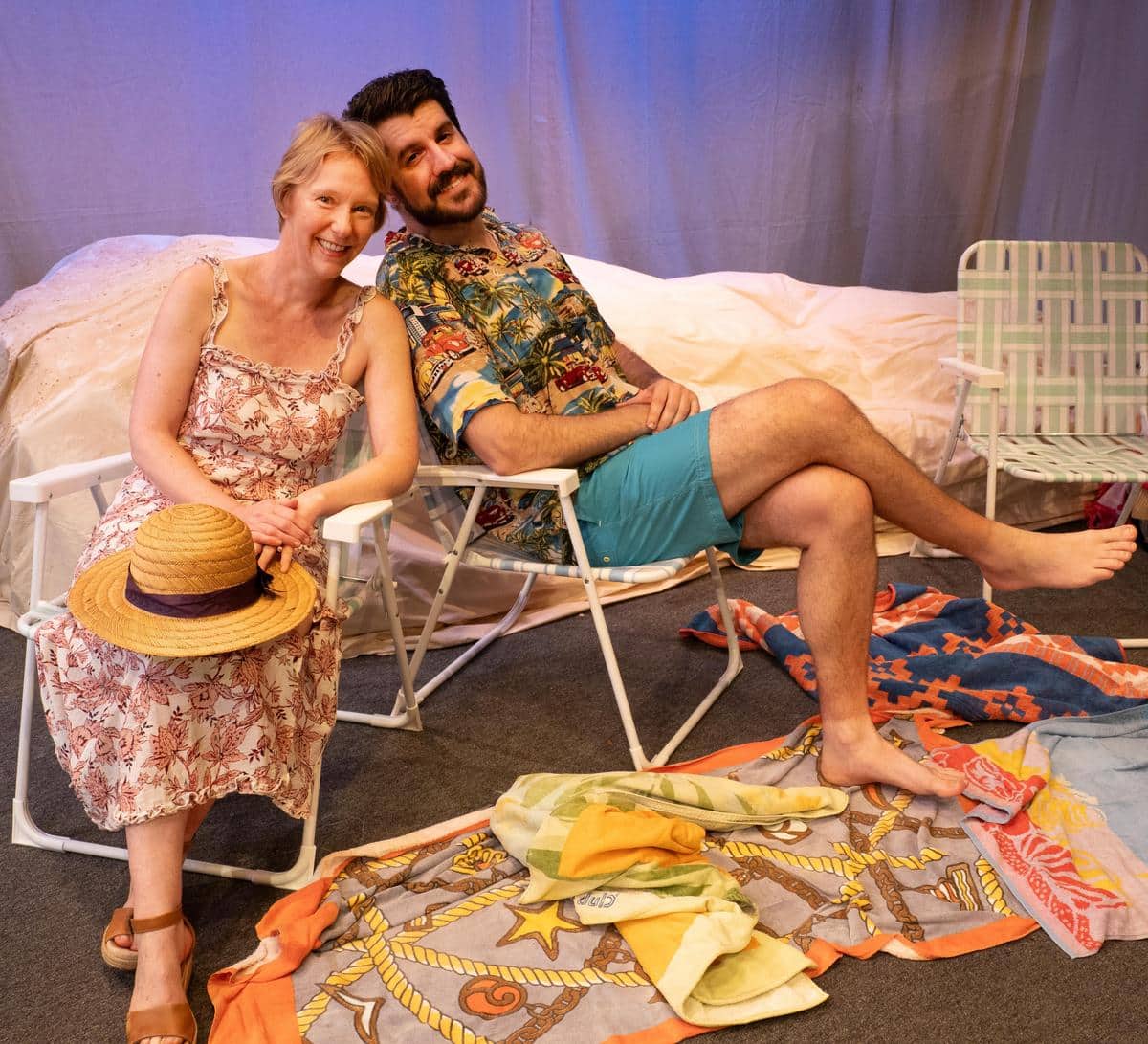
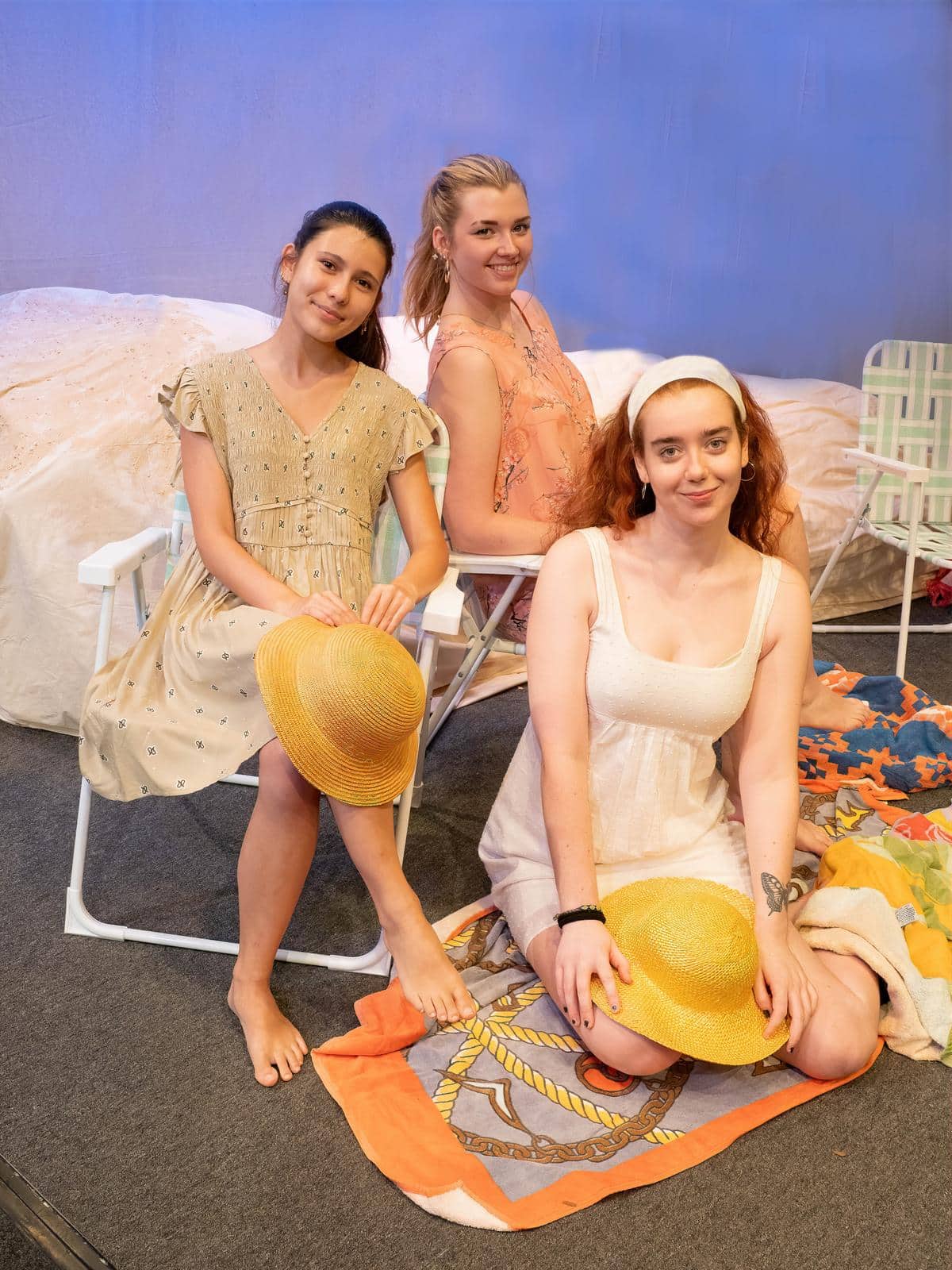

The scene (and many subsequent scenes) is stolen though, by Karen Pattinson as Coral, the wife of headmaster Roy (Martin Bell). Coral drifts on the edges of scenes like a ghost; there but not there. Roy and Coral lost their son in the Vietnam war, and Coral now alternates between complete dissociation and a series of somewhat ghastly attempts to put a socially acceptable mask on at the urging of her husband, who just wants to move on with life with the woman he used to know. She succeeds, at moments, to look and act somewhat normally, but you can see the effort trembling at the edges of her face before she drifts back into her own world of pain.
Rounding out the stable of strong female leads, Tara Bishop plays Meg with quiet restraint. Meg is chafing at the bonds of expectation that tie her to her mother’s happiness – or rather, lack of it – and the moments where she starts to pull away and challenge the situation land with the subtle authority of a much older actor. She’s one to watch going forward.
Lucas Dockrill’s Tom is worth mentioning as similarly grounded, offering a portrayal of genuine sweetness and vulnerability. His openness is engaging, though there are moments where emotional beats are pushed too quickly, slightly undercutting the character’s natural awkwardness.
Although the premise of the play is that all three families are going away for a holiday over Christmas, the theme of… awayness, for lack of a better word, permeates through every character. Gwen flees into anger to avoid confronting the trauma of her past; Meg longs to escape the crushing responsibility for her mother’s happiness; Roy seeks distance from grief in the pursuit of normality; while Coral retreats into dissociation or fantasy to escape her pain. For the remaining characters, separation of another kind hovers – but I’ll leave the audience to discover that for themselves.
For all its emotional weight, the production is far from relentlessly bleak. A distinctly Australian humour surfaces throughout, with Oscar Baird deserving a special mention for his energetic multi-role performance, including a memorable and unexpectedly arresting banjo solo during the campsite talent show.
As its threads converge, Away ultimately reveals itself as a story not just about leaving, but about coming home – to connection, empathy, and shared understanding. It’s a quietly affecting journey, and a production well worth experiencing.
Season: April 10 – May 2
Buy tickets via: https://www.ticketor.com/theatreonchester/default#buy
To book tickets to Away by Michael Gow , please visit https://www.ticketor.com/theatreonchester/default#buy.