A Frank Look At History Repeating Itself

The Diary of Anne Frank

The Diary of Anne Frank Rating

Click if you liked this article

I went into this production of The Diary of Anne Frank as I suspect many others did, knowing the loose story – the discovery of a young girl’s journal narrating life in hiding during the German occupation of Amsterdam – but not, perhaps, having read the book itself.

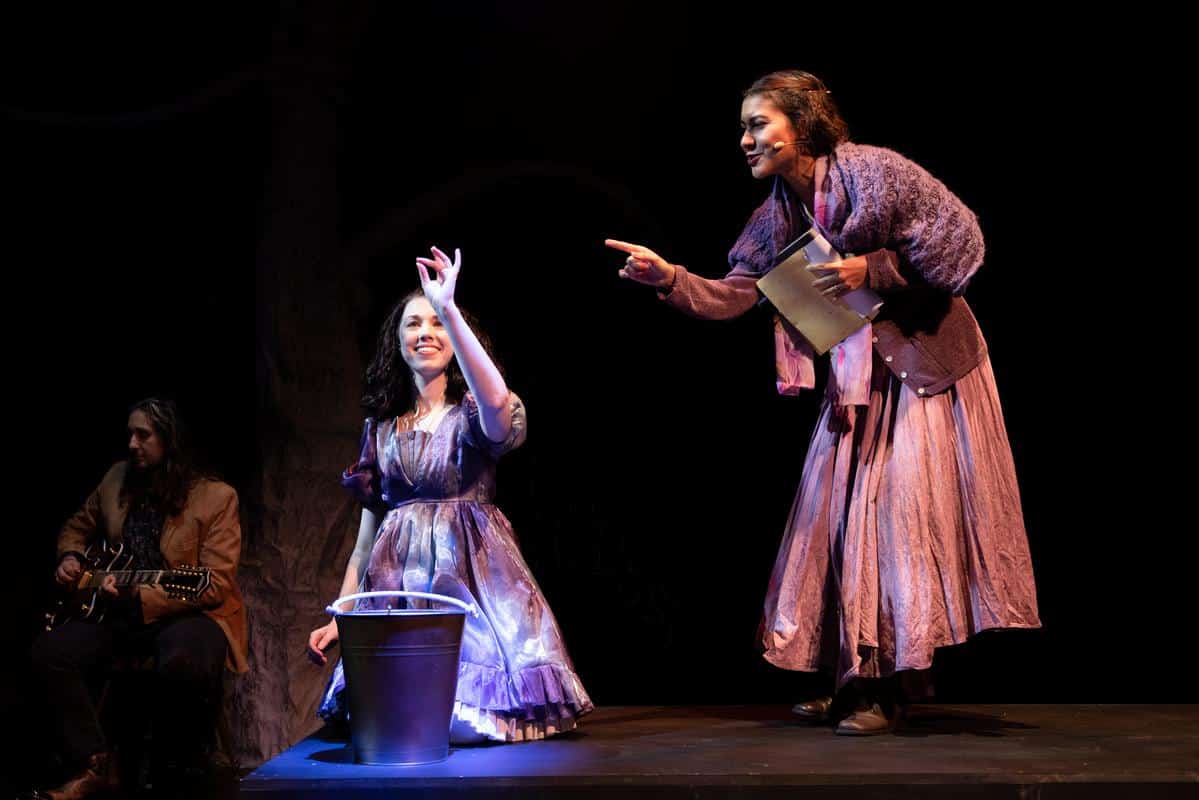
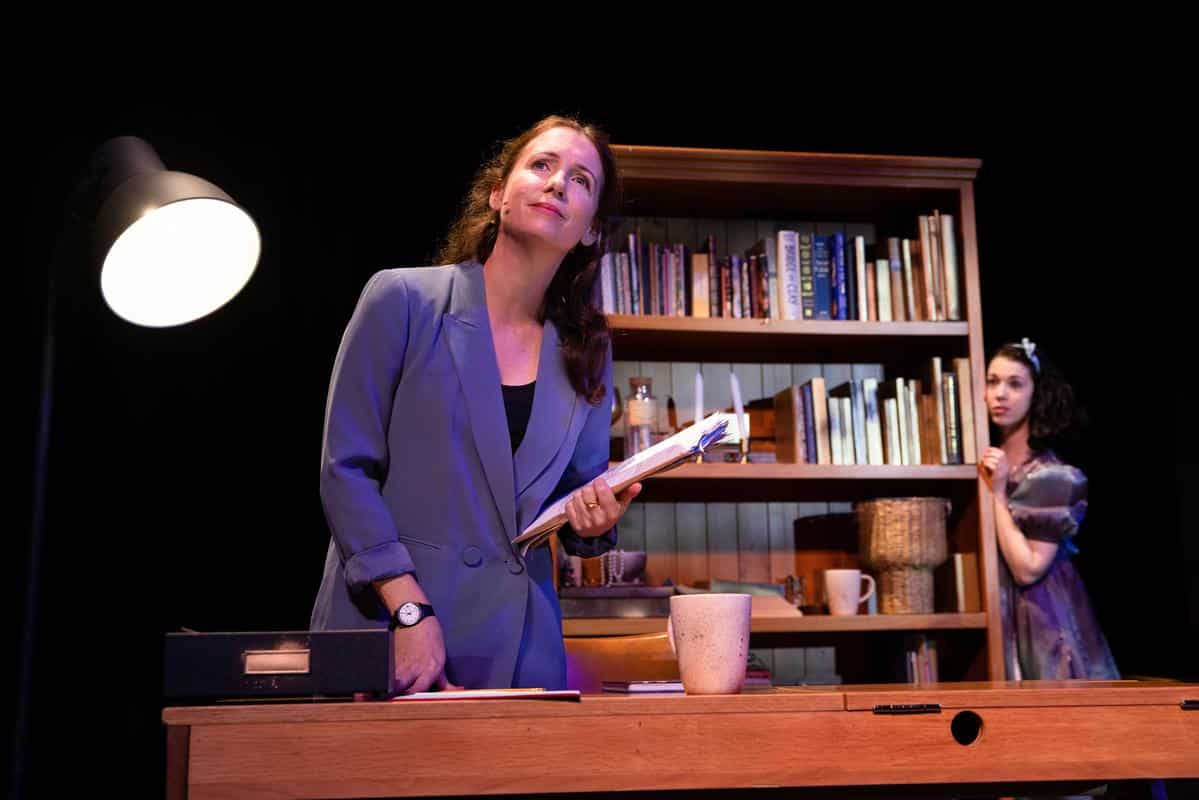
From the moment the lights go up on the small, cluttered space, drowned by shadows both literal and figurative, this production captures with painful accuracy the claustrophobia of several families living in forced confinement. They survive on ever more meagre rations and heavily edited news brought by their kindly protectors, who attempt to shield them from the worst of what is happening outside. The constant threat of discovery sits like a weighted blanket over every scene, adding a quiet but relentless tension as each family struggles to remain hopeful, generous and kind while their world shrinks day by day.

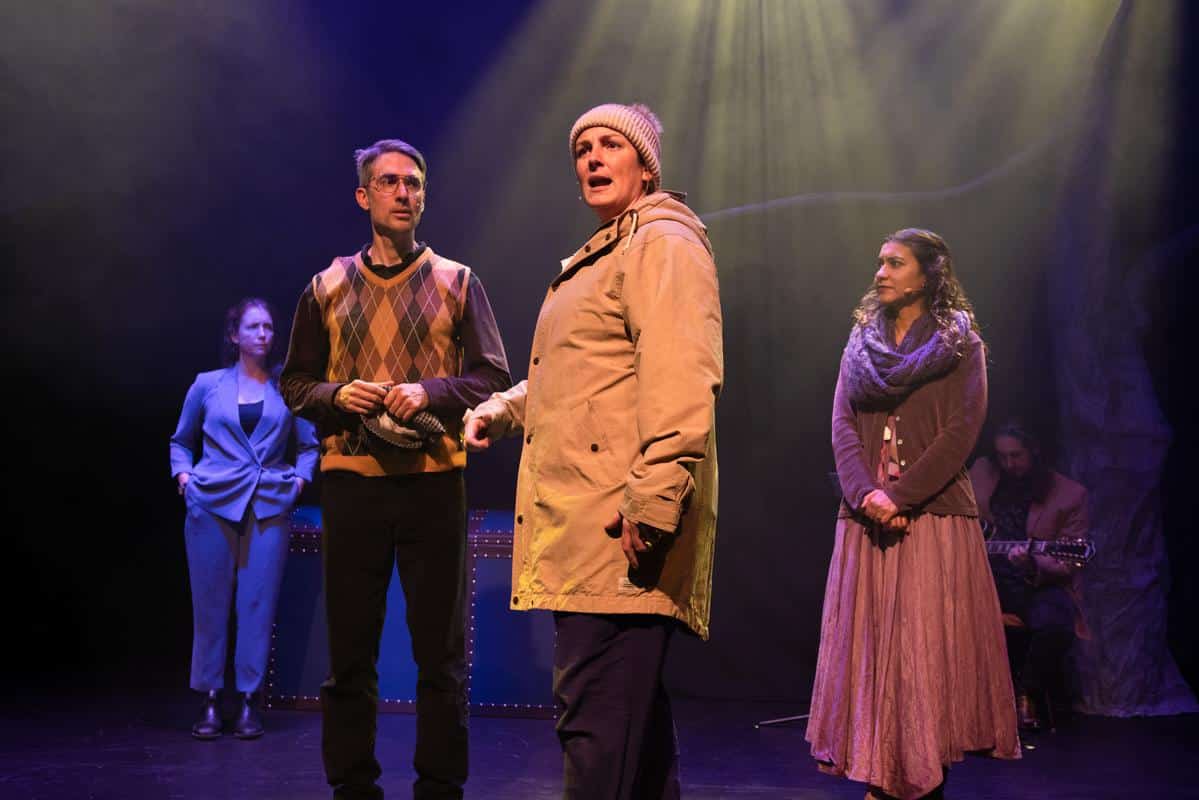
The ensemble work is strong. Otto Frank stands as a pillar of spiritual fortitude: humble, strong and deeply kind, bearing the circumstances with a remarkable evenness of temper. In contrast, Mr Van Daan is angry, argumentative and more than a little selfish, his frustrations simmering beneath the surface until he explodes with increasing frequency as the interminable incarceration continues. The dentist, last to arrive at the safe haven, is anxious, pessimistic and at times almost nihilistic, his moments of brutal honesty tipping the families into near hysteria. Together they offer a convincing portrait of people reacting to unimaginable pressure in very human ways.

At the emotional centre of the story is Anne herself, portrayed as robust, energetic and mischievous. She pushes against authority in the way only a teenager can, and her relationship with her father forms the soft heart of the play: he is her safe harbour, the one person who truly sees her. Her relationship with her mother, by contrast, is distant and strained in a way that will feel painfully familiar to many parents of teenagers.

What struck me most was how modern Anne feels. She believes she is far more enlightened than the generations before her but does not always see her own shortcomings. She misunderstands her mother and pushes back against rules and expectations around demeanour and behaviour. In short, she is exactly like the young people we know today, which somehow makes her fate even harder to absorb. Despite the fear surrounding her, Anne’s spirit remains largely undimmed – though the night scenes reveal a more complex reality. She suffers terrible nightmares about being taken by the Green Police, waking screaming in the small hours, exposing the terror beneath her bravado while also highlighting the remarkable way the young still manage to feel invincible even in the face of great danger.


One line stays with you long after the curtain falls. Anne remarks that they are living in a way that no young people ever have before. It calls to mind our own young people, living through a time of unprecedented advancement and enormous divisive change. It is a sobering thought: that humanity can move forward in so many ways and yet still find itself circling back towards division, fear, greed and cruelty.

What I found particularly moving was the moment at the end of the first half when the family sing the Hanukkah song. It brought a genuine tear to my eye, witnessing these families – hunted, discriminated against, living under the ever-present threat of the concentration camps – still finding a moment to express gratitude and companionship. When you consider the enormous suffering happening in the world right now and the bitter irony of it, the moment lands with even greater emotional force.

The second half carries a fragile sense of hope. The allies have landed and liberation seems almost within reach after two long years of hiding. For a moment, the audience allows itself to breathe – to believe that all will be well. Then they are discovered. The families are taken away, dispersed among the concentration camps, and we all know the terrible ending that follows.

The play is also quietly funny at times, particularly in its portrayal of family dynamics. It is remarkable how little has changed in the relationships between mothers and daughters or fathers and sons, even when history itself is collapsing outside the door.

Overall, whilst not the most polished of performances, the production is surprisingly moving. It leaves the audience with a renewed sense of gratitude for freedoms so easily taken for granted and prompts a quieter reflection on our own daily lives. For two years these families felt no wind on their faces, had no privacy, no freedom to step outside and almost no information from the outside world. Today we consume a constant stream of news, commentary and noise until we are utterly overwhelmed by it. Perhaps this ceaseless input is what keeps us over-aware but still underactive when it comes to shaping our own futures. I cannot help but wonder whether any of us would make as good a job of surviving that stillness as they did.

In the end, this is not only a historical story. It is a timely reminder of the fragility of freedom and of the extraordinary resilience of the human spirit. And perhaps, like Anne Frank, given everything that is currently unfolding in our world, we are all still quietly clinging to the same two poignant words.

I hope.

To book tickets to The Diary of Anne Frank, please visit https://www.athenaeumtheatre.com.au/shows/the-diary-of-anne-frank.

Photographer: Amanda Humphreys

Spread the word on your favourite platform!

A Mirror

A Mirror

A Mirror Rating

Click if you liked this article

4

As you enter the theatre for ‘A Mirror’, it feels less like attending a play and more like arriving at a celebration. The foyer hums with anticipation. Ushers hand you a wedding programme, neatly printed with the order of events, inviting you to witness a union. It is a charming touch—until you turn the paper over. There, instead of a sentimental note, is a stark Oath of Allegiance to the Motherland. The shift is immediate and unsettling. You take your seat—slightly more uncomfortable than expected—and as the festivities begin, you sense that you are not merely watching a wedding. You are being watched yourself.

From the outset, Holcroft’s play establishes a world chillingly reminiscent of George Orwell’s ‘1984’. The auditorium becomes part of the dystopia. Eyes seem to linger too long. Applause feels monitored. In this society, a misstep, a wrong look, an insufficiently enthusiastic smile—any of these could betray you. The atmosphere is thick with suspicion.

The wedding that frames the narrative is a masterstroke of theatrical irony. Traditionally a symbol of joy and new beginnings, here it is a hollow performance: a carefully constructed fiction designed to appease the authorities. Beneath rehearsed vows and forced laughter lies desperation. The ceremony becomes a metaphor for the wider social order—an elaborate façade maintained for survival. Love is secondary; compliance is everything.


As the story unfolds, we are drawn into the lives of writers coerced into producing patriotic fabrications. They are tasked with rewriting history, inventing heroes, and manufacturing narratives that glorify the regime. Their creativity, once a source of meaning, becomes an instrument of oppression. Through intimidation and propaganda, they are compelled to betray not only the truth but also themselves. Holcroft incisively explores how authoritarian systems corrupt the act of storytelling, transforming art into ammunition.

Yet the weight of the subject matter, combined with the absence of an intermission, makes the production feel deliberately relentless. There is no pause for reflection, no moment to breathe. While this structural choice reinforces the suffocating atmosphere of the regime, it also renders the experience slow at times, even long. The unbroken intensity mirrors the characters’ entrapment, asking the audience to endure the same sustained pressure.

When the lights dim, the impact lingers. The play offers no easy catharsis, no triumphant overthrow. Instead, it leaves the audience with a question that echoes long after departure: would you speak the truth if the price were injury, imprisonment, even death?

In its bitterness, the play achieves a powerful moral clarity. It compels compassion, provokes self‑examination, and reminds us that while regimes built on lies may feel immovable, they persist only as long as individuals choose silence over courage. The truth may not always triumph—but as long as there are people willing to tell it, even at great cost, it can.

To book tickets to A Mirror, please visit https://belvoir.com.au/productions/a-mirror/.

Photographer: Brett Boardman

Spread the word on your favourite platform!

Moving, Off-Beat, And Deeply Tender

Tonsils + Tweezers

Tonsils + Tweezers Rating

Click if you liked this article

3

As we enter the theatre, an actor in boxers, a singlet, and a sleeveless tuxedo top is already on stage, catching our attention with a scientific riddle and collecting our answers as we take our seats. When the lights focus on them, the show officially begins, the riddle now in the hands of two figures we come to know as Lewis (Tweezers) and Tonsils, our excitable and endearing narrator.

The set, designed by Bella Saltearn, is deceptively simple; vintage wallpaper, a small corner kitchenette, two chairs off to the side. It grounds us in a space that slips gently through times, ages, and memories.

Early on, we’re warned something terrible will happen in eight minutes, setting an urgent emotional pace for Tonsils as they try to save Lewis from whatever fate lies ahead.

Max and Beth enter as narrative threads of their own. Their present-day scenes (preparing to perform Macbeth) become a vehicle for reflecting on the past. Gradually, it’s revealed that Max was one of the “Fountain Boys,” childhood bullies of Lewis and Tonsils.

Matthew Phillips’ tightly orchestrated sound design, paired with Poppy Townsend’s nuanced lighting, adds immense texture. What seems simple at first quickly reveals itself to be intricately timed, every shadow and flicker purposeful, especially as moments of puppetry and shadowplay appear.


Lia T’s delicate compositions, together with handmade props and playful visual touches, bring a sense of whimsy that keeps us laughing even as the story edges toward heartbreak.

This is part of the emotional rollercoaster of this piece; you go from belly laughs to a shocked silence, or deep tenderness in moments. This is the show’s quiet brilliance, sustained by an exceptional ensemble. Ariyan  Sharma, as Tonsils, fills every inch of the space with captivating energy, never losing the thread even through unexpected moments (a broken glass in the audience doesn’t faze Ariyan for a second). Caitlin  Green and Toby  Carey offer depth and grounded humour, while Victor Y Z Xu’s performance as Lewis is a slow-build ache, leaving more than a few of us wiping away tears by their powerful performance in the final moments of the play.

Lucy Rossen’s direction is thoughtful, playful, and deeply human. Lucy navigates Will O’Mahony’s script with care, finding the humour within the heaviness and the truth within the surreal. Tonsils + Tweezers is a darkly funny and haunting exploration of friendship, grief, and the fragile membrane between imagination and reality.

There is a reference to how Macbeth is known as “A tragedy of the imagination…” and this is clearly drawing a correlation between Macbeth and Tonsils + Tweezers. We are seeing what happens when the veil between reality and imagination is held together by the flimsiest thread.

It’s deep themes, and hard subjects are not for everyone but it was truly enjoyable from start to finish, and relatable on so many levels (some you wouldn’t want to share with most people). It was light, painful and incredibly touching all at once. It will leave you tender but grateful.

To book tickets to Tonsils + Tweezers, please visit https://www.oldfitztheatre.com.au/tonsils-tweezers.

Photographer: Nicholas Warrand

Spread the word on your favourite platform!

Knock And Run Theatre Presents I And You – A Powerful, Poetic Two-hander About Connection And What It Means To Be Alive

Feature-I and You

Knock And Run Theatre is proud to announce its upcoming production of I and You, a funny, surprising and deeply moving play by Pulitzer Prize finalist Lauren Gunderson. Set over the course of a single evening, I and You follows Caroline (Nyah Le, “Girls Like That”, “The Wedding Singer”), a sharp, sardonic teenager confined to her bedroom by illness, and Anthony (Sam Lane, “The Crucible”, “Sweeney Todd), an earnest overachiever who arrives unannounced to work on a school assignment about Walt Whitman’s Leaves of Grass.

What begins as an awkward homework session quickly transforms into something far more profound. As the two spar, joke, challenge and ultimately open up to one another, the play becomes a moving exploration of youth, mortality, art, and the mysterious ways we are connected. Both laugh-out-loud funny and unexpectedly devastating, I and You reminds us that even brief encounters can change us forever.

Artistic Director James Chapman says the play was an immediate choice for the company:

“This is a beautifully crafted script. It is witty, intelligent and emotionally explosive. It speaks directly to young people, but it resonates just as powerfully with adult audiences. It’s about seeing someone truly, and being seen in return.”

Known for championing bold, intimate storytelling, Knock And Run Theatre continues its commitment to producing works that place actors and language front and centre. With only two performers, I and You promises an electric theatrical experience driven by raw honesty, humour and heart. Audiences can expect a production that balances teenage vulnerability with philosophical depth, bringing Gunderson’s lyrical writing vividly to life.

I And You is directed by Knock And Run Theatre Artistic Director James Chapman and stars Nyah Le and Sam Lane who are both previous students of Chapman during their acting training at Hunter Drama.

Performance Details
The Royal Exchange, Newcastle
April 8-11, 2026
Tickets on sale now: https://events.humanitix.com/i-and-you


Spread the word on your favourite platform!