One Flew Over the Cuckoo's Nest: An Electrifying Australian Production That Soars Beyond the Ordinary

One Flew Over The Cuckoo's Nest

One Flew Over The Cuckoo's Nest Rating

★★★★★

Click if you liked this article

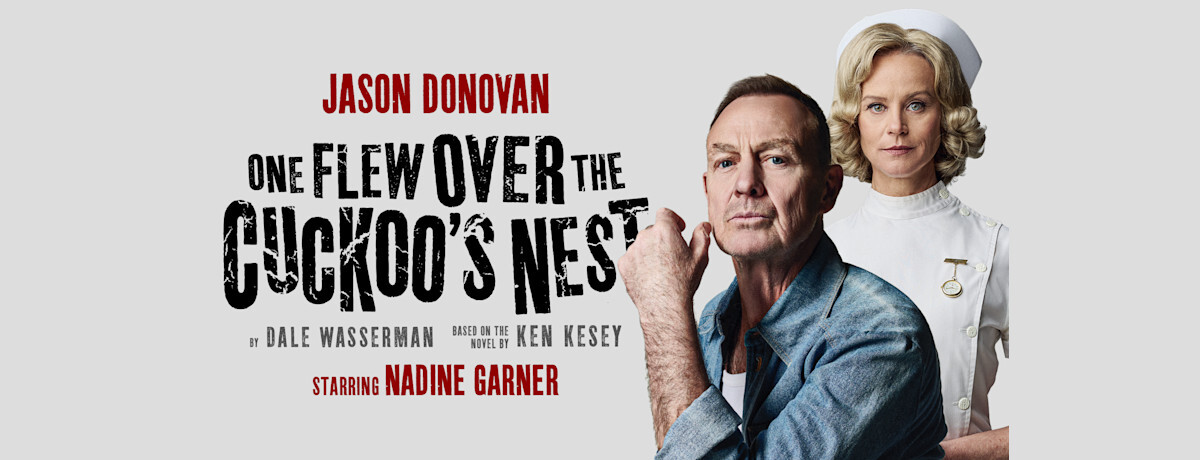
Melbourne audiences are in for an electrifying treat this season, with a bold, brazen and bespoke stage production of One Flew Over the Cuckoo's Nest treading our shores at the glorious Athenaeum Theatre in Melbourne. This thrilling piece is as poignant as ever, gripping us with masterful performances by Australia's great acting pool of theatrical talent, led by iconic stars Jason Donovan and Nadine Garner.

Historically speaking, this mesmerising play is based on Ken Kesey's 1962 landmark novel, One Flew Over the Cuckoo's Nest. It was then adapted by Dale Wasserman and premiered on Broadway in 1963 (starring Kirk Douglas). Smelling a surefire hit, Douglas secured the stage and film rights, envisioning a theatrical debut that would lead to feature film success. In 1975, an iconic film was mounted: directed by Miloš Forman and starring Jack Nicholson as McMurphy. It went on to sweep the Oscars that year, winning for Best Picture, Best Actor, Best Actress, Best Director, and Best Adapted Screenplay. It is still regularly performed to packed houses all around the world, and to this day, still speaks to modern audiences everywhere.

Why is One Flew Over the Cuckoo's Nest such a modern classic? It touches on complex subject matters of the human condition, at a time when free-thinking was deemed irrational and downright dangerous. Where fear-mongering was de rigueur. Where mental illness was treated with such disdain, even in psychiatric systems who deemed to 'heal' their patients in a myriad of demeaning ways. Breaking a patient down to dust - physically, emotionally and spiritually.

Theatregoers, you are in for a voracious treat - One Flew Over the Cuckoo's Nest is not for the faint-hearted. It is a mélange of emotional rawness. A bit gritty in nature, and yet, hilarious moments too, creeping in at every turn. As an audience, we are witness to a beehive of beguiling humans trying to stay above water, locked inside the cold systematic environs of an Oregon psychiatric hospital. Governed by an equally cold Nurse Ratched, who rules with an iron fist. Where the patients have learned not to question anything, but to live by her rules.

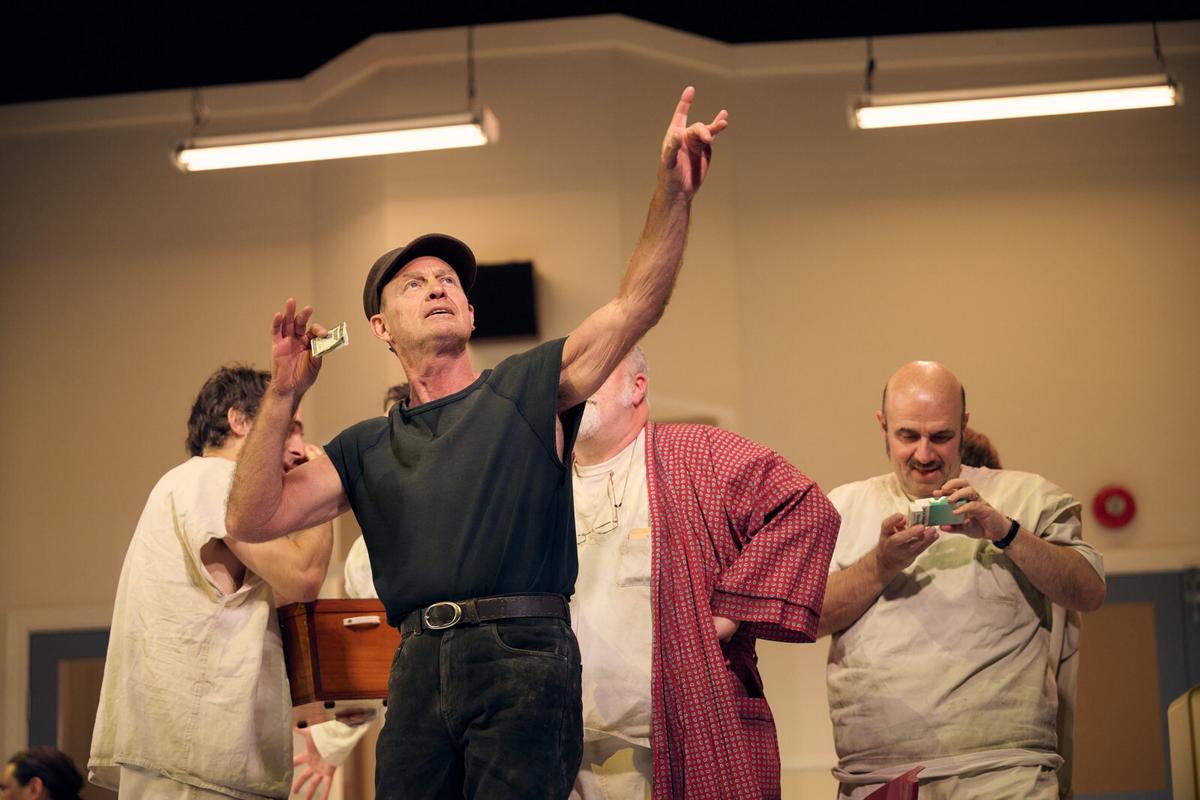
Into this unbreathable setting we meet a new patient - rebellious soul Randle Patrick "Mac" McMurphy, exquisitely played by Jason Donovan. A gravely, in-your-face upstart. A man, who incidentally, is only there for an easy ride - faking insanity to avoid hard labour on a prison farm. Expecting to sit back and relax in the 'charming confines' of a mental health ward.

Yet McMurphy is irked by this environment, and by the robotic conformity around him. So, he refuses to submit and leads his own revolution-of-sorts. He finds himself a mission to help these wounded souls by inspiring them to go against the grain. To rediscover their own voices, wants and needs: by giving them back their dignity - while turning the ward upside down, despite the consequences.

Sneaky chaos ensues on every hilarious corner. There are erotic playing cards that provoke even the most upstanding of male hospital staff. There is a vote staged to watch the World Series. There is a basketball game with an ingenious human basket holder. And last but not least - McMurphy's ultimate pièce de résistance? Hosting a late-night sex-positive party to celebrate a fellow inmate's loss of virginity.

As to be expected, McMurphy's rebellious nature clashes with Nurse Ratched. What ensues is a battlefield of wills that is tantalising to watch. Akin to a psychological tête-à-tête - a wrestling match that slowly unveils the truly twisted underpinnings of a psychiatric system bound by unjust, immovable conduct.
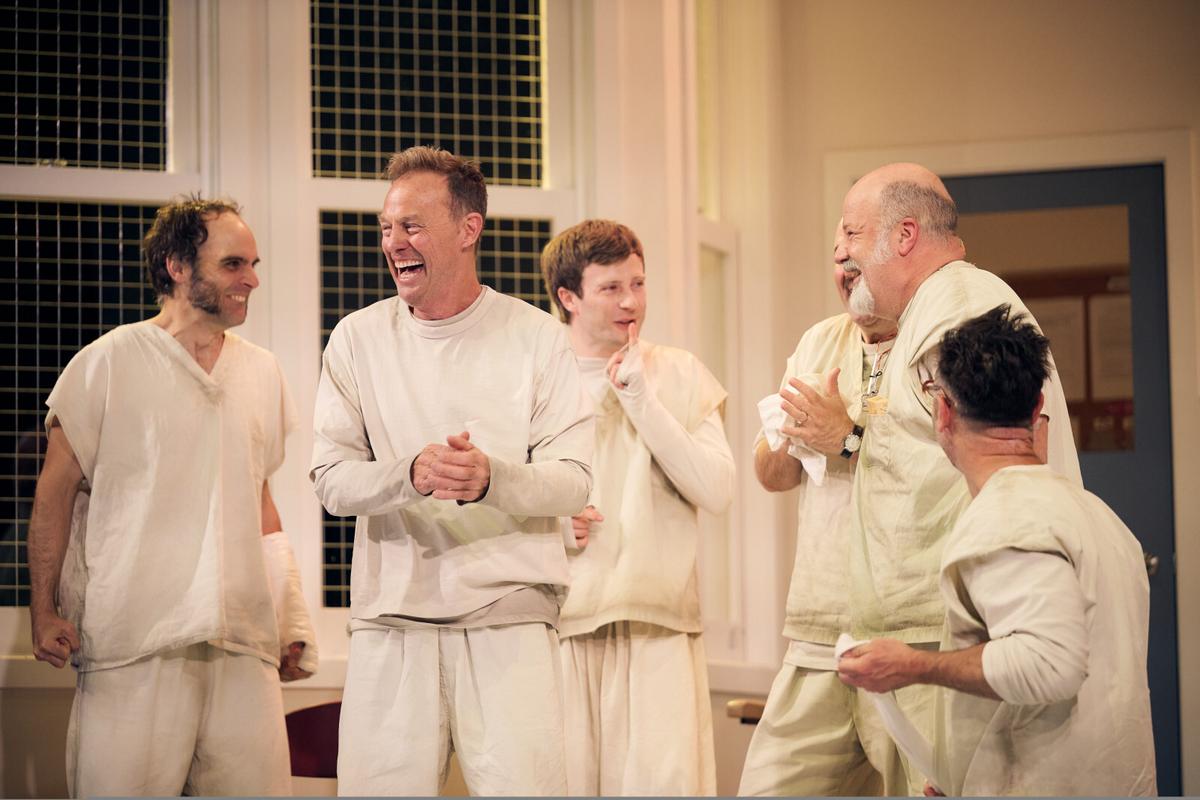
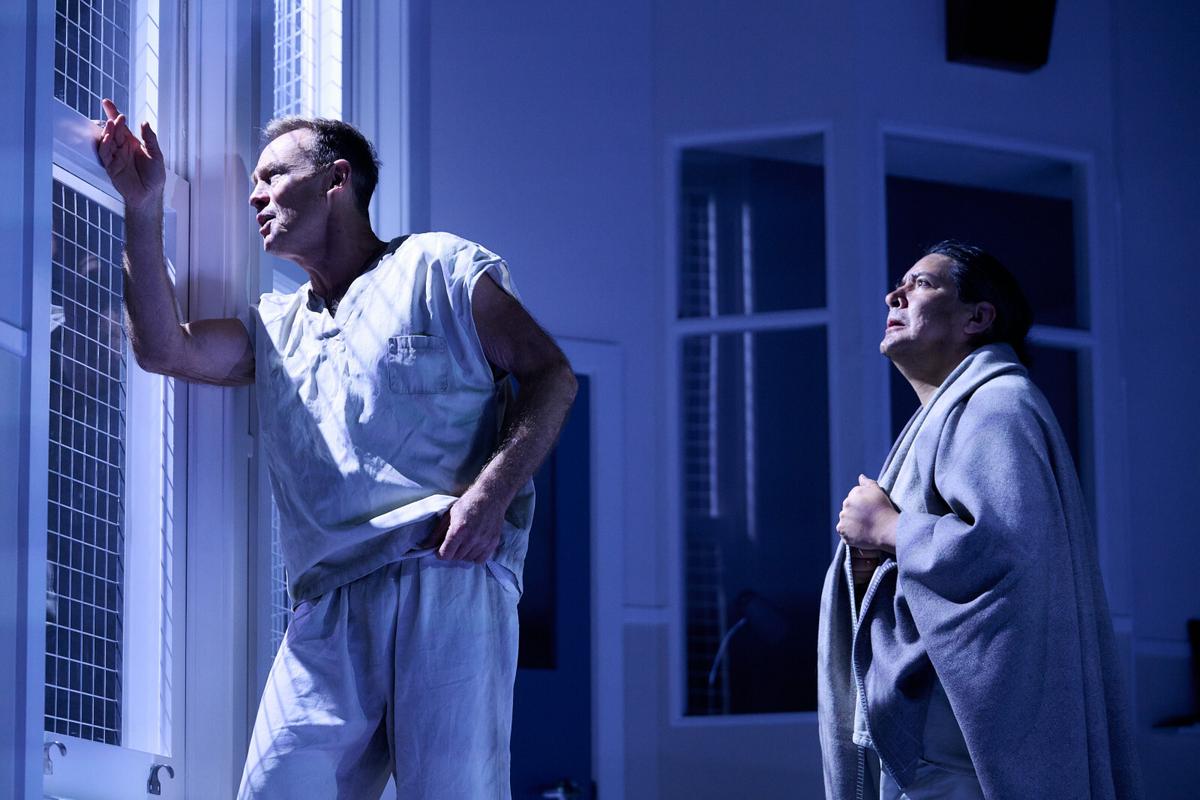
Produced as a bespoke, all-Australian production by the innovative team at StoreyBoard Entertainment, the Stoddart Entertainment Group & Jason Donovan himself, One Flew Over the Cuckoo's Nest's production team all bring their A-game in terms of stage mastery. The set design by Richard Roberts is on-the-money - pasty, cold and reeking of clinical; oozing a universal, stomach-churning, anxiety-inducing fear of hospital phobia. The costumes, designed by Ella Butler, all in uniformed shades of white, are cleverly designed in a more flexible fashion; so that they could be adapted through each character's journey, and moulded and adapted to the more erratic scenes that require more movement. The lighting design by Niklas Pajanti was illusionary and dreamily delivered, particularly in Chief Bromden's hallucinatory moments, bravely designing a sensitive, damaged and inflamed nervous system with originality and precision. The sound design by Marcello Lo Ricco was clear, alarming and bursting through the theatre with electrifying speed, with an aim to draw the audience in. And lastly, kudos to the original music composition by Kohan Van Sambeeck, who clung to a fortified mission - to unbalance the audience in deliberate disorientation - mixing different rhythms and synthesized sounds, including my most favourite of all - the traditional native scale, to set a spiritual tone against a hard-wired piece of theatre.

Every nuance, every silence, every scene, every output of characterisation from every single cast member in One Flew Over the Cuckoo's Nest was amplified and breathlessly crafted under the masterful eyes of director Roger Hodgman. Darcey Eagle as Candy Starr, and Mia Dabkowski Chandler as both Nurse Flynn and Sandra, both depicted the sexy 60s siren archetypes to the hilt, breaking up the chilled ward environment with Ann-Margret, cougar-ish fun. Jack Scott and Deep Sroa, as Aide Williams and Aide Warren, were equally cunning and menacing; depicting the evil treatment that belied mental ward patients of that time - akin to schoolyard bullies. Harvey Almond as Dr. Spivey, displayed the see-sawing consciousness of a man caught in between his ethics and the rules of a broken institution, while Chris Connelly brought a great deal of comedy to his scenes, doubling up seamlessly as lobotomy patient Ruckley, as well as Aide Turkle, the ward's most questionable nighttime orderly.

A multifaceted ensemble bring next-level patient humour in One Flew Over the Cuckoo's Nest with laughter at every delusional turn. Another is Martin Blum's role as explosive-obsessed Scanlon, unknowingly to himself an unhinged bomb just waiting to go off. Another sympathetic nod goes to David James as Harding, the ward's leader and an intrinsically complicated man bound by his insecurities, expressed beautifully with exceptional well-roundedness.

A well-deserved accolade must go to Daniel R. Nixon, who plays Billy Bibbit, whose acting was simply supreme. Every time he spoke, the audience struggled with him. When his emotions pierced the stage, the audience fell silent and fought with him. His voice not only carried throughout the theatre like a crystal-clear bell, but urged us to run up and embrace Bibbit's wounded soul. For this reason alone, Nixon is the example of a brave new talent - who is a privilege to behold.

Gyton Grantley as exuberant, child-like Cheswick is a joy to watch. His wide-eyed, wondrous energy gives light to every scene, blending humour with bounce. He brought his character to life with a renewed physicality that simply shone, reminding Australian audiences why he is such a well-rounded star in any medium he appears in.

Jeremy Proulx, as half-Native American patient Chief Bromden in One Flew Over the Cuckoo's Nest brings the deep-rooted, spiritual aspect to this piece - playing a hallucinatory narrator that introduces the audience to the depraved actions of a psychiatric ward. Central to his role, acting like a so-called deaf and dumb patient in order to be left alone, Chief Bromden is essentially the observer, an eye in the sky, a gentle giant seeking to escape the ward he is chained to and reclaim his Native American identity. Proulx plays the juxtaposition of his character's complexity with expertise; embodying a tearful lost boy one minute, and an imposing, lonesome figure the next, who finally grows in stature and flies away from his confines.

Nadine Garner, as Nurse Ratched, the foe-of-the-show, holds her role with clipped precision. Yet, instead of playing to strictness, Garner does the opposite, using a manipulative sense of playfulness, a cat-like meow - to tease the patients, as well as surprise us. Kudos to Garner for making this interesting acting choice, to play Nurse Ratched's feline power to trump her male patients, for her own personal benefit. Using allure as prey, for inevitable dominance: without a care in the world.

But Jason Donovan, as Randle P. McMurphy? Is simply born to play this role. From the moment Donovan arrives on stage, he is a force to be reckoned with. Donovan morphs into a performance of a lifetime with gusto, as a menacing hero, a man destined to be a seed of hope; creating a ripple effect by daring to stand up against a broken system of control and break free from society's rules. An iconic star, Donovan expertly knows who he is, and passionately expresses how the craft of acting is really done, by incorporating McMurphy into his whole entire being, mentally, physically and so severely. He gives a no-holds-barred approach towards making McMurphy in One Flew Over the Cuckoo's Nest a legendary, unforgettable soul who is equally bad as he is good; teaching us that even within the chaos of man, there still lies a heart and spirit that can serve as a guiding force for others, beyond life's confines.

Why is One Flew Over the Cuckoo's Nest the perfect show for Melbourne audiences? It has a language and legacy beyond its time. It not only examines the frailties of the human condition; but examines institutional injustice itself - be it educational, religious or political. It is a story about human beings fighting for their own authenticity.

A challenge that any of us, at some point in our lives, can empathise with.

One Flew Over the Cuckoo's Nest is exclusively showing at Melbourne's Athenaeum Theatre from now until December 20th 2026, for a strictly limited season, and is a classic masterpiece that is worth its weight in gold. It is raw, revolutionary, funny, and in many moments, truly confronting. If you are in the mood to see a groundbreaking work teamed with an unforgettable night of electrifying performances, then go see this once-in-a-lifetime, extraordinary piece of work. It's a night you won't forget.

To book tickets to One Flew Over The Cuckoo's Nest, please visit https://www.athenaeumtheatre.com.au/shows/one-flew-over-the-cuckoos-nest.

Photographer: Eugene Hyland
Spread the word on your favourite platform!

Real, Unreal, And Impossible To Look Away From

The Homecoming

The Homecoming Rating

★★★★★

Click if you liked this article

2

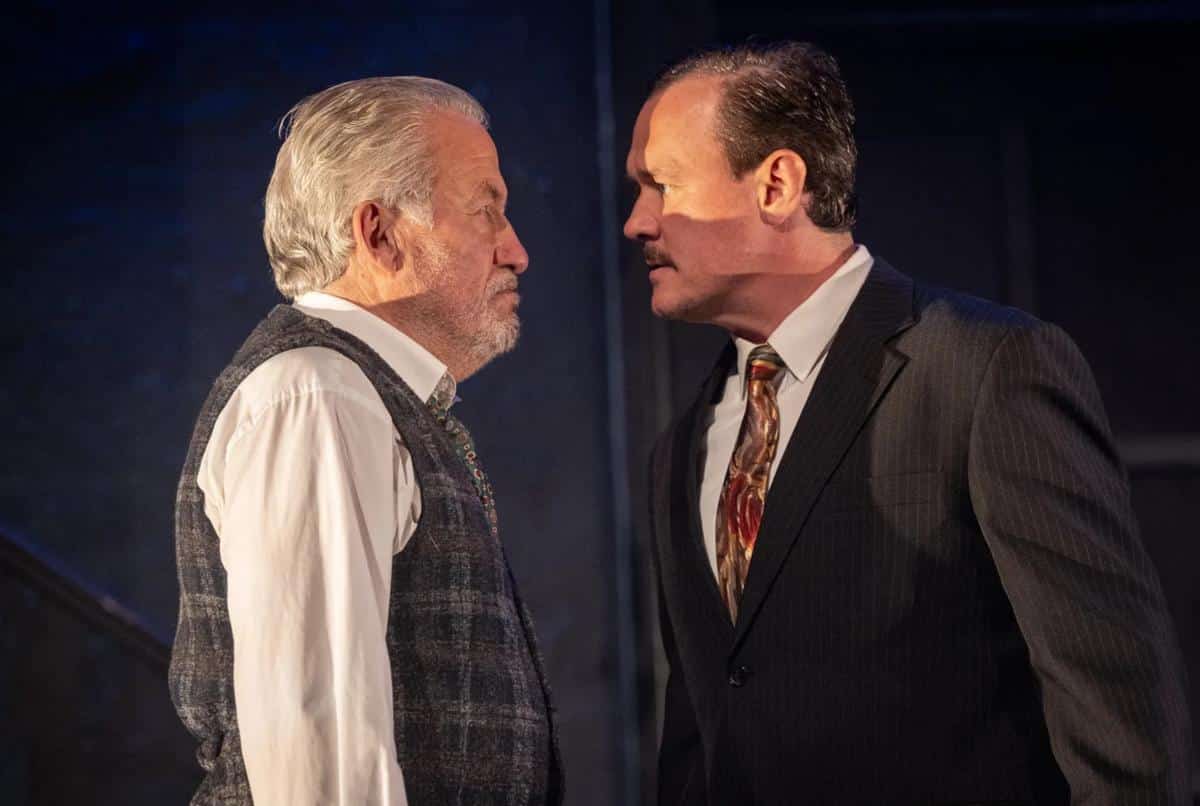
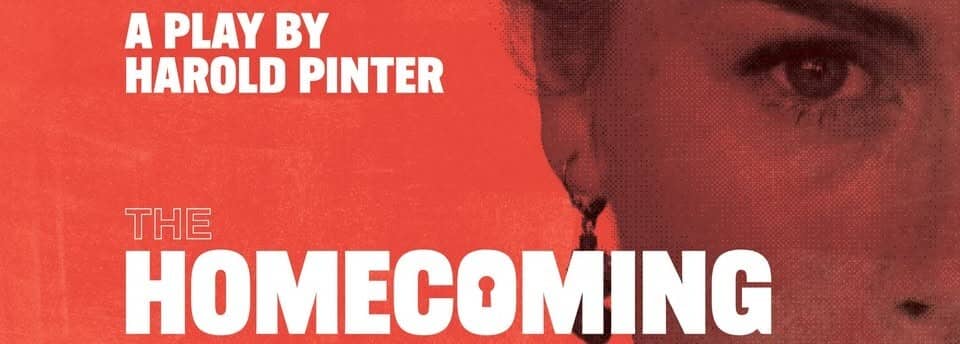
Harold Pinter's The Homecoming is playing at the Athenaeum until 3 October, and it is about as Pinteresque as Pinter gets. If you know his work, you know the terrain: the power plays, the disillusionment, and dialogue that always feels like it is missing something,. You find yourself hunting for meaning inside the words because what is being said rarely lines up with what is actually happening. This production, directed and designed by Greg Carroll, plays with Pinter in a way that feels fresh. Lines are blurred and you are never sure whether you are watching someone's internal world, something unfolding in the room, or a subtext that is treated as the truth.

If you want a night of theatre that leaves you thinking and feeling, rather than absorbing and walking away, this is the one for you.

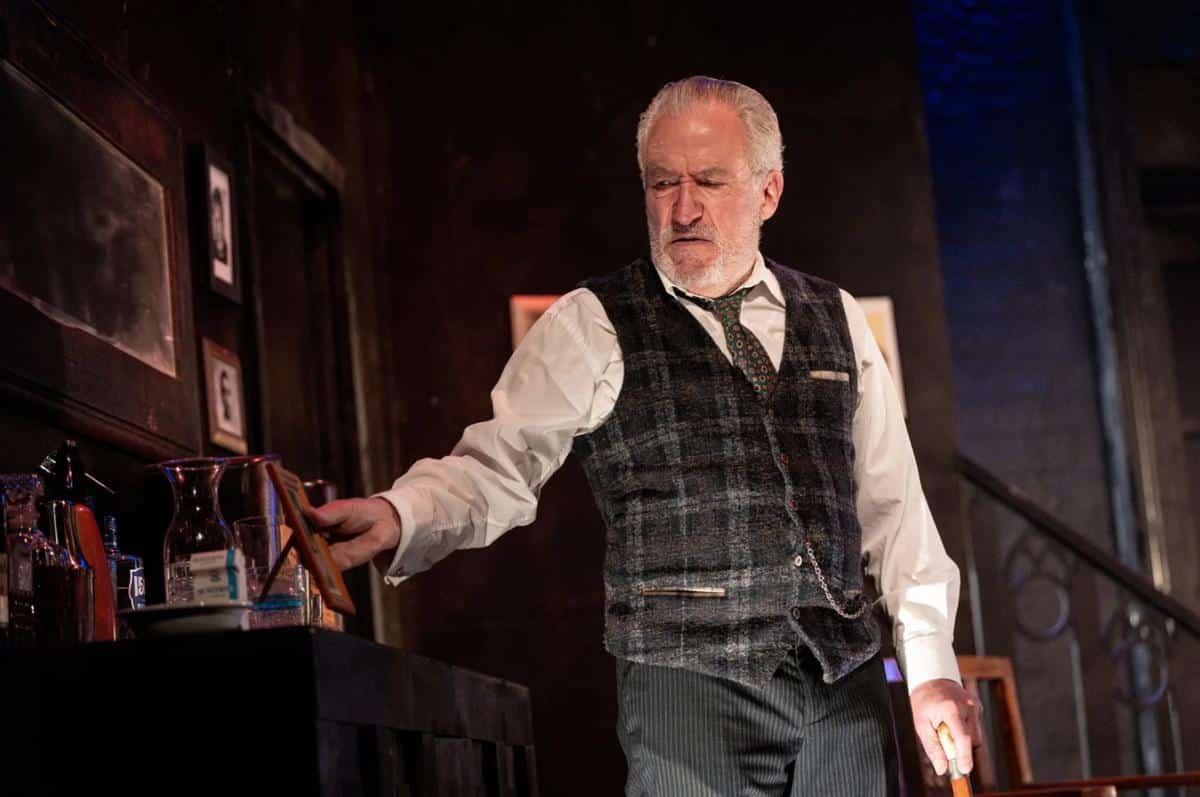
The cast is thoughtfully assembled. The household is three sons, their father, and their uncle, all packed into the same house, and the production draws out every fault line running between them. You watch the rivalries between the brothers, the manoeuvring between fathers and sons, and the strange sideways tension between each member of the house, and it never lands any where safe. Richard Piper's Max presides over the chaos, with David Field as his brother Sam, and Ben Geurens, Eddie Orton and Peter Houghton as the three sons circling one another for position.


Then there is the woman we never see. The dead mother is spoken about so constantly that you build a whole picture of her, an idealised feminine presence hovering over the house. When Teddy comes home from America and brings his wife, Kate Kendall's Ruth, you meet another idealised feminine figure, except she arrives as the inverse of the mother, an idealised whore rather than a Madonna. The Madonna and whore split runs right through the piece.

Ruth is the one and only female character on stage, and by the end of the play she has become the figure around whom the entire family's plans for the future turn. Watching that progression of power unfold is one of the real pleasures of the production, because it opens up a genuinely interesting look at what gets counted as feminine power. It felt dated and contemporary at the same time, which says as much about the tangled worlds we live in now as it does about the play. Kendall gives Ruth a mysterious presence and a commanding hold over every room she enters, and she is perfect for the role.

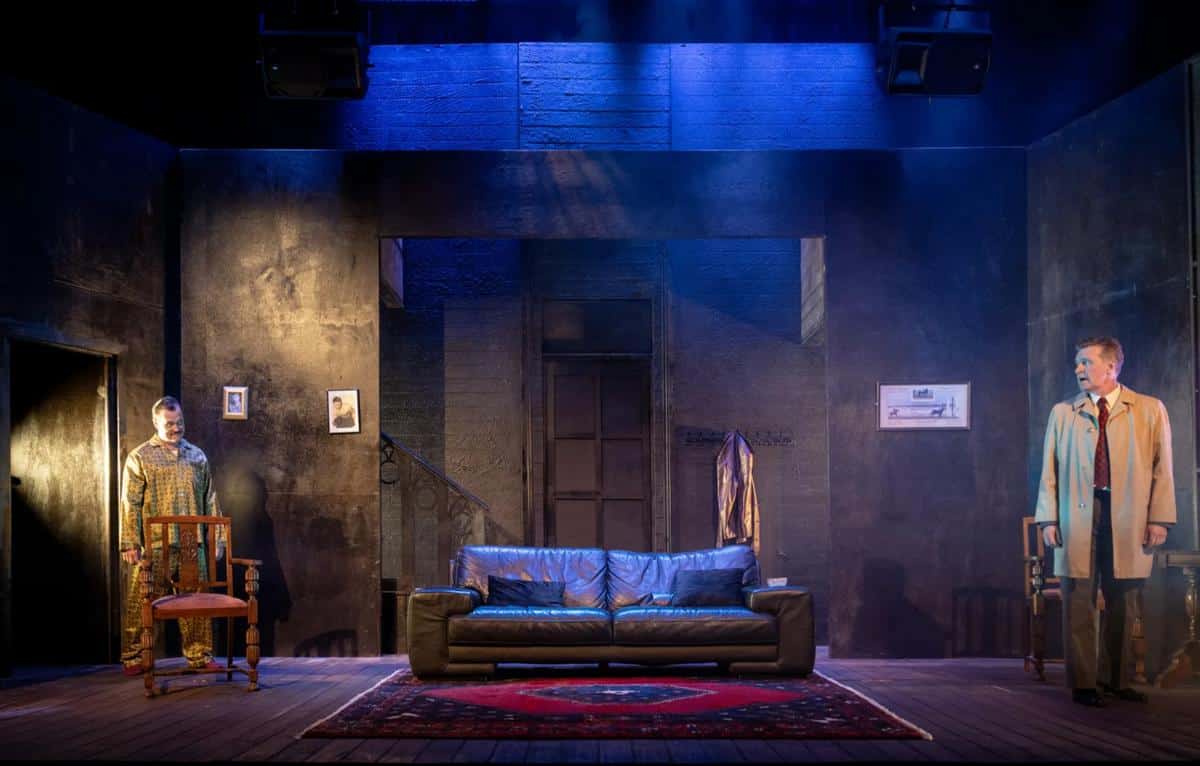
The set is all dark, heavy, Victorian Gothic furniture, and it does a lot of the storytelling. It feels oppressive and confined, which is exactly right for a group of people this trapped with one another. The lighting stays mostly flat until a handful of pointed moments break the action open and make you question whether what you just saw was real at all.
It is a heavy play and it gives you a great deal to think about, which is precisely the point.

To book tickets to The Homecoming, please visit https://tickets.shakespeareaustralia.com.au/sales/performances/studio/the-homecoming.

Spread the word on your favourite platform!

A Frank Look At History Repeating Itself

The Diary of Anne Frank

The Diary of Anne Frank Rating

★★★★★

Click if you liked this article

I went into this production of The Diary of Anne Frank as I suspect many others did, knowing the loose story - the discovery of a young girl's journal narrating life in hiding during the German occupation of Amsterdam - but not, perhaps, having read the book itself.

From the moment the lights go up on the small, cluttered space, drowned by shadows both literal and figurative, this production captures with painful accuracy the claustrophobia of several families living in forced confinement. They survive on ever more meagre rations and heavily edited news brought by their kindly protectors, who attempt to shield them from the worst of what is happening outside. The constant threat of discovery sits like a weighted blanket over every scene, adding a quiet but relentless tension as each family struggles to remain hopeful, generous and kind while their world shrinks day by day.

The ensemble work is strong. Otto Frank stands as a pillar of spiritual fortitude: humble, strong and deeply kind, bearing the circumstances with a remarkable evenness of temper. In contrast, Mr Van Daan is angry, argumentative and more than a little selfish, his frustrations simmering beneath the surface until he explodes with increasing frequency as the interminable incarceration continues. The dentist, last to arrive at the safe haven, is anxious, pessimistic and at times almost nihilistic, his moments of brutal honesty tipping the families into near hysteria. Together they offer a convincing portrait of people reacting to unimaginable pressure in very human ways.

At the emotional centre of the story is Anne herself, portrayed as robust, energetic and mischievous. She pushes against authority in the way only a teenager can, and her relationship with her father forms the soft heart of the play: he is her safe harbour, the one person who truly sees her. Her relationship with her mother, by contrast, is distant and strained in a way that will feel painfully familiar to many parents of teenagers.

What struck me most was how modern Anne feels. She believes she is far more enlightened than the generations before her but does not always see her own shortcomings. She misunderstands her mother and pushes back against rules and expectations around demeanour and behaviour. In short, she is exactly like the young people we know today, which somehow makes her fate even harder to absorb. Despite the fear surrounding her, Anne's spirit remains largely undimmed - though the night scenes reveal a more complex reality. She suffers terrible nightmares about being taken by the Green Police, waking screaming in the small hours, exposing the terror beneath her bravado while also highlighting the remarkable way the young still manage to feel invincible even in the face of great danger.


One line stays with you long after the curtain falls. Anne remarks that they are living in a way that no young people ever have before. It calls to mind our own young people, living through a time of unprecedented advancement and enormous divisive change. It is a sobering thought: that humanity can move forward in so many ways and yet still find itself circling back towards division, fear, greed and cruelty.

What I found particularly moving was the moment at the end of the first half when the family sing the Hanukkah song. It brought a genuine tear to my eye, witnessing these families - hunted, discriminated against, living under the ever-present threat of the concentration camps - still finding a moment to express gratitude and companionship. When you consider the enormous suffering happening in the world right now and the bitter irony of it, the moment lands with even greater emotional force.

The second half carries a fragile sense of hope. The allies have landed and liberation seems almost within reach after two long years of hiding. For a moment, the audience allows itself to breathe - to believe that all will be well. Then they are discovered. The families are taken away, dispersed among the concentration camps, and we all know the terrible ending that follows.

The play is also quietly funny at times, particularly in its portrayal of family dynamics. It is remarkable how little has changed in the relationships between mothers and daughters or fathers and sons, even when history itself is collapsing outside the door.

Overall, whilst not the most polished of performances, the production is surprisingly moving. It leaves the audience with a renewed sense of gratitude for freedoms so easily taken for granted and prompts a quieter reflection on our own daily lives. For two years these families felt no wind on their faces, had no privacy, no freedom to step outside and almost no information from the outside world. Today we consume a constant stream of news, commentary and noise until we are utterly overwhelmed by it. Perhaps this ceaseless input is what keeps us over-aware but still underactive when it comes to shaping our own futures. I cannot help but wonder whether any of us would make as good a job of surviving that stillness as they did.

In the end, this is not only a historical story. It is a timely reminder of the fragility of freedom and of the extraordinary resilience of the human spirit. And perhaps, like Anne Frank, given everything that is currently unfolding in our world, we are all still quietly clinging to the same two poignant words.

I hope.

To book tickets to The Diary of Anne Frank, please visit https://www.athenaeumtheatre.com.au/shows/the-diary-of-anne-frank.

Photographer: Amanda Humphreys

Spread the word on your favourite platform!

Egg, Chips, and a Side of Self-Discovery

Shirley Valentine

Shirley Valentine Rating

★★★★★

Click if you liked this article

As someone who adored the original Shirley Valentine film starring Pauline Collins, I was skeptical of ex-Neighbours actors/pop stars making the leap to serious theatre, and has a deep intolerance for people who butcher any accent from my homeland, (but especially one as unique as Liverpudlian), I entered this performance fully prepared to be critical.

Willy Russell’s iconic story first won hearts as a stage play before the beloved film cemented its place in the lives of middle-aged women everywhere in the late 80s. At its core, Shirley Valentine is the tale of a woman suffocating in the monotony of a life that has drained her of identity and joy. Trapped in a world where her only confidante is her kitchen wall, Shirley exists in quiet desperation—serving an ungrateful husband, appeasing selfish grown children, and mourning the rebellious, spirited woman she once was.


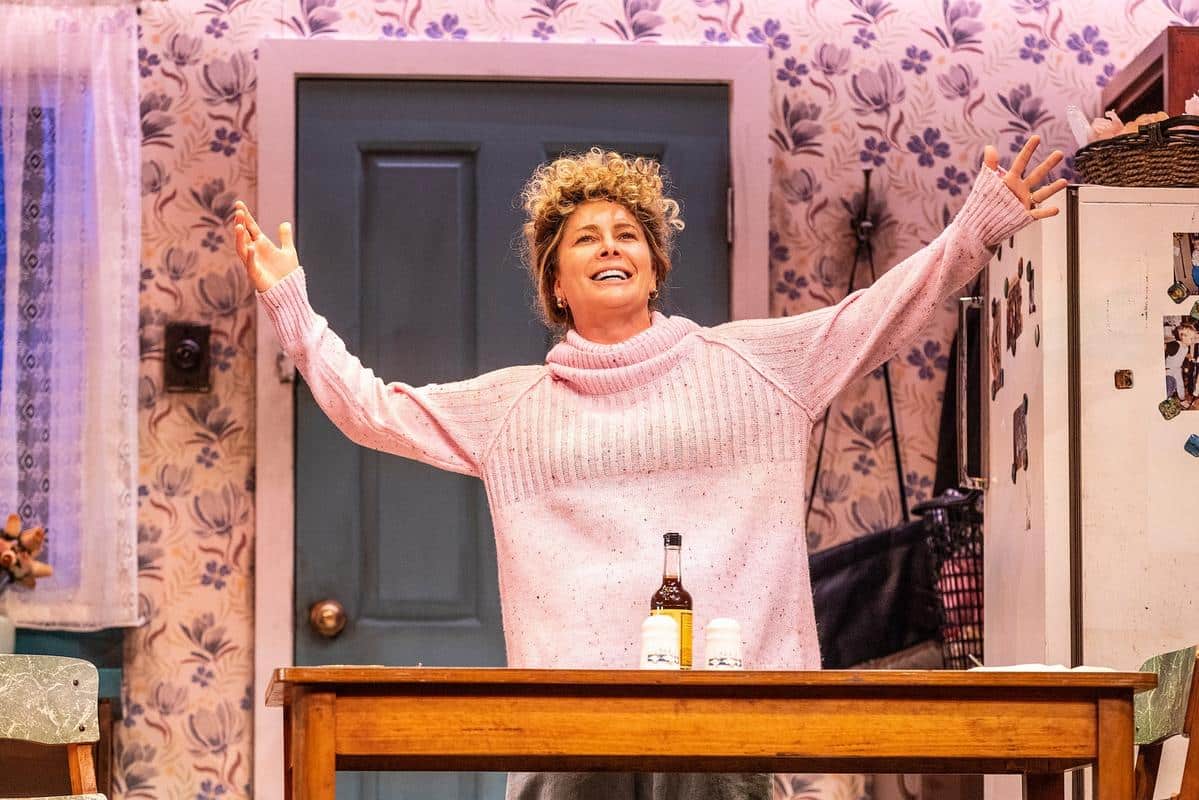
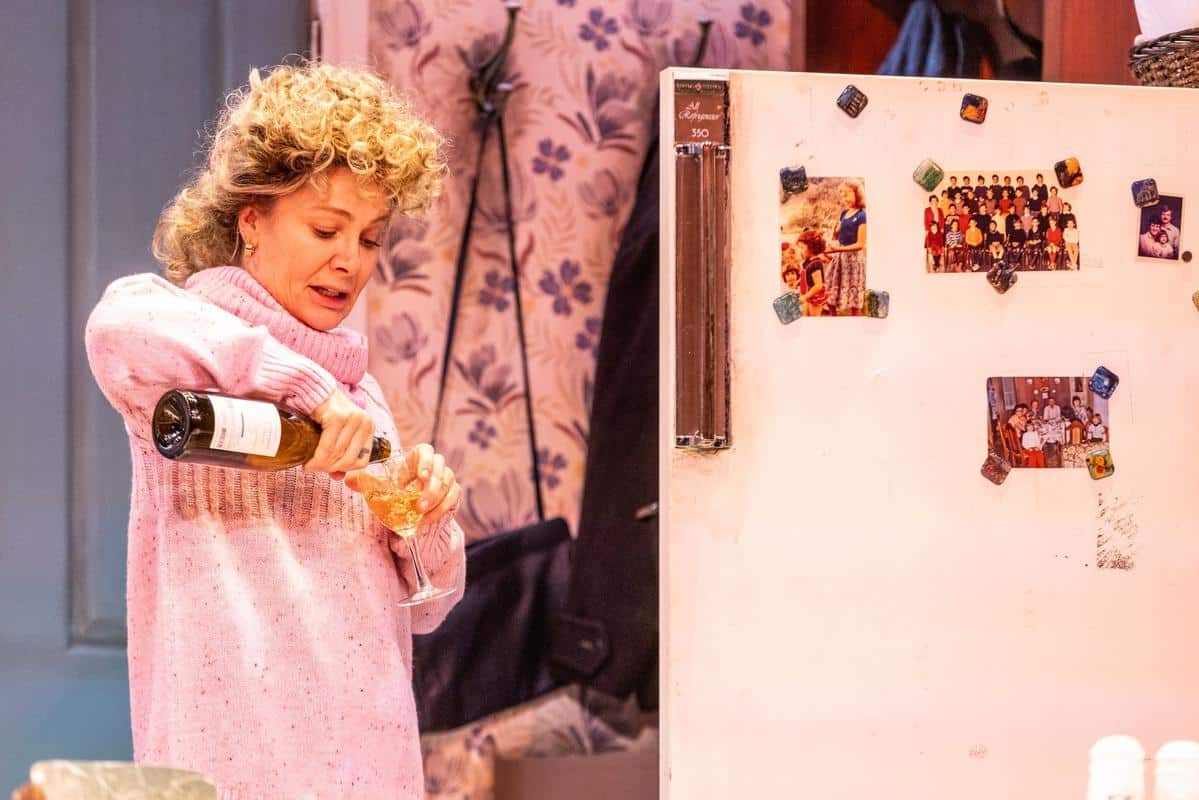
As the familiar strains of the 80s hits fade, Natalie Bassingthwaite sighs onto the stage, gulping white wine and chopping potatoes for her husband, Joe—who will, she assures us, “have a right gob on him” when he realises dinner is egg and chips instead of his usual Tuesday mince. Despite all my reservations, Natalie doesn’t just step into Shirley’s shoes—she revives her, fully embodied, in bleached mum jeans and a comfy pink sweater. Every weary movement between the fridge, the bench, and the stove tells the nuanced story of a woman who has slowly lost herself. Lamenting that she allowed herself “to lead this little life, when inside me there was so much more.” It’s a portrayal that resonates deeply, particularly with an audience of largely midlife women who, in one way or another, perhaps recognise their own fading dreams in Shirley’s quiet grief and who are just as afraid of dying with their music still in them.

Shirley is captivating—raw but never indulgent, resigned yet still tinged with hope. She draws us in with wry humour, reminiscing about her rebellious school days and the classmates she once envied, only to realise they now envy her—or at least, the woman she used to be. When, in between comparing marriage to the Middle East and sex to supermarkets, she nervously reveals that her friend Jane has invited her to Greece (has bought her a ticket, no less), we feel the impossible weight of the decision. The airline ticket trembles in her hands as she dares to dream of sitting with the sun on her face, drinking “a glass of wine in a country where the grape's grown.” Yet even as she visibly aches for escape, for the possibility of something to shake her out of her never-changing world, she continues preparing a dinner Joe will never eat.


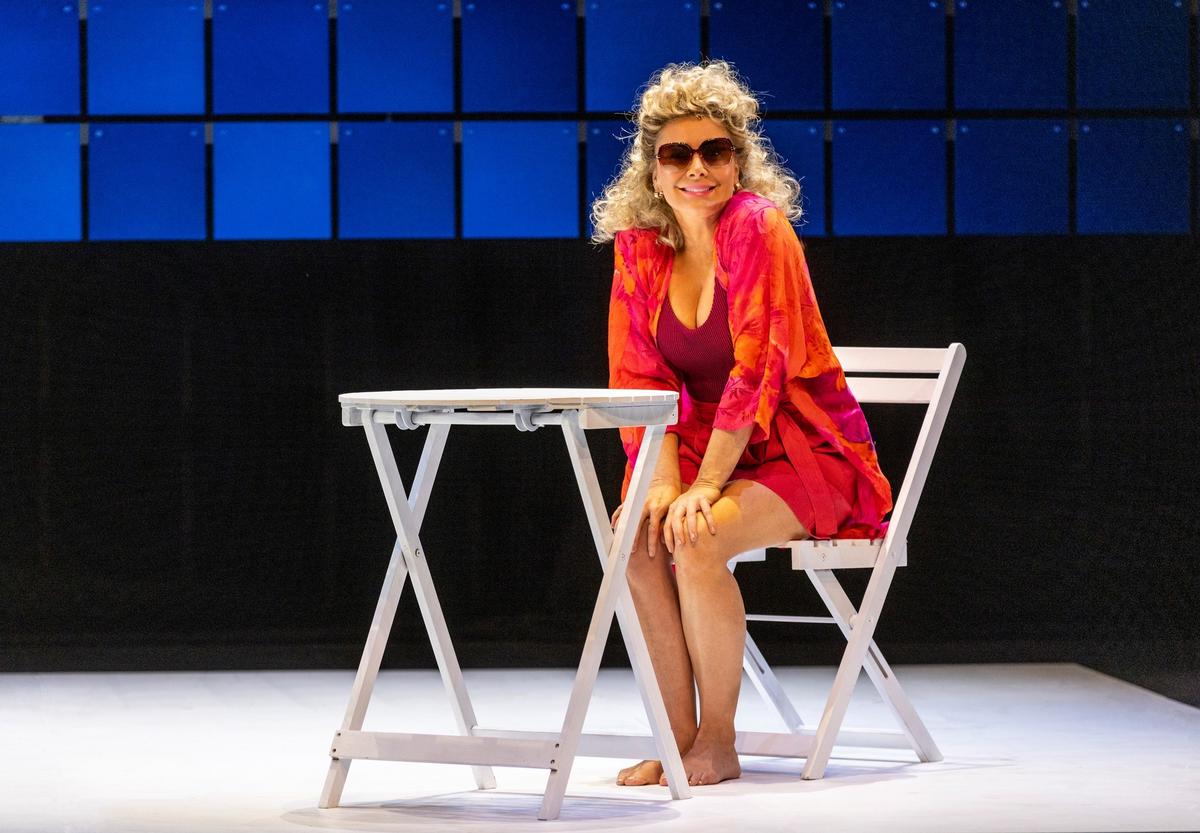
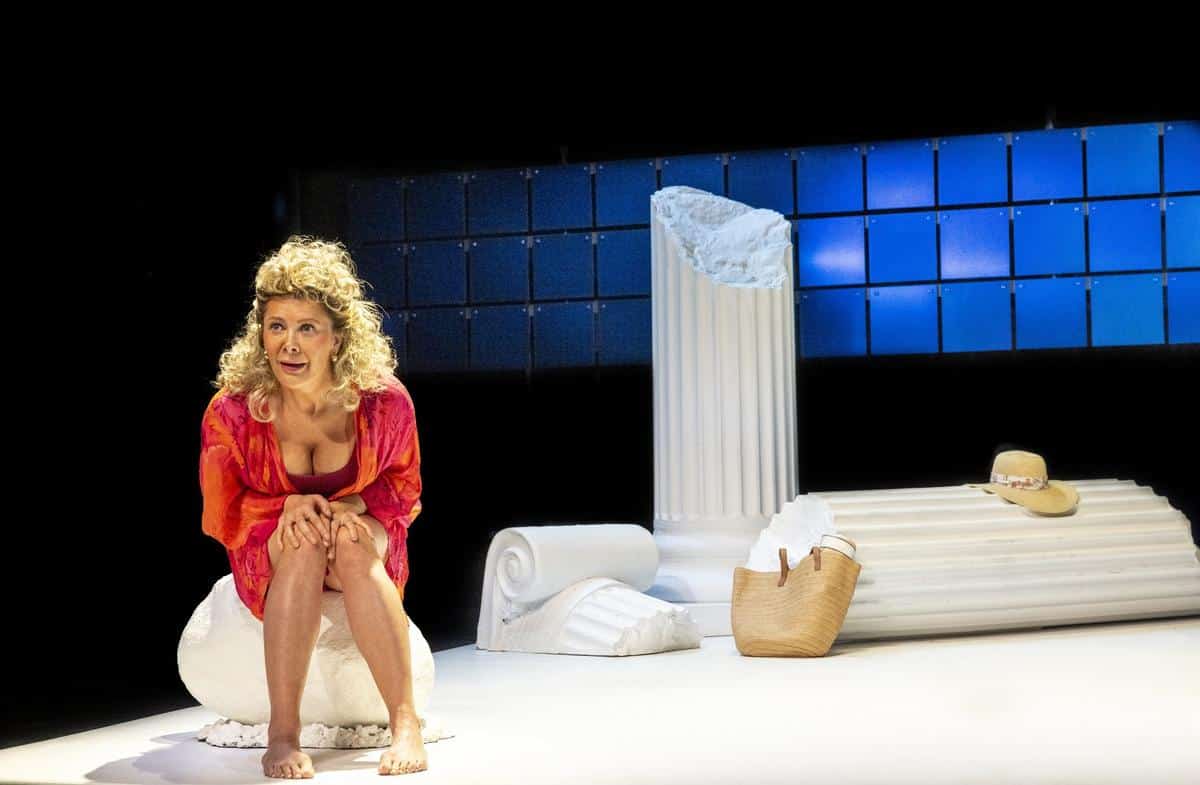
Bassingthwaite’s performance is nothing short of revelatory. Her Liverpudlian accent—much to my relief—is acceptably solid, despite the odd line fluff. Indeed, she disappears so entirely into the role that her popstar past is all but forgotten. But it is in the second half that her transformation truly shines. As the lights go up on a tanned, relaxed Shirley, Bassingthwaite reveals a woman that is no longer the same. A woman no longer crushed by monotony, who had to anxiously force herself onto a plane. This is a Shirley who is self-assured, present, and forever changed—not because of an affair or a holiday romance, but because, at last, she has chosen to explore all the ‘unlived life’ remaining within herself. She has, at last, chosen herself.

This is Shirley Valentine in all its bittersweet brilliance. A triumphant performance, beautifully staged, and an absolute pleasure to witness.

To book tickets to Shirley Valentine, please visit https://shirleyvalentine.com.au/.

Spread the word on your favourite platform!

Subscribe to What's The Show

Reviews, show news and what is on, straight to your inbox.