Seeing My Heart In Jack’s Hand

Dead Mum

Dead Mum Rating

Click if you liked this article

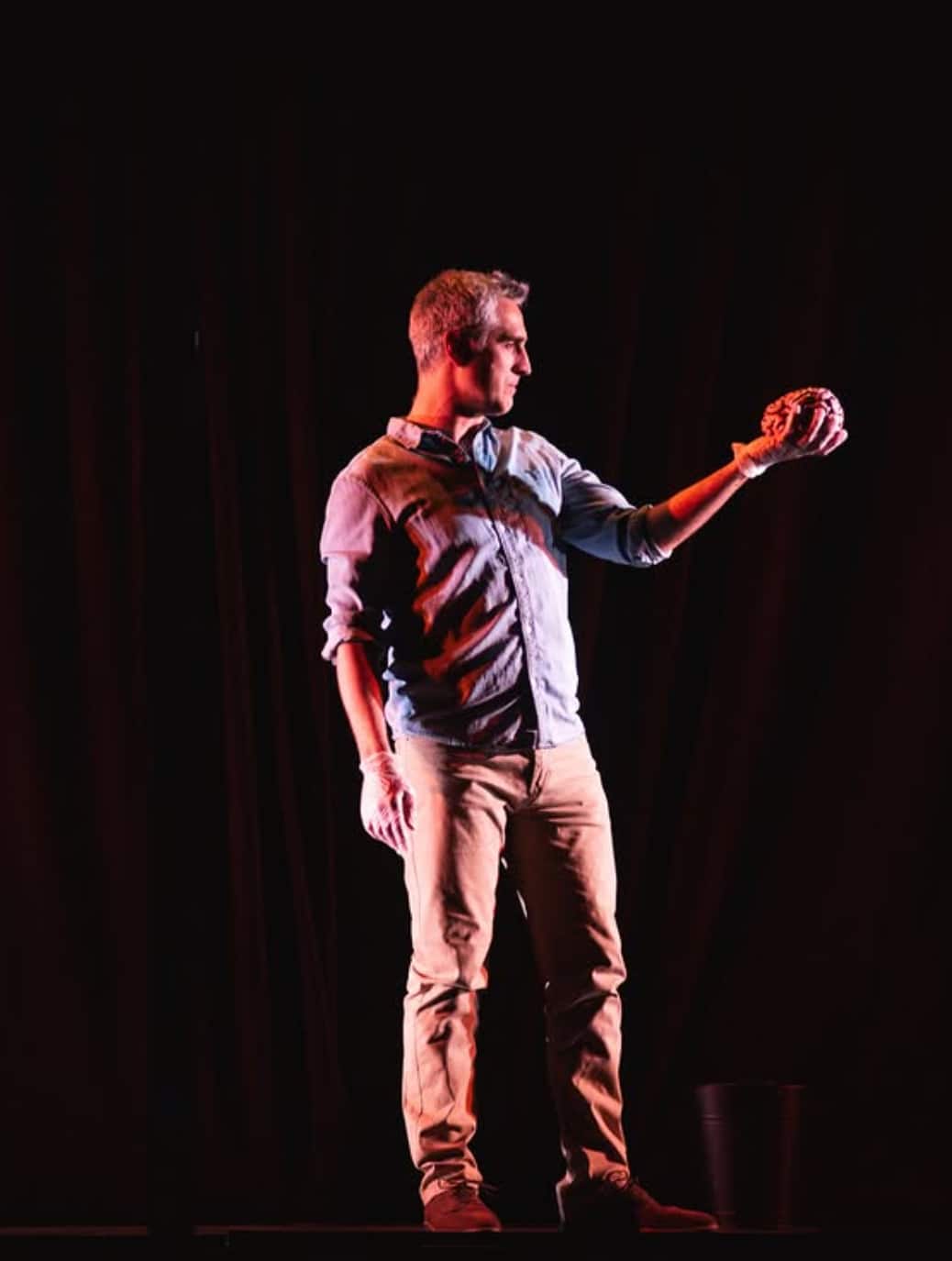
Dead Mum is the true experience of writer/performer Jack Francis West, whose mother died when he was 19 years old. In this cabaret, Jack explains both earnestly and with a great deal of dry humour how he managed and reacted to his mother’s death, and how it still impacts him today. Jack is joined on stage by a talented band, Riley Richardson (music director/guitarist), Eve Pilkington (drummer), Lucy Cleminson (cellist/bassist) and Teige Cordiner (pianist). Throughout the show the band not only provided their musical talents, but added to the humour and atmosphere of the performance. The band successfully curated a vibe of warmth and safety for Jack to share how he is feeling, whilst occasionally being called out for being camp.

The show began with Jack walking around taking selfies with audience members and his mums’ urn. It was a world building moment, defining the nature of the show. There were people everywhere, too many people for the space. And of course, I was eager to get my selfie with Jack and his mum Kate. Jack was charismatic and endearing, warm and friendly, as he moved through the crowd.

Immediately the first song Jack sang was silly, breaking the tension that had been built by the presence of an urn and a clear mourning setting. The mourner’s flowers around the room set the tone which the song swiftly broke. Jack conducted some dry crowd work, which had me cackling. Jack sang with depth, and picked music that was true to the themes of the show, whilst embodying something I know well, the musical theatre girlie life. I was consistently switching between cackling and tears, as I imagine Jack intended.

Jack acknowledged that trauma has changed who he is. Most evidently his dry sense of humour, which so perfectly matches my own, is a direct results of his mum’s early death. Jack tells the audience about the moment his mum died, describing the toxic relationship he was in at the time in great detail. The notes I took during the show just contain ‘ahahahah’ which isn’t very helpful but is a good description of how I felt and experienced the show. Jack put little throw away lines peppered in, and he got me laughing loudly and often.


The physicality of the show contributed to the atmosphere building and vibe generating. Throughout the show there was some minimal blocking, that was not quite choreography. It felt like thoughtful movement, it was considerate and funny. The blocking added to Jack’s humour and acted as an additional tool to bring the audience closer into Jack’s stories.

Jack recognised that “humour makes uncomfortable things better, but if you do it too much can disappear into it.” Although Jack often made a joke when things became too sincere, he recognised and feared that he might lose himself in the protective shielding. Jack noted, he wouldn’t be the same person without his grief. He would be stupider and more blissful. Having lost my aunt at a young age, having lost my cousin, and watching how my friendship group was wrecked when our friend took his own life, Jack’s grief was so visceral and real to me. Jack said “time doesn’t heal all wounds, it turns them into scars,” and particularly when my cousin died I found myself struggling to focus and work, even after several months of healing and processing. It was difficult to admit, but grief is not linear and I didn’t understand how that felt until I was stuck in the middle of it.

Jack saw into my soul, the grief I had experienced in my life, and the way that theatre had healed some of those scars for me, I could see Jack was holding up a mirror to those experiences and feelings. Or maybe more accurately, Jack placed his heart in his hand for the audience to see, and I found something that so similarly mirrored my own grief and healing process that I was torn apart, and in tears as Jack sang the final song. Obviously, I knew all the words, and I was silently singing the song back to Jack.

Jack’s vulnerability felt real and raw. He has had time and distance from his mum’s death, but he described what grief looks like with time, that it’s still a powerful feeling, and that he sees his mum everywhere. His realisation and understanding of his own grief wrecked me, and reduced me to a blubbering mess. My drive home from the theatre consisted of creating a playlist of the songs Jack sang, and revisiting those songs, windows rolled down, very loudly.

To book tickets to Dead Mum, please visit https://www.theatreworks.org.au/2026/dead-mum.

Spread the word on your favourite platform!

Campfire Unleashed

Campfire Unleashed

Campfire Unleashed Rating

Click if you liked this article

Campfire is a warm, expressive, and impressive act of acrobatics and physicality. The audience follows two friends, Louis (Green) and Griffin (Hooper), as they hike through the bush. They have strange interactions with an aberration (Naz Turner) who is up to some mischief. This dance piece is bursting with expression and athleticism. A whole narrative, character development and plot, is conveyed solely through dance. Campfire unleashed is filled with rich creative dance, with the three dancers using their powerful bodies to effectively tell the story of two friends and the mysterious person in the bush. All the dancers were able to move around the stage gracefully with ease, no language was needed, as the dancers articulated themselves with their bodies.


The show starts with Turner mysteriously dancing around the stage. It felt like he was a spirit welcoming the audience, acknowledging the bush and land the show is set on. Once turner creeps off stage, Louis and Griffin greet each other warmly with exaggerated chest bumps, and quickly get to hiking. The audience then gets to watch as both boys try to set up camp with whimsical athleticism. Shockingly, somehow, the boys end up having to share a sleeping bag! Louis and Griffin remain consistently and dramatically expressive throughout the whole ordeal, expressing their wild personalities through their movements and interactions with each other. Louis, Griffin, and the aberration then each have their solo dance numbers, highlight specific skills of each dancer in impressive and unique ways. Each dancer utilised new forms of dance, surprising the audience with their different movements.

Throughout the performance each dancer exhibits a great deal of control in their movements. The physicality and countenance of each performer builds drama and tension through every movement. Each dancer is afforded their own moment to creatively express their characters thoughts and feelings, be it fear, terror, or elated excitement. Although there are serious moments of anxiety pepper throughout the show, overall Campfire Unleashed remained light hearted and silly. Even more impressively, the silly characters remained sexy, given the visibly powerful bodies of all three dancers. The creative and modern dancing was sown together in ways that I didn’t expect, forming an experience both astounding and delightful.

To book tickets to Campfire Unleashed, please visit https://www.theatreworks.org.au/2026/campfire-unleashed.

Photographer: Aaron Walker

Spread the word on your favourite platform!

TWO

TWO

TWO Rating

Click if you liked this article

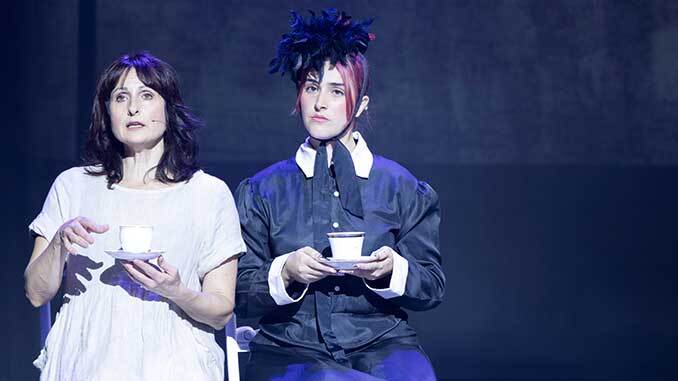
Melbourne’s queer theatre scene is growing bolder and more joyful with every passing year. However, with widespread acceptance and marketability, there is always a risk of falling into complacency. As a trans playwright, I’m well aware of this ‘tolerance trap’, so I was excited to see a new play with a protagonist as grey in their morality as they are in their gender presentation. Add themes of queer family dynamics and the societal treatment of AFAB bodies into the mix, and you have a recipe for a fascinating comedy. The execution of Two, directed and written by Artemis Muñoz, however, left much to be desired in terms of the writing, set design, and performances.

Two’s protagonist, Kit (Sienna Macalister), is polyamorous, non-binary and newly pregnant. Excited as they are to be a parent, they quickly grow sick of people’s questions about their baby’s gender/sex/genitals. During a particularly tense get-together, they lie to their mother (Rebecca Morton) and announce that they are having twins, a boy and a girl. This temporarily fields uncomfortable conversations with Kit’s family, but strains relations with their partners (Vasi Devi and Marz Cooper) and creates further issues once the (singular) child is born. Will Kit’s family, chosen and biological, survive the fallout?

When creating such an esoteric plotline, there’s a tricky balance between getting your themes across and not lecturing your audience. Unfortunately, I felt that Two fell off the latter side of that tightrope, especially when it came to Kit’s frustration with their mother. It often felt as if the script was insisting that we dislike the mother through prolonged rants from Kit, instead of letting the audience infer ways in which her microaggressions impacted her child. This didactic writing extended to other scenes that fell into a predictable pattern: someone makes an offensive comment, Kit calls them out, they double down, Kit gives them a scolding.


The staging also didn’t help with character connection because the space felt too wide. By using various side set pieces along with an expanding central frame, the actors felt so physically distant from the audience that it was hard to connect with their intimate scenes. The blocking often seemed stiff and aimless, with characters stuck standing around in scenes they didn’t fully belong in and a lack of opportunities for the actors to make eye contact with each other. A more closed-off stage and further opportunities to sit in moments of silence would have made it easier to connect with characters who are, on paper, fascinating.

Two still has moments where it lives up to the premise’s promise, especially after Kit’s child is born. The scene where Kit gives birth was a visceral showcase of Macalister’s acting, using a luminous ball as a stand-in for the baby was a beautiful symbolic choice, and there was a greater sense of emotional weight as certain character arcs wrapped up. The play’s penultimate scene with Kit and their mother was one of the only times when the mother felt fully sympathetic. It truly seemed that she didn’t fully understand the weight of her actions and that she had the potential to do better. It also brought home a more complex message about ‘cutting off’ loved ones: it isn’t easy on anyone and it’s never anybody’s first choice, but it can still promote the possibility of change.

Two is a play with many interesting things to say that needs further confidence in saying them. The writing comes across as lecturing at points, which could be mitigated by further drafting and less nervousness in the performances. I also think a smaller, more intimate venue would benefit the cast and audience. I would be interested in seeing a future production, and if the premise of the show resonates with you then you may enjoy it in its current form, but it could reach many more people with further polish.

To book tickets to TWO, please visit https://www.theatreworks.org.au/2025/two.

Spread the word on your favourite platform!

Jumping About All Over The Place

Nihilistic Optimism on Trampolines

Nihilistic Optimism on Trampolines Rating

Click if you liked this article

2

‘Nihilistic Optimism on Trampolines’ is undoubtedly one of the most unusual plays I’ve seen this year. Whilst heavy on the nihilism (and light on both optimism and trampolines), it was an original and genuinely imaginative reworking of the supposed origins of the classic novel ‘Frankenstein’.

The production blended text from Mary Shelley’s novel with excerpts from her personal journals adding some emotional depth to the relationships depicted. It also set the whole thing, hilariously, in ‘Trampoline World’ a place of suffocating monotony and lacklustre job prospects. The cast threw themselves into the story with enthusiasm and full physical commitment and for the most part the chemistry between them worked well. The performance of Mary (played by Gabrielle Ward) was a standout, but honourable mention should go to the comic relief of Byron (Eleanor Golding), who brought some levity to the darker moments.
While the production lacked polish, any real production values and occasionally slipped into feeling a little improvised, it also aimed high. Reworking a classic text is extremely difficult to do with originality unless you commit fully and take creative risks. To their credit both the writer and cast were clearly swinging for something clever and nuanced.

Where the show really excelled was in its depiction of the sheer monotony of customer facing work. The endless repetitive conversations. The glazed interactions. The joy of mopping up vomit while being surrounded by screaming children and huffy parents. Much of the audience would have recognised their own flashbacks to those teenage jobs where commitment was low, wages even lower and the tangled crushes and camaraderie among staff were the only things getting you through the shift.


Where the show struggled was in clearly communicating the heart of the story. My theatre partner had not read Frankenstein and most certainly was not aware of Mary Shelley’s dramatic Geneva holiday with Percy Bysshe Shelley, Lord Byron and Mary’s sister, Claire. Which means he also had no reference for the dark emotional chaos that surrounded Mary’s relationship with Percy at that time, nor that the trip, (and her recurrent horrific nightmares), became the impetus which inspired her story – so those little nods to that experience, though explored in the play, were far too easy to miss.

As someone who has read the novel, seen the films and even watched ‘Rowing with the Wind’ a period film which dramatises the strained and sometimes unhinged relationships between the four (suggesting, as it does, that much of it was fuelled by both drugs and rather free sexual relationships between them all), I had a much easier time connecting the dots. For audience members without that context, I imagine the play would feel disjointed and confusing. The plot is fragmented and sometimes hard to track even for those who do know the backstory. The jumps between contemporary speech and period speech and the sudden segues between the tangled lives of the staff of Trampoline World and the feverish imaginings in Mary’s mind were not always smooth. Despite solid acting the heart of the play felt obscured under the sound effects, jarring lighting shifts and literal jumping around. In reference to the trampolining side of things, I would note that there wasn’t a whole lot of trampolining in the show and none of it was of a particularly entertaining or acrobatic nature – I was expecting something a little more exciting in that respect.

On a final positive note, the live band deserves acknowledgement. Their music added atmosphere, drive and emotional colour to the play and helped anchor scenes that might otherwise have floated away completely.

Ultimately this one was a swing and a miss for me, but with the recognition that it was highly original, and original thinking should always be applauded.

To book tickets to Nihilistic Optimism on Trampolines, please visit https://www.theatreworks.org.au/2025/nihilistic-optimism-on-trampolines.

Spread the word on your favourite platform!