‘To Save Your Soul, Shake Your Soul.’

Daytime Deewane

Daytime Deewane Rating

★★★★★

Click if you liked this article

3

Daytime Deewane is an uplifting and high-energy play by award-winning UK writer Azan Ahmed, written from, in his words, ‘a place of radical joy. ‘

The play dives into the 1990s’ era of London’s daytime raves, when brown men were often excluded from nightclubs, forbidden to share public space with non-Asians. To circumvent this, young brown men from the Asian diaspora converged on nightclubs between 3pm and 6pm to lose themselves in the cultural euphoria of Bhangra music and dance.

Racism and identity and the ways in which they perniciously intertwine are the overarching themes of Daytime Deewane. For example, if you’re told enough times that your brown or black skin makes you inferior, odds are you might come to inhabit
this self-belief.

Directed by Iranian-Australian Sepy Baghaei (Wish You Were Here, Gate Theatre), Daytime Deewane introduces Muslim cousins, Farhan (Ariyan Sharma) and Sadiq (Ashan Kumar). Both young men are heavily burdened by generational family expectations of them to be ‘good Muslim boys’ and ‘proper British men’ 1. It is 1997 and they are at the last ever London daytime rave. Bhangra music plays, a dhol drum beats hauntingly. Here is a safe space in which they can fully immerse themselves into the euphoric music and dance, a place to celebrate culture and free expression.

Farhan is the quiet cousin, the conformist to Sadiq’s rebel. They argue, disagree, plead, weep, push and shove. They only have until 6pm to come up with the solutions to their questions. This is, after all, the final daytime rave.


Playwright Ahmed brilliantly weaves spoken word with Bhangra music and dance, lending a sense of urgency to the play. Each of these elements synergise exquisitely with the other, with Bhangra the conduit that unites Farhan and Sadiq in their explorations of self. The language of the play is poetic, tender in places, angry and bold in others. Short pauses in dialogue allow the audience to digest the nuances and complexities at hand during that racially divisive time in London’s history.

Ariyan Sharma (STC, Dear Evan Hansen) as Farhan is terrific casting. His portrayal is rich with humour and compassion, his belief in the unbreakable bond of cousins is touching and evocative. The audience laughed, cried, cheered him on. His interactions with the audience were engaging and highly entertaining. He brings humour and compassion to the role, his whimsical facial expressions are timed perfectly, and yes, he can dance!

Sadiq is played by Ashan Kumar (MainStage Debut). He dresses gangsta-style, soccer hoodie, baggy denim jeans with chains, thick silver jewellery, and sports a flip-top Motorola. Kumar inhabits Sadiq – he is angry, funny, tender, loud, despairing and inherently likeable. He speaks volumes with expressive hand and arm gestures that intensify every spoken word. His audience interaction was hilarious.

The set clearly reflected a 1990s’ nightclub with strip lighting on the floor, shooting strobes, and neon green strip lighting on the ceiling. During the dance components, the light show brought the stage to brilliant life.

Daytime Deewane is a thoroughly enjoyable, immersive production richly imbued with the playwright’s ‘radical joy.’ Don’t miss it!

To book tickets to Daytime Deewane, please visit https://riversideparramatta.com.au/whats-on/daytime-deewane/.

Photographer: Phil Erbacher

Spread the word on your favourite platform!

Billy Elliott The Musical

Billy Elliot The Musical

Billy Elliot The Musical Rating

★★★★★

Click if you liked this article

5

Red Tree Theatre is showcasing an incredible production of the infamous Billy Elliot The Musical at their very own Red Tree Theatre,Tuggerah. Co-director Daniel Craig and Sancia West have outdone themselves in bringing this larger-than-life musical to the stage.

Innovative staging allowed for the creation of multiple spaces. Billy’s tiered bedroom was utilised fabulously and the quaint kitchen was picturesque in creating a homely atmosphere. The use of multiple exits created interesting stage dynamics and gave the illusion of a wider, more complex world.

The Billy Elliot Musical is a fine example of pushing gender boundaries and breaking stifling stereotypes of men in dance, and in particular, ballet. It is unfathomable how far society has regressed considering that until the 18th century, men had dominated ballet from its origins in the 15th century. For centuries, only men were allowed to train and perform at court, even performing the female roles. The plot of the musical explores these ridiculous stereotypes in the 1980s, but unfortunately they linger on in today’s current society.

The star of the show, Billy Elliot, was performed today by up and coming young talent Adam Weinstein. Adam infused the role with energy, heart, and unwavering commitment to character. Adam portrayed great emotional depth and range in his acting; in particular, the Angry Dance scene shone through fervently with fury. Adam also portrayed great wit and comedic skill during his scenes with Ella-Mai Johnson as Debbie. Ella-Mai also proved she has a massive future in theatre awaiting her. What a stage personality! Full of verve and highly energetic, Ella-Mai was a delight to behold. The way she screamed out to her Mum, Mrs Wilkinson, brought the house down each time. The dedicated dance teacher, Mrs Wilkinson, was powerfully presented with utmost heart and sincerity by Sian Hayes. Every one of her lines was delivered with authenticity and passion as was her singing and dancing. A five-star performance in every aspect.


Rocky Croot’s performance was another major highlight. Rocky played Michael Caffey, Billy’s close friend with utmost charisma and lit up the stage. He clearly demonstrated his natural flair for theatre. Rocky’s fantastic tapping, singing, and acting delivered a showstopping performance.

Jason King delivered the role of Billy’s Dad and commanded the audience’s attention from start to finish. Jason’s convincing performance was polished, professional, and thoroughly engaging. His scene with the male ballerina was absolutely hilarious and perfectly authentic to his male chauvinistic character.

Billy’s Grandma, played by Sam Powell, injected the audience with love, warmth, and an abundance of laughter. Sam was outrageously zany and comedic, and I loved every moment of her energetic heartfelt performance. She was the life of the party character we all want to know and love.

A stellar cast and ensemble articulated the masterful choreography, which is a main feature in this musical. Essentially the main plot revolves around Billy’s journey into the world of dance. Karina Graham-Wilson’s choreography was eye-catching and ingeniously transitioned scenes, in particular between the rowdy miners and the ballet class. The highlight of the choreography would have to be the fantastic tap dancing which was delightfully in abundance. The finely syncopated choreography and use of interesting canons was extremely effective and executed superbly. The fight scenes were choreographed by Adam Soldo and were smooth, effective, and impactful.

Red Tree Theatre’s adaption of Billy Elliot the Musical is fabulously entertaining and a highly engaging performance. Excellent direction, a skillful production team, spectacular choreography and a truly fabulous cast and ensemble have made this a stellar production not to be missed.

To book tickets to Billy Elliot The Musical , please visit https://redtreetheatre.org.au/whats-on/.

Photographer: James Beggs Imaging

Spread the word on your favourite platform!

Seed Hunters – A Global Movement for a Better World?

Seed Hunters

Seed Hunters Rating

★★★★★

Click if you liked this article

1

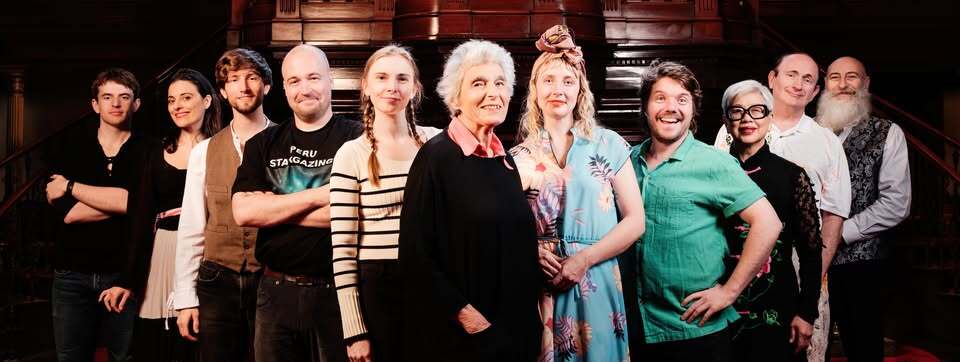
What if the world we live in could be peaceful? This is one wish that many people, me included, could hope for in our lifetime. What if people could make this happen by conceiving children who will become men who are less aggressive and less of the “toxic tough guy”?

Scene Theatre Sydney’s play, Seed Hunters, made its premiere debut at the Pitt St Uniting Performance Space, and this question is one which is explored by a group of women. They are known as “Seed Hunters”. This is a movement of women from all over the world who, based on science, they believe that men of mixed ancestry are more likely to be more intelligent and less combative.

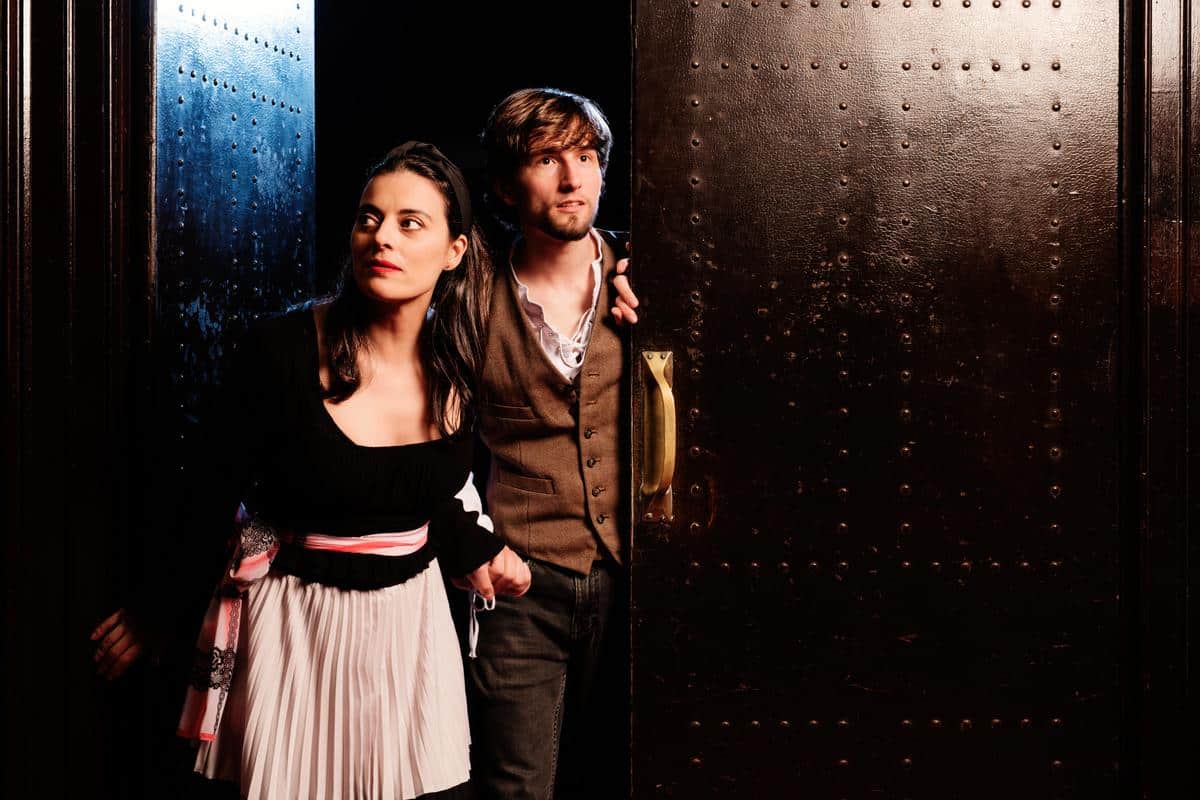
Set in Peking in 1976, students are invited by the Chinese government into a post-Mao world. It’s here that Rosa (portrayed by Fabiola Pellegrino) attempts to seduce a young Australian named Bob (played by Micah Doughty). Nearly 40 years later in present time in Australia, Bob discovers his niece Bridget (portrayed by Julia Grace) is a part of the Seed Hunters movement.

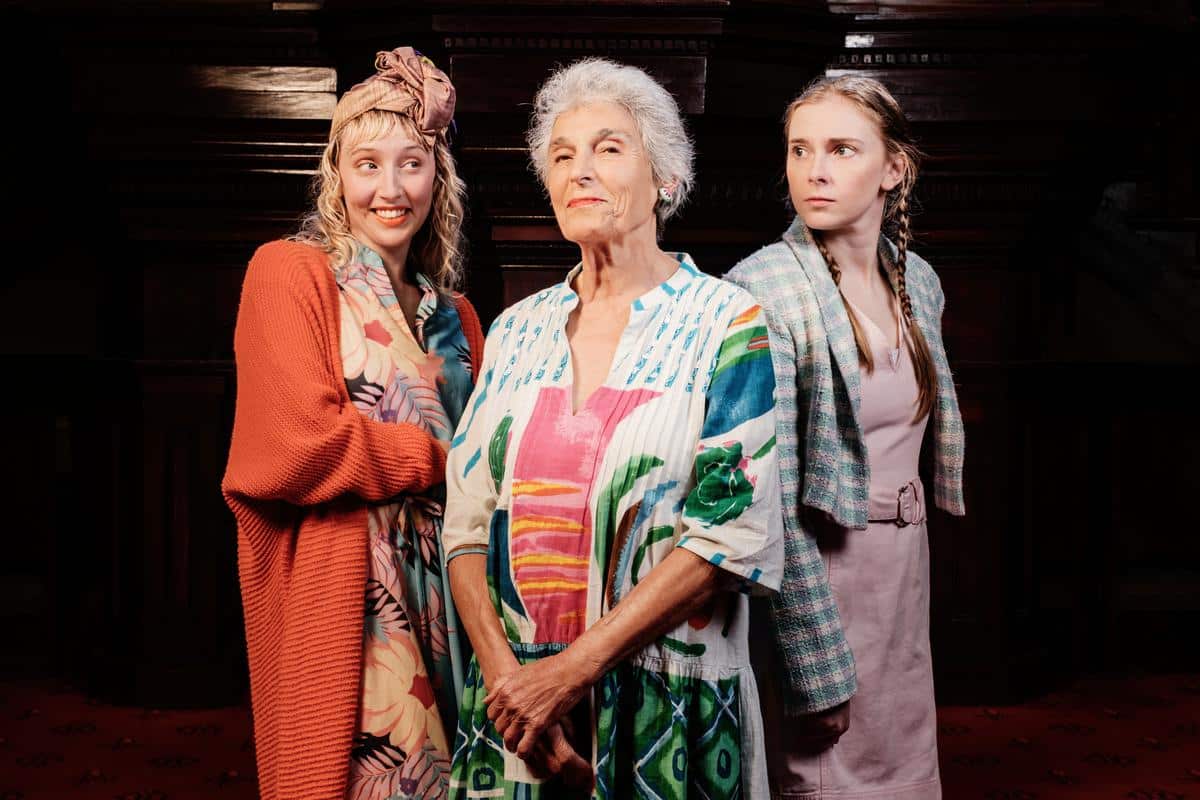
Julia Grace delivered an earnest and compelling performance as Bridget, capturing her youthful idealism and determination. She investigates women’s groups in ancient Greece, the Hopi Indians in Arizona, and various other women who study men, all in search of the perfect match. Bridget befriends Larry (played by Oliver Harcourt) and the audience learns what it is she wants from him. (“I need Larry and his mixed-up genes”)


Meanwhile, Bridget’s sister Sarah (Madison Chippendale) returns home to be reunited with her. She has news of her own. Larry’s brother Jack (Theo Rule), a kids show host with no kids of his own, reacts with shock when he learns of Bridget’s plan. The girls’ grandmother, Dorothy (Joan Rodd), takes the opportunity to share her thoughts directly with her granddaughters.

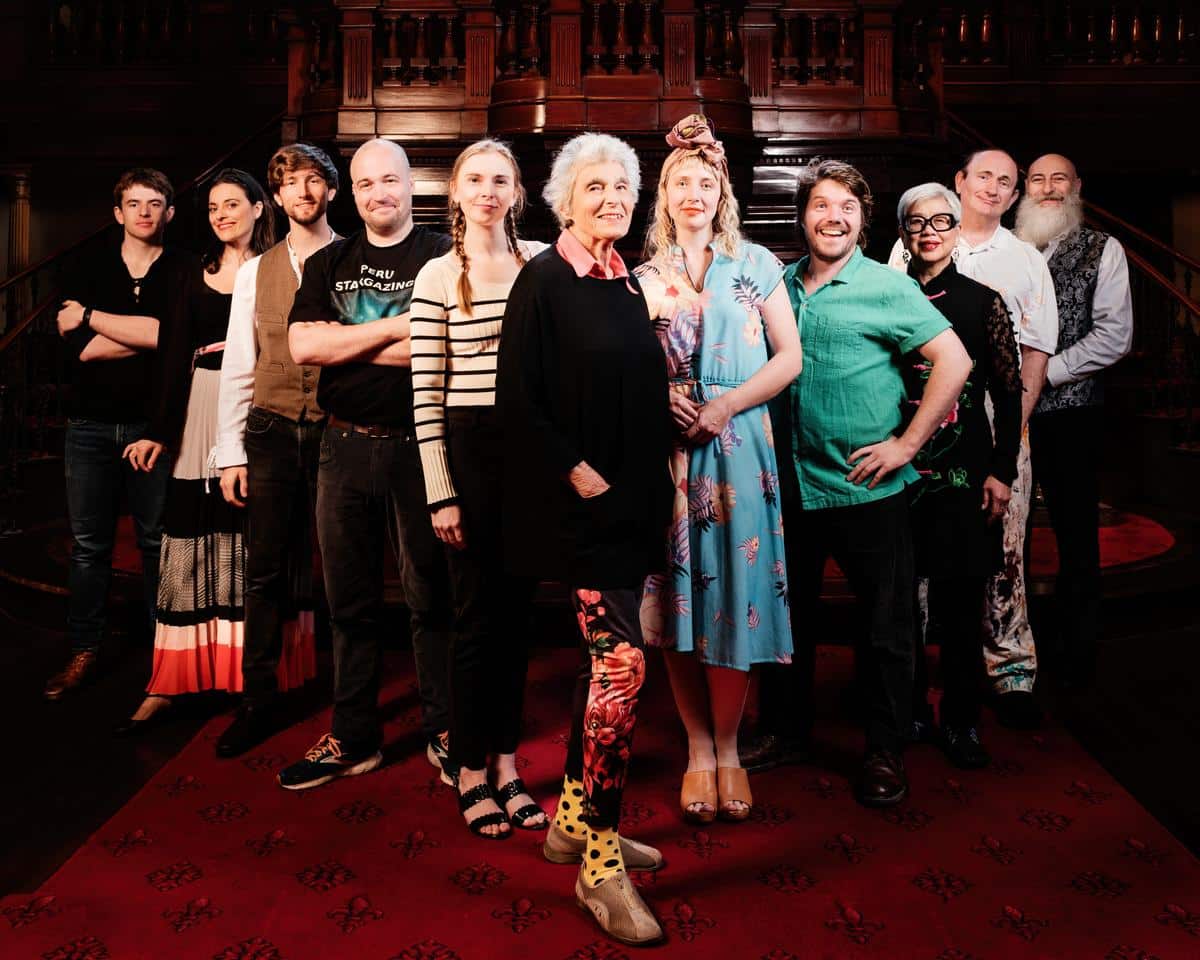
There are a lot of characters in Seed Hunters – with a cast of eleven sharing the stage, telling their different stories interwoven with art, the stars and history. The director Melissa Paris reminds us that “the seeds of transformation are planted by real people…whether through protest, parenting, music, art or simply refusing to stay silent, their stories echo today’s struggle and dreams.” Themes of self-identity and grief were intermingled with family dynamics.

The cast also took on various tasks, such as turning pages on a stand positioned at one side that displayed the names of the characters’ locations. These titles might have been more visible if they were larger or positioned slightly higher. The staging featured multiple levels, and a sense of intimacy was achieved through the characters’ interactions along the central aisle. However, since the play took place in a large venue with a high ceiling, I occasionally had trouble hearing some of the dialogue. Seed Hunters sound and lighting designer Jay Murrin chose some songs which were beautiful, providing the perfect atmosphere that complemented the scenes.

On leaving this performance, there were a few discussion points that came up from this very interesting concept. What will this seed hunters movement evolve into, in the future? Is this the way leading to a peaceful world?

Seed Hunters was written by Australian playwright Carol Dance.
Season run: October 17 – October 26 2025
Venue: Pitt Street Uniting Church Performance Space, 264 Pitt St, Sydney
Duration: Approximately 105 minutes
Tickets: Students $35, Concession/ Senior $45, Adults $55
www.ticketebo.com.au/scene-theatre-sydney/seed-hunters

To book tickets to Seed Hunters, please visit https://www.scenetheatresydney.net.au/seed-hunters.

Photographer: Robert Catto

Spread the word on your favourite platform!

Serpent’s Path: Japanese Cult Movie to Taut French Thriller

Serpent's Path

Serpent’s Path Rating

★★★★★

Click if you liked this article

Director Kiyoshi Kurosawa takes a second shot at ‘Hebi no michi,’ his 1998 Japanese V-Cinema movie. Here, Kurosawa steps away from Japan’s criminal underbelly, remaking his film in Paris, as a predominately French-language thriller.

Back in 1998, Kiyoshi Kurosawa (no relation to the legendary Japanese filmmaker Akira Kurosawa) made V-Cinema movies as quickly as Roger Corman used to make horror films. Most were straight-to-video, some had a limited theatrical release. V-Cinema usually meant low-budget action: bullets, explosions, crime stories and thrill rides.

‘Hebi no michi’ was dark and contemplative. Two men, Miyashita and Nijima, were hellbent on revenge. Carving a bloody swathe through everyone Miyashita held responsible for the brutal murder of his daughter.

The original 1998 Japanese movie, starring Teruyuki Kagawa as Miyashita and V-Cinema legend Show Aikawa as Nijima, rapidly gained cult status.

French cinemagoers have developed a taste for director Kiyoshi Kurosawa’s movies. He has twice won the Cannes Film Festival’s Un Certain Regard prize, for ‘Tokyo Sonata’ in 2008, and for ‘Journey to the Shore’ in 2015.

His international reputation was cemented in 2020 when his film, ‘Wife of a Spy,’ won the Silver Lion for Best Director at the Venice International Film Festival.

Given the opportunity to remake one of his earlier movies in France, Kurosawa jumped at the chance, immediately choosing ‘Hebi no michi,’ ‘Serpent’s Path.’

‘Serpent’s Path,’ ‘La Voie du serpent,’ 2024, updates and makes a number of subtle but effective changes.

Kô Shibasaki (Battle Royale; 47 Ronin; The Boy and the Heron) and Damien Bonnard (Les Misérables; Poor Things; The French Dispatch) star in this taut and brilliant thriller.


Damien Bonnard takes the role of Albert Bacheret. The original’s Miyashita was ex-Yakuza. Part of Japan’s criminal underworld. Here, Bacheret is a bumbling, grieving father. He shambles, broken and hurting but unstoppable.

Kô Shibasaki as Sayoko Mijima holds every frame she appears in. Mijima’s stillness is in marked contrast to the stumbling Bacheret. Mijima is a psychiatrist rather than the original’s schoolteacher. As the movie’s mysteries are revealed one by one, Mijima keeps her secrets.

Shibasaki and Bonnard are ably supported by a cast of French character actors including Mathieu Amalric (The Diving Bell and the Butterfly; The Grand Budapest Hotel; Quantum of Solace) and Grégoire Colin (The Dreamlife of Angels; The Vourdalak).

Kurosawa shifts the story from Japan’s criminal underworld to the dark side of European charitable organisations. Anonymous foundations, with secretive inner circles. Wider conspiracies that hide unspeakable crimes.

‘Before you embark on a journey of revenge, dig two graves’ was originally a Japanese proverb.

In Serpent’s Path, you need to dig half a graveyard to bury the dead. The first act of abduction, dehumanisation and revenge rapidly spirals as deeper secrets are uncovered and the body count rises.

Is anyone telling the truth? Are they lying and pointing fingers to shift blame and save their own skin?

Serpent’s Path winds left and right, zigzagging as you follow the clues, the confessions and the trail of the dead.

Avoid spoilers, buy tickets and immerse yourself in this razor-sharp thriller.

To book tickets to Serpent’s Path, please visit https://japanesefilmfestival.net/film/serpents-path/.

Spread the word on your favourite platform!

Subscribe to What's The Show

Reviews, show news and what is on, straight to your inbox.