A Fresh, Empowering Take On Shakespeare’s Lesser-known Tragedy: Jovanna Hepburn Illuminates In Timon of Athens

Timon Of Athens

Timon Of Athens Rating

★★★★★

Click if you liked this article

1

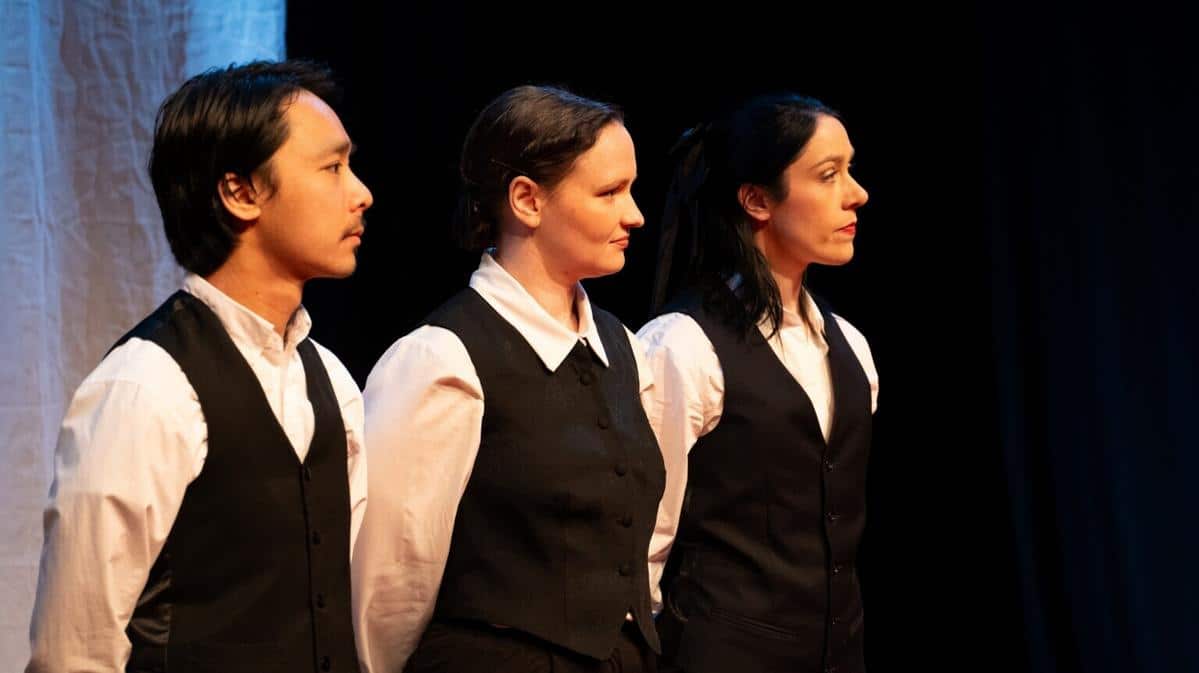
A large, opulent curtain sits upstage centre. Welcoming a long, lustrous dining table enveloped by an ivory tablecloth. Underneath it, a majestic round red carpet, fit for royalty. Staff in uniform stand to order. Staring straight ahead.

As if butter wouldn’t melt in their mouths. As if, we are in the enclosure of a bountiful environment.

Blue lights flicker on and off, ominously. Like thunder from the gods. As they do, staff move forward and back; in different directions.

Signifying perhaps, that there are cracks in these foundations.

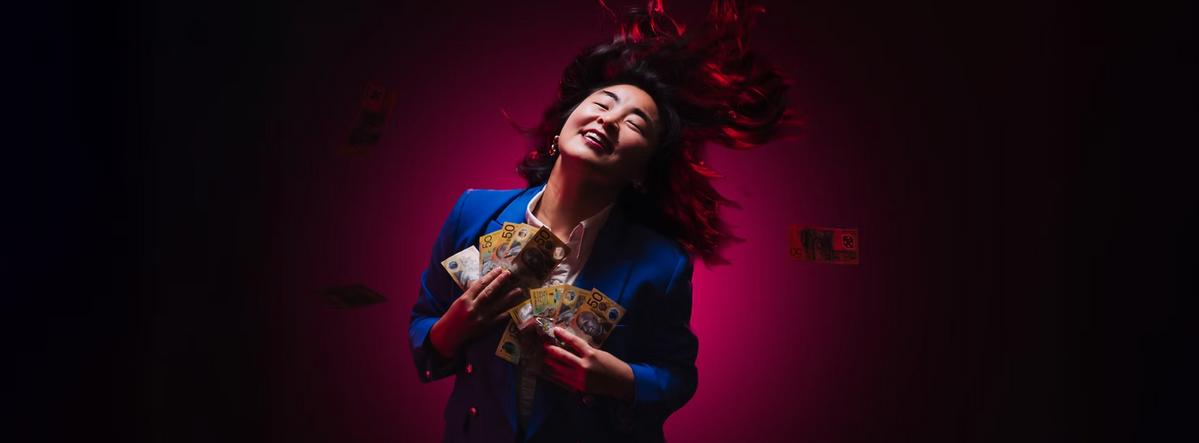
At each surge, movements of the staff continue to jerkily bend and twist. Someone lies down on the table, as if resting after a long hard day. As this lonesome figure sleeps, the staff move and swerve closer and closer to the audience. We watch in awe as the rest of the cast emerge from underneath this table like vultures, as they catch money thrown around freely. As they in turn, give out this printed money to us in the audience.

So we can breathe in the opulent energy of Athens. Of the language of its secret benefactor, Timon.

An ultra-generous philanthropist and restaurateur. A public figure for all-things-good. A patron of the arts. A genuine human who loves his community and has great aspirations for his city. His high-octane restaurant serves up bountiful meals to the elite. He doles out money equally to statesmen as he does to bail out petty criminals. From artists to painters to influencers. Everyone in high positions are given Timon’s riches.

So naturally, Timon believes wholeheartedly, that these people appreciate his generosity. That they also mean well. That universally speaking, ‘humans are genuinely loving and appreciative.’ Timon is convinced that to whom he gives, is a blessing he will ‘receive back in kind’.

That camaraderie is everything.
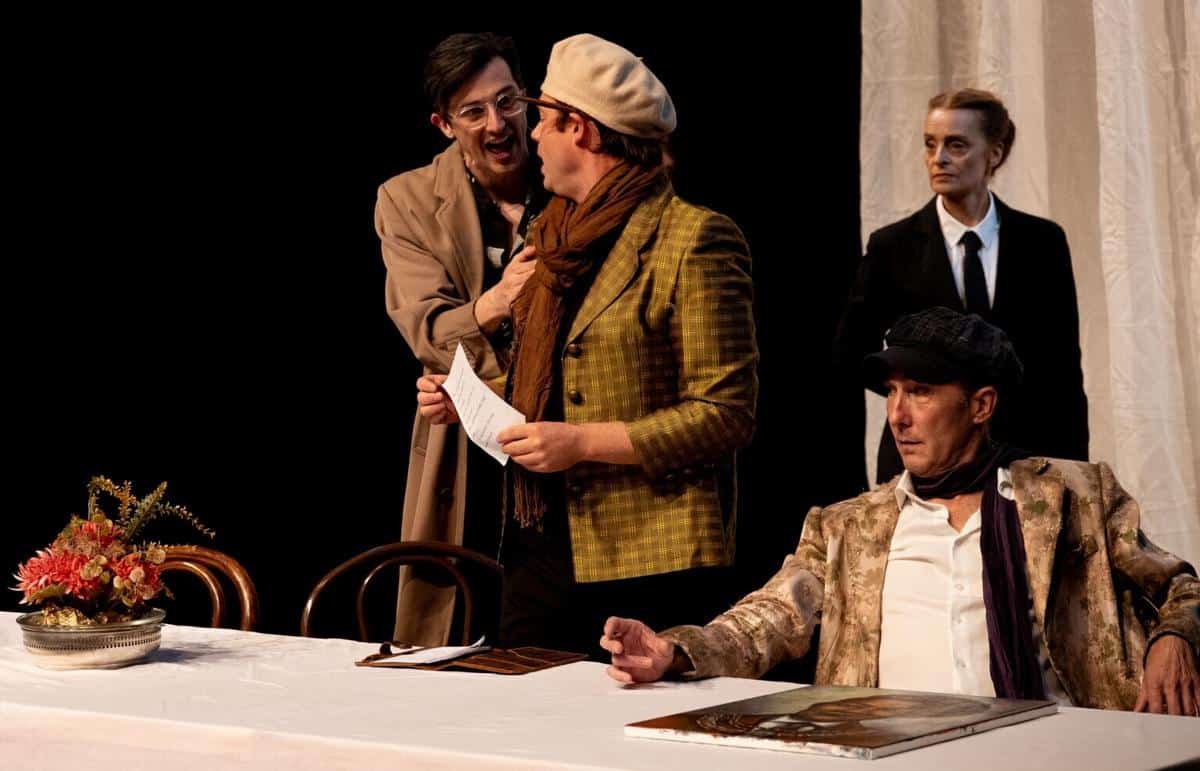
 

And Timon, according to his ‘smoke and mirrors’ circle? Is indeed a gift from the Grecian gods. He’s the gift that keeps on giving. So much so, that Apermantis, the town’s paparazzi photographer, and keen observer of human behaviour, views these gatherings with disdain. Shamelessly calling out these freeloaders to Timon. Warning Timon that they are deceiving him, and in turn, refuses to dine with them.

Timon just laughs this off.

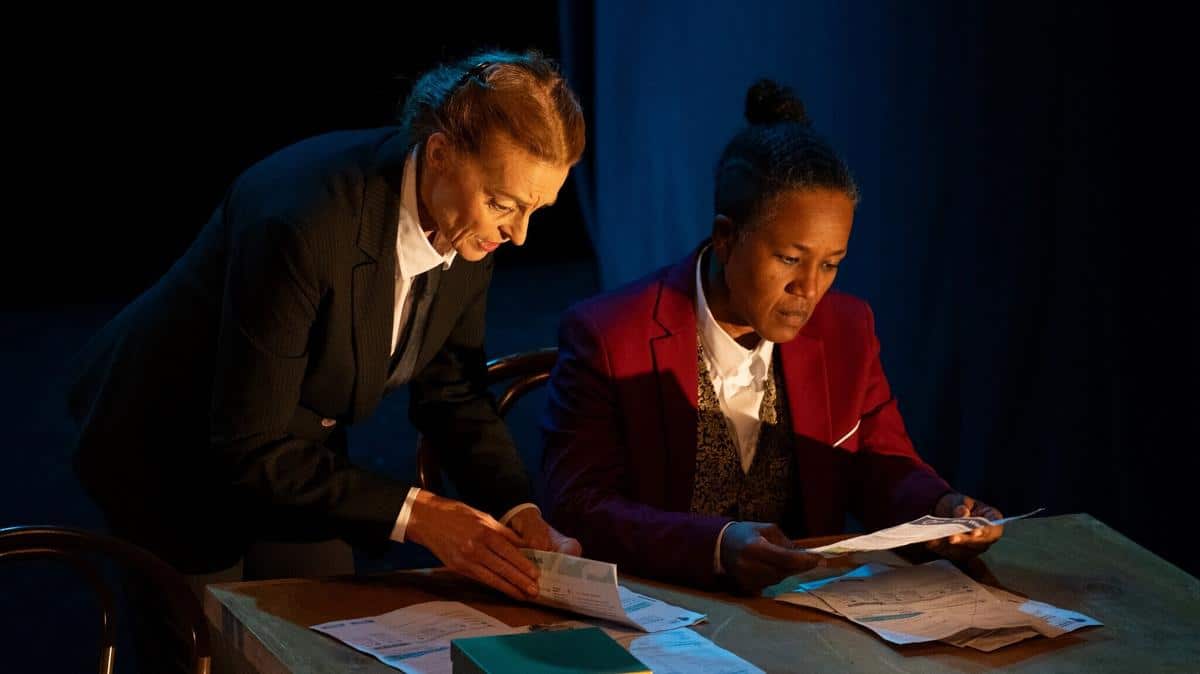
That is, until Timon’s assistant Flavius points out that he has no more money to give anybody. For Timon is in debt. He has accidentally bankrolled the state ‘a little too much’. His funds are being spent by his ‘well-healed friends’ for corruptive means. His flashy restaurant will be no more. His business is in economic crisis.  

Timon’s otherworldly state of Greek god-like generosity? Comes crashing down to earth like a crack of flickering thunder.

Flavius, in a state of distress, suggests that Timon ask his friends to pay him back the monies he gave them (to service the public). Instead of coming to his rescue? His friends are instead repulsed by this act and refuse to dig into their pockets.

What ensues? Is a lesson for Timon. A tuition about division. That when it comes to someone’s generosity in society, humanity can be divided in their actions.

There are the givers, and there are the takers.

How, when it comes to money or kindness - ‘the takers’ will receive, but behind our backs? Be our secret foes, wrestling with resentment. That takers use individuals for their own greed. And that greed, on a higher-level playing field?

Can lead to corruption.

Which is what consumes the mind of Timon as he struggles through this point. So much so, that Timon becomes a recluse, unable to deal with the corrupt minds of his once beloved city.

But more importantly, this story is about how the shocking effects of betrayal, especially from those he believed he could trust - can sometimes have devastating consequences.

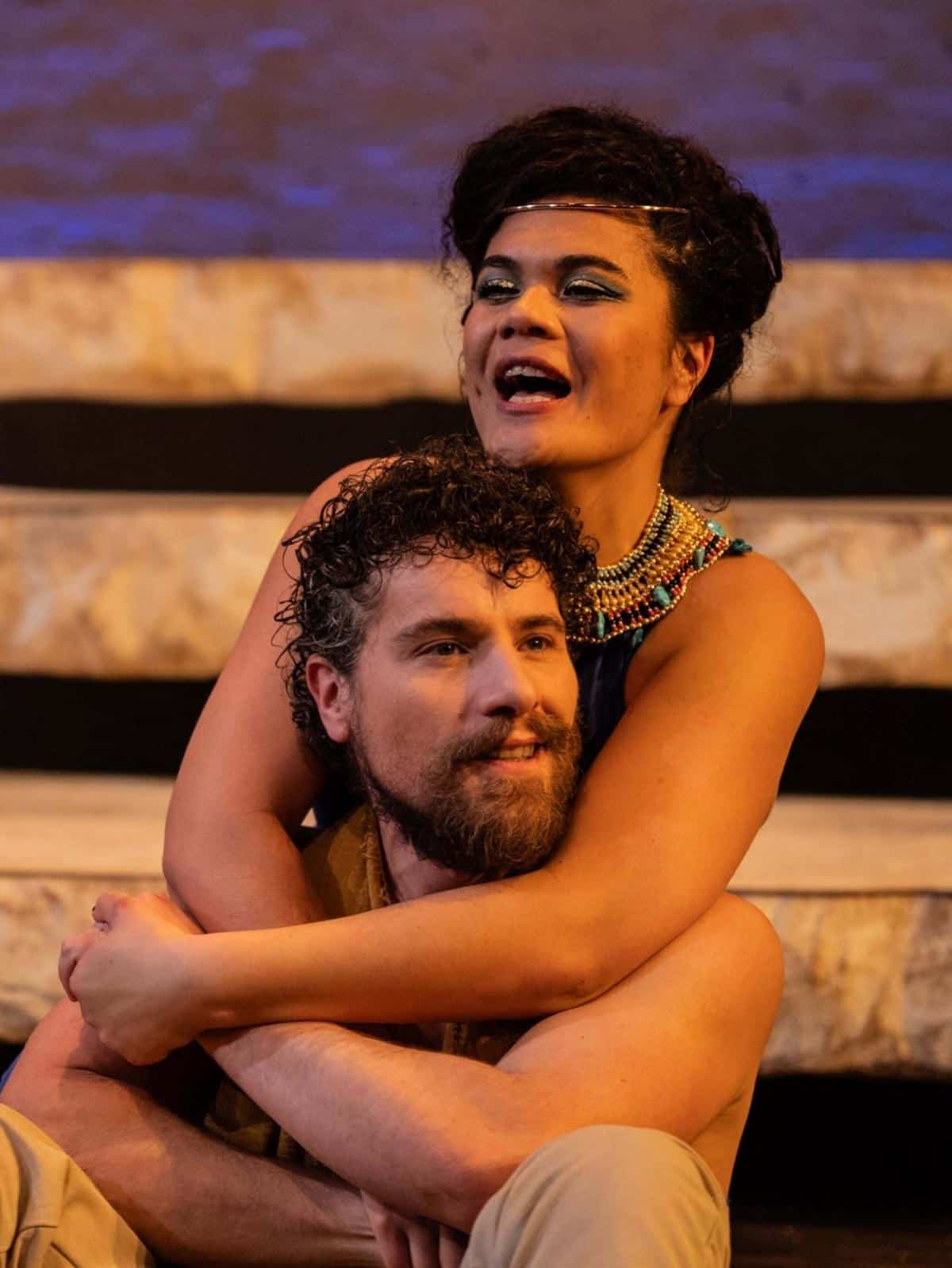
This modern-day version of William Shakespeare and Thomas Middleton’s Timon of Athens is a well-rounded, humorous satire. Introspectively directed by Claire Nicholls and Kevin Hopkins, it is a wine-and-dine fest of music, dance and physical delights. The main roles are non- binary, which I loved, creating a fresh, empowering take on Shakespeare’s iconic works, (which in the past, was largely reserved only for males). And the quality of acting, especially from the seasoned ensemble, was sharp, precise and exciting to watch.

The set design, also created by directors Claire Nicholls and Kevin Hopkins— was minimalistic, yet the colours on stage resembled familiar colours of world leadership. The red, white and blue of the American and Australian flags, to start. Perhaps representing our modern global capitalist systems. The dolling out of $100 Australian dollars to each audience member? Perhaps to immerse us in the folly of money, that often has the potential to weaken our perspective, not strengthen it. Much like those in power in our current climate. They too have the potential to create serious economic disaster, if they have not done so already.

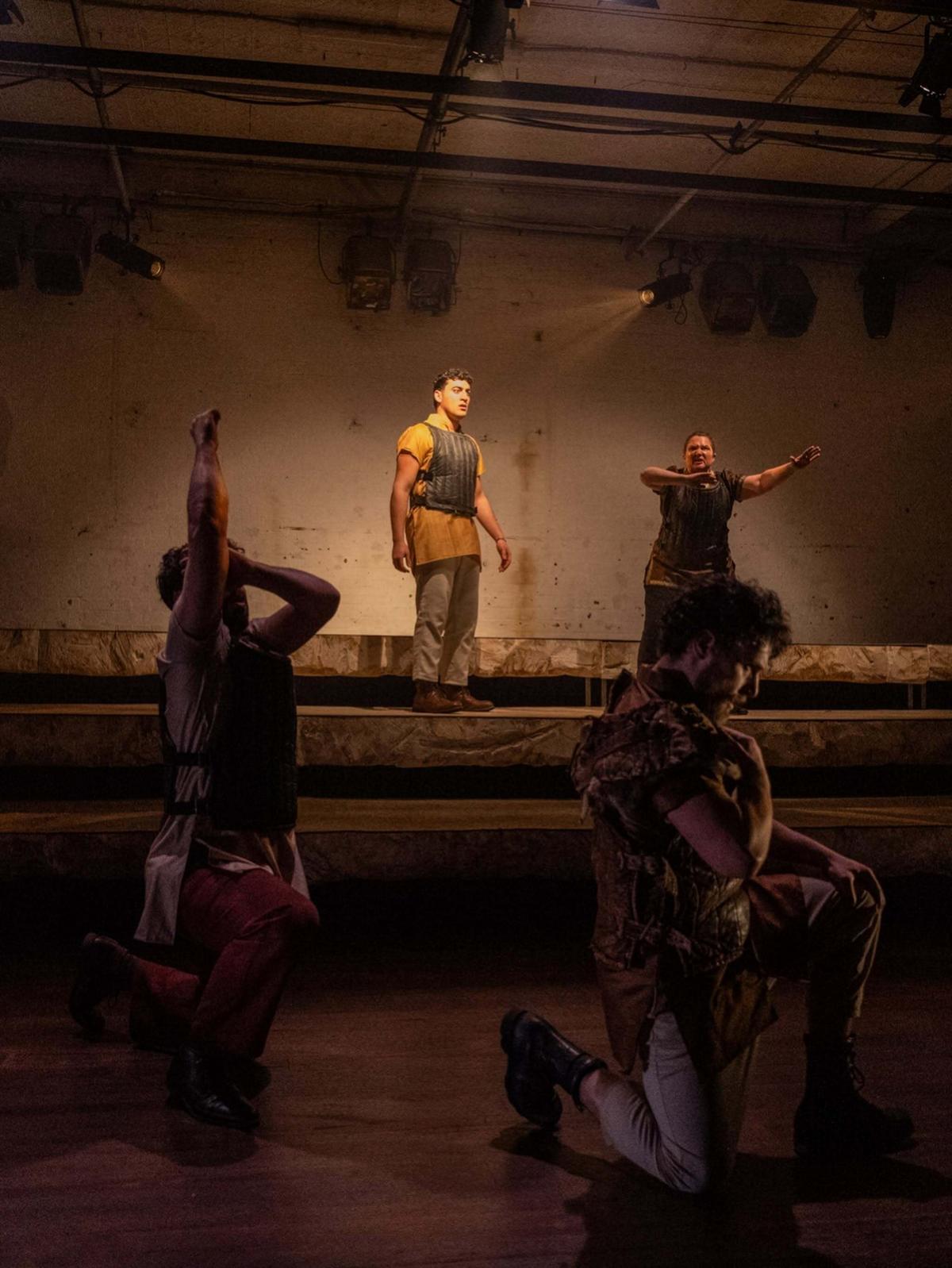
Also equally impressive was the physical movements onstage that tied in seamlessly with the actions. The miming of the three-piece band in the background of Timon’s dinner parties. The rebellion of Timon’s friendship clan turning against him in slow motion via the news. And the military coup that takes place at the end of the play, with slow-motion movements of warfare. An overthrow of a corrupt state, to create order in Athens once again.

There are a few actors in this riveting show worth their weight in gold.

Scott Jackson, as Lucius the poet, deliciously brims with cheeky wit. His crisp consonants elevating the stage alongside his hilarious antics, electrifying outfits, slick physicalities, and oozing Athenian pretentiousness.

Helen Hopkins is sensational as Timon’s most trusted advisor Flavius. She has a focused intensity, commanding firmness, and a tender-yet-sturdy quality to her performance that is riveting to watch.

And finally, Jovanna Hepburn sets the theatre ablaze as Timon. From start to finish, she pillars this production with a force beyond words, exemplifying the heartbeat of excellence for modern Shakespearean works. Her rhythmic resonance booms with every pentameter. Her physicality embodying overflowing emotions of despair. Her stamina and emotional architecture exemplifying the innate qualities needed to bring a history of theatrical greatness to life.

Proudly developed as part of the Prague Shakespeare Company's 2025 Summer Shakespeare Intensive program, Th'UnGuarded Duncan should consider themselves mighty proud to co-present a lessor-known Shakespearean work that hold great relevance to today’s world, for the 2026 Theatreworks season.

To book tickets to Timon Of Athens, please visit https://www.theatreworks.org.au/2026/timon-of-athens.

Photographer: Andrew Cullimore
Spread the word on your favourite platform!

Nicholas Pang: Creating Hypnotic Drone Scores for Shakespeare

Feature-Othello

Behind Come You Spirits’ production of Othello is composer Nicholas Pang, a creative talent whose work crosses theatre, film and video games. Bringing Shakespeare’s famous tragedy into the setting of early colonial Australia presents an unusual opportunity for musical interpretation. In this interview, Pang takes us behind the scenes of the production, revealing how he works with directors, the challenges of composing for live theatre and the artists who have influenced his career.

Meet The Composer - Nicholas Pang

What is this production or project about?

Come you Spirit's Othello is a retelling of the famous Shakespearean work with an early colonial Australian twist.

This adaptation reframes Shakespeare’s most searing tragedy within a world of first encounters, shifting power and cultural collision, where love and jealousy unfold against the backdrop of devastating change.

The heart of the story sees Othello navigating leadership, trust, prejudice and betrayal. Deception runs rampant and echoes the power struggles of the young colony.

How would you describe the musical world of this work?

It's something of a fusion between orchestral and drone/ambient music! Drone music is a minimalist genre defined by long-held, sustained tones, notes or tone clusters that play continuously or with very slow, subtle variations. It is meditative and hypnotic, dense and heavy yet cinematic.

How do you collaborate with a director or creative team when writing for the stage or screen?

Josephine, the director of Othello wanted to bring in elements of Australian culture by collaborating with First Nations artist Uncle Col Lyons. We combined my music with his live recorded didgeridoo and clapsticks, often scored to soulful dancing on-stage. Hearing Uncle Col play the didgeridoo left me in such awe, an almost spiritual feeling as this was the first time I heard the didgeridoo performed live. His original music is integral to this theatre production and connects and grounds it to Country.

Charles, the musical director of Othello has been very kind and informative with his approach in letting me know the brief. To start composing, Charles wrote out 14 different musical keys from C Major to B Minor and described each one using certain phrases or emotions. Eg. C Minor - Despondent home, textured and dark,  anger and fear, danger. “this was my home, it is no longer a safe place."

From there, using the suite of low orchestral instruments such as the tuba, french horn, double bass and synth pads, I would riff around the key and create rough melodies that suited the description. Charles would also let me know what colours each key corresponds to, and that would help my compositional process significantly!

What is the most challenging cue or section you had to write, and how did you solve it?

Because Othello's music lends itself to minimalist drone music, any instrument that is high pitched takes away from the dialogue. A lot of the more "major key" music first had oboes or piccolos to represent a more feminine energy, but there was a lot of frequency overlap with the actors voices. This was challenging for me as I thought that the pieces weren't unique enough. But luckily, after hearing all the music together with the actors, I realised that the music conveys the same emotions to the audience as it would've with a piccolo. After all, music is created to enhance the performance!

How does writing music for performance differ from writing concert music?

As I've often written music to suit specific story beats or animations, composing for theatre has been more of a freeing experience! It's less about getting the melody exactly on time and more about communicating particular emotions. Because Othello's music is more ambient than say, a cinematic orchestral composition, the audience will focus less on the music which is the intended result. For example, the song "Dark Heartbreak" is full of the same 30 second repeating motif stretched over many minutes. It's designed to be performed like this because the repetition keeps the music feeling endless and meditative, instead of being jumpy and taking the audience out of an immersed state.

What do you want the audience to feel when the music is working at its best?

Haha well it really depends! In the play's worst moments I want the audience to feel tense, uncomfortable and uneasy, immersed in the music and action. In it's most peaceful moments, I would like the audience to feel a sense of meditative stillness or awe for the characters. Overall, I want them to be spellbound by the atmosphere and fully engaged with this sensory experience.

Who are the composers or artists who have shaped the way you think about your craft?

My inspirations are:

- John Powell (How to Train your Dragon)
- Christopher Larkin (Hollow Knight, Silksong)
- Borislav Slavov (Baldur's Gate 3, Divinity 2)
- Ludovico Einaudi (Minimalist pianist)
- RADWIMPS (Your Name, Weathering with You)
- Yuki Hayashi (My Hero Academia)

Each of these musicians have done wonders for my creativity and essentially changed my life!

What is next for you creatively?

As a versatile composer and sound designer, my next projects dive into the realm of video games! My music will be heard in the mobile game "SlingBug" releasing Q1 2027. I'm also working as a sound designer on a tactile puzzle game called "Aberrate Inc." coming to Steam, also in Q1 2027!

Is there anything else you would like to share?

I hope everyone enjoys Othello! Come you Spirits have been an excellent organisation to work with and who knows, you might hear my music again in their future theatre productions.

I'm a composer and sound designer for film, video games and theatre, so my repertoire for these works can be found on my website, www.nicholaspang.com

Please check out my Showreels on the home page!

Our thanks to Nicholas Pang for sharing his experiences and offering a fascinating look at the work that goes into creating an original theatrical soundtrack. With two video game projects scheduled for release in 2027, his career continues to develop across different creative industries.

Audiences can discover his latest theatrical work in Come You Spirits’ production of Othello at Darling Harbour Theatre. Visit the theatre's website for performance details and ticket information.

Spread the word on your favourite platform!

Cleopatra & Antony

Cleopatra & Antony

Cleopatra & Antony Rating

★★★★★

Click if you liked this article

2

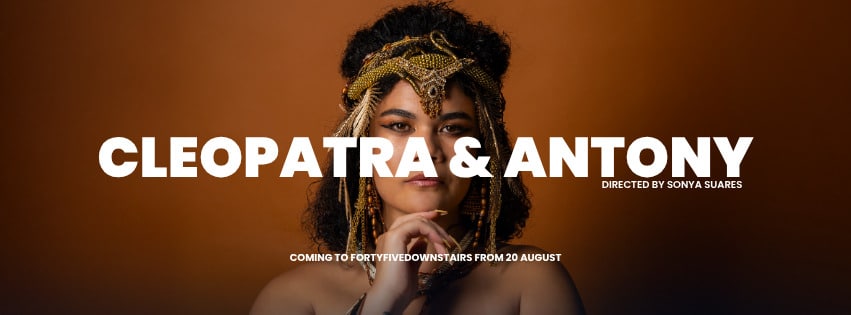
With a simple reframe, the Melbourne Shakespeare Company’s ‘Cleopatra & Antony’ signals a deviation from the norm long before curtains up. Shakespeare’s original play centres the Roman general Mark Antony, but this production flips the script to spotlight his infamous beau, the Egyptian queen Cleopatra.

Shakespeare’s ‘Antony & Cleopatra’ follows the powerful relationship between Cleopatra and Mark Antony and their tragic demise as casualties of the crowning Roman Empire. The tragedy is one of Shakespeare’s more ambitious works, notorious for its numerous scenes spanning scores of characters, relationships and locales. On paper, it’s a bit of a slog, so it’s the direction that makes or breaks this production.

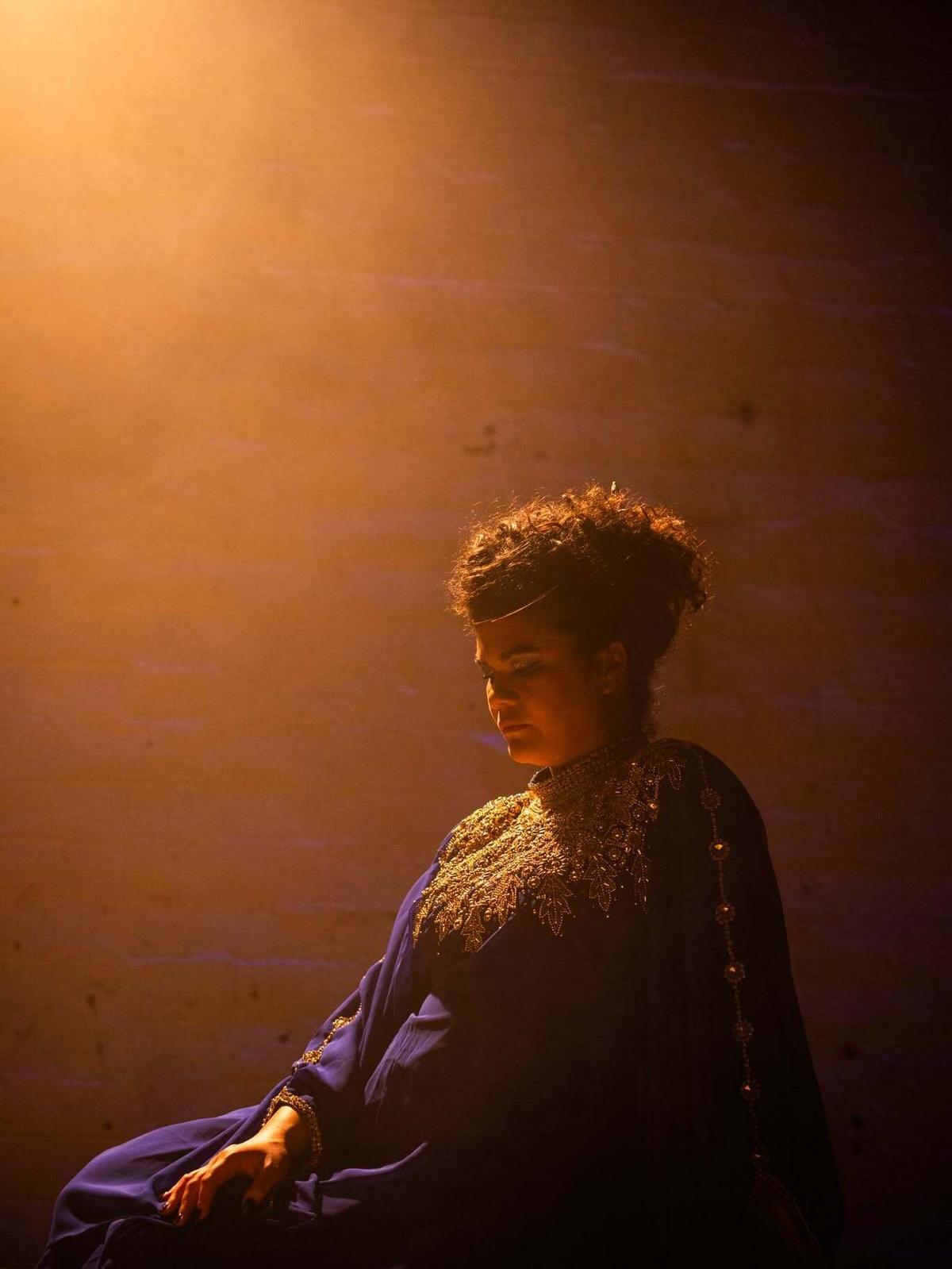
The Melbourne Shakespeare Company's adaptation sat dreamlike between traditional and contemporary. On stage, the set (designed by Eloise Kent) was pared back, with organic splays of linen, stone and smoke; pale fawns and ochres evoking a dusky Mediterranean villa.


Crazy, stupid love is the one luxury Cleopatra and Antony can’t afford; their chaotic affair begets a doubly chaotic state of affairs. Sonya Suares directs ‘Cleopatra & Antony’ with that restless, impulsive passion which grated at times to watch, but only for its bitter truth. That’s where tragedy lives, in the oh-so-avoidable. We’re meant to shake our heads at the foolishness of these characters because we aren’t the fools in love (until we are).

Akina Edmond’s Cleopatra and Louis Lucente's Antony were forces in their own right and all the more powerful together. Intense, playful and hotblooded, the two moved as if in orbit and fed off each other’s boundless energy until their final devastating moments. Supported by strong characters from Tsungirai Wachenuka’s Charmian to Jennifer Vuletic’s Agrippa, Laura Iris Hill’s Enobarbus and the multifaceted ensemble, the chemistry on stage was palpable.

I appreciated the intention to make the content more digestible, but I’m unsure if Charmian’s metatextual narration answered this adaptation’s purpose. The play stretches itself across so many histories and contexts that I wonder what—if any—method there would be to compensate for gaps in audience knowledge. For a lesser-known play, it struggles to reap the benefits of contemporary direction. Strip off the frills, let us relish in the madness.

I’m similarly undecided if anything new was added for me in the reframing of Cleopatra’s role, though I will say this: there’s a power in perception and Cleopatra is one of history’s most misunderstood figures. Even if the story remained the same, the Melbourne Shakespeare Company’s adaptation extends an invitation to its audience to recontextualise a previously fixed character, wielding the transformative power of narration to ask a critical question: who is telling the story?

To book tickets to Cleopatra & Antony, please visit https://www.melbourneshakespeare.com/cleopatra-and-antony.

Spread the word on your favourite platform!

Ibsen Award-winning Forced Entertainment Bring Their Take On Shakespeare To The Opera House

Feature-Table Top Shakespeare: Selected Works

ONE MONTH TO GO
Shakespeare's greatest plays retold with a Dettol bottle, a jar of marmalade and a set of salt and pepper shakers at Sydney Opera House

World-renowned, Ibsen award-winning UK company Forced Entertainment brings its acclaimed production, Table Top Shakespeare, to Sydney for the first time this September – a genuinely accessible, laugh-out-loud way into the Bard for anyone who finds his works intimidating or a slog at school. Suitable for ages 14 and up.

With exactly one month until opening, the Sydney Opera House is counting down to the Sydney premiere of Table Top Shakespeare, presented by internationally acclaimed ensemble Forced Entertainment – the company The Guardian has called "Britain's most brilliant experimental theatre company" and The Times says is "confounding conventions and exploding audience expectations."

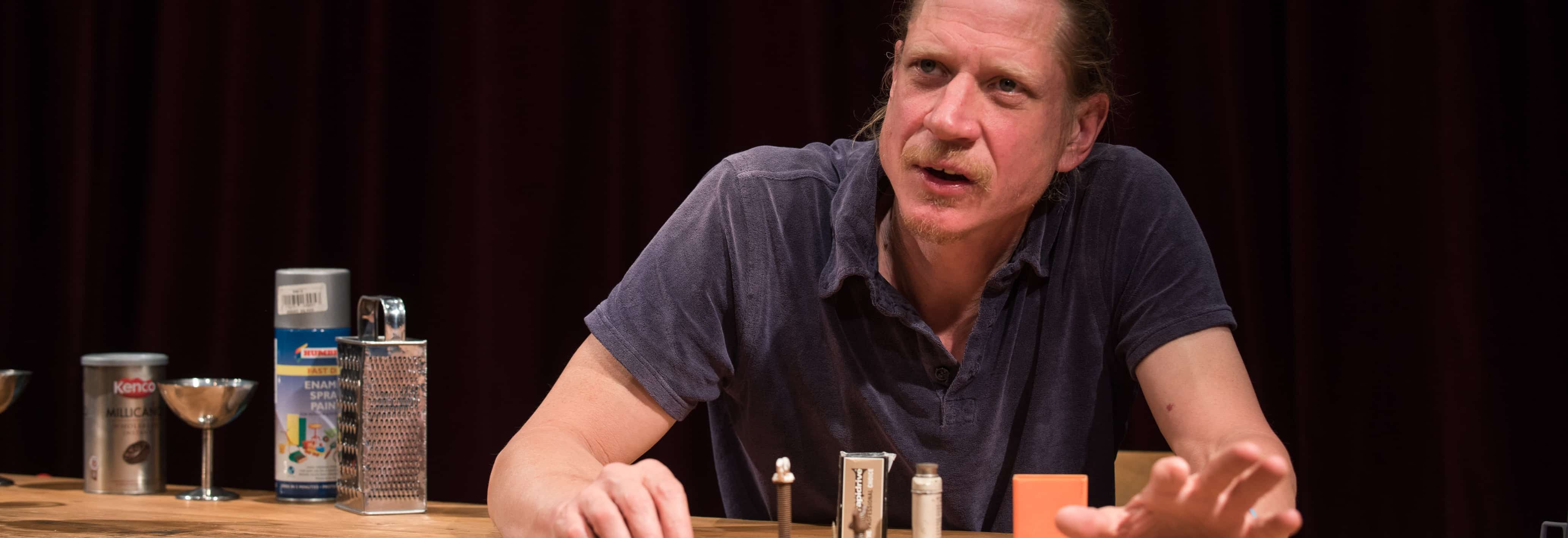
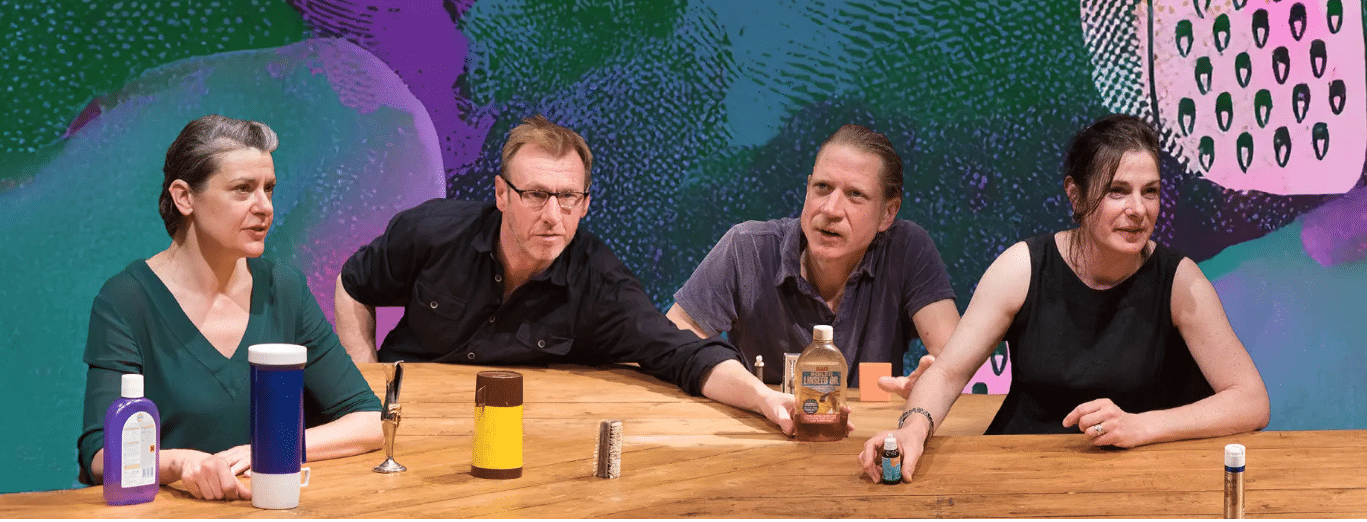
Six performers take on the whole of Shakespeare's canon using nothing but everyday household objects – a vase becomes a prince, a jar becomes Juliet, a Dettol bottle plays her nurse, and salt and pepper shakers rule an entire kingdom. Narrated live and entirely from memory, with no fixed script, each retelling strips Shakespeare's comedies, tragedies and histories back to their essential drama, wit and plot – no prior knowledge of the plays required.

image002.png

It's a genuinely different way in for audiences who find Shakespeare's language intimidating or who haven't engaged with his work since school, as well as a fresh, funny lens for seasoned theatre-lovers. Forty years into a career built on pulling apart theatrical convention, this marks Forced Entertainment's first-time tackling Shakespeare – and their first time performing them in Sydney.

Table Top Shakespeare: Selected Works is presented as double bills across the season – two plays per evening over one week, covering comedies, tragedies and histories including Hamlet, Macbeth, Romeo and Juliet, Othello and A Midsummer Night's Dream.

SHOW INFORMATION:
WHAT: Table Top Shakespeare
WHEN: 22 – 27 September 2026 (one week only)
WHERE: Studio, Sydney Opera House
FOR: Ages 14 and up
PRICES: Tickets from $75 + booking fee.

ABOUT FORCED ENTERTAINMENT
Forced Entertainment is an ensemble of artists founded in 1984, recognised as one of the world's most influential experimental theatre companies. Winners of the International Ibsen Award, the company has spent over 40 years pulling apart the conventions of narrative, genre and theatre itself, touring their work across the UK, Europe, North America and Japan. Led by Artistic Director Tim Etchells, with performers Robin Arthur, Jerry Killick, Richard Lowdon, Claire Marshall, Cathy Naden and Terry O'Connor.

Spread the word on your favourite platform!

Subscribe to What's The Show

Reviews, show news and what is on, straight to your inbox.