The Social Ladder

The Social Ladder

The Social Ladder Rating

Click if you liked this article

8

At its world premiere, The Social Ladder found an impeccably apt home at the Ensemble Theatre—the country’s longest continuously running professional theatre company—perched in rarified Kirribilli, with Sydney Harbour shimmering outside like an accessory quietly signaling old money. One could hardly imagine a more socially literate setting for a play so exquisitely preoccupied with rank, aspiration, and the fragile choreography of belonging.

Penned by David Williamson AO—Australia’s grand maître of social satire, whose canon includes such drawing-room dissections as Emerald City and Don’s Party—this latest work turns its incisive gaze toward status itself: how it is curated, performed, and so desperately desired. Williamson’s dialogue is once again sharp as cut crystal, producing laughter that curdles almost immediately into recognition.

In an age of relentless social visibility, where curated online selves often eclipse private truths, The Social Ladder feels not merely timely but almost uncomfortably current. The premise is elegantly contained: three couples, six agendas, one dinner party designed as a social audition. At its centre is Katie (Mandy Bishop), a woman of unmistakable ambition and unmistakably non-elite origins. Hailing from resolutely middle-class Engadine, her accent alone threatens to betray her aspirations, yet she is convinced—fervently—that her talents merit elevation.



Her chosen ladder rung arrives in the form of Sydney power couple Charles (Andrew McFarlane) and Catherine Mallory (Sarah Chadwick), art-collecting, influence-wielding exemplars of cultural capital. A few fleeting schoolyard encounters with Catherine ignite Katie’s belief that proximity might equal access. Thus, the dinner is conceived: not a gathering, but a campaign.

No expense is spared. Catering is outsourced, furniture rented, and even an “artistic masterpiece” hired to telegraph taste. Appearances, after all, are everything. To soften the social calculus, Katie also invites her neighbours—old friends, Ben (Matt Minto), a once-promising film industry figure now professionally becalmed, and Laura (Jo Downing), a dance teacher whose achievements lack the requisite sheen. Their invitation is both olive branch and afterthought.

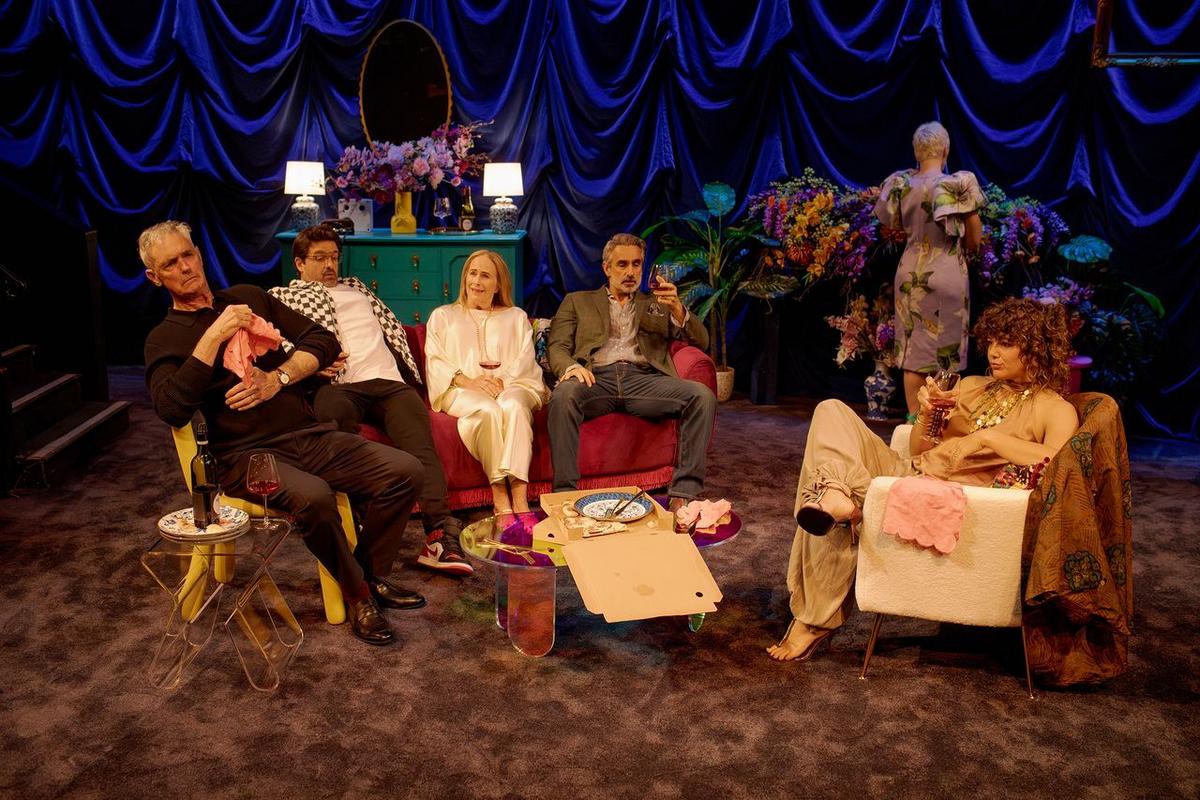
Naturally, the evening implodes. The food never arrives, the wine order is forgotten, and the borrowed artwork is revealed—mortifyingly—to belong to the very guests meant to be impressed. As façades fracture, civility gives way to desperation, deceit, and the ignominy of cheap wine and takeaway pizza.

The staging is slyly symbolic: three chandeliers ascending in grandeur, empty picture frames lining the walls, furniture beautiful but uncomfortable—an elegant visual shorthand for hollow status and performative taste. Performances across the board are finely tuned, creating the uncanny sensation of eavesdropping on a private catastrophe.

By the final unraveling—replete with secrets, betrayals, humiliations, and small redemptions—the audience is left laughing, wincing, and quietly auditing their own social manoeuvres. One exits the theatre not just entertained, but unsettled, pondering the price paid for a seat at the high-end table—and whether it was ever worth it.

To book tickets to The Social Ladder, please visit https://www.ensemble.com.au/shows/the-social-ladder/.

Photographer: Phil Erbacher
Spread the word on your favourite platform!

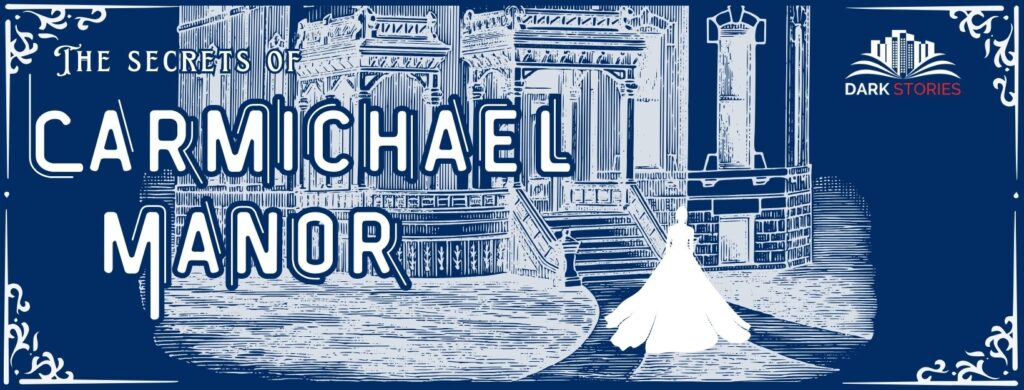
A Step Back in Time – The Secrets of Carmichael Manor

The Secrets of Carmichael Manor

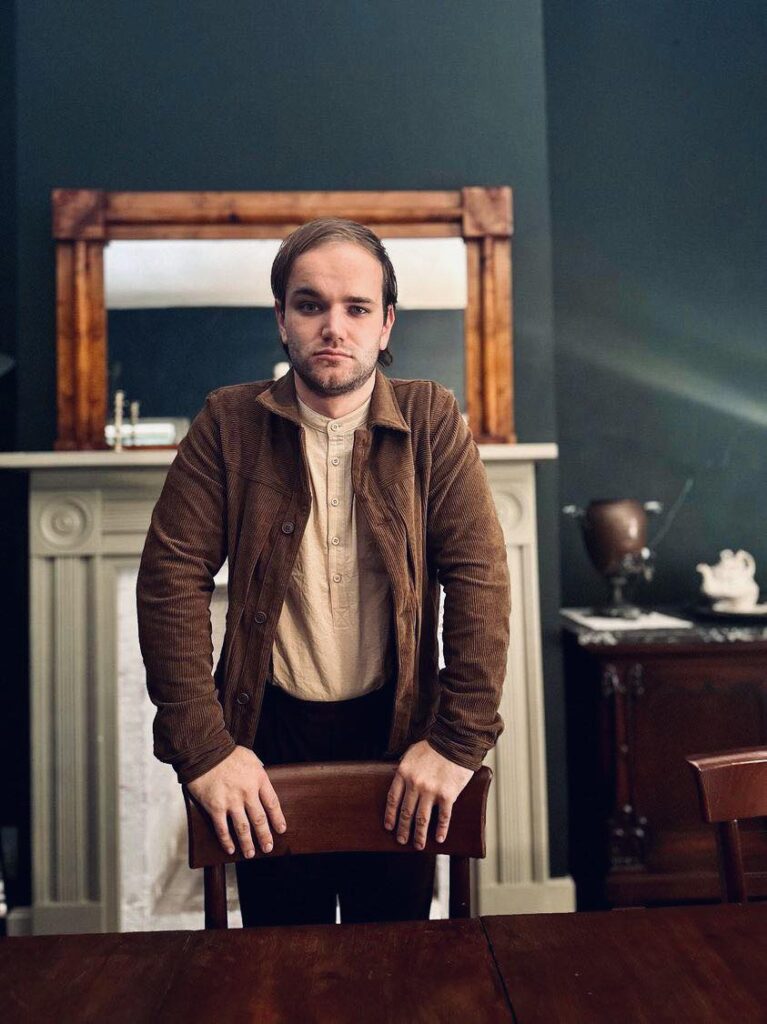
When Shakespeare wrote, “All the world’s a stage…” he could not have more accurately described a Dark Stories interactive theatre experience. The Secrets of Carmichael Manor does not occur on a singular stage, where the audience sits still, watching a play. As with their previous theatre performances, Dark Stories unfolds in the real world and, in this case, inside several rooms inside the historic Experiment Farm Cottage in Harris Farm, Sydney. The audience moves from room to room alongside the characters.

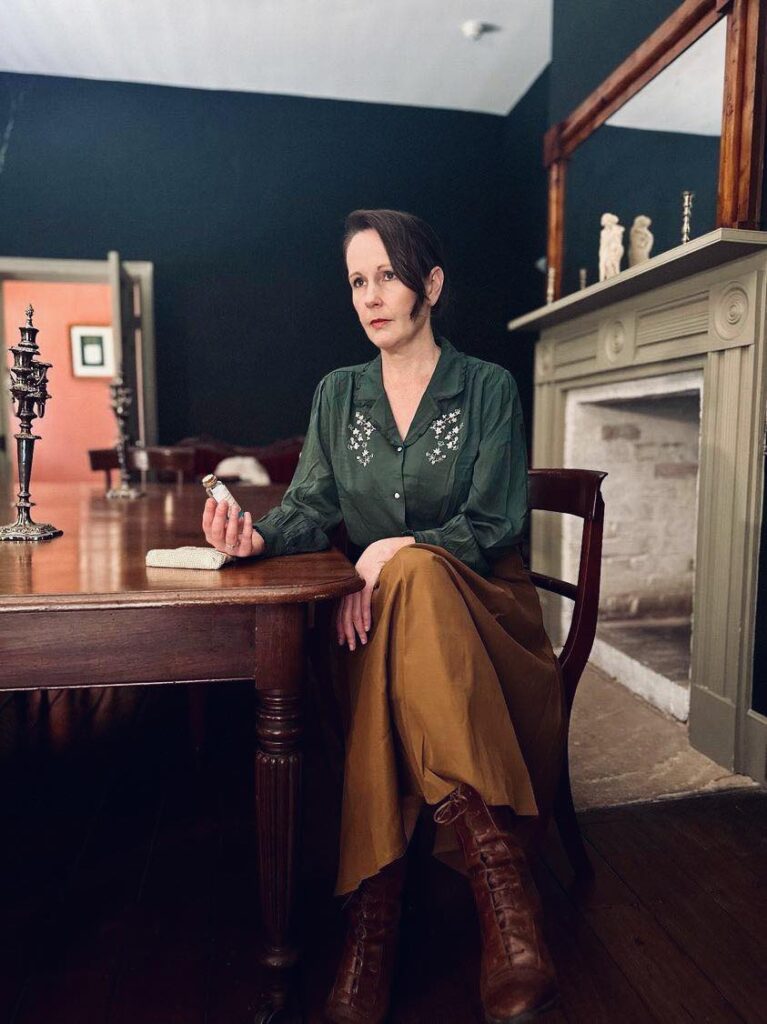
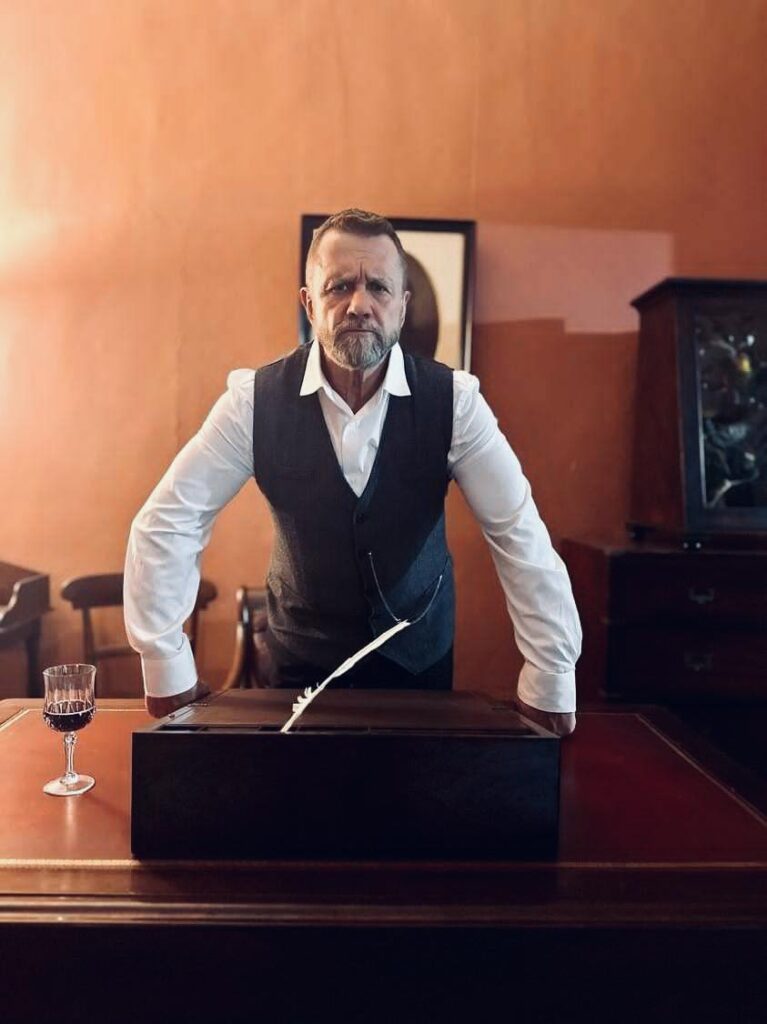
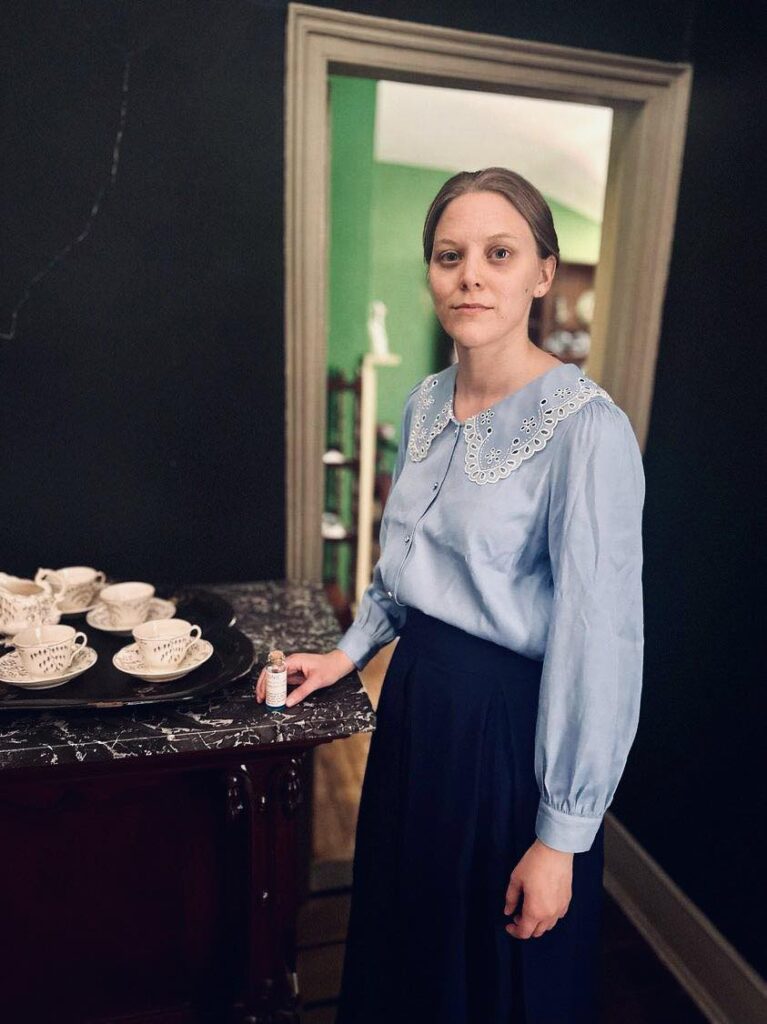
The Secrets of Carmichael Manor was written and directed by award-winning actress Kate Jirelle, who takes on one of the lead roles as the bride-to-be Elspeth Carmichael in the play. Kate brought depth to her headstrong character.

Gary Leonard Belshaw, who played the role of Elspeth’s domineering father, George Carmichael, was a standout in the show. In contrast to brutish George was his gentle wife, Mrs Ada Carmichael, played by Erica Nelson. In some scenes, these three characters argue over family issues and the audience is made uncomfortable, as though we were intruding on a family squabble. However, witnessing this in the same room was a testament to their believable acting.

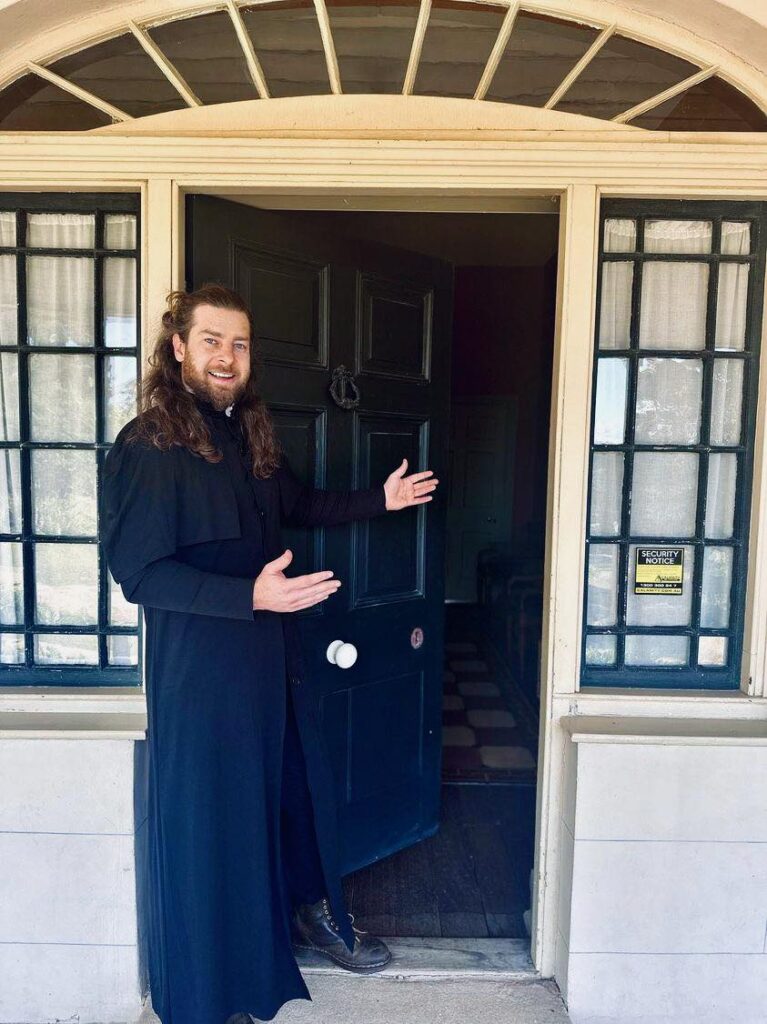
Set in 1919 and led by Father Patrick, played by Ben Durham, the audience is initially briefed on the mystery to be investigated outside the bungalow, built in 1835 and thought to be one of Australia’s oldest standing properties. I loved having the opportunity to enter this cottage in the evening. It was the perfect setting for the time period.

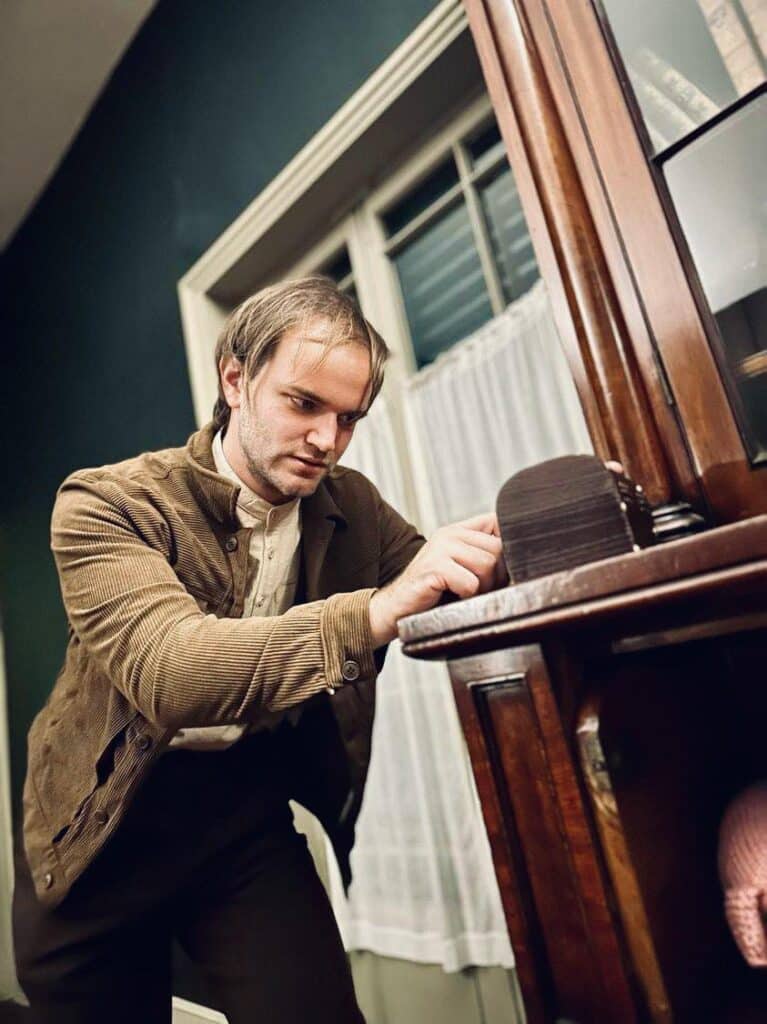
Entering the cottage, the Australian colonial furniture and beautifully polished wood floors transported us back in time to just after World War 1. Combined with the scent of wood and the steady ticking of the grandfather clock, one of the rooms created a 4D experience for the performance. Though at first, we were observers, this transitioned into us being integrated into the story.

The cast is joined by the Carmichaels’ servant, Mr Peter Schmidt, played by Matthew McDonald-Kearns. The costumes and hairstyling added to the authenticity of the 1900’s, and Mr Schmidt’s costume was one that particularly stood out to me with the authentic colour shade of his shirt and braces.

Father Patrick is our host and guides the audience through the house, propelling the story forward in a Miss Marple type style. There appeared to be a definite nod to Agatha Christie in this script, and at one point, a character asks who that is. (She had not yet released her first novel, which was due to come out in 1920.)

Amongst the seriousness of unfolding events, Father Patrick brings a comedic levity to the experience.

One unique aspect of the Dark Stories theatre is that it is immersive and unlike any other play currently showing. The characters interact directly with the audience, and we become part of the performance by helping to solve a puzzle or participating directly by asking questions or commenting. All of the cast were able to incorporate audience participant comments and adapt their character to respond with interjections and responses.

I imagine that no two performances of The Secret of Carmichael Manor are the same! I can’t give away anything about the plot because of spoilers, but it was an entertaining experience. It was fun to be a part of the play. Step back in time to help solve this mystery and unravel The Secrets of Carmichael Manor.

The Secrets of Carmichael Manor is showing at Experiment Farm, 9 Ruse St Harris Park.

Performances: Fridays, Saturdays, and Sundays from Friday, 13 October 2023 – Sunday, 22 October 2023.

Show times: 5.30pm, 7pm and 8.30pm.

Click here for more Dark Stories Theatre Reviews

Spread the word on your favourite platform!

Venus and Adonis – a Play Within a Play of the Sonnet

Venus and Adonis

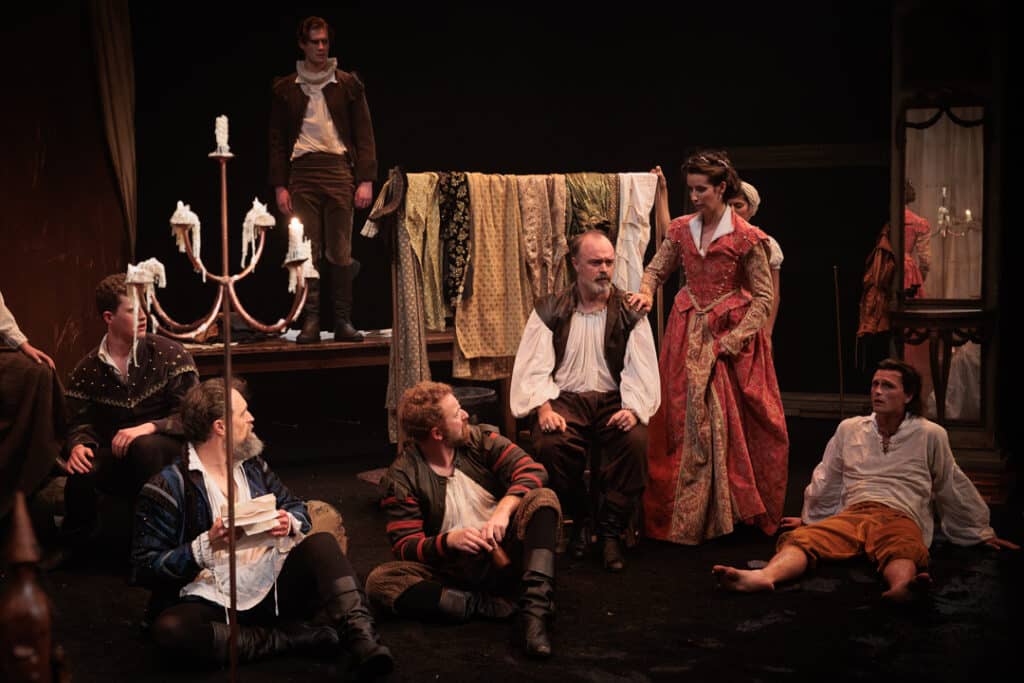
Venus and Adonis was filled with such strong performances; it came as no surprise to learn that the cast from Sport for Jove Theatre Company had previously been involved in the world of Shakespeare’s plays. Their delivery of various sonnets scattered throughout Venus and Adonis showcased their skills of navigating and steering the linguistics in a way that enthralled the audience.

I was particularly impressed with Anthony Gooley’s portrayal of William Shakespeare and how he coincided with the creation of sonnets in his mind by performing them aloud as the words appeared on the wall behind him as he spoke. This was a wonderfully original piece of visual theatre.

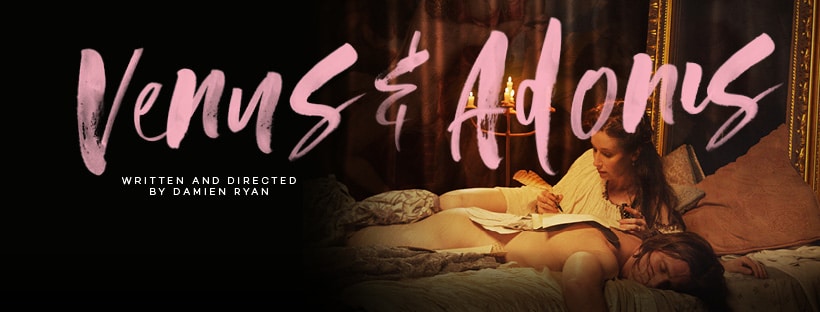
Venus and Adonis was written and directed by award-winner Damien Ryan, who has directed over 40 productions with Sport for Jove Theatre. I was at the opening night world premiere at The Seymour Centre for the play three years after the feature film of the same name was released in 2020. Many of the cast reprised their roles for this live performance.

Venus and Adonis

It is a bold story of the woman rival to Shakespeare, his secrets, intertwining his wife Agnes Hathaway (Bernadette Ryan) and a personal family tragedy into an engrossing stage production. Bernadette garnered my sympathy as Will’s wife and put in a powerful performance with lines that cut.

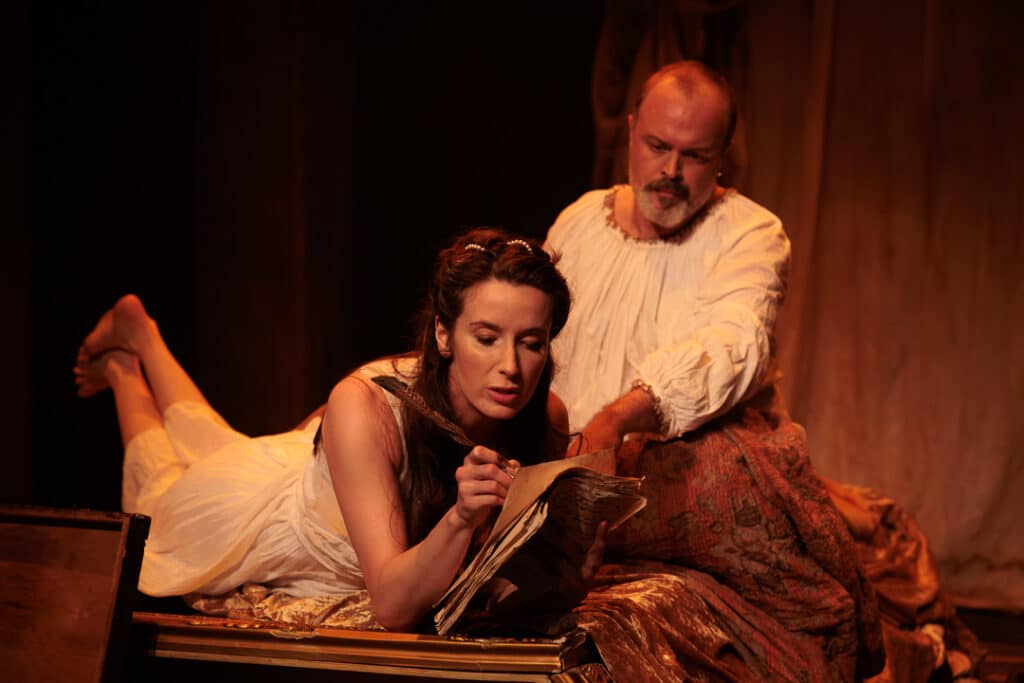
The play begins dramatically, introducing us to William Shakespeare and his mistress, Aemilia Lanyer, played by Adele Querol, who also performs the role of Venus. Adele’s solid performance as both Aemilia and Venus stood out as both characters were strong women, with Aemilia (Millie) having a voice essential to the play’s theme.

Damien Ryan brought Millie into the story as a talented poetess and stage actor during the late 1500s when women were not as valued as men and not allowed to perform on stage or be published. (Aemilia Lanyer was the first Englishwoman poet to publish a volume of original verse in 1611).

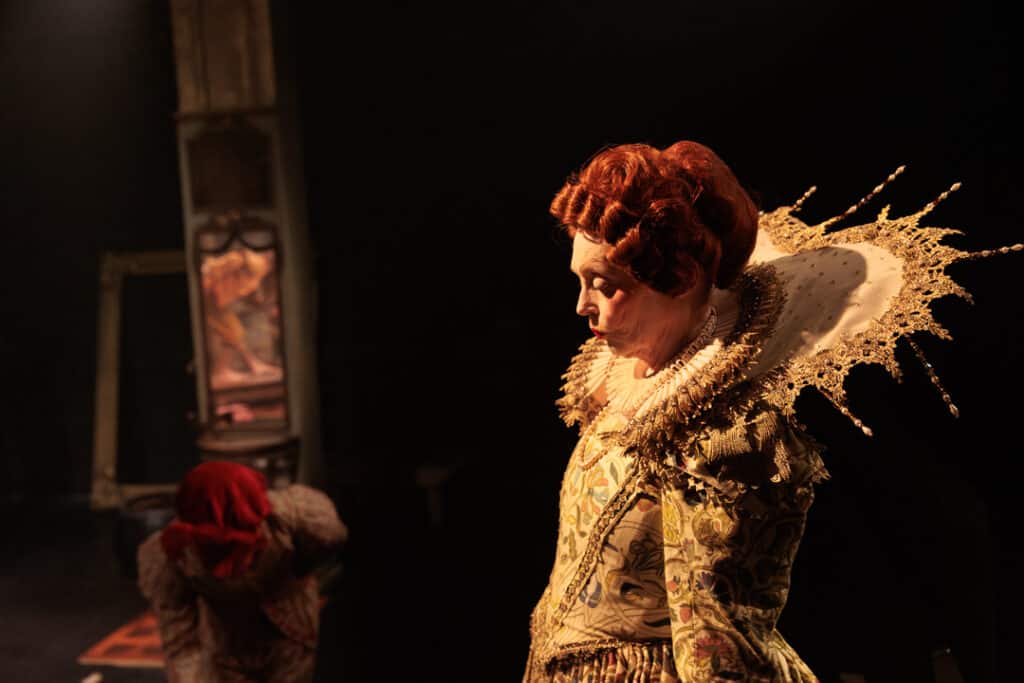
Adele brought depth when she was portraying Aemelia, who played Venus in a private performance for Queen Elizabeth I. Belinda Giblin’s version of Queen Elizabeth I was both commanding and regal, showcasing a distinct no-nonsense intelligence and sharp humour, especially toward the second half of the play.

Alongside Venus in this play for the Queen was Adonis, performed by Jerome Meyer. In the sonnet, this character was ‘hunt obsessed’ and fairly bland but was brought to life colourfully as Jerome’s portrayal of Nathaniel (Nate) Field, who took on the challenge of playing a male. Nate was previously only performing female roles.

The supporting cast in the ‘play within a play’ was outstanding, with all cast members eliciting laughs consistently. The production and careful costume design by Bernadette Ryan firmly placed us in the Tudor period.

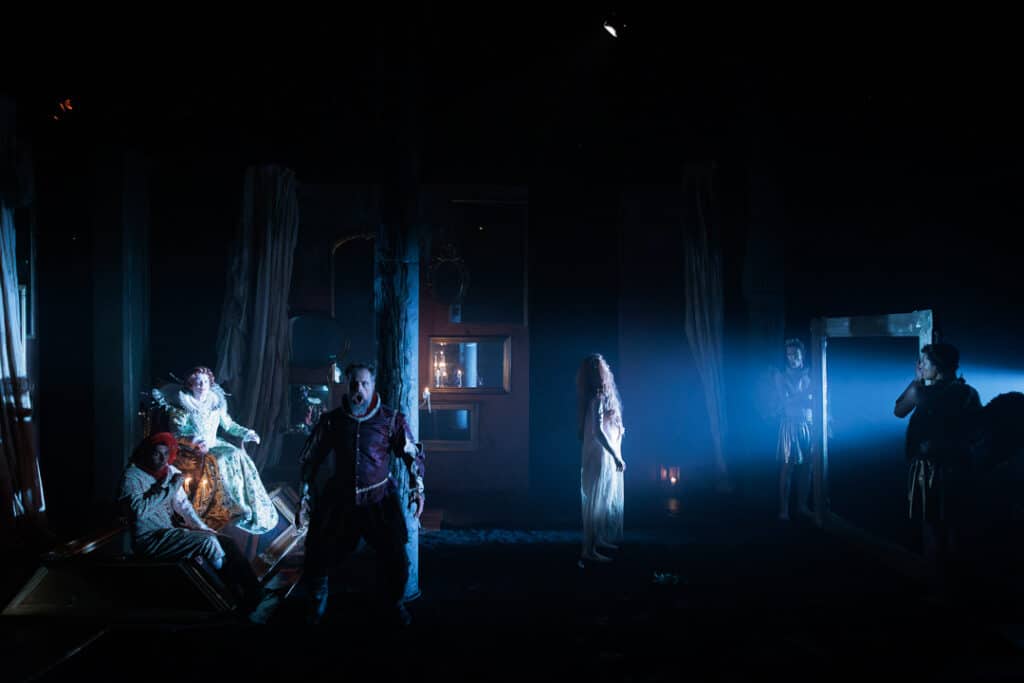
The stage was cleverly lit, with lighting designer Sophie Parker using mirrors and shadows to create atmosphere throughout the play. This was particularly poignant during an emotional scene with Hamnet Shakespeare, played by Liv Rey Laaksonen.

The use of music, composed by Jay Cameron and played whilst the characters spoke, provided the feel of a dramatic cinematic layer.

Venus and Adonis is an original stage production that I recommend for both Shakespeare fans and those who aren’t very keen on sonnets – who knows, after seeing this play, you may find yourself falling in love with the beauty of poetry.

Venus and Adonis is playing in the Reginald Theatre at The Seymour Centre, on the corner of City Rd and Cleveland St, Chippendale, between 29 September – 21 October 2023.

Duration: 165 minutes (including interval)

Tickets:

  • Full $54
  • Concession (Pensioner, Veteran, Full-time Student, Senior) $42
  • Under 35/ Groups of 8+ $39
Spread the word on your favourite platform!

Venus and Adonis
Spread the word on your favourite platform!