RUINS / أطالل 

Ruins

Ruins Rating

Click if you liked this article

9

RUINS / أطالل 

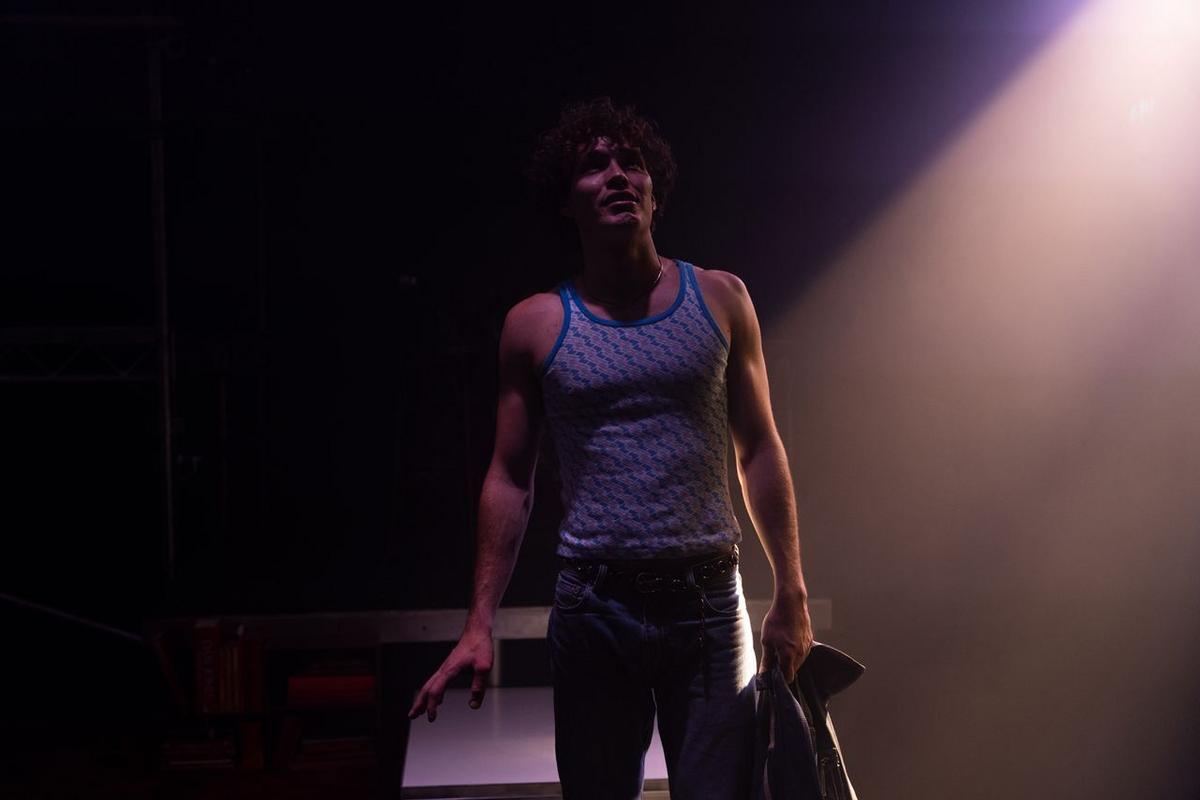
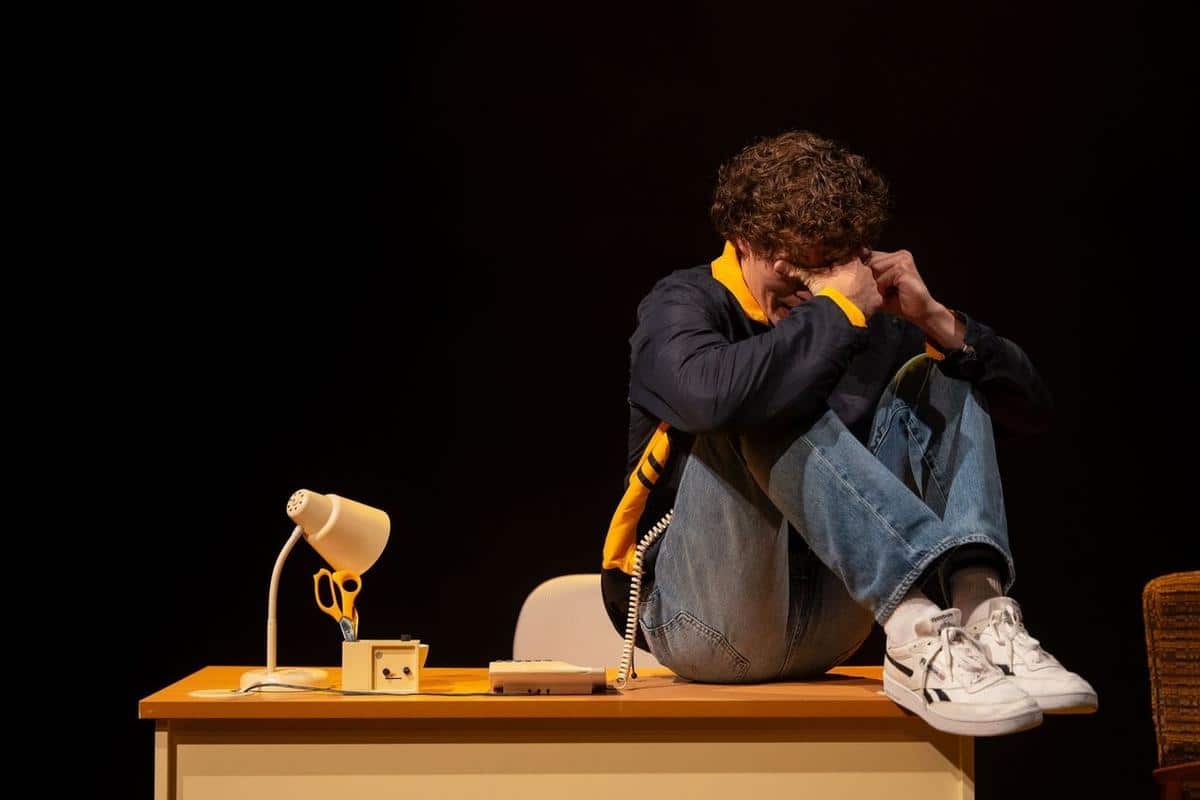
Ruins / أطالل at the Seymour Centre is a stunningly realised masterpiece of movement from Clockfire Theatre Company, devised by Emily Ayoub and Madeline Baghurst.

The play was described by the creatives as a love letter to Lebanon and the Arab Diaspora, and it’s clear from the very first seconds of the play that the love runs deep. Ruins / أطالل creates an utterly beautiful depiction of a deeply human story that at times conveyed the liveliness and beauty of Lebanon and then, at other times, took an unflinching look at the realities of war. 

Ruins / أطالل is one of the most important and relevant pieces to come to life in the current Australian theatre landscape. It’s a powerful story, exploring the complexities of grief and family, migration and sacrifice, and the power of memory. The subject matter is handled with sensitivity and emotion, creating a story that feels authentic and honest. 

Amelia is grieving the sudden loss of her father, and takes a solo trip to Lebanon that they’d planned to take together. Alongside her journey, we see her fathers last trip to Lebanon as a young man, and see how their stories intertwine in an intensely emotional journey through time and place. 


Ruins is brought to life by an incredible cast of actors that deserved every second of the standing ovation they received at the end of the play. Randa Sayed is an emotional powerhouse as Amelia, delivering an incredible performance full of vulnerability and power. Moments of humour perfectly balance the grief, delivered with perfect comedic timing by Adeeb Razzouk and Piumi Wijesundara, both of whom were able to switch deftly between humour and heartbreak at a moments notice. Tony Poli brings a groundedness and charm to his character with a remarkable performance. Youssef Sabet is spectacularly energetic, carrying his roles with ease, and Madeline Baghurst displays some of the best movement work I’ve ever seen.

Movement drove every minute of this play and created a world that invited the audience to connect. The ensemble created worlds with their movement, and had a synchronicity onstage that felt almost musical.

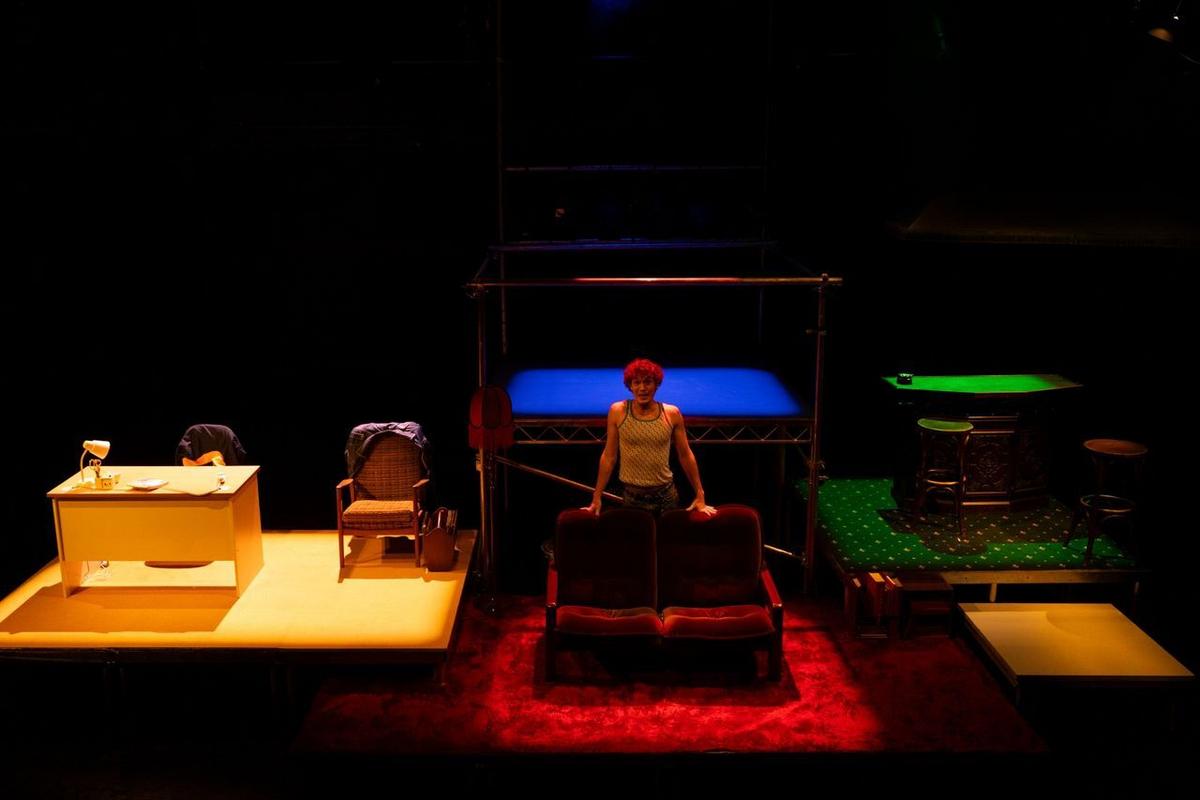
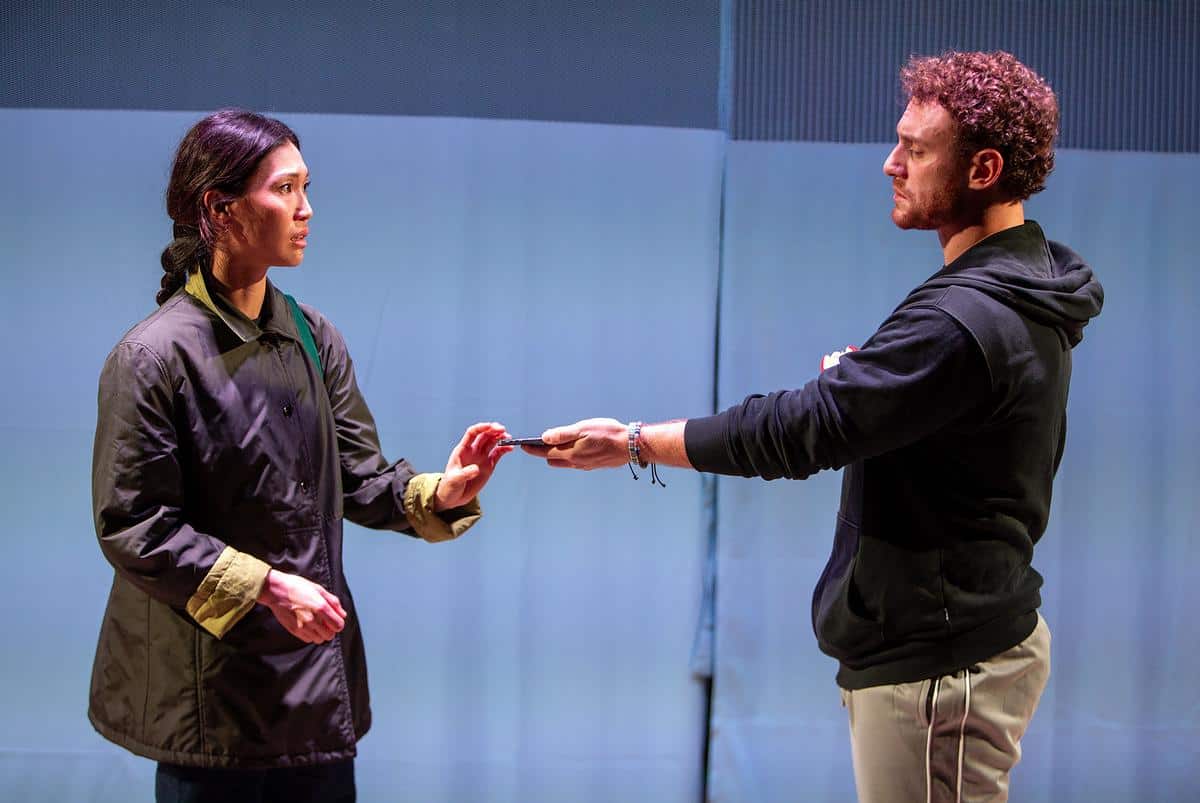
The set is stripped back and immediately intriguing, bursting with dimension. The raised stage is removed, making the most of the space and creating a sense of the vast in the intimate theatre space. Sheer fabric with rounded archways cut out of them pair beautifully with video projections to create a vivid environment that brings the story to life without distracting from the main elements of the story. Transformation is a key part of the genius of this set design, with minimal props and set pieces inventively used to convey a multitude of spaces. 

Projections and music were beautiful accompaniments to the action onstage, and the live flute performances were a gorgeous addition to the beautifully designed soundscapes. 

The language was a beautiful mix of English and Arabic, that elicited the sense of musicality within the language. Projected subtitles make it accessible for non- Arabic speakers, but even the scenes that weren’t given subtitles felt accessible through movement and tone. 

Ruins / أطالل is exquisitely moving, and utterly devastating, full of flawlessly executed movement pieces, creating something transcendently beautiful. 

Ruins / أطالل is playing at the Seymour Centre until October 18th.

To book tickets to Ruins, please visit https://www.seymourcentre.com/event/ruins/.

Photographer: Geoff Maggee

Spread the word on your favourite platform!

Courage and Love in The Face of Jizo

The Face of Jizo

The Face of Jizo Rating

Click if you liked this article

2

Japanese playwright Hisashi Inoue’s script must make for some tender reading. Translated by his long-time friend, Australian Roger Pulvers, The Face of Jizo is brought to life onstage inside the intimate space of the Reginald Theatre by co-director and actor Shingo Usami and Mayu Iwasaki. Omusubi Production’s The Face of Jizo delicately unravels the ache in a heart, drawing the audience in for an emotional journey for a sensitive topic.

Set in the aftermath some three years after the dropping of the atomic bomb, the story opens to a severe thunderstorm. Lightning flashes and Mitsue (Iwasaki) umbrella in hand, enters her house, (a neat shack, designed with Japanese authenticity by Tobhiyah Stone Feller) with elevated tatami mats and a small, tidy kitchen. She is terrified. Calling for her father, “Daddy, I’m scared!” her father appears and there, Takezo (Usami) calms her, and we see the first glimpse into a beautiful father and daughter relationship. He tells her, “You got your reasons for being scared and you shouldn’t be ashamed of it. Nobody blames the victim of the bomb for getting shook up over something that flashes, even if it’s just an innocent little firefly.” I loved the significance of Takezo’s reference to a firefly; it beautifully captures how even something as small and delicate as a firefly can traumatise the innocence of the victims, making their pain all the more poignant and justified.

Mitsue’s job as a librarian brings her in contact with Kinoshita, (unseen) a man who collects items related to the atom bomb. Mitsue is in possession of some items, notably the face of Jizo, the guardian of children and travellers, which is half destroyed in war. A blooming relationship appears to be growing, but as the audience hears, Mitsue’s belief in finding true happiness for herself is shadowed with self-sabotage. Iwasaki brought the barbed sharpness of survivor’s guilt pain to the stage in a raw and genuine performance that brought tears to my eyes, and I know I was not the only one in the theatre who felt this deeply.


In this performance, on the 80-year anniversary in August 2025, it felt one message was clear; an act of inhumanity affects everyone – the innocents, for years to come and this unnatural act should never occur again. Despite the tears though, The Face of Jizo is a story of hope, love and courage. Usami’s portrayal of Takezo was captivating; his blending of a wise, paternal presence with a playful, larger-than-life humour added depth, warmth and levity to some scenes.

Composer Me-Lee Hay created a backdrop to Hiroshima in the late 1940’s with some beautiful music to accompany some scenes, as did Zachary Saric’s sound design throughout the play. The lighting by Max Cox captured the horror of the atomic bomb’s flashes, conveying an unspeakable event.

The vision of co-directors David Lynch and Shingo Usami for this timely production was outstanding, with their insight enhancing the emotional impact for which it was intended.
The Face of Jizo, a Japanese / Australian production in the Seymour Centre is theatre that tenderly addresses generational trauma as well as imparting courage and resilience.

The performance I attended on opening night, August 22, was a sold-out show that concluded with a well-deserved standing ovation. I highly recommend watching The Face of Jizo, as it is sure to continue moving audiences throughout the entire run.

Seymour Centre: Corner of City Road and Cleveland St, Chippendale
Season: 21 August – 6 September 2025
Time: 80 minutes, no interval
Tickets: www.seymourcentre.com/event/the-face-of-jizo

To book tickets to The Face of Jizo, please visit https://www.seymourcentre.com/event/the-face-of-jizo/.

Photographer: Kathy Luu

Spread the word on your favourite platform!

Eureka Day

Eureka Day

Eureka Day Rating

Click if you liked this article

1

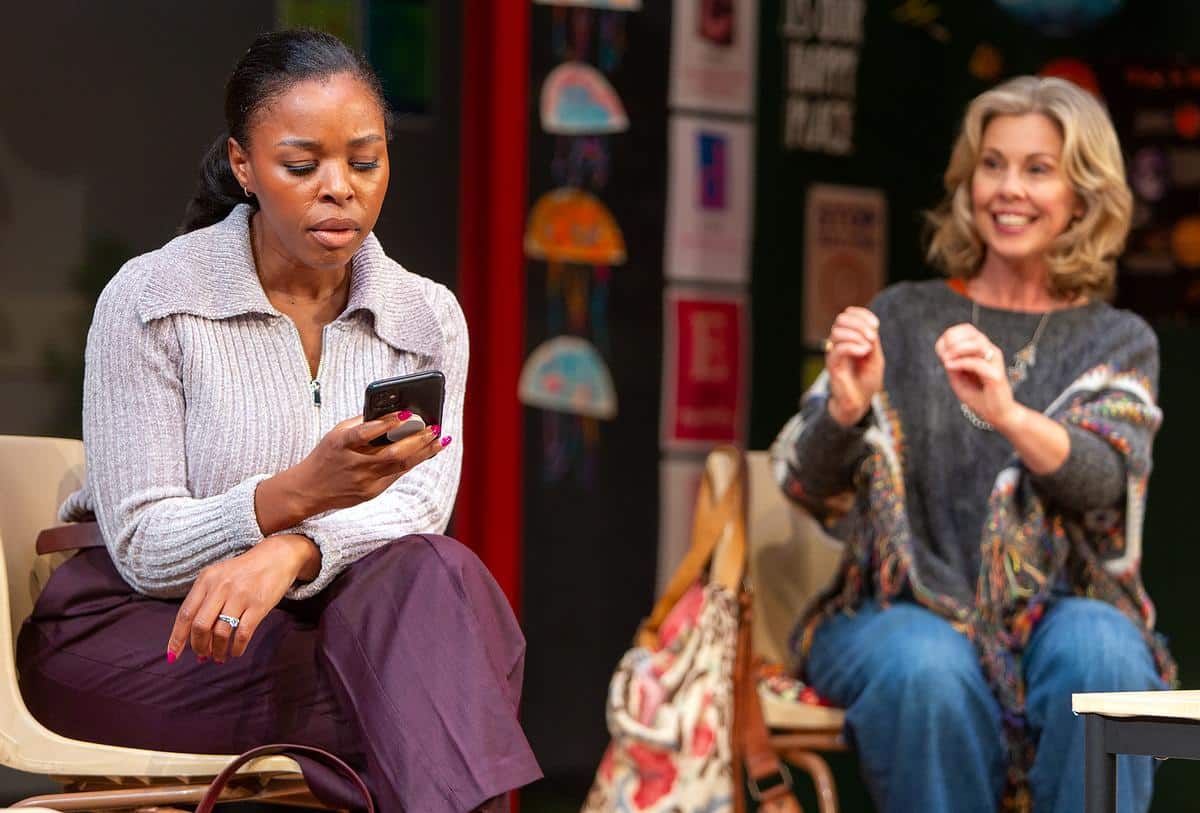
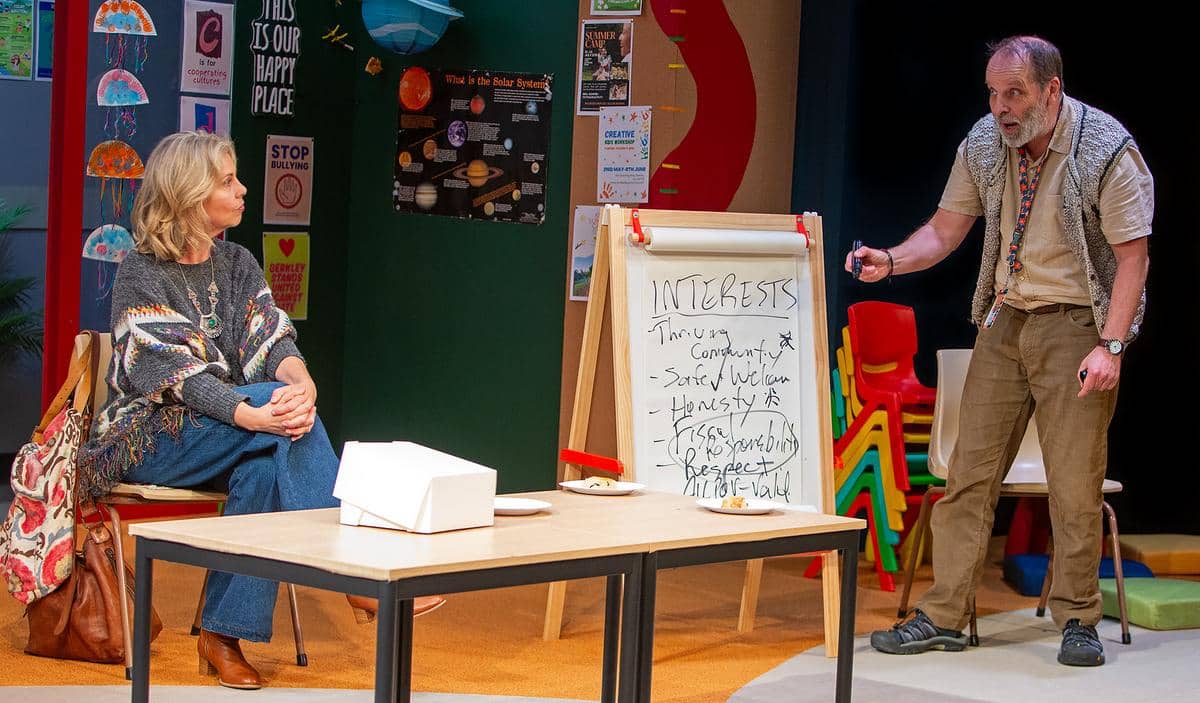
In Eureka Day, Jonathan Spector’s razor-sharp satire of liberal consensus and public health anxiety, a seemingly progressive Californian school board descends into chaos over a mumps outbreak. But what could easily become a smug send-up of anti-vaxxers and virtue-signallers is instead something more nuanced, uncomfortable, and timely. Under Craig Baldwin’s deft direction, Outhouse Theatre Co’s production at the Seymour Centre lands every comic beat while never losing sight of the emotional truths buried beneath the surface.

Although the play is distinctly American in setting, this Australian staging loses none of its relevance. The characters feel instantly recognisable, the debates all too familiar. This is a story not just about vaccines, but about what happens when our desire for clarity and reassurance collides with ambiguity, grief, and fractured trust.

Katrina Retallick is particularly compelling as Suzanne, the new age, soy latte-sipping board member whose calm certainty masks deep personal pain. She walks the tightrope between satire and sincerity with precision, making Suzanne both maddening and deeply human. When the character’s backstory is revealed, Retallick’s performance shifts into something tragic—an aching portrayal of a parent failed by the institutions she once believed in.

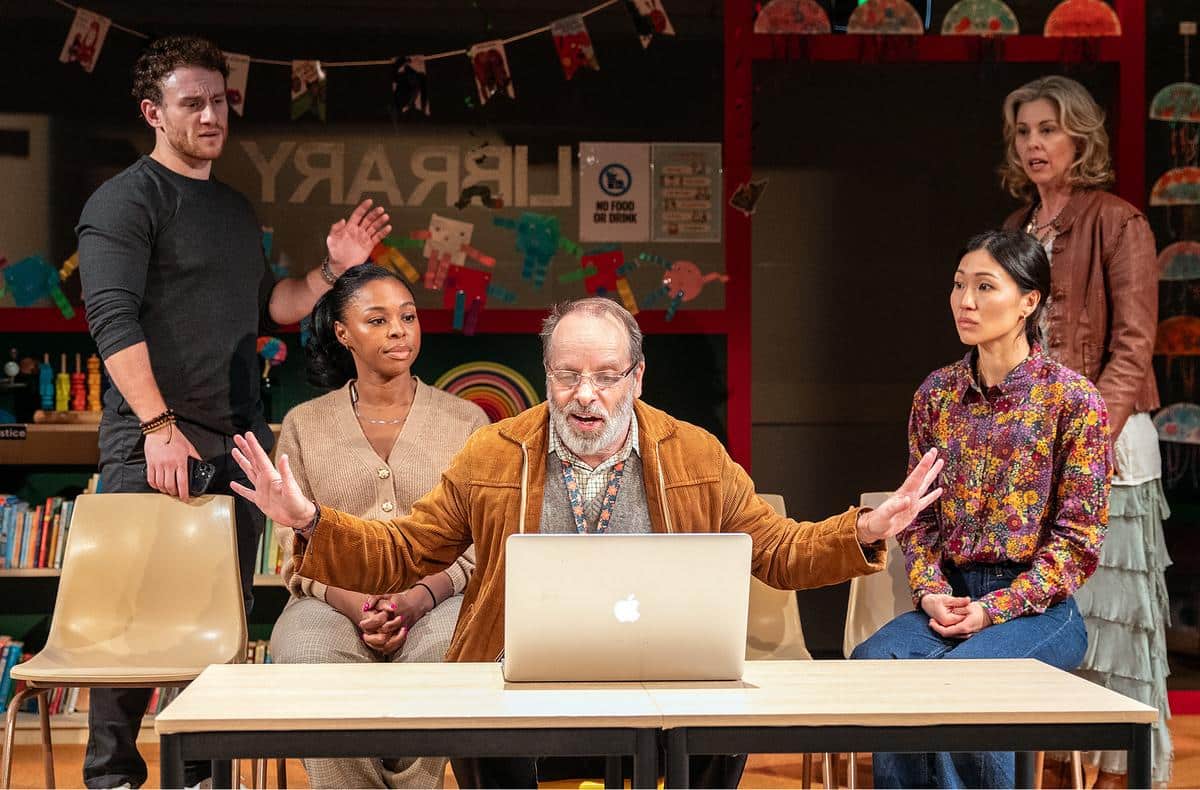
Jamie Oxenbould’s Don is equally affecting. The embodiment of well-meaning, moderate liberalism, Don wants nothing more than to keep everyone happy. Oxenbould captures his charm and diplomacy perfectly, but also lets us see the cracks forming under the strain of trying to appease all sides. His unravelling in the brilliantly staged Zoom scene is as funny as it is painfully relatable.

Deborah An brings a quiet strength to May, initially playing her as a reserved and observant figure. But as the stakes rise, An reveals the steel beneath the calm, delivering a performance that builds patiently to a moment of quiet triumph. Christian Charisou’s Eli enters bold and brash, full of passionate conviction, but undergoes one of the play’s most significant emotional shifts. His transformation, grounded in his role as a father, adds weight and tenderness to a character that could easily become just a mouthpiece.

As Carina, Branden Christine is a standout. Starting off as a newcomer eager not to step on toes, she grows into a voice of clarity and compassion. Her confrontation with Suzanne doesn’t just showcase moral courage, but also the empathy that gives the scene its emotional punch. Christine subtly anchors the play’s message: that we must speak up for what we believe in, but also make space to truly hear one another.

Technically, the production is sharp and inventive. The colourful, clean set provides a visual cue for the play’s early optimism, which contrasts starkly with the bleakness of the later hospital scene. The use of live projection, sound, and lighting in the Zoom sequence is a highlight—expertly timed, uproariously funny, and all too recognisable to anyone who survived the remote meeting era.

Eureka Day is a biting, intelligent, and unexpectedly moving production. Outhouse Theatre Co has created a version that speaks directly to Australian audiences, reminding us that the messiness of democracy—and of parenting—has no borders. It’s as hilarious as it is human, and well worth seeing.

To book tickets to Eureka Day, please visit https://www.seymourcentre.com/event/eureka-day/.

Photographer: Richard Farland

Spread the word on your favourite platform!

Meet The Actor – Deborah An

Deborah An

Greetings, theatre enthusiasts! Today, we’re delighted to feature a star from the upcoming production of Eureka Day at the Reginald Theatre. Our guest has journeyed through diverse characters on stage and screen, bringing a unique blend of charm and depth to every role. As we gear up for the show’s premiere, let’s dive into the world of our talented actor and discover their passion for the craft.

About Deborah An

Why do you want to be an actor?

From the age of six, I wanted to be everything when I grew up: a ballerina, an astronaut, a teacher, police officer, mermaid, lawyer, veterinarian, painter, pilot. You get the idea. Everything. Around the age of 10, I discovered the reason I wanted to be all these things was because I saw them in movies. It was then that I realised the only profession I could pursue that would allow me to be all of these people was acting. But don’t get me wrong, I still – and on a sometimes regular basis – consider changing careers. The thing is I always come back to acting. And let’s be honest, we can’t all be Jonny Kim (Google him if you need to).

What do you enjoy most about acting?

When you step into a character, you have no choice but to see the world through their perspective. Sometimes your character holds similarities to you as the actor, but when they don’t, it’s a challenge. Even more than a challenge, it’s an opportunity to confront your own ideals, worldview and sometimes fears. No matter who the character is, I always walk away at the end of a production feeling like I’ve evolved as a person, and that’s what I love about acting.

What has been your favourite role so far in your career?

This is such a tricky question! If I had to choose one, it would be Min Jee in Night Bloomers on SBS. It was the first time I spoke Korean on camera and also the first time I died on camera! Don’t worry, it’s an anthology, that wasn’t a huge spoiler. The whole creative team, the writers, directors and most of the actors were all Korean and that was pretty special to me.

What do you think makes a performance most believable?

This is something I struggle with in my day to day life, but I think LISTENING. When you stop just hearing the words someone else is saying because you’re too busy trying to think of what you’re going to say next, and start actively listening, it makes you present and responsive. But to be honest it can actually be quite exhausting. Haha.

How do you maintain your physical and emotional health while working on demanding projects?

Prioritising the basics like eating and sleeping well, I find, goes a loooong way. Outside of pure survival though, if I know I’m going to be flat out for X period, I’ll let my friends know I won’t be seeing them for a few weeks, or in some cases months. I can be quite an introvert, so the last thing I want to do after a long week is socialise on the weekend. My friends know me well enough by now not to take it personally. Bless them. Physically, I like walking my dog to the park or beach, which helps emotionally too. I also love cleaning the house and meal prepping, so that becomes almost a meditative ritual for me. I think it comes down to knowing what you need and scheduling time for that.

Is there anything else you’d like to add?

Outhouse Theatre Co and Seymour Centre present Jonathan Spector’s ‘Eureka Day’ at the Reginald Theatre from 29th May to 21st June!

Where can patrons purchase tickets to this production?

To book tickets to Eureka Day, please visit https://www.seymourcentre.com/event/eureka-day/.

Thank you so much for sharing your incredible journey and insights with us! Break a leg in *Eureka Day*; we can’t wait to see you bring the Reginald Theatre to life. Cheers to an amazing run!

Other interviews can be viewed in our Meet The Performer Series.

Spread the word on your favourite platform!