‘To Save Your Soul, Shake Your Soul.’

Daytime Deewane

Daytime Deewane Rating

★★★★★

Click if you liked this article

3

Daytime Deewane is an uplifting and high-energy play by award-winning UK writer Azan Ahmed, written from, in his words, ‘a place of radical joy. ‘

The play dives into the 1990s’ era of London’s daytime raves, when brown men were often excluded from nightclubs, forbidden to share public space with non-Asians. To circumvent this, young brown men from the Asian diaspora converged on nightclubs between 3pm and 6pm to lose themselves in the cultural euphoria of Bhangra music and dance.

Racism and identity and the ways in which they perniciously intertwine are the overarching themes of Daytime Deewane. For example, if you’re told enough times that your brown or black skin makes you inferior, odds are you might come to inhabit
this self-belief.

Directed by Iranian-Australian Sepy Baghaei (Wish You Were Here, Gate Theatre), Daytime Deewane introduces Muslim cousins, Farhan (Ariyan Sharma) and Sadiq (Ashan Kumar). Both young men are heavily burdened by generational family expectations of them to be ‘good Muslim boys’ and ‘proper British men’ 1. It is 1997 and they are at the last ever London daytime rave. Bhangra music plays, a dhol drum beats hauntingly. Here is a safe space in which they can fully immerse themselves into the euphoric music and dance, a place to celebrate culture and free expression.

Farhan is the quiet cousin, the conformist to Sadiq’s rebel. They argue, disagree, plead, weep, push and shove. They only have until 6pm to come up with the solutions to their questions. This is, after all, the final daytime rave.


Playwright Ahmed brilliantly weaves spoken word with Bhangra music and dance, lending a sense of urgency to the play. Each of these elements synergise exquisitely with the other, with Bhangra the conduit that unites Farhan and Sadiq in their explorations of self. The language of the play is poetic, tender in places, angry and bold in others. Short pauses in dialogue allow the audience to digest the nuances and complexities at hand during that racially divisive time in London’s history.

Ariyan Sharma (STC, Dear Evan Hansen) as Farhan is terrific casting. His portrayal is rich with humour and compassion, his belief in the unbreakable bond of cousins is touching and evocative. The audience laughed, cried, cheered him on. His interactions with the audience were engaging and highly entertaining. He brings humour and compassion to the role, his whimsical facial expressions are timed perfectly, and yes, he can dance!

Sadiq is played by Ashan Kumar (MainStage Debut). He dresses gangsta-style, soccer hoodie, baggy denim jeans with chains, thick silver jewellery, and sports a flip-top Motorola. Kumar inhabits Sadiq – he is angry, funny, tender, loud, despairing and inherently likeable. He speaks volumes with expressive hand and arm gestures that intensify every spoken word. His audience interaction was hilarious.

The set clearly reflected a 1990s’ nightclub with strip lighting on the floor, shooting strobes, and neon green strip lighting on the ceiling. During the dance components, the light show brought the stage to brilliant life.

Daytime Deewane is a thoroughly enjoyable, immersive production richly imbued with the playwright’s ‘radical joy.’ Don’t miss it!

To book tickets to Daytime Deewane, please visit https://riversideparramatta.com.au/whats-on/daytime-deewane/.

Photographer: Phil Erbacher
Spread the word on your favourite platform!

Seed Hunters – A Global Movement for a Better World?

Seed Hunters

Seed Hunters Rating

★★★★★

Click if you liked this article

1

What if the world we live in could be peaceful? This is one wish that many people, me included, could hope for in our lifetime. What if people could make this happen by conceiving children who will become men who are less aggressive and less of the “toxic tough guy”?

Scene Theatre Sydney’s play, Seed Hunters, made its premiere debut at the Pitt St Uniting Performance Space, and this question is one which is explored by a group of women. They are known as “Seed Hunters”. This is a movement of women from all over the world who, based on science, they believe that men of mixed ancestry are more likely to be more intelligent and less combative.

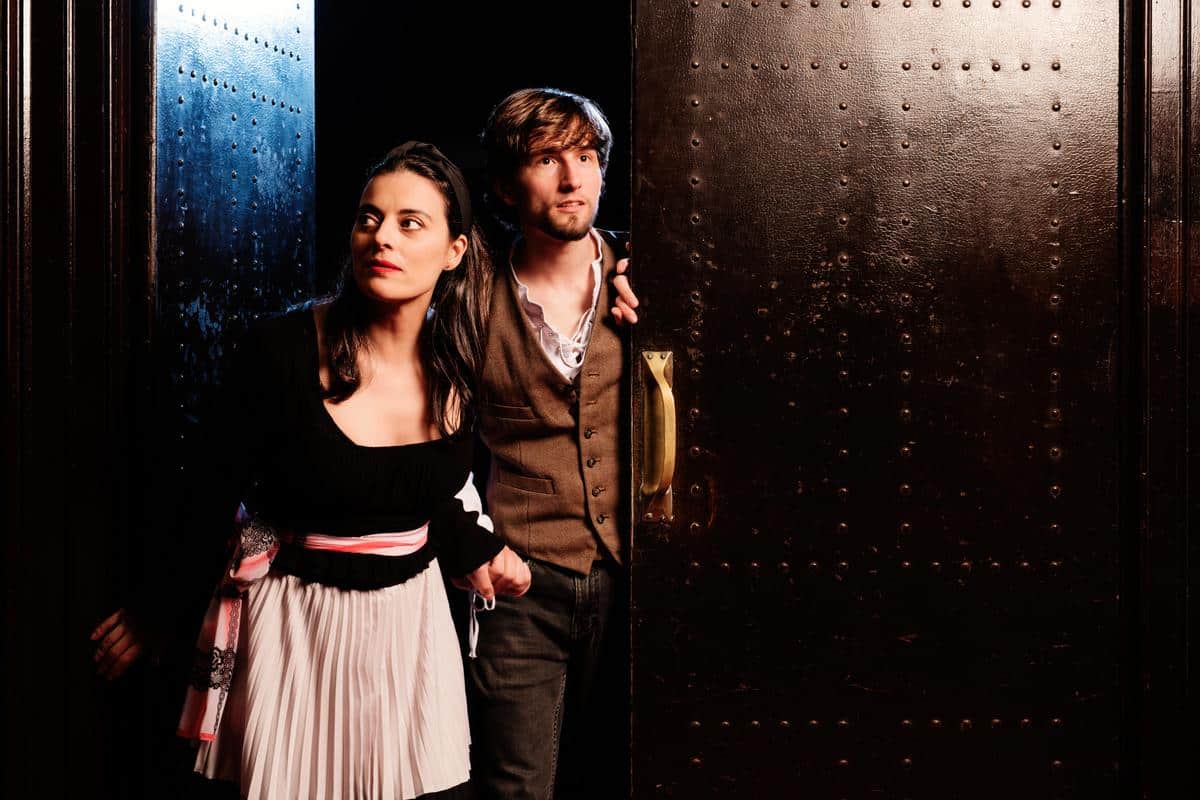
Set in Peking in 1976, students are invited by the Chinese government into a post-Mao world. It’s here that Rosa (portrayed by Fabiola Pellegrino) attempts to seduce a young Australian named Bob (played by Micah Doughty). Nearly 40 years later in present time in Australia, Bob discovers his niece Bridget (portrayed by Julia Grace) is a part of the Seed Hunters movement.

Julia Grace delivered an earnest and compelling performance as Bridget, capturing her youthful idealism and determination. She investigates women’s groups in ancient Greece, the Hopi Indians in Arizona, and various other women who study men, all in search of the perfect match. Bridget befriends Larry (played by Oliver Harcourt) and the audience learns what it is she wants from him. (“I need Larry and his mixed-up genes”)


Meanwhile, Bridget’s sister Sarah (Madison Chippendale) returns home to be reunited with her. She has news of her own. Larry’s brother Jack (Theo Rule), a kids show host with no kids of his own, reacts with shock when he learns of Bridget’s plan. The girls’ grandmother, Dorothy (Joan Rodd), takes the opportunity to share her thoughts directly with her granddaughters.

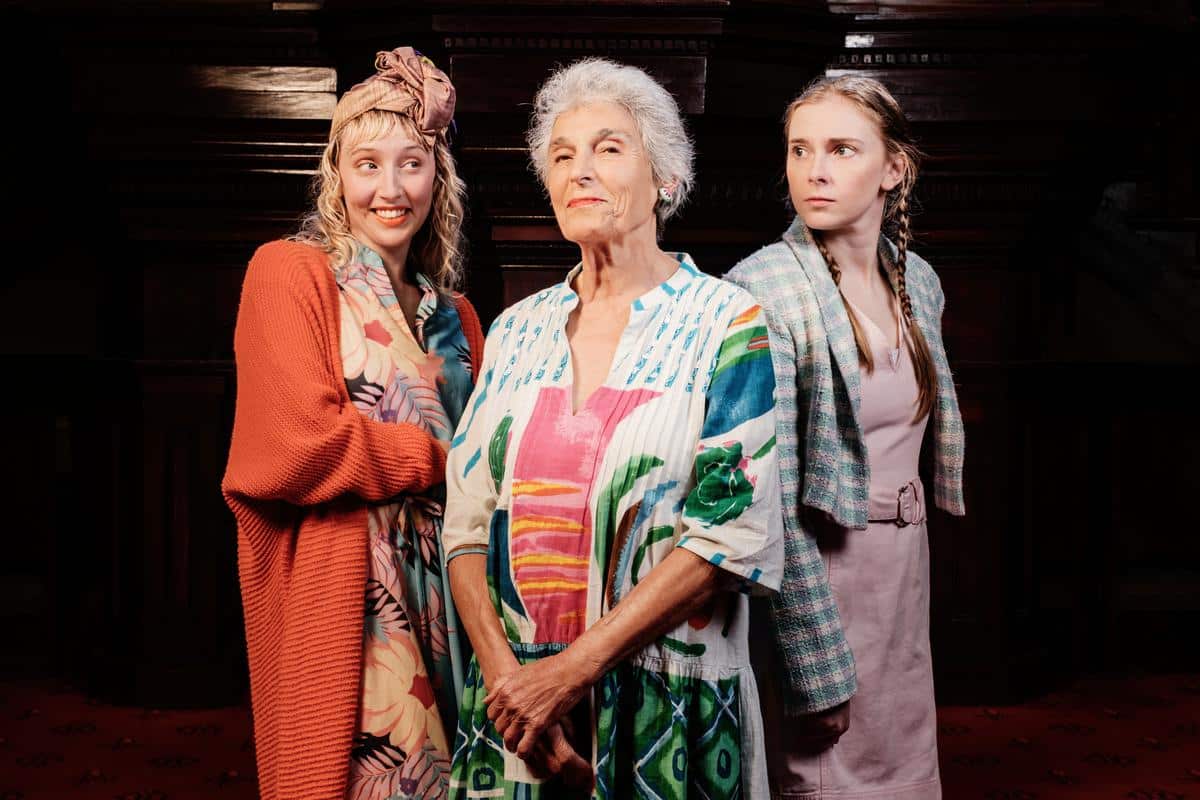
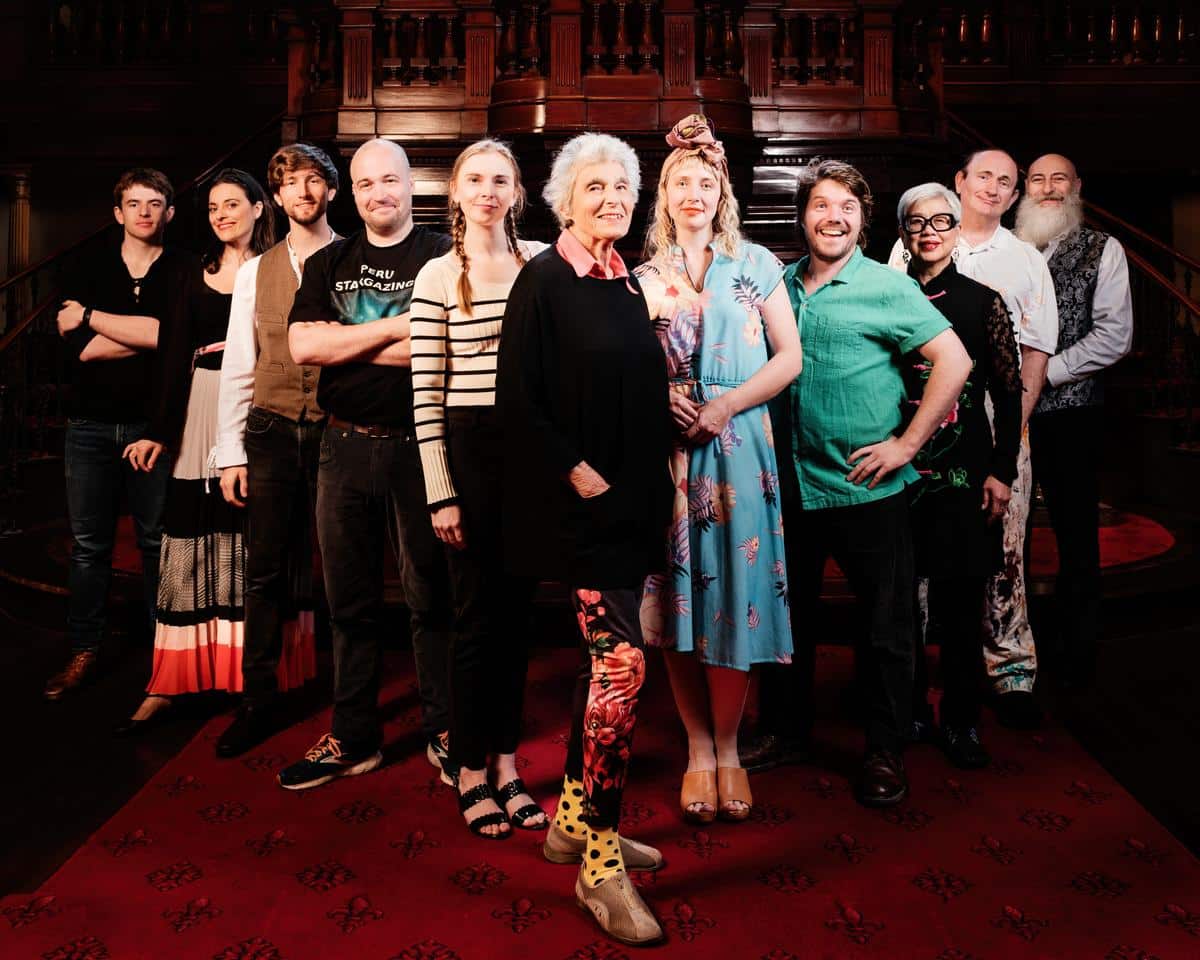
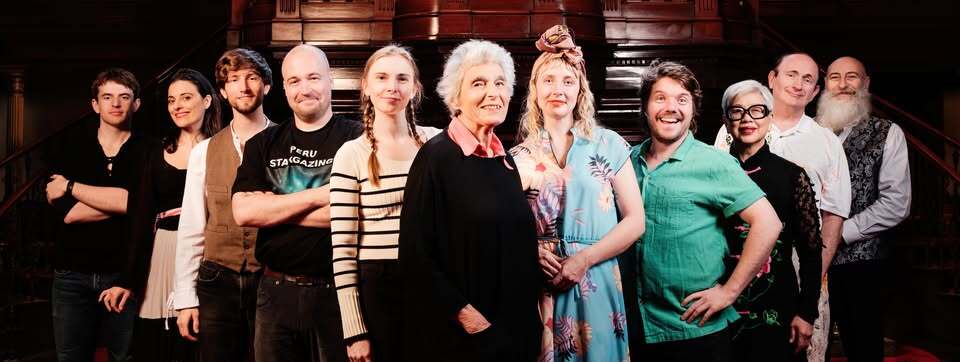
There are a lot of characters in Seed Hunters – with a cast of eleven sharing the stage, telling their different stories interwoven with art, the stars and history. The director Melissa Paris reminds us that “the seeds of transformation are planted by real people…whether through protest, parenting, music, art or simply refusing to stay silent, their stories echo today’s struggle and dreams.” Themes of self-identity and grief were intermingled with family dynamics.

The cast also took on various tasks, such as turning pages on a stand positioned at one side that displayed the names of the characters’ locations. These titles might have been more visible if they were larger or positioned slightly higher. The staging featured multiple levels, and a sense of intimacy was achieved through the characters’ interactions along the central aisle. However, since the play took place in a large venue with a high ceiling, I occasionally had trouble hearing some of the dialogue. Seed Hunters sound and lighting designer Jay Murrin chose some songs which were beautiful, providing the perfect atmosphere that complemented the scenes.

On leaving this performance, there were a few discussion points that came up from this very interesting concept. What will this seed hunters movement evolve into, in the future? Is this the way leading to a peaceful world?

Seed Hunters was written by Australian playwright Carol Dance.
Season run: October 17 – October 26 2025
Venue: Pitt Street Uniting Church Performance Space, 264 Pitt St, Sydney
Duration: Approximately 105 minutes
Tickets: Students $35, Concession/ Senior $45, Adults $55
www.ticketebo.com.au/scene-theatre-sydney/seed-hunters

To book tickets to Seed Hunters, please visit https://www.scenetheatresydney.net.au/seed-hunters.

Photographer: Robert Catto

Spread the word on your favourite platform!

The Weathering

The Weathering

The Weathering Rating

★★★★★

Click if you liked this article

7

The Weathering is an extraordinary fusion of movement, sound, projection, and puppetry, a bold new work from Fusion Theatre’s inclusive ensemble that resonates long after the final moment fades into darkness. Directed by Darcy McGaw and Jo Raphael, this poetic and deeply human production transforms the urgent realities of climate change into a visceral, sensory experience.

From the first moments, the performers command the stage through their physicality. Their bodies become landscapes, trembling trees, surging waves, shifting winds — embodying both the fragility and ferocity of a planet under pressure. The use of light and darkness creates a haunting rhythm, as projections wash across the stage like passing weather fronts. At times, the performers seem to dissolve into these shifting visuals, blurring the line between human and environment.

The original soundscape adds another layer of emotional texture. Whispers of rain, the low rumble of thunder, and fragments of breath and song create a world that feels at once intimate and immense. The puppetry, too, is quietly powerful — delicate yet evocative, revealing the interconnection between people and nature in ways words alone could never capture.


What makes The Weathering so compelling is the way it seems to capture opposing forces in its grip. It holds space for both helplessness and hope, for the chaos of the storm and the calm that follows. The pacing shifts fluidly between frenzy and stillness, echoing the unpredictable rhythms of the natural world. There are moments of silence that feel deafening, and bursts of movement that feel like the earth itself is speaking.

At its core, this is a show with immense heart. It gives voice to those who are too often excluded from conversations about the climate crisis — voices that are essential, urgent, and profoundly moving. The ensemble’s commitment shines through every gesture, every sound, every flicker of light.

McGaw and Raphael have crafted a work that feels both timely and timeless. The Weathering doesn’t just ask us to think about the world we’re losing — it invites us to feel it, to grieve it, and ultimately, to imagine how we might begin again.

To book tickets to The Weathering , please visit https://www.theatreworks.org.au/2025/the-weathering.

Spread the word on your favourite platform!

Ethnically Ambiguous

Ethnically Ambiguous

Ethnically Ambiguous Rating

★★★★★

Click if you liked this article

Ethnically Ambiguous is a silly and heartfelt comedy that explores three actors disappointing experiences as culturally diverse individuals in a shallow industry. Max Nunes-Cesar, Jo Malta and Zac Rose created and performed Ethnically Ambiguous as an exploration and presentation of their upsetting experiences as actors. This show contained a skit like format, moving between storytelling, faux game shows, musical numbers, and heartfelt monologues. This show also broke the fourth wall in frequently funny ways.

Ethnically Ambiguous contained a plethora of clever self-referential jokes and audience participation. The most powerful audience participation is the game of ‘guess the ethnicity’ with a wheel of origin as a practical gag. This worked well in combination with the actors and creators, it had an immediate and powerful impact on the audience. This skit was a clear and powerful moment of the actors creating tension, and using themselves and their experiences to cut the tension and connect with the audience.

The actors felt authentic, which makes sense given their roles as creators of the show, sharing their own experiences of the world. In particular, Zac Rose stood out as a powerful story teller, conveying his experiences and personal narrative in a touching and meaningful way. Rose was able to explore his ongoing feelings of shame and guilt, accepting that his ancestors were discriminated against because of the colour of their skin, and acknowledging that he carries the trauma of those experience, with the understanding that no one can see it, and he doesn’t experience it himself (due to his white passing presentation). Rose is told by his friends that “you choose what defines you,” as he decides to reclaim his sense of self, and falls into a space of acceptance.


The show’s theme of disconnection of perception and sense of self was well established and maintained. However, the show at times lacked direction and focus, with skits between the characters stagnating the pacing of the show. There were moments of the show that felt non-sensical. A sharp and clear perspective was missing at times, which meant the impetus of the show fell flat. As a result, the long-lasting impact of the show might not be as clear as the creators intended.

Acting is a visual and audible job, how you look and sound impacts how you are perceived, and although Nunes-Cesar, Malta and Rose don’t state it, to me it felt that it important to recognise and accept that there are things you cannot change, like the colour of your skin. This show reminded me that one’s sense of self, confidence, and acceptance of self should be tied to who you are, rather than the success you find in your career.

Ultimately, I came out of this show with the knowledge that pursuing a career in acting is risky, idealistic and irrational, and I’m glad Nunes-Cesar, Malta, and Rose are doing it.

To book tickets to Ethnically Ambiguous, please visit https://www.melbournefringe.com.au/whats-on/events/ethnically-ambiguous.

Spread the word on your favourite platform!

Subscribe to What's The Show

Reviews, show news and what is on, straight to your inbox.