Dial M for Murder – A Killer Thriller at the Ensemble Theatre

Dial M for Murder

Dial M for Murder Rating

Click if you liked this article

Where can you find yourself as an observer to a murder, a diabolical plot and the twists and turns of an inverted mystery? Onstage at the Ensemble Theatre’s Australian premiere of Dial M for Murder! Jeffrey Hatcher’s adaptation of Frederick Knott’s 1952 stage thriller masterfully explores classic motives for murder—fear, jealousy, revenge and greed—through a script that continuously kept me guessing about how the story would ultimately unfold.

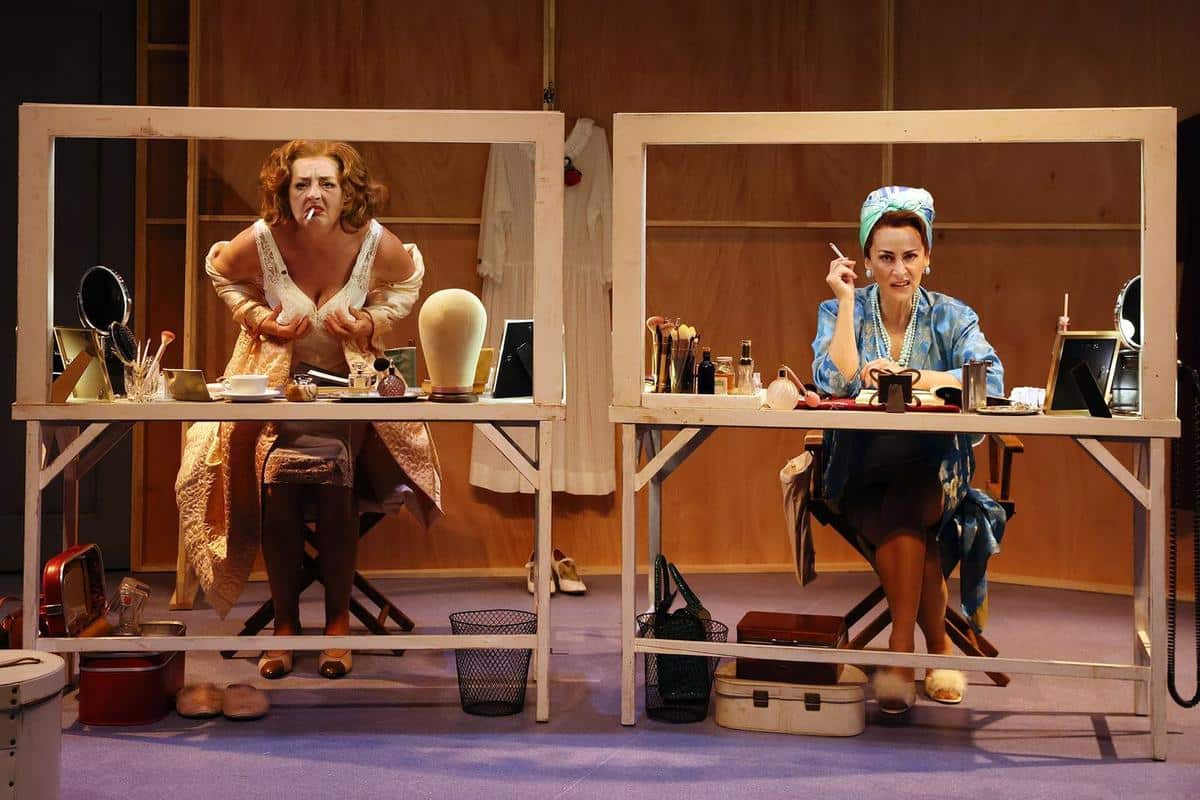
Set in the 1950’s, two women reunite in London after an absence of time. Set and costume designer Nick Fry added small details which enhanced this period. There’s a rotary dial phone sitting on a wooden stand and art deco furniture in the loungeroom. Sitting together on the couch, a stylishly dressed Margot (Anna Samson) asks Maxine (Madeleine Jones) “How would you murder me?” Maxine begins to casually list, in alphabetical order, several ways that she could kill her. This was an intriguing start to the play, and we learn that Maxine is a writer of murder thriller novels. One of Hatcher’s changes to the original script features Maxine as a female (originally a male), giving a modern update to the story with these two characters being secret lovers in a lesbian relationship, even though Margot was married.

The cleverness of Hatcher’s script is hidden in the breadcrumbs of clues he leaves along the way. In this opening conversation, certain details are hinted at that the audience might not immediately notice but will later have an “aha” moment upon reflection. There is one method mentioned by Maxine highlighted in the characters’ conversation, and it is indeed used in a future scene which appears to throw some suspicion on Maxine.


There are many layers in Dial M for Murder, which could have gotten sticky if not for the wonderful way the director Mark Kilmurry kept the play at a suspenseful pace. Margot’s husband Tony Wendice (Garth Holcombe) wants his wife dead, Captain Lesgate (David Soncin) and Maxine find themselves involved in this situation and Inspector Hubbard (Kenneth Moraleda) is driven to discover the truth. Everyone finds themselves in a tangled web of misinformation and intrigue. As a ‘whodunnit’ mystery murder it is inverted because the audience knows exactly what happened and ‘who did it’ right from the beginning. Then we experience how the detective figures it out. Kenneth as the Inspector reminded me of Columbo and his almost bumbling way of cloaking what he was thinking to appear not so intelligent, until he lays out the crime and you realise how brilliantly logical his mind worked.

Anna Samson brought depth into her character Margot, showing her character’s vulnerability. Her stillness in the aftermath of a tragedy showed reality bleeding into her consciousness and it was powerful. Kudos to Madeleine Jones for Maxine’s broad New York accent.

Garth Holcombe was simply outstanding as Tony! Standing tall dressed impeccably in a dark suit, he appeared as an upper-class suave gentleman. However, it wasn’t long before the audience saw the real Tony; a smug, sneaky, and malicious man intent on carrying out ‘the perfect crime’ to kill his wife. It wasn’t so much in his dialogue, but in the quiet, small, almost imperceptible movements he made – such as a twitch of his mouth or a shift of his eyes that Garth performed which screamed loudly of Tony’s duplicitous and arrogant nature.

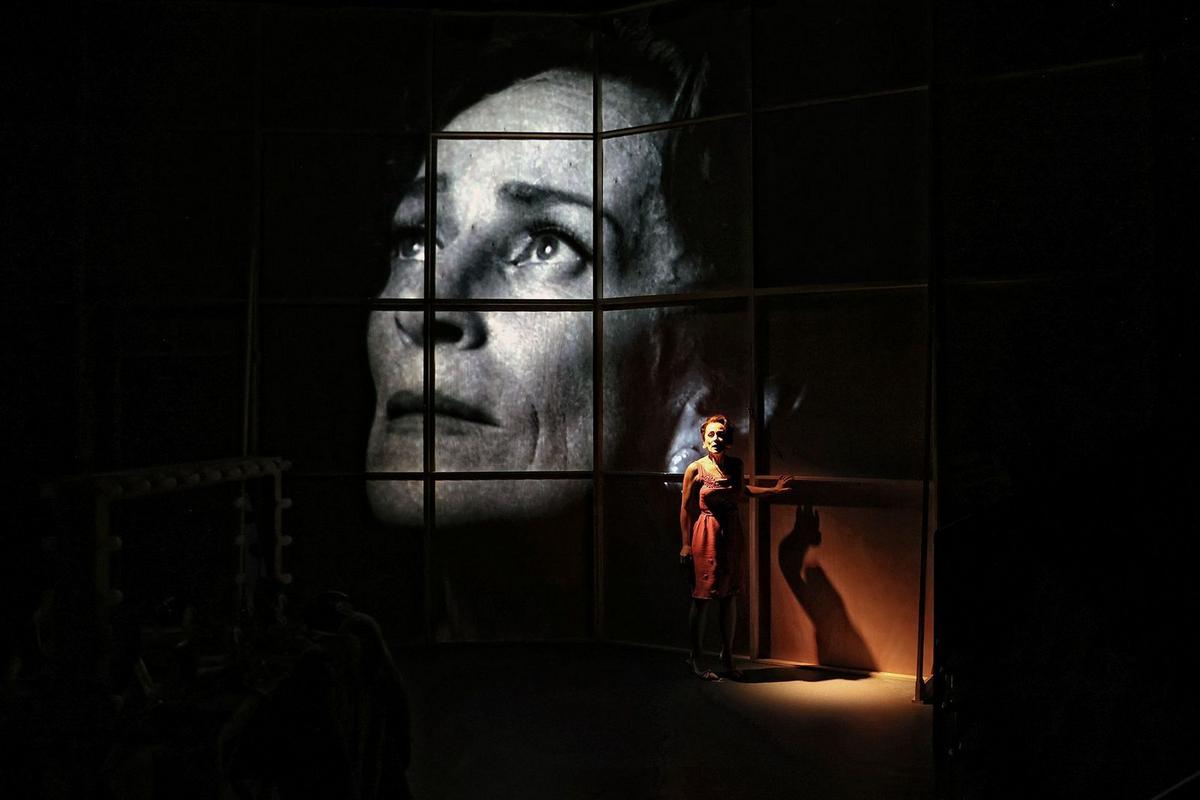
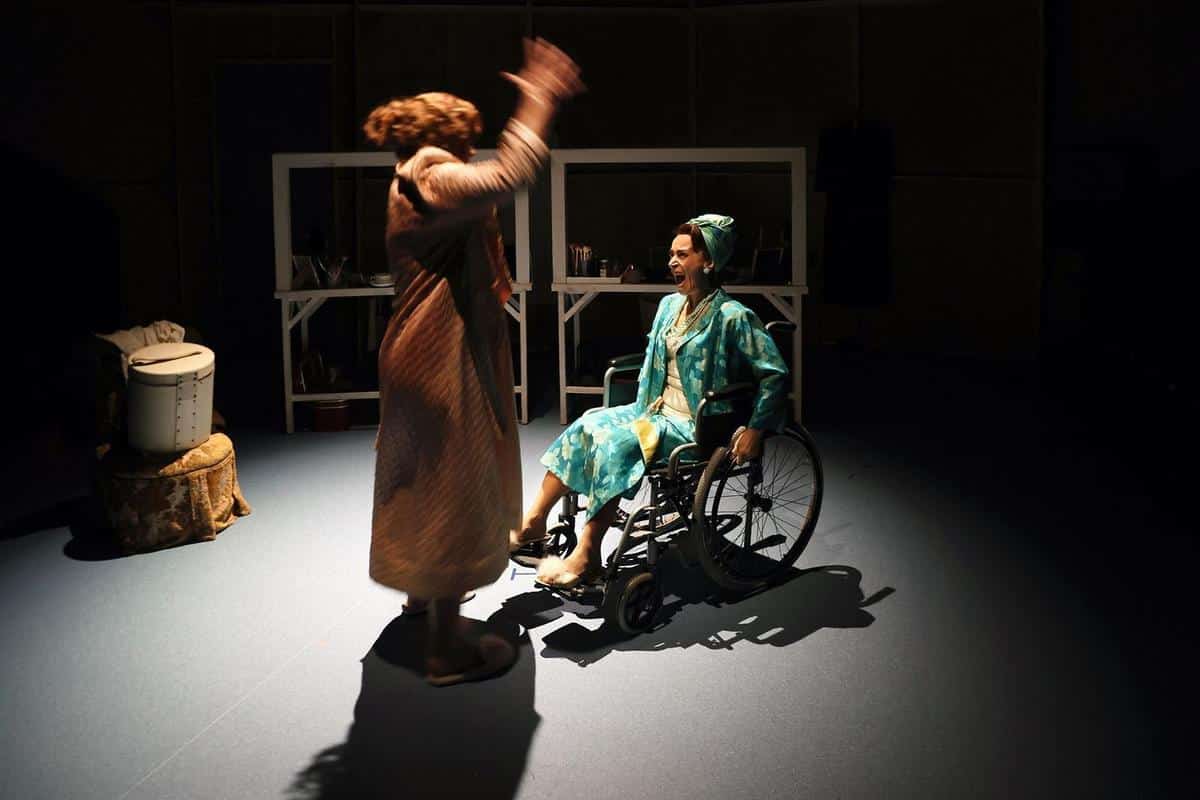
Madeleine Picard’s music and sound design during the play’s tense moments was atmospheric and evocative, reminiscent of the suspense found in a Hitchcock film. Combined with Matt Cox’s lighting design, especially during the storm where flashes of lightning dramatically illuminated the characters’ struggle in the life-and-death situation, the effect was truly exceptional.

Scattered throughout the play were some funny lines which were delivered perfectly by the cast to create some pockets of dark humour. Dial M for Murder was a tightly produced, fast paced play which was entertaining and had the audience at the edge of their seats. Although this is a ‘you-know-who-dunnit’ murder thriller, it’s one that keeps you guessing with numerous surprising twists and unexpected developments until the very satisfying conclusion. Don’t miss it!

Dial M for Murder is playing at the Ensemble Theatre. 78 McDougall St, Kirribilli
Season run: 28 Nov 2025 – 11 Jan 2026
Time: 2 hours 20 minutes, including interval
Tickets: www.ensemble.com.au/shows/dial-m-for-murder

To book tickets to Dial M for Murder, please visit https://www.ensemble.com.au/shows/dial-m-for-murder/.

Spread the word on your favourite platform!

Sultry, Sticky, Smoky: Sherlock Holmes And The Adventure Of The Elusive Ear

Sherlock Holmes And The Adventure Of The Elusive Ear

Sherlock Holmes And The Adventure Of The Elusive Ear Rating

Click if you liked this article

2

For a book series that came out in the very late 1800s, Sherlock Holmes has not yet failed to capture the minds of the public. Something about that wise-cracking, pipe-smoking, genius detective can’t help but keep his audience on the edges of their seats. And yet, much like Shakespeare, Sherlock runs the very real risk of being done to death. The character has been adapted, and adapted again, and again, and again, well over twenty-five thousand times. So what makes the Pavilion Players production of Sherlock unique? One simple, and yet deceptively elusive reason for the average Sherlock production. It’s funny.

The name of the game for director Paul Sztelma was stylistic cohesion. The script, in its rawest form, doesn’t offer a whole lot in terms of emotional growth or nuanced performance – and if the performances and production value weren’t presented in a very specific way, the audience would’ve eventually noticed. In a less competent team, this would’ve been an all too easy pitfall to trip into. But Sztelma fundamentally understands what he can and cannot do with the script, and so, does not ask his cast and crew to move his audience emotionally. Instead, Sherlock Holmes and the Adventure of the Elusive Ear, presents us with a kitschy, high-camp production more similar to Noel Coward’s Present Laughter than BBC’s dark and gritty Sherlock. By heartily embracing the style of the play, the production evades both the boredom of its audience, and my usual questions as a critic: “What’s the point of the show?” Does it matter? “What was the journey of the characters?” Who cares? The point, put simply, is that it’s good fun to watch.

The other defining choice that this production makes, once again setting it apart from its peers in private detective-ing, is that this production is… hot. It’s not unusual for Sherlock adaptations to make the character borderline asexual, so obsessed with cracking cases that he never really has the time to be human, nor debase himself with such pitiful things as impulses. But Sztelma’s production, and subsequently his entire cast, remind us sharply that these are all smart, obsessive and attractive people locked into an apartment for months at a time, often drunk or high. Which can only mean one thing. By allowing for the sensuality of the characters, Sztelma also allows the cast to explore their relationships on stage beyond the superficial. Although the show is built for fast-paced comedy, when scrutinized closer, it was clear that the characters did have legitimate history with one another, and we could see it behind every one of their interactions.


These two things combined into more than the class act performances on stage. Upon curtains opening, we were presented with the maximalist wonderland set-building of Abby Bishop and Sztelma. Dark burgundy red walls littered with trinkets and easter-egg props worked as a collective to transport us into the style and world of the piece. It also did much of the work in grounding the production, giving us a tether to reality that the cast could not do lest they break that delicate stylistic framework. Production continued to impress, with James Winter’s lighting design supporting the work happening on stage without committing the sin of being distracting, and Chris Harriot and Sztelma’s (the guy did everything) sound design nailing both being light, crisp accents and rock and roll needle drops when required. Costumes by Annette Snars and Jennifer Hurst elevated the piece once more, whilst joining the set in grounding the piece in reality.

Thinking back on this show, and specifically its performances, my mind is drawn much to the 1985 movie Clue, in its shared performance principle of unabashed commitment to character. Standouts of the night in this regard were Brendon Stone’s John Watson, who was both a brilliant physical comedian and retained the dry humour and littered emotional outbursts necessary for an English comedy, and Ben Pobjie’s Oscar Wilde, who gave us a fabulously homoerotic, Tim Curry-esque, pretentious, sensuous performance that stole many a scene for the better. Ben Wheeler’s Sherlock Holmes was delightfully foolish, which made his glimmering moments of intelligence all the more enjoyable, but I was looking for him to relax into the style of the show here and there. Nicole Hardwood’s Irene Adler was a sharp wit undercutting the fat of the egos of the men around her, an impressive badass from start to finish, although I would’ve been interested in seeing her work through each thought slightly more. Oscar Baird’s Vincent Van Gogh was wonderfully neurotic, and his commitment to flinging his body across the stage was something that both impressed and terrified me slightly – I only wished for moments of vocal dynamic shifts, to explore the different ways he could explore that neuroticism. Holky Bramble as Marie Chartier presented an entertaining and seductive antagonist, and was a lovely folly to Irene Adler, though would’ve benefitted from a more intimidating edge, especially as the daughter to one of the most famous villains in written history. As a cast, all six were virtuosos of comedic timing and playing to the benefit of the text, without needing to overperform the comedy – a rare skill set. The fight choreography was fast-paced and fun, not necessarily adrenaline-inducing but I don’t believe it had to be. Across the board, all actors were also fantastic at keeping themselves busy on stage, and never was my eye drawn to someone who was standing on stage zoning out. On a script level, Adler and Chartier’s moments of feminist uprising were a little benign, especially as Adler did almost all the domestic work in the text, and yet I can’t fault the production for that – for this I must point fingers at the original writer David MacGregor. Although, perhaps seeing some more moments of admiration or solidarity between the two women would’ve eased this marginally.

As an entity, Sherlock Holmes and the Adventure of the Elusive Ear proves the importance of stylistic commitment, and in some ways makes the argument that if you understand the limitations of your script, you can almost entirely negate them. Earning its place in other camp theatrical comedies like Clue and The Play That Goes Wrong, this production thrives as a masterclass of comedy and what leaning into the dirty and foolish can do for a production. Sztelma has met the challenge of Sherlock’s time in the sun, and although has not broken open the character in some earth-shattering way, in many ways he’s done something harder – he’s allowed him to continue being enjoyable.

To book tickets to Sherlock Holmes And The Adventure Of The Elusive Ear, please visit https://paviliontheatre.org.au/holmes-and-the-elusive-ear/.

Spread the word on your favourite platform!

The True History Of The Life And Death Of King Lear And His Three Daughters

The True History Of The Life And Death Of King Lear And His Three Daughters

The True History Of The Life And Death Of King Lear And His Three Daughters Rating

Click if you liked this article

2

WOW! Just WOW!

King Lear and his three daughters at Belvoir Street Theatre is an epic undertaking and an epic delivery on all fronts. Colin Friels plays the title character of King Lear, and commands the stage with his presence. The story revolves around an aging King Lear and his three daughters. He is dividing up his kingdom to his daughters and this is where the drama begins.

Filled with brutal murders and back stabbing and on stage blood spurts are a delight. The stage is bare but there is so much happening on stage with all parties conspiring against each other, that you barely notice.

There are live musicians scoring the play throughout, and the drums are especially unsettling.

With modern costuming you can picture this to be a family fighting over a will, or politicians fighting for power.

A special mention to the storm scene with the lighting will dazzle you.

The play has a run time of three hours and fifteen minutes with two fifteen minute intervals. You will need the intervals to process and discuss what you are witnessing.


I personally have a love hate relationship with Shakespeare but this was thoroughly enjoyable. Even if you have a mild love of Shakespeare I truly think this is a must see.

King Lear is a tragedy, but Peter Carroll as the Fool brings hilarity in every scene he is in. A truly unique and remarkable performance which will have you belly laughing throughout.

Tom Conroy as Edgar, delivers a nuanced performance which is sure to delight. His performance is truly heartbreaking.
Brandon McClelland as Kent, (King Lears most loyal companion) gave an unwavering depiction of loyalty and strength.

Special mention to Jana Zvedeniuk who plays Regan, one of King Lear’s daughters exerted a tremendous fierceness in the role. Adding believability with every line uttered.

This show is truly an ensemble piece and every piece fit. The acting was so strong that during the scenes in Dover, I was truly transported to the cliff face and they really brought the words to life. A very well done to all the actors, and backstage crew and Eamon Flacks direction was on point!

This is one of those plays that needs to be experienced to truly grasp the monumental undertaking of such a spectacle.
And dare I say that I think Mr Shakespeare would have enjoyed his play done in the way it was.

Highly recommend this show, as someone who struggles with Shakespeare I have been converted into a fan.

Well done again to all involved.

Run don’t walk to see this show.

To book tickets to The True History Of The Life And Death Of King Lear And His Three Daughters, please visit https://belvoir.com.au/productions/king-lear/.

Photographer: Brett Boardman

Spread the word on your favourite platform!

Don’t Panic! (It’s Happened Before)

Don't Panic (It's Happened Before)

Don’t Panic (It’s Happened Before) Rating

Click if you liked this article

This one-man show is worth seeing purely for the energy and presence of Sam Bowden, its writer and star. The Old Fitz theatre space, downstairs from an excellent pub of the same name and consistently bold and ambitious in its programming, is a perfect fit for this rambling show. “Don’t Panic! (It’s Happened Before)” is closer to a three-drinks-deep conversation than traditional theatre piece, but holds the house’s attention (with both some risky commentary and excellent comedy) for the entire journey.

Bowden doesn’t leave the stage at any point, and in the opening fifteen minutes it feels miraculous that he can catch his breath. Even the premise is ambitious; we begin with the history of human kind and speed-run to the unknowable (and somehow predictable) future. His physicality elevates this show from being an unusual stand-up routine into something with more meat. At the highest velocity moments of the show there were sparks flying everywhere as a disheveled captain steered us through war, plague and queer detours at pace.


Any piece with brave hopes will inevitably not land every trick, and while Bowden acknowledges his euro/western-centric lens at the top, some of his more sweeping conclusions feel like they could be dismantled by the expansion of that lens. That said, the best answer or counter to this within the show is when he wisely and deftly brings the focus to a micro level, unpacking photos from his own life and vast complexities that run through our personal histories as well as our collective ones. There is a strong enough vein of compassion running through the show that any points of discomfort or disagreement from the audience with the confident tales of our life being shared on stage were brief, and not ruinous to the audience leaning in to all we were hearing rather than away.

There are genuine belly laughs and some persuasive insights amongst quips and the scattered apartment set complements the energy perfectly. The use of PowerPoints and whiteboards, scrunched up papers and marker-drawn horsemen of the apocalypse helps thread the varied directions of this show together. There is a core of hope here, despite all the violence and death forewarned in the beginning. Izzy Morrissey’s lighting design gives a crispness to both the staging and sections of the show, adding a theatricality that elevates it.

This is a well executed piece, full of heart. Both Sam Bowden’s performance and writing, and Artie Gallagher’s direction allow the humanity and humour to shine in a densely written one man show. It closes tonight and is worth a visit!

To book tickets to Don’t Panic (It’s Happened Before), please visit https://www.oldfitztheatre.com.au/dont-panic.

Spread the word on your favourite platform!