Greeking Out

Greeking Out

Greeking Out Rating

Click if you liked this article

0

Greeking Out reminded me why I love fringe theatre. At its best, fringe is lean and mean, a little scrappy, full of wit and invention and always just outside the norm. Rebecca Perich’s show delivered all of that in spades. This was peak fringe and I loved everything about it.

The premise is deceptively simple: a lecture on Greek mythology, given from a stool with a projector and an easel as props. Yet from that stripped-back set, Perich created an hour of comedy, storytelling and mythological deep-diving that was as enlightening as it was entertaining. The projector doubled as a lecturer’s whiteboard, lighting shifts offered just enough atmosphere and the black cloth-draped brick walls of the pop-up venue made the room feel like the kind of black box theatre where ideas are meant to spark. Even the old school seating added to the classroom vibe. It was, in every sense, authentic fringe.

What struck me most was Perich’s ability to master two seemingly opposite demands: making the audience laugh while also making them think. The show had proper laugh-out-loud moments There were cheeky asides, call-and-response games and even bursts of light choreography that pulled us into her world. But it also had a depth that stayed with me long after. I really loved how Perich didn’t just retell myths. She unpacked their cultural resonance, wove them into pop culture touchpoints and reminded us why these ancient stories still matter. Her skill lay in making the complex simple, without ever dumbing it down.


Fringe theatre can sometimes alienate, but Perich did the opposite. She met her audience exactly where we were, adapting her pace, her explanations and even her jokes to ensure accessibility. She was like that favourite teacher who can’t help but share their hyperfocus with you, dragging you joyfully into side quests and tangents like the naming of Europe or the complex family tree of Greek gods. These digressions were never wasted, they added texture and charm, much like the best detours on a road trip.

The 60-minute format was exactly right. As one of my favourite theatre sayings goes, “Everything good is better shorter”. Perich clearly understands this. The show was tight, sharp and left me wanting more. By the end, I wasn’t just entertained, I was ready to sign up for Mythology 201.

Rebecca Perich is a gifted storyteller, part comedian and part lecturer, who has found a form that feels utterly her own. She can take a myth thousands of years old and make it feel like gossip you’ve just overheard at the bar. That’s no small feat. Greeking Out was smart, funny and brimming with charm. More importantly, it was a reminder of why myth still holds power in our lives.
I laughed, I learned and I can’t wait for the next class. That’s my takeaway and I suspect anyone lucky enough to see this show will feel the same.

To book tickets to Greeking Out, please visit https://www.melbournefringe.com.au/whats-on/events/greeking-out.

Spread the word on your favourite platform!

Colour and Light: The Art of Sondheim

Colour and Light: The Art of Sondheim

Colour and Light: The Art of Sondheim Rating

Click if you liked this article

6

Buckle in. There is going to be a lot of hyperbole in this review. When something is this good, how else can you describe it?

Colour and Light: The Art of Sondheim, presented by Watch This at Theatre Works, is less a musical revue and more a velvet-draped love letter to the genius of Sondheim. It’s the kind of show that slips under your skin, reshapes your idea of what cabaret can be and sets a new standard for how theatre should be made.

Theatre Works is perfect venue for this show. It balances epic with intimate, using the high ceiling to hang long luscious drapes but keeping the audience close enough that we felt every word on the stage. Designer Rob Sowinski has conjured a stage that feels like a plush, lived-in lounge room (art deco drinks trolley and all) with a circle of tiered staging, bathed in the soft glow of vintage table lamps. It’s intimate and luxurious.

What follows is a breathtaking journey through Sondheim’s songbook. Yes, the big numbers are here, but so are the deep cuts and the “why-don’t-more-people-sing-this?” gems. I’m sure Sondheim diehards will know that he wrote songs for the 1990 film, Dick Tracy, but I had no idea and it was a revelation to hear music from the soundtrack on the stage. The show flows with purpose and precision, thanks to the clean, intelligent direction of Melanie Hillman and Dean Drieberg, whose love of the material radiates through every moment. The loose thematic arc is shaped around Seurat’s artistic principles of Order, Design, Tension, Balance, Harmony. The structure gives the evening clarity without ever feeling constrained or contrived. This is cabaret at its best.

And then there’s the music.


Dr Trevor Jones, who arranges, musically directs and performs from the piano, is the beating heart at the centre of the piece. His arrangements are stunning. They are lush, showy when needed, simple when called for and always with a focus on the emotional truth of the songs. This is some of the finest musical storytelling I’ve heard on a Melbourne stage and reminds me why, when done well, musical theatre is one of the greatest art forms ever.

Johanna Allen is a master of her craft. Her ability to navigate the razor-thin line between vocal fireworks and emotional restraint is unmatched. She brings a knowingness to the stage that draws the audience in and lets us share the humour and pathos in all of her delivery. There are countless moments she channels such precision and ache that you could feel the entire theatre holding its breath. This is vocal acting of the highest order.

Vidya Makan broke my heart multiple times across the night. There’s an emotional directness to her performance that’s magnetic. Her choices are always fresh, never predictable and she elevates everything she touches with nuance and grace. Her I’m Still Here was a stand out moment in a evening of stand out moments. She gave us an exquisitely rendered journey from introspective calm to triumphant exuberance with countless little gut-punches along the way.

Nick Simpson-Deeks, as ever, delivers with polish and pinpoint clarity. He finds the architecture in each song, builds it, then knocks it down with a smirk or a sigh. It looks effortless, but this has to have been crafted and perfected over years. His Send in the Clowns has ruined every other version for me. Honestly. It needs to be bottled and prescribed to every aspiring performer and every audience member.   It is good for the soul.

Jacob Rozario brings vibrant charisma and thrilling musicality. They shift gears effortlessly from the ridiculous to the sublime and their voice is an instrument of total control and warmth. There wasn’t a moment when their performance wasn’t a captivating blend of playful, detailed and vocally dazzling. His delivery of Can That Boy Foxtrot will stay with me for a long time. 

Colour and Light: The Art of Sondheim elicited a palpable love in the room, not just for Sondheim, but for collaboration, for precision, for joy. The audience left buzzing, visibly moved and audibly delighted. As for me? I’ve already booked to see it again.

This is one of the finest tributes to Sondheim I’ve seen anywhere in the world. Don’t miss it.

To book tickets to Colour and Light: The Art of Sondheim , please visit https://www.theatreworks.org.au/2025/colour-and-light.

Photographer: Ben Fon

Spread the word on your favourite platform!

A Clever Tour de Force, Full Of Surprises

The Forgotten Songbook

The Forgotten Songbook Rating

Click if you liked this article

4

Stepping through a light haze in Chapel Off Chapel’s Loft, into the twilight world of The Forgotten Songbook instantly transports the audience to bygone era of music-making. The set, dressed simply but evocatively with a piano, a few furniture pieces and faded posters of long-forgotten musicals like Vienna Days and Girl Leaves Boy, conjures a smoky dive bar in the middle of nowhere and everywhere. It’s the perfect frame for a show that unearths the dazzling, almost unbelievable, fragments of composer Wilbur Weissman’s lost career.

What follows is a two-act whirlwind of longing, misfires and brilliance, pulled together by a creative team whose passion for Weissman’s story pulses through every beat.

Emerson Hurley’s compositions form the heartbeat of the show. Sitting at the piano with a relaxed command, Hurley not only plays with casual virtuosity but delivers a score that is tuneful, witty and remarkably affecting. His pastiche writing honours the Tin Pan Alley style while crafting songs that feel entirely fresh. “I’ll Never See Memphis Again” is one of the evening’s most poignant moments, unveiling emotional depths in both character and composition that stop time. Hurley may be at the beginning of his career, but The Forgotten Songbook suggests a voice with the sophistication of a modern-day Gershwin, or dare I say Weissman? Either way, he has the originality to stand on his own.

Co-writer and producer Dylan McBurney brings theatrical structure and dramaturgical clarity to this sometimes chaotic rollercoaster tale. The narrative, full of unexpected turns (a hippo attack??) never wavers in purpose. It’s comedic and poignant in equal measure, an impressive feat that speaks to the balance and restraint of McBurney’s work.


In his debut as director and choreographer, Mikey Halcrow crafts a staging full of flair and control. He uses stillness to great effect, allowing quieter moments to resonate and leans into the physicality of the performers to heighten the absurd and the powerful beats. The rapid pace never falters, but the show knows when to let a moment land and when to let the music speak for itself.

Karla Hillam gives a stellar performance. Channelling the style and swagger of a classic torch singer, she moves with elegance and sings with great versatility. Her character work is razor-sharp, shifting styles and personas with impressive precision. Her natural chemistry with co-star Jonathan Guthrie-Jones anchors the piece. Together, they deliver both belly laughs and broken hearts.

Guthrie-Jones, in turn, feels like a Hollywood leading man of yesteryear brought to life. His rich, beautifully controlled voice wraps itself around the material with ease and his performance is laced with charisma and genuine vulnerability.

Together, the cast form a dynamic double act (or trio including Hurley at the piano), effortlessly slipping between satire, drama and song. Their rendition of The House Un-American Activities Rag is a showstopper. It’s choreographically tight, musically rich and laugh-out-loud funny.

The Forgotten Songbook is more than a showcase. It is an excavation of talent, myth and memory. In a country where new musical theatre often struggles to find space, this piece deserves to travel far beyond its opening weekend. Don’t miss it and don’t miss seeing the work of any of this team in the future.

To book tickets to The Forgotten Songbook, please visit https://chapeloffchapel.com.au/show/the-forgotten-songbook/.

Photographer: Kristopher Wardhana

Spread the word on your favourite platform!

An Transcendent Evening Of Theatrical Brilliance

Night Night

Night Night Rating

Click if you liked this article

3

From the moment I was handed an interactive pendant at the door of the Alexander Theatre, it was clear Night Night was no ordinary night at the theatre. What followed was one of the most inventive, heartfelt and boundary-defying performances I’ve ever experienced.  

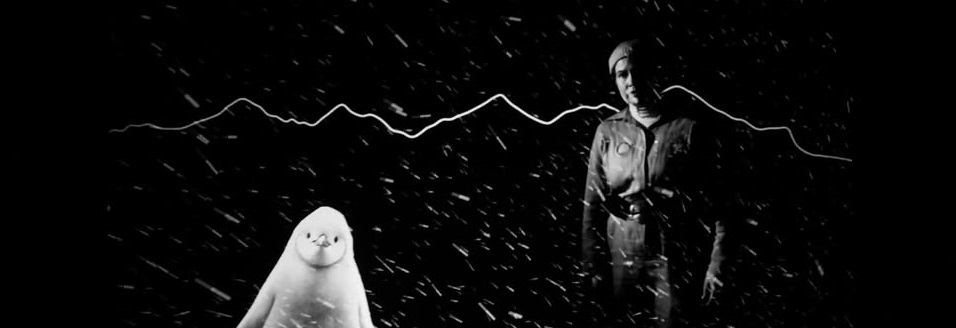
Created and directed by the trio Arielle Gray, Luke Kerridge and Tim Watts, Night Night tells the story of Pip, an Antarctic scientist on a quest to uncover the origins of life. What begins as a familiar voyage into isolation and scientific frustration soon tumbles into a surreal dreamscape with an albino penguin guiding our hero and glowing entities emerging from unseen dimensions. It’s a world built from ice and wonder, where the veil between this world and the beyond feels paper-thin.

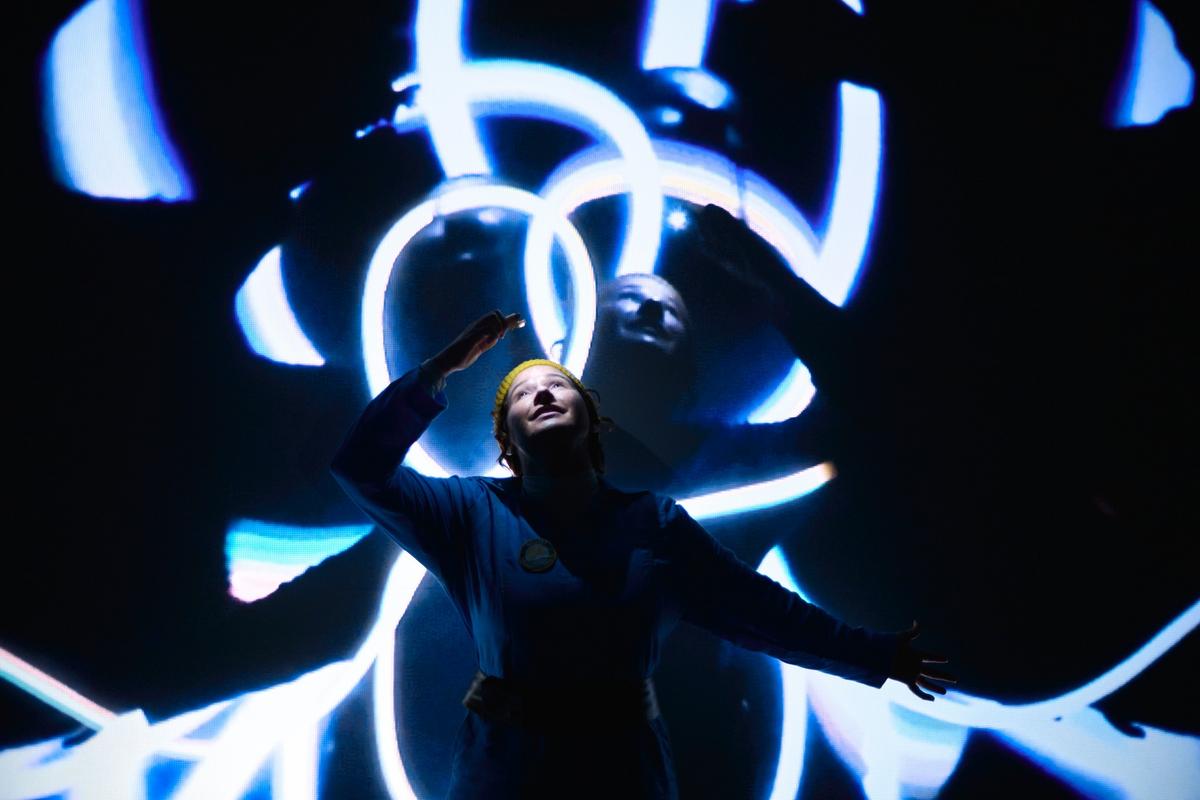
The compelling narrative unfolds not just on stage, but across a variety of mediums. The set is deceptively simple, consisting of a large projector screen and a small movie studio, fully visible, at the side of the stage. Combined, they become a playground of live cinematography, puppetry, mime, and animation. Gray and Watts deliver a masterclass in physical theatre, coaxing moments of poignancy, whimsy and laugh-out-loud humour from every pixel and prop at their disposal. Their onstage rapport and seamless interaction is the glowing heart of the show. Their performances feel at once effortless and deeply considered.

The sensory layering was delightful from the moment we entered the theatre. Live sketches on an iPad become playful preludes to the show, blending content warnings with charm (beware the show’s loud sounds, flashing lights and wimsy). Messages and images appear on the screen, inviting the audience into the world with a light touch before plunging them into deeper waters.

Rachel Claudio’s musical score and sound design deserve particular praise. They don’t just accompany the action, they elevate it, transporting the audience with a soundscape that moves from delicate to dazzling, always in perfect dialogue with the visual storytelling. The audio-visual synthesis is so immersive it’s easy to forget how complex and technical the show must be.

Night Night’s innovation lies in how it wears its complexity lightly. Static and animated visuals are woven with handmade puppets, showing digital magic dancing alongside analogue charm. Every moment feels handcrafted, intentional and lovingly made. The creative team’s meticulous attention to detail is evident in every snowflake, shadow and blink of light.

This is theatre as revelation. An invitation to see the world differently and to feel more deeply, remembering the power of connection to each other, to nature and to something greater. As Pip’s journey becomes more metaphysical, so too does the audience’s, emerging not only entertained, but perhaps even enlightened. 

In short, Night Night is a rare piece of theatre that feels both personal and universal, intimate and epic. It’s a reminder of what live performance can achieve when craft, heart and imagination collide. This is the kind of show that lingers long after the lights go out. Do not miss it.

Night Night will be on tour soon and is coming to Geelong Arts Centre in August and Bondi Pavilion in September. To book tickets to Night Night, please visit https://www.thelastgreathunt.com/night-night.

Spread the word on your favourite platform!