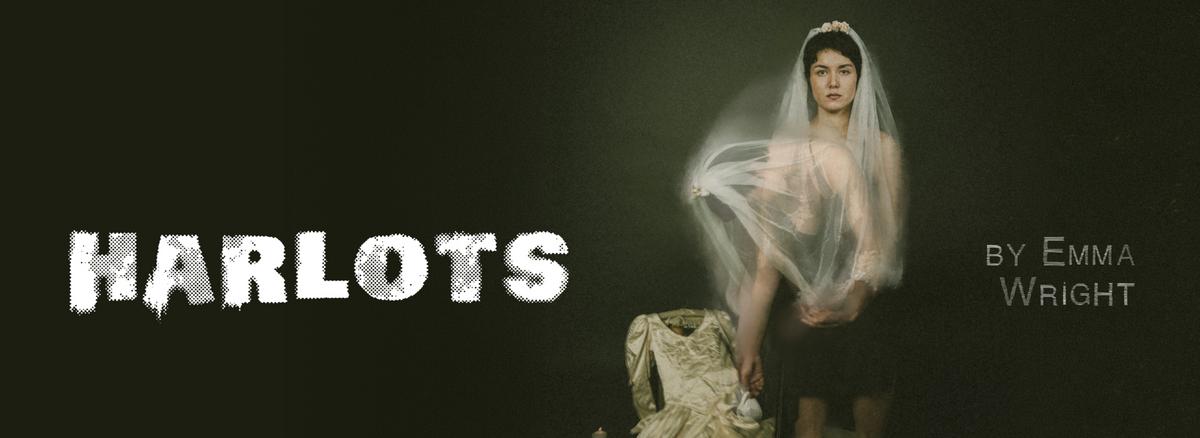
Dying To Live: Harlots At The Old Fitz

Harlots

Harlots Rating

★★★★★

Click if you liked this article

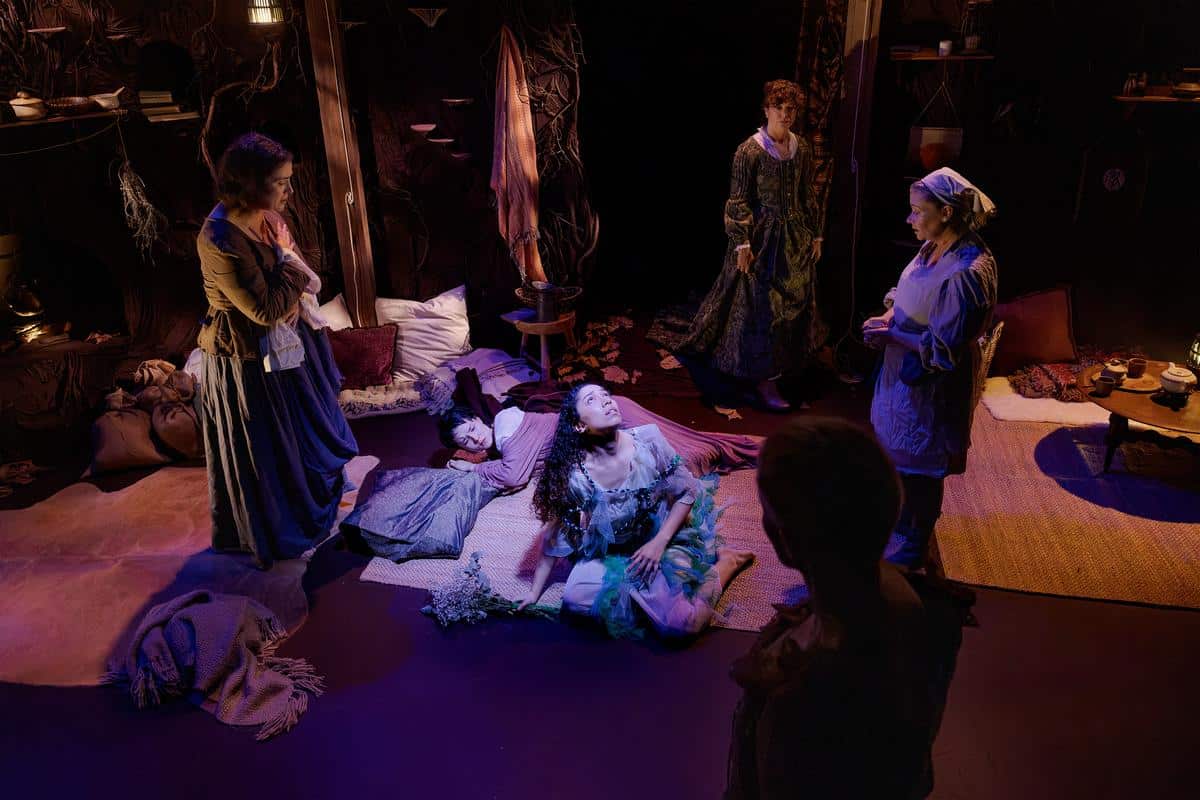
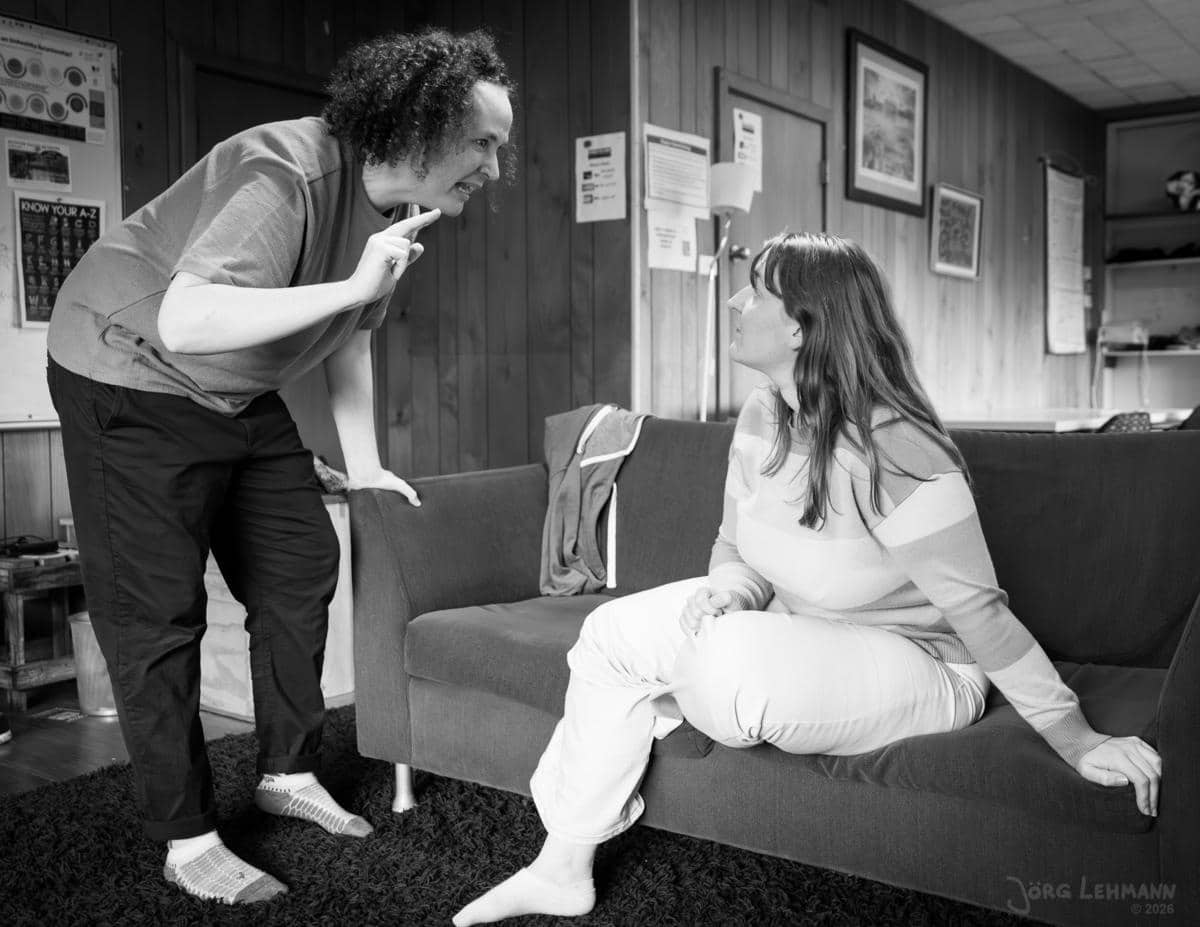
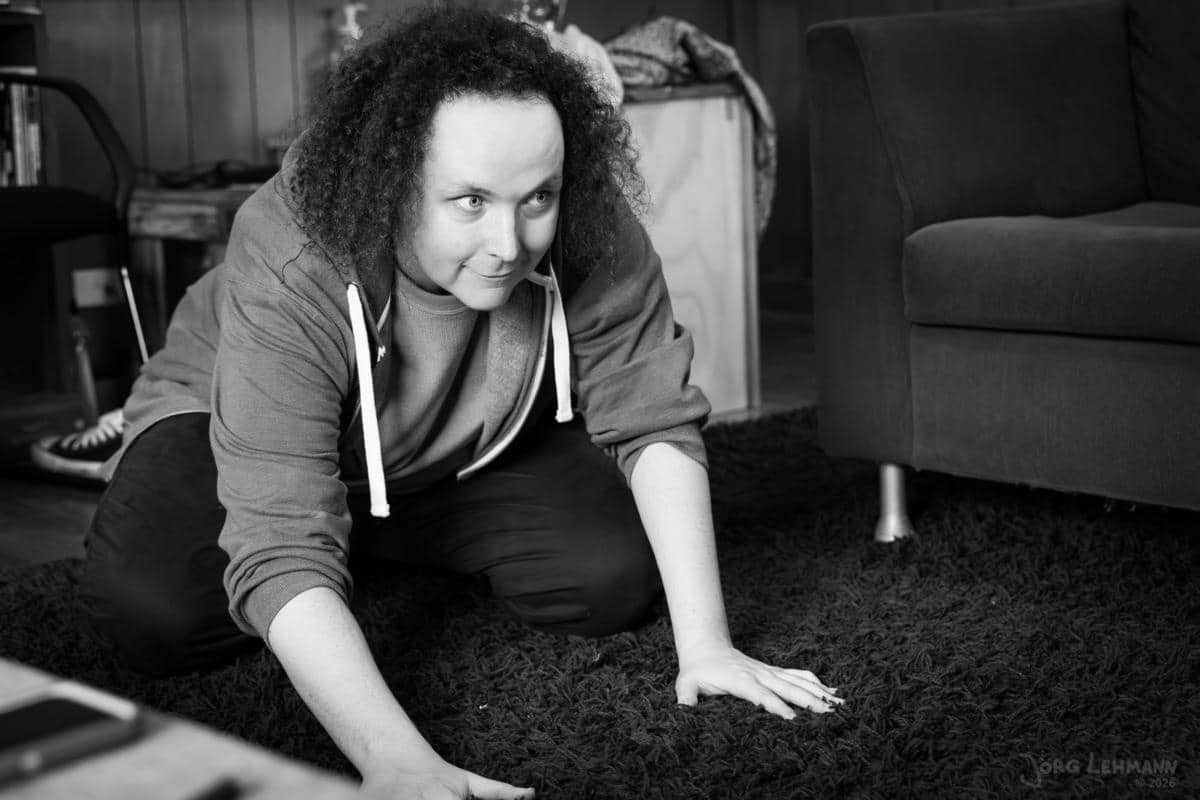
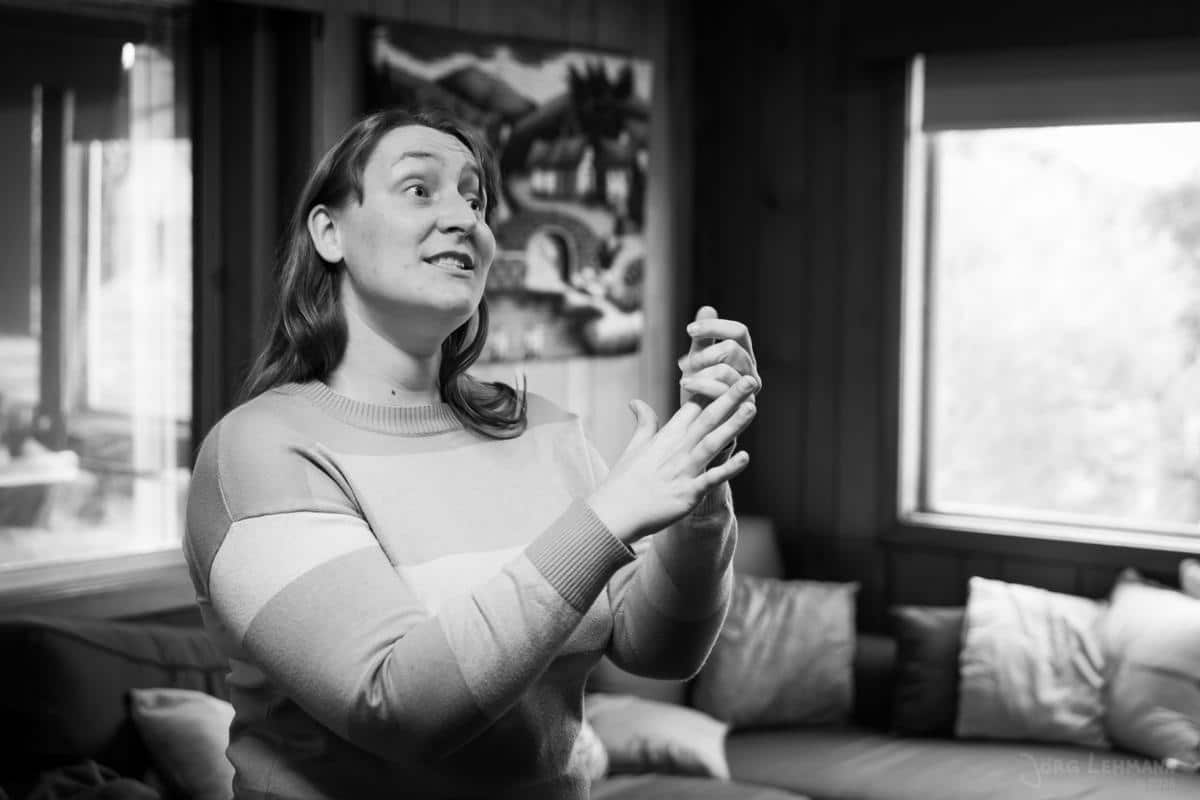
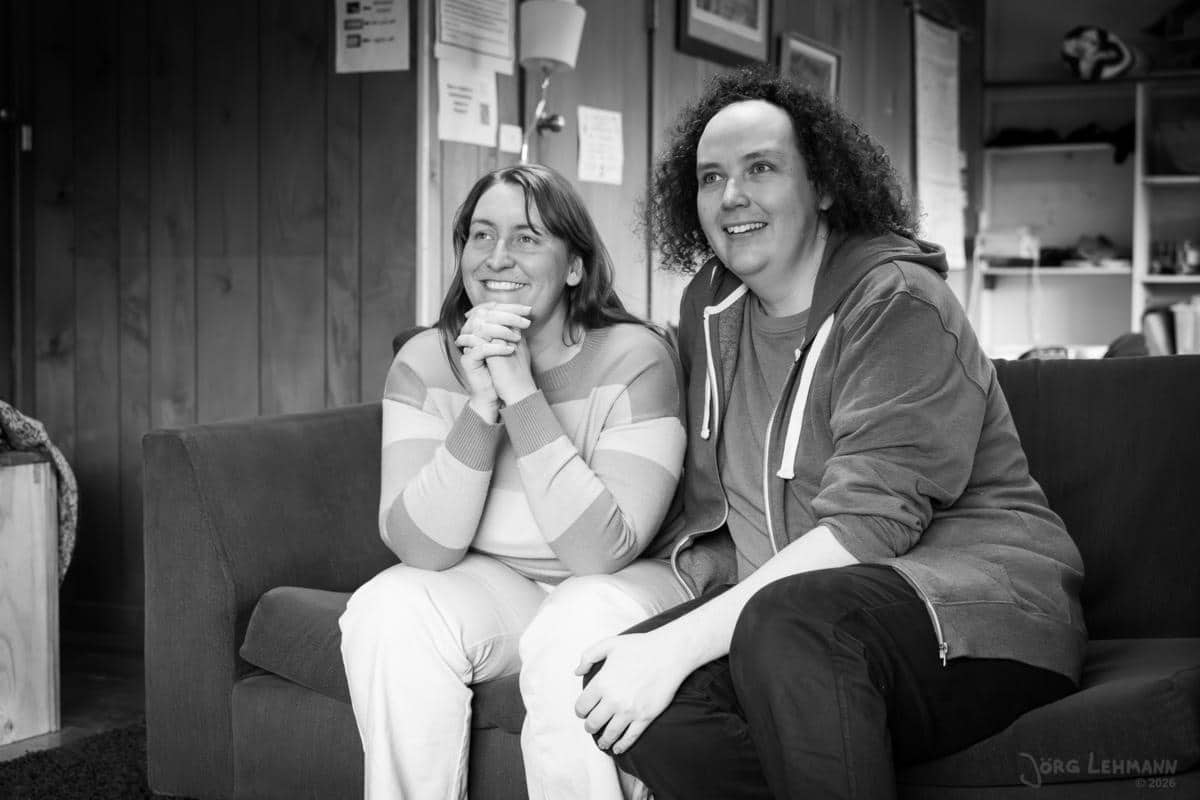
Last night I had the pleasure of witnessing Harlots by the New Ghosts Theatre Company at the intimate Old Fitz Theatre in Woolloomooloo. It was a fantastic production by an all-female and non-binary team and cast. The show was an immersive experience, taking place in and around the audience, with the stage utilised to its maximum capacity. Directed by Janine Watson, the play sucked me into its world and spat me out again 90 minutes later.

The denigrating term ‘harlots’ has been reclaimed by writer and producer Emma Wright in this critique and love letter to Shakespeare. Having studied one Shakespeare play per year throughout my six years of high school, I was excited to see the women from his work get more time in the spotlight. The work explores what happened in the time between his female characters faking their deaths and re-emerging with their names cleared (Hermione in The Winter’s Tale and Hero in Much Ado About Nothing)… The play depicts freedom in the form of an underground society of women whose values were love and healing. How ironic that these women had to “die to live” and a hole in the ground provided more freedom than society’s shackles. The characters explore the healing powers of psychedelics and working through trauma in a supported environment. Madness and the role of violence in society are called into question, can these things be escaped or are they inherent?

Each and every one of the cast played their role sublimely. They were all equally impressive and distinct. Jo Downing’s portrayal of Beatrice was a marvel. Ella Prince was a powerful Helena; I loved their abrasive mannerisms that boycotted the idea of traditional femininity. Hannah Waterman and Megan O’Connell had incredibly complex chemistry on stage as Paulina and Hermione. ‘Ana Ika was a dreamy Ophelia and Madeleine Li’s monologue at the end of the play as Hero will be something that stays with me for a long time.
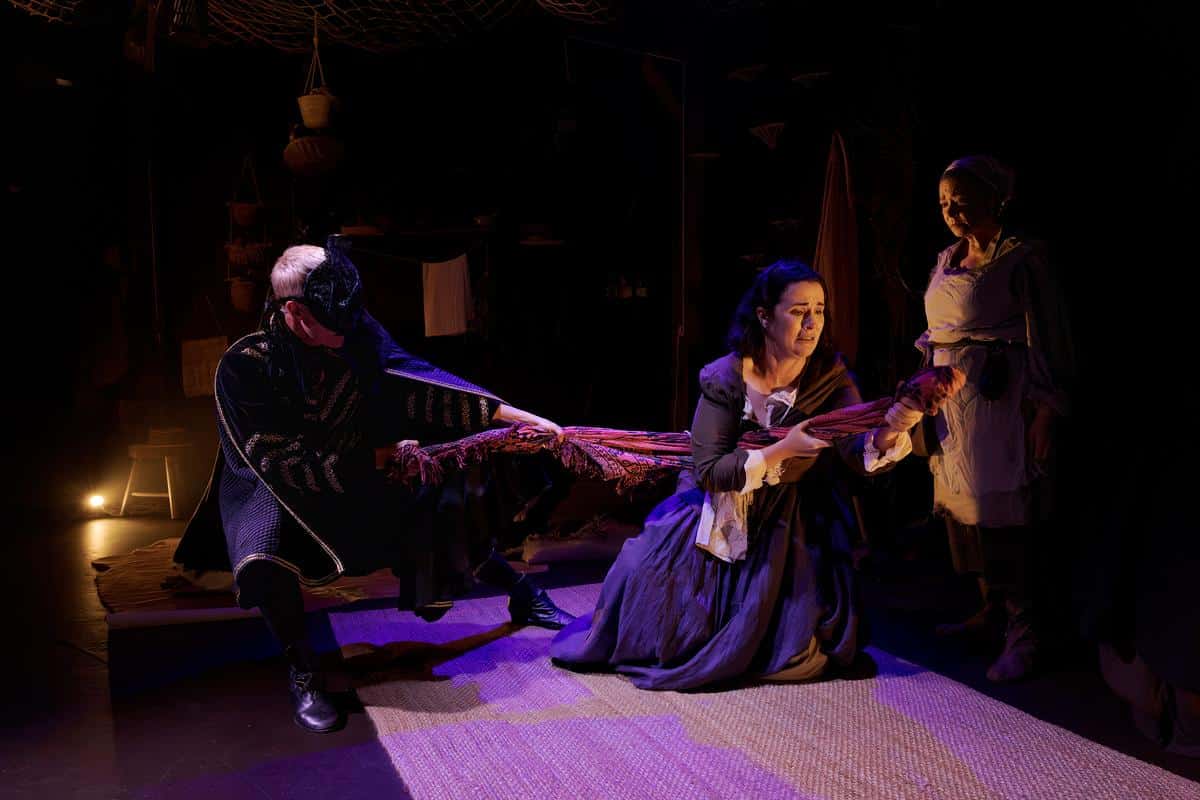
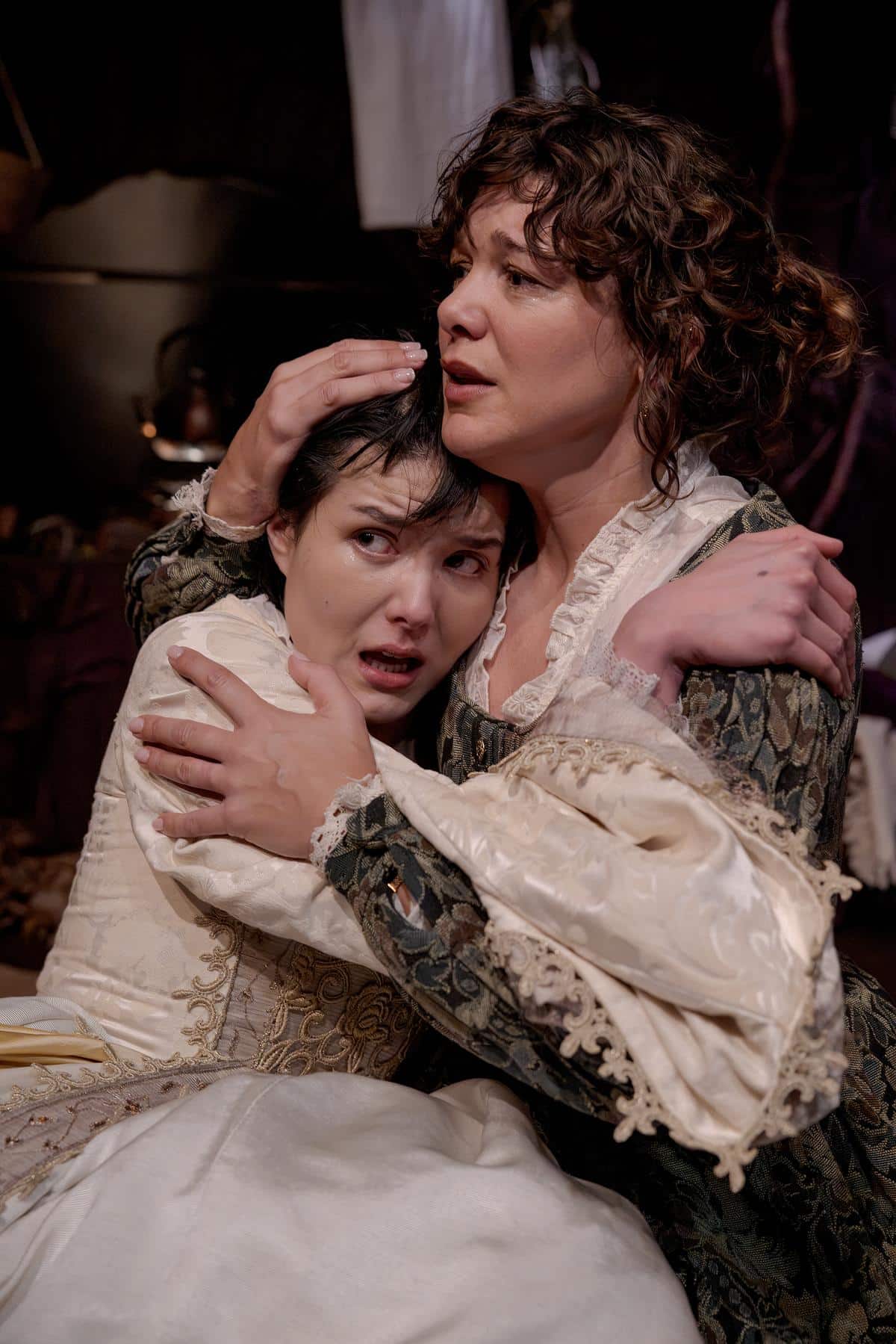
 

The set design (by Kate Beere) was simple yet effective, inviting us into the women’s underground world of mushrooms and rest. The costumes (by Aloma Barnes Siraswar) were beautiful and thoughtful. I loved the attention to detail of the mushrooms growing on Hero and Hermione’s dresses for their underground lives. The lighting (designed by Luna Yuet Yee Ng) and music (composed by Clare Hennessy) helped indicate villainy and different states of consciousness.

Being a Shakespeare inspired work, I was worried that I would find it hard to follow (especially after a day at work). However, the script was intelligent and engaging without being too much hard work for our 21st century technology addled brains. True to form, the script dipped between verse and prose, masterfully using iambic pentameter to challenge status. I loved the references to other canonic literature and the idea that the women that Shakespeare wrote would be well-read and learned.

The audience was captivated, with the occasional giggle at a provocative line and well-deserved, sustained applause resonating long after the cast had left the stage. I highly recommend seeing Harlots, it was an entertaining, provocative and thought-provoking exploration of some of Shakespeare’s lesser known heroines. Showing until 6 September in Sydney.

To book tickets to Harlots, please visit https://www.oldfitztheatre.com.au/.

Photographer: Phil Erbacher
Spread the word on your favourite platform!

The Book Of Everything

The Book of Everything

The Book of Everything Rating

★★★★★

Click if you liked this article

0

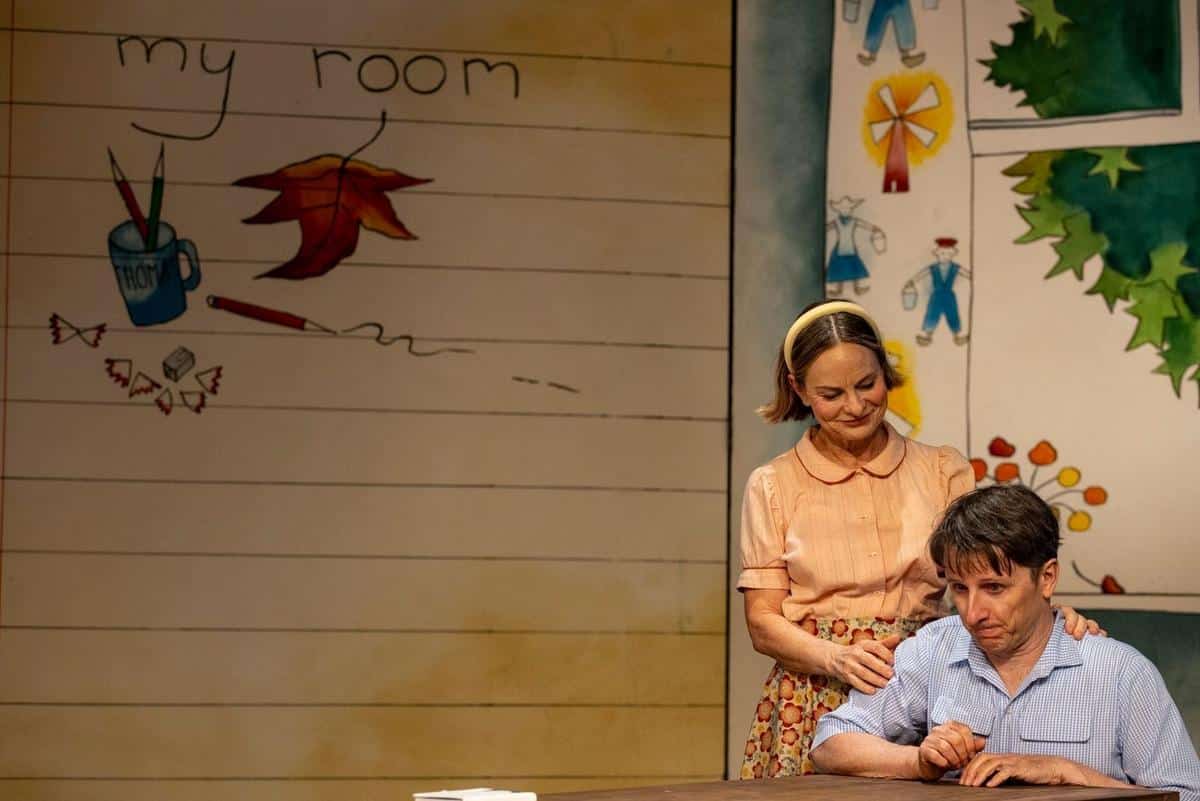
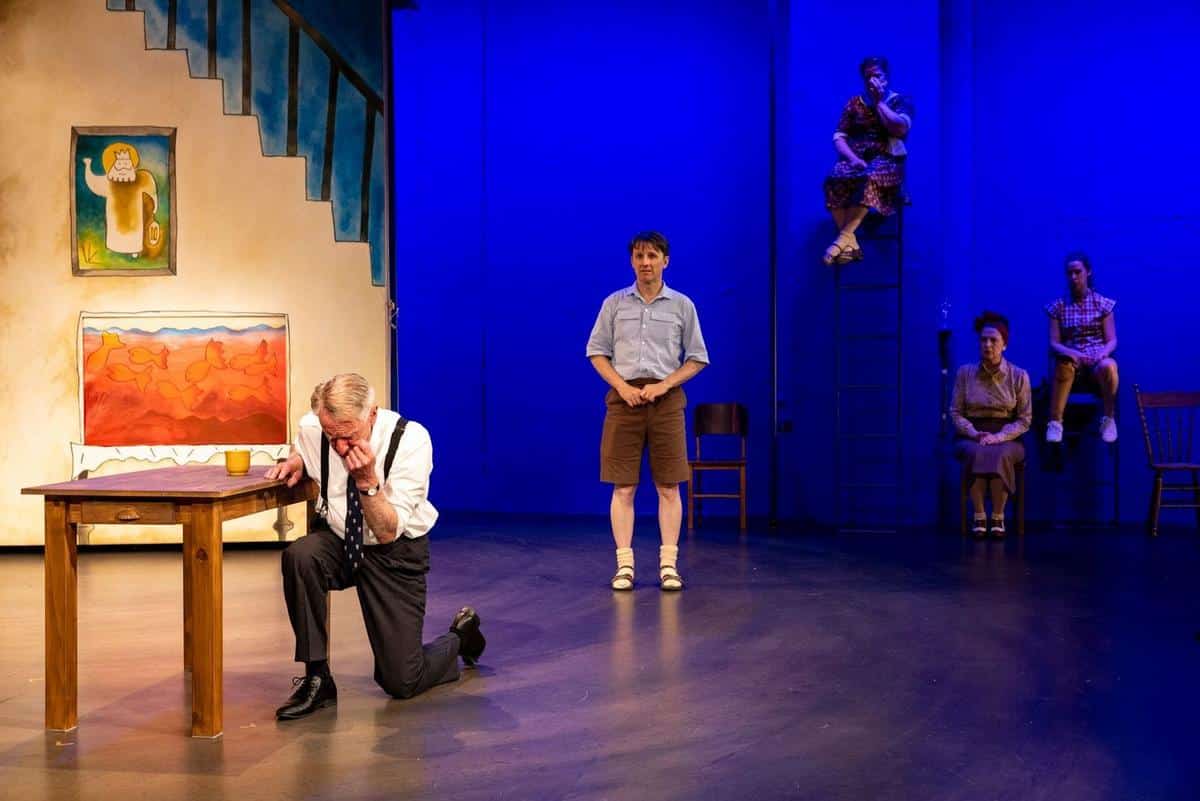
“What I want to be when I grow up? Happy!” said Thomas Klopper, aged ‘nearly 10’. The audience was young and old and instantly charmed by Thomas played by a grown up Matthew Whittet. We were let into his imaginary world of tropical fish in the canal, his joy of reading and talking to a very present and comical Jesus (John Leary). He is also part of a post-war family dealing with just about everything.

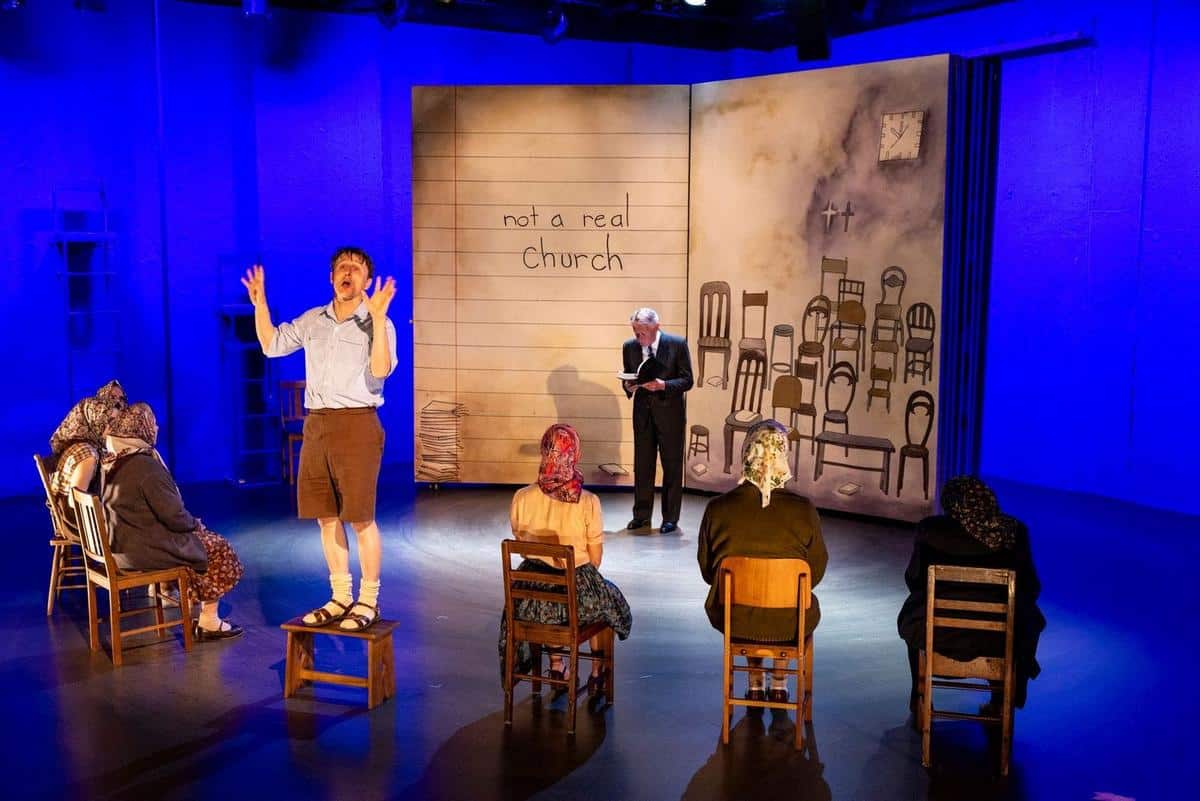
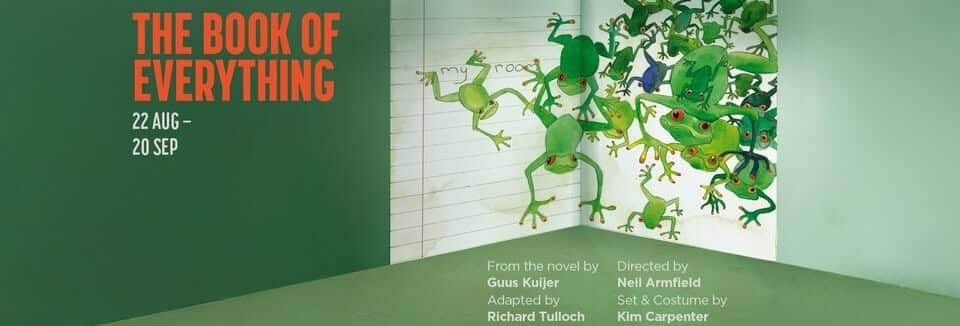
The set of a giant book that was opened and re-opened with dreamy cartoon-like scenes was another character that took on a life of its own and provided a backdrop to each event. A musician (Jack Ward) playing music beautifully, added emotion with a range of instruments providing a childlike understanding of life and sound. The cast members also contributed to the ‘soundtrack’ by playing instruments themselves.

We were engaged within five seconds being brought into the world and gentle naivety of children pushing back the past dark war years and its impact on what is left of life. The script (Guss Kuijer) is full of witticisms and the audience responded with laughter and joy. The team of Richard Tulloch, Neil Armfield and Kim Carpenter produced a play that was delightful, funny, thoughtful and uplifting. This play, which addresses serious themes skilfully balanced with humour, is highly recommended for the young and young at heart.


Thomas’ father (John Gaden), a dry, deeply religious and angry man, his mother (Claire Jones), a weary and loving mother and Margot (Rebecca Massey), a sprightly teenager coming into her own, form a family living in Amsterdam and dealing with family secrets. On the sidelines is the observant neighbour, Mrs Van Ammersfoort, (Julie Forsyth), with the look and panache of the neighbourhood witch but who is really a war resistance survivor. Aunty Pie (Pamela Rabe), rebels by wearing trousers and Eliza (Bridie McKim), is Thomas’ love, despite being 16 years old and having a leather and hinged leg.

The lesson is about kindness and how Thomas’ gentle and whimsical heart breaks open the community as he desperately tries to resolve his father’s violence towards his mother. It is a journey of discovery around loneliness, fear and finding a sense of self. As each character breaks open, new life reveals itself and in a childlike manner, the adults discover their innocence and desires.

Audience participation was included with one hilarious action and young people are invited on to the stage. Serendipitously, a large group of schoolboys was in the audience and they bounded down the steps to joyfully join the cast and be ‘nearly 10 years old’ again. They took a group photo after to celebrate. And that was what the play was about; the celebration of kindness, innocence and people’s dreams, even if all it really amounts to is being happy.

To book tickets to The Book of Everything, please visit https://belvoir.com.au/productions/the-book-of-everything-3/.

Photographer: Brett Boardman

Spread the word on your favourite platform!

It Takes Two: A Gripping Lens Of Life, Love and Loss

Two

Two Rating

★★★★★

Click if you liked this article

3

In our life’s journey, it’s safe to say that we may likely get to experience the gamut of relational dynamics. Some may be genuine, some may be deemed unhealthy or harmful; but more often than not; they are largely played out behind closed doors, where couples may hide their truth from the outside world for privacy’s sake, or in deeper cases, to protect the masks they portray to the outside world.

But in the case of playwright Jim Cartwright, his masterful take on the complexity of human relationships, his play aptly entitled ‘Two’, turns the ‘behind-closed-doors’ theory on its head – instead having the audience focus on the fractured relationship between a boisterous, bickering landlord and his counterpart, a landlady – both publicans of a working- class Northern English pub. Tasking us ‘head-first’ with a particular duty – of piecing together the ‘why’s’ behind the ‘cocktail of cracks’ we are witnessing in their relationship. Is it largely due to infidelity? Or is it simply a love/hate relationship where both parties have simply outgrown one another?

But wait — that is not all. For Cartwright dared to take it one step further, and distract us from the issue at hand; perhaps to set the record straight. Setting this couple’s woes aside, we remain glued to this pub setting, and instead are greeted by a revolving door of 14 other pub patrons (all played to perfection by the show’s only 2 leads), where we get to experience the gamut of different relationship dynamics, and how both genders choose to survive within walls of light vs shade; of the highest-of-highs, to the woest-of-woes. There are comedic moments, as well as grimmer ones that are at times, harder to bear witness to.

The difference in this play? Is that surprisingly, BOTH genders are shown in these scenes to be equally as lustful, resilient, bittersweet, deeply troubled and lonely. Posing a question to us about the power play in romantic relationships. Do they go both ways? Are there indeed two sides to the coin? And if so; can both sexes sometimes be deemed equally good or bad, when it comes to relationships?

As we start to question this, Cartwright cleverly places us back into the first dynamic – the blaring energy of the landlord and landlady, to piece together whether there is any hope left in their fractured relationship.


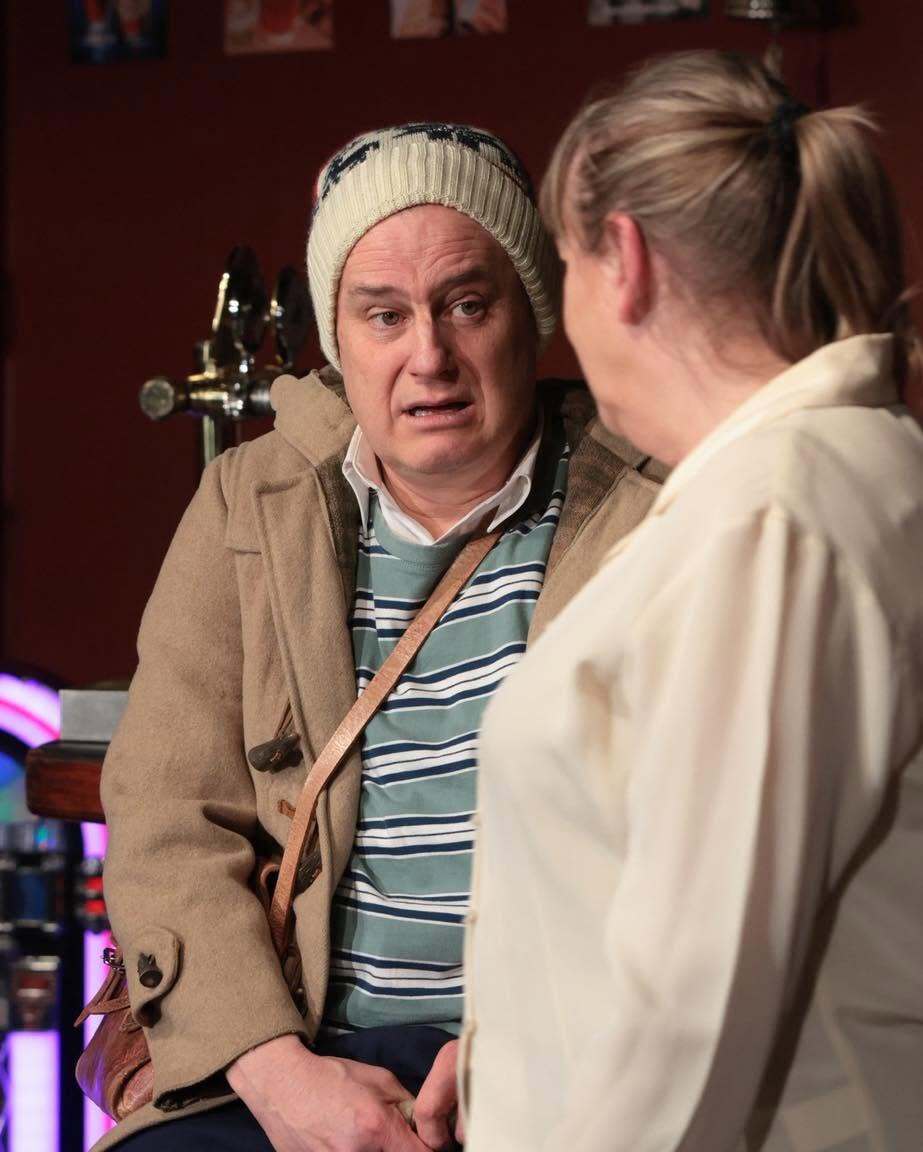
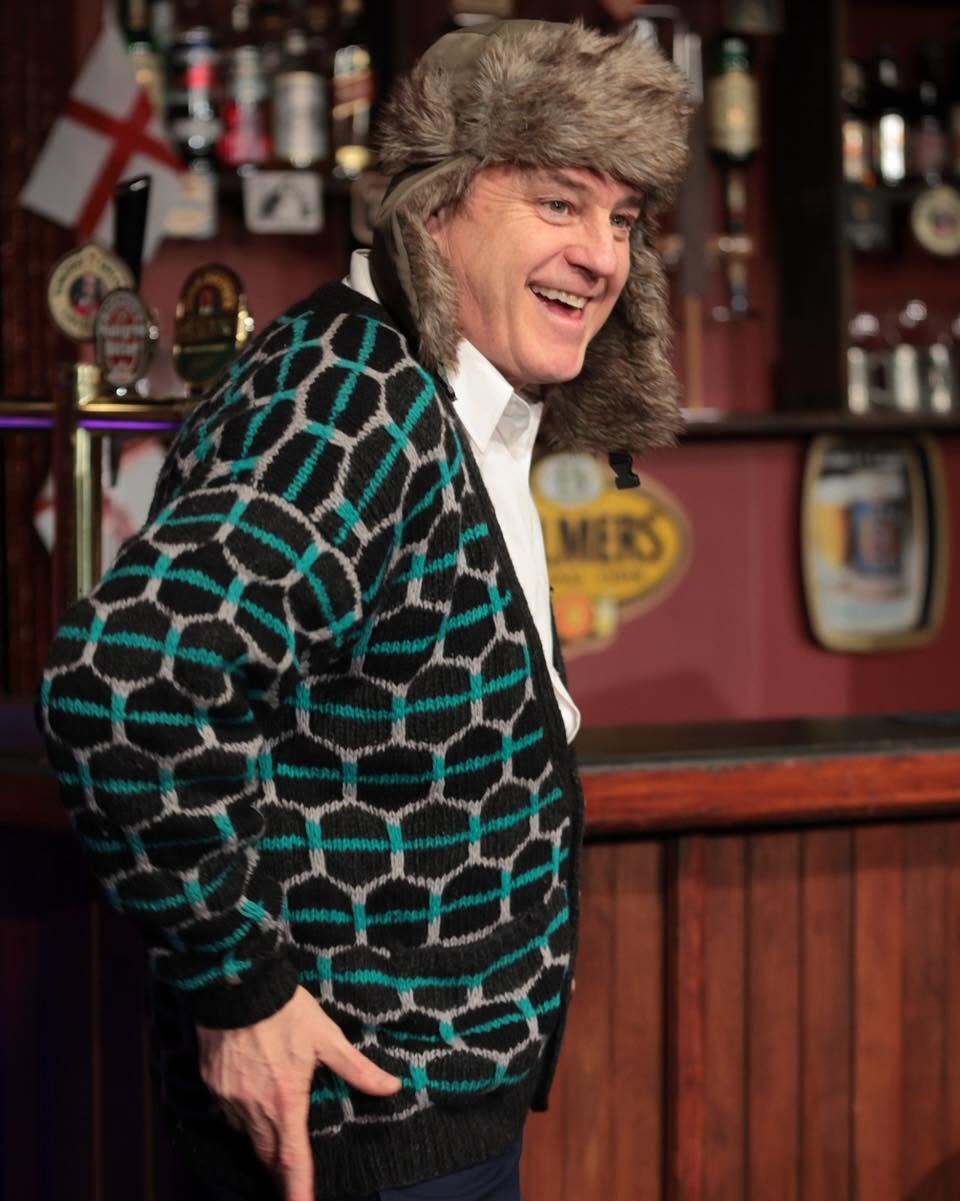
Speaking of which, the landlord, played by the very charismatic Chris Mentor, is simply mesmerising as he is so nuanced in every character he plays. From a sensitive 7 year old boy, to a damaged husband, to a widower tenderly describing his grief. And yet, his presence is unwavering and strong; remaining confident and courageous enough to tell stories that range from deeply funny to deeply broken. From his seamless performance, it is clear why Chris Mentor was cast in this demanding lead role.

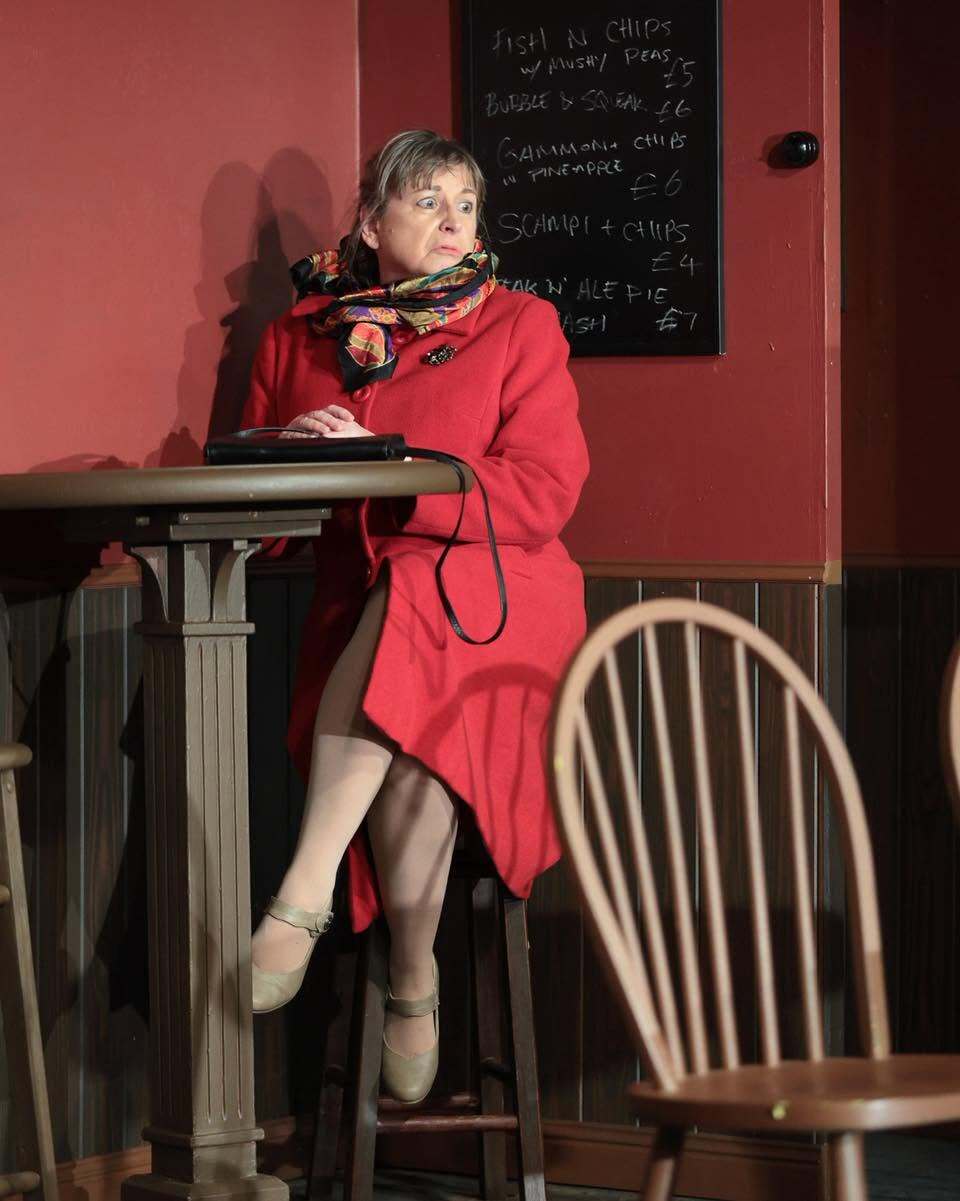
As the Landlady, Angelique Pascoe is exquisite, and her energy of ferocity perfectly matched the role required to play the landlord’s counterpart. Every part she played had the bite and the stacks of humour needed to play such complex female characters, many who owned difficult backgrounds and stories not for the faint-hearted. But she conquered each tale with aplomb, as if it spoke to her heart, completely.

Cartwright’s powerful play ‘Two’, is brilliantly directed by Natasha Boyd, who has perfected in her actors the precise bridging of comedy vs pathos needed to keep us hooked; gripping us in every scene with a spectrum of human emotion and an unbridled energy that pulls no punches. Where in a span of 80 minutes, the audience is fully immersed in a fly-on-the-wall experience of witnessing a vivid cross-section of complex characters come to life inside the closed door of a pub. Where we can bear witness to what it truly means to be human in our most challenging moments.

And lastly, I feel it fitting to mention the incredible set design crew that brought this little English pub to life. From the detailed 80”s lighting fixtures to the bright and jolly jukebox. From the old wooden bar and classic dartboard to the colourful wall-to-wall postered ads all in their fine 80’s form. From every angle, not one detail was left out — even creating a makeshift hallway with paintings off one side of the stage, bringing the aspect of pure realism to the audience, whichever way their eyes looked.

All this, was what indeed made STAG’s ‘Two’ a dramatic experience like no other, filled with a scope of comedy, grit, storytelling and a sum of surprises – making this a winning night out at the theatre.

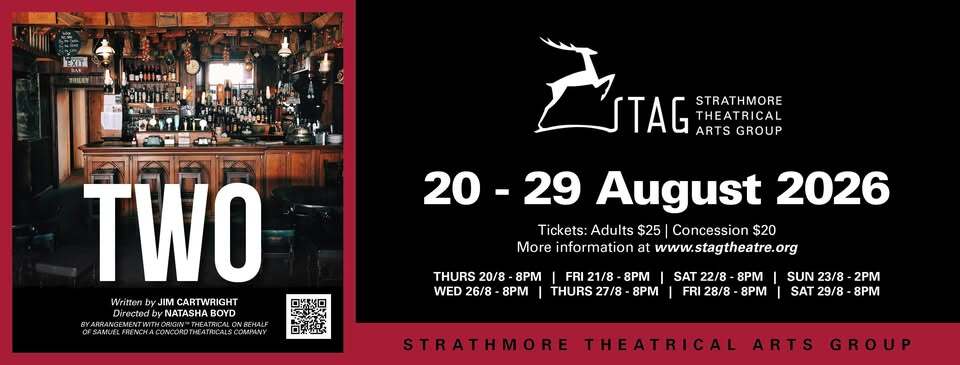
To book tickets to Two, please visit https://www.trybooking.com/events/landing/1528222.

Photographer: Dave Swann

Spread the word on your favourite platform!

Lemons Lemons Lemons Lemons Lemons: When Silence Becomes the Story

Feature-Lemons Lemons Lemons Lemons Lemons by Sam Steiner

What happens when the simple act of speaking freely is stripped away? Rational Animals is bringing this thought-provoking work to Newcastle audiences. The production’s director shares how movement, silence and minimal staging become powerful storytelling tools in their hands.

About The Production – Lemons Lemons Lemons Lemons Lemons by Sam Steiner

What is this production about?

For me, this production is about language, freedom and control. It explores what happens when something as simple as being able to speak freely is taken away, and how that begins to affect our relationships, choices and sense of self.

What is challenging about bringing this script to life?

The biggest challenge has been making the many scene changes and shifts in time feel seamless. With each change, the characters’ intentions, tone, mood and body language shift too. There is a lot happening beneath what can appear to be very simple conversations, so finding a way to communicate those changes clearly, while keeping the pace and rhythm of the production, has been a real challenge.

What sort of person is going to love this show?

I think anyone who enjoys theatre that makes you think, question things and notice the little details will love this show. You don’t need to know anything about politics or censorship to connect with it. At its heart, it’s still a very human story about two people trying to understand each other, communicate and stay connected.

What will the audience be thinking about on the drive home after this show?

Hopefully, they’ll be thinking about how much freedom they actually have in the words they use every day. What would happen if we couldn’t say what we wanted to say? And how would that change the way we communicate, connect and understand one another?

What is going to surprise people about this production?

The movement, repetition, lighting, silence and minimal set all become part of the storytelling. What initially looks like a simple conversation between two people gradually becomes something much bigger. I think audiences will be surprised by how much can be communicated through what is not said.

A heartfelt thank you for sharing the intricate work behind bringing Steiner’s script to life, particularly the challenge of making those many shifts in time feel seamless. For those who love theatre that rewards attention to detail and lingers in the mind long after the curtain falls, tickets are available through TryBooking.

Spread the word on your favourite platform!

Subscribe to What's The Show

Reviews, show news and what is on, straight to your inbox.