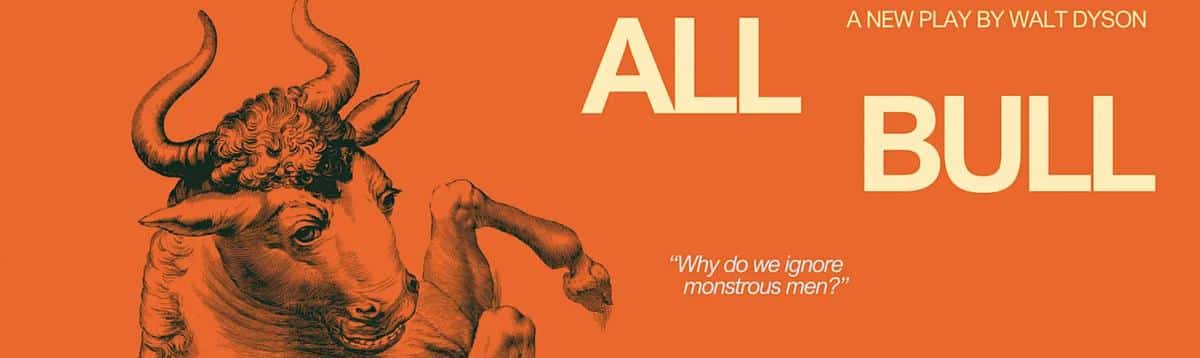
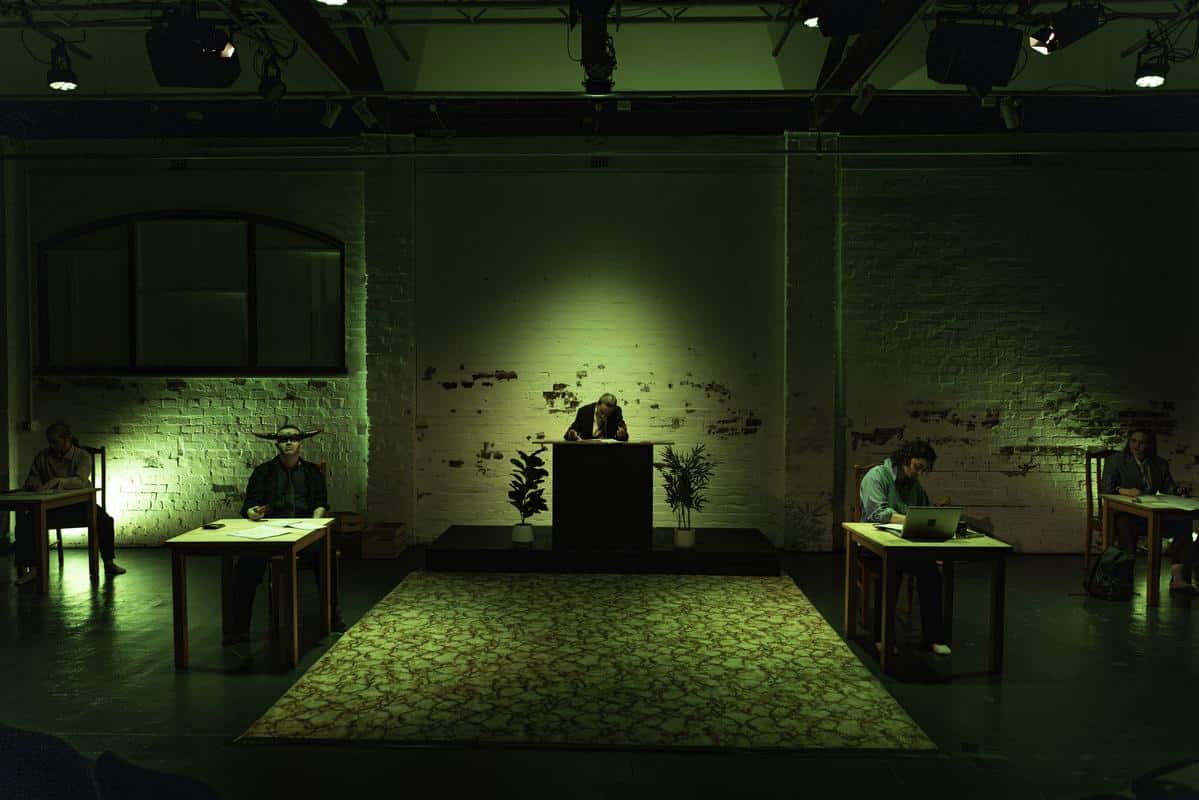
All Bull, written and directed by Walt Dyson, follows a group of five salesmen as they travel from pub to work to pub to work and spot a bull stampeding down the street. As the play progresses, employees Ben (Lousie Jameson) and John (Ashlynn Parigi) attempt to raise the alarm as the group and the rest of the city are turned one by one into bulls.
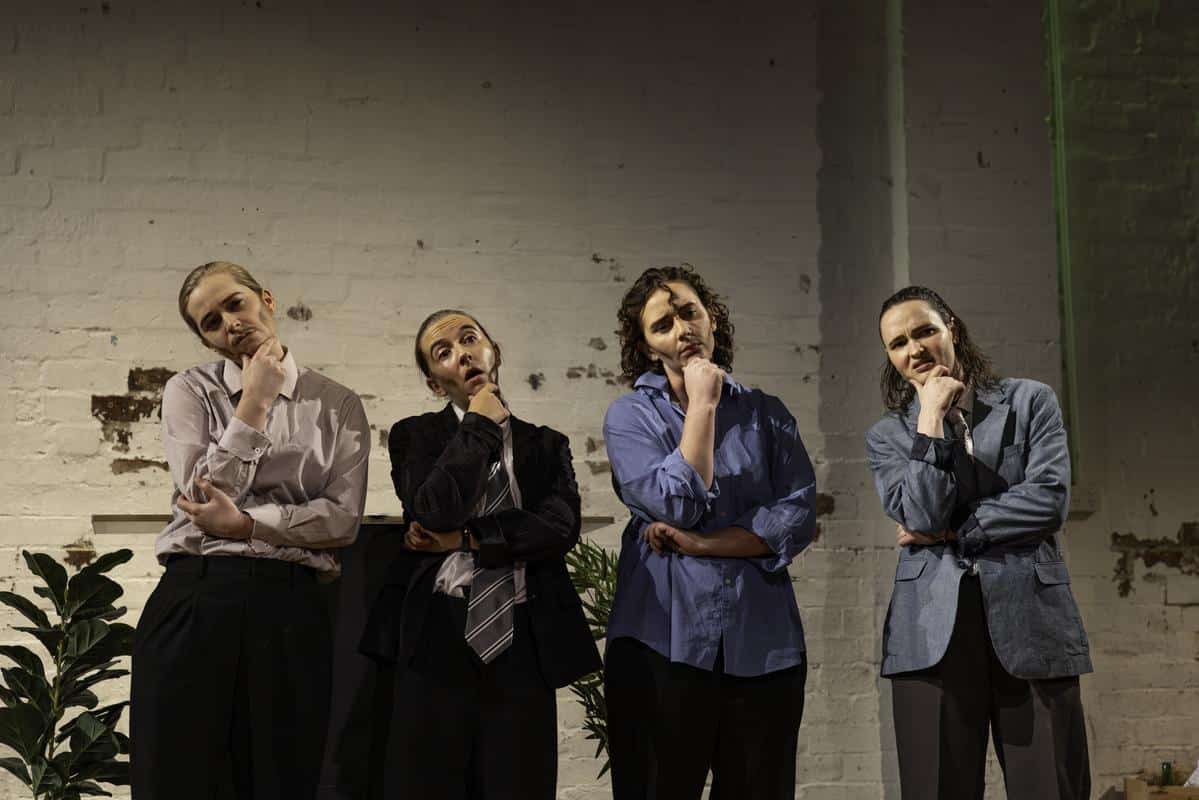
The show is a bit unpolished in a few ways, firstly its tone/style has difficulty finding a home. Joe and Jeff who were played by Emily Farrell and Emily Jenkins respectively, were written almost solely comedically, allowing the actors to lean into the ridiculousness of their characters. Farrell and Jenkins’ clowning energy were fantastic to watch and were real comedic highlights of the show. In comparison, Jameson’s Ben and Parigi’s John were more grounded. Their embodiments created men the audience felt they knew. However this does highlight that the play is unsure whether to commit to realism or camp, and therefore often lands awkwardly in between. There were more camp moments near the start, particularly when first spotting the bull, that I wish had been peppered more throughout.
The sound and composition by Junaid Eastman is a stand out production element. Transitioning from cow bells to clinking glasses, Eastman creates an unnerving environment from when the audience first enters and plays off the tonal layers throughout the show.
While I was particularly excited to see where the bull transformations fit in the themes, the allegory is a bit half baked and attempts to stretch without material to cling onto. The script attempts to make it explicit, spoonfeeding the audience direct lines about what it’s meant to mean, e.g. “bulls will be bulls,” while the allegory itself becomes inconsistent. The reasoning for why some of the men turn into bulls or are drawn to its appeal is underdeveloped. Additionally, the choice of making dangerous men monstrous and unintelligent is already a delicate game.
Though I give credit to the fact the script was attempting to branch out from sexual violence and misogyny – as many productions critiquing masculinity have focused their attention – it ends up being a vague what is being critiqued. It leans towards talking about male alcoholism, but we don’t see it actually cause many problems. In the director’s note Dyson references “drunken acts” he had witnessed, but few happen during the show, including none from Ben who is meant to be the raging alcoholic. It ends up not feeling grounded in these real world issues it’s alluding to, saying “drinking makes men act badly” without proving its claim or asking why. I think there is something in the cracks about how capitalism nurtures toxic masculinity, but it doesn’t develop far.
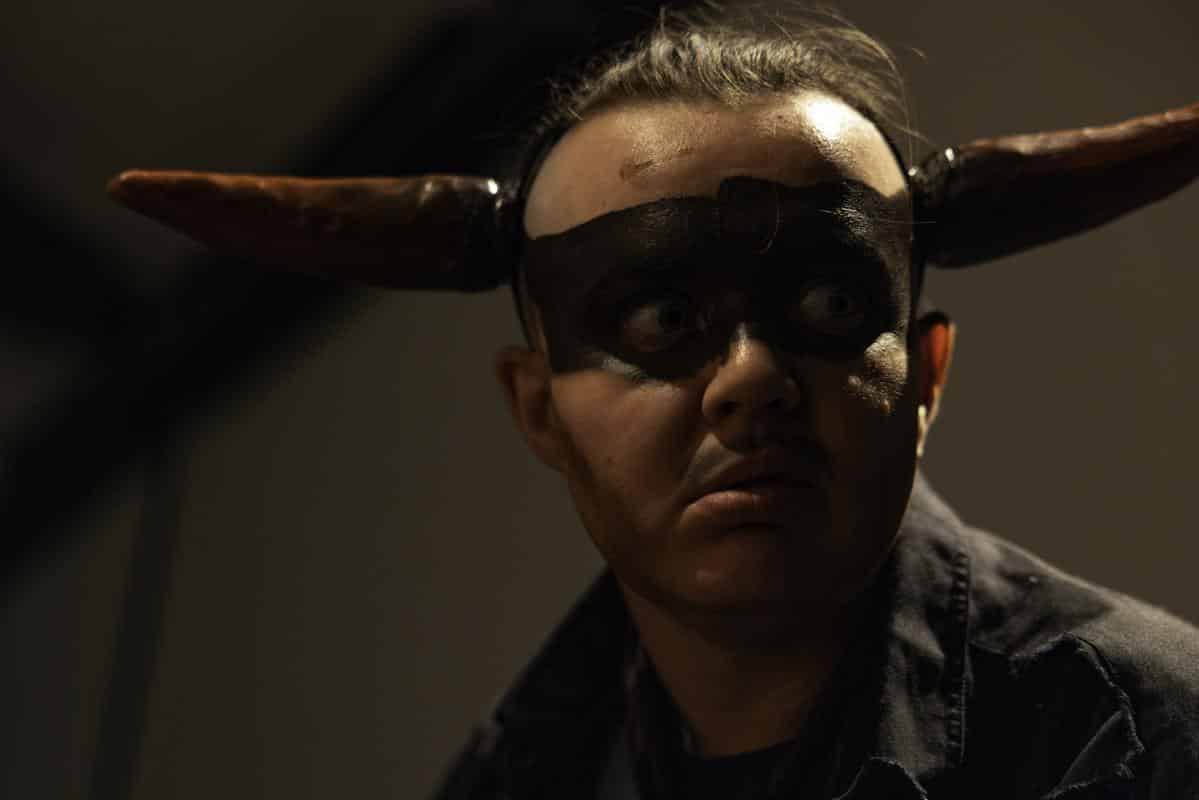
The show’s strongest moments were in the choreographed movement sequences and leaning into the physicalisation and aggression of the bulls. Faun Xe and Eden Bren were standouts in their bullish masculinity, even when doing a set transition the energy was palpable with clear hierarchical lines drawn. The staging did however at times feel static and awkward, often drawing my eye away from the main conversations.
All Bull attempts to examine Australian drinking culture, toxic masculinity and at times the manosphere, but ends up unsure in its thesis. I think with some more development and a confident through thread, this show could truly be something special. In a current climate where there is by no means a lack of theatre about masculinity, Dyson needs to be specific with what he actually wants to talk about.
To book tickets to All Bull, please visit https://www.eventbrite.com.au/e/all-bull-a-play-in-one-act-tickets-1984172243593.