A Look At Love Again In Neil Simon’s Play ‘Chapter Two’

Chapter Two

Chapter Two Rating

★★★★★

Click if you liked this article

3

Chapter One of your life – if you are lucky, you may date, find your ‘person’, your one true love and live happily ever after. But what happens if that person isn’t there anymore? Do you find another True Love? Do you deserve a second chance at love? “chapter two”, written by Neil Simon and directed by Moja Band, is a fast-paced play exploring the human depth of emotional self-introspection.

Neil Simon is widely regarded as one of the most successful playwrights by his audience and peers. Over his career, he wrote more than 30 stage plays, many of which were adapted into major motion pictures – a rare achievement that highlights his influence on both theatre and film. Simon’s work earned him significant critical respect, reflected in his record for the highest combined number of Oscar and Tony nominations received by any writer in show business history. Having written comedies such as the well-known plays The Odd Couple and Biloxi Blues, I was looking forward to seeing the Hunter’s Hill Theatre’s production of “chapter two”.

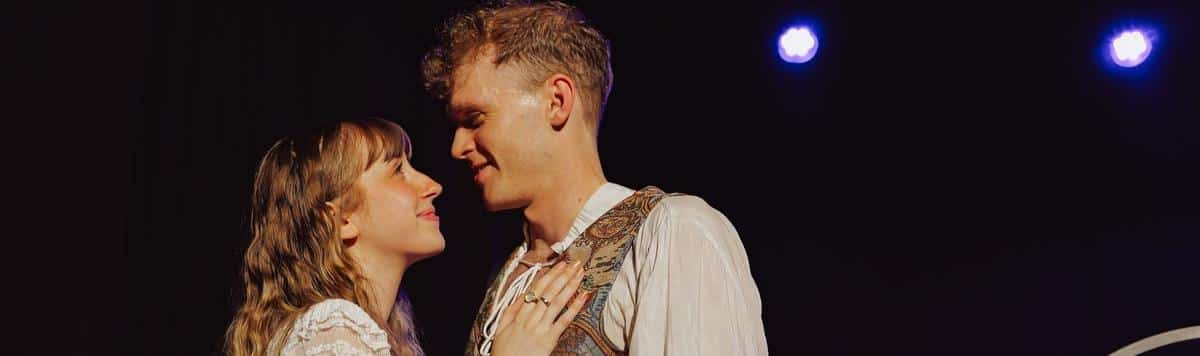
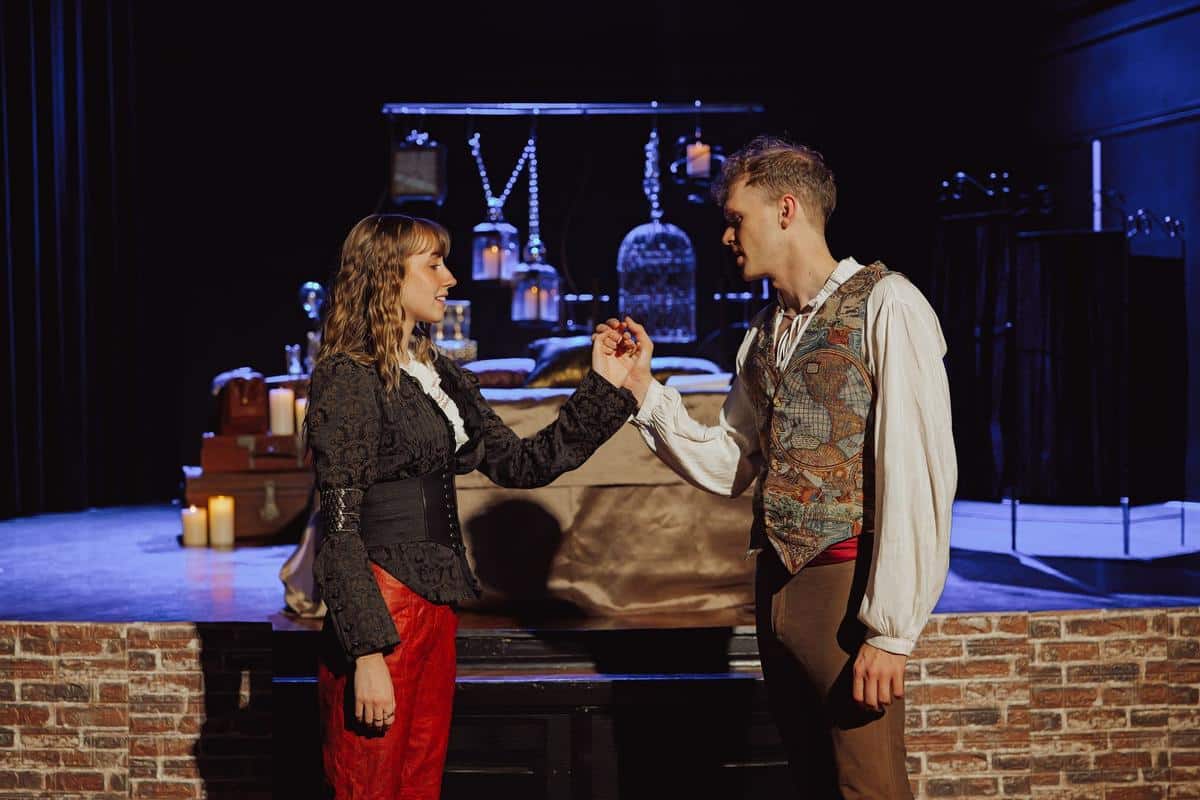
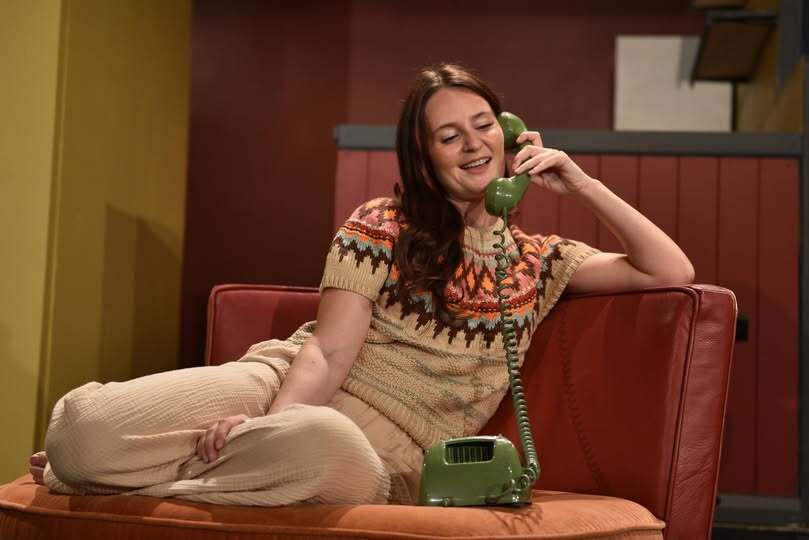
When grieving widower George (Daniel Ferris) returns from an overseas trip that was meant to be healing following the loss of his beloved wife Barbara, his brother Leo (Simon Pearce) sets him up with Jennie (Laura Stead) who had gone through and come out the other side of a divorce. Though at first reluctant to return to dating, George relents and picks up the phone to call Jennie. What follows is a surprisingly strong connection between the two characters and they agree to meet that day in George’s apartment. A whirlwind romance blossoms during the first act leading to an unexpected (from the audience’s point of view) engagement after only knowing each other two weeks. Treated to the witty dialogue with the trademark one liner sharp comedic lines of Neil Simon, carried off with just the right amount of nuance and confidence by the two lead characters, I was hooked and asking myself, “where does it go from here?”.
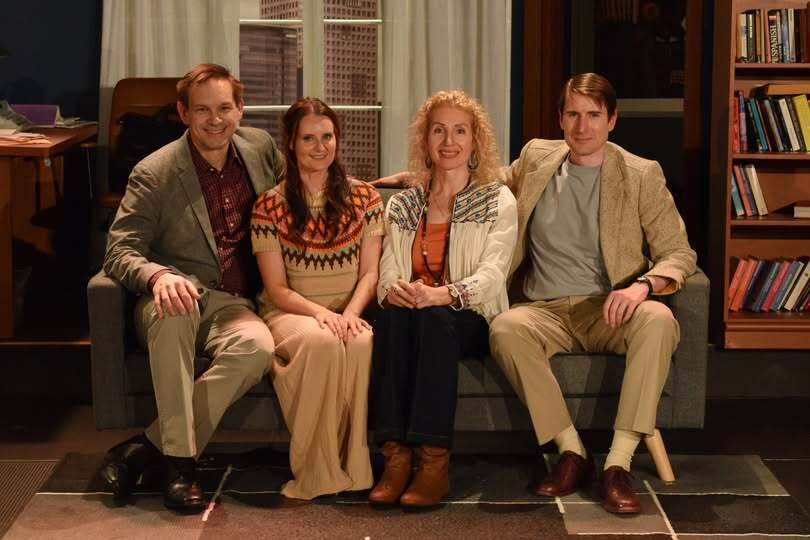


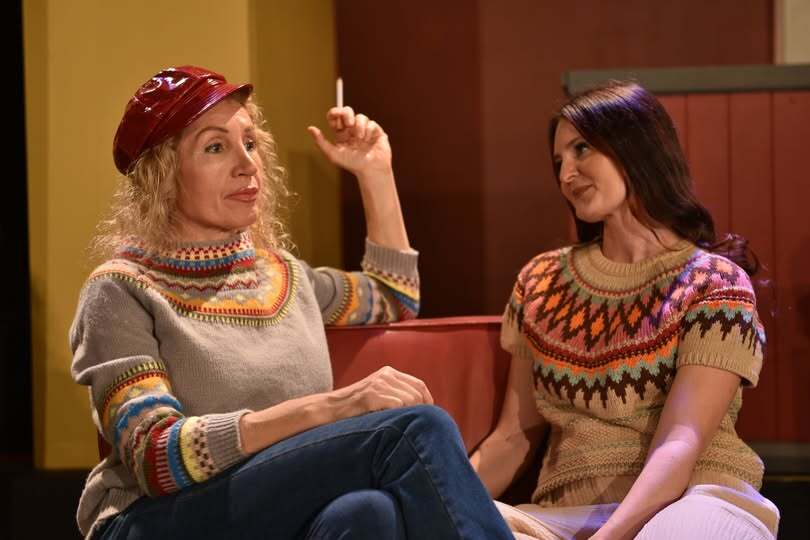
Meanwhile, Jennie’s best friend Faye (Margareta Moir), a brassy actress unhappy in her loveless marriage, longs for attention and affection. Moir highlights Faye’s dramatic lunge into what she hopes will be a cloak and dagger affair with George’s brother Leo, a busy press agent. Pearce leans fully into the role of Leo, a smooth-talking philanderer (and proud of it!) and both he and Moir together deliver the lighter comedic scenes in contrast to some of the more complex themes his younger brother and Jennie are experiencing.

The second act sets out to explore some of these emotionally conflicting themes as George deals with his unresolved immense guilt about moving forward with his life with Jennie. I felt the weight of these heavy scenes as the actors encompass their characters.

Only two months ago, Ferris co-directed The Heartbreak Choir with Pymble Players, which I saw and loved. He quickly switched hats from director to actor onstage, with an outstanding performance playing all the complicated highs and lows of George. “chapter two” was semi-autobiographical, echoing similarities of Neil Simon’s life. Like his character, Simon was already a successful writer when his wife of twenty years passed away from cancer. He met and married his second wife just three months after she died. Drawing from his own guilt and subsequent pulling away from his second wife in the months shortly after their marriage, it is no wonder the dialogue felt so real and raw.

Jennie is left with the emotional fallout of George’s unhappiness during their honeymoon and on the return to their apartment. Stead’s performance led me to be cheering for her character to have a happy life as when we first met Jennie, she was bright, a real sweetheart and full of life. There were plants all around her apartment and from the first telephone conversation, Jennie’s optimism and sweetness was apparent. In the second act, Jennie stood up to George when he was saying some hurtful things to her, and the strength in these scenes showed us that she would fight for George because she loved him, and that she had the confidence to not be a replacement wife but be loved for who she is.

Stead delivers a commanding performance as Jennie, capturing her fierce independence, yet also her raw vulnerability. I had seen Stead some time ago performing the lead role in Hunters Hill Theatre’s “The Ballad of Maria Marten” and I remember that I was impressed by her acting then. It is to her credit that I didn’t recognise she was the same actress until I read her bio in the program, as that character was so different from the current character she was portraying; a testament to Stead’s acting.

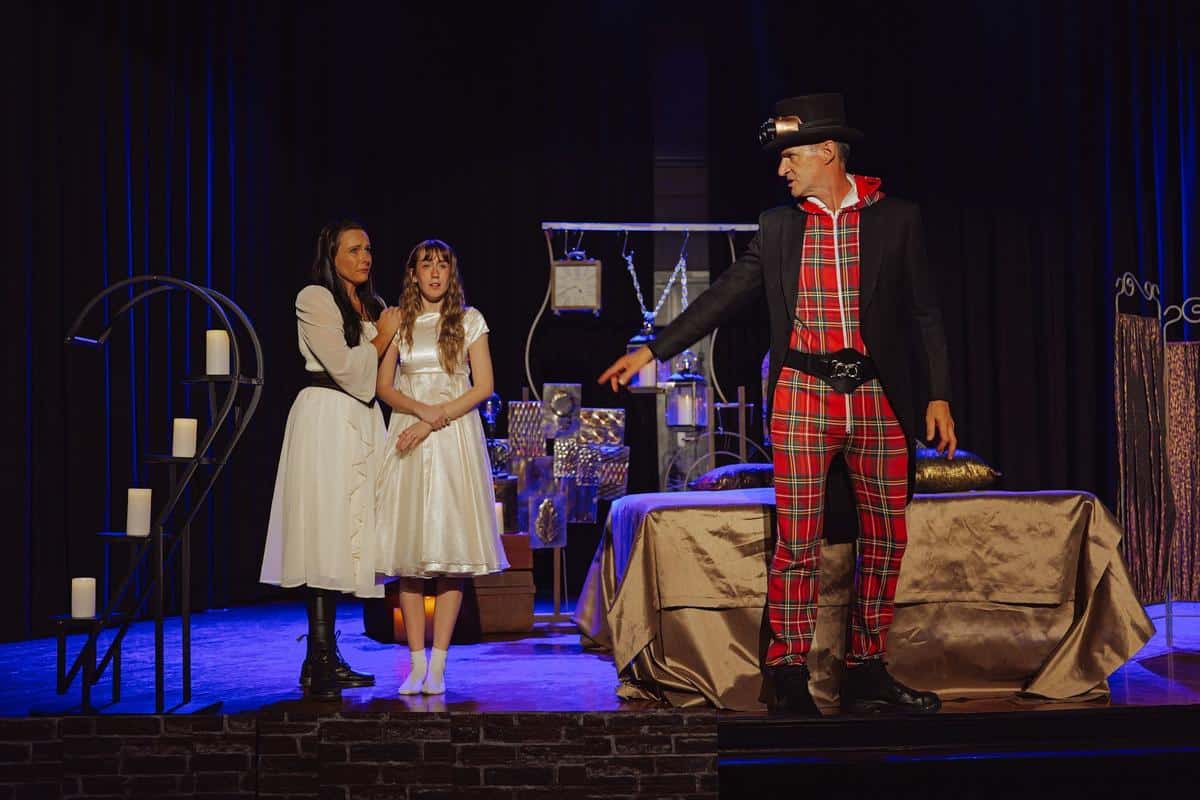
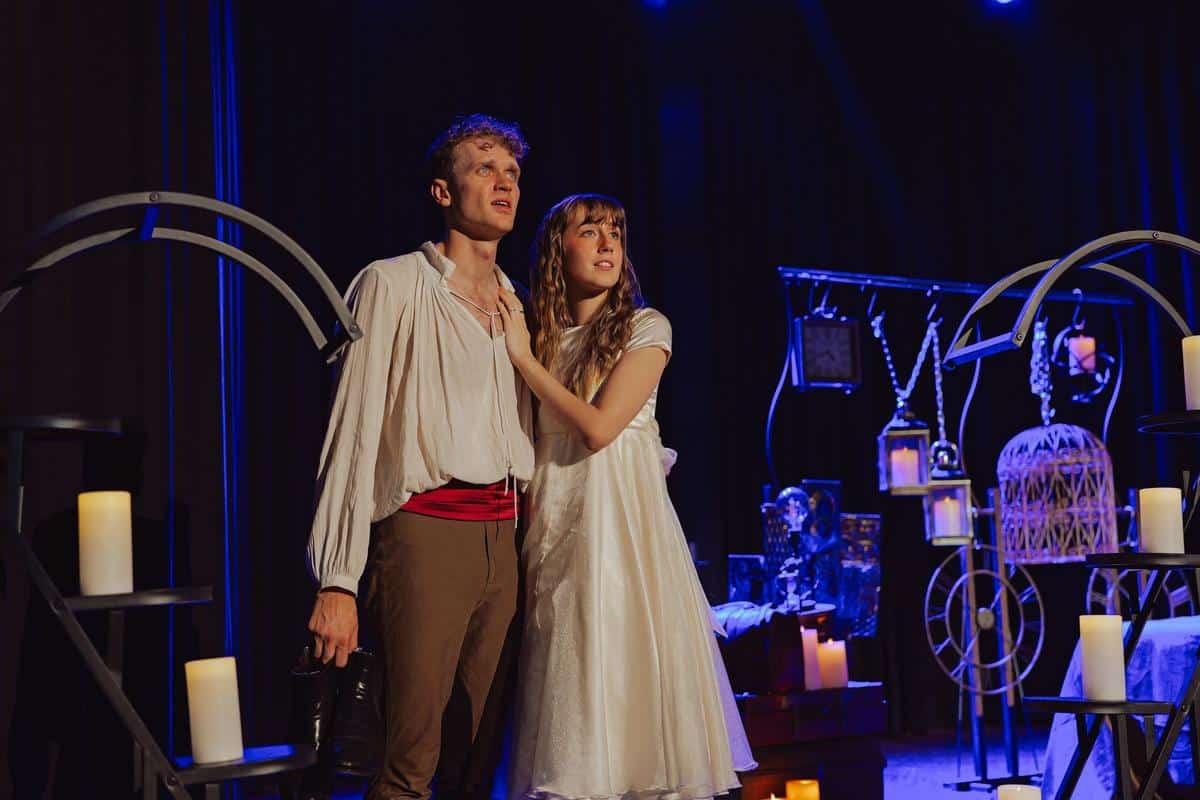
The stage was divided into half, with each representing George and Jennie’s apartments. The lighting design by Antony Read worked well, using different types of light and strengths to highlight each. The sound design by Peter Tucker brought out the emotional moments in the play, with songs from the 1950’s lyrics delivering subtle messages to the audience. Well done to the lighting and sound operators Wayne Chee and Oliver Davies on the night I attended the play.

“chapter two” is a witty and emotionally raw masterpiece. Book your tickets to see Hunters Hill Theatre’s performance of this deeply moving play, which invites audiences to witness a story of self-reflection after tragedy and the courageous pursuit of true happiness, the second time around.

Season: 29 May 2026 – 21 June 2026
Running Time: Approx 2 hours with a 15 minute intermission
Club Ryde Ex. 728 Victoria Road, Ryde.
Tickets: www.huntershilltheatre.com.au

To book tickets to Chapter Two, please visit https://www.huntershilltheatre.com.au/.
Spread the word on your favourite platform!

The Last Witch

The Last Witch

The Last Witch Rating

★★★★★

Click if you liked this article

2

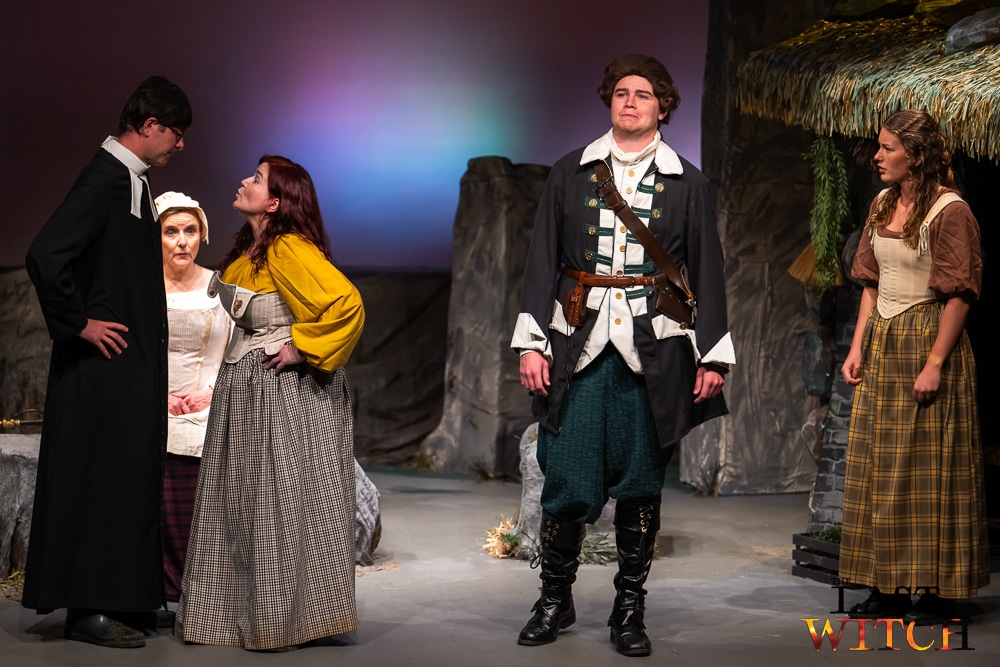
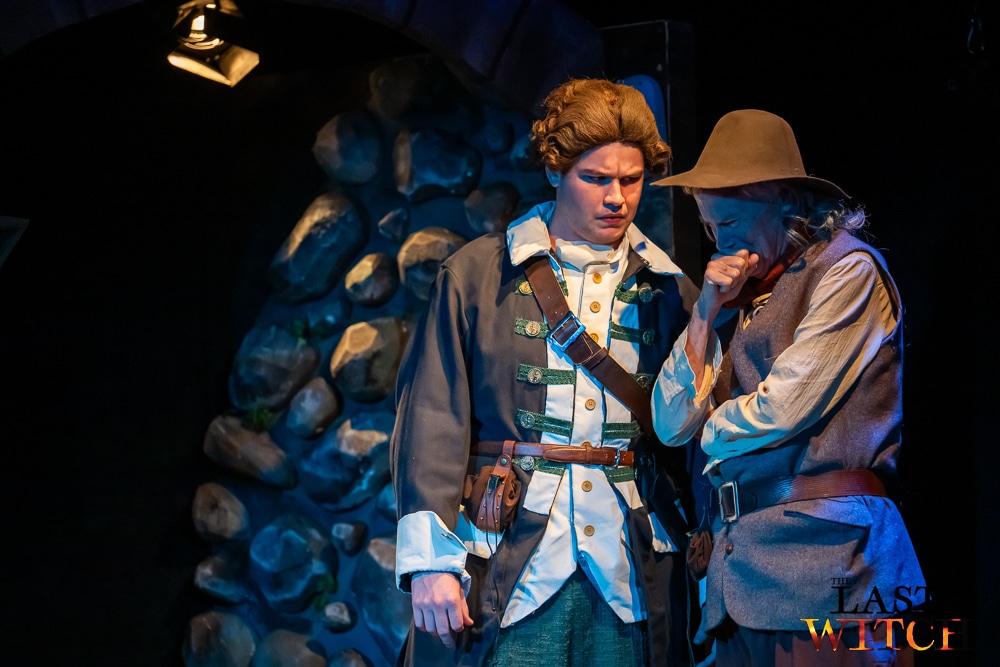
A compelling blend of historical fact and supernatural mystery, Rona Munro’s The Last Witch is a fictionalised account of the last woman to be officially burned for witchcraft in Scotland. Through the fiery clashes between Janet Horne (Paula Searle) and Dornoch’s spiteful new sheriff Captain Ross (Toby Rowe), The Castle Hill Players’ rendition of The Last Witch explores the dynamics of social power between men and women in the 18th century and presents a cautionary tale of what happens when two equally intemperate people with the power to cause harm refuse to back down.

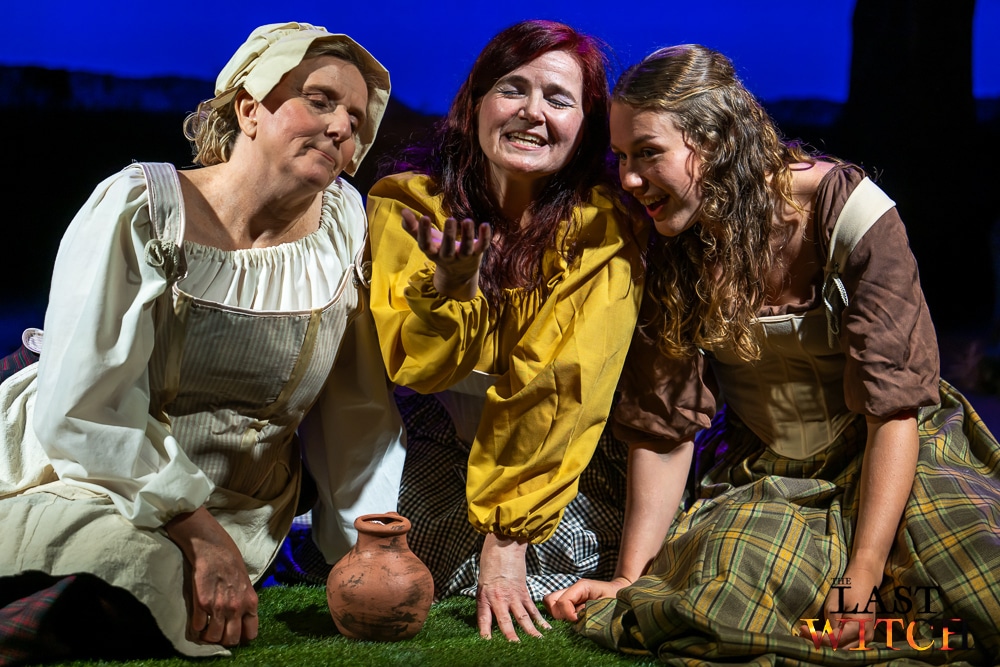
Paula Searle is an electric presence onstage, capturing Janet as both woman and myth through stunning monologues and sometimes shocking interactions with other characters. She has two brilliant moments in Act I that I believe summarise her character; when Captain Ross first visits her cottage to investigate, she easily gains the upper hand in their conversation and evades his questions, acting as though she is about to deny the accusations. She then offers to read his palm and divine his past, a blatant act of witchcraft and a ridiculous escalation of the situation. Later on, in a lovely but misguided moment of emotional connection, Janet comforts Helen and her friend/neighbour Elspeth Begg (Penny Johnson) in their hunger by drugging them with a hallucinogenic herb to make them believe they have access to food. I loved this little show of Janet’s strange ways of caring, and I also loved the (perhaps accidental) nod to a popular Salem witch trials theory.
Janet’s constant contradictions make it almost impossible for the audience to form a solid opinion on her. Is she really a witch? Is she even really all that much smarter than the daughter she derides? Perhaps only Janet could give a definitive answer.


The play’s opening night brought a stunning set design of sprawling grass and weathered stone structures, polishing off the scenes with a perfect use of lighting and sound alongside an admirable commitment to Scottish accents. I particularly enjoyed the slow shifting of an aurora borealis as Janet cast her opening spells, the orange glow of the stones underneath Janet’s stake, and the simplicity of spotlights becoming a full moon for Janet’s daughter Helen (Chloe Overeem) to take her own first steps into magic.

Hidden beneath the sordid tales of seduction, ego, and the haunting presence of what could be the Devil himself, The Last Witch is a simple story of the enduring strength of everyday women. The male characters pop in and out of scenes, delivering powerful sweeping statements that completely change the lives of Janet, Helen, and Elspeth, but the relationships forged from powerlessness between these three women ultimately become powerful enough to stop Captain Ross’ path for vengeance and end the cycle of violence before it sweeps beyond Janet.

To book tickets to The Last Witch, please visit https://paviliontheatre.org.au/the-last-witch/.

Photographer: Chris Lundie

Spread the word on your favourite platform!

Come you Spirits’ Romeo and Juliet: Immersive and Impressive

Romeo & Juliet

Romeo & Juliet Rating

★★★★★

Click if you liked this article

Romeo and Juliet. Two starry-eyed lovers whose story ends in tragedy. This iconic and universally known play has been performed globally for centuries. The Shakespearean theatre group Come you Spirits’ performance of Romeo and Juliet onstage at the Darling Quarter Theatre, directed by Charles Mayer and Jo Mayer, was immersive.

Through the very first inclusion of the gentle tapping of a suspended gong by Charles Mayer, and the deep, beautiful sustained vibrational tones that Jo Mayer produced on the crystal singing bowl, the audience was introduced into the world of Shakespeare in a truly magical and harmonious way.

Romeo, played by Ciarán O’Riordan and Charlotte Edwards as Juliet performed the title roles. Both actors conveyed their characters’ young love with an earnestness and innocence, and in the second act, with the desperation and anguish that the characters needed. Who wouldn’t swoon with Romeo’s line, “Heaven is here, where Juliet lives.” O’Riordan aptly portrays Romeo’s intensity of his emotions, aligning Juliet with celestial skies, and taken alone without context of the whole quote, it is one romantic quote!

Edward’s delivery of one of my favourite lines was perfection –
“My only love sprung from my only hate,
Too early seen unknown, and known too late!
Prodigious birth of love is it to me
That I must love a loathed enemy.”


In one scene, Edwards was riveting as she faced the heartbreaking choice of following her father’s wishes of Juliet marrying a man he had chosen that she did not love, or face an uncertain future. Lord Capulet, played with a fierceness by Charles Mayer, had a cold stage presence which demanded obedience, or Juliet would be disowned and thrown out onto the street to survive on her own. This scene was particularly strong, and clearly conveyed as the turning point for Juliet’s future plans.

Mayer also played The Friar, the gentle well-meaning clergyman who secretly marries Romeo and Juliet in the hopes of bringing the two feuding families together, as well as being pivotal in providing the potion to Juliet. The two characters’ different personalities showcased Mayer’s acting talent.

Jo Mayer took on dual roles as Juliet’s Nurse and Tybalt. Her depiction of The Nurse was warm and nurturing, serving as a trusted confidante to Juliet. In stark contrast, Mayer brought great energy and passion to her portrayal of Tybalt, capturing their fiery temperament.

David Halgren accurately portrayed Mercutio as the lovable rogue that his character is. He captured the boisterous charm and brought a fiery zest to Mercutio, clearly shining and delivering the bawdy humour directly to the audience. His untimely demise, with the famous lines –
“A plague o’ both your houses.
They have made worms’ meat of me.”
was hard hitting and led to a chain of events that shaped Romeo’s future.

All actors’ accents and, in my opinion, difficult cadence of the Shakespearean language was performed with flawless professionalism throughout the play.

Another original touch to Come you Spirits Romeo and Juliet was the setting. Verona was set in the barren post-apocalyptic land. The characters wore bandanas and gaitors to cover the lower parts of their faces, in part to disguise who they were and to protect themselves from the tumbling dust from sandstorms and brown leaves strewn around the stage. Lighting and sound played a large part in this play, with spotlights, sirens and announcements from the unseen higher hierarchy that alluded to a chaotic environment.

Lighting Design was by Adam Applebaum and the mood he created set the play’s authenticity to bringing our attention to where he wanted us to be.

Kudos to Brandon Read, who composed and performed original music for Romeo and Juliet. Together with his sound design, it completed this magical play. The audience heard Gregorian Chanting, and Read composed the tracks to Solfreggio frequencies, which throughout the show, aligned with our seven chakras.

This was a truly original experience, different to any Romeo and Juliet play I had previously seen. The characters’ movement around the theatre, into the area where we were, and talking to the audience gathered us all together. Shakespeare would have been impressed seeing this interpretation of Romeo and Juliet through Come you Spirits eyes. And he would have left feeling peaceful and fulfilled, at a night witnessing a tale of comedy and tragedy, ending with a grounding and beautiful meditation of gratitude to people and nature. This is a gorgeous production of Romeo and Juliet, do not miss seeing this and being taken away into the world of Shakespeare.

Romeo and Juliet is showing at Darling Quarter Theatre 20 – 22 May 2026 and at the Concourse Theatre Chatswood 28-30 May 2026
Tickets: www.comeyouspirits.com/in-sydney
Running time: 2 hours with a 15 minute interval

To book tickets to Romeo & Juliet, please visit https://www.darlingquartertheatre.com.au/event/come-you-spirits-romeo-and-juliet/.

Photographer: Syl Marie Photography

Spread the word on your favourite platform!

The Birds: Gothic Horror At Belvoir

The Birds

The Birds Rating

★★★★★

Click if you liked this article

Feathers fly and beaks pierce in this contemporary take on Daphne du Maurier’s horror classic.

Gothic horror is officially having a revival. Nosferatu by Robert Eggers. Guillermo del Toro’s Frankenstein. Emerald Fennell’s Wuthering Heights. STC’s production of Dracula, starring Cynthia Erivo, on London’s West End. Daphne du Maurier’s novel Rebecca is revered within the gothic horror canon, alongside her short story The Birds.

Du Maurier’s ‘The Birds’ is a tight, terrifying tale written and set in Cornwall, in the 1950s. This is post-war England. Men and women that fought against fascism and survived the blitz. The story focuses on Nat, his unnamed wife and their children, Johnny and Jill.

Without warning, the birds begin to flock, and attack. They gather, out to sea, in the winter fields. Driven by the east wind. Besieging the family. Drawing blood with stabbing beaks.

Nat is more prepared that his distant neighbours. He observes and acts. Others fall victim to the birds, their bodies left lying in and around their homes.

Alfred Hitchock’s classic chiller ‘The Birds’ followed in 1963, shifting the action to Bodega Bay, California. Hitchcock took the title and the concept and had Evan Hunter (better known by his pen name, Ed McBain) rewrite the story.

Hitchcock’s movie centres on socialite Melanie Daniels (Tippi Hedron’s debut) and lawyer Mitch Brenner (Rod Taylor) as the birds attack and they struggle to survive and keep Brenner’s mother Lydia and young sister Cathy alive. (Interesting side note: Cathy is played by teen Veronica Cartwright, who went on to play Lambert in Ridley Scott’s classic sci-fi horror, Alien.)

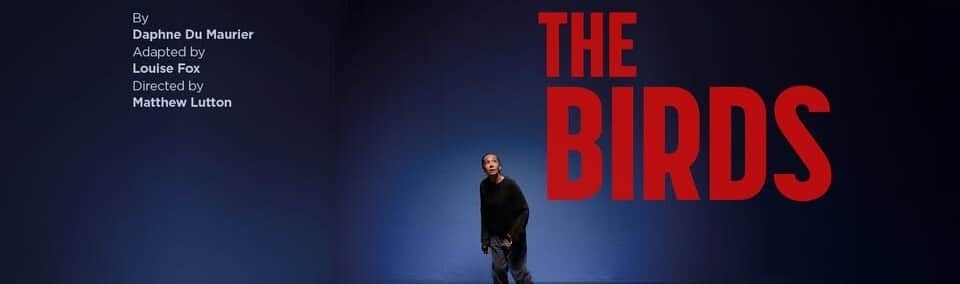
In 2026, Belvoir presents Malthouse Theatre’s production of ‘The Birds,’ directed by Matthew Lutton (The Return, Picnic at Hanging Rock, The Bloody Chamber) and adapted Louise Fox (Glitch, Tartuffe, The Trial)

Lutton and Fox decided to transpose the story to Australia, to a small seaside town somewhere in Victoria, bringing the action up to date with mobile phones, pandemics and conspiracy theories.

Australia is the only country in the world to fight, and lose, a war against birds. In 1932, the military, armed with Lewis machine-guns, were sent to Western Australia to defend the wheatbelt in the Great Emu War. Australia is legendary for its deadly fauna from funnel web spiders and red-bellied black snakes to sharks and stonefish. Birds and quokkas are among the few things that aren’t trying to kill you.

Despite the Australian setting, the attacking birds are predominantly the gulls and gannet of Du Maurier’s short story. I’ve seen sulphur-crested cockatoos eat a trampoline and hack through wire screen doors with hooked beaks and talons. We never hear these natives in the soundscape. No screeching cockatoos or menacing kookaburra laughter. I’m afraid that if Australia’s birds suddenly turned murderous, we wouldn’t survive the 80-minute duration of the play.


Lutton and Fox’s decision to make this a one-woman show, casting Paula Arundell (The Master and Margarita, Harry Potter and the Cursed Child) was a masterstroke.

Arundell leads as Tessa. She is Nat’s unnamed wife from Du Maurier’s short story given the name of Melanie Daniel’s unseen aunt from Hitchcock’s movie. Arundell shifts roles and voices as Tessa talks to her husband, children and neighbours. This is a choice – and like Vegemite you may love or hate it. For me this jumping between roles was a misstep, dragging us out of the building tension, throwing the focus away from Tessa to other characters that will never be fully realised. In an 80-minute show, every moment away from that central character is a loss and the zig zagging was distracting.

The adaption introduces other issues. Australianisms and moment of humour pierce the rising tension, deflating the horror. We lose the gradual building terror of Du Maurier’s original story, where she deftly escalates from waves of small birds to gulls and gannet, and the grim finality of the birds of prey with their sharp beaks and deadly talons. There was no light comedy to dull that horror. Do 2026 audiences need respite or giggles?

Warnings in the programme include coarse language, and graphic descriptions of violence, harm and death. The coarse language is grating. Does a play really need the F-word and C-word thrown around to be contemporary or authentic? They added nothing but took a lot. Likewise, Fox’s graphic and gory descriptions of the dead and dying add little but shock value. The audience’s imaginations can conjure these horrors without a list of brutal injuries and mutilated body parts.

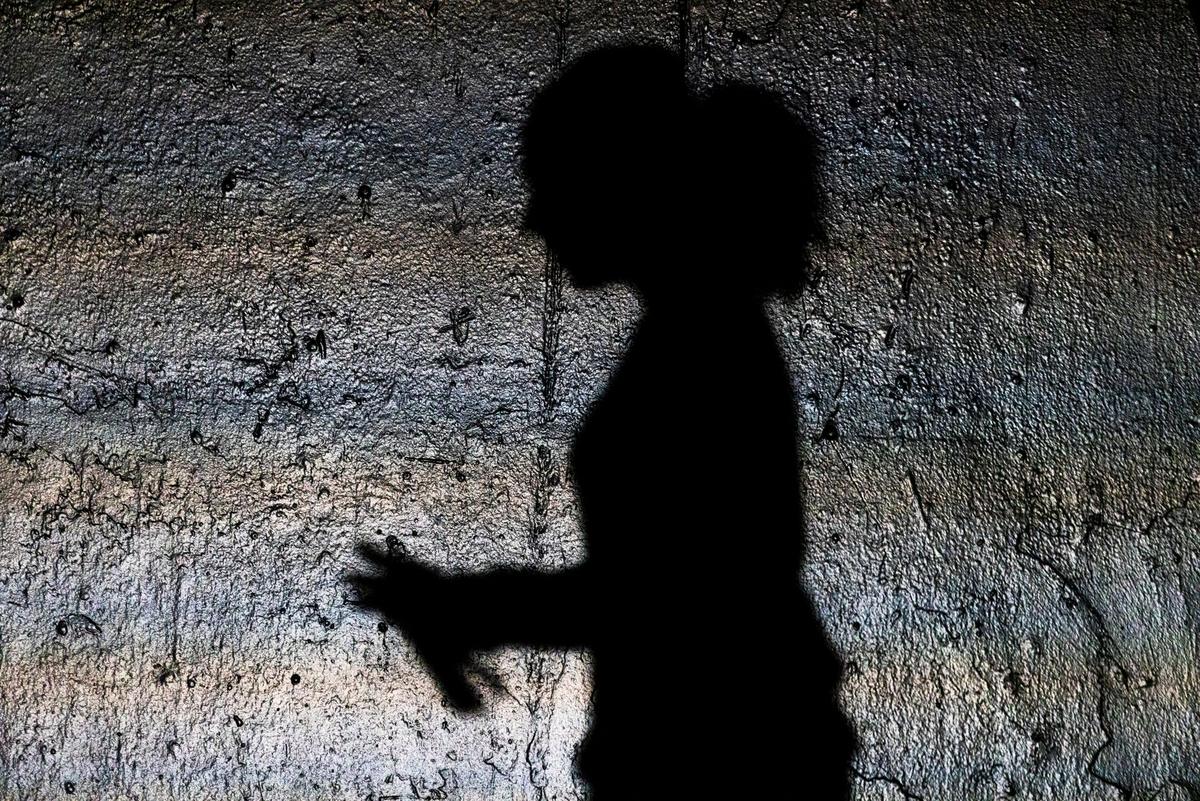
This is a production with no actual birds. No animatronics, no puppets, no projections. The bird attacks are conjured with stabbing sound and fierce white light. The effect is visceral and nothing short of brilliant. Lighting Designer, Niklas Pajanti, and Composer and Sound Designer, J. David Franzke’s collaboration is breathtaking.

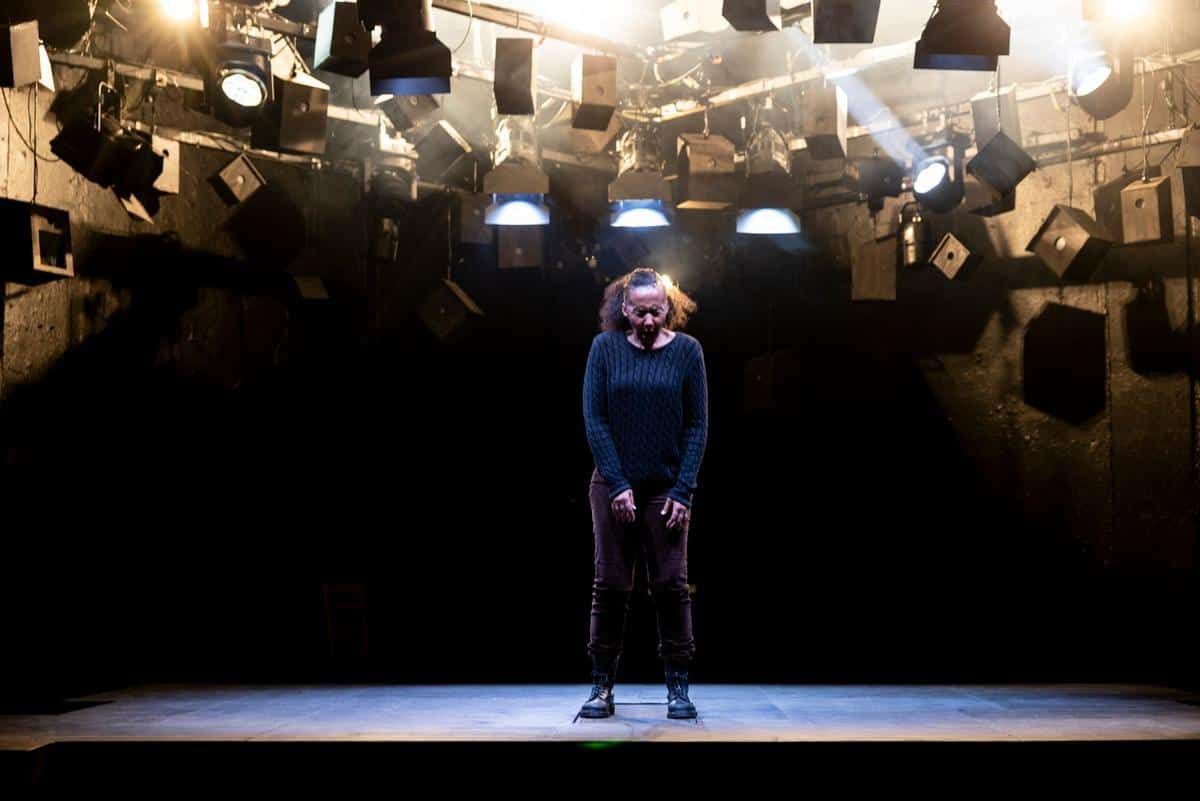
Kat Chan’s set appears minimalist at first glance. Three white windows and pitch-black staging. The outline of Tessa’s house as a raised platform. The inclusion of a treadmill felt like a gimmick. When Arundell is running for her life, it sadly looks more like she’s jogging at a 24-hour gym. (Useless fact: Hitchcock used a treadmill on a soundstage for the scene where the schoolchildren flee the crows. They ran on a treadmill, in a cage, while handlers threw live birds at their heads!) Chan’s set extends above Arundell’s head as the roof threatens to cave in on Tessa. I may have imagined it but there seem to be black bird boxes hiding among the stage lights. Black roofs, holes cut in their sides, like little gothic haunted bird houses.

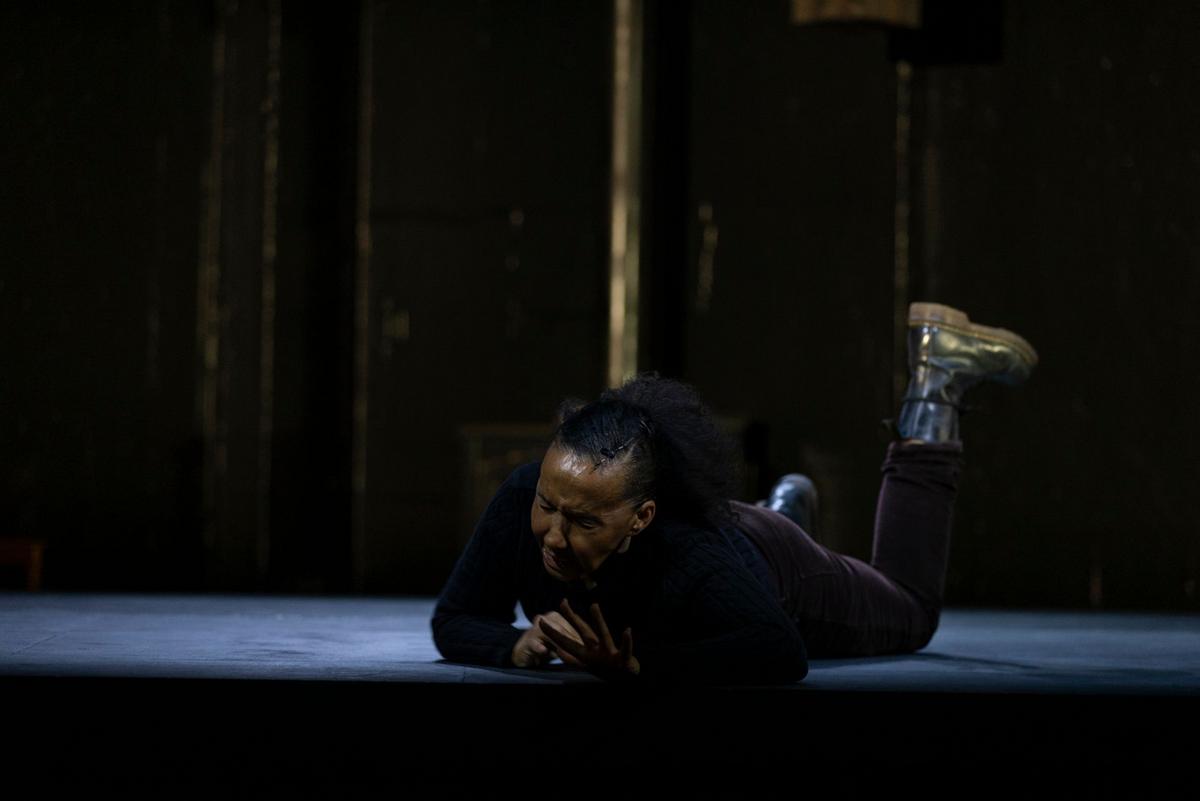
Paula Arundell is a force to be reckoned with. Horror is often looked down on as a genre. But Australian actors have taken horror roles as an opportunity to shine. Nicole Kidman in The Others. Toni Collette in Hereditary. Samara Weaving in Ready or Not. Naomi Watts in The Ring. Essie Davis in The Babadook. Paula Arundell appeared in Late Night with the Devil. She plays Tessa as the final girl, initially confused and afraid but gradually adapting and finding her power, fighting back to protect the ones she loves.

Arundell’s barnstorming performance, and the lighting, sound and set design lift this production, creating a gothic horror for the post-pandemic, post-truth age.

To book tickets to The Birds, please visit https://belvoir.com.au/productions/the-birds/.

Photographer: Brett Boardman

Spread the word on your favourite platform!

Subscribe to What's The Show

Reviews, show news and what is on, straight to your inbox.