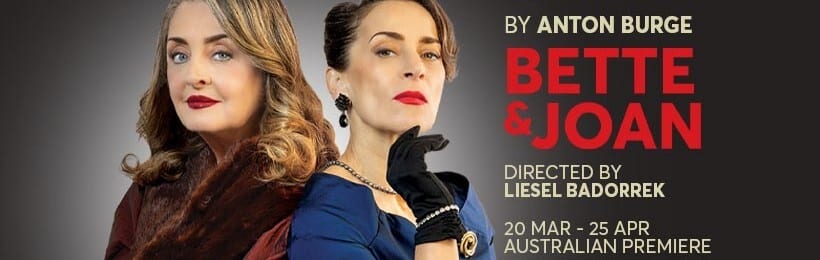
Bette & Joan: Exquisite Acting From Two Top Dames

Bette & Joan

Bette & Joan Rating

Click if you liked this article

The theatre was abuzz as the audience took their seats, anticipating the legendary cat fight ahead.

Two dressing tables, both alike in dignity, face the audience. Behind them – a facade – flats from the film set of “Whatever Happened to Baby Jane” are standing, reverse side towards the audience. We are invited into their private world, to peak behind the scenes.

They were leading ladies of the silver screen so why was “Whatever Happened to Baby Jane” the only picture they ever made together?

A New York Times critic once wrote that to reach their level of stardom, a woman “needed the constitution of a horse and the temperament of a wildcat.”

The rivalry between Bette Davis and Joan Crawford is the stuff of Hollywood legend. Tinseltown was rocked by their personal feud for years. Even at age 79 Davis would say of Crawford: “We’re very different kinds of women, different kinds of actresses… she was a fool… she wasn’t very smart.”

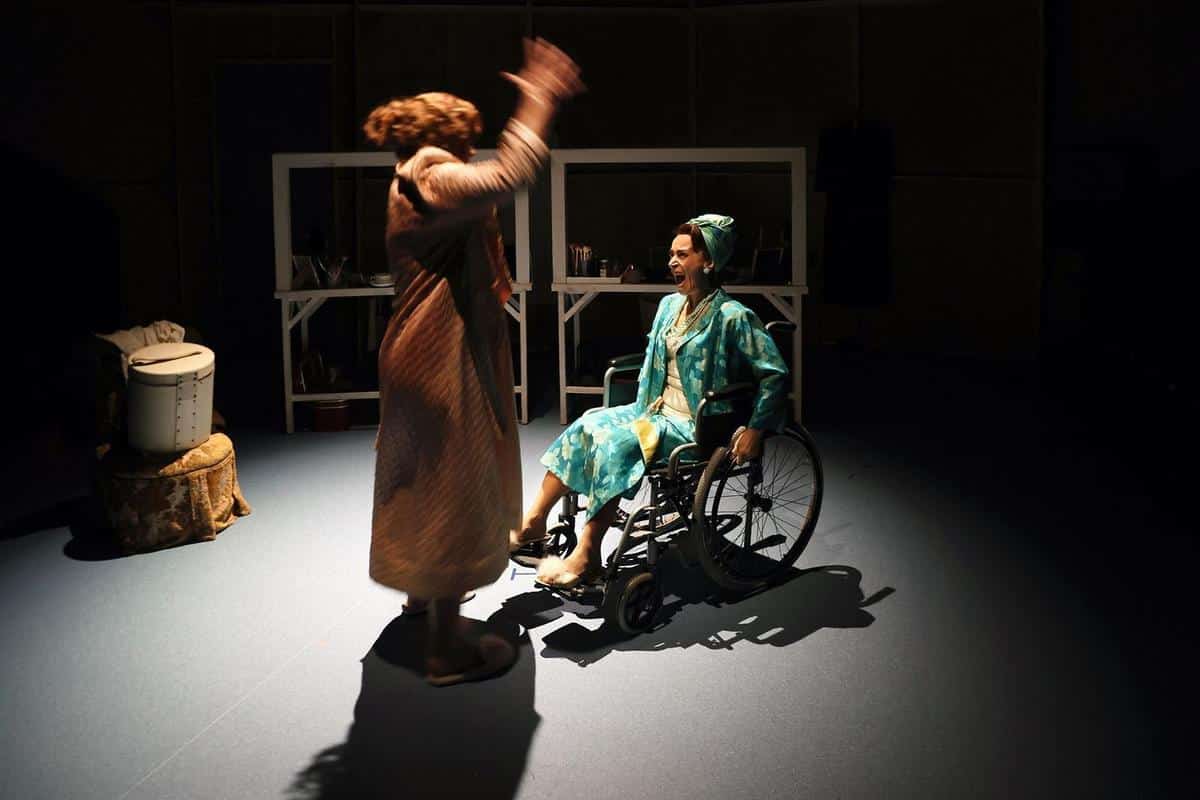
Jeanette Cronin and Lucia Mastrantone reign supreme as the battling pair, both fulfilling the writer’s words with admirable physical and vocal skill.
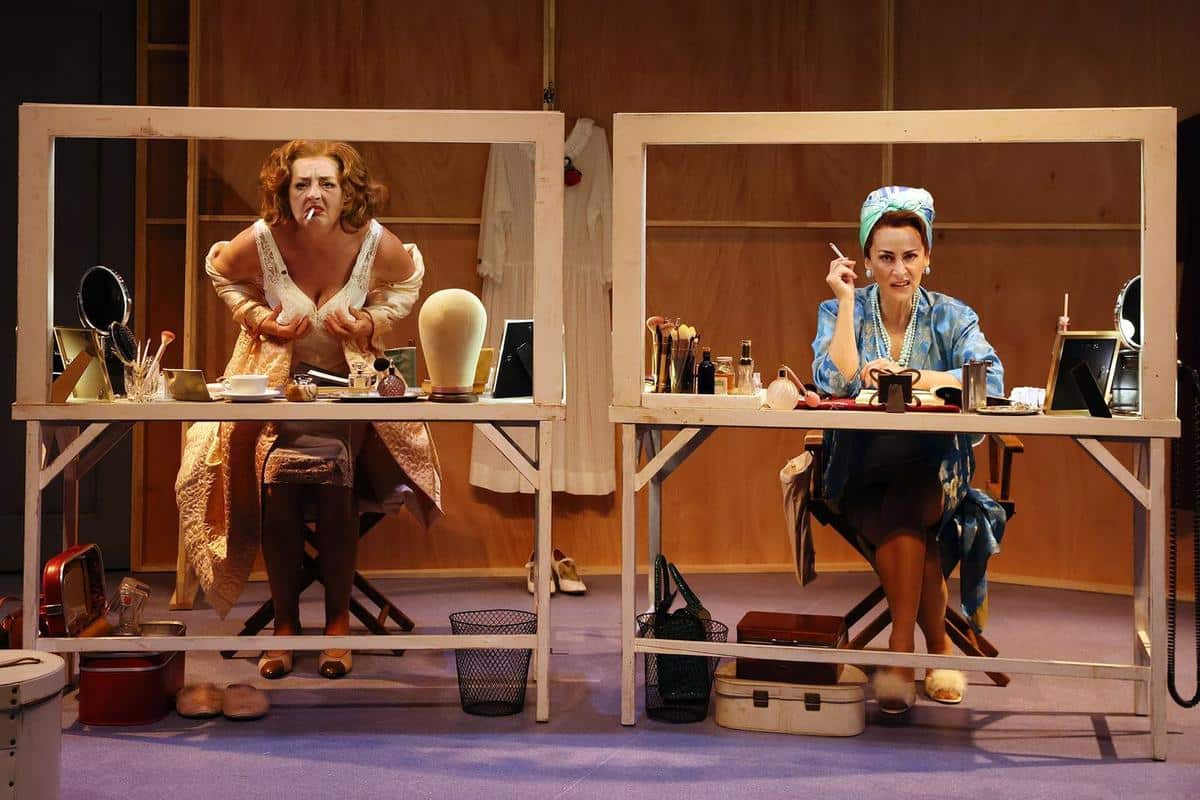


The clash of personality styles is fully realised – Bette Davis (Cronin) as the consummate artist striving for the pinnacle of performance and Joan Crawford (Mastrantone) the OCD actress obsessed with beauty who clawed her way to the top via the casting couch.

Cronin and Mastrantone are well cast and their characterisations specifically detailed, with excellent dialect work by Linda Nicolls-Gidley.

Joan: “Even close to death one must always resemble a star.”

The fourth wall is broken throughout, except in the moments of interaction between the two. This device works brilliantly as we are included in the Machiavellian plots as well as the moments of poignancy.

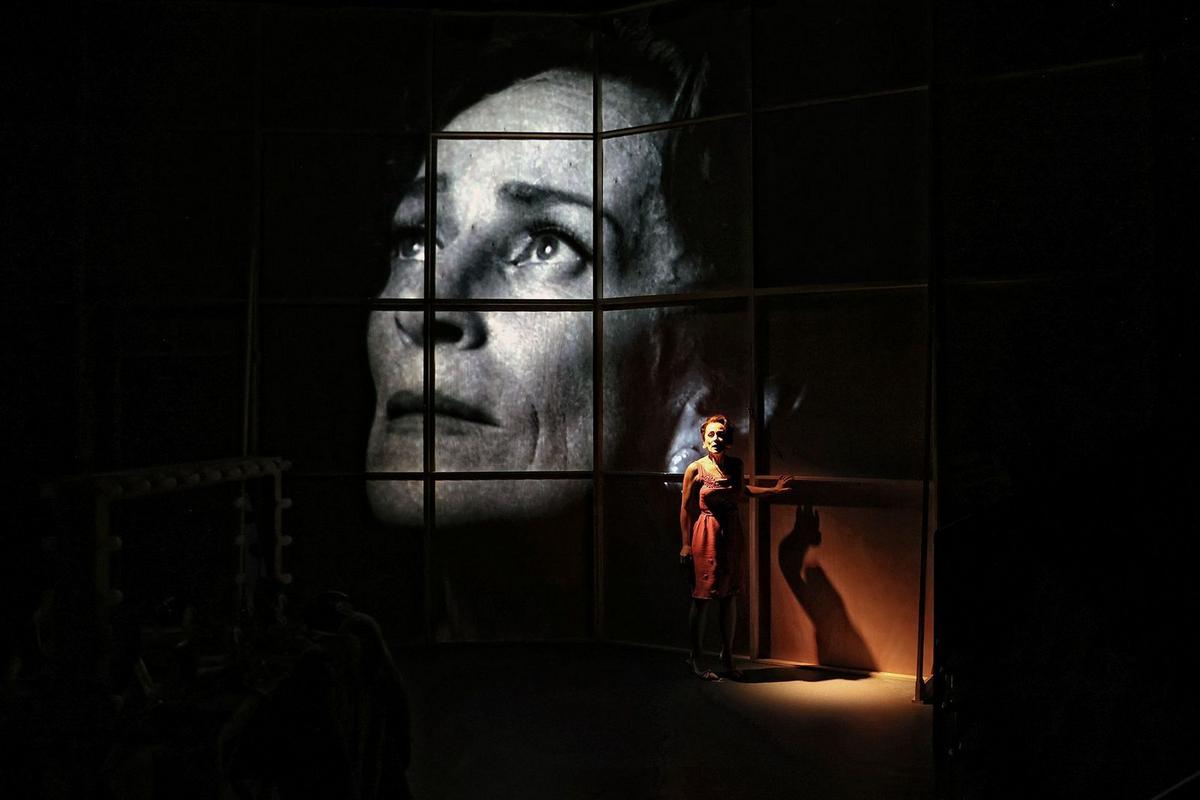
Direction by Liesel Badorrek is tight, scenes detailed. Exquisite choices using black and white video imagery, some live, some recorded, designed by Cameron Smith, enhance the Golden-Age Hollywood feel. Dialogue is paced well, with great rhythm and timing.

Costumes and sets by Grace Deacon are fabulous, immersing the audience. Kelsey Lee’s lighting design is flawless. The Ensemble Theatre becomes a backstage corner of a 1960s Hollywood lot.

The scenes turn on a dime, one moment we are brought to tears, the next – gaffaws as one of our divas drunkenly stumbles. But it is the painful moments, as their traumatic history is revealed that are truly moving.

Highly recommended. Sharpen your claws and get a ticket.

To book tickets to Bette & Joan, please visit https://www.ensemble.com.au/shows/bette-and-joan/.

Photographer: Prudence Upton

Spread the word on your favourite platform!

The Comedy Of Errors

The Comedy Of Errors

The Comedy Of Errors Rating

Click if you liked this article

1

Is comedy tragedy reversed? Do we know it’s a comedy because it ends happily?

Sport for Jove’s “The Comedy of Errors” starts with an extra Shakespeare speech – the “stranger’s case” from a play called “Sir Thomas More”, making an appeal for displaced persons. A fitting prologue to the opening where the merchant, Aegeon (Nicholas Papademetriou), is sentenced to death for washing ashore in the wrong country.

Aegeon’s story told to Duke Solinus (Lani Tupu) is a beautifully demonstrated piece of theatre magic by the ensemble.

It is after this that the play becomes farcical with double the fun: two sets of twins causing confusion and mayhem throughout Ephesus.

Be prepared for some pretty violent text supported slapstick between the Dromios and the Antipholuses, or was that Antipholii?

A famous line from Hamlet: “let those that play your clowns speak no more than is set down for them” is unheeded and ‘Errors’ is all the better for it. These additions add energy and atmosphere, giving those in the audience unused to the verse a hook back into the action.


One such standout was Luciana’s (Tamara Lee Bailey) online Shakespeare workout for her followers: “please like and subscribe” integrating the modern world of selfies and influencers into the narrative.

Naomi Belet dazzles in two original songs as the directors wisely lean into the multitalented casts’ varied strengths.

The two Dromios (Gabriel Fancourt and Diego Retamales) might be in danger of stealing any other show but are surrounded by brilliant performances from the dashing Antipholus of Syracuse (Kaya Byrne) and the faithless Antipholus of Ephesus (John Panayiotis Tsakiris) to the fiery Adriana (Imogen Sage) and her Muay Thai and kickboxing sister Luciana (Tamara Lee Bailey).

Dr Pinch’s (Lani Tupu) subliminal presence throughout the play pays off in the exorcism scene. The lost lovers Aegeon (Nicholas Papademetriou) and Aemelia (Inga Romantsova) bring emotional depth amid the madcap antics.

Direction (Damien Ryan and George Banders) is well crafted.

The text is justified, a difficult task considering some Elizabethan comic references are truly dated, however imaginative settings grounds these to the present.

A visual treat is the dance at “The Mermaid”, with choreography (Shannon Burns), the costumes (Bernadette Ryan) luminous under lighting by Lisa Benham.

“The Comedy of Errors” is an enjoyable lark full of vibrant energy.

Unlike real life we know it is a theatrical comedy as Aegeon is forgiven his trespass by the Duke and no one dies in the end. Would that life were so forgiving.

To book tickets to The Comedy Of Errors, please visit https://www.sportforjove.com.au/the-comedy-of-errors-2025.

Spread the word on your favourite platform!

Bach Akademie Australia: The Brandenburg Concertos

The Brandenburg Concertos

The Brandenburg Concertos Rating

Click if you liked this article

About 25.3 billion kilometres from Earth, travelling at 61,000 km per hour, Voyager 1 contains a gold record that includes recordings of Barnumbirr (Morning Star) and Moikoi Song played by Tom Djäwa, Mudpo, and Waliparu, Johnny B. Goode by Chuck Berry, and Johann Sebastian Bach’s Brandenburg Concerto No. 2 in F Major.

When asked what message humans should send to alien civilisations, the biologist Lewis Thomas replied: “I would send the complete works of Johann Sebastian Bach… but that would be boasting.”

The Brandenburg Concertos are exquisite, like gems, cut precisely and polished so they sparkle.

Imagine you are 36 years old. Your wife had died, you have four children and you need a better paying job. In 1721, Johann Sebastian Bach wrote six concertos in an attempt to convince the Margrave of Brandenburg-Schwedt to hire him. It didn’t work. The manuscript was discovered, tucked away in a library cupboard, in 1849. It appears that the Margrave never saw them.

Miraculously, the original manuscript survived the bombing of the train they were being carried on during World War II. A librarian, transporting the manuscript, fled the train, running out into a forest with Bach’s concertos hidden under his coat.

Madeleine Easton, the artistic director of Bach Akademie Australia, was captivated by the concertos when she first heard them as a child. The music “bubbled” joyfully. She was transfixed and determined that one day she would learn to play them herself.

Easton has more than realised that artistic dream. She is one of Australia’s most celebrated violinists, performing to acclaim internationally, and leading the Bach Akademie Australia.


Bach Akademie Australia are a remarkable group. The promo spoke of “unbridled joy”, a promise kept in the performance of the Brandenburg Concertos tonight. Technical skill is present in abundance in this group of accomplished musicians, but it is the balance of that skill with the dynamic interpretations and the sheer joy of performing that makes Bach Akademie’s music memorable.

It is delightful to see the communication between the musicians as they play: a glance here, the synchronised breathing, the physical uplift of the body to initialise the tempo, or a call and response between instruments in the concerto. The travelling solo in Brandenburg Concerto number three was a pleasurable highlight.

I found odd moments of real magic, not just during the performances but during the interval, when Nathan Cox tuned the harpsichord.

To a certain extent recordings have spoiled us. There is an unspoked expectation of perfection that can only be achieved by editing and the best of hi-fi equipment. With this in mind, there is a wonderment in hearing original and acoustic instruments without amplification, especially in a chamber music setting.

Madeleine Easton plays a 1682 Giovanni Grancino violin, an instrument with a wealth of experience in its wood. Her colleagues are similarly equipped, and we the audience benefit greatly from the wood, the breath, the brass, the experience and the joy.

To book tickets to The Brandenburg Concertos, please visit https://www.bachakademieaustralia.com.au/events.

Spread the word on your favourite platform!

So Young by Outhouse Theatre Co

So Young

So Young Rating

Click if you liked this article

Douglas Maxwell has built a strong reputation as one of Scotland’s most successful playwrights.

Now, Ainslie McGlynn, Jeremy Waters, Henry Nixon and Aisha Aidara bring Maxwell’s comedic four hander ‘So Young’ to the Old Fitz for its Australian premiere for Outhouse Theatre Co.

‘So Young’ won the Best New Play at the annual Critics’ Awards for Theatre in Scotland with its funny and heartfelt portrayal of facing the future while the scars of the covid pandemic are still healing.

Sydney’s a long way from Glasgow. The four actors performing So Young had no way of knowing there was a Scots native that lived for years in Glasgow hiding at the back of the audience. I’m happy to report that Outhouse Theatre Co’s new production wouldn’t be out of place in the Tron, the Traverse or Oran Mor’s a Play, a Pie and a Pint.

Sam O’Sullivan’s clean and realistic direction wastes nothing. The text is timed exquisitely, making great use of Maxwell’s pauses for comic effect. Lighting design by Aron Murry supports the realism using changes and specials to assist the settings of place and time. Set by Kate Beere is detailed and homely, with a warmth created by an autumnal colour palette. Lamps, books and records adorn and enhance the ‘lived in’ feel.

Greta: “This is my world – it’s mine for the taking and I’m taking it!”


The acting walks the line of heightened drama and comedy with precision. Aisha Aidara is warm, vibrant and kind as “Greta”. Ainslie McGlynn shows great range as “Liane” battling change and grief, as does Henry Nixon as Milo – but with stoicism and Vesuvian anger. Jeremy Waters is thoroughly watchable as “Davie” – working the text with aplomb.

It’s a risky endeavour to take on a Glasgow accent. For a comparatively wee city there’s a wide variety of accents and throw in some Scots words and you’re playing with fireworks. Hats off to Linda Nicholls-Gidley for coaching the cast to succeed in sounding Glaswegian, while keeping it easily accessible for a Sydney audience, and only occasionally stray west toward Ireland.

At one point Maxwell namechecks Scots authors Iain Banks and Irvine Welsh. So Young’s comedy is not nearly as dark as Banks or Welsh. This is a Glasgow of middle-aged teachers and graphic artists. They drink white wine instead of Buckfast and Irn Bru.

The audience clearly loved it, laughing happily throughout, with a few tears shed in the final act.

To book tickets to So Young, please visit https://www.oldfitztheatre.com.au/so-young.

Photographer: Richard Farland

Spread the word on your favourite platform!

Subscribe to What's The Show

Reviews, show news and what is on, straight to your inbox.