Author badges: 🌟 Standout Reviewer (18 reviews), 🦉 Veteran Reviewer (more than 2 years with What's The Show)
Kat Skarbek is a writer of both fiction and non-fiction. Despite her obnoxiously precocious beginnings as a 10 year old playwright (over-confidently putting on a ghostly school play that she wrote, directed and acted in), her most recently leanings have been toward short stories with folk horror leanings and creative non-fiction. She is currently incubating an idea for a novel of historical fantasy fiction which, frankly, terrifies the bejesus out of her, so that’s got to be a good sign.
Kat likes to think of herself as a bibliophile but her husband says she can call it any fancy name she wants, it’s basically book hoarding, and where the hell is he going to find space for them all anyway?
Although she is an ‘all genres’ reading and writing type of gal, at the moment she is devouring mythological and fairy-tale retellings from such authors Natalie Haynes and Angela Carter and genuinely unnerving horror from the terrifying minds of Adam Neville and T. Kingfisher.
Aside from writing and being the mother of a brace of character-building teenagers, she spends her time as a Midlife and Mindset coach, teaching women how to make their midlife the most fulfilling and inspiring part of life so far.
Kat is very chatty in person but then feels guilty about talking too much. She is a restless nomad in love with family travel, gin, swearing and knitting, though not necessarily in that order.
It was a real pleasure to review this soulful short film by Ngā Aho Whakaari as part of the Maori Short Film Festival and not just because it’s so impressive to see filmmakers who can create something so beautiful, with such incredible production values, on a small budget.
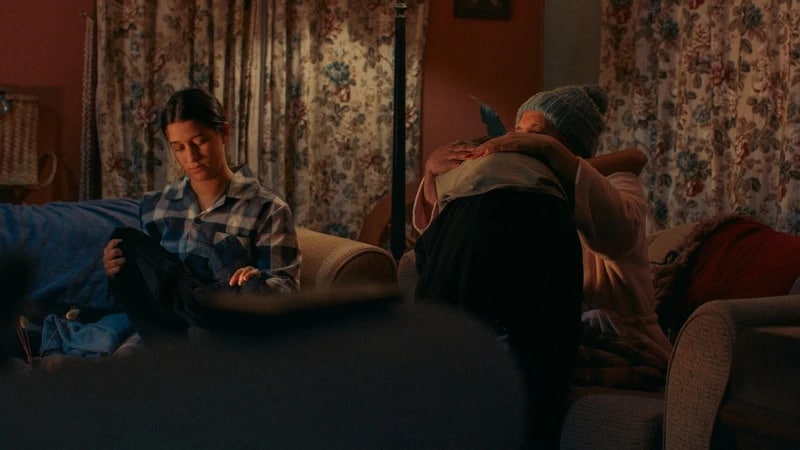
Exploring important themes of land and belonging – environmental protection, the preservation of cultural identity and intergenerational familial relationships – we are introduced to 16-year-old Hiwa who returns home from boarding school to discover her beloved grandfather, the local ‘land legend’, is seriously ill and unable to tend to the forest he has spent his life protecting.
Whilst her younger brother Pōtiki, who has clearly inherited his grandfather’s deep affinity for the ‘whenua’ (land), is determined to follow in his Korua’s footsteps, Hiwa struggles to integrate her simple, traditional values with the ‘modern’ world she inhabits at school.
Both children wrestle with the shifting dynamics in their family, and the darkly green and lush scenery is a beautiful but ominous metaphor, reflecting both Hiwa and Pōtiki’s realisations of the importance of their new roles as the next generation of guardians for the land and their family.
This film was part warning, part love letter to land and culture. As someone who has a deep connection to land myself, it was an invitation to recognise the ways in which we are called to stand as protectors for that to which we ‘belong. ‘ It’s definitely one to watch.
As someone who adored the original Shirley Valentine film starring Pauline Collins, I was skeptical of ex-Neighbours actors/pop stars making the leap to serious theatre, and has a deep intolerance for people who butcher any accent from my homeland, (but especially one as unique as Liverpudlian), I entered this performance fully prepared to be critical.
Willy Russell’s iconic story first won hearts as a stage play before the beloved film cemented its place in the lives of middle-aged women everywhere in the late 80s. At its core, Shirley Valentine is the tale of a woman suffocating in the monotony of a life that has drained her of identity and joy. Trapped in a world where her only confidante is her kitchen wall, Shirley exists in quiet desperation—serving an ungrateful husband, appeasing selfish grown children, and mourning the rebellious, spirited woman she once was.
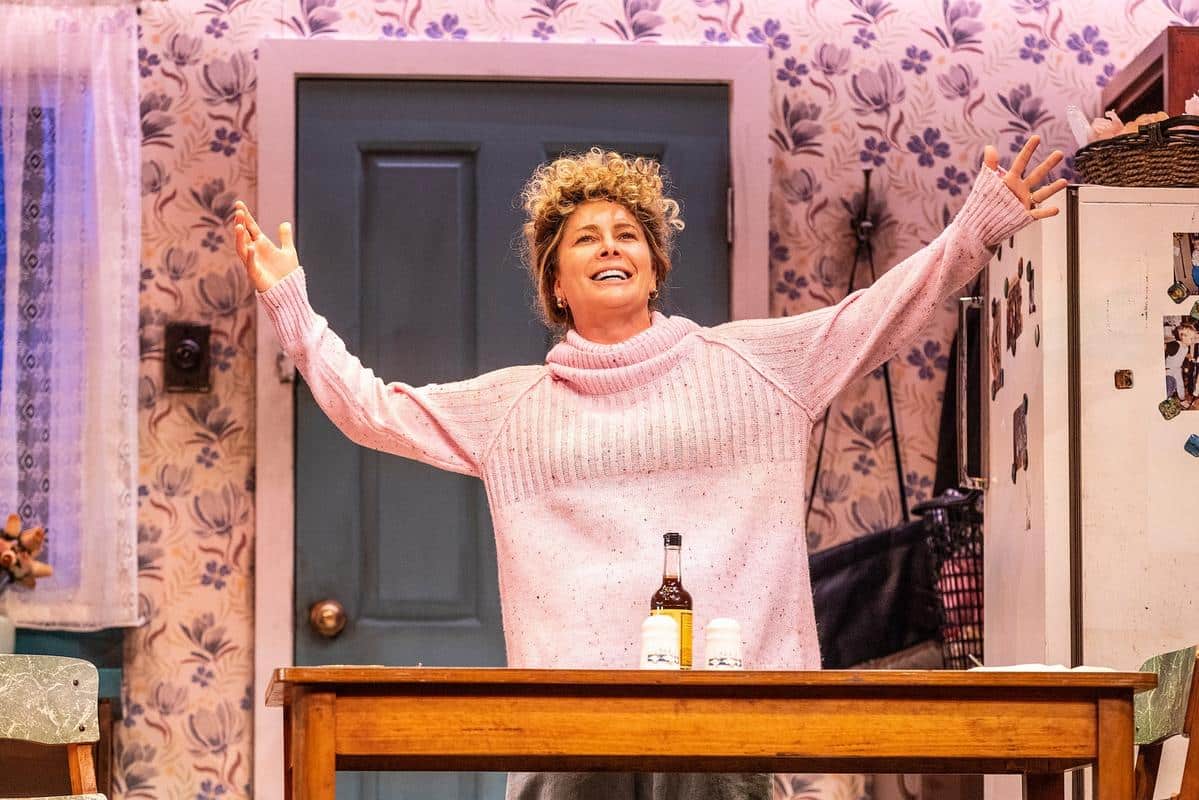
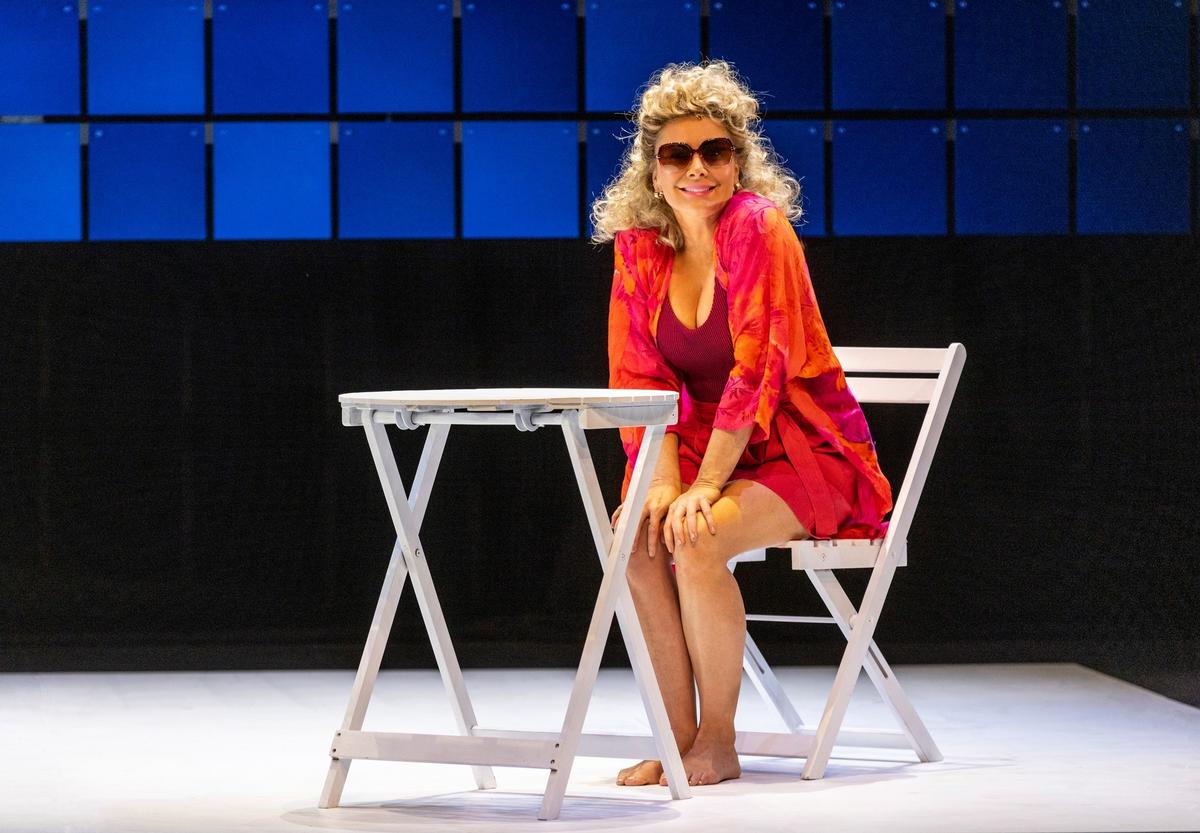
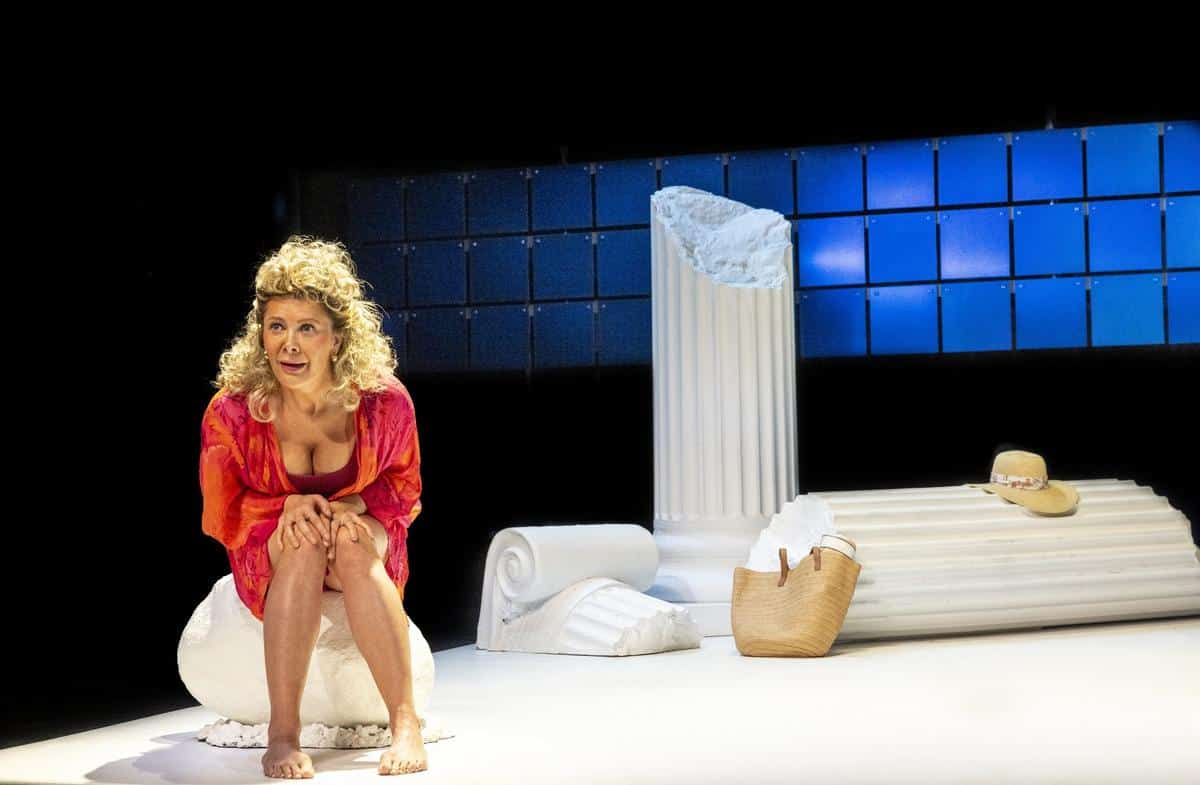
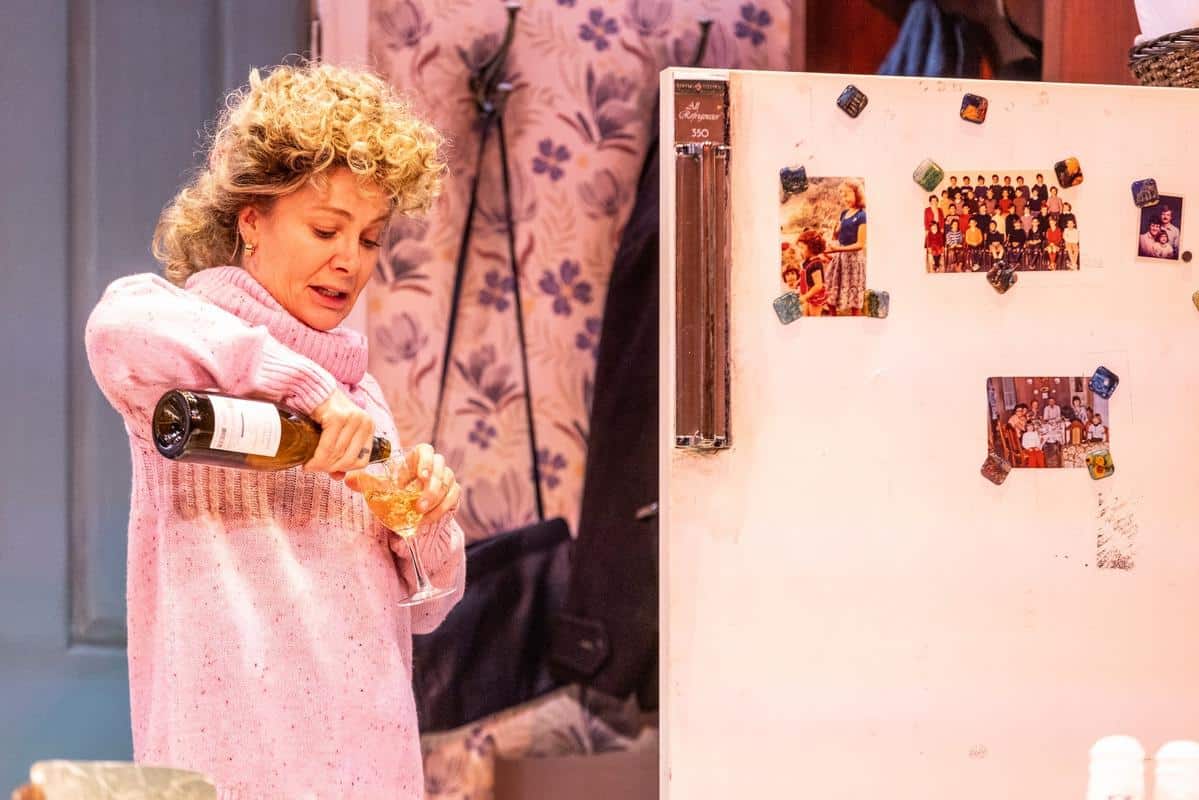
As the familiar strains of the 80s hits fade, Natalie Bassingthwaite sighs onto the stage, gulping white wine and chopping potatoes for her husband, Joe—who will, she assures us, “have a right gob on him” when he realises dinner is egg and chips instead of his usual Tuesday mince. Despite all my reservations, Natalie doesn’t just step into Shirley’s shoes—she revives her, fully embodied, in bleached mum jeans and a comfy pink sweater. Every weary movement between the fridge, the bench, and the stove tells the nuanced story of a woman who has slowly lost herself. Lamenting that she allowed herself “to lead this little life, when inside me there was so much more.” It’s a portrayal that resonates deeply, particularly with an audience of largely midlife women who, in one way or another, perhaps recognise their own fading dreams in Shirley’s quiet grief and who are just as afraid of dying with their music still in them.
Shirley is captivating—raw but never indulgent, resigned yet still tinged with hope. She draws us in with wry humour, reminiscing about her rebellious school days and the classmates she once envied, only to realise they now envy her—or at least, the woman she used to be. When, in between comparing marriage to the Middle East and sex to supermarkets, she nervously reveals that her friend Jane has invited her to Greece (has bought her a ticket, no less), we feel the impossible weight of the decision. The airline ticket trembles in her hands as she dares to dream of sitting with the sun on her face, drinking “a glass of wine in a country where the grape’s grown.” Yet even as she visibly aches for escape, for the possibility of something to shake her out of her never-changing world, she continues preparing a dinner Joe will never eat.
Bassingthwaite’s performance is nothing short of revelatory. Her Liverpudlian accent—much to my relief—is acceptably solid, despite the odd line fluff. Indeed, she disappears so entirely into the role that her popstar past is all but forgotten. But it is in the second half that her transformation truly shines. As the lights go up on a tanned, relaxed Shirley, Bassingthwaite reveals a woman that is no longer the same. A woman no longer crushed by monotony, who had to anxiously force herself onto a plane. This is a Shirley who is self-assured, present, and forever changed—not because of an affair or a holiday romance, but because, at last, she has chosen to explore all the ‘unlived life’ remaining within herself. She has, at last, chosen herself.
This is Shirley Valentine in all its bittersweet brilliance. A triumphant performance, beautifully staged, and an absolute pleasure to witness.
The Motley Bauhaus is a tiny theatre at the back of a large pub in Carlton. Its intimate nature lends itself to powerful storytelling and heartfelt performances, and that’s exactly what ‘My Queer Spiritual Entropy’ (a play by Holly Rowan & The Wilderbeans) amply provides.
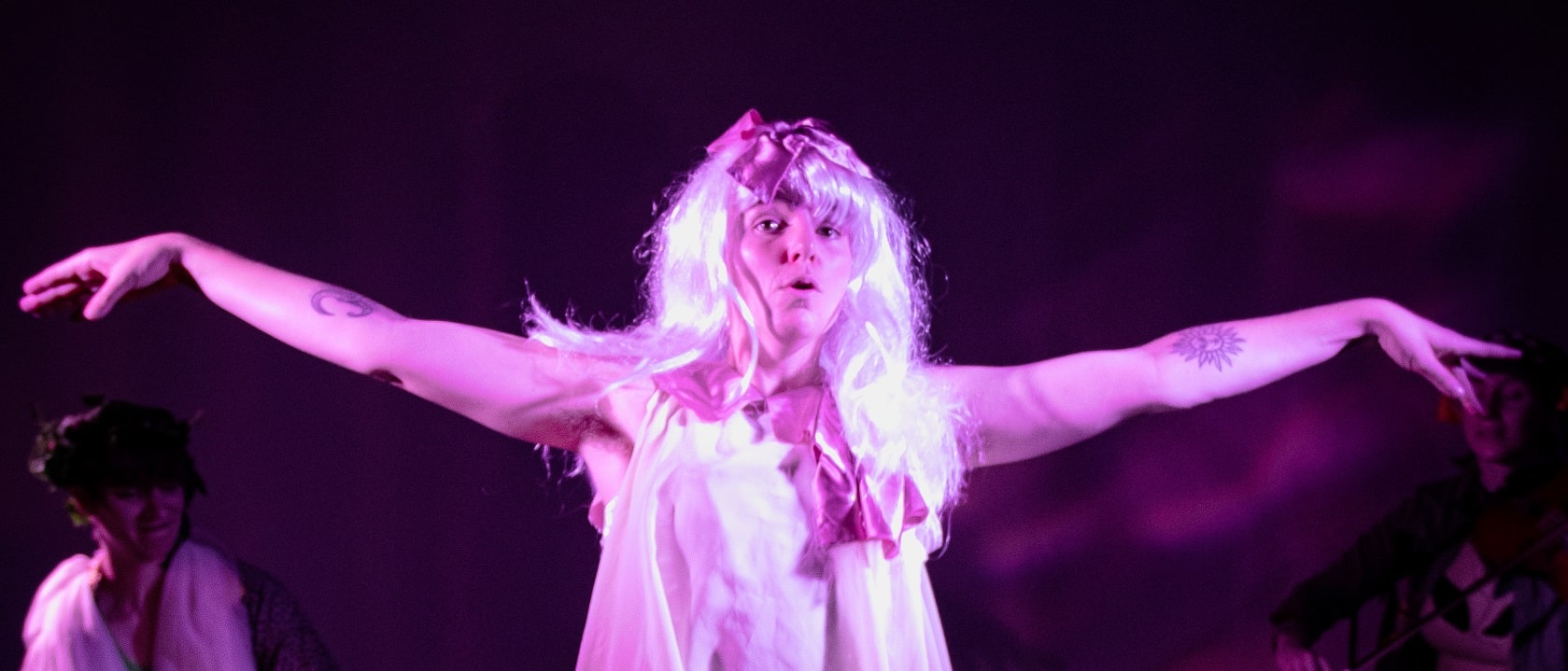
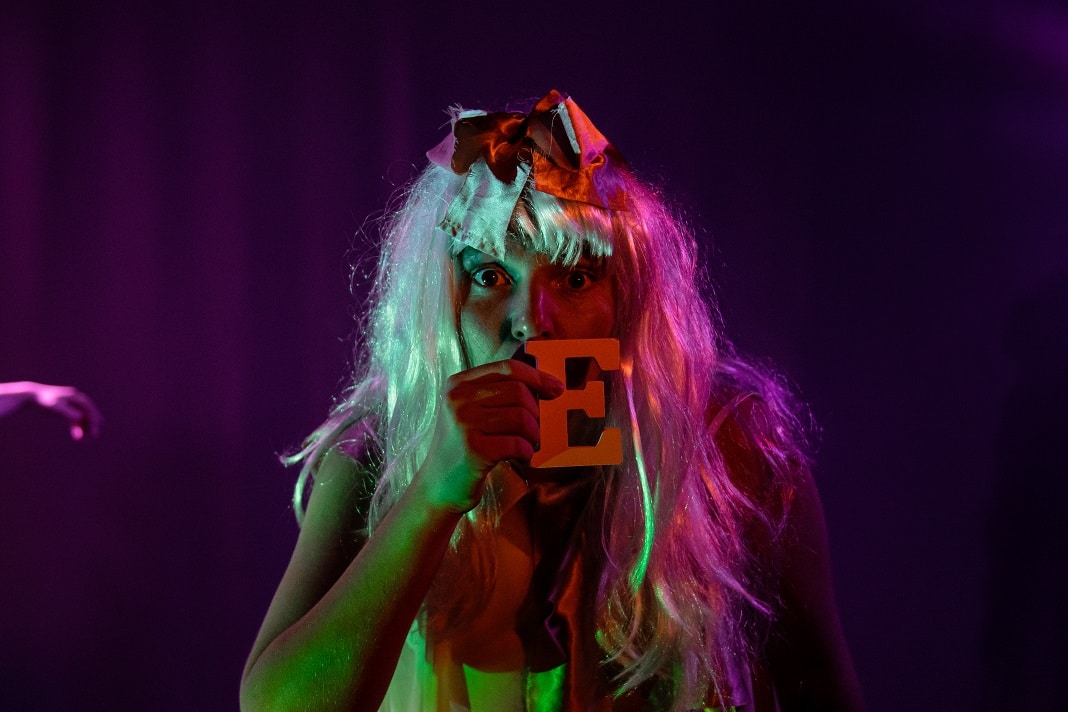
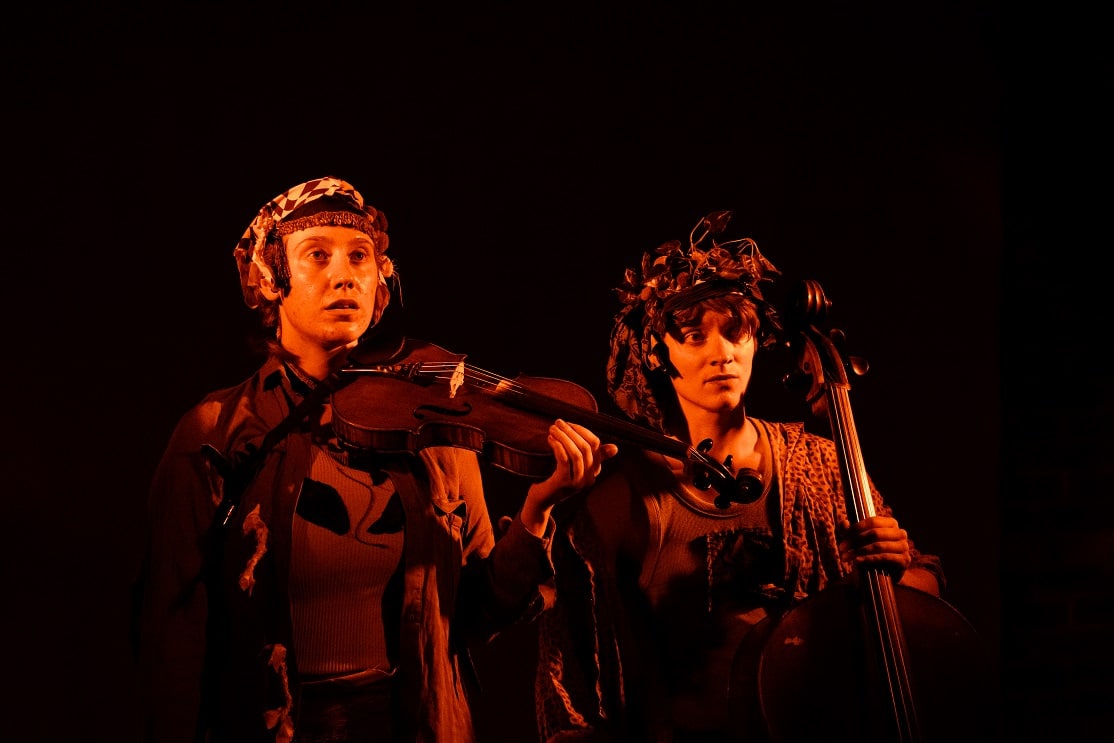
We are welcomed into our seats by an accompaniment of whimsical folk music played live by three child-like nature creatures. The creatures reveal themselves to be ancient trees and through music and story they begin to share with us the delights of the natural world and their places within it. We are educated about the hermaphroditic nature of some trees which possess both male and female parts within themselves and is something which makes that tree truly special, giving it the ability to self-fertilise and reproduce without external pollinators, ensuring its species survives.
However, this same natural and special ability in trees becomes something of deep concern when it happens in humans. Indeed, it becomes not just concerning but deeply antagonistic when anything happens outside of the binary of male and female in humans.
To help us understand that differences are natural and not something to be feared, the tree shares the tale of a little girl called “Holly’ who was once happy, wild and free, revelling in her unique nature but who slowly, little by little, squashes herself into the tiny gender box assigned and deemed appropriate by society, even as it slowly suffocates her. Holly is berated for being ugly, unnatural and ‘wrong’, rejected for not being a ‘proper’ female. Holly is told that their true nature is unnatural and offensive to the family, society and world in which they live. So they try to be ‘good’ and ‘fit in’, but it slowly erodes their sense of self and their connection to their true selves and makes them desperate, self-destructive and terribly lonely.
If it sounds heavy in parts, that’s because My Queer Spiritual Entropy calls attention to the lived experience of many gender-diverse people and is at times confronting, forcing us to look at our own behaviour, beliefs and binary-centric attitudes to the lives and gender, non-conforming ‘choices’ of our queer folk. At other times, the show is amusing, poking pointed but good-natured fun at the accepted roles of men and women in our society and challenging our unconscious compliance with those ideologies. Plus, nothing is funnier than a little nip at the narcissistic dark side of the personal development world, which was a highlight for me.
As a theatre-goer who was, at first, a little worried the show might disappear too much into ‘experimental’ with a side of ‘end of year school play’, I was both surprised at the complexity of the non-binary narrative and genuinely moved in several places – in particular when Holly begins to find acceptance both inside of and outside of themselves. My theatre-mate, for whom this is a lived experience, found himself reflected very clearly in the material and also shed a tear or two – such was the power of the music, the silliness, the playfulness and the raw beating heart of this eccentric, edgy but very poignant play.
I believe we, as a society, have to do better in many ways, and right now, one way in which we can do better is by learning to shake off the chains of the ‘two gender’ binary because beyond ‘man’ and ‘woman’, in the complex and often challenging landscape of queer identities, there is a vast community of people whose voices deserve to be heard. I urge you to listen.
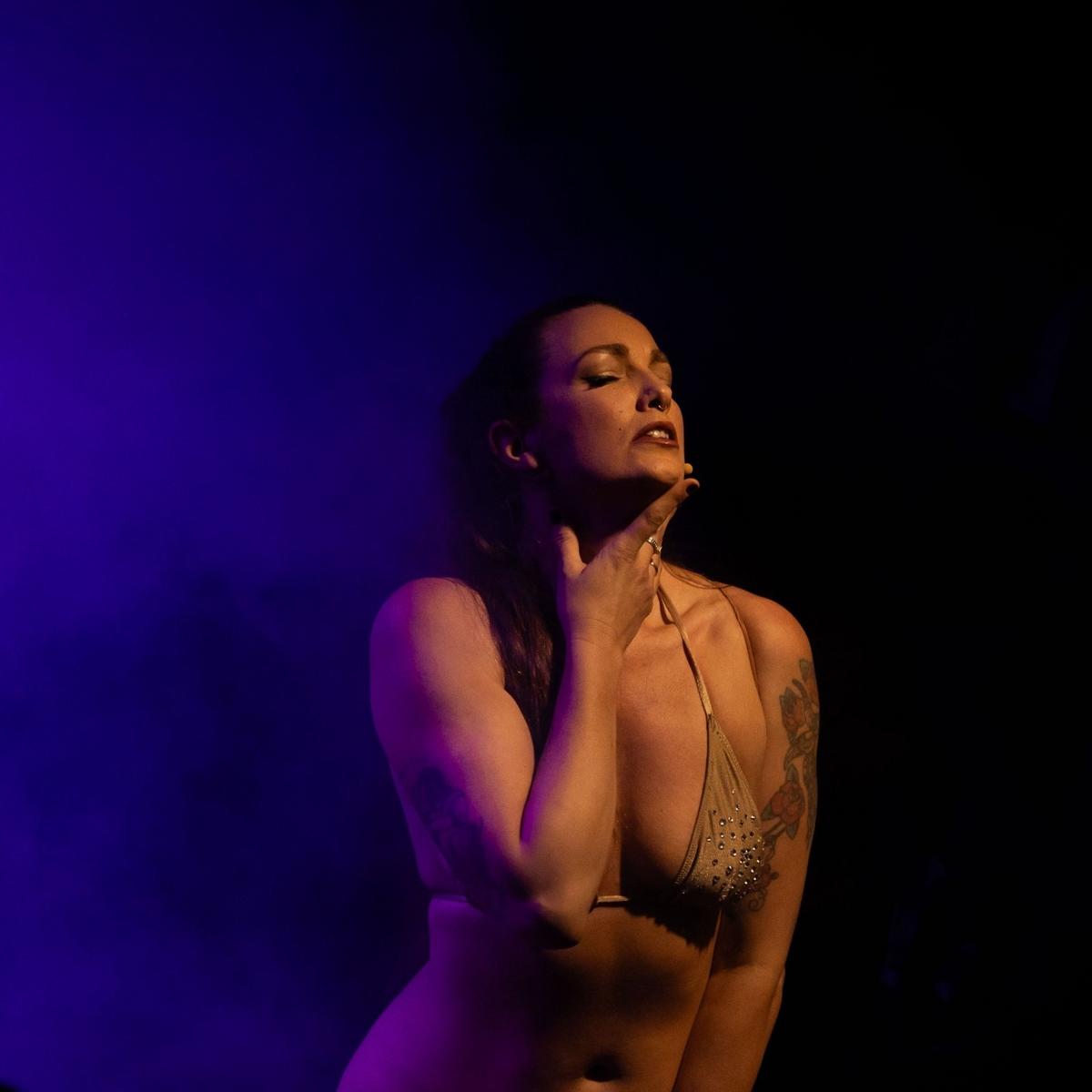
Whatever I thought I was expecting from the show, ‘A Body At Work, the tale of a queer woman’s 17 years, and counting, in the sex industry,’ I was not expecting the undiluted eloquence of the artist in both body and mind.
Frankie van Kan sidles onto the stage quietly, adding the finishing touches to her makeup while the audience continues to file in, tousling their art student hair-do’s and taking their seats. Whilst I, possibly the only straight woman in the audience, and certainly the only one on a date night with her husband, quietly placed my pearls within easy clutching distance. (Yes, I willingly took my man to see another woman up close and very, very personal.)
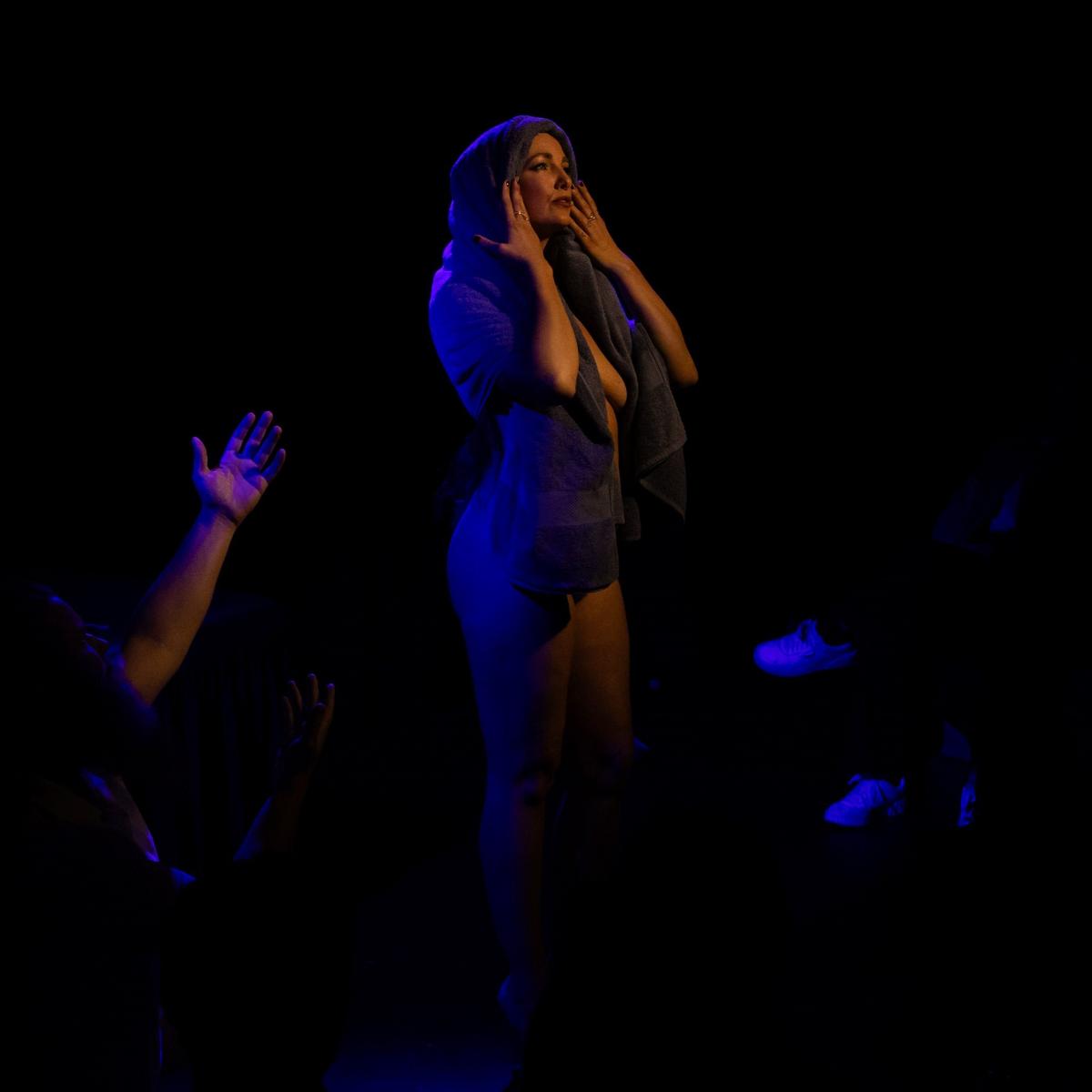
The moment the lights go down, Frankie slides quickly into action and is almost entirely naked within the first few minutes of her opening monologue. It’s an act that is both deliberate (get the nudity out of the way early and the audience can get comfortable with it) and excitingly ‘naughty’ and we are all immediately seduced by both her candour and her unabashed delight and confidence in herself.
Throughout the 80 minute show, which is an account of her 17 years of work in the sex industry, she shares raunchy stories that induce laughter and whoops of approval. She snakes and writhes her way across the stage, undeniably intoxicating, sharing genuine moments of compassion and tenderness towards her motley assortment of clients. She pokes fun at the ‘bro’ culture power dynamic that pervades her world, juxtaposing her absolute and embodied agency over her body, her pleasure and her boundaries, alongside the recognition that her body and her work are created for the male gaze, on which it relies. Throughout it all she offers us the most tantalising peek through the forbidden window of strippers and sex work.
One of the most memorable parts of the whole performance is when she answers the question of, ‘what do strippers think about when they are giving a dance?’ in a way that manages to be both shockingly candid and deeply poetic. What is truly extraordinary though is that she can flip from Aussie good humour to sex kitten stripper magic with just a playful toss of her long hair. And as easily as she pulls us nervously into that neon glittering world, she also has us pulling at the threads of our own judgemental narratives around this work and the people who do it, all with the practised ease of a remarkable woman and performer.
Despite this show being marketed to the wonderful queer folk of our beautiful city as part of ‘Midsumma,’ I truly believe that this is a show for everyone (over the age of 18). It is beautifully acted, exceptionally well-written with real cheek, genuine warmth and admirable honesty. Frankie herself is intelligent, seductive, insightful, funny and incredibly perceptive. An artist revealing to us the soft underbelly of this curious, discomfiting, often taboo industry and the surprisingly resilient people who work within it, all while offering humorous, sharp-eyed social commentary. I also want to give a shout-out to her chameleonic and energetic supporting actor/stage hand, who, though uncredited, does not go unnoticed or unappreciated and whose ‘male gaze’ was both humorous and touching.
As much as I have waxed lyrical about this show because it truly was a pleasure to watch and participate in its playful intimacy, I do have one small criticism, and that was that it ended too abruptly. The finale came unexpectedly while everyone was still deliciously absorbed in the story and seemed strangely at odds with the energy of the rest of the show, which was far more deliberate. Perhaps I just wasn’t ready for it to end.