A Twist of Fate Season 5: When Silent Film Characters Step Through the Screen

Feature-A Twist of Fate Season 5

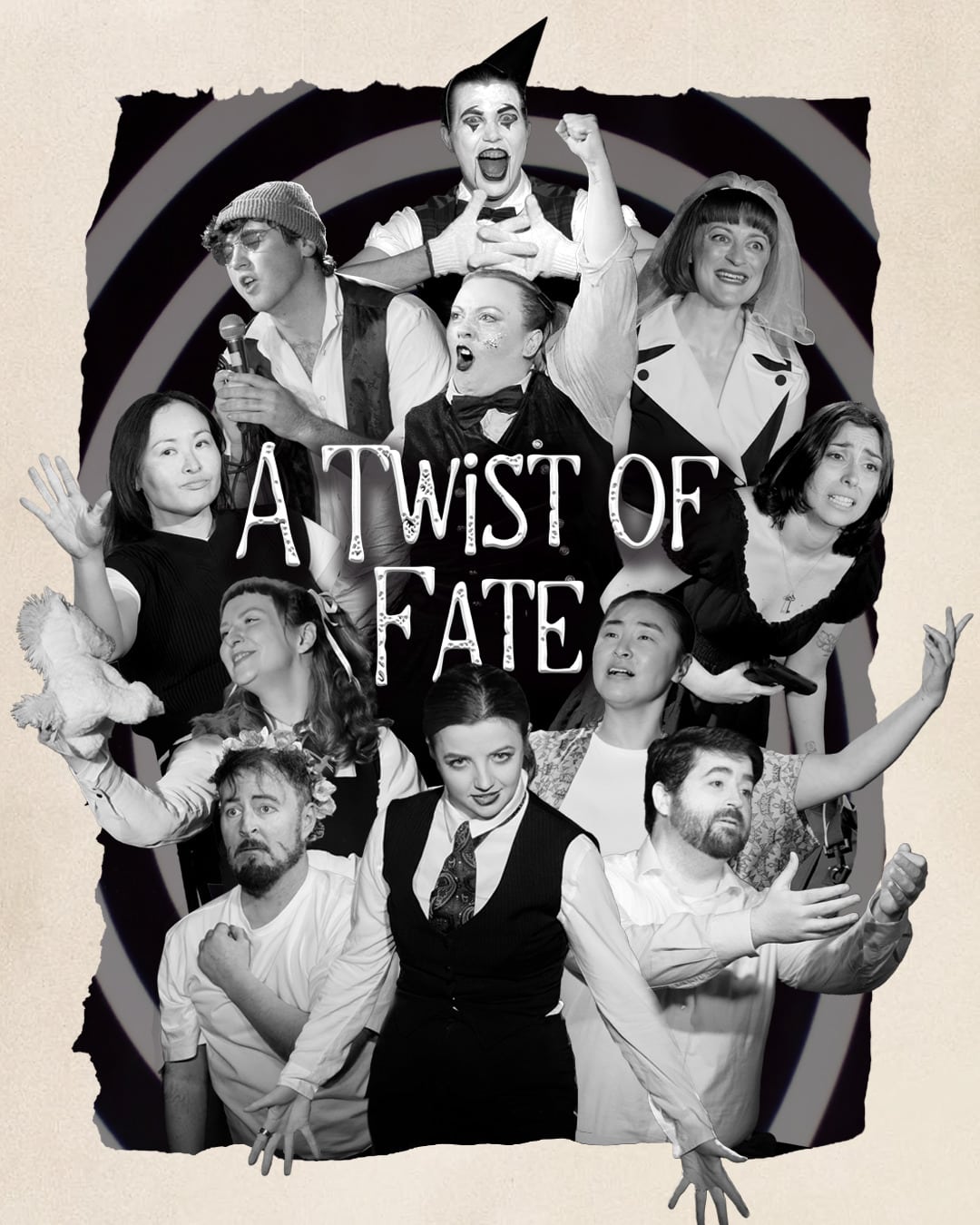
A silent film that breaks through the screen and spills into the theatre is just one of the surprises waiting in Scary Goats Theatre’s latest anthology season. Chloe Towan, who serves as the narrator, director, and writer for A Twist of Fate Season 5, shares insights into this production, which promises shocking twists wrapped in quirky humour.

About The Show – A Twist of Fate Season 5

What is this show about?

A Twist of Fate is an anthology series inspired by The Twilight Zone and Black Mirror. The show features four short plays, each with a devastating twist or reveal.

Season 5 features the following plays:

Not So Black and White by Chloe Towan
Come with us back to the Silent Era as we present a silent comic melodrama, where not everything is as it seems…

We Live to Serve by Charlie Simmons
In a world ravaged by global warming, an outmoded butler vies for the last ticket on a transport to a better place.

Muffin Day by Richard Mealey
In a modern office, Ronnie is forced to re-live the worst day of her life. But, is there way she can find forgiveness?

Two Characters in Search of a Memory by Chloe Towan
When two people wake up in a dark void with no memory of who they are or what happened to them, they must work together to uncover the truth.

How would you describe this show to someone who has never seen anything like it before?

The show is like The Twilight Zone meets Black Mirror, but with a lot of campy humour!

What is the moment in the show you most look forward to performing?

I play the Narrator and do little introductions to each play which are always a lot of fun. I’ve also directed one of the plays and written two of them.

This season we’re really experimenting with genre and form and have some really exciting concepts we can’t wait to get in front of an audience. There are some really shocking twists this season, and I can’t wait to see the audience reacting to them!

How did this show come together? What was the creative starting point?

I originally came up with the idea of A Twist of Fate in 2024 at Halloween, when I thought an anthology show would be a great way to get some cool and experimental theatre on the stage. We launched A Twist of Fate in January 2025, and have now performed four main seasons and two specials.
Chloe Towan

What is the element of the show that is hardest to explain but unmissable in person?

This season features a silent film story. It starts off as a silent film we’ll project onto the screen, but when it reaches the halfway point the characters discover a portal that leads into the theatre. It’s like nothing we’ve ever done before and we think people will be really surprised by what we’ve created.

Who is this show for? Who is going to have the time of their life?

SGT pride on ourselves on making ‘theatre for misfits, by misfits’. Anyone who likes their theatre a little on the dark, kooky or unhinged side will have an absolute blast at the show.

What is going to genuinely shock or delight people?

Each of the four plays has its own twist (or, in some cases, twists). The fun in A Twist of Fate is always in trying to guess the twist as you watch the show, and I think audiences will have a ball trying to work out what’s going on in these three plays.

How long have you been developing this material, and what has changed along the way?

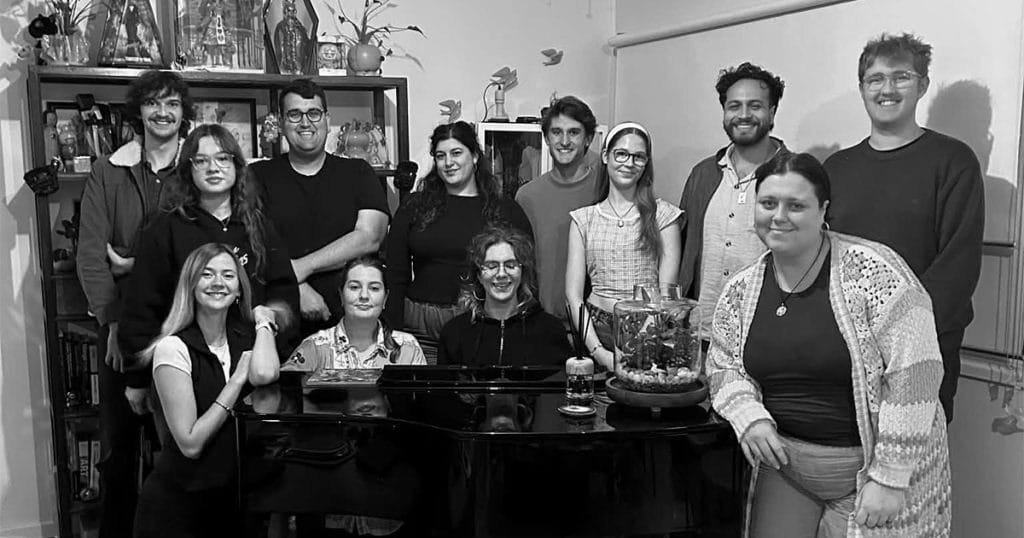
We operate on a two-month turnaround. Our writers meet up to create their plays, we go through a workshopping process, and then we rehearse the plays with our talented ensemble of actors.

What do you want the audience to feel in the final moment?

The plays we have this season, despite their unusual premises, each tell stories of hope, forgiveness and perseverance, and we hope our audiences can leave the theatre feeling inspired in these dark times.

What is the best reaction you have ever had from an audience to a moment in this show?

In our last season, we had the audience cheer when a particularly nasty character was defeated. We’re particularly hoping to get some very loud audience interaction in our silent film play.

Is there a story behind one of the key routines or segments?

My silent film play I’ve written is a deep love letter to silent cinema and features many visual call-outs to some of my favourite silent films.

Is there anything else you would like to share?

We hope audiences come to and enjoy A Twist of Fate!

Thanks to Chloe for pulling back the curtain on what sounds like the most genre-bending season of A Twist of Fate yet; that silent film portal concept alone sounds unmissable. If you like your theatre dark, kooky and delightfully unhinged, grab your tickets through Eventfinda and see if you can guess the twists before they hit.
Spread the word on your favourite platform!

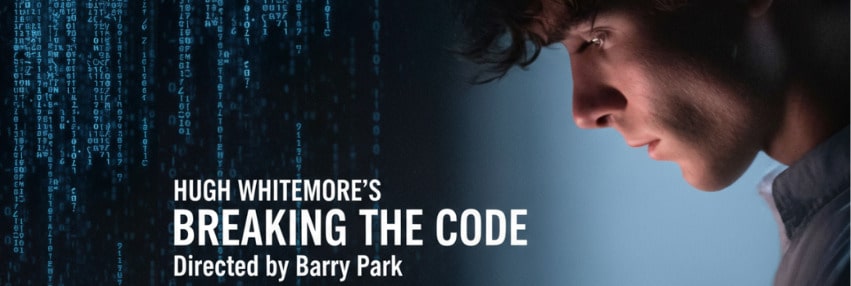
Breaking The Code: The Turing Test

Breaking The Code

Breaking The Code Rating

★★★★★

Click if you liked this article

2

Hugh Whitemore’s Breaking the Code is built around one of the great contradictions of the twentieth century: Alan Turing helped change the course of history, yet was punished by the very society that benefited from his genius.

Presented by Melville Theatre Company and directed by Barry Park, Breaking the Code is based on Andrew Hodges’ biography Alan Turing: The Enigma. It is a biographical drama about genius, secrecy, sexuality, punishment and the moral contradictions of mid-twentieth-century Britain. It is also a play about codes in more than one sense: wartime codes, mathematical codes, legal codes, social codes, and the private codes by which people try to survive.

At its centre is Thomas Dimmick as Alan Turing. It is a demanding role, and Dimmick carries a large share of the evening. Turing is rarely absent from the action, and the performance requires stamina as well as emotional and intellectual precision. Dimmick gives the role a thoughtful intelligence, holding together the contradictions of a brilliant, awkward, playful, stubborn and vulnerable man.

What gives the story its continuing force is that Turing was not only a victim of legal and social cruelty. He was also a mind looking far beyond his own age. His work helped lay the foundations for modern computing, and his thinking around machine intelligence now feels strikingly prophetic. In an era where artificial intelligence is no longer theoretical but part of daily life, the play’s glimpses of Turing as the man who helped imagine the “electronic brain” are among its most intriguing moments.

The production is strongest when it allows us to see that larger figure: not only the man who helped break Enigma, but a kind of national superhero, now recognised with his image on the British £50 note. The cruelty of his treatment lands most strongly when set against the scale of what he gave, and the scale of what his country failed to honour in his own lifetime.


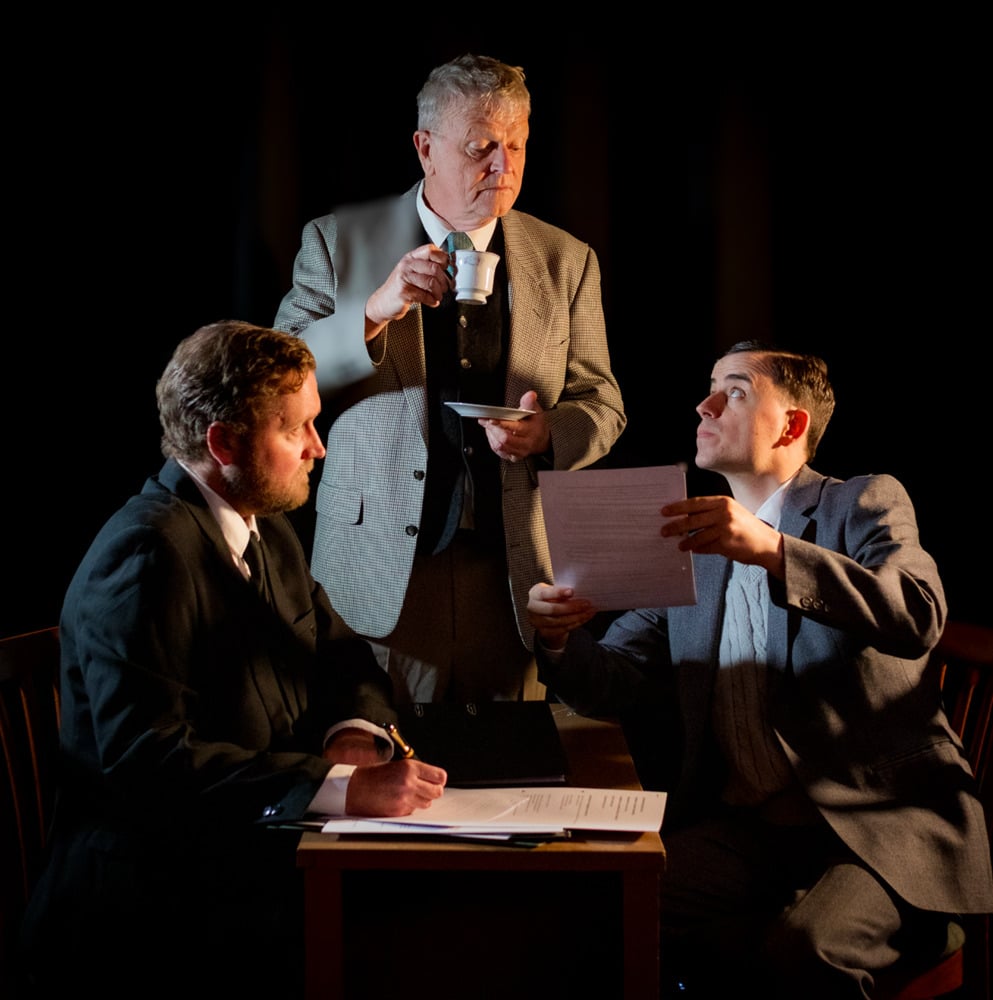
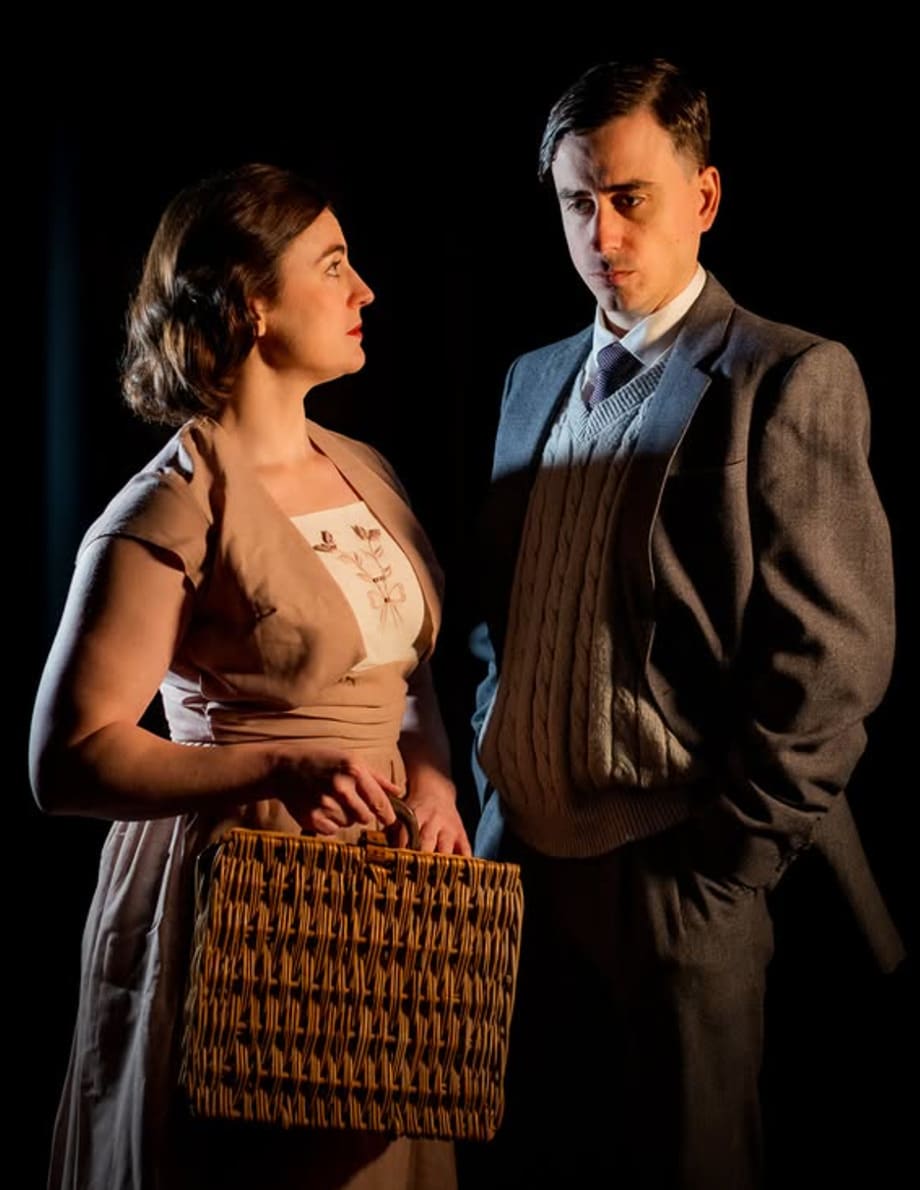
The supporting cast bring considerable strength to the production. Patrick Downes diligently inhabits Detective Mick Ross, giving him the firmness of a man of the law as he conducts several interrogations of Turing. Anna Head successfully represents the motherly perspective of the 1940s and 1950s as Sara Turing, loving her son while remaining unaware of his sexuality. Jack Riches plays the mildly scheming and villainous Ron Miller, the low-level thief and lover whose actions help set Turing’s downfall in motion.

Grace Edwards brings warmth and clarity to Pat Green, giving insight into Turing’s wartime years and accurately portraying a relationship in which his homosexuality is accepted rather than condemned. Martin Forsey portrays Turing’s wartime boss, Dillwyn Knox, with strength and empathy, with many of their scenes providing thoughtful debate around social codes, judgement and compassion. Rounding out the ensemble, Nicholas Mountain, Nate Tonkin and Jamie Brooker ably help fill out the emotional and social world around Turing.

Barry Park’s direction treats the material with seriousness and respect. Mark Nicholson’s lighting and the simple, functional staging support the shifting locations, while Merri Ford’s costuming helps anchor the period. This is a sincere and committed community theatre production, led by a strong central performance and a clear respect for the man at the heart of the story.

When Breaking the Code was first staged in 1986, it was undoubtedly working to break taboos. Its treatment of homosexuality, state persecution and moral hypocrisy would have carried a sharper social charge in the era in which it was written. In 2026, those injustices are no less appalling, but they are less likely to shock an audience in quite the same way. For that reason, the play is most effective when it moves beyond the fact of persecution and into the more complicated territory of Turing’s mind, isolation, contradictions and historical significance.

Turing emerges as a man who broke codes for his country, imagined the future for the world, and was constrained by the moral codes of his own society. Melville Theatre Company’s production gives that story a thoughtful and respectful staging, with a committed cast and a strong sense of care for the remarkable life at its centre.

To book tickets to Breaking The Code, please visit https://www.trybooking.com/events/landing/1569149.

Photographer: Curtain Call Creatives

Spread the word on your favourite platform!

Shoptalk: The Retail Musical Delivering Working Class Catharsis

Feature-Shoptalk: A New Musical

An original musical born from the trenches of retail work, Shoptalk follows a group of 20-somethings navigating the particular horrors of their service-industry lives. The writer and creator behind this Thesperanto musical production shares how the autobiographical story balances comedic dialogue with surprisingly earnest musical numbers that get to the emotional core of service-industry survival.

Shoptalk: A New Musical

What is this musical about?

SHOPTALK is an original musical following a group of 20-somethings working in retail as they navigate burnout, workplace crushes, and eccentric clientele, all the while trying to deliver service with a smile.

What does this production bring to this musical that audiences may not have seen before?

This is an entirely original and autobiographical story that delivers a relatable and poignant sense of working-class catharsis not often available in a lot of works. You’ll laugh, you’ll cringe, and you’ll empathise!

Which number in the show is the one you cannot wait for audiences to experience?

There’s something for everyone in the score, but there is a “We Are the World”-inspired anthem sung by the more ungrateful characters that will likely be a real crowd-pleaser!

What has been the most challenging scene or sequence to stage?

The more people in the song, the more elaborate the harmonies are, and the same for the busier choreography! There’s one monstrous group number towards the end that’s had an especially long teething process, but it’s going to be fantastic once it’s nailed down.

How does the music serve the story in this production?

It’s interesting because while the dialogue and scenes are more comedic, the songs are a little more earnest and get to the emotional core of each situation, usually by demonstrating what a character has to lose at that time. It’s a wonderful balance, and don’t get me wrong, the songs will still have you laughing!

What character in the show do you think will surprise people the most?

Whichever one they connect with the most, I’m sure!

What is the emotional heart of this musical, and how have you approached it?

The emotional heart is the naive new girl who still believes that the world is good and that becoming jaded isn’t necessarily a good thing to do.

Who has the best costume, and is that fair?

Anyone not in one of the unflattering polos.

What will people be humming on the way to the car park?

No spoilers!

Who in the cast is most like their character, and who is least?

The casting process was magical because everyone brought an inherent quality already featured in their character. There’s really great synergy with every member of the company and their role.

What sort of person is going to absolutely love this show?

To recycle a similar dedication from the show, it certainly won’t be “anybody who’s had to take their business elsewhere”. Karens, stay home!

A huge thank you for sharing the journey behind this refreshingly relatable new work; here is hoping that monstrous group number comes together as brilliantly as planned. For anyone who has ever had to deliver service with a smile while dying inside, tickets are available through Lake Macquarie Performing Arts.

Spread the word on your favourite platform!

The Almighty Sometimes: When Protection Becomes Control

The Almighty Sometimes

The Almighty Sometimes Rating

★★★★★

Click if you liked this article

2

The Almighty Sometimes asks a question that sits uneasily at the heart of family life: when does care become control?

Written by Kendall Feaver and presented by Black Swan State Theatre Company, the play enters the complicated emotional terrain between mental health, medication, autonomy and parental love. At its centre is Anna, an 18-year-old beginning to ask who she might be beyond the prescriptions and diagnoses that have shaped much of her life. For her mother Renee, that search for independence is inseparable from fear, memory and the instinct to protect.

It is a powerful premise, and one the production handles with intelligence and sensitivity. The Almighty Sometimes is not a simple argument for one side over another. Anna’s desire for agency is deeply understandable. Renee’s fear is also deeply human. The play’s strength lies in its refusal to make either woman easy to judge.

Director Emily McLean gives the story space to breathe. The production allows the audience to sit inside the tension rather than being pushed toward an obvious conclusion. This is not merely a play about mental illness, nor merely a mother-daughter drama. It is about the difficult place where love, risk, responsibility and control overlap.

‘Ana Ika brings urgency and volatility to Anna, capturing the restlessness of a young woman desperate to define herself on her own terms. It is a demanding role, full of emotional turns, humour, anger and vulnerability.


Alison van Reeken is excellent as Renee, presenting a mother whose love has been shaped by years of vigilance. There is no easy sentimentality in the performance. Renee’s care is practical, anxious, frightened and forceful; the performance makes clear how easily love can become tangled with fear.

Amy Mathews brings authority and composure to Vivienne, while Harry Gilchrist is very effective as Oliver. His performance adds warmth, humour and emotional contrast, giving the production some of its most natural and engaging moments.

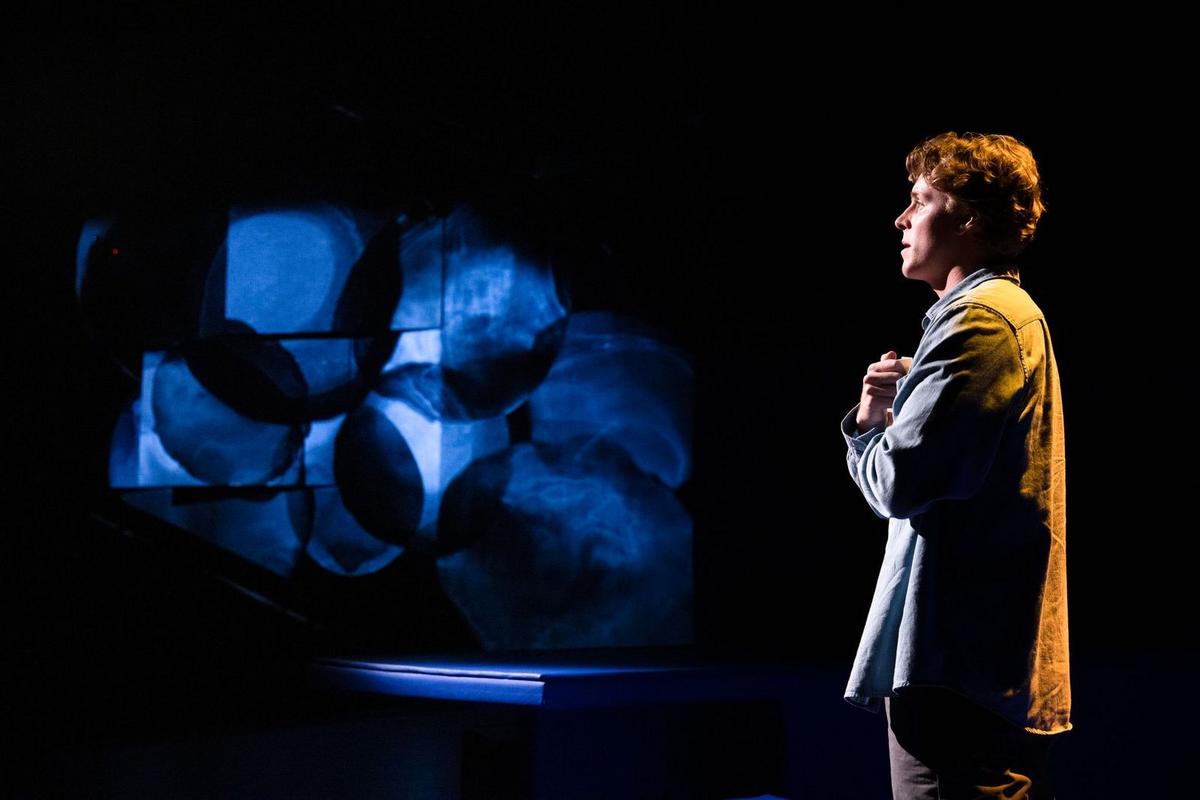
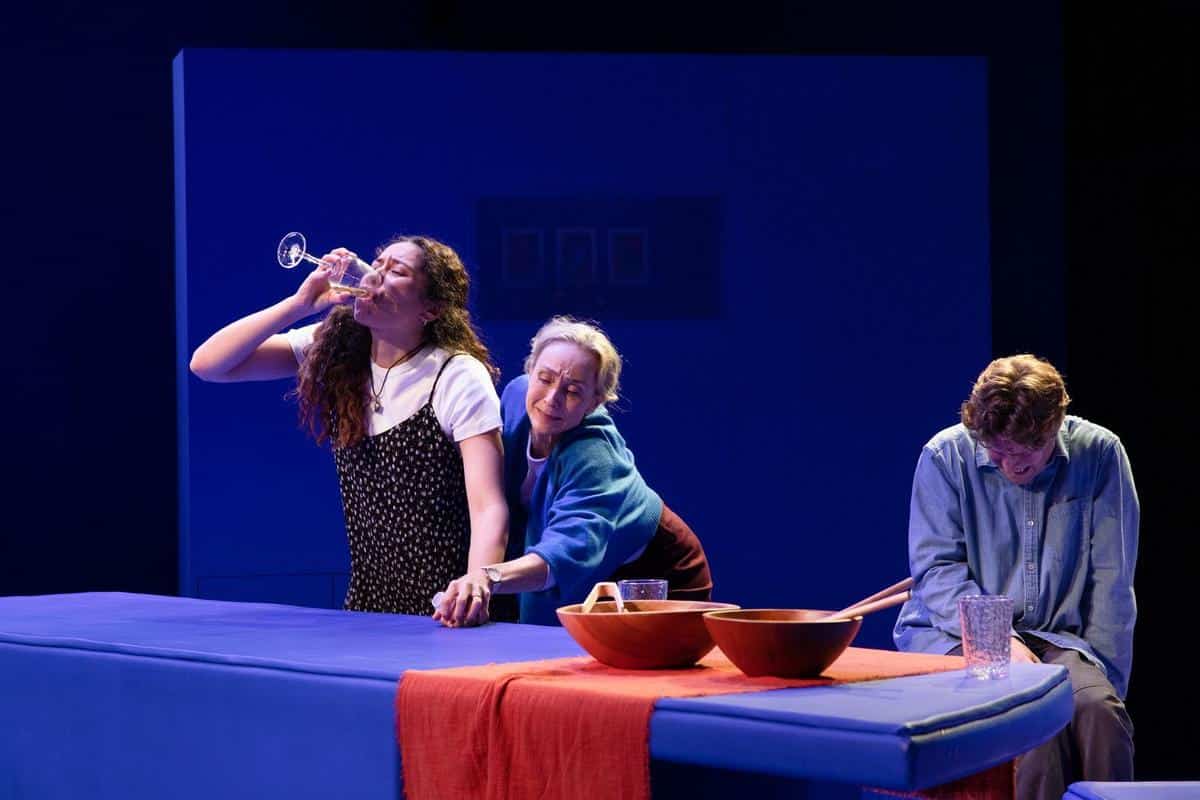
The creative elements give the production a distinct visual identity. Fiona Bruce’s set and costume design makes strong use of a cool, blue-toned world; a choice the program links to ideas of protection, intensity and emotional excess. Karen Cook’s lighting supports the production’s movement between domestic realism and more heightened emotional moments.

The Almighty Sometimes is not light entertainment, but it is compelling theatre. It asks difficult questions without flattening them into easy answers. How much risk should a person be allowed to take in pursuit of independence? How far can love go before it becomes possession? What happens when the person you are trying to protect also needs freedom from you? These are not comfortable questions, but the play explores them with intelligence and sensitivity, providing much food for thought and is carried by a strong ensemble.

The Almighty Sometimes is a mature and absorbing production from Black Swan State Theatre Company; a thoughtful drama that leaves you pondering the difficult questions it asks about love, risk, responsibility and control.

To book tickets to The Almighty Sometimes, please visit https://blackswantheatre.com.au/season-2026/the-almighty-sometimes.

Photographer: Daniel J Grant

Spread the word on your favourite platform!

Subscribe to What's The Show

Reviews, show news and what is on, straight to your inbox.