A Feast For The Ears – An Evening With Omega Ensemble

Inner Landscapes

Inner Landscapes Rating

Click if you liked this article

My husband and I had the pleasure of attending Omega Ensemble’s concert, Inner Landscapes, at the beautiful Melbourne Recital Centre. Neither of us had been to a live classical concert before, so we had no idea what to expect. What we got was an amazing aural sound-bath from the incredibly accomplished musicians who make up the ensemble. With the hall’s beautifully acoustic design holding, reflecting and reinforcing the music from every direction, this was a true feast for the ears, joyful, surprising and moving in turns.

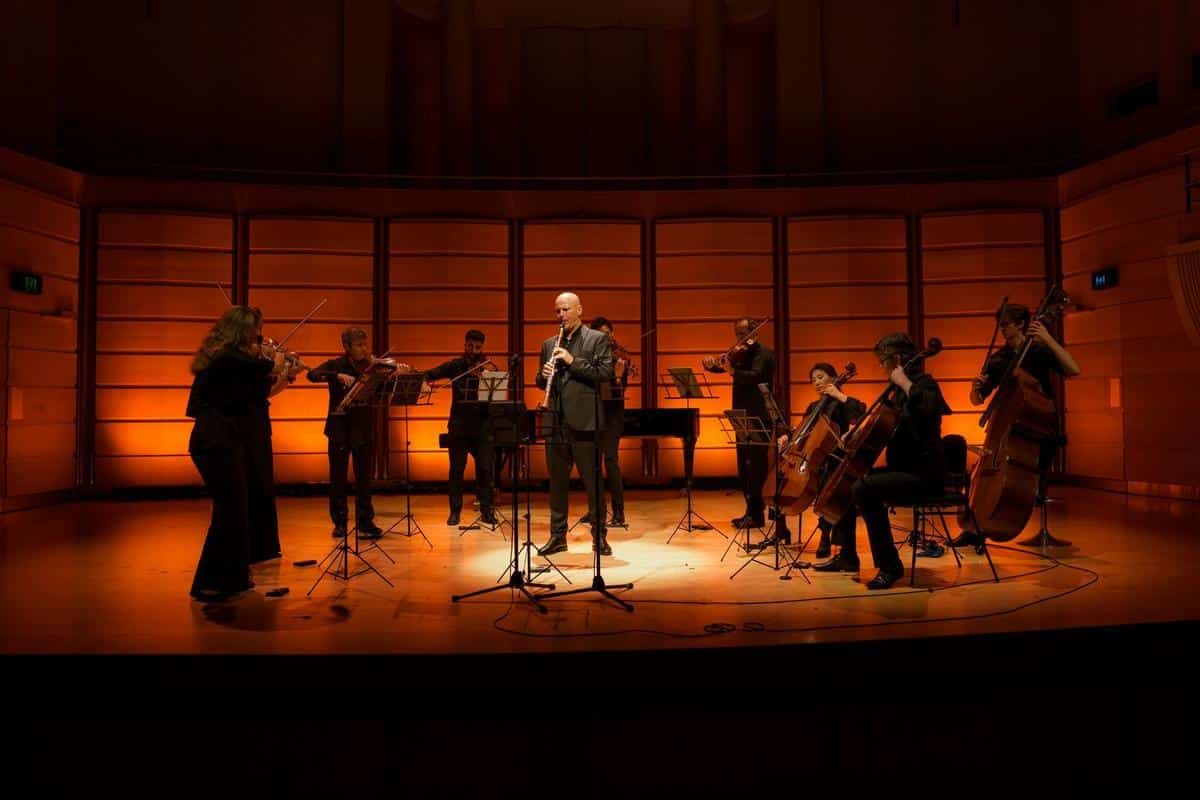
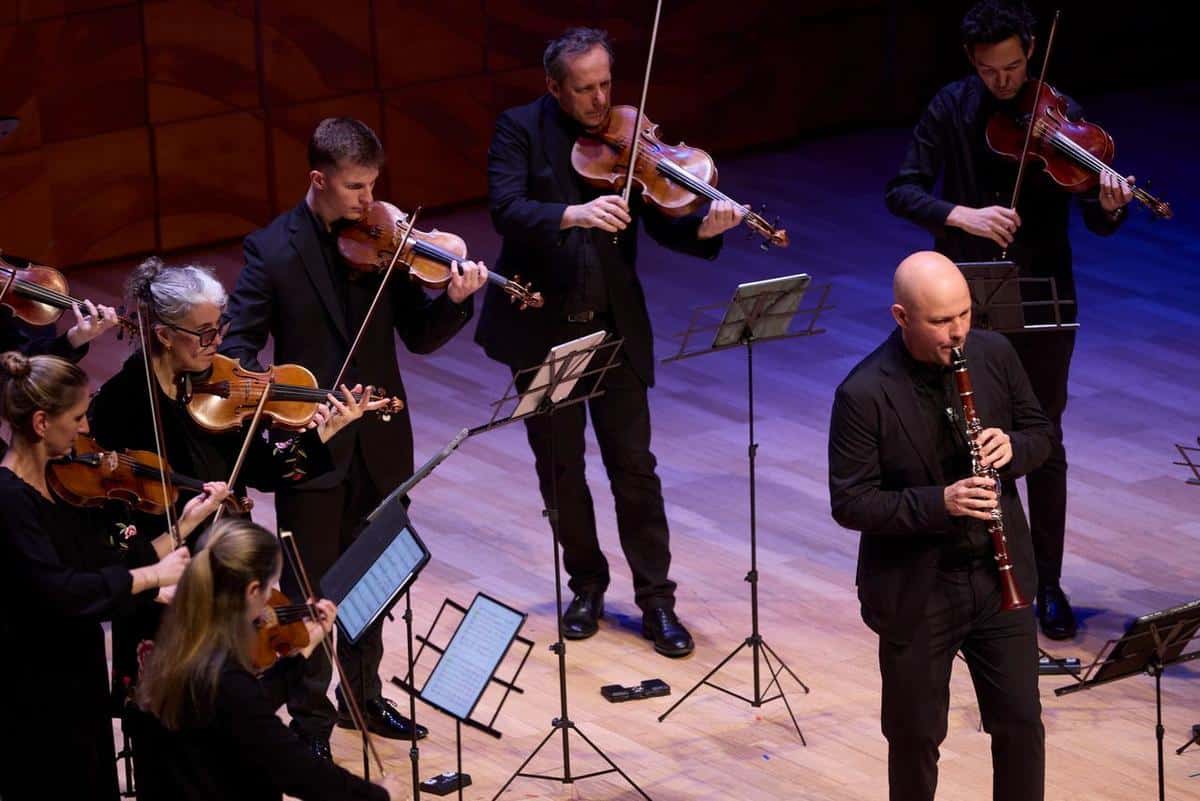
The night opened with a powerful original score by the Pulitzer Prize winning composer, John Corigliano. ‘Soliloquy’, written in memory of his father, was a tender exploration of that loss. The interplay between the violins and the solo clarinet carried a poignant sense of the empty spaces left behind when someone we love leaves. Even with its mournful threads pulling at absence and longing, quietly unravelling the listener, it was not without drama. There was an almost Hitchcockian feel to the piece in places, a sense of tension surrounding the beauty of the violins, suggesting that even as normal life was being lived, something darker and more insidious tugged at the edges, threatening to overwhelm it. It was an incredible treat to hear it live and be invited into that deeply personal experience.

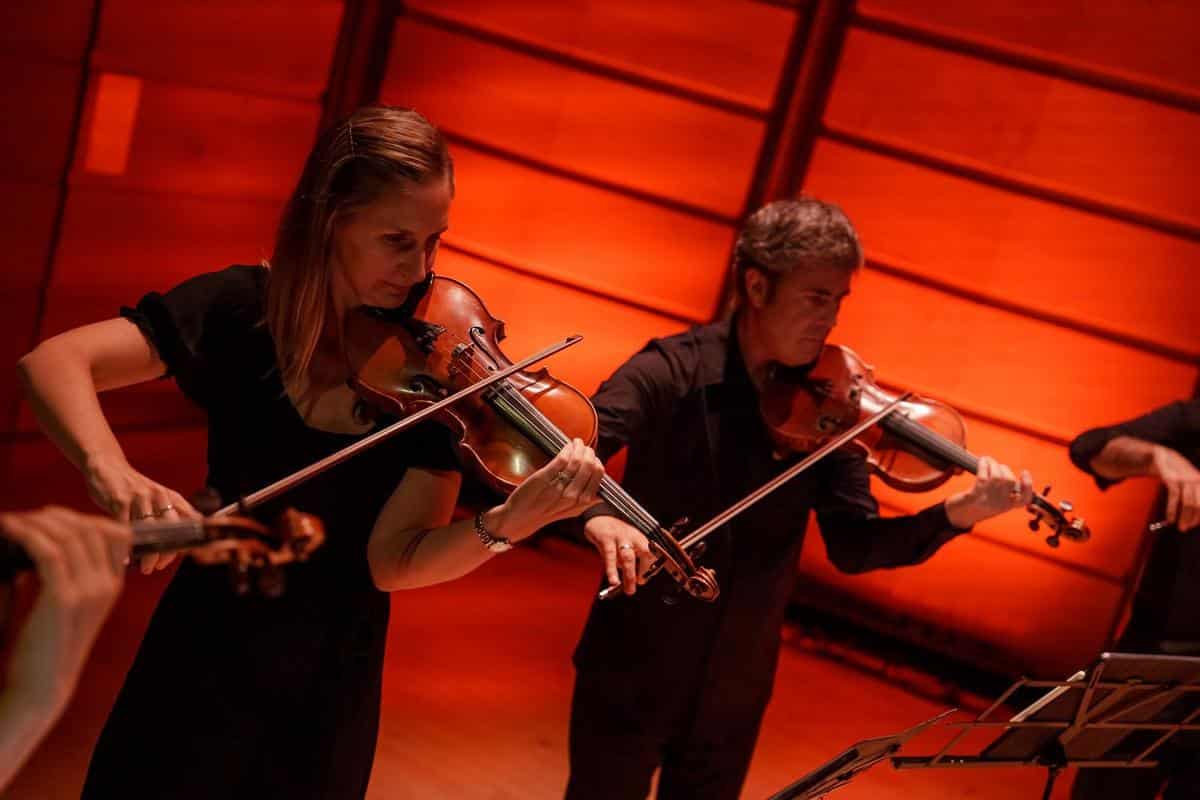
The second piece was delightfully familiar to me and will be to many of you too, I imagine. An expanded ensemble, now including cellos and double bass (I love these deep, earthy, mournful instruments the most), gave us a powerful performance of Franz Schubert’s String Quartet No. 14, Death and the Maiden. Performed in four movements, it rose and fell deftly. The first conjured rolling hills, bird murmurations, a feeling of youth and vitality, with an edge of unpredictability and sometimes danger created by the dancing, vigorous strings. My understanding is that this movement reflects the Maiden’s terror of Death. The second is slower, meant to convey a sense of safety despite Death’s presence. Here Death felt safe and generous rather than fearful, yet still carried the passionate, dramatic surges of feeling such a meeting would bring. It felt like being carried through the full emotional gamut of a life, seasons the Maiden will never live through rolled past as if in fast forward, a little like the idea that your life flashes before your eyes when you die. The third and fourth movements were sublime, returning to earlier themes with maturity and depth. The ensemble worked together impeccably. With no conductor, I watched with great interest the subtle interplay between the musicians, the tightly bound group led with breath and eye and the subtle hand of the principal viola and violinists. I was left thinking: if this is how incredible this ensemble is, can the Philharmonic really be any better?
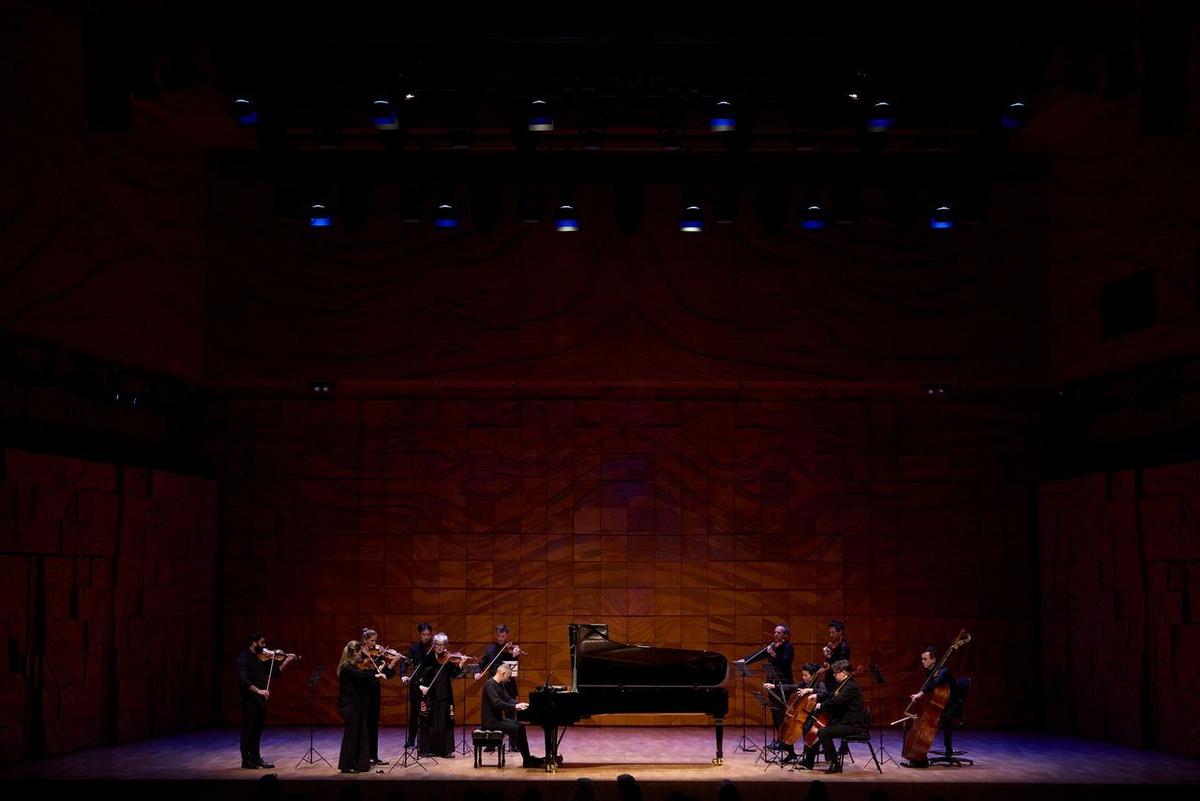


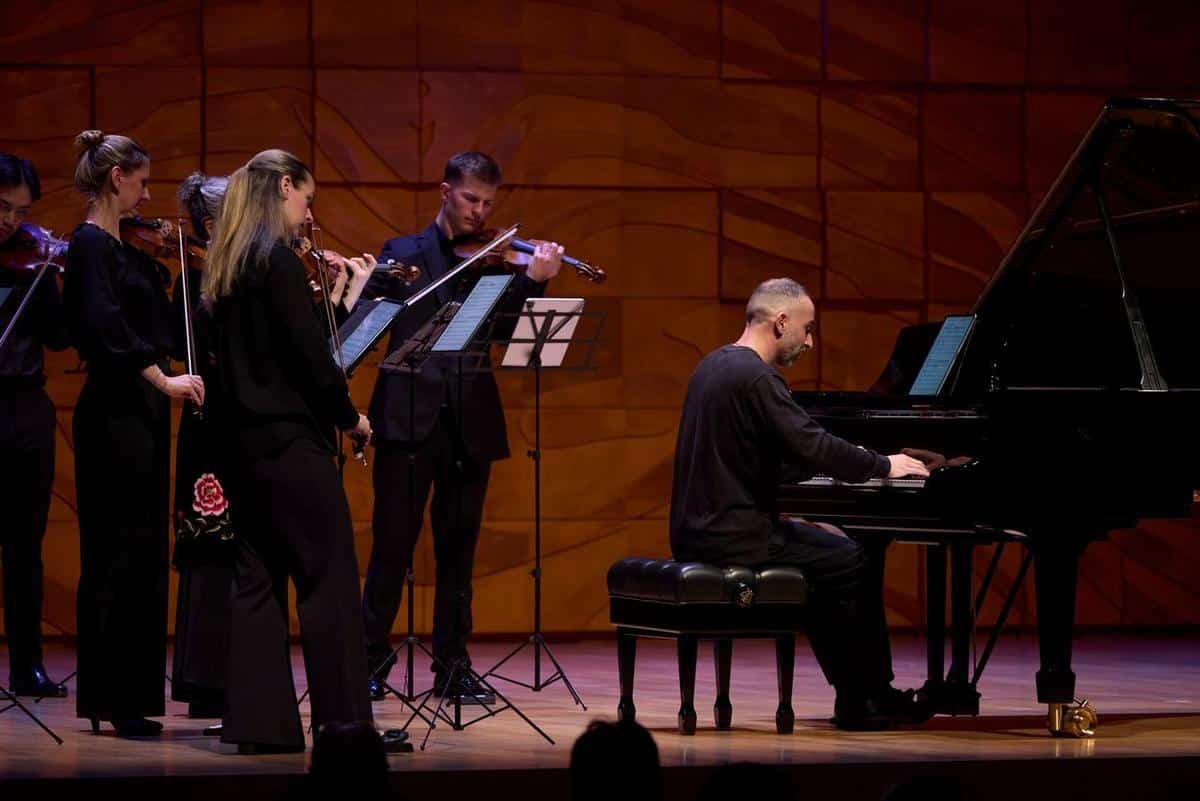
The third piece was another original composition, ‘Rounds’ by Jessie Montgomery, a Grammy Award winning composer and violinist. Inspired by T.S. Eliot’s epic poem ‘Four Quartets’, it felt to me like sitting in the centre of a storm. With passionate, skilful playing from pianist, Vatche Jambazian, I felt immersed in water: storm clouds producing lightning and rain, surging seas, the threat of violence and danger interspersed with lighter, more playful refrains, violins and piano exploring light and dark together, discordant, harmonious, rising and falling in ever more powerful rounds. A unique and interesting piece, and one that left the listener feeling as though they’d resurfaced breathlessly from deep underwater.

The final piece, a world premiere of ‘Paludarian Dreams’ by another award winning composer, Paul Stanhope, explored themes of nature found in a busy city. It was written for Omega Ensemble and it’s Artistic Director and solo clarinetist, David Rowden, whose deft fingers brought easily to mind the swift unpredictability of birds in flight.
Workshopped with the ensemble members, it felt beautifully collaborative and is, by their own admission, always evolving. It is joyful, sometimes whimsical and always surprising, delighting the audience with violin frogs that made us laugh out loud (not something you expect from classical music) as they called throatily to one another in the dark marshy waters of the piece. And the long cello solo was a genuine treat for me.

Honestly, this was one of the most enjoyable experiences I’ve had as a reviewer. Some of that can perhaps be put down to the delight of my first foray into live orchestral music, but most of it was down to the sheer talent of these highly accomplished musicians and the power of the compositions.

I highly recommend you go and see them as soon as you can, whichever city you happen to be in, because the only sad thing about the whole experience was that the auditorium wasn’t full to bursting. Omega ensemble truly deserves a full house.

To book tickets to Inner Landscapes, please visit https://www.melbournerecital.com.au/whats-on/current-productions/omega-ensemble-inner-landscapes.

Photographer: Laura Manariti
Spread the word on your favourite platform!

Omega Ensemble Presents: Starburst

Starburst

Starburst Rating

Click if you liked this article

2

Taking place at Melbourne’s Recital Centre, ‘Starburst’ marks the start of the Omega Ensemble’s 2026 season, featuring works by four unique composers in an evening of genre-bending chamber music. The Omega Ensemble is a cornerstone of Australia’s classical music scene, and this year’s performance once again reaffirmed their reputation for pushing boundaries and delivering extraordinary musical experiences.

The program was nonstop from curtains up, opening with Jessie Montgomery’s punchy, experimental ‘Starburst’ and moving just as quickly into the more traditional ‘Clarinet Concerto’ by 20th century composer Gerald Finzi. The small chamber ensemble was a tight unit throughout, gliding through highly complicated pieces with cohesion and exquisite technique. Within the walls of the acoustically-optimised Elisabeth Murdoch Hall, each instrument blended together superbly and never once into the background.

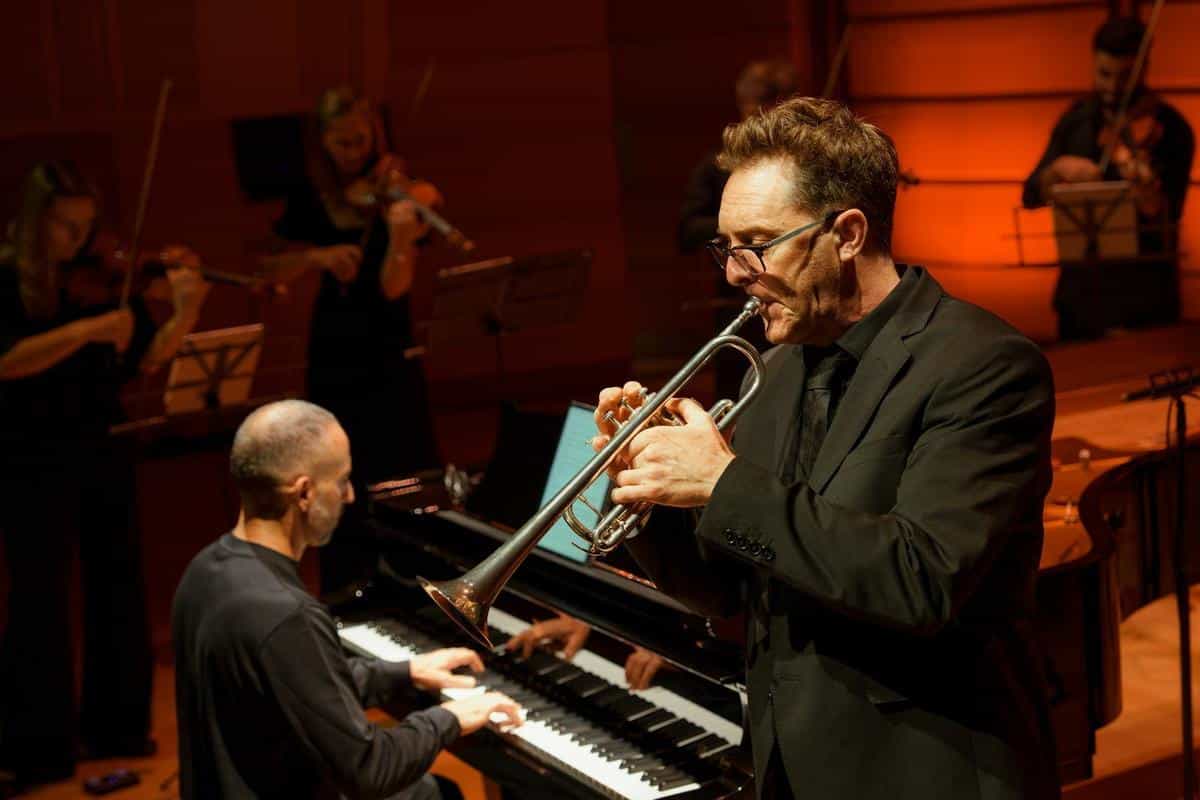
Trumpeter David Elton and clarinetist David Rowden were a pleasure to watch, from their brilliant solo performances of Finzi and Shostakovich to the world premiere of Lachlan Skipworth’s ‘A Turning Sky’, a double concerto composed specifically for Elton and Rowden. Side by side they expertly weaved together a melodic and full-bodied duet that, backed by the orchestra, completely encompassed the hall in a wash of perfect harmony. ‘A Turning Sky’ was incredibly arranged, highly detailed and masterfully performed; it was just awesome to experience original work by leading Australian composers.


The Omega Ensemble’s rendition of Dmitri Shostakovich’s ‘Concerto No. 1 for Piano, Trumpet and Strings’ was truly something to behold and the undeniable nucleus of ‘Starburst’: an unrelenting combustion of a concerto closing with a piano solo that earned pianist Vatche Jambazian a well-deserved standing ovation. It was a physical performance as much as it was musical and Jambazian’s backbreaking playing style kept eyes pinned as he shredded on the keys like a man possessed. Shostakovich, I now know, was insane—but man, the whiplash from ominous dissonance to jolly fanfare melted my brain. I had to go listen to it again later just to be sure it was real.

‘Starburst’ featured a particular selection of composers that, while incredibly enjoyable to listen to, emphasised a deeper significance beyond music alone. In the years between what we know to be classical (then) and contemporary (now), experimental music emerged as a means of radical self-expression in times of great uncertainty, loss and discovery. The Omega Ensemble explores the space between classical and contemporary music in bursts of sound and light, connecting modernist musicians of centuries past with composers pioneering the classical genre today. Both an exchange and a collaboration, ‘Starburst’ highlights the value of artistic dialogue as a catalyst for redefining the boundaries of contemporary classical music.

‘Starburst’ has finished up its run, but you can always catch the Omega Ensemble Australia-wide all year round!

To book tickets to Starburst, please visit https://www.omegaensemble.com.au/starburst.

Photographer: Amelia Kain

Spread the word on your favourite platform!

Piotr Anderszewski

Piotr Anderszewski (Musica Viva Australia)

Piotr Anderszewski (Musica Viva Australia) Rating

Click if you liked this article

Some concerts creep up on you. Others announce themselves with force. Piotr Anderszewski’s recital at Melbourne Recital Centre did something rarer. It invited us in with quiet confidence and then held the entire room completely still. It was the kind of night that reminds you why we gather in concert halls instead of sitting at home scrolling through recordings.

The program opened with twelve pieces selected from Brahms’ late piano works Opp. 116 to 119. These miniatures can feel introspective, even private, but Anderszewski treated them like a conversation he was having directly with us. Nothing about his playing felt unconsidered. Every shift in colour had purpose. Every pause had weight. There was virtuosity here but it was the kind that draws you closer rather than pushing you back. The hall was silent enough (save for the single phone ringing that, I swear, brought a subtle shake of the head from the pianist) to hear the softest phrases land like thoughts forming in real time.

After interval came Bach. Anderszewski delivered the Prelude and Fugue in E major BWV 878 and the Prelude and Fugue in G sharp minor BWV 887 with a clarity that never tipped into dryness. He let the melodic lines speak with a simplicity that suited the space. Elisabeth Murdoch Hall has the kind of acoustic that wraps a performer in a warm glow without smudging the detail. It felt made for this music.


Then came one of the loveliest theatrical touches of the evening. Without any break or invitation for applause, Anderszewski slipped straight into Beethoven’s Sonata No. 31 in A flat major Op. 110. You could feel the audience catch on one by one. A tiny ripple of realisation moved through the hall.  It was clever and charming and made the transition feel like part of the storytelling rather than a reset.

His Beethoven had an almost improvisatory quality. Not loose for the sake of it but alive to the moment. Dynamic shifts surprised us yet always connected to the emotional flow of the work. The Arioso dolente was especially moving and the fugue grew with a kind of quiet determination that suited Anderszewski’s understated presence at the keyboard. Nothing was showy beyond necessity. Everything was honest and heartfelt.

Two encores followed after an eruption of applause at the end of the evening. The first felt like a warm nod to the audience and the final encore offered a gentle send off. A perfect ending.

Musica Viva deserves real credit for bringing this artist to Australia and for programming a recital that felt both rare and completely right for this venue. Elisabeth Murdoch Hall remains one of the great gifts to Melbourne audiences. Nights like this prove it.

To book tickets to Piotr Anderszewski (Musica Viva Australia), please visit https://www.musicaviva.com.au/concert-season/past-seasons/concerts-2025/piotr-anderszewski/.

Photographer: Claudio Raschella

Spread the word on your favourite platform!

How Classical Music Can Feel Modern And Accessible

Elevator Music

Elevator Music Rating

Click if you liked this article

The Omega Ensemble’s Elevator Music, consisted of Anna Clyne’s Stride, Gaeme Koehne’s Dances on the Edge of Time and Aaron Copland’s Clarient Concerto. The concert was deliciously familiar and heart-warming. In particular Koehne’s work sampled familiar melodies, acting as a postmodern classical music DJ of sorts. The lively and energetic ensemble wove both old and new classical music, bringing to life a new and harmonic story through sound. The music was postmodernist and playful, referencing and recycling beloved melodies. The clarinet soloists (Michael Collins and David Rowden) pression and control, particularly their purity of tone in the upper registers, exhibited a mastery of the clarinets transition between registers.

The first piece began with, what seemed to me, crisp personality and warmth, benefitting from the expressive first violin, Véronque Serret. The music continued ominously and atmospherically, effectively building tension and my anxiety (as I assume the composer intended). The piece felt like story telling through sound, a fearsome loathsome tale that swiftly transitioned from hopeful to fearful. The tone was clearly conveyed in a way that listeners unfamiliar with classical music could feel and understand.


Dances on the Edge of Time introduced the two clarinet soloists, Michael Collins and David Rowden (also the artistic director). The clarinets ushered in a warmth and airy lightness. This was mirrored in the addition of the piano (Vatche Jambazian). In this piece the two clarinets blended deliciously with a foundation of sound built by the orchestra. All the musicians were playing and toying not just with sound, but volume too, which drew out swirling emotions from the audience. Koehne’s work continued to be heart warmingly nostalgic, as intended, the program noted that Koehne prefers warmth, clarity and lyricism over “the cliched angst and ponderousness of so much ‘respectable’ new music.” I tend to agree, and found the soulful, thoughtful and playful music, particularly the call and response from the clarinet soloists, to be moving and enjoyable. Koehnes orchestration is at times reminiscent of ravel’s colouristic effects

The Clarinet Concerto began slowly and gently, guided by the harmonic direction of Michael Collins. The piece was played as hopeful and dreamy, and produced feelings of wistfulness within me. I was brought along a journey that the artists wanted the audience to follow, it was twisting path of beauty and cool breezes. This piece continued, picking up speed and energy, with an ominous shift in orchestration and accompaniment. The clarinet soloists, however, continued with a light and energetic harmony, containing more call and response weaving in well-known classical melodies to the modern music. The piece continued with the whimsy highlighted by the double bases (Adrian Whitehall and Jacques Emery), powerfully building and breaking the tension of the music.

The concert ended with a surprise encore and world premiere of a reworked (for two clarinet soloists) piece called Ornamental Air. The encore began with a sense of urgency from entire orchestra. This piece continued with the playfulness of the previous works. The clarinets were delicately and deliberately light and harmonious. It was a delightful end to a lovely evening of music that moved me, and took me along a journey through my mind.

To book tickets to Elevator Music, please visit https://www.melbournerecital.com.au/whats-on/current-productions/omega-ensemble-elevator-music.

Photographer: Eloise Coomber

Spread the word on your favourite platform!