If you’ve ever been lucky enough to have had a ‘perfect moment’ where you wanted to freeze time, to bathe in pure happiness, you will be able to relate to Sylvia in Till the Stars Come Down. In contrast, the feeling of wanting to stay, for fear of what may happen next, may also be relatable. These poles of emotion are strong, and it is in the myriad of this and everything in between, that becomes a tightrope linking a family together.
Directed by Anthony Skuse, and currently performing at KTX on Broadway, Till the Stars Come Down is a play about the complexities of family, grief, loyalties and love. Set in the deindustrialised working-class town Mansfield in the UK, the play takes place over the course of one day.
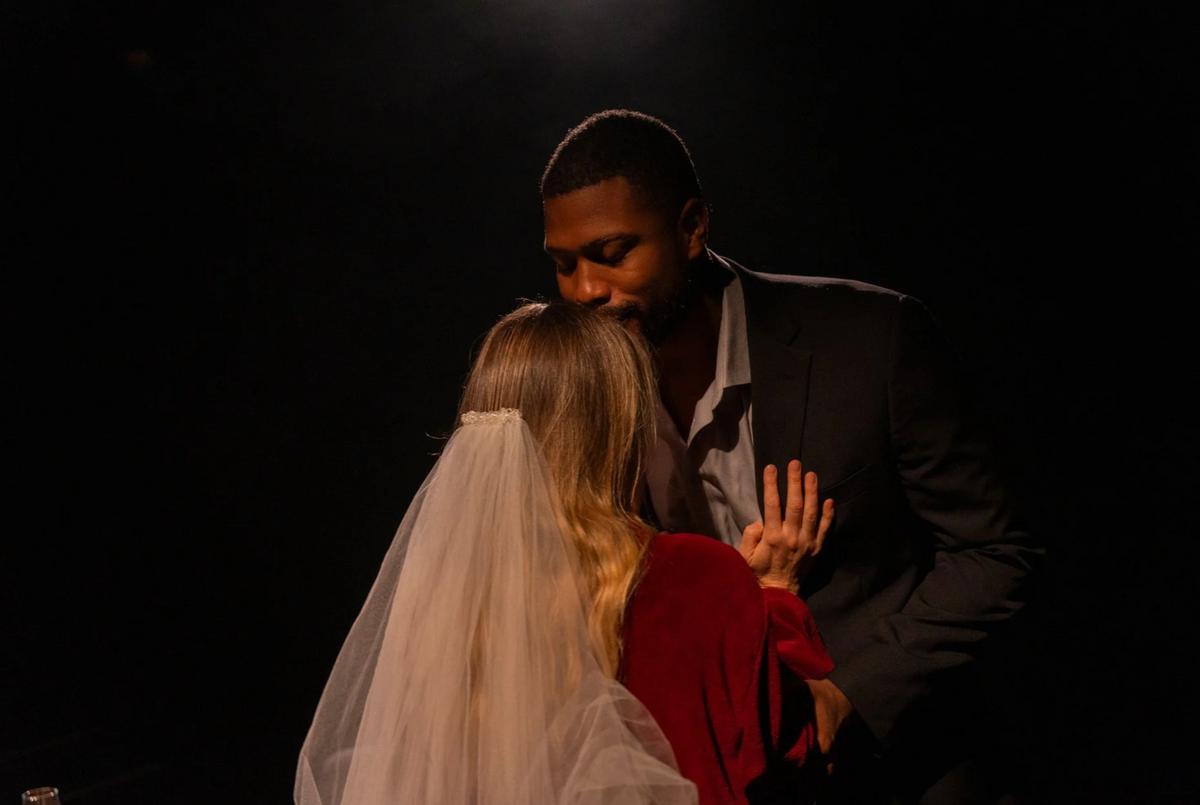
After a whirlwind romance, Sylvia (Imogen Sage) is marrying Polish immigrant Marek (Zoran Jevtik). Sylvia is one of a trio of sisters, and although each have very different personalities, they appear to be close. There’s a beautifully intimate scene where the sisters are lying on the floor, heads together and chatting, reminding me of either the innocence of making snow angels, or representative of the three of them combining to make a single star. I thought that maybe this was a subtle nod to the play’s title.
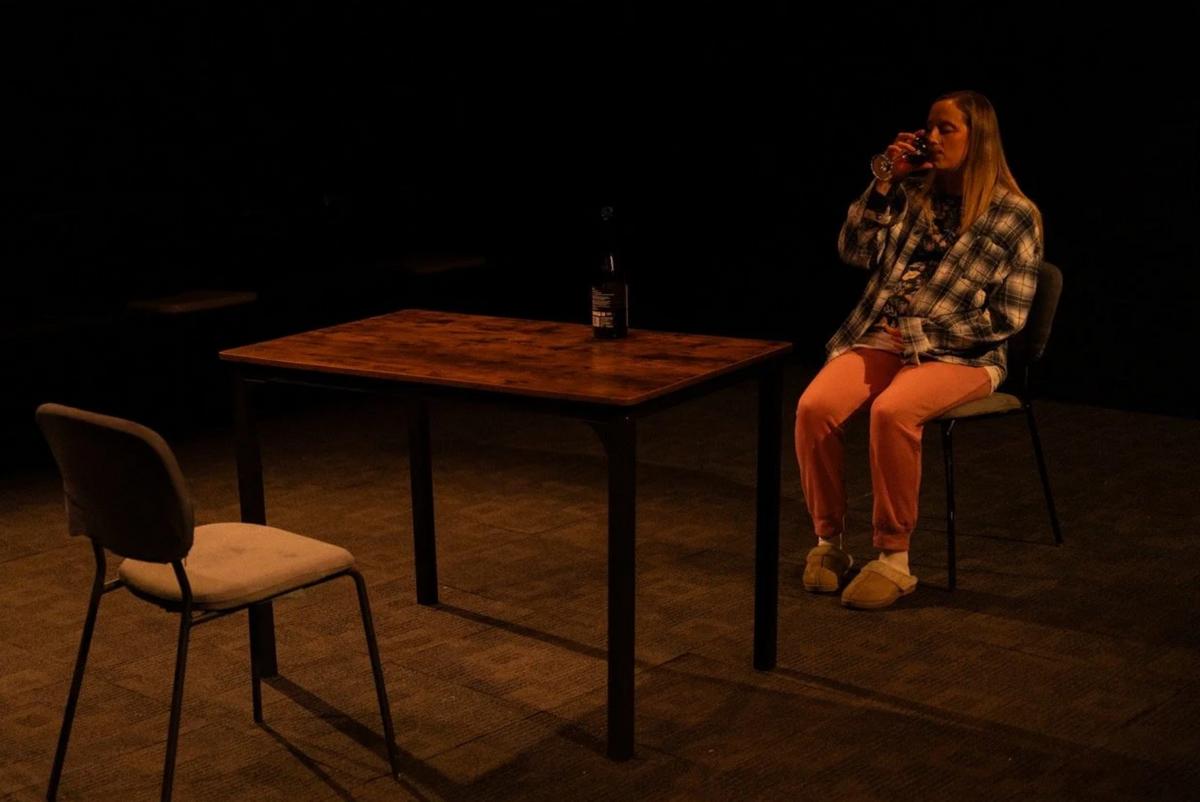
Hazel, (played with highly strung perfection by Ainsley McGlynn) is stuck in a job she finds boring, in a marriage where she feels unseen and consequently has a rather sharp tongue which seemed to be frequently aimed at her sister Maggie (Jane Angharad). Hedonistic and quadrupled married (twice to the same man, does that count as four times? “I only married him because he looked at me like I was a potato in a famine.”) lives elsewhere and had left Mansfield abruptly leading to the other sisters feeling somewhat abandoned. Angharad’s portrayal of Maggie was layered, and her lack of self-esteem as well as her desperate confusion in some parts of the play was admirable. Sage’s portrayal of bride Sylvia was sweet. She feels some guilt about moving out of home, having been a companion and career for her widowed father Tony (Peter Eyres).


The first half of the play is female led, and in the opening scene we are introduced to Sylvia’s living room by Hazel’s youngest daughter Sarah (Kira McLennon) zooming onto the stage, laughing with girlish innocence, and playing with a spacecraft. (I noted this may have been another cosmic nod to the play’s title) Hazel’s older daughter Leanne was also there, portrayed with just the right amount of teenage attitude by Amy Goedecke. Aunt Carol, (Jo Briant) arrives, a no-nonsense loveable character full of advice in the form of quick wit. On getting old, she says, “I’d like a bit more of the middle part” and speaks with the wisdom of a woman who has lived a colourful life. Briant was a standout scene stealer, particularly as she got more inebriated at the wedding and danced – the audience loved her!
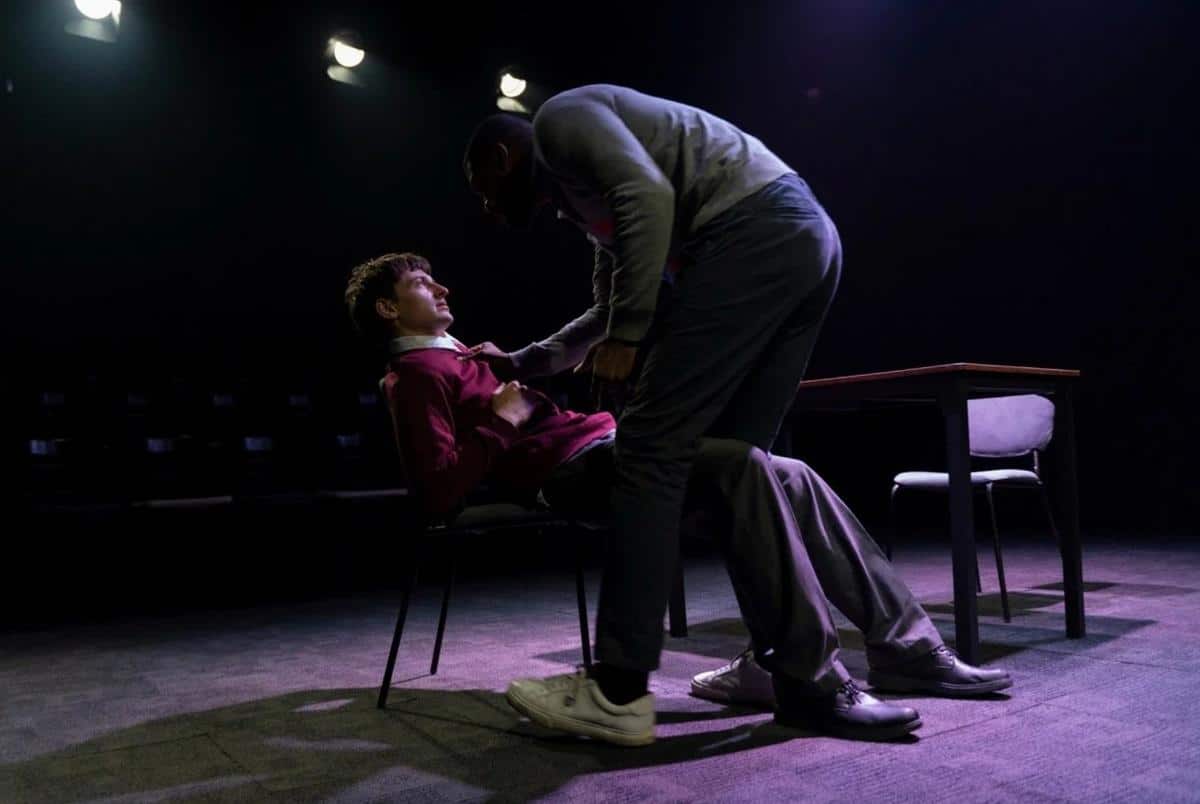
During the wedding day, things start to become messy as Sylvia’s family reveal their racism and suspicion towards Marek. Hazel’s husband John (James Smithers) is unemployed and a kind offer by self-employed Marek is not received gracefully. An added layer at the table was Sylvia’s father and his estranged brother Peter (Brendan Miles). Tension built due to old resentments from past actions (disagreements during the time of the mining strikes) which billow around them.
Then, the beautiful wedding day descends into total family chaos.
Playwright Beth Steel has successfully written a script which gives a strong voice to all characters in fairly even measures; each have their own depth and inner struggles. The ensemble was cohesive, bringing their own character’s hidden raw emotions to the surface. This drew me into their lives and moved me. Although not an expert on accents, I believe all of the actors’ English East Midlands accents were flawless throughout this performance, kudos for this.
Composer and sound designer Layla Phillips brought the relevant era to the stage with the choice of pop songs and some original moving music throughout the play. Set designer James Smithers created a stage with minimalistic props. The wedding table and setting which appeared to have real food on the actors’ plates, along with the top bars that ran above the table was a highly effective use on the small stage. The intimate KXT Broadway was a good choice to house this play, and the casts’ clever involvement of the audience during one part added that extra bit of immersive sparkle to this production.
I loved Till the Stars Come Down! It is a hard-hitting play which explored many themes and circles back to love, life and ultimately surviving the day. It is a play which will stay with you for a long time – go see it!
Season: March 27 – April 11 2026 at the KXT Theatre Broadway
Run Time: 120 minutes with an interval
www.events.humanitix.com/til-the-stars-come-down
To book tickets to Till the Stars Come Down, please visit https://www.kingsxtheatre.com/till-the-stars-come-down.