TWO

TWO

TWO Rating

Click if you liked this article

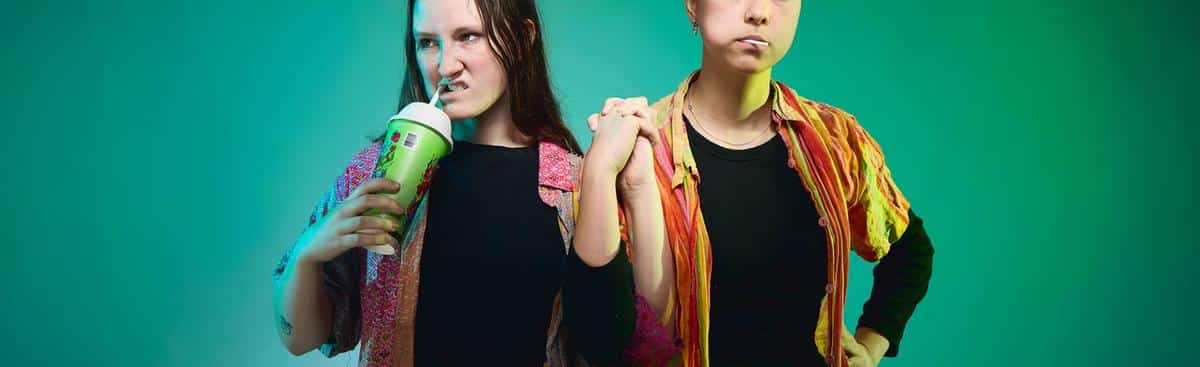
Melbourne’s queer theatre scene is growing bolder and more joyful with every passing year. However, with widespread acceptance and marketability, there is always a risk of falling into complacency. As a trans playwright, I’m well aware of this ‘tolerance trap’, so I was excited to see a new play with a protagonist as grey in their morality as they are in their gender presentation. Add themes of queer family dynamics and the societal treatment of AFAB bodies into the mix, and you have a recipe for a fascinating comedy. The execution of Two, directed and written by Artemis Muñoz, however, left much to be desired in terms of the writing, set design, and performances.

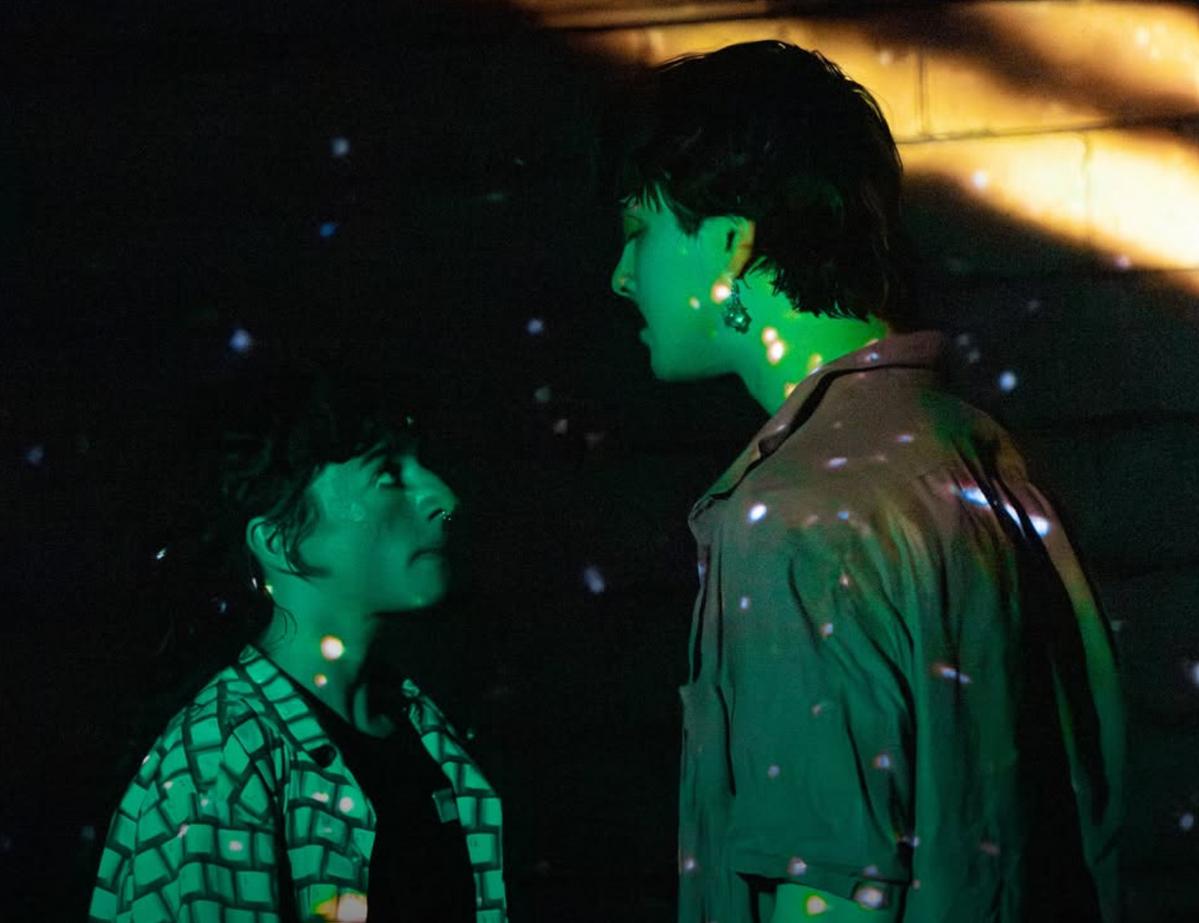
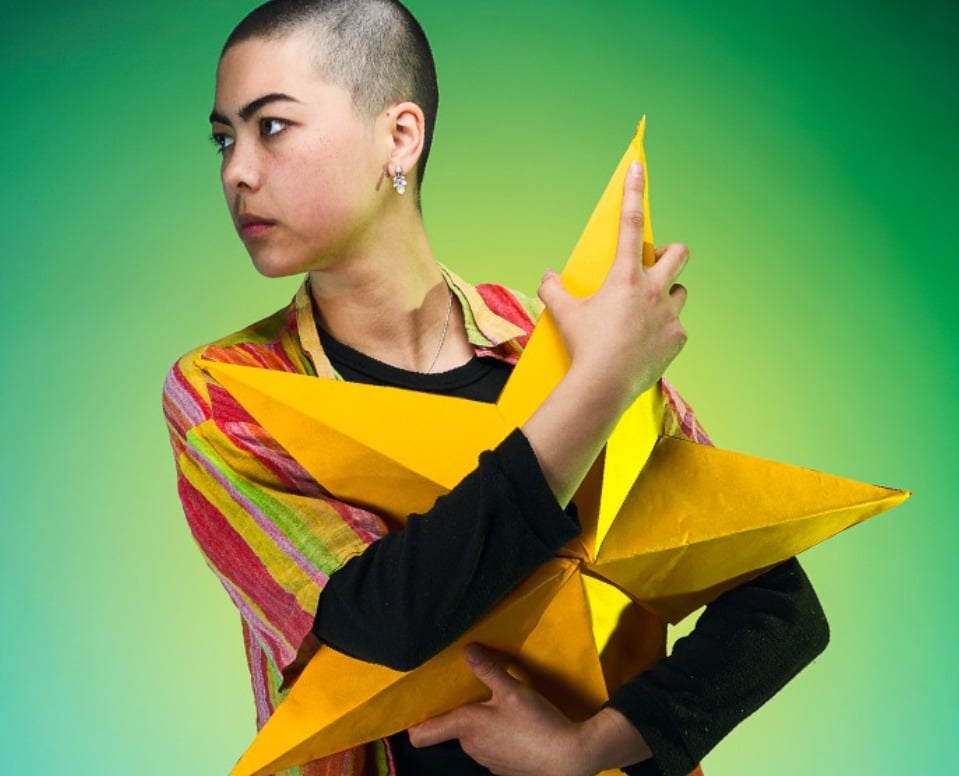
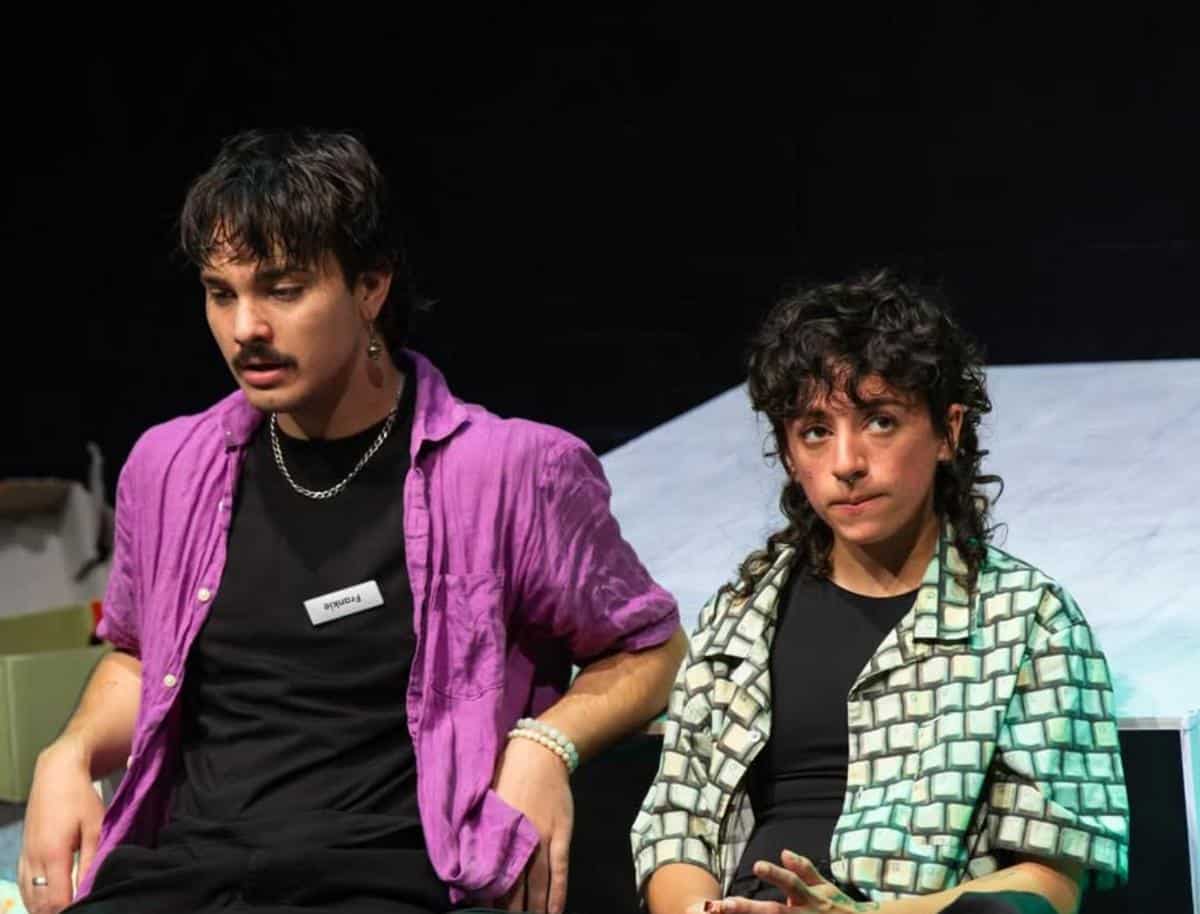
Two’s protagonist, Kit (Sienna Macalister), is polyamorous, non-binary and newly pregnant. Excited as they are to be a parent, they quickly grow sick of people’s questions about their baby’s gender/sex/genitals. During a particularly tense get-together, they lie to their mother (Rebecca Morton) and announce that they are having twins, a boy and a girl. This temporarily fields uncomfortable conversations with Kit’s family, but strains relations with their partners (Vasi Devi and Marz Cooper) and creates further issues once the (singular) child is born. Will Kit’s family, chosen and biological, survive the fallout?

When creating such an esoteric plotline, there’s a tricky balance between getting your themes across and not lecturing your audience. Unfortunately, I felt that Two fell off the latter side of that tightrope, especially when it came to Kit’s frustration with their mother. It often felt as if the script was insisting that we dislike the mother through prolonged rants from Kit, instead of letting the audience infer ways in which her microaggressions impacted her child. This didactic writing extended to other scenes that fell into a predictable pattern: someone makes an offensive comment, Kit calls them out, they double down, Kit gives them a scolding.


The staging also didn’t help with character connection because the space felt too wide. By using various side set pieces along with an expanding central frame, the actors felt so physically distant from the audience that it was hard to connect with their intimate scenes. The blocking often seemed stiff and aimless, with characters stuck standing around in scenes they didn’t fully belong in and a lack of opportunities for the actors to make eye contact with each other. A more closed-off stage and further opportunities to sit in moments of silence would have made it easier to connect with characters who are, on paper, fascinating.

Two still has moments where it lives up to the premise’s promise, especially after Kit’s child is born. The scene where Kit gives birth was a visceral showcase of Macalister’s acting, using a luminous ball as a stand-in for the baby was a beautiful symbolic choice, and there was a greater sense of emotional weight as certain character arcs wrapped up. The play’s penultimate scene with Kit and their mother was one of the only times when the mother felt fully sympathetic. It truly seemed that she didn’t fully understand the weight of her actions and that she had the potential to do better. It also brought home a more complex message about ‘cutting off’ loved ones: it isn’t easy on anyone and it’s never anybody’s first choice, but it can still promote the possibility of change.

Two is a play with many interesting things to say that needs further confidence in saying them. The writing comes across as lecturing at points, which could be mitigated by further drafting and less nervousness in the performances. I also think a smaller, more intimate venue would benefit the cast and audience. I would be interested in seeing a future production, and if the premise of the show resonates with you then you may enjoy it in its current form, but it could reach many more people with further polish.

To book tickets to TWO, please visit https://www.theatreworks.org.au/2025/two.

Spread the word on your favourite platform!

Jumping About All Over The Place

Nihilistic Optimism on Trampolines

Nihilistic Optimism on Trampolines Rating

Click if you liked this article

2

‘Nihilistic Optimism on Trampolines’ is undoubtedly one of the most unusual plays I’ve seen this year. Whilst heavy on the nihilism (and light on both optimism and trampolines), it was an original and genuinely imaginative reworking of the supposed origins of the classic novel ‘Frankenstein’.

The production blended text from Mary Shelley’s novel with excerpts from her personal journals adding some emotional depth to the relationships depicted. It also set the whole thing, hilariously, in ‘Trampoline World’ a place of suffocating monotony and lacklustre job prospects. The cast threw themselves into the story with enthusiasm and full physical commitment and for the most part the chemistry between them worked well. The performance of Mary (played by Gabrielle Ward) was a standout, but honourable mention should go to the comic relief of Byron (Eleanor Golding), who brought some levity to the darker moments.
While the production lacked polish, any real production values and occasionally slipped into feeling a little improvised, it also aimed high. Reworking a classic text is extremely difficult to do with originality unless you commit fully and take creative risks. To their credit both the writer and cast were clearly swinging for something clever and nuanced.

Where the show really excelled was in its depiction of the sheer monotony of customer facing work. The endless repetitive conversations. The glazed interactions. The joy of mopping up vomit while being surrounded by screaming children and huffy parents. Much of the audience would have recognised their own flashbacks to those teenage jobs where commitment was low, wages even lower and the tangled crushes and camaraderie among staff were the only things getting you through the shift.


Where the show struggled was in clearly communicating the heart of the story. My theatre partner had not read Frankenstein and most certainly was not aware of Mary Shelley’s dramatic Geneva holiday with Percy Bysshe Shelley, Lord Byron and Mary’s sister, Claire. Which means he also had no reference for the dark emotional chaos that surrounded Mary’s relationship with Percy at that time, nor that the trip, (and her recurrent horrific nightmares), became the impetus which inspired her story – so those little nods to that experience, though explored in the play, were far too easy to miss.

As someone who has read the novel, seen the films and even watched ‘Rowing with the Wind’ a period film which dramatises the strained and sometimes unhinged relationships between the four (suggesting, as it does, that much of it was fuelled by both drugs and rather free sexual relationships between them all), I had a much easier time connecting the dots. For audience members without that context, I imagine the play would feel disjointed and confusing. The plot is fragmented and sometimes hard to track even for those who do know the backstory. The jumps between contemporary speech and period speech and the sudden segues between the tangled lives of the staff of Trampoline World and the feverish imaginings in Mary’s mind were not always smooth. Despite solid acting the heart of the play felt obscured under the sound effects, jarring lighting shifts and literal jumping around. In reference to the trampolining side of things, I would note that there wasn’t a whole lot of trampolining in the show and none of it was of a particularly entertaining or acrobatic nature – I was expecting something a little more exciting in that respect.

On a final positive note, the live band deserves acknowledgement. Their music added atmosphere, drive and emotional colour to the play and helped anchor scenes that might otherwise have floated away completely.

Ultimately this one was a swing and a miss for me, but with the recognition that it was highly original, and original thinking should always be applauded.

To book tickets to Nihilistic Optimism on Trampolines, please visit https://www.theatreworks.org.au/2025/nihilistic-optimism-on-trampolines.

Spread the word on your favourite platform!

Titus Andronicus

Titus Andronicus

Titus Andronicus Rating

Click if you liked this article

3

Theatre Works and Th’ Unguarded Duncan have delivered a Titus Andronicus that shakes the dust off Shakespeare’s most brutal tragedy and gives it a visceral, contemporary pulse. It’s a nightmarish, muscular production filled with human vulnerability and psychological horror rather than empty shock value and it had the audience ricocheting between laughter, gasps and the occasional tear. This is Titus for newcomers and die-hard Shakespeare fans alike.

At the centre of it all is Josh Morrison as Titus, who unleashes an unrelenting rage that never tips into caricature. His performance is a thunderous force, yet it sits on a foundation of emotional authenticity that makes the character’s descent compelling. For my taste, I might have enjoyed a sharper arc from decorated general to shattered father, but Morrison’s clarity of intention gives the role a gripping cohesion that I really can’t fault. It’s easily the best Titus I’ve seen.

Joanna Halliday’s Lavinia is spellbinding. She begins the play vivacious and bright then slowly transforms into something still, deliberate and driven. Her physical and emotional control draws your eye even in silence. Halliday leans into the horror elements without losing the character’s dignity, giving us a Lavinia who is both haunting and heartbreakingly human.

Helen Hopkins grounds Marcus with immaculate text work. She brings the energy of a seasoned Shakespearian actor, the kind who makes the verse feel like breath rather than technique. Marcus can vanish in a sea of titanic characters, but Hopkins’ patrician poise ensures the role resonates.


The production finds remarkable subtlety in its men of war. Rajendra Moodley (Aaron) and River Stevens (Lucius) deliver monologues that feel as if they’re aimed straight at each audience member. Their grounded humanity makes their choices believable and their presence magnetic.

Meanwhile, the Goth brothers steal scene after scene. James Cerche (Chiron) and Seon Williams (Demetrius) are wickedly funny, disturbingly casual and physically razor sharp. Their playful cruelty taps perfectly into the show’s tonal balance of horror and wit.

Victoria Haslam’s Tamora delights in viciousness, particularly in her chilling condemnation of Lavinia. She’s dangerous, charismatic and hard to look away from.

Directors Kevin Hopkins and Claire Nicholls craft a production that feels purposeful in every moment. The physicality is cohesive, the pacing is tight and the story is crystal clear without ever being over-explained. The minimal set keeps the focus on the ensemble, and while the central ring’s construction briefly distracted me, its use to delineate space and evoke the infamous pit was inspired. Lighting stays subtle and supportive, letting the actors carve the world. Max Hopkins’ sporadic bursts of heavy metal underscore transform key scenes into something almost cinematic, heightening tension and chaos in all the right places.

Paulina Kostov and Victoria Haslam’s costuming choices and creation drew a sharp line between worlds: disciplined Romans in hakama and rebellious Goths in punk-inspired gear. It’s a clever visual shorthand that deepens the storytelling.

This production made me see Titus Andronicus in a new light. It strips away the noise and brings the humanity right to the surface. A thrilling, haunting and deeply satisfying night of theatre at Theatre Works.

To book tickets to Titus Andronicus , please visit https://www.theatreworks.org.au/2025/titus-andronicus.

Photographer: James William

Spread the word on your favourite platform!

Shakespeare Meets Succession in The Breath of Kings

The Breath of Kings

The Breath of Kings Rating

Click if you liked this article

3

Theatre Works in St Kilda is currently home to an ambitious production, The Breath of Kings. It is a two-part history cycle of the plays Henry VI and Richard III. Directed by Robert Johnson, the production brings Shakespeare’s history plays to life with extraordinary immediacy, energy, and invention.

Over an entire day of theatre, audiences are invited to witness the bloody history of England’s royal houses, from the Wars of the Roses to the rise of Richard III. The experience is immersive from the start. Staged in the round, the audience sits within arm’s reach of the performers, blurring the line between spectator and participant. The interaction is constant and sometimes joyful. At one point, I was dancing on stage and sharing treats passed around by the cast. It was alive, communal, and very much in the spirit of Elizabethan performance.

The first play, Henry VI, is a thrilling, blood-soaked account of ambition and collapse. The charismatic Duke of York, played by Tobias Manderson Galvin, ignites the crowd into chants of “York, York, York!” His performance is full of swagger and charm. Ellen Marning as Queen Margaret is a force of nature, embodying raw power and ferocity, while Sean Yuen Halley brings a touching vulnerability to King Henry VI, revealing the man beneath the crown. The production moves with such intensity and rhythm that its two and a half hours fly by.


After a short dinner break, the audience returns for Richard III, an equally kinetic and captivating experience. Alexander Tomisich’s Richard is impish, calculating, and darkly magnetic, a scheming antihero who could easily walk into an episode of Succession. His sideways charm and growing menace are compelling to watch. The ensemble around him works in seamless harmony, each actor shifting roles and tones with remarkable ease.

The production feels like a cross between Succession and a session of Parliament. It was sharp, fast-moving, and dripping with modern corporate ambition. Characters jostle for dominance and betray each other with a familiar blend of charisma, cruelty and political posturing. It is Shakespeare’s power politics reimagined through the lens of contemporary boardrooms and wealthy family dynasties.

The visual world of The Breath of Kings is simple. There is no elaborate set, only a raw, concrete-like space that places all focus on the performances. The costumes, designed by Zachary Dixon (Richard III) and Tait Adams, are a clever mix of Gothic and 1980s-inspired corporate fashion, blending the medieval with the modern to explore timeless forms of power and corruption. The effect is both stylish and symbolic, a mix of crown meet boardrooms.

This is a production that rewards commitment. Spending a day at Theatre Works for both plays is an epic journey through history, politics, and human ambition. It is fast-moving, immersive, and full of action. You may never again have the chance to see Henry VI and Richard III performed back-to-back in such an inventive way, and it is absolutely worth the time.

If you can, see both. The Breath of Kings is a triumph of energy, imagination, and ensemble storytelling.

To book tickets to The Breath of Kings, please visit https://www.theatreworks.org.au/2025/breath-of-kings.

Spread the word on your favourite platform!