Beyond The Neck

Beyond The Neck

Beyond The Neck Rating

Click if you liked this article

2

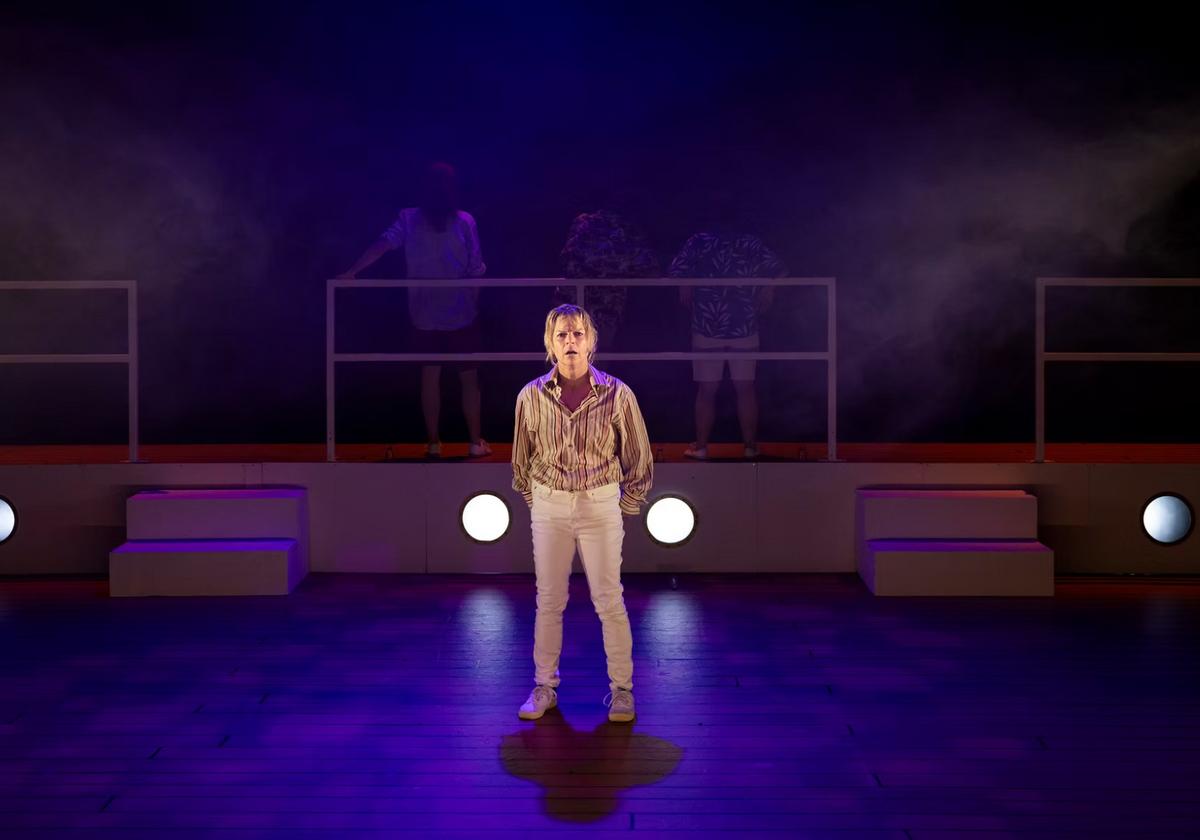
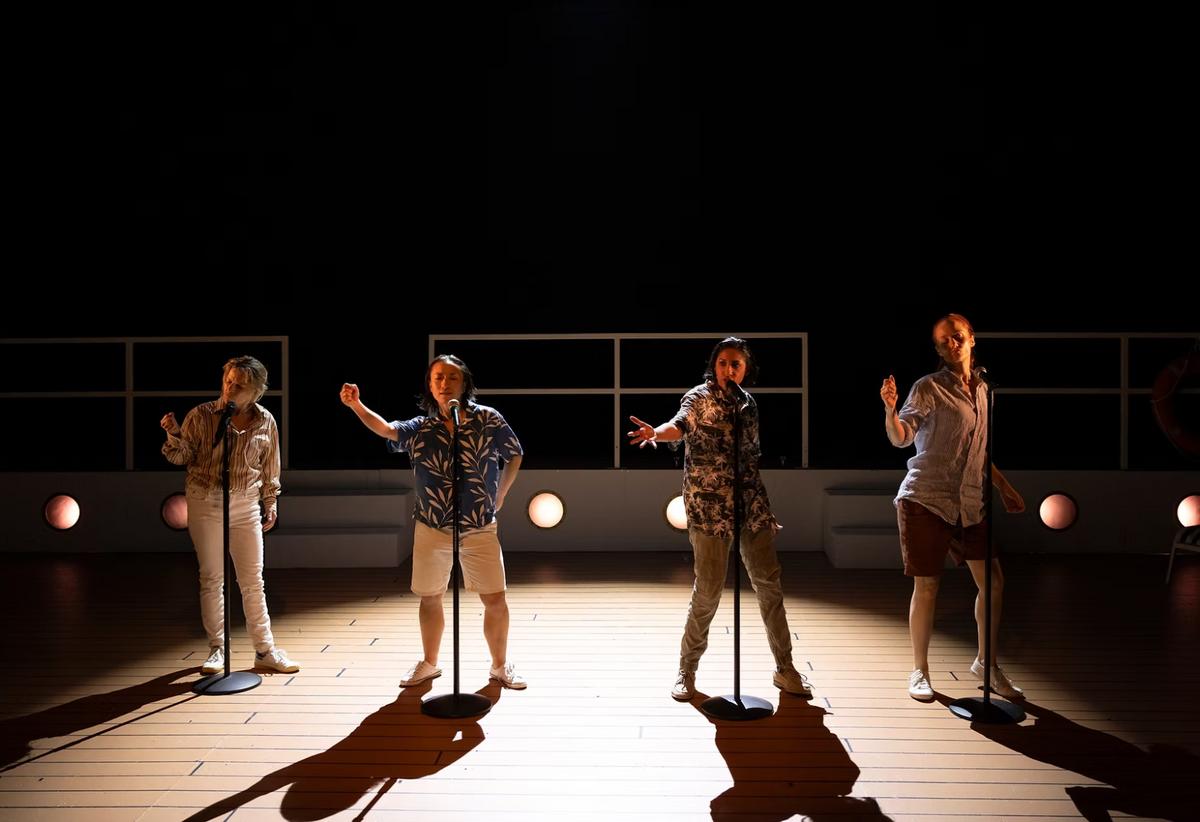
None of the characters in Tom Holloway’s Beyond The Neck have names. This may seem like an odd choice for a play about the aftershocks of the 1996 Port Arthur massacre, given recent efforts in the USA to publicize the names of mass shooting victims, but not the perpetrators. A play about a subject that epitomizes ‘personal meets political’ makes a decision that could easily alienate us from its characters. Theatre Works’ production (directed by Suzanne Chaundy) feeds into this alienation with a bare set of four chairs and a painting of Port Arthur, and actors who seem aware that they are telling a story, speaking out to us more than each other. It’s a little Brechtian, quite funny in some parts and very dark in others.

And yet, the connection was palpable, the audience always laughing, sighing and silent when intended. The Old Man (Francis Greenslade), The Young Mother (Emmaline Carroll Southwell), The Boy (Freddy Colyer) and The Teenager (Cassidy Dun) have such specific backstories and distinct voices, but they also become archetypes of the people who were there when the shooting happened, and who are in the audience now. Some of the characters don’t have direct connections to the massacre but simply being at the site forces them to confront other traumas that have plagued their lives. This is despite the strange façade that the first half of the play is built around: a tour of Port Arthur in which the massacre is never mentioned. When that façade breaks down and our characters are plunged to their lowest points, it is truly heartbreaking.


With the sparse and static staging, this iteration of Beyond The Neck lives and dies on the strength of its actors, and they more than pull their weight. Putting the focus on them was a very smart directorial decision because their work as an ensemble is meticulous and enrapturing. Four characters telling four stories at once could be confusing in the wrong hands, but there’s an almost magical direction of the audience’s attention in every actor’s use of gesture and voice. We always know whose story we’re in and what their character is like, and when the fourth wall goes up and the characters start interacting with each other properly and being honest about their stories, it feels well earned. The Young Mother did get somewhat lost in the shuffle, but I think that has more to do with the pacing of the writing than this specific production – it would have been nice to have more time given to her response to grief. Ultimately, the cast’s chemistry perfectly suited a play about the intermingling of personal and group trauma.

It’s sobering to think that in the wake of the Bondi shooting, Beyond The Neck may be more relevant now than Holloway ever envisioned when he wrote the play in 2008. But what has also stayed relevant is the sense of community and love that the play ends with. In a way, good theatre is an embodiment of that experience, and this provocative production created an intensely beautiful atmosphere. It’s a reminder that no matter what we face – death, grief, nightmares, abuse, isolation – we are never truly alone, and there is life on the other side.

To book tickets to Beyond The Neck, please visit https://www.theatreworks.org.au/2026/beyond-the-neck.

Spread the word on your favourite platform!

Femoid

Femoid

Femoid Rating

Click if you liked this article

3

‘The Manosphere’ is a hot topic right now. YouTube video essays, long form news features, a new Netflix documentary series hosted by Louis Theroux, and even another recent Theatre Works show (Blackpill: Redux) delve into the depths of modern misogyny in an attempt to understand: what is happening, are men okay, and why are incels…The Way That They Are?

FEMOID. reveals a blind spot that should be obvious but is often a footnote in these conversations: misogyny maims and kills women. Almost a quarter of Australian women have experienced intimate partner violence at some point from age 15. Globally, this number balloons to a third of all women. The set of three grey blocks and a screen is bordered by various bunches of flowers, and if you look closely at them after the show, each has a nametag – each is dedicated to an Australian femicide victim. These flowers encapsulate FEMOID.’s strengths in a nutshell: it is a thoughtful, brutal and cathartic show, loaded with powerful symbolism.

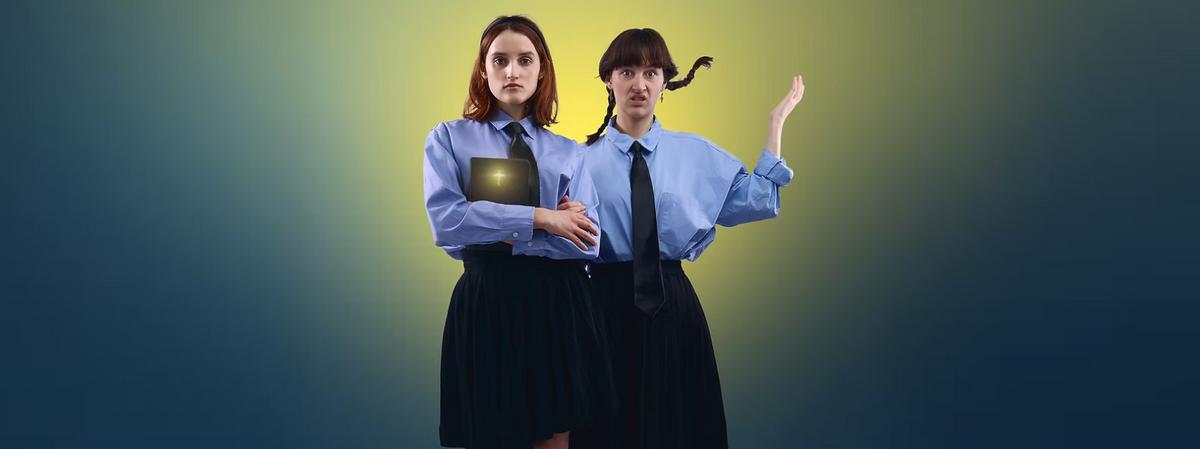
The play follows three teenage girls – Rory (Roisin Wallace-Nash), Piper (Natasha Pearson) and Olive (Iris Warren, who also wrote the show) – in light-hearted school playground conversations about boys, relationships and sex. Despite their carefree and honest love for each other, we learn that a clock is counting down. We sometimes skip forward in time (or perhaps outside it?) to sombre discussions about an unnamed event, and Olive is conspicuously absent. And throughout the show, white text flashes on a screen behind them: verbatim posts from incel forums that are almost too vile to believe.


Portraying the sexual curiosity of teenage girls without objectifying or patronizing them is a tricky needle to thread, but Warren’s writing and Izabella Day’s direction pull it off perfectly. The characters’ discussions about sex are innocent yet emotionally intelligent, which makes the juxtaposition with the text behind them about ‘sluts’, ‘foids’, ‘whores’ and worse all the more chilling. The cast functions more as an ensemble than individual characters with distinct voices, but this makes sense for a show concerned with violence against women as a collective. We laugh with the girls’ naivety, not at it, and the contrast created between scenes with and without Olive never stops being jarring.

Along with a unique perspective on the manosphere, FEMOID. stands out in its attention to detail. The use of symbolism and motifs is masterful, but difficult to talk about without spoilers. I’ll only say that everything seen and said on stage feels meticulous and pointed. There are many details to ruminate on, from the name tags on the flowers (which I wouldn’t have noticed if I hadn’t read one of the venue posters) to the fact that the female main characters all have gender neutral names. The lighting was also a highlight in terms of giving a sense of place and occasionally glitching to further the constant sense of foreboding. The only snags for me were that the text projections were fuzzy and often difficult to read, and there were a few lines that felt too blunt in foreshadowing what was to come. Otherwise, the show felt as bold and precise as its subject matter called for.

There has been much speculation and information about why so many men hate women so much. The bitter irony is that this discourse often sidelines or desaturates the concrete consequences of this hatred. FEMOID. reminds us why we care and who we are fighting for. It is a very confronting and well-crafted show on every level, which will leave you with a lot of rage and a glimmer of hope.

To book tickets to Femoid, please visit https://www.theatreworks.org.au/2026/femoid.

Spread the word on your favourite platform!

I Thought You Said

I Thought You Said

I Thought You Said Rating

Click if you liked this article

1

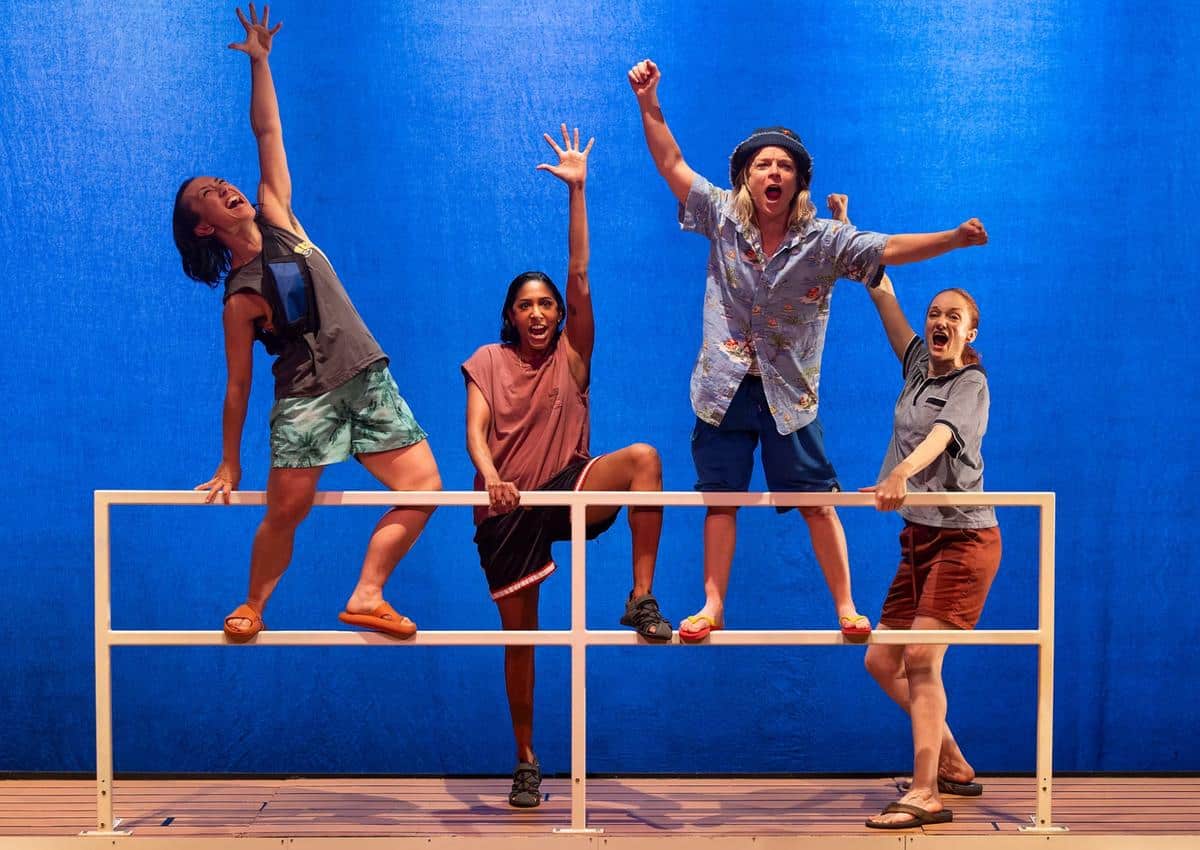
I THOUGHT YOU SAID is a dark, passionate, and fast-paced show. It follows Frankie (Finn Corr) and Sam (Ally Taueki-Gatt) across a single evening of late night shift work. An experience I am deeply familiar with, late night shift work is often filled with empty space and time, providing ample opportunity for strange, emotional, and difficult conversations to occur. Corr and Taueki-Gatt immediately establish a taut and cordial connection that is pulled and stretched as the audience follows them throughout their evening. Bronte Lemaire’s direction and writing allows for humour to pepper tense moments of the show, and stretches the expectations the audience has of the characters.

The show begins with Frankie arriving at the store for their shift, both Frankie and Sam are in their own worlds, listening to their own music. Frankie and Sam discuss how we take in information, how do we process bad news and fear mongering? Frankie and Sam have different approaches to processing and dealing with a world that is slowly breaking down. The world that Fankie and Sam live in is plagued with dangerous falling stars, as a result of big business mining star cores.

Throughout the show there are several interludes and moments of chaos that represent the progressive danger of the falling stars. This fictional crisis is mirrored in the wars and conflict we see in our world today. After each interlude Sam and Frankie alternate and monologue directly to the audience. Frankie’s first monologue felt poignant, as they delved into the issue of performative posting on social media, and addressing that change can’t occur if you’re only shouting into an echo chamber. Frankie made me think, if we only have a limited time on this earth, wouldn’t we want to live as comfortably as possible? And if it has a negative impact on the world, how much impact can we as individuals have? What is the price of comfort?


Lemaire’s beautifully written show provided moments of levity among serious conversations. Sam and Frankie continue their evening, discussing the hypocrisy and environmental impact of large companies such as their employer. They argue about what people will sacrifice to remain good. Ultimately Sam feels that people are generally shallow, stating “it’s not a protest, it’s a parade,” that without sacrificing safety or causing real violent damage, any sort of activism falls short of effectiveness. I found myself disagreeing with Sam, and sympathising with Frankie. Both Sam and Frankie are passionate throughout the show, they both care, but they struggle to agree on how passion and care should manifest.

The dynamic relationship between the characters, matched by frantic lighting (designed by Allira Smith) created a powerful and lasting impression. I found myself questioning my own beliefs, and reconsidering how I engage with topics that I am passionate about. It’s clear that this production was created with love and care, that the creative team are thoughtful and want the audience to consider what meaningful action and engagement with the world looks like. I felt impassioned and empowered to take action, and its a testament to the power of theatre, and the power of this show.

To book tickets to I Thought You Said, please visit https://www.theatreworks.org.au/2026/i-thought-you-said.

Photographer: Mia Sugiyanto

Spread the word on your favourite platform!

Now

Now

Now Rating

Click if you liked this article

Now is a show exploring a family and how they move through Now- a virtual reality that pulls the one (or i call him the child) into it, as the one feels it is the future, and the only way forward. The one’s parents, like many parents, don’t understand what he’s doing in the Now, and the disconnection of the familial dynamics are central to the show. Although awkward in a review, the namelessness of the characters makes much more sense within the context of the show.

Now is set after COVID, in a dystopian future. Slowly paced, X (Helene Tardif) tries to come to terms with how her son, the One (Andrew Drava) lives his life. X and her husband (Marc Opitz) tell the audience how COVID made the other one selfish, and it becomes clear immediately that the relationship between X and her husband lacks a foundation of respect and trust. This is an issue that continues to plague the show.


The One finds everything he needs online, including a partner (Georgina Scott). The One’s partner introduces herself to the audience whilst singing happy birthday to herself, a sad representation of the future where somewhere like the Now brings people together, but also isolates us from each other. The One and his partner enter the Now using their glasses, and continue to spend all their time in the Now.

The show established a tense relationship between the parents from the beginning, with the father being particularly disagreeable, inflexible and stubborn. A point of conflict for X, the One, and the Father, is how the One enjoys and finds success in the Now. The Father loses his job and the dynamic between father and son becomes tense and frustrating. The Father is rude, and the One is dismissive. Neither are willing to talk to the other. The Father’s behaviour continues to escalate, until he has an outburst that impacts the whole family.

Now dove into dystopia and family dynamics. Some of the behaviours of the characters felt unearned, aggression (in particular from the father) felt like it appeared out of nowhere, with little base. Similarly X and the One forgive the Father, which feels unearned, given how little the Father reflected on his behaviour and the impact it has on his family. This show tried to explore dynamics of a family falling apart, but only shallowly explores motivations and drive behind each character’s actions.

To book tickets to Now, please visit https://www.theatreworks.org.au/2026/now.

Spread the word on your favourite platform!