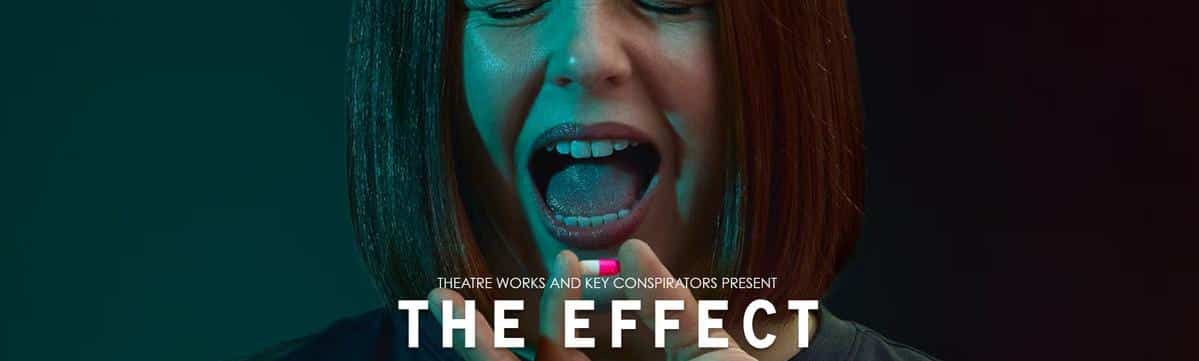
I’m already fairly familiar with The Effect by Lucy Prebble when I sit down in the Theatre Works audience, the play having first debuted in 2012 at the National Theatre in London and been played across the world since. More than a decade later the show has made its way down to Key Conspirators and I’m curious what they’ll do with it. The four-hander mainly follows two participants in an antidepressant drug trial, Connie and Tristan, as they begin to fall in love – but whether it’s caused by the supplementary dopamine coursing through their veins is troublingly unknown to them and the doctors alike.
As needed for any tight cast show, the ensemble is near flawless. Directed superbly by Alonso Pineda, each actor embodies their character to their utmost limits.
Emma Choy, playing Dr Lorna James, has wrapped everything she does in anxiety. Her vocal tone, her gaze, her slight shifting, all build to a near pitiful portrayal of the doctor until it reveals a spine that stands straight throughout all the chaos. Choy is endearing and heart-breaking all at once, honing in on the lovable awkwardness so we can watch it be torn apart.
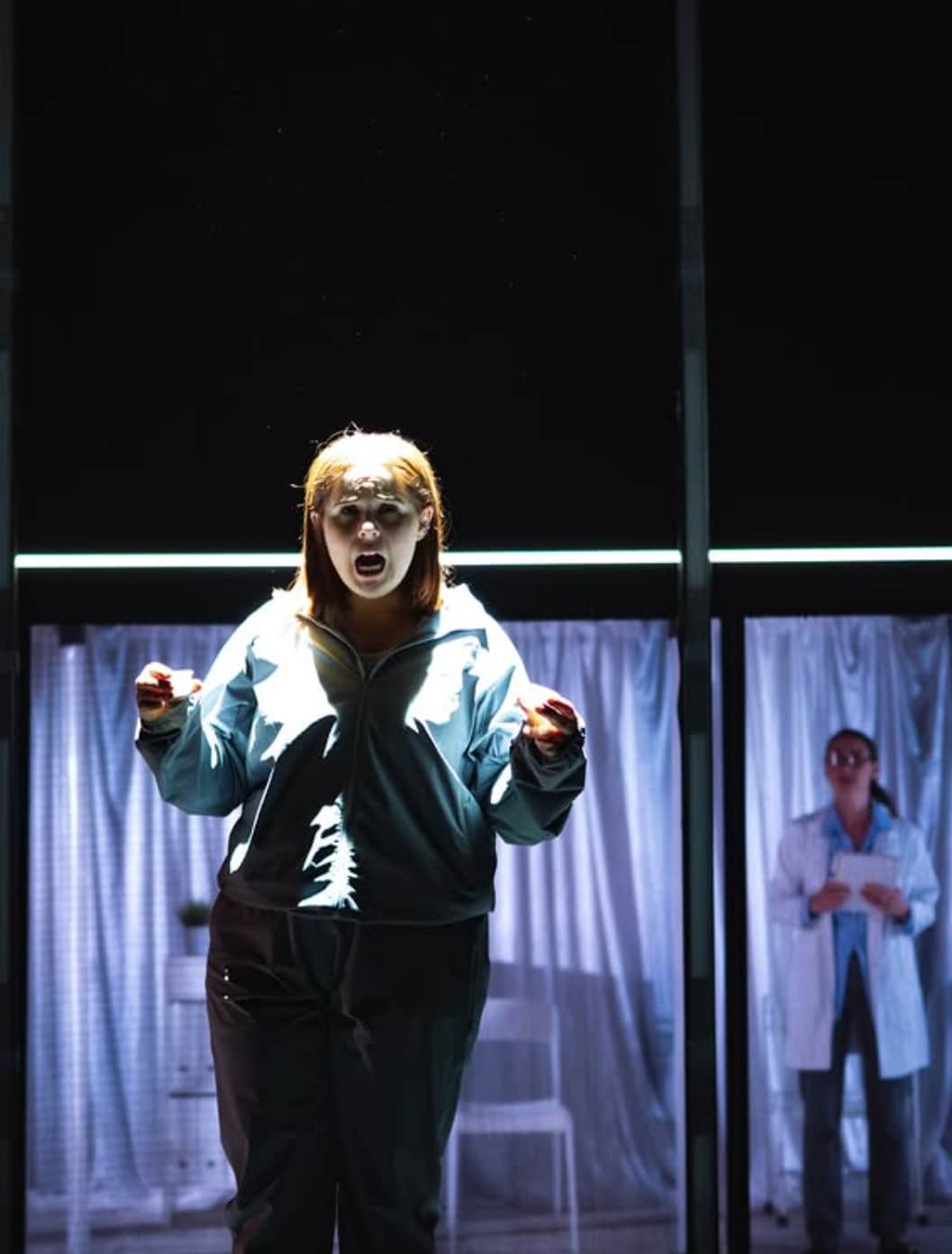
Jessica Martin finds an unexpected confidence in Connie instead of the bashful and desperate versions I’ve previously seen. Martin lets Connie discover a self-aware power which becomes fascinating to watch be desperately clung to and employed against Tristan and Dr James. It also got to rear its head beautifully well within the intimate and vulnerable relationship with Damon Baudin’s Tristan that made me blush to watch.
Baudin’s physicalisation is intoxicating to watch. His bounces, his fidgets, his careful curation of presence are all highly rendered. Tristan feels real. He’s able to slip from small and helpless to explosive in the blink of an eye, weaving a carefully constructed pathos through a character that could easily become scarily dominating and uncomfortable. To balance such crassness with an earnest love that you root for, proves Baudin is a master of his craft.
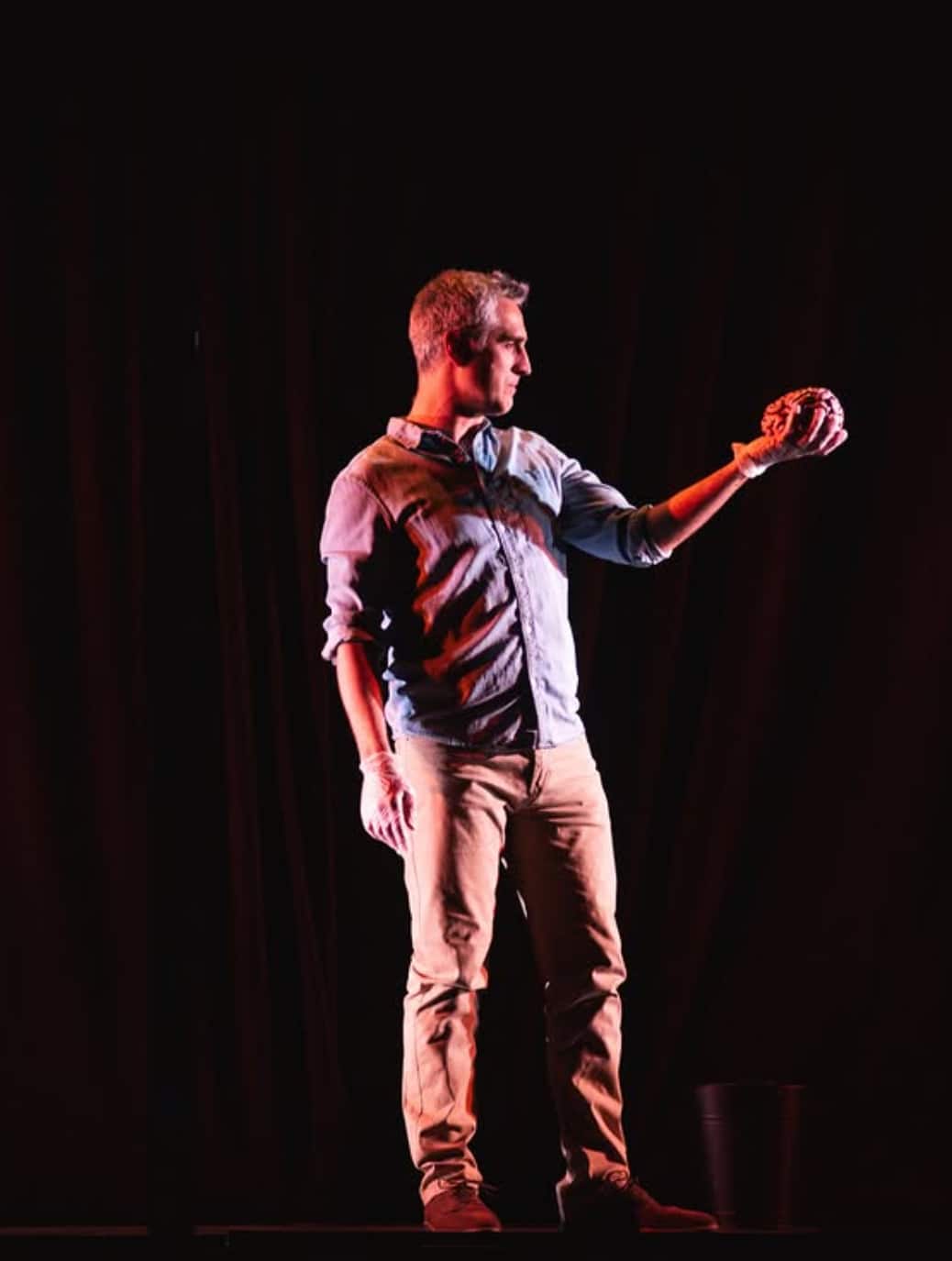
Similarly, Philip Hayden as Dr Toby Sealey carefully toes the line between a pretentious dickhead and a man genuinely trying his best. The role of Dr Sealey is one that can quickly slip into caricature or downright evil, but Hayden brings a needed empathy. You trust that he believes his own words, even if you vehemently disagree with them.
Pineda has intelligently leant into the repetition and isolation of the text. People are scattered across large spaces, making them feel simultaneously alone and claustrophobic. We want to escape the trial as much as they do. There is also an employment of voyeurism by both the characters and the audience that creates a layered effect of examining the show as its own experiment. Occasionally during the longer scenes between Connie and Tristan, the staging did start to feel a bit static, mainly because I was desperate for more play as soon as the characters could escape the rigidity.
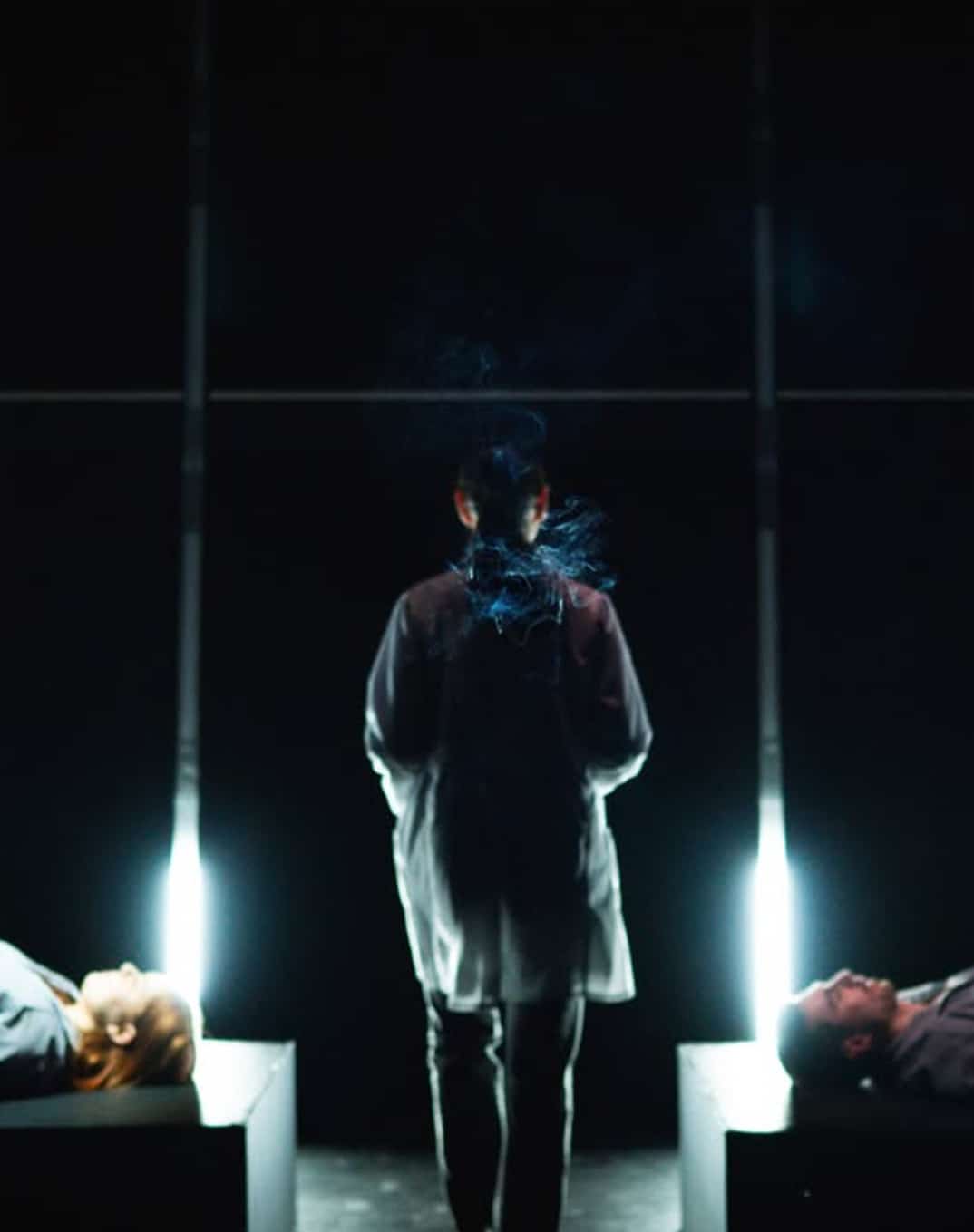
Vulcan is meticulous in his design, the aesthetics feel entirely in tune with the clinical and desaturated nature of the text. The stage is split into three distinct areas. We have the main downstage area acting as the facility where only the actors can bring it colour and life, amplified by the grey-scale costumes. Then we have the two-story set up where below are realistically rendered medical facilities and above is a transient play space that moves from bedroom, to stage, to a platform for the watchful eye. This two-story set up smartly allows itself to be hidden away, only visible when lit, letting us sit in the dark, unstimulating emptiness with Connie and Tristan.
Additionally, Vulcan has built an absolute spectacle of lighting into the membranes of the set. The set is the lighting and the lighting is the set: it’s symbiotic. Using an array of lighting bars, Vulcan had created lighting that breathes and has a life of its own, almost reacting organically to actors. Vulcan is not afraid of the dark either. Light is only introduced when it’s absolutely required, the haunting scene of Dr Lorna James sitting quietly in the dark comes to mind.
The Effect is a tight production that doesn’t do more than it needs to, threading all production areas together to prioritise the themes of the text. With a wicked ensemble and beautiful design, the show is not to be missed!
To book tickets to The Effect, please visit https://www.theatreworks.org.au/2026/the-effect.