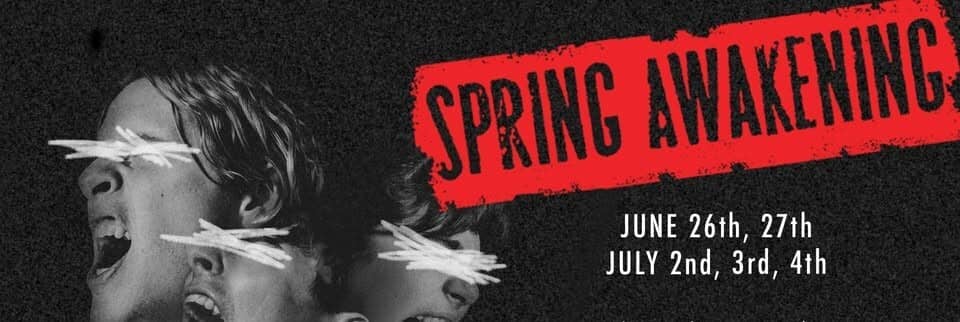
Spring Awakening

Spring Awakening

Spring Awakening Rating

★★★★★

Click if you liked this article

3

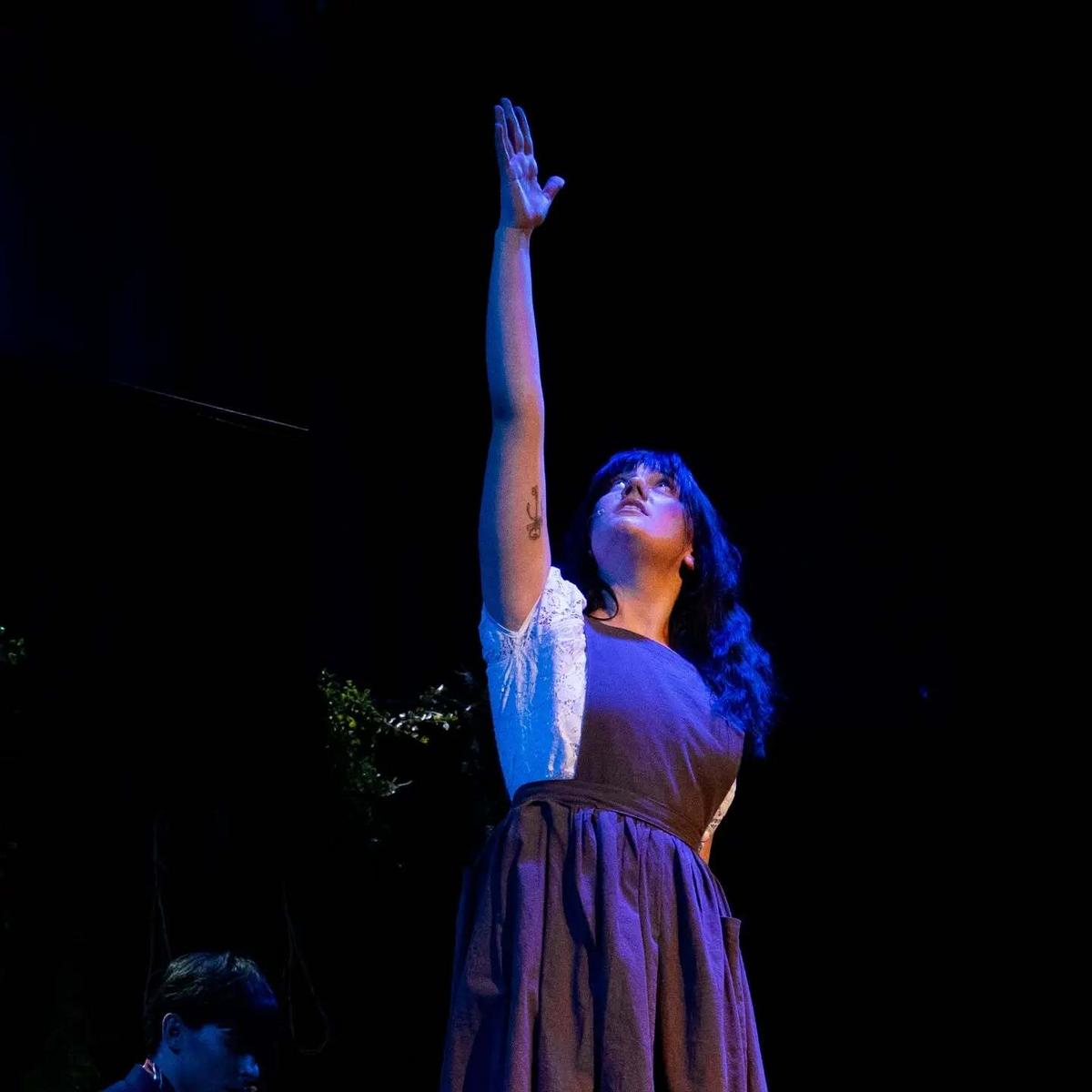
For many in the Perth theatre scene, Spring Awakening has been a highly anticipated production, with many performers passionate about the material.

The story centres on a group of young teenagers discovering their sexuality in a world where adults have led them to live rather sheltered lives. Covering themes of suicide, sexual violence and abuse viewer discretion is advised before attending.

Centred on Melchior (Joshua Hollander) and Wendla (Escher Roe), the pair navigate their budding feelings and the awkward first times that come with it. Roe – who also doubled as costumer – shows great naivety while Hollander brings a soft tenderness to his character that complement each other well. Together the pair work as a solid anchor for the performance. Direction from Taylor Broadley cleverly uses their arc as a mirror for the wider cohort who are all experiencing similar feelings.

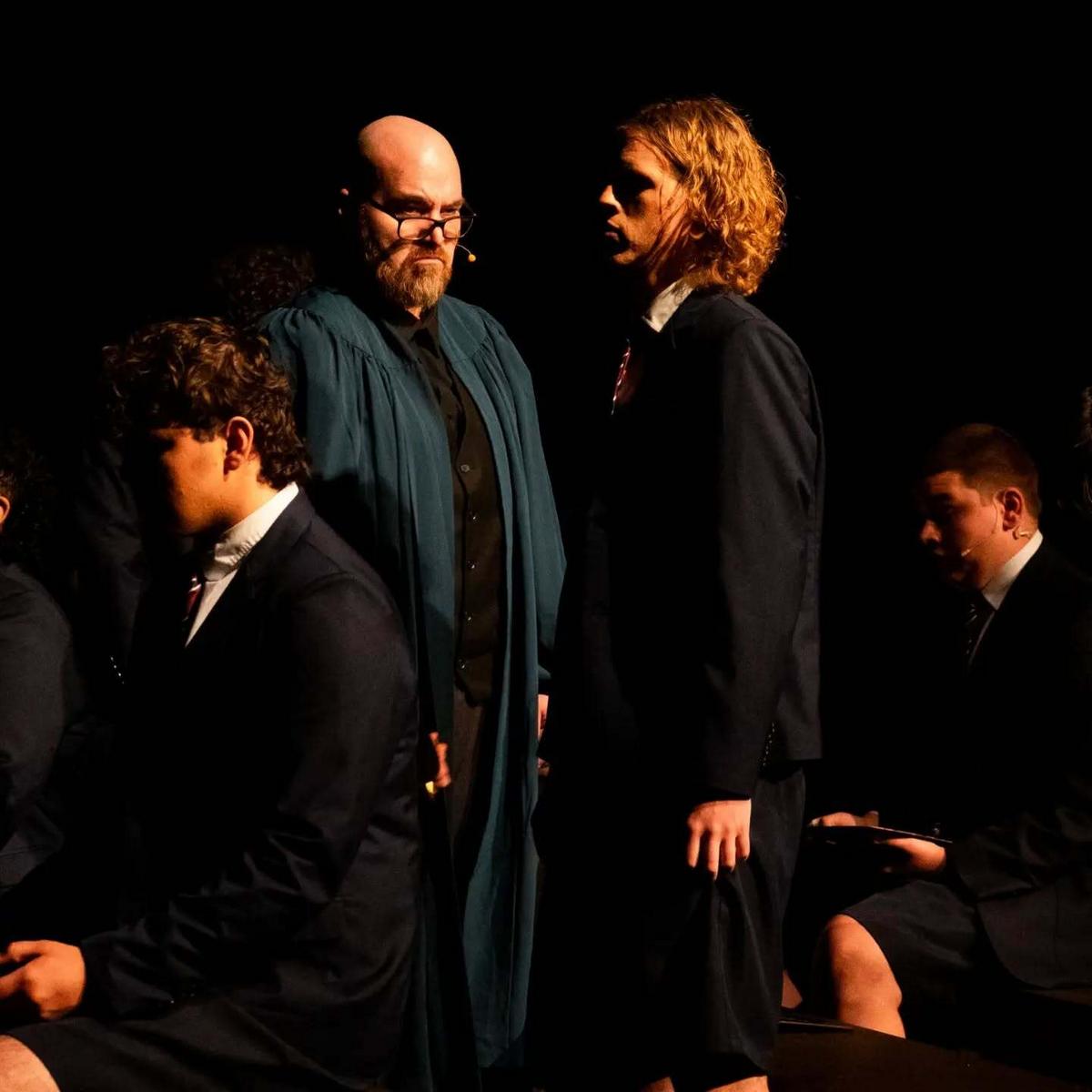
Luca Daniel impresses as Moritz, the anxious classmate desperate to please his father – giving a very heartfelt performance in taking some strong themes. Ella McCaughey is the brooding and outcasted Ilse, another excellent casting with a fantastic voice, well suited to the show’s folk like style. Her performance of The Dark I Know Well, together with sister Marta (Ella Monaghan) was a highlight, both sung and performed excellently.

The real magic of this show is in the wider ensemble. Built up of actors who easily could, and have, lead productions themselves they all worked well together to flesh out the story and serve as the listening ears of the young school group. Personal standouts were Blair Price-Morgan as Georg who gave an incredible rendition of Touch Me and whose character provided great light in a very heavy show. Lukas Perez and Gab Sharra were also endearing as Ernst and Hanschen. Benn Austin, Tashlin Church and Abbey McCaughan worked overtime as the myriad of adults throughout the show, with Austin particularly showing great diversity between his many characters.
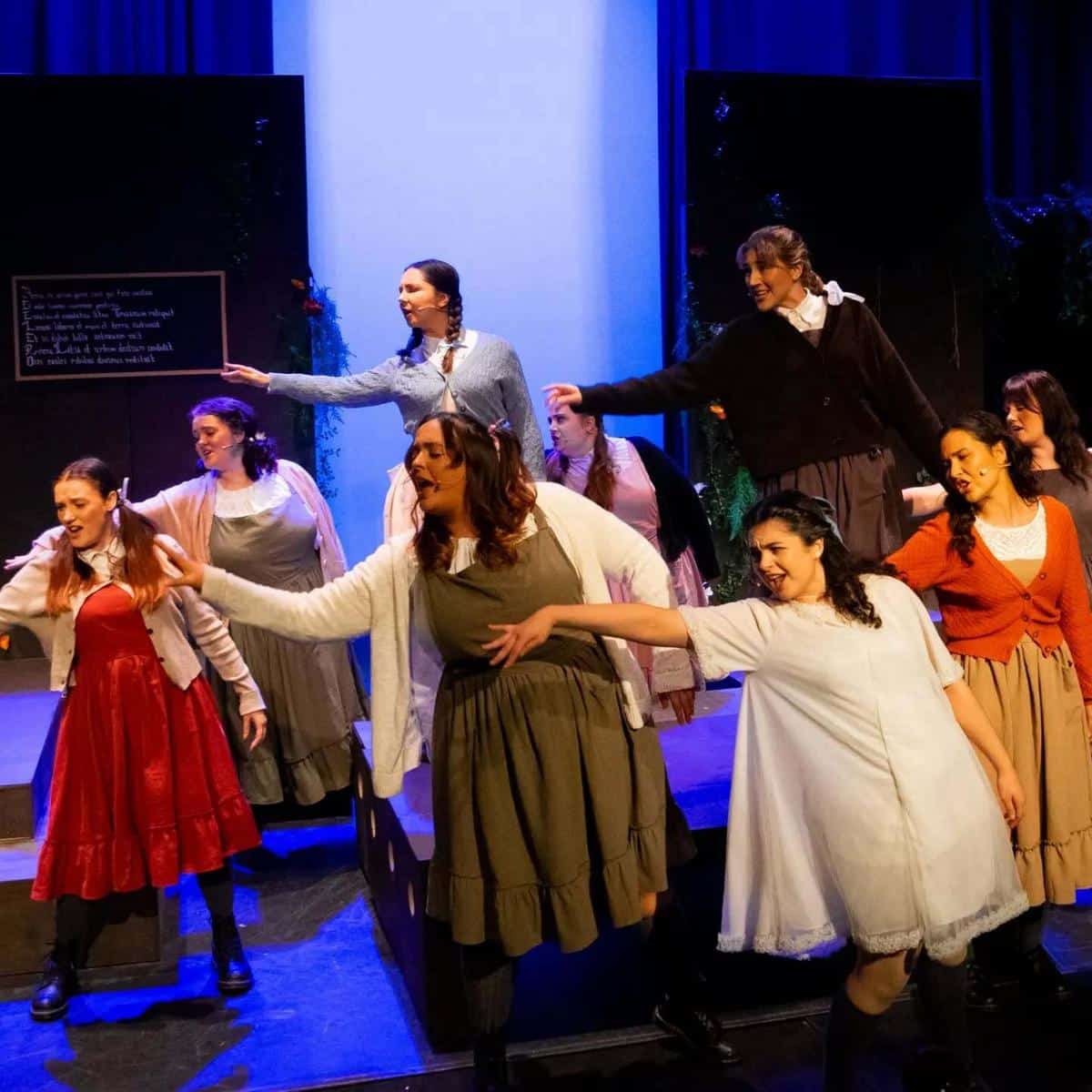


The music in this show is hauntingly beautiful. Led by Mathew Leak, the ensemble singing is flawless – with closing number ‘The Song of Purple Summer’ a memorable moment. Leak also leads a seamless orchestra, one of whom I was advised learnt the show in less than a day having to step in due to sudden illness but you wouldn’t have noticed at all. Unfortunately some sound imbalances often made it hard to hear soloists, which saw some exposition missed but you were still able to follow with context clues.

Jordan D’Arcy’s choreography is well thought out and executed by cast. Though it’s certainly not a dance show, the movement compliments the wider story well without impeding the critical moments, and makes great use of the multi level set (Craig Delbridge and Abbey McCaughan).

On the note of set, while clever use of levelling made it the stage feel spacious, there were a few scenes that felt quite compacted, especially at times where there were multiple different moments playing out simultaneously.

Admittedly, the ending fell a little flat for me. Without spoiling the story, I felt the final scene relied a little too much on audiences needing to use their imagination to piece plot points together and further set dressing (particularly to help indicate location) could have assisted in making this a more impactful moment. The final costume change was also a little jarring and removed me for the story despite being a vocal highlight.

With plenty of offerings in Perth theatre currently, I implore you to see this production. Having known very little about what to expect, I thoroughly enjoyed this show, a heart breaking yet beautiful story that is wonderfully executed by all involved.

To book tickets to Spring Awakening, please visit https://drpac.sales.ticketsearch.com/sales/salesevent/163791.
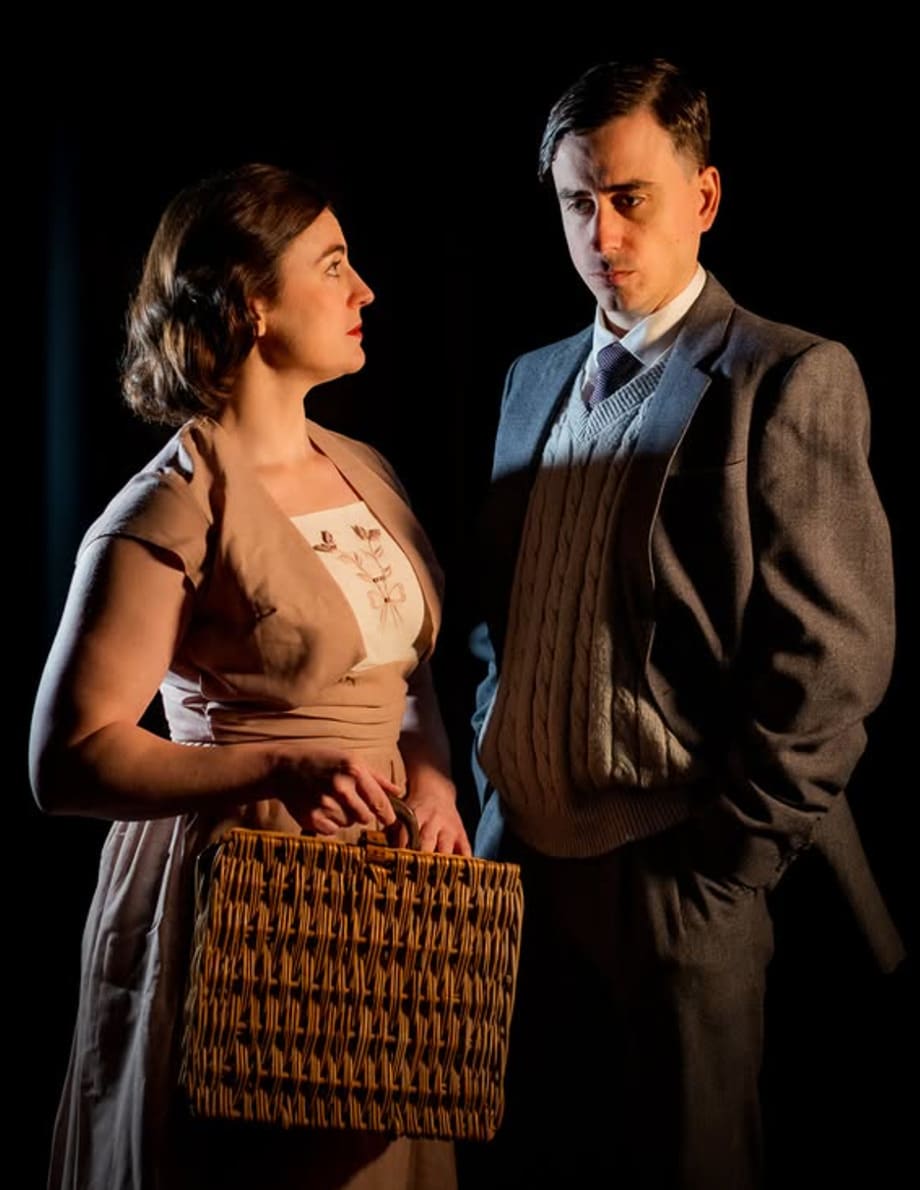
Spread the word on your favourite platform!

Breaking The Code: The Turing Test

Breaking The Code

Breaking The Code Rating

★★★★★

Click if you liked this article

2

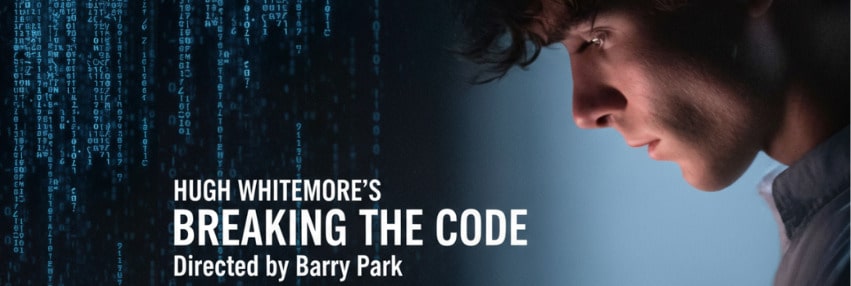
Hugh Whitemore’s Breaking the Code is built around one of the great contradictions of the twentieth century: Alan Turing helped change the course of history, yet was punished by the very society that benefited from his genius.

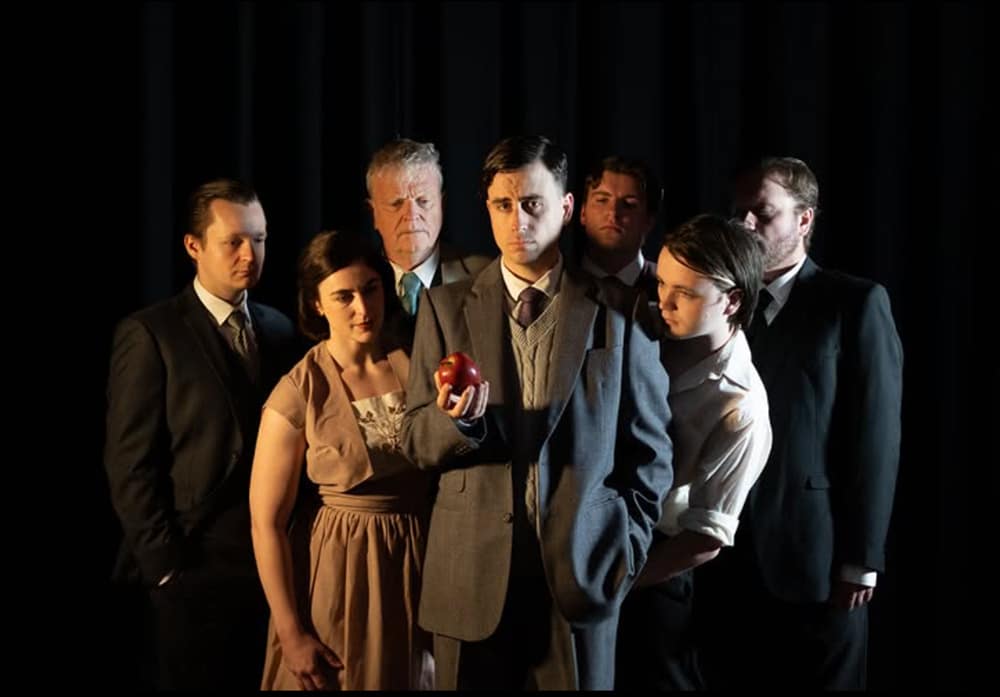
Presented by Melville Theatre Company and directed by Barry Park, Breaking the Code is based on Andrew Hodges’ biography Alan Turing: The Enigma. It is a biographical drama about genius, secrecy, sexuality, punishment and the moral contradictions of mid-twentieth-century Britain. It is also a play about codes in more than one sense: wartime codes, mathematical codes, legal codes, social codes, and the private codes by which people try to survive.

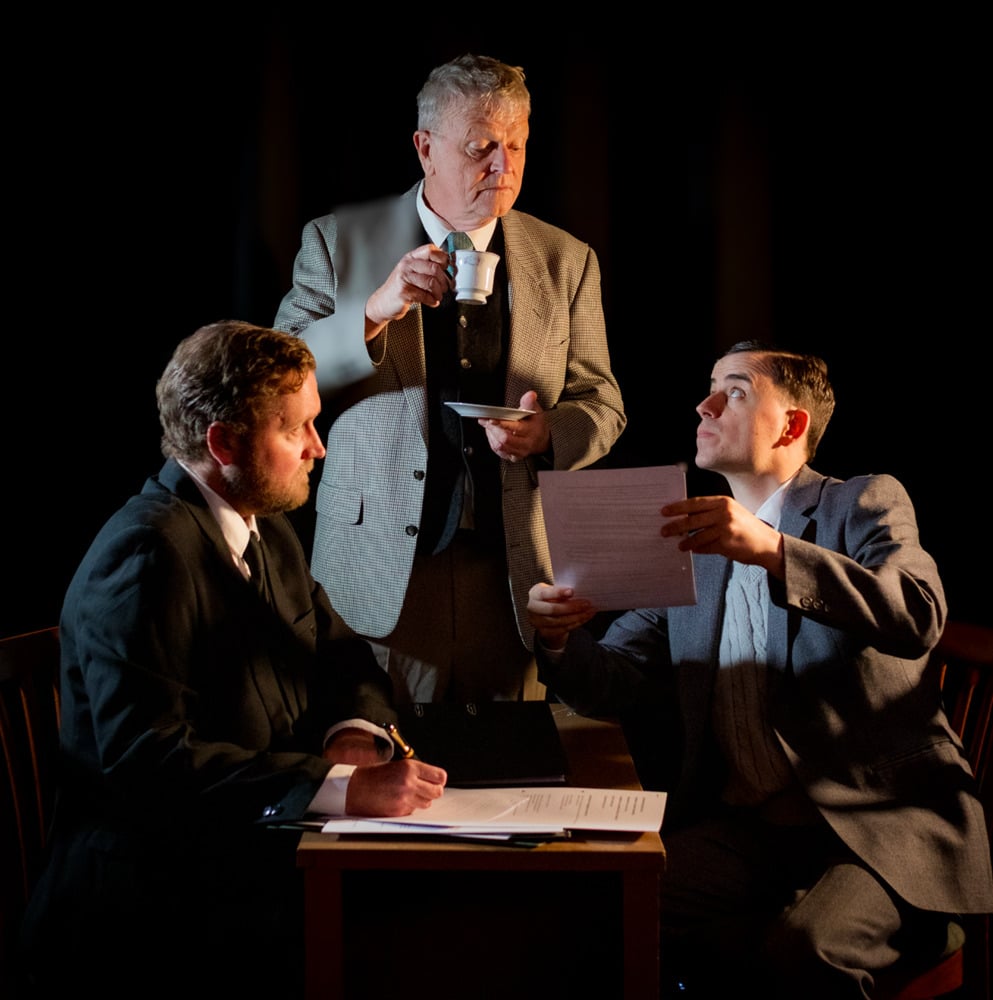
At its centre is Thomas Dimmick as Alan Turing. It is a demanding role, and Dimmick carries a large share of the evening. Turing is rarely absent from the action, and the performance requires stamina as well as emotional and intellectual precision. Dimmick gives the role a thoughtful intelligence, holding together the contradictions of a brilliant, awkward, playful, stubborn and vulnerable man.

What gives the story its continuing force is that Turing was not only a victim of legal and social cruelty. He was also a mind looking far beyond his own age. His work helped lay the foundations for modern computing, and his thinking around machine intelligence now feels strikingly prophetic. In an era where artificial intelligence is no longer theoretical but part of daily life, the play’s glimpses of Turing as the man who helped imagine the “electronic brain” are among its most intriguing moments.

The production is strongest when it allows us to see that larger figure: not only the man who helped break Enigma, but a kind of national superhero, now recognised with his image on the British £50 note. The cruelty of his treatment lands most strongly when set against the scale of what he gave, and the scale of what his country failed to honour in his own lifetime.


The supporting cast bring considerable strength to the production. Patrick Downes diligently inhabits Detective Mick Ross, giving him the firmness of a man of the law as he conducts several interrogations of Turing. Anna Head successfully represents the motherly perspective of the 1940s and 1950s as Sara Turing, loving her son while remaining unaware of his sexuality. Jack Riches plays the mildly scheming and villainous Ron Miller, the low-level thief and lover whose actions help set Turing’s downfall in motion.

Grace Edwards brings warmth and clarity to Pat Green, giving insight into Turing’s wartime years and accurately portraying a relationship in which his homosexuality is accepted rather than condemned. Martin Forsey portrays Turing’s wartime boss, Dillwyn Knox, with strength and empathy, with many of their scenes providing thoughtful debate around social codes, judgement and compassion. Rounding out the ensemble, Nicholas Mountain, Nate Tonkin and Jamie Brooker ably help fill out the emotional and social world around Turing.

Barry Park’s direction treats the material with seriousness and respect. Mark Nicholson’s lighting and the simple, functional staging support the shifting locations, while Merri Ford’s costuming helps anchor the period. This is a sincere and committed community theatre production, led by a strong central performance and a clear respect for the man at the heart of the story.

When Breaking the Code was first staged in 1986, it was undoubtedly working to break taboos. Its treatment of homosexuality, state persecution and moral hypocrisy would have carried a sharper social charge in the era in which it was written. In 2026, those injustices are no less appalling, but they are less likely to shock an audience in quite the same way. For that reason, the play is most effective when it moves beyond the fact of persecution and into the more complicated territory of Turing’s mind, isolation, contradictions and historical significance.

Turing emerges as a man who broke codes for his country, imagined the future for the world, and was constrained by the moral codes of his own society. Melville Theatre Company’s production gives that story a thoughtful and respectful staging, with a committed cast and a strong sense of care for the remarkable life at its centre.

To book tickets to Breaking The Code, please visit https://www.trybooking.com/events/landing/1569149.

Photographer: Curtain Call Creatives

Spread the word on your favourite platform!

The Almighty Sometimes: When Protection Becomes Control

The Almighty Sometimes

The Almighty Sometimes Rating

★★★★★

Click if you liked this article

2

The Almighty Sometimes asks a question that sits uneasily at the heart of family life: when does care become control?

Written by Kendall Feaver and presented by Black Swan State Theatre Company, the play enters the complicated emotional terrain between mental health, medication, autonomy and parental love. At its centre is Anna, an 18-year-old beginning to ask who she might be beyond the prescriptions and diagnoses that have shaped much of her life. For her mother Renee, that search for independence is inseparable from fear, memory and the instinct to protect.

It is a powerful premise, and one the production handles with intelligence and sensitivity. The Almighty Sometimes is not a simple argument for one side over another. Anna’s desire for agency is deeply understandable. Renee’s fear is also deeply human. The play’s strength lies in its refusal to make either woman easy to judge.

Director Emily McLean gives the story space to breathe. The production allows the audience to sit inside the tension rather than being pushed toward an obvious conclusion. This is not merely a play about mental illness, nor merely a mother-daughter drama. It is about the difficult place where love, risk, responsibility and control overlap.

‘Ana Ika brings urgency and volatility to Anna, capturing the restlessness of a young woman desperate to define herself on her own terms. It is a demanding role, full of emotional turns, humour, anger and vulnerability.


Alison van Reeken is excellent as Renee, presenting a mother whose love has been shaped by years of vigilance. There is no easy sentimentality in the performance. Renee’s care is practical, anxious, frightened and forceful; the performance makes clear how easily love can become tangled with fear.

Amy Mathews brings authority and composure to Vivienne, while Harry Gilchrist is very effective as Oliver. His performance adds warmth, humour and emotional contrast, giving the production some of its most natural and engaging moments.

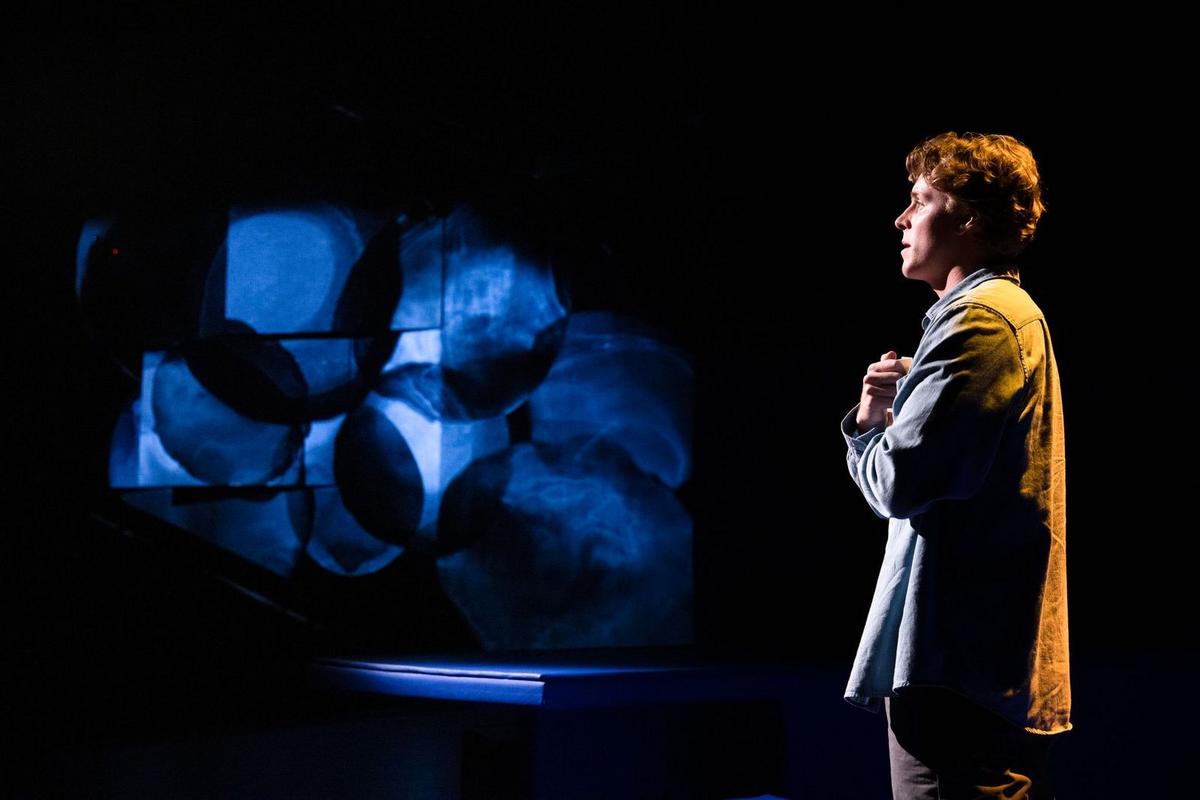
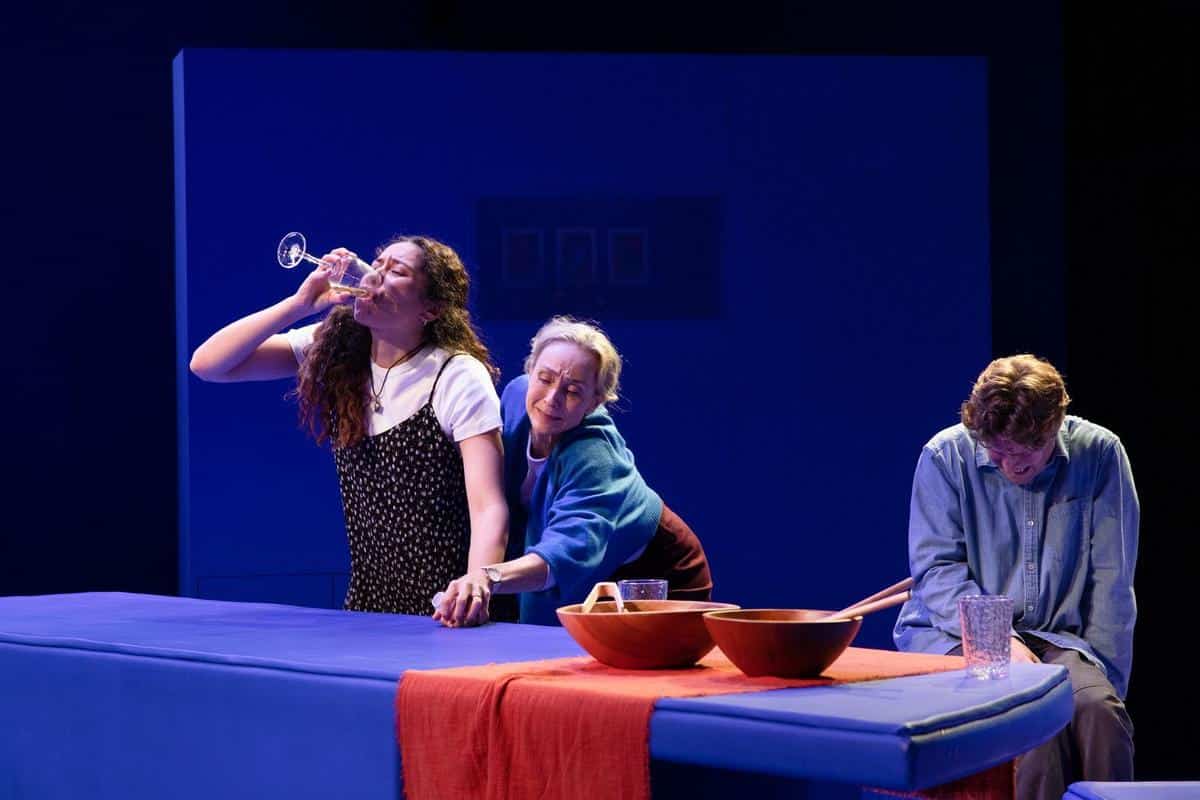
The creative elements give the production a distinct visual identity. Fiona Bruce’s set and costume design makes strong use of a cool, blue-toned world; a choice the program links to ideas of protection, intensity and emotional excess. Karen Cook’s lighting supports the production’s movement between domestic realism and more heightened emotional moments.

The Almighty Sometimes is not light entertainment, but it is compelling theatre. It asks difficult questions without flattening them into easy answers. How much risk should a person be allowed to take in pursuit of independence? How far can love go before it becomes possession? What happens when the person you are trying to protect also needs freedom from you? These are not comfortable questions, but the play explores them with intelligence and sensitivity, providing much food for thought and is carried by a strong ensemble.

The Almighty Sometimes is a mature and absorbing production from Black Swan State Theatre Company; a thoughtful drama that leaves you pondering the difficult questions it asks about love, risk, responsibility and control.

To book tickets to The Almighty Sometimes, please visit https://blackswantheatre.com.au/season-2026/the-almighty-sometimes.

Photographer: Daniel J Grant

Spread the word on your favourite platform!

Romeo and Juliet

Romeo and Juliet

Romeo and Juliet Rating

★★★★★

Click if you liked this article

Shakespeare is too often treated as something reserved for the “smart kids”. For many of us, our entire experience of Shakespeare amounts to a few compulsory weeks in Year 9 English before we leave it behind forever – a confusing whirlwind of unfamiliar language that never quite comes alive. What I admire most about Tom Healey’s production of Romeo and Juliet is that it refuses to accept that this is how Shakespeare should be experienced.

This is Shakespeare for everyone.

I attended the schools’ performance, with numerous school groups filling the theatre, and spent almost as much time watching the audience as I did the stage. What struck me was the diversity of those attending. Students from a wide range of schools across Perth filled the theatre. Yet regardless of background, there were no yawns, no glazed expressions and no restless fidgeting. Instead, students were engaged, laughing, reacting to the action and leaning into the story.

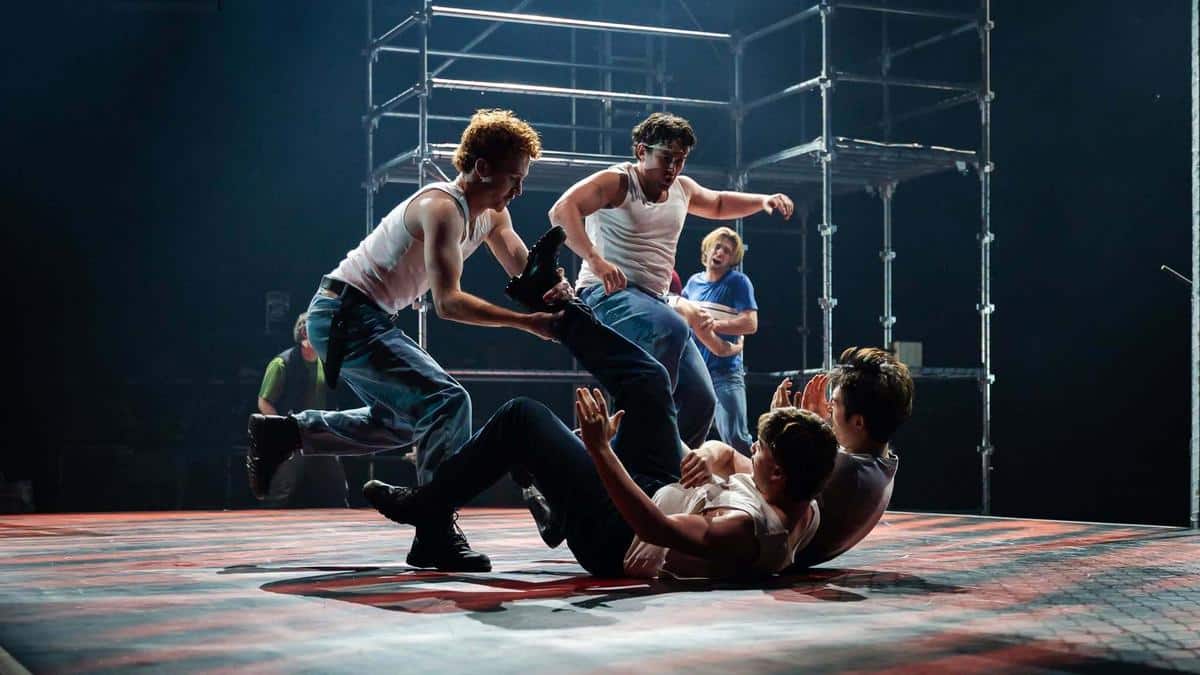
I also attended with my 10-year-old son and, despite the recommended age of 14+, found the production entirely appropriate for younger theatre-goers. He was captivated throughout, with the energetic fight scenes proving a particular favourite.

Get the kids in early. Get them watching. Get them understanding.

This is what Shakespeare was always meant to be: living theatre. Not something admired from afar, but something experienced, debated, laughed at and felt.

WAAPA’s graduating acting students, under Healey’s direction, deliver a vibrant, accessible and highly entertaining interpretation that brings Shakespeare’s most famous love story firmly into the 21st century.

From the outset, it is clear that movement will be central to the storytelling. Tyrone Earl Lraé Robinson’s choreography and movement direction are standout features, infusing the production with energy, sensuality and visual excitement. More than simply providing spectacle, the movement becomes a storytelling language in its own right. Relationships, power struggles and emotional shifts are often communicated physically before a word is spoken. The result is a production that feels constantly alive and in motion.

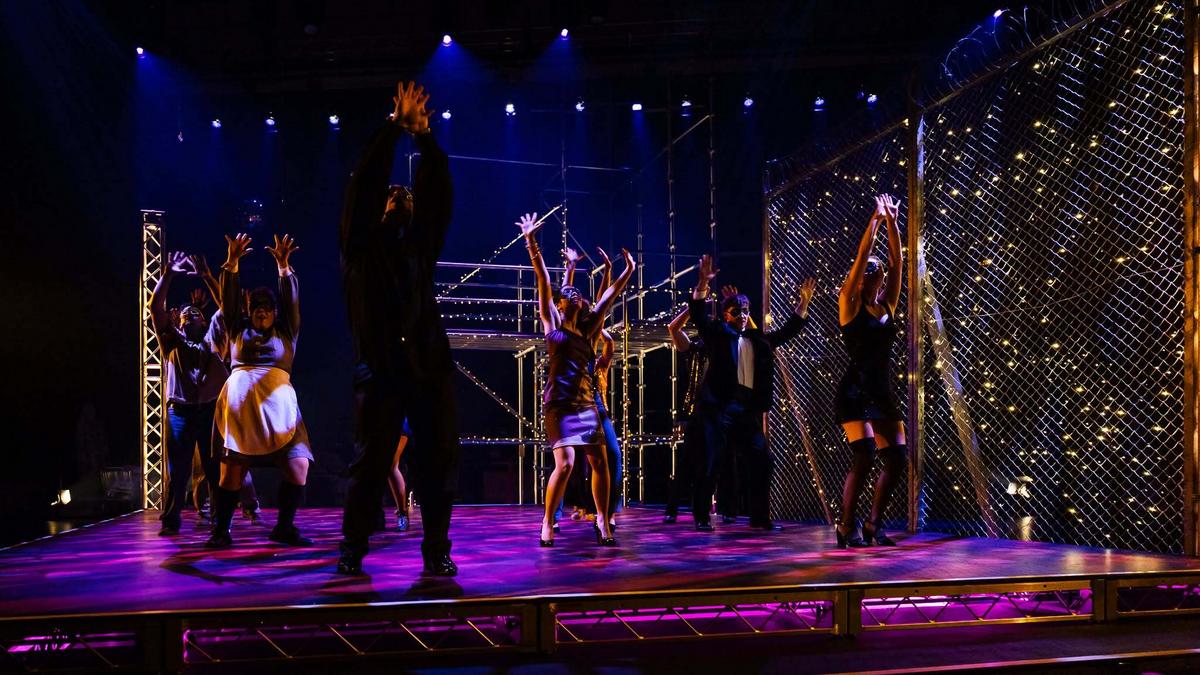
The dance sequences are a particular highlight, providing moments of joy, connection and visual flair that offer a welcome counterpoint to the production’s violence. Beautifully performed and seamlessly integrated into the action, they elevate the storytelling and rank among the afternoon’s most memorable moments.

Before the performance even began, a heartfelt Welcome to Country set an authentic and respectful tone for the afternoon. Rather than feeling procedural or rehearsed, it felt genuine and sincere, creating an immediate connection with the audience.
The ensemble is consistently strong, with several performances standing out.

Tom Kelly’s Mercutio is undoubtedly one of the production’s greatest assets. Taking bold risks both physically and emotionally, Kelly creates a character bursting with charisma, humour and unpredictability. His comic timing is impeccable, and his stage presence is magnetic. Even in scenes packed with talented performers, it is difficult to look away from him. Mercutio provides much of the production’s comic relief, but Kelly also ensures there is depth beneath the bravado, making the character’s fate all the more impactful.


Daniel Halmarick impresses as Benvolio and may well be the most technically accomplished performer on stage. Possessing a rich, resonant voice and exceptional clarity of speech, he handles Shakespeare’s language with confidence and ease. He has the kind of vocal authority and textual command that bodes well for a successful future on the stage.

Sarah Hindle’s Nurse is another standout. Endearing, funny and instantly recognisable, she feels less like a Shakespearean archetype and more like someone we all know. The broad Australian accent is a fun touch, helping bridge the gap between Renaissance Verona and contemporary Perth. Hindle brings warmth, humour and heart to every scene she inhabits, quickly becoming an audience favourite.

Griffin McLaughlin delivers a thoughtful Romeo, bringing emotional depth and welcome variety to a role that can sometimes become one-note. His performance balances youthful impulsiveness with genuine vulnerability and sincerity, giving the character substance beyond romantic idealism.

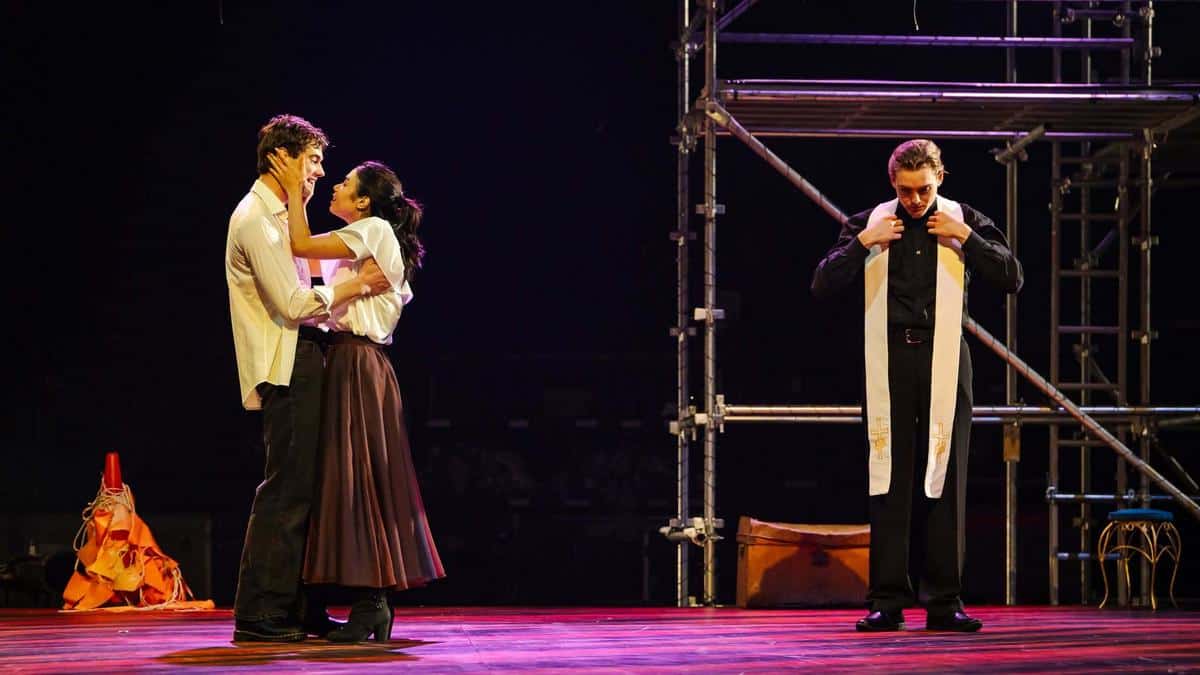
Holly Samaniego’s Juliet takes a little time to fully settle into the role. While her early scenes occasionally lack the spark and emotional urgency needed to fully ignite the character, she steadily grows in confidence throughout the performance. By the final act, she has won over the audience, bringing strength to Juliet’s tragic journey. The chemistry between the young lovers remains believable throughout and there are some funny scenes where they simply cannot keep their hands off each other.

Among the supporting cast, Sofia Watts deserves special mention for her portrayal of Lady Capulet. Despite being close in age to many of her fellow performers, she convincingly embodies Juliet’s mother, bringing authority, maturity and impressive vocal clarity to the role.

More significantly, the final scene lacks the emotional devastation the production has spent two hours building towards.

Throughout the play, blood packs are used symbolically. For much of the production, this visual motif works well. However, in the closing moments, the decision to rely on this symbolism rather than Juliet’s traditional knife proves less successful. Rather than heightening the tragedy, it creates a degree of theatrical distance at precisely the moment the audience most needs emotional connection.

Compounding this issue is the omission of Romeo’s final speech. Together, these choices diminish the impact of the ending. The final moments should leave the audience heartbroken. Instead, I found myself admiring the concept more than feeling the tragedy. I wasn’t reaching for a tissue; rather, I felt somewhat short-changed by a conclusion that lacked the emotional force the preceding scenes had so richly earned.

Yet these criticisms are relatively minor in the context of an otherwise impressive production.

Healey’s Romeo and Juliet understands something fundamental: Shakespeare survives not because he belongs to academics, teachers or literature students, but because his stories continue to speak to ordinary people. By prioritising clarity, accessibility, movement and a fresh look, this production throws the doors wide open and invites everyone inside. And judging by the students who filled the Heath Ledger Theatre, many were more than happy to accept the invitation.

For students encountering Shakespeare for the first time, seasoned theatre-goers and even younger audience members, this production demonstrates that these plays remain as powerful and relevant as ever. Judging by the response of the students around me – and one very enthusiastic 10-year-old theatre-goer – WAAPA’s graduating actors have ensured that Shakespeare’s spark remains very much alive.

To book tickets to Romeo and Juliet, please visit https://boxoffice.waapa.ecu.edu.au/Events/.

Photographer: Kathy Wheatley and Stephen Heath

Spread the word on your favourite platform!

Subscribe to What's The Show

Reviews, show news and what is on, straight to your inbox.