Sydney Film Festival – Aquarius

Sydney Film Festival - Aquarius

Sydney Film Festival – Aquarius Rating

Click if you liked this article

1

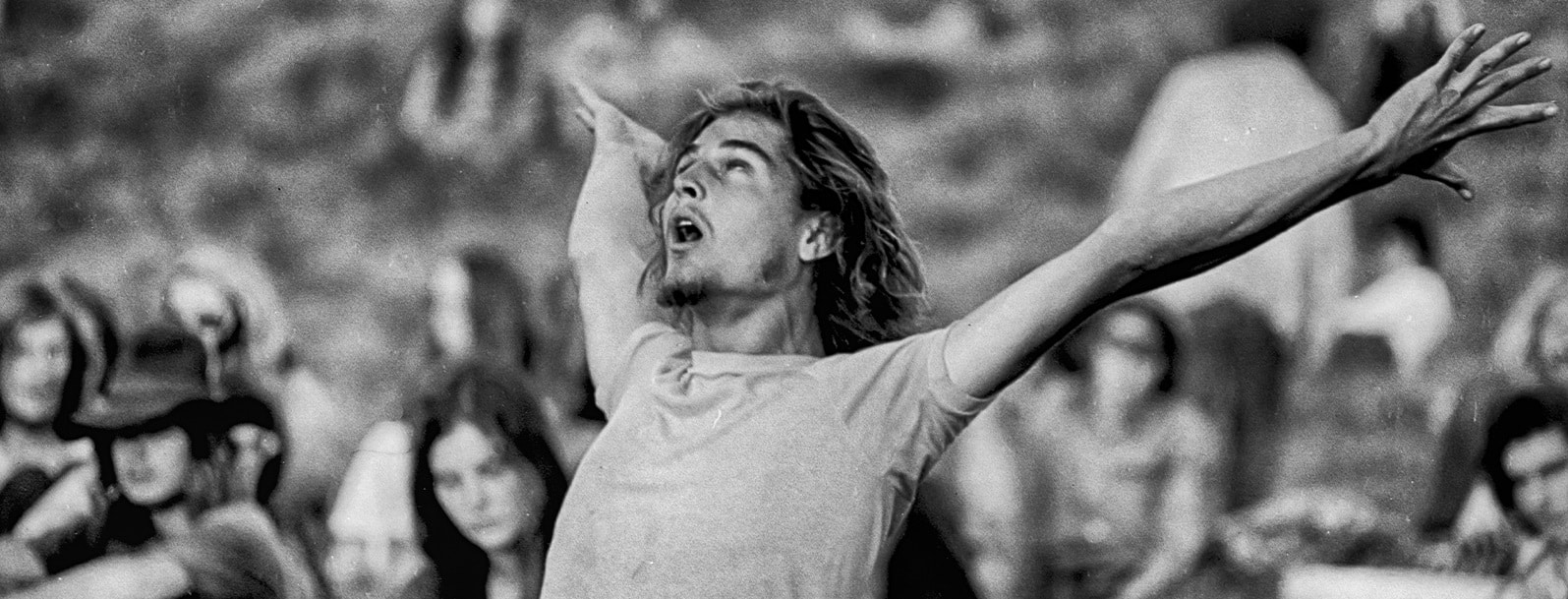
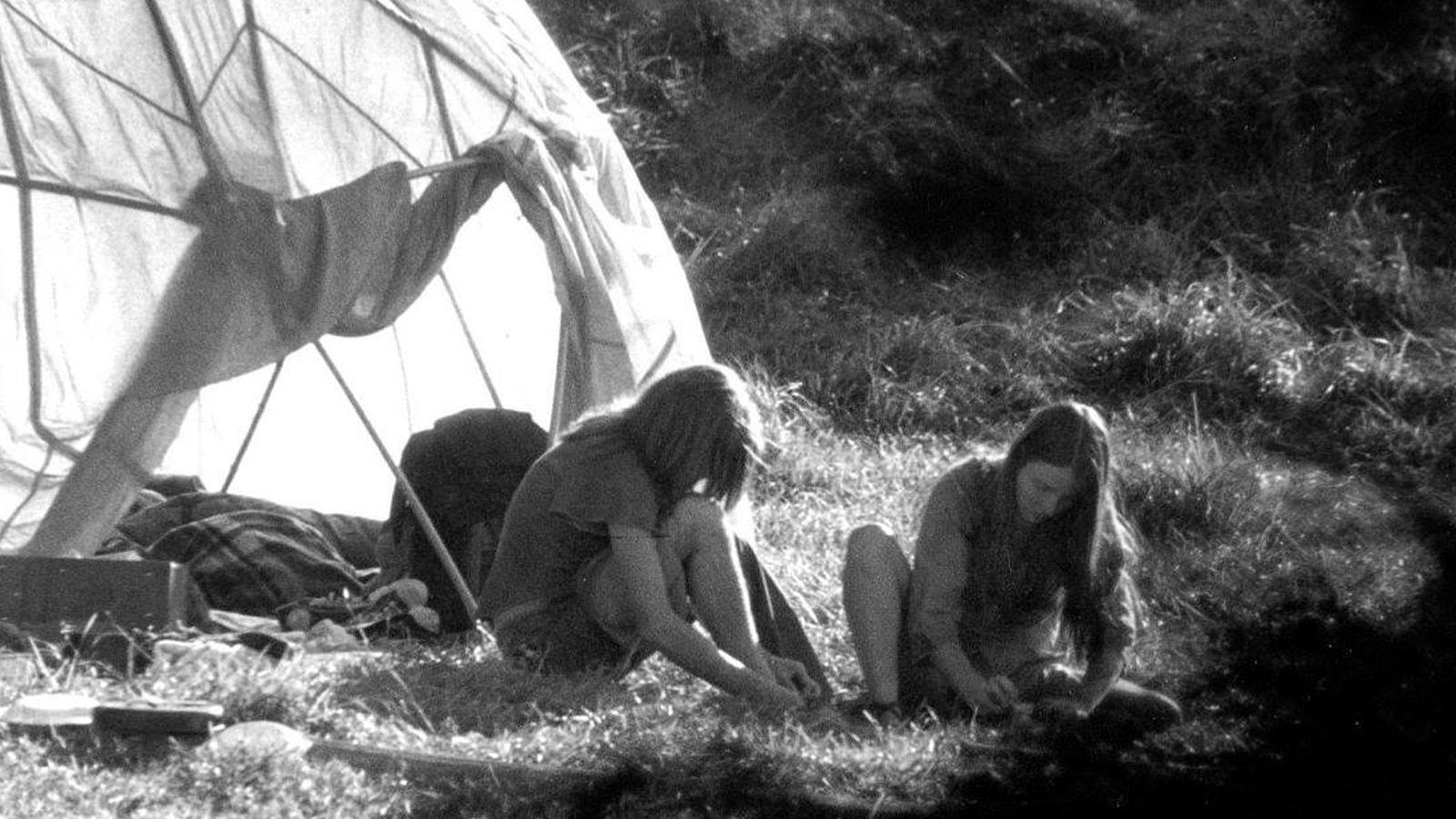
If you live in Australia, then it’s likely you’ve heard of Nimbin, famous for peace, love, and hippies. But it wasn’t always that way. In 1973, a group of university students from Sydney were looking for a place to celebrate new ideas and counterculture outside the conservative restrictions and government violence of the city.

To do this, they imagined a 10-day festival of art and music and alternate living in a rural setting. The location they finally picked was a small country town in Northern NSW called Nimbin. The rest, as they say, is history.

Aquarius is a new documentary exploring the 1973 Aquarius festival, which not only transformed a small country town into a hippie heartland but also triggered a social movement that changed a generation and is still alive today. Director Wendy Champagne wisely approaches the documentary with a soft hand, relying mostly on archival footage and contemporary interviews with those involved. This helps draw the audience into the experience while not over-explaining or over-dramatizing the event.

Luckily for Champagne and editor Karin Steininger, the festival was well-documented by several film-making collectives and amateur documentarians, leaving a vast library of video, film, and even television material to use. It’s a shame that much of the video footage was either damaged in storage or shot with damaged cameras–I could see the trails of burned-in video sensors damaged by inexperienced film-makers shooting bright lights like the sun–but the film-makers wisely chose to use the footage unaltered and not try to fix it somehow.

Authenticity counts, and the footage is important to tell the story. The editing was well-paced, and the images were always appropriate for the narrative or mood. Original design sketches made by University of Sydney students at the time who helped organise the festival are brought to life through fun, clever animations.

The documentary’s core drawback is establishing its purpose. Why should people care? The film does explore the festival’s impact on subsequent environmental and social movements, but ultimately, it just feels like nostalgia bait for those who were there. It doesn’t really have anything to say to a younger audience apart from repeating how fun it was and that it was historically important. But those claims are never really that convincing.

My screening was mostly occupied by people over 60, many of whom were there. Will a broader audience be interested in some hippy festival that happened back in 1973? I hope so. Aquarius is still a well-made documentary and a satisfying look at a special time in Australian history. It’s well worth your time.

Spread the word on your favourite platform!

Spread the word on your favourite platform!

Spanish Film Festival: A Ravaging Wind

Spanish Film Festival: A Ravaging Wind

Spanish Film Festival: A Ravaging Wind Rating

Click if you liked this article

‘A Ravaging Wind’ is the story of a young girl, Leni, who travels with her preacher father, Reverend Pearson, around towns in rural Argentina.

He is an evangelical preacher spreading the word of God and healing sinners. It is a coming-of-age film about Leni as she is trapped in a lifestyle not of her choosing. Argentine director Paula Hernández starts the film as a road movie as we follow them from one church to another.

As they are heading to their next sermon, we start to see more of the character of Leni, played by Almudena González. As she runs errands for her preacher dad, Alfredo Castro, you start to see the doubt in her mind about the direction of her life. On the road, their aging car breaks down, and they are taken, car and all, to a local mechanic out in the middle of nowhere.

Spanish Film Festival: A Ravaging Wind

Here they met Gringo the Mechanic, played by Sergi López, who is opposed to faith and his son Tapioca, played by Joaquín Acebo. Here, we have a similarity between the two families, both being teenagers brought up by their fathers.

As the car is repaired, Reverend Pearson decides he wants to save Tapioca; in fact, he becomes obsessed with trying to save the lad. This echoes with Lenis in the story.

The quality of the acting really makes this movie stand out. Without it, the film would have been a slow-moving road movie. The cast seems to understand the characters and what the director requires of them. It’s a really nice ensemble piece and worth watching. I give it 4 out of 5 stars.

The Spanish Film Festival runs through June-July, 2024 in Adelaide, Brisbane, Byron Bay, Canberra, Melbourne, Perth and Sydney.

Spread the word on your favourite platform!

Spread the word on your favourite platform!

Sydney Film Festival – The Outrun

The Outrun - Sydney Film Festival

The Outrun – Sydney Film Festival Rating

Click if you liked this article

According to Orkney Island folklore, when people drown in the sea they get turned into seals. These creatures, called Selkies, secretly come back to land at night to dance in human form, before heading back into the sea. But, if someone sees them while on land, they get stuck in human form, to live their lives unhappily on land and longing to return to the sea.

I recently saw The Outrun, a new Scottish film by German director Nora Fingscheidt, at the Sydney Film Festival. It tells the story of Rona, a young woman who returns to the windswept Orkney islands of Scotland to recover from a troubled past while studying in London. The film is fragmented and non-linear, jumping back and forth in time between her childhood, wild nights out in London, the rise and fall of a relationship, and her journey of recovery on the Islands of Orkney.

The cinematography is solid and often beautiful, showcasing not only the wild, natural beauty of the Orkneys, but also letting us dive into the colour and vibrancy of London and the sensory confusion of intoxication. Rona is an alcoholic, and her journey deep into the abyss of her addiction and then trying to climb back out is the core of the film.

The cast are incredibly engaging. Saoirse Ronan, who plays Rona, also produced the film and leads an outstanding cast including Stephen Dillane, Saskia Reeves, and Paapa Essiedu. They all deliver solid, believable performances that feel true to their characters.

What I noticed most about the film was how well sound was being used to create atmosphere. The constant howling wind on the islands gave a real sense of an unforgiving and cold environment. I felt like I was there. It was often subtle but almost always there, and when they faded out the wind for a poignant moment of reflection it worked beautifully.

In London, the sounds of traffic and people and music was an effective contrast to the desolate wind. Sound was also important to Rona. She listens to dance music as she works on her father’s farm or walks along the shore, a connection to her distant life in London. For months she listens out for the elusive call of a rare migratory bird.

We are told this bird, the Corncrake, has a low chance of surviving its journey to Africa and back. That was an allegory I felt laid on with a heavy hand, especially when Rona is told similar statistics to the success of recovering alcoholics before embarking on her journey back to the Orkneys.

Another problem was the cliché use of hair colour to denote different periods on Rona’s life. Hair-colour is a well-used visual cue for the audience to keep track of constant shifts in narrative time, but they could have come up with something more creative, such as hairstyle or even tattoos. It seemed easy, and lazy. And worse, it was used to manage an editing choice that was itself problematic.

The narrative has several layers of extra complexity and detail that could have been dropped from the film without doing any damage to the core emotional story. This seems to be a hangover from its source; the bestselling memoir by Amy Liptrot, who also helped write the screenplay. It felt as if the production team was so enamoured by elements from the novel, they were determined to put them in the film even though they’re different mediums. Random voiceovers came in that don’t help build the world or drive the narrative forward in a satisfying way. It was obvious these were simply bits from the book they wanted in the film but didn’t have time to explore properly. The Outrun is littered with these half-formed ideas or half-developed themes.

Paradoxically, while it’s littered with detail, the narrative runs out of steam. By mid-way, the film settles into a constant repetition of events and doesn’t really go anywhere, only adding small details or extra information that could have been told earlier and more efficiently, or not at all.

The second act is often dangerous territory for film-makers and The Outrun suffers from a lack of discipline. The constant jumping in time and place may represent Rona’s state of mind, and reflect the source material, but it doesn’t allow the audience to settle down and get drawn into the story. Instead, I was getting bored.

And then came the ending, which I felt was somewhat derivative, predictable, and a little unsatisfying. The Outrun is a well shot, superbly acted film that suffers from an undisciplined script and a chaotic structure that takes the wind out of its sails.

Spread the word on your favourite platform!

Spread the word on your favourite platform!

Spanish Film Festival: Un Amor

Spanish Film Festival: Un Amor

Spanish Film Festival: Un Amor Rating

Click if you liked this article

Un Amor is a delirious dive into the torment experienced by a young woman who walked away from the stress of her work interpreting the tragic stories of refugees and moved to La Escapa, a small village deep in the Spanish countryside, only to be thrust into a story almost as horrible as the ones she was running away from.

Multi-award-winning and multi-lingual Spanish director Isabel Coixet co-wrote and directed this searing drama, told with interspersed flashbacks to the horrors of her previous work, paralleling her descent into indecency.

The cinematography is often breathtaking, showing the scope and beauty of the region and vividly bringing life to Nat’s mixed emotions. The villagers’ characterisations, foibles, intrigues, and veiled love triangles are all treated with gusto. There’s a delightful smorgasbord of humanity on display.

In a dilapidated house with an abused dog thrust into her care, thirty-year-old Natalia, or Nat (Laia Costa), faces overt hostility and sexist micro-aggressions from her landlord and covert hostility from nearly all her neighbours. Initially wooed by a slightly older man who demonstrates an artistic sensitivity with stained glass, she demurely dismisses his overtures.

Spanish Film Festival: Un Amor

Then after an extraordinary encounter, Natalia reluctantly gives in to an awkward illicit proposal from her brutish neighbour Andreas (Hovik Keuchkerian) so as to have her dwelling refurbished somewhat and made into a more liveable space. In so doing, she succumbs to a passion that punishes her and causes her to see who she really is.

The film is based on Sara Mesa’s bestselling novel of the same name. The Spanish newspaper El País named it Spain’s 2020 book of the year. Un Amor has been described as a bittersweet and striking exploration of gender roles, love, obsession, and desire.

It deftly deals with some eternally fundamental and gripping questions that have plagued humanity. What is love? Are we sexual in nature? It’s a disturbingly frank look at the dynamics of gender politics and sex as a commodity.

John Holland of Screen Daily, a website providing a real-time view of the film industry, said the film was sometimes “redolent of Coixet’s very best work.” Guy Lodge of Variety, a website featuring entertainment news and reviews, considered the film to be a return to form for Coixet.

In two top ten lists of Spanish films, it ranked 2nd (El Español) and 10th (Mondosonoro).

Spread the word on your favourite platform!

Spread the word on your favourite platform!