Jesus Christ Superstar: A Modern, Mesmerizing and Immersive Experience

Jesus Christ Superstar

Jesus Christ Superstar Rating

ā˜…ā˜…ā˜…ā˜…ā˜…

Click if you liked this article

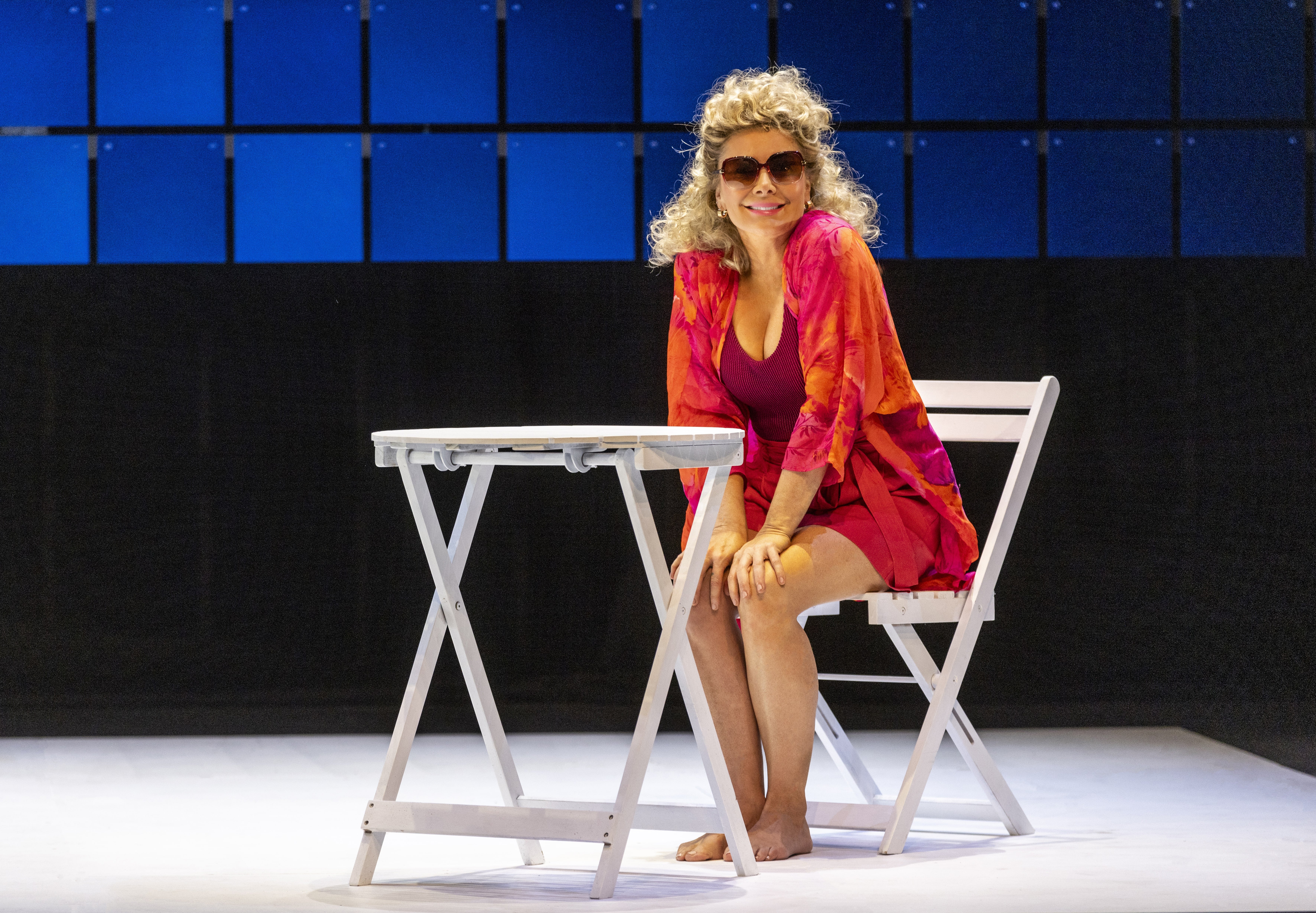
It’s opening night in Brisbane after a successful Australian tour, and there is no denying that Jesus Christ Superstar rises again. For those uninitiated, the action focuses on the final days of the man himself, culminating in his crucifixion. However, this is no ordinary bible story – nor ordinary musical; Jesus Christ Superstar is conceptual rock n roll, and this production brings the classic firmly into 2025, with the help of eminent Australian pop, rock and soul musicians, inspired choreography, and exemplary calibre of cast. This is a show even for people who don’t typically enjoy music theatre, while still delighting those of us who do.

I’ve seen Jesus Christ before, both the fantastic 1973 movie and an enjoyable high school production many years ago, which featured my sister in the orchestra. However, it has been long enough for me that events unfolding seem surprising and fresh, while I realize the master plan toward which they culminate. This interpretation feels right now but retains the campy strut and sensibility of early iterations; A feature of Jesus Christ Superstar is how well it translates into different eras, being so beautifully open to experimentation.

As Jesus, Michael Paynter’s singing is exceptional, with clarity, control and conviction. An experienced professional musician with success in the pop charts, this show is Paynter’s first foray into the musicals; While I consider that he grows in stature throughout the performance (he is firing on every cylinder in the second act), the more I think about it, his calm, innocent, nearly boy-like portrayal in the first act is an appropriate and effective character choice.

Mahalia Barnes as Mary is also new to musical theatre; However, JCSS can be fairly considered part of the rock realm, so more her world than most musical theatre. Like Paynter, she is a music industry veteran, and a beautiful interpreter of song; She gets to sing some of my personal favourites in this show, giving soulful tone and connection, while radiating wholesome beauty. Her duet with Peter (Tana Laga’aia) is notable, bringing some gentler reflection into the strident second act.

As the flamboyant Herod, Reuben Kaye’s beauty is somewhat less wholesome than Barnes’s, but nonetheless riotously evident. Kaye is a force of nature, and while his stage time is shorter than the other cast, his presence is indelible, eating up the stage with electric energy, sinister sexuality and some impressive vocal histrionics – spanning from gargle to whistle and back again. No stranger to controversy himself, and certainly willing to ā€˜go there’ (watch his 2023 interview on The Project re: his love of Jesus, if you’re unfamiliar/not easily offended), Kaye goes all out as Herod, his courage and charisma perfectly cast in the role.

Javon King as the maligned but misunderstood Judas blends exuberance and anguish into a very memorable portrayal. Judas gets some of the show’s absolute banger musical numbers, and King handles them royally, with soulful elevation and powerful falsetto. While remembered for his betrayal, Judas is a complex character with arguably noble intentions, who errs, then cannot bear the burden of his own conscience. King captures these contrasts with phenomenal energy, nuance and commitment.

Other especially memorable performances are given by Elliot Baker, oozing machismo as Caiaphas, and Graeme Isaako, giving grit and sincerity as Simon. The standard of the whole cast is superb, and the production feels alive and in the moment. This show is not about main members singing stationarily in the spotlight, but rather the entire cast exploding throughout the stage, creating texture and dynamism both visually and narratively.

Special mention must be given to Choreographer Bree Tipoki, for her input behind such a captivating feature of the show; The dance and movement bring fascinating life and shape to the stage, and to the story. The live band, costuming, stage design and lighting are all dialled into the highest professional standard. As a whole, Jesus Christ Superstar gives life, as the plot takes one away. Yet, there are no sins to speak of; The shows deeper commentary on society’s casual detachment, desensitization and perverse voyeurism toward the suffering of one we raise up only to smack down – is thought provoking. Each distinct element blends vibrantly to create a modern, mesmerizing and immersive experience, that should not be missed.

To book tickets to Jesus Christ Superstar, please visit https://www.qpac.com.au/whats-on/2025/jesus-christ-superstar.

Photographer: Jeff Busby

Spread the word on your favourite platform!

Bright. Young. Things.

Bright. Young. Things.

Bright. Young. Things. Rating

ā˜…ā˜…ā˜…ā˜…ā˜…

Click if you liked this article

3

Bright Young Things is a coming of age production about several young game show contestants who seek to win the grand prize and be named the country’s brightest. Produced by Sun & Wine Arts Company, this show was written by Georgia Christou and directed by Claire Yorston.

Upon sitting down in the audience, I was immediately drawn to the stage design. There was a table in front of the stage with an actor, soon revealed to be Rochelle’s father, sitting at it looking at a telephone. On stage sat six chairs on upper stage left with five actors seated (the game show contestants). All actors, waited patiently, watching as audience members settled in. This offered an interesting and engaging image that drew me in, along with the red lighting over them.

Despite the lack of space, the actors maintained good blocking throughout the show. It was good to see how the production utilised the space it had. The stage design consisted of the game show space onstage and a green room/Rochelle’s house were in front of the stage at the table. Minimal props such as a telephone, maps and a bowl of potato chips, were used to indicate scene changes, which allowed for smoother transitions.


All costumes were basic but effective for each character’s personality and development. An example of this was when one of the contestants, Shian, tried on Rochelle’s jacket. Untying her hair and adjusting her outfit was a way to show the character’s personal realisation of her independence and newfound confidence.

Throughout the play there was an effective use of audio effects and music. Including when the phone was ringing, the show theme, and game show buzzers. The lighting was fairly standard and accompanied the scenes well, shifting between white wash and spotlights when necessary, when representing the more intimate character moments.

Some of the highlights that stood out to me included the use of symbolism and dynamics. I reference the symbolism of authority and control displayed throughout, growing and decreasing as the play went on. The role of the corporate bosses were represented initially by two actors. Each scene where they were trying to portray a stronger sense of control, an actor was added to the group, the voices speaking in unison and growing louder and stronger. As it got softer and weaker, actors were removed.


As the game show progressed, the contestants grew in confidence in themselves, revealing more of the bosses agenda and as well as the potential of who the characters knew they could be.

Another key point of possible symbolism was displayed in Rochelle’s flashback of her mother leaving. Instead of only using the two actors, multiple cast members appeared, echoing words Rochelle had heard her mother say. As Rochelle relived her trauma, the memory acted as a distraction, losing her the place in the final round of the competition. This was an especially interesting portrayal of emotional depth and context for her character, as we had only seen glimpses prior.

All actors performed respectfully well and worked together to tie the production together. Notable moments in particular were during the monologues of the contestants, including Esther and Bernie. Congratulations to all for a fantastic performance.

To book tickets to Bright. Young. Things., please visit https://sunwinearts.wixsite.com/sun-and-wine-arts-co/copy-of-compass.

Spread the word on your favourite platform!

The Mountain – Fjalliư (Scandinavian Film Festival)

The Mountain (Scandinavian Film Festival) Rating

ā˜…ā˜…ā˜…ā˜…ā˜…

Click if you liked this article

Director and Screenwriter Ɓsthildur Kjartansdóttir’s third full length feature is about grief, dealing with loss, guilt and growth. Filmed in the sparse beauty of an Icelandic autumn, it is a cosmic journey that handles these themes with sombre grace in this excellent film well worth the audience’s engagement.

Set in the port town of Hafnarfjƶrưur, a town outside ReykjavĆ­k, Maria (Sólveig Guưmundsdóttir) an Astronomer, has planned a family trip to the highlands of Iceland to photograph what she hopes is a comet. When the weekend arrives however her husband Atli (Bjƶrn Hlynur Haraldsson), a one-time guitarist but now an Electrician stuck on a job with a client he despises, informs her that he has to work all weekend. Their nineteen-year-old daughter Anna (ƍsadóra Bjarkardóttir Barney), an aspiring Musician, also informs her mother that she can’t go because her band will be performing on the weekend. Maria travels by herself but has an unfortunate accident and dies, which triggers a path of grief and guilt for both Atli and Anna. It also starts them on other paths as they deal with her loss.

Bjƶrn Hlynur Haraldsson, probably best known in Australia for his role as PĆ©tur in the outstanding Lamb (2021) and as Dries in Northern Comfort (2023) shines in the role of Atli. Haraldsson’s portrayal of the grieving husband on a personal journey deftly depicts the wide range of emotion that Atli transverses in a very skilful manner.


The role of the daughter, Anna, is correspondingly exceptionally portrayed by ƍsadóra Bjarkardóttir Barney. The Mountain – Fjalliư marking her debut in a major film role, having previously played the minor role of Melkorka in The Northman (2022) (which also featured her actual mother, Musician/Actor, Bjƶrk, as Seeress, the blind sorceress). The scenes with Bjƶrn Hlynur Haraldsson outstandingly highlight the father and daughter relationship in crises.

The other roles of the mother, Maria, played by Sólveig Guưmundsdóttir, and Anna’s boyfriend KĆ”ri played by Vilberg Andri PĆ”lsson are also portrayed very well as are the other roles by all the cast. Cinematographer, Bergsteinn BjƶrgĆŗlfsson, takes full advantage of the light and shades of the Icelandic landscape. For the indoor scenes he impressively utilises outside natural light as a focus for the action of the scenes.

The Mountain – Fjalliư is the first officially vetted sustainable production in Iceland noted for ā€œmarking a significant milestone and contributing to the establishment of a standard for sustainability in the Icelandic film industryā€, and has been awarded the prestigious Green Film Sustainability certification.

Although only her third full length feature film, Ɓsthildur Kjartansdóttir is a veteran Director of Photography, Producer, Sound, Editor, Script Supervisor, Writer, and Producer, The Mountain – Fjalliư sees her at her peak power in this first-rate film. If the rest of the films in the Scandinavian Film Festival are of this standard, then it will be an outstanding Festival.

Reviewed by Rob McKinnon

Rating; 8 out of 10
Genre: Drama
YouTube trailer: https://scandinavianfilmfestival.com/films/sca25-the-mountain

To book tickets to this, or any films in the Scandinavian Film Festival, please visit https://scandinavianfilmfestival.com.

Spread the word on your favourite platform!

Small Sparkles and Little Pearls

Spanish Film Festival - Mugaritz. No Bread, No Dessert

Spanish Film Festival – Mugaritz. No Bread, No Dessert Rating

ā˜…ā˜…ā˜…ā˜…ā˜…

Click if you liked this article

Paco Plaza’s ā€œMugaritz: No Bread, No Dessertā€ is a poetic documentary that explores the inner workings of one of the world’s most inventive restaurants – Mugaritz. Led by chef Andoni Luis Aduriz, a self-proclaimed non-leader steering his energetic staff with generosity and ā€œstepping backā€, the restaurant closes from November to April each year to recreate its thematic menu. For 2025, the culinary concept is ā€œWhat Cannot Be Seenā€.

Plaza’s wobbly, handheld camera is distracting as it allows us to observe the detailed process of creation, trial and perfection through the eyes of what appears to be an overly caffeinated voyeur. There are many scenarios which could have been left out, minimised or replaced with more moments of tension (more than the one shown) to alleviate the feeling of being in an hour-and-a-half board meeting.

The music, composed by Mikel Salas, is bizarre. Salas uses cutlery and frying pans in an effort to match the poeticism of the cuisine, yet ends up making one feel as if they are listening to an Apple iPhone alarm instead of a sumptuous musical score. However, visually, the documentary delights.

The pastoral Basque countryside, the streamlined, cosy restaurant and the new ways in which the fragile dishes are put together all combine to give the audience a real feast for the eyes. There is an entrĆ©e tea ceremony where the cups are made from frozen, green tea leaves; then comes a broth only reachable by breaking into an edible bone with a rock and notably a soup-like-substance whereby the diner has to lean down and lick it out of a mould made to look like…well, it’s naughty.

Although ā€œNo Bread, No Dessertā€ has been applauded for its appeal to the masses, this reviewer feels this will appeal especially to the restauranteur and food lovers. It is fascinating for the risk-taker-chefs and those who are interested in combining cooking with storytelling. As Aduriz himself says, it is ā€œā€¦small sparkles and little pearlsā€.

To book tickets to this or any other film at the Spanish Film Festival, please visitĀ https://spanishfilmfestival.com/.

Spread the word on your favourite platform!