A Shot In The Dark

A Shot In The Dark

A Shot In The Dark Rating

★★★★★

Click if you liked this article

3

Comedy often succeeds not simply because of good jokes, but because of rhythm. Jason Spindlow’s production of A Shot in the Dark understands this well, balancing measured scenes with bursts of energetic physical comedy to create a production that remains engaging from beginning to end. Rather than maintaining a relentless pace, quieter moments allow both the characters and the humour to develop before the action accelerates, making the comic peaks land all the more effectively.

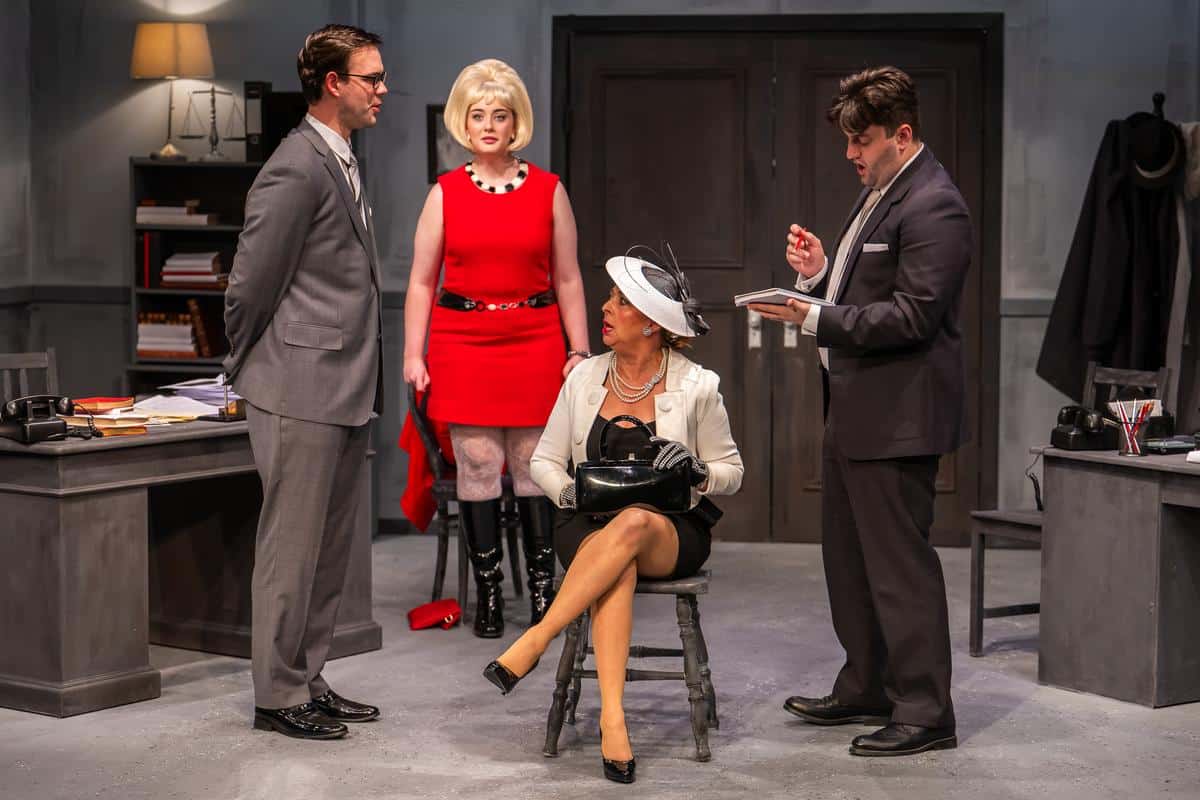
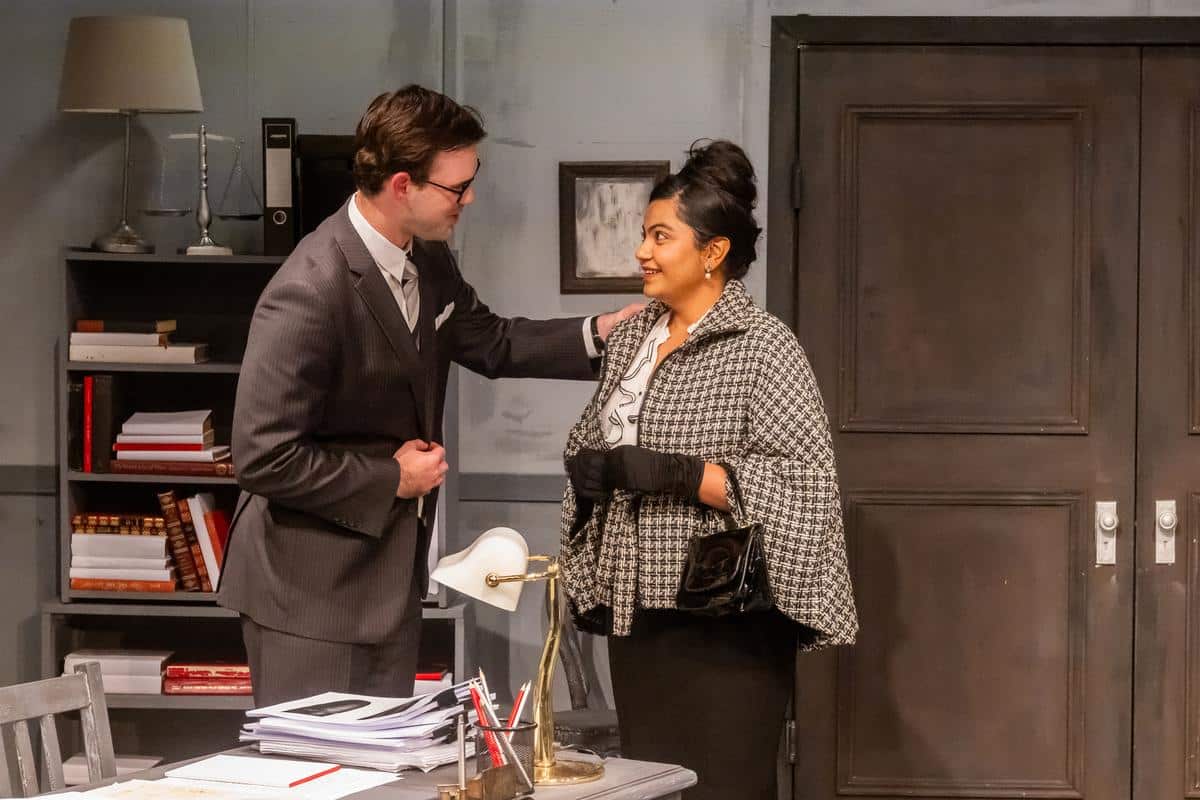
Ben Wheeler anchors the production as Paul Sevigne, presenting an examining magistrate whose fierce commitment to justice gradually collides with his growing attraction to the irrepressible Josefa Lantenay. Wheeler gives Sevigne authority from the outset, yet reveals the cracks beneath his composed exterior through excellent physical comedy. Whether shuffling papers in frustration, gently rebuking Morestan for openly staring at Josefa, or sprawling awkwardly across his desk in a futile attempt to prevent his wife from seeing his beautiful suspect, Wheeler communicates Sevigne’s increasingly impossible predicament almost entirely through body language. Importantly, the comedy never undermines the character’s integrity. Sevigne’s determination to discover the truth remains the engine that drives the play forward.

Ella Rose Titterton is captivating as Josefa Lantenay. Visually, she dominates the stage, dressed in vibrant red and black against a production otherwise defined by shades of black, white and grey. The contrast immediately establishes Josefa as the disruptive force within this ordered world. Titterton plays her as vivacious, brazen and keenly aware of the effect she has on those around her. Josefa delights in the attention she attracts and the jealousy she provokes, yet the performance avoids reducing her to a flirt. Beneath her confidence lies a woman caught in an impossible situation, forced to conceal information or risk conviction and execution for murder. Titterton gives the character warmth and nuance, ensuring Josefa remains sympathetic even as she continually complicates the investigation.
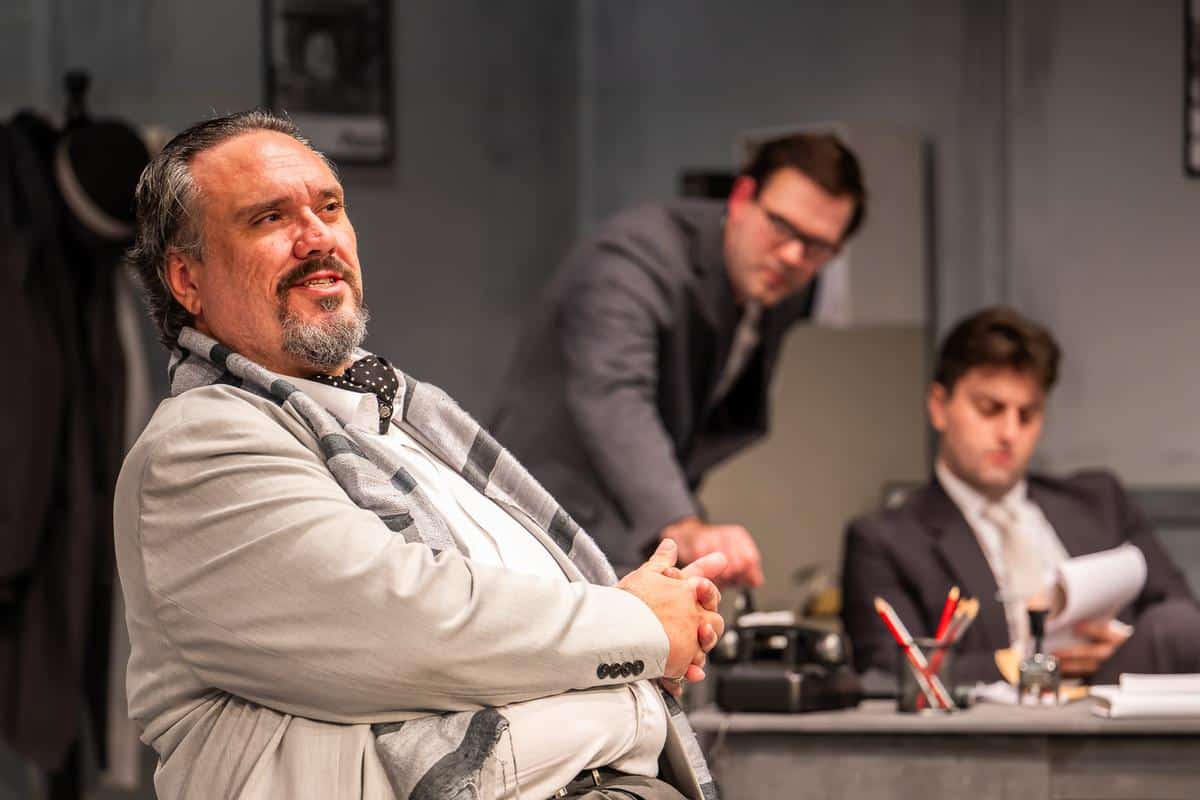


Lachlan Armstrong proves an outstanding comic foil as Morestan. Though firmly a supporting character, he arguably receives the biggest laughs of the evening through superb comic timing and wonderfully expressive reactions. His wide-eyed fascination with Josefa, mischievous grins during Sevigne’s interrogations and perfectly judged physical comedy consistently delight the audience without distracting from the central story. A second-act sequence involving the frantic concealment of a centrefold magazine is particularly well executed. Morestan is more than simply comic relief; Armstrong presents him as a genuinely capable assistant whose inability to disguise his reactions provides a perfect contrast to Sevigne’s increasingly strained professionalism.

Among the supporting cast, Aditya gives Antoinette Sevigne a calculating edge. Her concern extends beyond marital jealousy to protecting the social position that accompanies her husband’s career, making her suspicion of Josefa both understandable and, ultimately, justified. Ben Pobjie plays Benjamin Beaurevers with languid confidence, maintaining complete composure until events finally expose him, while Faith Jessel gives Dominique Beaurevers an eccentricity that skirts absurdity without tipping into caricature. Peter Phan brings quiet authority to Lablache, presenting Sevigne’s superior as meticulously controlled rather than bombastic, before demonstrating impressive versatility later in the evening with a memorable piece of broad physical comedy as the prison guard.

The production’s visual design is equally thoughtful. Abby Bishop’s set is convincing without becoming cluttered, allowing the actors ample room for the production’s physical humour. The central chair becomes almost a stage within the stage, naturally drawing attention whenever a character occupies it. Leone Sharp’s costumes establish a stylish mid-century aesthetic while reinforcing the play’s visual language through a restrained monochrome palette, broken only by Josefa’s striking red wardrobe. Together they create a world where order and disruption are immediately recognisable before a word is spoken.
By combining assured performances, intelligent direction and carefully considered design, this production captures both the wit and humanity of A Shot in the Dark. It is a polished and consistently entertaining evening of theatre, led by a strong ensemble that understands comedy is as much about character and timing as it is about laughter.

To book tickets to A Shot In The Dark, please visit https://paviliontheatre.org.au/a-shot-in-the-dark/.

Photographer: Chris Lundie

Spread the word on your favourite platform!

Strategic Love Play By Miriam Battye

Feature-Strategic Love Play

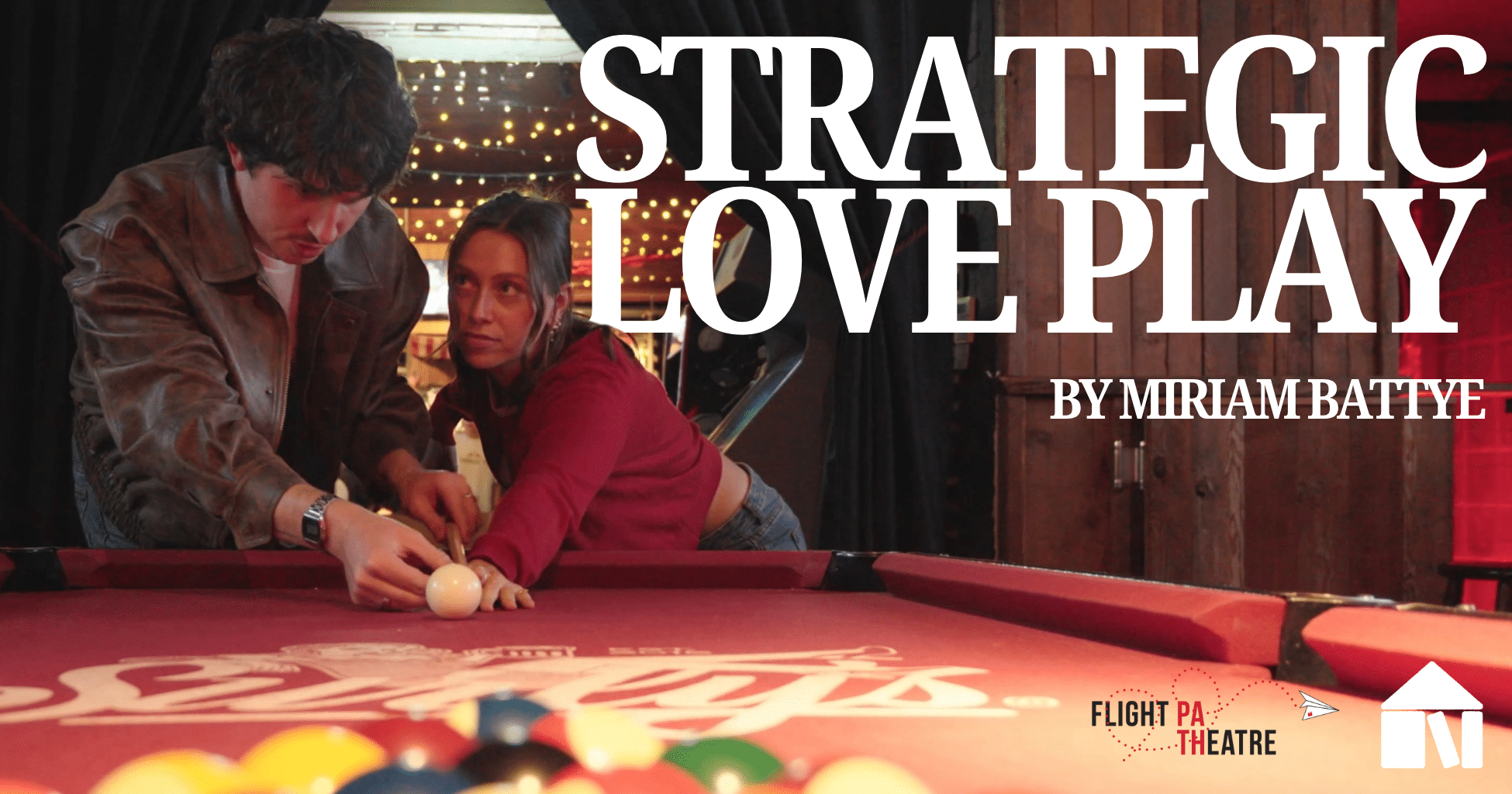
Sharehouse Production Company in association with Flight Path Theatre, is thrilled to present their second production, Strategic Love Play written by Miriam Battye. The season will run from August 25th – 29th.

“NO. I don’t want to, like, go for WALKS…I want to tear someone apart.”
After endless swipes left and right two strangers meet for a pint. One is asking all the questions you shouldn’t ask on a first date, the other just wants to survive the night. What begins as awkward small talk quickly spirals into a too-honest, too-intimate proposition. Bold, witty, and brutally honest, Miriam Battye’s comedy pulls the audience right into the discomfort and hilarity of modern romance.

This production features some of Sydney’s most promising emerging talent. For director Ava Rusch (Oh, the Humanity and Other Good Intentions, NIDA), this marks her directorial debut since graduating from NIDA’s prolific Directing MFA. The cast stars up-and-comers Georgia-Paige Theodos (Love, Old Fitz) and Caleb Jamieson (Traffic Light Party, KXT). Both are NIDA trained actors who graduated in 2024 and 2023 respectively.

Previous praise for Strategic Love Play
“Cynical, fun, and as gripping as a friend’s rapid-fire WhatsApps from a disastrous first date.” Pamela Raith, Evening Standard
“Buoyed by sharp comic performances…entertaining for anyone familiar with the exhausting rituals of online dating.” Gillian Russo, New York Theatre Guide

image

More about the show
Writer Miriam Battye is one of the most celebrated writers of our time. Her plays have been produced at iconic theatres such as the Royal Court, Manchester Exchange and Soho and her recent screenwriting work on HBO’s Succession and Netflix’s BEEF cemented her as one of the most exciting voices of the modern day.
An entirely NIDA trained cast and creative team including Ava Rusch (MFA Directing, 2026), Georgia-Paige Theodos (BFA Acting, 2024), Caleb Jamieson (Diploma of Acting, 2023), Caitlin Green (Diploma of Acting, 2023), Victor Xu (Diploma of Acting, 2023), Otto Zagala (BFA Technical Theatre and Stage Management, 2026) and Bronte Hunt (BFA Design for Performance, 2025).

Cast
Woman: Georgia-Paige Theodos
Man: Caleb Jamieson

Creative team
Playwright: Miriam Battye
Director: Ava Rusch
Production Design: Bronte Hunt
Sound Design: Otto Zagala
Producers: Caitlin Green, Caleb Jamieson, Victor Xu, Jago Feild

Additional thoughts from the creative team
Ava Rusch (Director) on why now and why this show:
“I actually love romance but also find the whole concept of dating rather strange, yet we need this awkward stage to potentially find “the one” and with dating apps becoming the main source of how people find “the one” it interested me to watch two people genuinely figure out if they can make it work past the texting stage. I feel the world of romance is a bit lost at the moment. I feel dating apps and social media tend to make people judge one another too quickly before ordering the drinks and waiting for the awkwardness to pass, you never know what an hour can do. Battyes words cleverly show the other side of these online dates which is the exhaustion of being judged on a first date and just dating full stop, going on another date and another and maybe this one? No another! Over and over again, so how brilliant to propose an alternate option and see how it unfolds.”

Caitlin Green (Producer) on Sharehouse’s ongoing collaboration with young creatives:
“It’s difficult to get work if you haven’t already done work. That catch 22 became the impetus for starting Sharehouse. Since then, platforming emerging artists has always been our north star. They’re hungry, scrappy, and have an untapped well of talent; which is amazing for us. Our entire producing team is NIDA-trained, and the connections we made during our time there has carried us into our careers. We’ve only continued to strike gold in the years since drama school. Every creative we’ve had the pleasure of working with has truly been the best of the best. We could not be more grateful for their commitment and talents. And you’ll definitely see some familiar faces returning for this show – we’ve got the A team.”

Dates: 25-29 August (Preview on the 25/8)
Performance times: 8pm
Location: Flight Path Theatre, 142 Addison Rd, Marrickville NSW 2204
Bookings: https://www.flightpaththeatre.org/whats-on/strategic-love
Tickets: Preview $25 + booking fee; General Release $30 for Concession, $35 for Adult + booking fee

Content warnings: Strong language.

Spread the word on your favourite platform!

Too Much Light Makes The Baby Go Blind

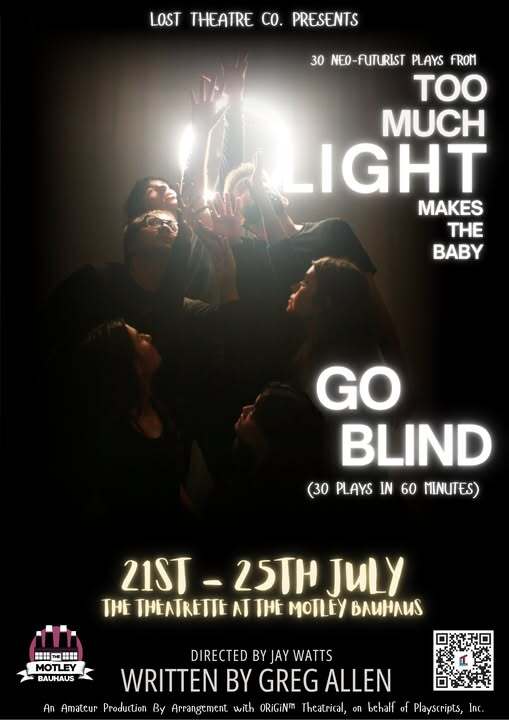
30 Neo-Futurist Plays From Too Much Light Makes The Baby Go Blind (30 Plays In 60 Minutes)

30 Neo-Futurist Plays From Too Much Light Makes The Baby Go Blind (30 Plays In 60 Minutes) Rating

★★★★★

Click if you liked this article

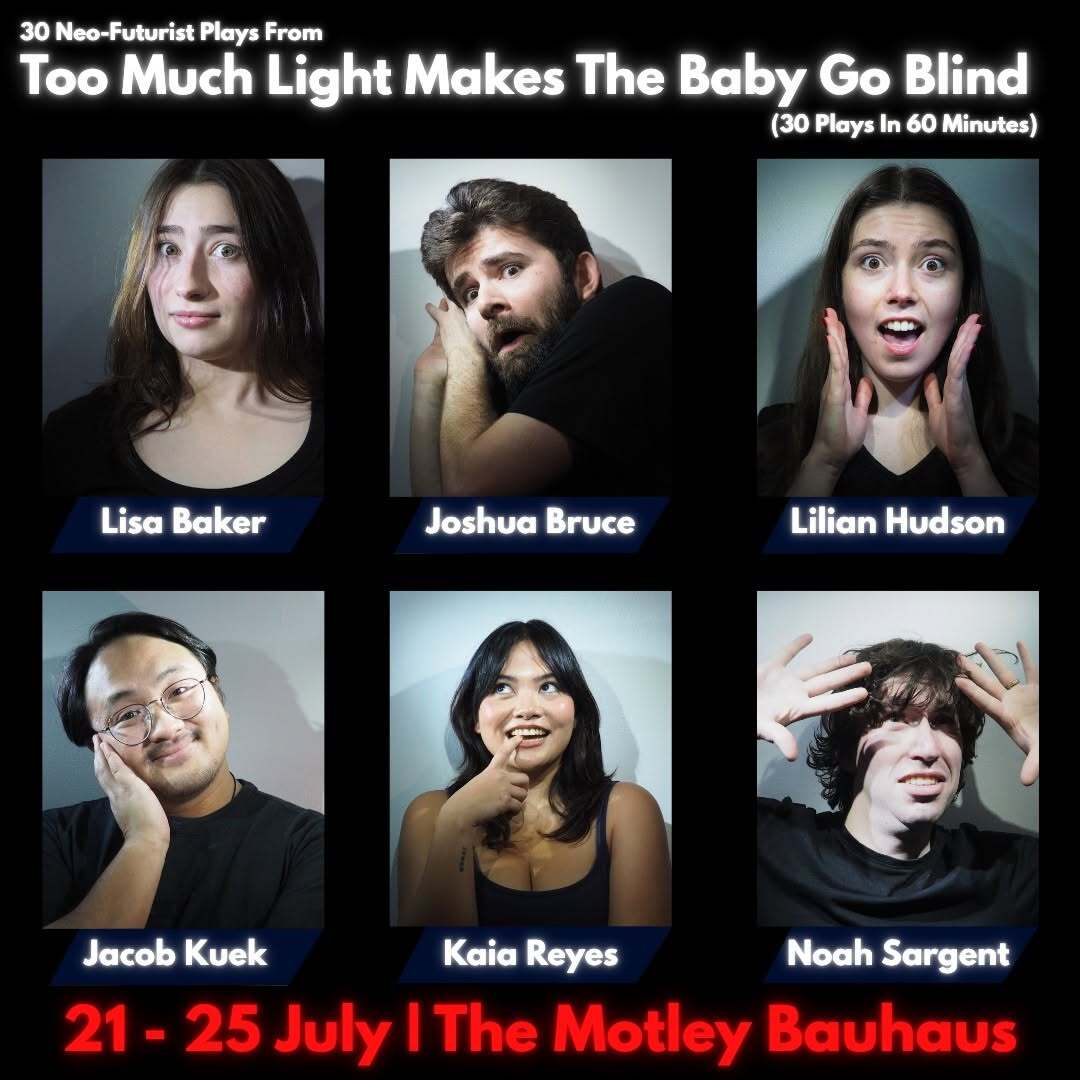
As soon as we walk in, the game begins. The Lost Theatre Co. cast members mill about the theatre and greet us, wearing black T-shirts emblazoned with their (real) first names – Joshua, Lilian, Jacob, Kaia, Noah and Lisa. We each receive a lanyard with a red/green card and a ‘menu’ of thirty short play titles to choose from. The house lights stay up as they get our attention and begin. We have a role, a responsibility and an immediate sense of comradery.

Too Much Light Makes The Baby Go Blind is a proudly absurd meta theatre game. The aim is to perform all thirty plays on the menu within an hour – once the hour is up, that’s all we get; they’ll stop mid-scene if they must. Audience members call out a number to indicate what play we want to see, it’s performed, then it’s on to the next one. It’s the epitome of controlled chaos.

The ensemble’s confidence, chemistry and enthusiasm absolutely carry the show. Even though all the shows are obviously scripted, there’s a constant feeling of spontaneity, like we’ve walked in on actors messing around while on break. This makes it easy to forgive some weaker performances during the micro-plays themselves, though it would’ve been nice to see more range in the genres and characters within the shows. Still, with thirty distinct plays, it’s almost guaranteed nobody will click with everything, and there were definitely more hits than misses.


It’s difficult to comment on the show’s writing. The plays move so fast and there’s so many of them that to single out anything feels like either nitpicking or a matter of personal taste. Plus, the tone is so silly that deeper analysis of themes almost feels like missing the point. Even so, the whole premise raises interesting questions about what ‘counts’ as theatre and how much or little time you need to tell a story. These ideas are highlighted in how the actors use the set. The lack of costumes, the simple props and set pieces strewn around seemingly at random and the constant timer on the wall counting down the hour deliberately make it difficult to fully focus on the plays. This could be a drawback for some, but I like that Jay Watts’ direction kept us focused on the gamification of it all, constantly drawing attention to how we as an audience had a huge part to play in the fun.

Consent and safety were clearly priorities for the troupe, and it was impressive how seamlessly they incorporated these essentials into the show. The lanyards we were given let us show either a green or red card to indicate if we wanted to be interacted with, and we were assured we could flip the card at any time, even while the actors were speaking to us. This did happen once or twice, and they kept their word, stopping immediately and moving on to somebody else. There were content warnings on the menu, but on the other side from the titles so we could be surprised if we wanted to. The instructions they gave to participants were snappy and clear, and they rolled equally well with awkwardness and enthusiasm from the audience. Overall, it’s probably the best handling of audience interaction that I’ve ever seen; whether your card’s green or red, it’s so fun to watch and play along.

Although we didn’t win the game (we got close but had to stop in the middle of the thirtieth play), there wasn’t any sense of disappointment or missing out. If anything, the lack of closure felt appropriate. If you enjoy the fresh frenetic energy of improv, theatre about theatre and/or being involved in the unfolding action, this is definitely the show for you. And if anything about the audience participation seems daunting, don’t worry. You’re in good hands and no matter which plays you do or don’t see, you’re in for a great time.

To book tickets to 30 Neo-Futurist Plays From Too Much Light Makes The Baby Go Blind (30 Plays In 60 Minutes), please visit https://www.losttheatreco.com/.

Spread the word on your favourite platform!

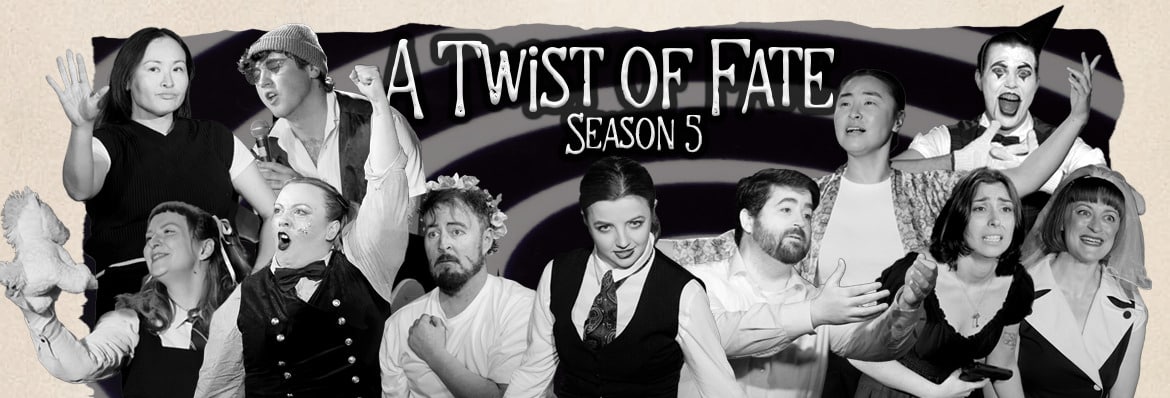
A Twist Of Fate – Season 5

A Twist Of Fate Season 5

A Twist Of Fate Season 5 Rating

★★★★★

Click if you liked this article

2

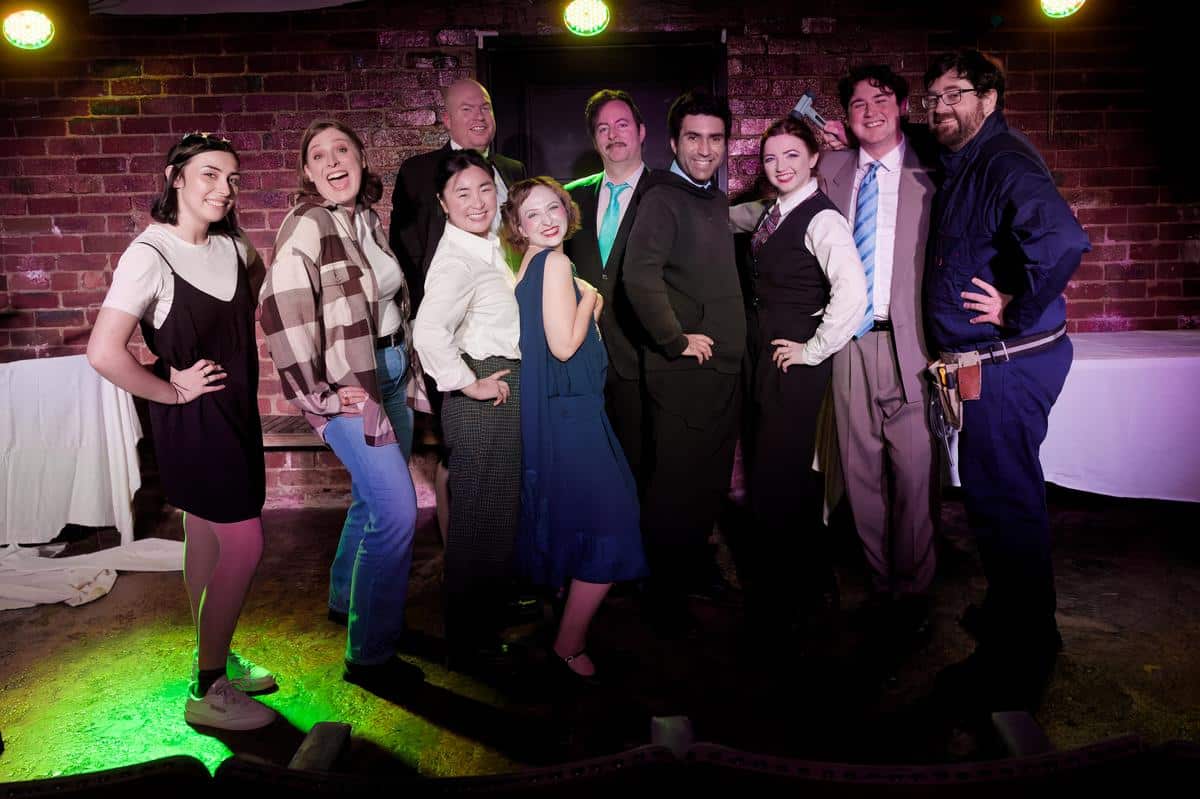
I’ve now seen three iterations of Scary Goats Theatre’s A Twist Of Fate series. The conceit – short Twilight Zone-esque plays, each built around a game-changing plot twist – is reliably entertaining and capacious. Every season I’ve seen has had a different tone and a wide range of premises and themes in the showcased plays. And yet, season 5 started with a delightful surprise that nobody in the audience could have expected: a short film.

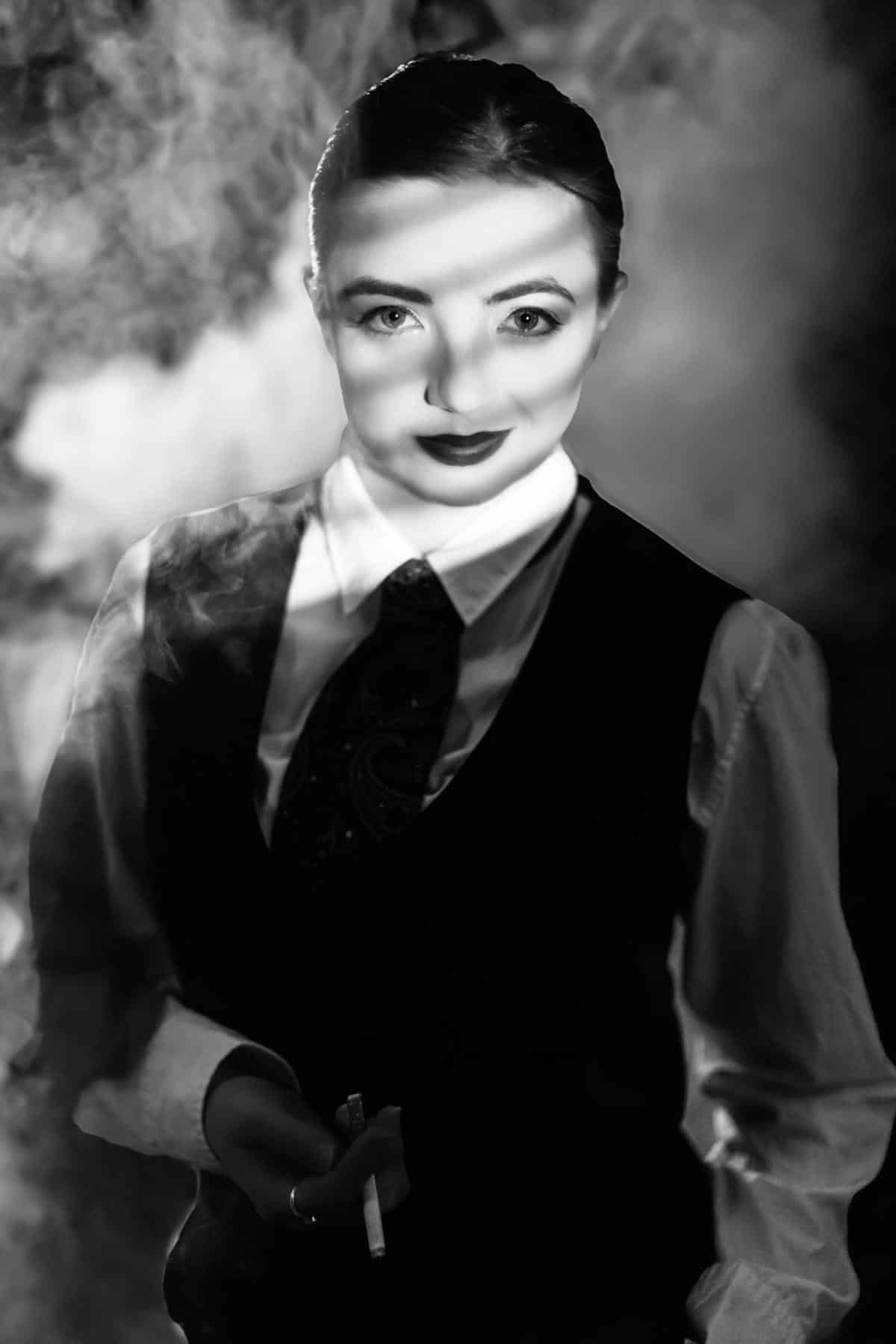
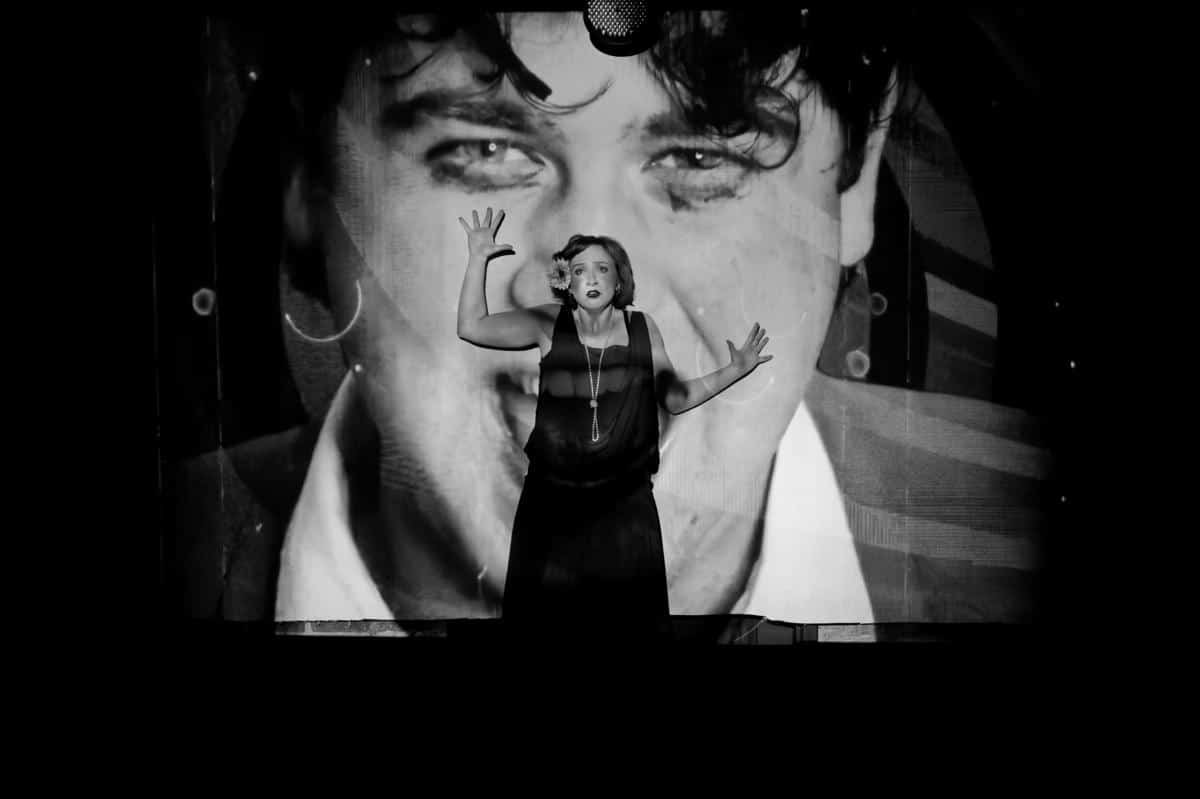
Not So Black And White is a mixed media pastiche of black-and-white silent films. You’ve seen or are at least aware of the kinds of characters featured. Nelle Nilson is a clever young woman, dainty and desired by her fiancée Steadfast Sam. Her father is a renowned physicist and the villain, Hardluck Harry, hatches a plan to get close to Nelle and steal her father’s work. Stereotypical shenanigans ensue…until they don’t. The slapstick and physicality are comedically stilted in exactly the way you’d expect from silent films, and while the jokes clearly send up the genre, they don’t feel like retreads of other parodies. There are multiple twists in the plot and character arcs, and they each feel jarring in an arresting and calculated way. Chloe Towan wrote, directed, choreographed, shot and edited this show, and she along with the cast have created a fantastic vehicle to show the beauty and flaws in these kinds of stories.

Riding on the high of the first show is We Live To Serve, written by Charlie Simmons. In a future where the earth is near uninhabitable due to extreme heat, two workers – a butler named Calvin and a custodial worker named Alvin – are desperate to get hired on one of the spacecraft leaving the planet. The poor job interviewer has no idea how far the duo’s desperation will push them. The performances from Patrick Slee, Richard Mealiey and Corey M. Glamuzina are great; their characters are loveable, mischievous and easy to empathize with. I also appreciated the commentary on technological dependence and the concept of disposability, as some lines felt downright chilling in the context of the world’s increasing reliance on generative AI. I think this script would have benefitted from a longer runtime, since the context and exposition felt jam-packed and hard to follow at first. Still, it was an enjoyable show with engaging characters and a sweet, hopeful ending.


The third show, Muffin Day by Richard Mealey, presents a nightmarish Groundhog Day scenario. Ronnie is stuck reliving the worst moment of their life: their death. Over and over, they come into their work at a bank, chat with their bubbly colleague Chris, and get shot by an intruder named Lou looking for revenge. It takes a lot of energy and planning to craft a script like this, where information is slowly drip-fed and elements have to be repeated without getting tedious. Mealey pulls it off perfectly, creating a constant sense of progression and perfectly balancing comedy and tragedy. Developing Chris and Lou more as side characters is a simple yet effective way to subvert this kind of story and foreshadow the twist that comes later. Even if you guess what’s coming, the acting and tone of the payoff makes it both satisfying and harrowing.

The final show, Two Characters In Search Of A Story, is about exactly what is written on the tin. Two characters wake up in a locked room with numerous concealed objects, having no memory of who they are. While transitioning into this show, Towan mentioned that her script was originally going to be saved for a season next year and to be honest, I wonder if that might have been for the better. The two lead performances are strong and full of chemistry, and the way that set pieces were revealed and recontextualized over time was really clever. However, I feel like the title set us up for a more ‘meta’ revelation than the twist turned out to be, and overall, the pacing felt uneven and the emotional arc of the characters didn’t quite sit right with me. Still, many audience members seemed to find it moving, and it was definitely an interesting watch.

A running theme in this season of A Twist Of Fate is breaking expectations. Comedic settings are more multi-dimensional than expected, the assumptions underpinning a familiar premise are knocked out from under it, and characters seek to find their place in their own story. If this reflects what Scary Goats Theatre seeks to do with their work going forward, then I’m sure they are more than capable of rising to the challenges they set themselves. If you haven’t already, definitely come and see at least one season of this show. Whether you guess what’s coming or have your mind blown, you’ll still have a great time with some thoughtful, diverse and entertaining theatre.

To book tickets to A Twist Of Fate Season 5, please visit https://www.eventfinda.com.au/2026/a-twist-of-fate-season-5/melbourne/carlton.

Photographer: Kieran McNamara

Spread the word on your favourite platform!

Subscribe to What's The Show

Reviews, show news and what is on, straight to your inbox.