Bette & Joan: Exquisite Acting From Two Top Dames

Bette & Joan

Bette & Joan Rating

Click if you liked this article

The theatre was abuzz as the audience took their seats, anticipating the legendary cat fight ahead.

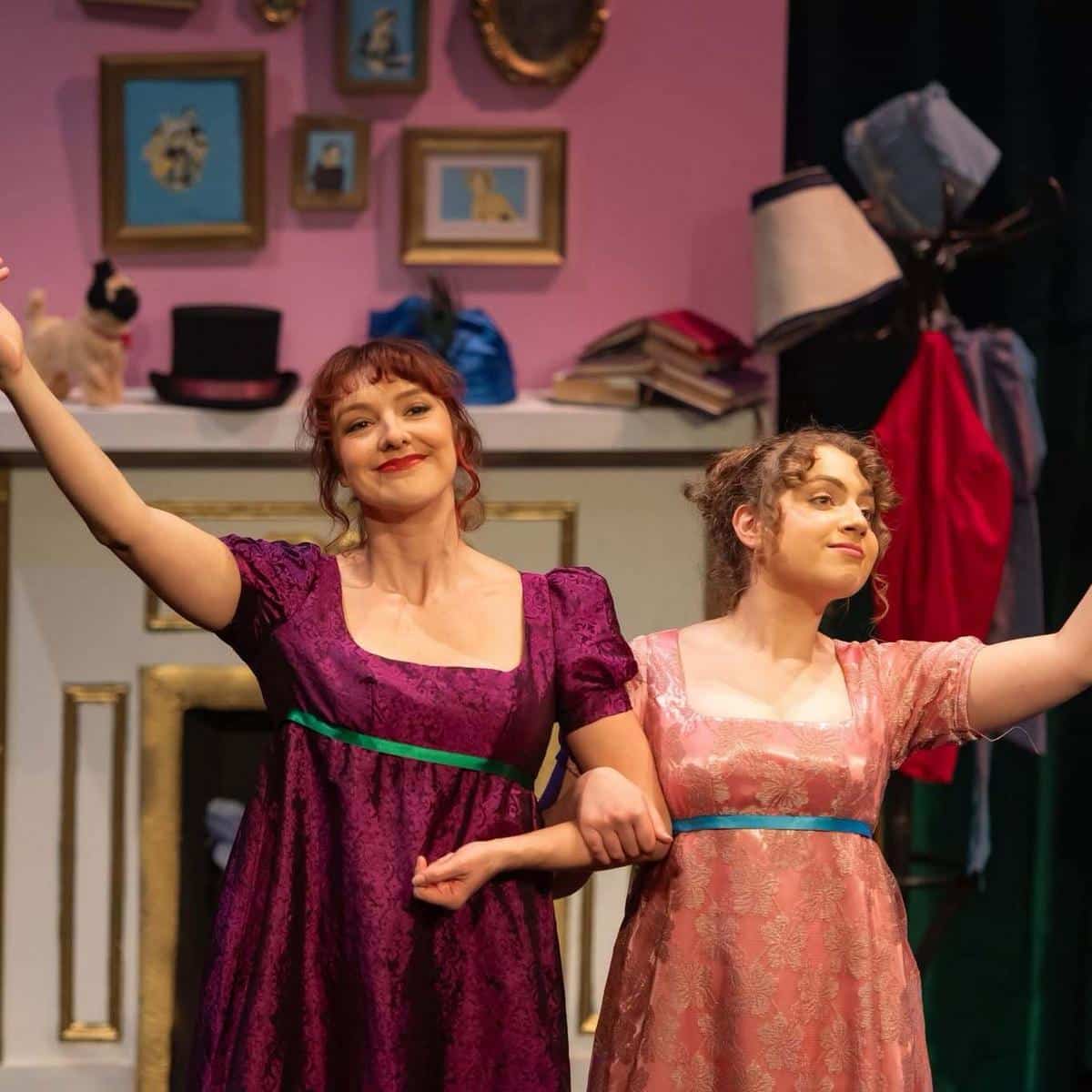
Two dressing tables, both alike in dignity, face the audience. Behind them – a facade – flats from the film set of “Whatever Happened to Baby Jane” are standing, reverse side towards the audience. We are invited into their private world, to peak behind the scenes.

They were leading ladies of the silver screen so why was “Whatever Happened to Baby Jane” the only picture they ever made together?

A New York Times critic once wrote that to reach their level of stardom, a woman “needed the constitution of a horse and the temperament of a wildcat.”

The rivalry between Bette Davis and Joan Crawford is the stuff of Hollywood legend. Tinseltown was rocked by their personal feud for years. Even at age 79 Davis would say of Crawford: “We’re very different kinds of women, different kinds of actresses… she was a fool… she wasn’t very smart.”

Jeanette Cronin and Lucia Mastrantone reign supreme as the battling pair, both fulfilling the writer’s words with admirable physical and vocal skill.


The clash of personality styles is fully realised – Bette Davis (Cronin) as the consummate artist striving for the pinnacle of performance and Joan Crawford (Mastrantone) the OCD actress obsessed with beauty who clawed her way to the top via the casting couch.

Cronin and Mastrantone are well cast and their characterisations specifically detailed, with excellent dialect work by Linda Nicolls-Gidley.

Joan: “Even close to death one must always resemble a star.”

The fourth wall is broken throughout, except in the moments of interaction between the two. This device works brilliantly as we are included in the Machiavellian plots as well as the moments of poignancy.

Direction by Liesel Badorrek is tight, scenes detailed. Exquisite choices using black and white video imagery, some live, some recorded, designed by Cameron Smith, enhance the Golden-Age Hollywood feel. Dialogue is paced well, with great rhythm and timing.

Costumes and sets by Grace Deacon are fabulous, immersing the audience. Kelsey Lee’s lighting design is flawless. The Ensemble Theatre becomes a backstage corner of a 1960s Hollywood lot.

The scenes turn on a dime, one moment we are brought to tears, the next – gaffaws as one of our divas drunkenly stumbles. But it is the painful moments, as their traumatic history is revealed that are truly moving.

Highly recommended. Sharpen your claws and get a ticket.

To book tickets to Bette & Joan, please visit https://www.ensemble.com.au/shows/bette-and-joan/.

Photographer: Prudence Upton

Spread the word on your favourite platform!

The Four Quartets

The Four Quartets

The Four Quartets Rating

Click if you liked this article

The Four Quartets – T.S.Elliot

Venue: Old Fitz Theatre, Woolloomooloo
Date: 12 March, 2026
Running: Until 20 March 2026
Directed by Patrick Klavins
Presented by The Wounded Surgeon

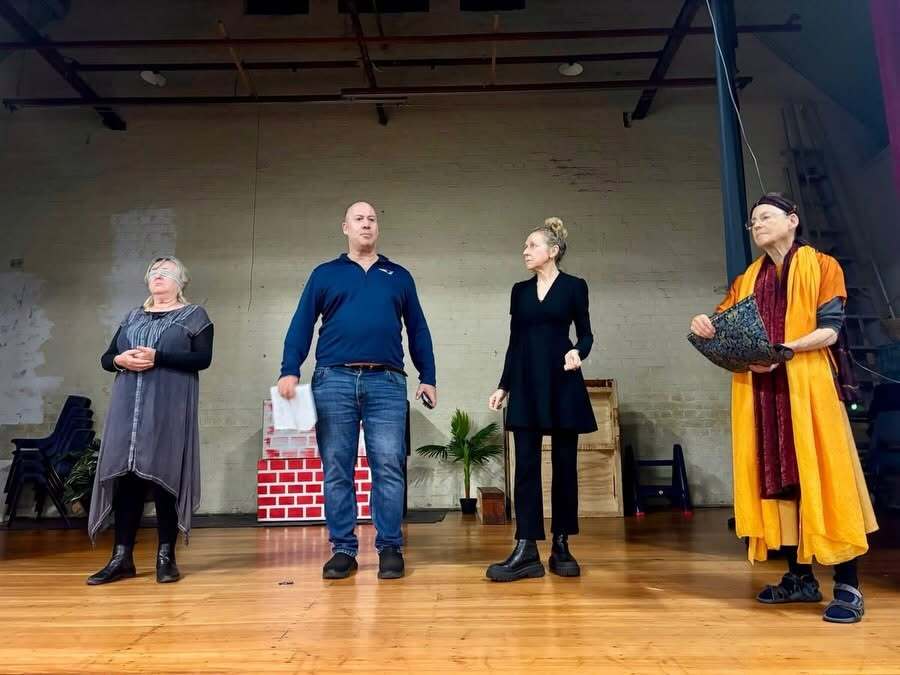
Four actors presented a sermon each on time, place, spirituality, a crisis of the soul and so many other philosophical ideas. Each piece was presented with fervour, not with pomposity, and left us with questions as Elliot intended. Whilst it would be good to understand the historical, religious, nature-focused and literal context of when he was writing these, it is also interesting to note that many of the words and references have also faded away and are no longer used. Eliot may have found this philosophically interesting.

The set was sparse with a tired looking curtain, one old chair, a crate and a bucket and by chance, a lone cockroach scuttled across the large hanging curtain as if to say, this is where I belong. Lighting and dry ice were used effectively to give a sense of sadness and thoughtfulness. We were in for an interesting time. Costumes were old linen as if the actors had come from the land.


The first actor set the scene as she presented immediately with a strong, shaman-like oration about time and that time is really eternity and what of it? With a depth of quiet sadness and gentle hand movements, she created an image of how life is not quite how we imagine and the present, past and future are non-chronological. The audience was attentive and moved by her sense of fatigue and desire to understand how we live and age and come to terms with it all.

The second actor was just as powerful and communicated the poetry as if it were a fervent conversation. Fiery at times and imploring at others, it was all about age and the actor was of an age to demonstrate an understanding of the questions we ask ourselves about where we have been as a reflection. The message was not to give up and keep on creating and experiencing life. It reminded us of Dylan Thomas’, “Do not go gentle, in to that good night…”

The third actor was young and moved us with parables about the sea, the ebb and flow of life and death, the sailors who didn’t come back and the women that mourned. Each part was about nature’s lifecycle and how we are part of it regardless. A strong plea was to “fare forward”.

The final actor brought the other pieces together with passion and fire questioning what we are doing with our lives and thoughts. To well-deserved applause for the difficulty of the text, it was the last word on deep imagery offering philosophical questions. The audience seemed to leave asking ourselves, where are we going, where have we been and why?

To book tickets to The Four Quartets, please visit https://www.oldfitztheatre.com.au/four-quartets.

Photographer: Matt Bartlett

Spread the word on your favourite platform!

Worlds Alive 2026

Worlds Alive 2026

Worlds Alive 2026 Rating

Click if you liked this article

Offering five separate perspectives of oppression, suppression, and corruption across different cultures but with the same result of division and pathos, Worlds Alive presented plays and excerpts as if listening to a radio. In a current world of media and without costumes, a set or lighting, the spotlight was on the beauty or directness of the word. It required concentration and some stamina but was well worth it.

Kunene and the King presented two people from opposing cultures and with past apartheid history hanging overhead. With one person ageing and the other caring for the aged, the audience was hoping for a developing friendship. Despite the antagonism due to a disappointment of the present socio-political environment, eventually deep conversations led to an understanding. Both actors generated a connection with well-rehearsed readings intertwined with the beauty of King Lear but also the foolishness of misunderstanding and ageing. With no set, the language was all the audience had and a powerful message was relayed of how mis-communication results in missing the opportunity for understanding and peace.

Miss Margarita’s Way – it was a hard act to follow the first powerful play. The actor offered a dark comedic vignette of suppression and indoctrination starting with youth. It left people quite rightly nervous of being in her space!


An Evening at the Opera – a couple at war with themselves and with a history of their despotic family ties and corruption, the relationship erupts as the dictator focuses on a macho-style leadership of ‘bread and circuses’ to appear as a benevolent dictator. At the same time, his wife, who has come from a line of family dictators, faces herself literally in the mirror and has to come to terms with who she is and what she has become. With her mother’s ghost offering dutiful female advice from the past, the future looks bleak. The actors each kept the audience uncomfortable enough to recognise the underlying political corruption with the overlay of a marriage and family dynasty.

Night Picture of Rain Sound – a reader questions the symbolism of Romeo and Juliet, offering a different perspective and possible outcome. The actor presented quietly and thoughtfully how we should question what we are supposed to believe, perform or be and for what purpose really?

The Struggle of the Naga Tribe – the full ensemble presented as a Greek chorus swapping roles to offer different perspectives. There were the corrupt business developers deliberately misinterpreting and demonstrating the results of economic progress to the benevolent but corrupt government who choose to ignore the impact on a peaceful village. Other voices included the village leader and people recognising too late that they have also been sold a story and that their culture and soul has been sold at a huge price. The actors powerfully presented alternating points of view with a sobering ending of ‘too little, too late’.

The audience listened carefully, absorbing and resonating with the social messages applauding each piece as a separate entity. It was at times bald, poetic and informative and well worth the effort.

To book tickets to Worlds Alive 2026, please visit https://www.scenetheatresydney.net.au/.

Spread the word on your favourite platform!

Monster

Monster

Monster Rating

Click if you liked this article

0

Performance theatre is often most effective in the context of a paired back stage and minimal props. In Monster – Directed by Kim Hardwick – a talented cast give compelling performances and bring Duncan Macmillan’s cracker of a script to life. This is the first time his characters have come to Sydney, and the intimate setting of KXT Theatre in Broadway was the perfectly suited venue to see them play out. Audience members bear witness to the type of theatre in which the flicker of a flame sparked makes a room to hold its breath, and a small box on the dinner table transforms the promise of engagement into a complex and foreboding omen.

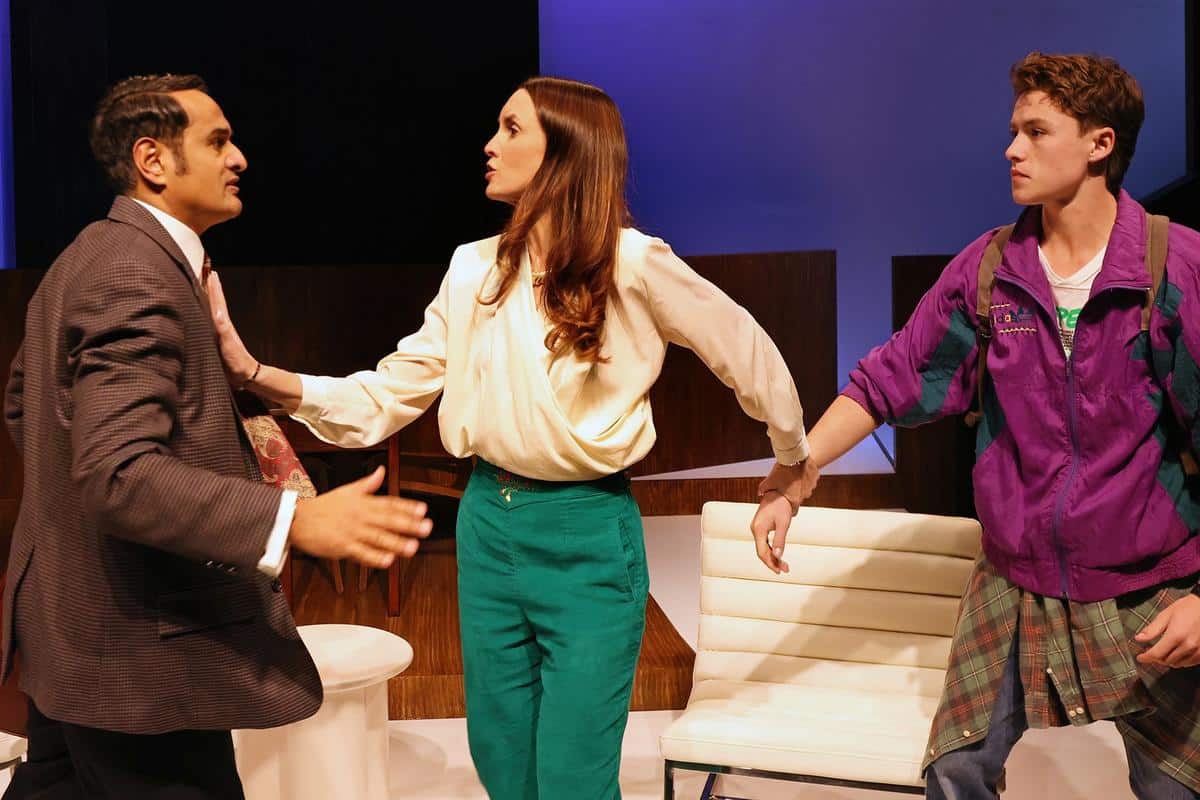
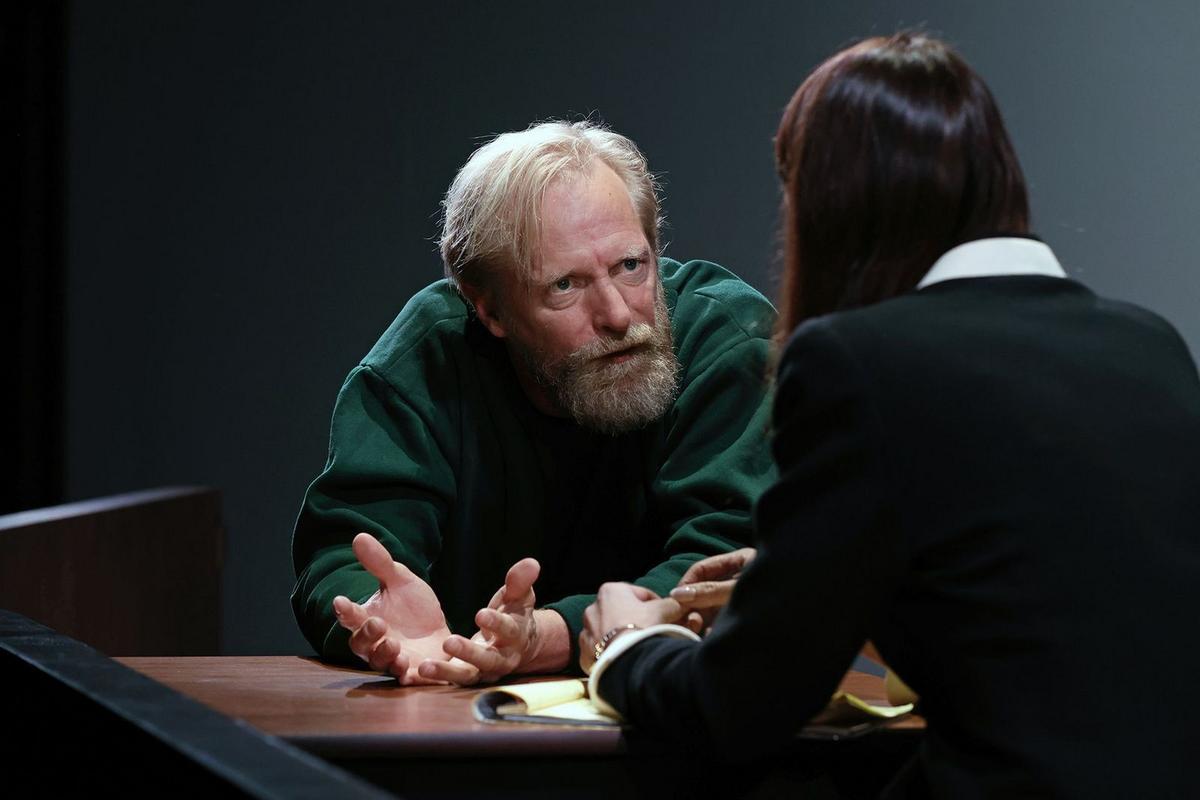
The “Monster” in Macmillan’s play is seemingly clear from the moment that stage lighting illuminates the youngest face of the cast. Campbell Parsons is electrifying as Darryl, a budding psychopath who speaks with convincing intensity about burning buildings, setting off fire extinguishers and playing with knives. Darryl idolises notoriously evil figures like Charles Manson and Jack the Ripper and informs his new teacher Tom (Tony J Black) – or as he calls him – “Agency” that he has aspirations to be just like these people one day. Daryll seems to have an eerie level of unspoken insight into his situation, and Parsons – as an actor – is able to use physicality and tone to accurately command the audience’s attention.

Darryl is a child whose pain has rendered him so incapable of anything productive beyond creating a spectacle of it. He exposes his new teacher’s vulnerabilities with ease; collecting them as ammunition to be inflicted at the right time. Black holds the character of the frustrated teacher well, and when he is regrettably drawn into comments about his race and level of affluence, it is clear that Darryl has successfully projected his own feelings of difference and shame onto his next unwitting victim. Darryl’s feelings seem to be so unbearable that even his Nan is not safe, evident by a moment in which he expresses to Tom that he fantasises about stabbing her in the back when she cooks his dinner each night.

The themes in this play are not for the faint of heart. Mental illness, social class, trauma and despair bounce around the room, as the stellar acting exposes the machinations of truly flawed people. Grey areas in moral culpability are explored, and when new characters enters the stage, they serve only to ask more questions than to answer them.


Tom’s soon to be wife Jodie (Romney Hamilton), as well as Darryl’s Nan ‘Ms Clarke’ or Rita (Linda Nicholls-Gidley), both do justice to the part of people who are trapped and out of their depth. Rita’s constant and fraught attempts to avoid associations with her surname – or to take any accountability for her grandson’s behaviour – are revealing aspects of the script. It is clear that despite being lonely, Rita does not want to be bound to the responsibility with which she is endowed, and she instead chooses to find what little solace she can in her “faith”. Her partner Carl – who only ever appears as a name in this play – is a character that seems to supersede all evil that Darryl mentions he is capable of to Tom.

There are glimmers of hope and humour in the performance and in one scene, Darryl hints of the notion that a child who has been written off as “inherently bad” may perhaps be capable of empathy (or at very least guilt) if someone were to truly care for him. However, what follows this scene adds an even greater depth to the plot, in the idea that people can inflict ferocious pain onto others when their own has gone completely unchecked.

In its intimate exploration of familiar but profound themes, this is a play – and venue – that allows for a communion of thought from an invested audience. The Director and cast treat the subject matter with respect, which means the themes are capable of reaching a thinking and feeling audience. It was – at some stages in this performance – difficult to avoid exchanging furtive glances with audience members on the opposite side, as they navigated their own visceral reactions to the many transfixing moments in the play.

More than ever, it is important that human beings continue to explore the puzzling moral issues within this play. Conversations ignited after this version of Monster are likely to spill out of the theatre bar and onto the streets well after the last scene. Don’t miss out on this one, and be sure to take a good friend or family member to yarn with after the show.

I give this one 4 stars (and a fantastic director)!

To book tickets to Monster , please visit https://www.kingsxtheatre.com/monster.

Photographer: Abraham de Souza

Spread the word on your favourite platform!