German Film Festival: Mother’s Baby

Mother's Baby

Mother’s Baby Rating

Click if you liked this article

1

Mothers are supposed to feel an instant, unbreakable bond with their newborn child; or at least, that’s what we’re led to believe. Austrian director, Johanna Moder’s new film, Mother’s Baby, bleakly reminds us that this isn’t always the case.

Forty year old music conductor Julia (Marie Leuenberger) and her loving husband, Georg (Hans Löw), desperately want a baby. When nature doesn’t deliver, they seek the help of Dr Vilfort (Claes Bang), a renowned fertility specialist. In Vilfort’s pristine private clinic, Moder introduces early on an axolotl, a strange looking amphibian that catches Julia’s interest but comes to haunt her (and viewers) later in the film.

With Dr Vilfort’s treatment proving successful, Julia and Georg wait expectantly for the birth of their longed for child. Yet the birth is a difficult one. The baby is whisked away by a medical team as soon as it is born. Moder captures Julia and Georg’s muted shock as they are kept in limbo waiting to meet their baby. When Julia finally gets to hold her baby, she seems underwhelmed, even detached from the child. Julia’s struggle to breastfeed only heightens her disappointment. An overly zealous midwife played by Julia Franz Richter doesn’t help as she pushes Julia to bottle feed instead.

Once home, Julia, long used to being in control in her professional life, continues to struggle to bond with her baby. Usually surrounded by music, the weirdly silent baby she has birthed, starts to unnerve her. Is there something wrong with the child or is Julia paranoid? Hans’ instant bond with their son, who Julia persists in referring to as ‘it’, adds to Julia’s distress.

In one particularly tense moment, Hans returns home from work to be greeted by the sight of Julia engrossed in her music, oblivious to her unfed baby. Julia’s sudden identity shift from world class conductor to stay at home mother has hit her hard. Hans fails to understand, reminding Julia as they argue that ‘It’s what we agreed!’. Is Julia’s lack of maternal connection with her baby a tell-tale sign of postpartum depression or is there something more sinister at play?

Increasingly frustrated by Julia’s unexpected reaction to new motherhood even the normally placid Georg starts to doubt his wife’s mental stability. Returning to Dr Vilfort, Julia insists there is something wrong with her baby, demanding answers from the preternaturally cool physician. In what smacks of medical misogyny, Vilfort condescendingly suggests Julia is the problem. We cringe as Georg joins cravenly with the doctor in agreeing that Julia needs help.

Moder’s psychologically chilling story of new motherhood achieves its aim of unnerving its viewers so that they feel vicariously the altered reality of the postpartum phase. Billed as a dark comedy, the film is inconsistent in creating humour; nonetheless, Moder is successful in capturing the absurdity of motherhood in a world which continues to unfairly insist on idealising maternity.

To book tickets to Mother’s Baby, or any other film in the German Film Festival, please visit https://germanfilmfestival.com.au/.
Spread the word on your favourite platform!

How Much Honesty Is The Best Policy?

What Marielle Knows

What Marielle Knows Rating

Click if you liked this article

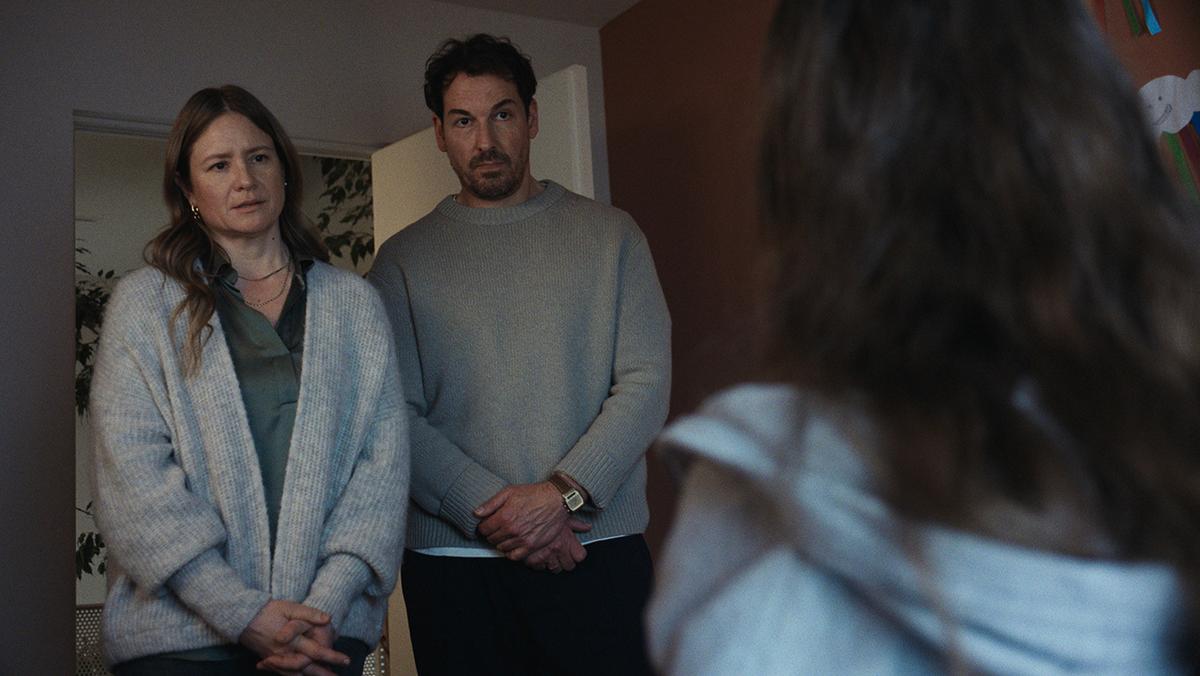
What Marielle Knows is a part of Melbourne’s German Film Festival for 2025. It was selected and screened at the Berlinale this year and follows parents Julia and Tobias when they discover that their daughter can see and hear everything they do, whether she is with them or not. The film is advertised as a comedy, however I think it would be better suited to a dark comedy label, dabbling very closely with drama. The film centres on the married couple and how through discovering their daughter’s sudden telepathic abilities, the fragile foundations of their relationship start to crumble and teeter them dangerously close to divorce.

The film tackles a lot in its 86 minute run time, which makes for a really engaging watch. On the surface What Marielle Knows is looking at lying, where the line is, what does honesty mean when compared to truth, and how much of the truth we should share with the people in our lives. Underneath that, it interrogates family dynamics, how each parent has a distinctly different connection with the same child and how this can be manipulated by either parent. It looks at the plain and simple morality of a child and tries to apply those black and white notions to complicated, more mature feelings.

At the bottom of the iceberg, the film is an exploration of the lessons parents teach their kids, commenting on how although they don’t see every action their parents take, there will always be a follow through of emotional consequences. I enjoyed the way the film brought each of these themes up. It felt as though director Frédéric Hambalek thought carefully about each when embedding them into the film’s narrative.

What did divert this understanding for me, was little attention the film paid to Marielle herself. Her parents are the main characters and in many ways Marielle serves as the antagonist, so it was an interesting creative choice to only really examine her reactions through the slow motion, rainbow dyed frames of her that were inserted between moments like title cards. It didn’t do a disservice to the story, as it focused on parental guilt and the pressures of trying to be a good parent and what that even means, but it did make me itch for a version of events told from her eyes, how she’s reacting to some of the more intense moments Julia and Tobias experience.

The greatest highlight of the film to me was the performances. Julia Jentsch, who played Julia, Felix Kramer who portrayed Tobias and Laeni Geiseler who was Marielle, all really brought their characters to life in a way that really allowed me to empathise with all of them. Felix Kramer in particular really shone to me, he conveyed a man on the brink of a nervous breakdown with such careful restraint; the whole film I was waiting to watch the delicate wire he perched his character on snap. Together, the cast had fantastic chemistry, despite their differing physical appearances, they really felt like a believable family unit.

As equally empathetic each character felt to the audience, I thought it was an interesting choice to make Julia’s character into the villain towards the end of the film. The film and Marielle gave Tobias much more grace for his actions, but gave Julia the most work to overcome. I didn’t necessarily resonate with this aspect of the story, considering how much Tobias consistently abused her trust throughout the film, however I do think that beneath this is an interesting discussion of where the line is when it comes to telling the ‘truth’.

For a comedy, this film packs its themes in air tight and gives the viewer plenty to chew on through a unique and original concept.

To book tickets to What Marielle Knows, or any other films in the German Film Festival, please visit https://germanfilmfestival.com.au/.
Spread the word on your favourite platform!

The Door-To-Door Bookstore: German Film Festival 2025

The Door-to-Door Bookstore

The Door-to-Door Bookstore Rating

Click if you liked this article

1

This heartwarming film is a beautiful reminder of the goodness in humanity and the power of unlikely friendships (and books!).

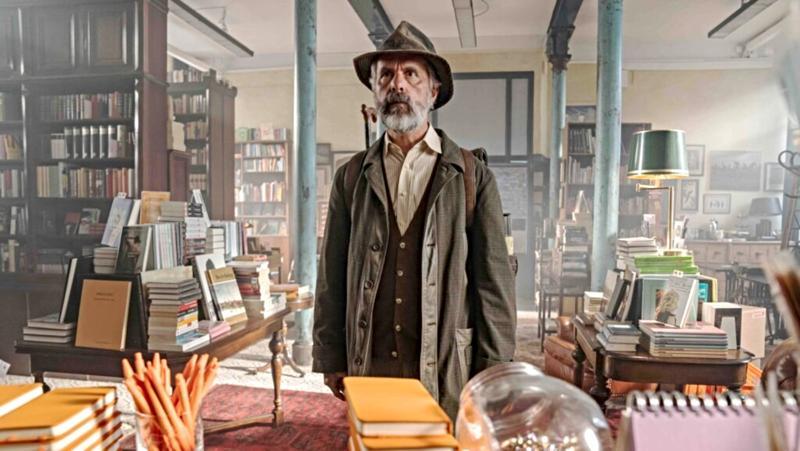
Based on the novel of the same name by Carston Henn, the story follows Carl, an older gentleman. Carl’s job involves walking around the town (in Aachen, Germany), delivering books to a variety of interesting people.

Carl is an awkward, shy, but kind man, drenched in loneliness, and obsessed by books. So much so, that he refers to his regular clients by the nicknames he has (sometimes not so secretly) ascribed to them; based on fictional book characters, who each have their own quirks.

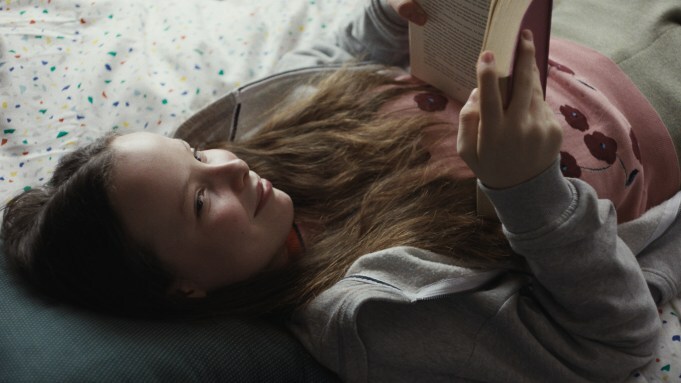
Nine-year-old Schascha has just moved to the town. In dealing with her own sadness in losing her mother, she also finds solace in books and reading.

Schascha begins to follow Carl on his daily book delivery, and an unlikely friendship develops. The two main characters end up working together to make some big, positive changes in the lives of the people Carl delivers his books to. As well as for themselves.

This enchanting story is full of themes of friendship, community, and embracing differences. It highlights the importance of kindness in humanity and community, and is a great reminder of the power of books and reading.

This is a wonderful film that the whole family will enjoy! The acting is brilliant from the entire cast. The cinematography is stunning for what is in essence quite a simple but powerful story of humanity.

Note that the film is in German, with subtitles in English.

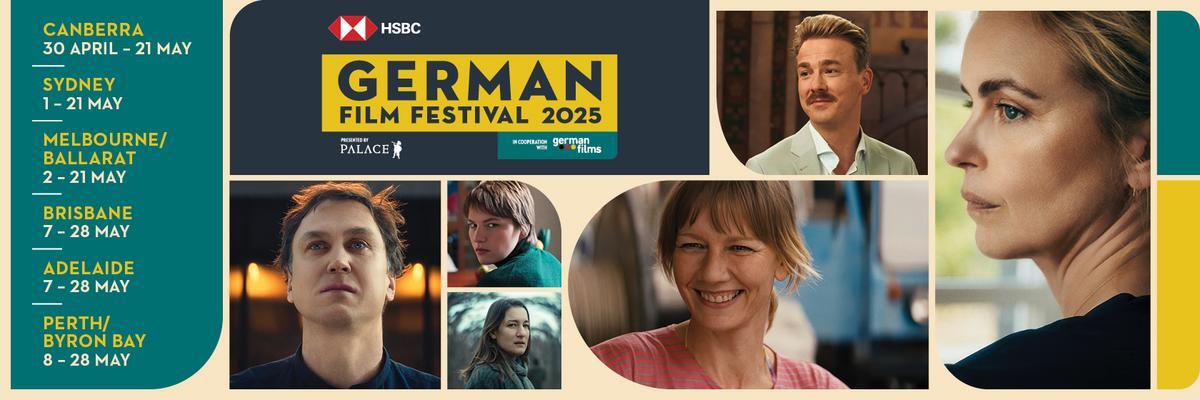
The German Film Festival runs from 30 April to 28 May. To book tickets to The Door-to-Door Bookstore, or to any other films in the festival, please visit https://germanfilmfestival.com.au/.
Spread the word on your favourite platform!

Persian Film Festival: The Great Yawn of History

The Great Yawn of History

The Great Yawn of History Rating

Click if you liked this article

The Great Yawn of History is a multi-layered debut piece written and directed by Aliyar Rasti, featuring as part of the 11th Persian Film Festival, Australia. Opening in Sydney and then touring both Melbourne and Armidale from the 24th of April to the 11th of May 2025, the program includes an official competition of feature and short film categories, which culminates in the Festival Jury presenting the Golden Gazelle Award to the best film in each section.

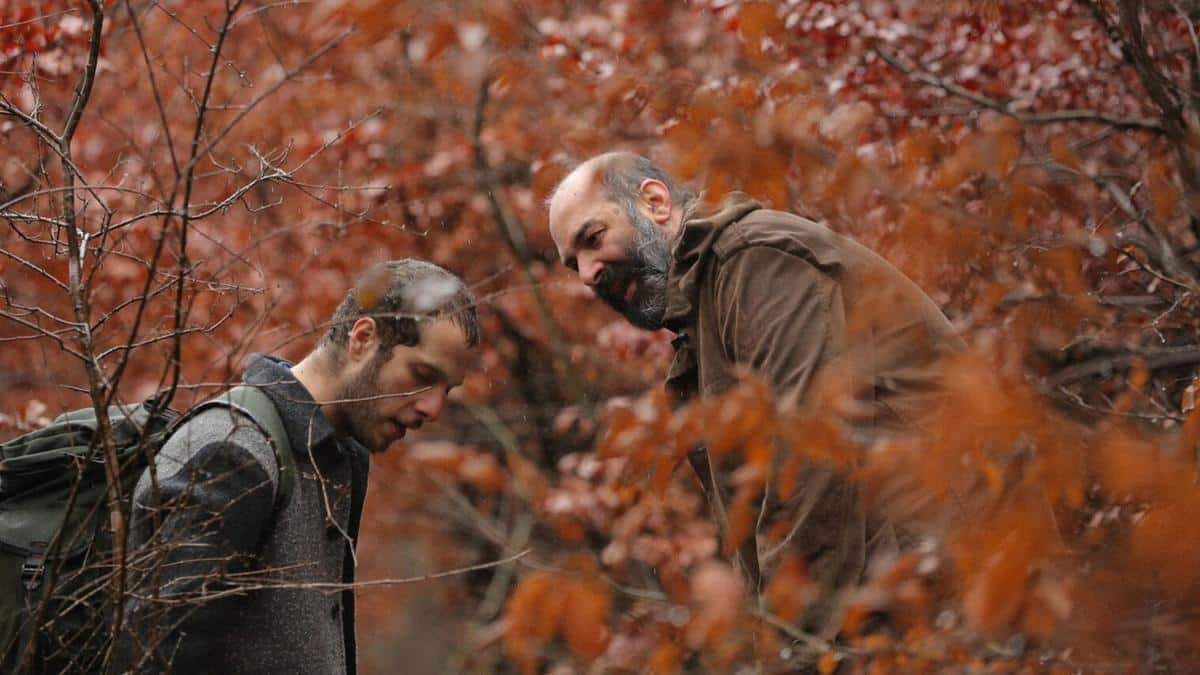
Staring Mohammed Aghebati known for When There Were Trees (2023) A Hero (2021), They (2018) and as the Director for 1001 Frames (2025), and Amirhossein Hosseini, an Iranian actor and visual artist, known for his diverse performances in cinema and theatre, The Great Yawn of History follows the journey of Beitollah (Mohammed Aghebati), a religious man who experiences constant and vivid dreams of finding gold coins at the end of a dark cave.

His religious beliefs mean that recovery of this lost treasure is haram, or more specifically, ‘sinful’, and therefore religiously forbidden in Islam. Due to this, Beitollah engages the assistance of the agnostic Shoja (Amirhossein Hosseini) to travel with him as he grapples with his ethical, moral and religious beliefs.

Throughout their journey, both actors bring different energies to the roles as they unpack the complex and specific character types – Aghebati expertly delivers an overbearing, sharp and to-the-point performance while Hosseini’s burdened posture translates into a believable portrayal of the worn-out and sceptical companion.

Iran’s staggering unemployment is also reflected in the manner in which Shoja is chosen for the task as Beitollah drops fake $100 bills on the street knowing that only a non-believer would pick up money found in this way, leading to the paradox lying at the heart of the storytelling – a contrasting moral dilemma – just the thing needed to ensure a successful and purposeful outcome.

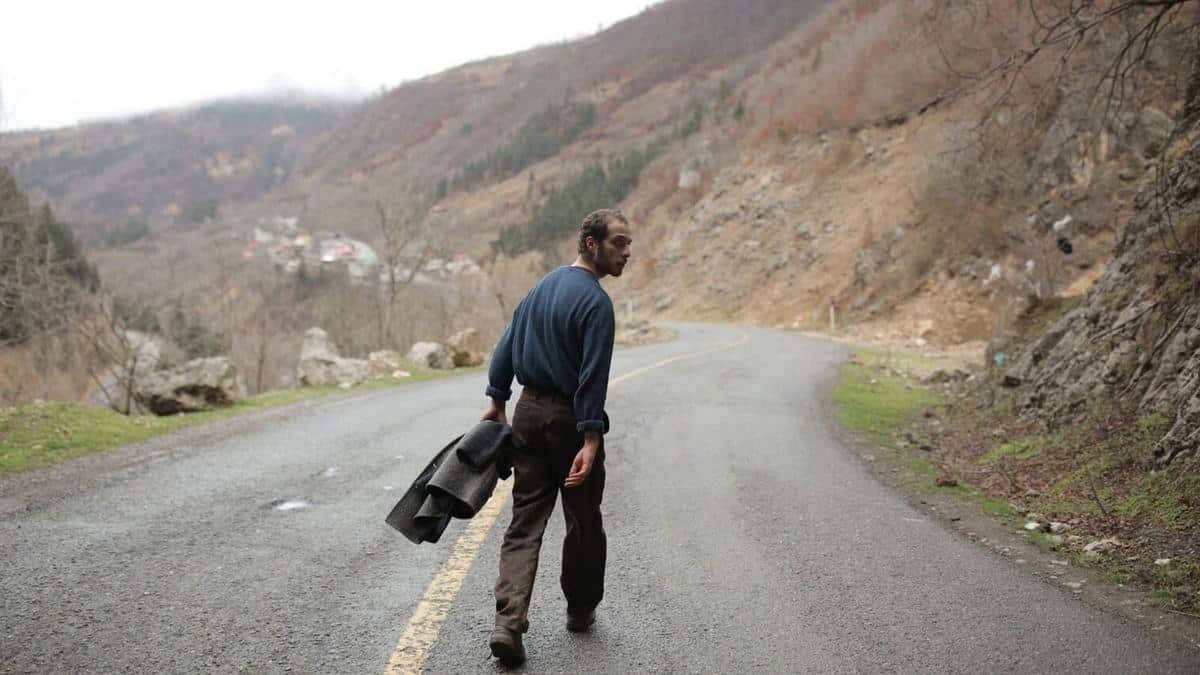
Rasti combines faith and superstition with visually engaging cinematography that effectively displays the harsh landscape of Iran, providing the viewer with insight into its reality. Some prior knowledge of the Muslim religious belief system may be advantageous for a deeper connection to this meditative journey; however, this is not a ‘must’ to be able to discern the conflict of the opposing beliefs that are portrayed in this partnership and journey.

The Great Yawn of History is a slow and steady burn full of multidimensional layers.

The Persian Film Festival will run from 24 April to 11 May 2025 in Sydney, Melbourne, and Armidale. For session details and to book tickets to this and other films, please visit https://www.persianfilmfestival.com.

Spread the word on your favourite platform!

Subscribe to What's The Show

Reviews, show news and what is on, straight to your inbox.