I Do, I Do, I Do

I Do, I Do, I Do

I Do, I Do, I Do Rating

Click if you liked this article

3

From the moment the curtain lifted at the Arts Theatre, the audience was in for a delightful ride. Therry Theatre’s production of I Do, I Do, I Do, directed by Sue Wylie, comes alive with great pace, sharp comic timing and infectious energy. The stage bursts open with wit, warmth and wonderfully controlled chaos, delivering a highly polished, laugh-a-minute theatrical performance that left the audience beaming from start to finish.

Based on Robin Hawdon’s delightfully tangled comedy of romance, mismatched expectations and wedding-day panic, this production leans fully into the farce while maintaining a grounded charm that makes every moment resonate. The result? A show that sparkles with energy, personality and honest heart.

At the centre of this whirlwind is seasoned performer Helen Geoffreys as Ann, the elegant mother-figure and linchpin of chaos and control. Her portrayal is beautifully layered—poised, witty, patient and exasperated—she holds the stage with effortless command. She deftly balances Ann’s dignified exterior with the growing mayhem of her family’s matrimonial misadventures, bringing genuine warmth to the humour to the character.


That said, this is far from a one-woman triumph. Paul Pacillo as Jamie, Laura Lines as Holly (stepping in two weeks before opening night – quite the achievement), Jess Corrie as the very conflicted Diana, Stephen Bills as Geoff and Tom Tassone as Tom were all uniformly strong, with each performer demonstrating a wonderfully consistent ‘posh’ high society accent, crisp delivery and fabulous comedic rhythm. The chemistry is seamless; the actors bounce off each other with precision, enhancing every misunderstanding. Nothing feels rushed, nothing drags, and each joke lands exactly where it should.

The production’s pacing is exceptional—bright, buoyant and confidently sustained. Physical comedy is used cleverly and sparingly, ensuring that character and intention always lead the humour. The comedic timing was on point making the laughed out loud moments genuine, whether through a misunderstanding, a revealing glance or the inevitable romantic entanglement. Complementing the action happening within, the living-room setting was both elegant and functional with the furnishings and space feeling warm and ‘lived-in’.

Above all, this production is simply fun capturing the spirit of Hawdon’s premise of “one bride, three grooms, and a tangled web of misunderstandings”. The experience felt celebratory and full of heart making Therry Theatre’s production of I Do I Do I Do a sparkling success—smartly directed, beautifully performed and overflowing with charm and comedic excellence. For anyone looking for a fun, laugh-out-loud, heart-warming theatre performance, this one comes highly recommended. A joyous, laugh-out-loud triumph.

To book tickets to I Do, I Do, I Do, please visit https://therry.org.au/.

Spread the word on your favourite platform!

Marco, The Invented Truth – 2025 HSBC Spanish Film Festival

Spanish Film Festival - Marco, The Invented Truth

Marco, The Invented Truth Rating

Click if you liked this article

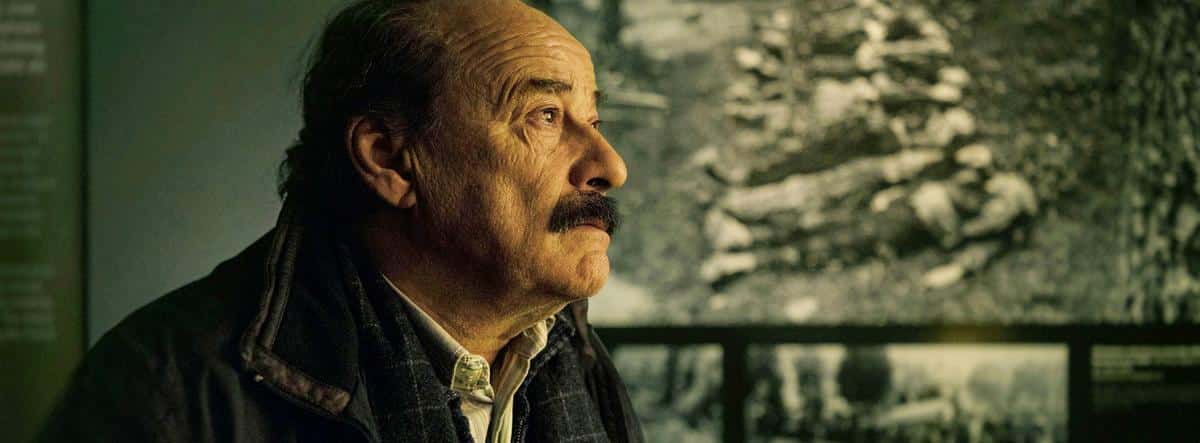
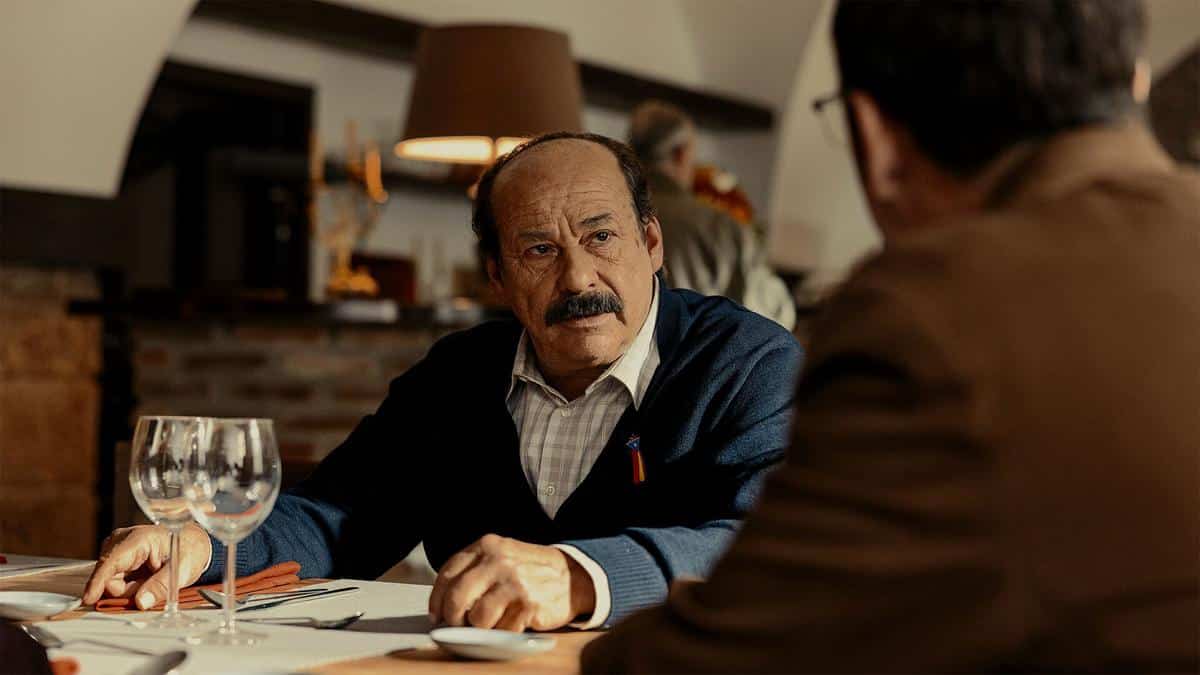
Based on a true story, and what an exceptional tale. Marco, The Invented Truth tells of the deception that charismatic Enric Marco unrelentingly and unapologetically carried with him for most of his life. Premiering in Australia at the 2025 HSBC Spanish Film Festival, this film is a gem that is well worth the investment of a packed 100 minutes of time.

A Spanish factory worker in Germany during World War II, Marco contrived the story of being a Holocaust survivor, in his mind to highlight the plight of approximately 9000 Spanish deportees who were imprisoned in concentration camps during the war – less than half of whom survived. Enric Marco was appointed as president of the Amincal Mauthausen, the association set up to defend the rights of the 9,000 Spanish people who were sent to Nazi concentration camps. His tireless work, which included giving numerous talks to school children, was revered.

His courage while suffering the horrors of Flossenbürg, the camp in which he claims to have been held prisoner, was given great respect and admiration, and through his efforts, Marco brought the organisation to great heights. That was until his false assertions were uncovered by historian Benito Bermejo who declared him a fake; he had never been in a concentration camp. The reality was that Enric Marco volunteered to travel to Germany in 1941 to work for the German war machine.

Although in fact Marco was imprisoned in Germany, it was not in a concentration camp but rather a Gestapo jail, accused of spreading Communist propaganda. A master storyteller who never apologised for his indiscretions upset many, although he was unrelenting in his belief that what he did, he did for good reasons.

Written by Aitor Arregi, Jon Garaño, Jorge Gil Munarriz, and Jose Mari Goenaga, the building of the lie was directed believably by Aitor Arregi and Jon Garaño as they work to take the audience on a roller coaster of emotions that fall somewhere between sympathy and dismay. 2025 Spanish Cinema Writers Circle Award winner for Best Actor, Spanish born Eduard Fernández’ depicts Enric Marco with extraordinary poise. If for no other reason, and there are many, Marco, The Invented Truth is worth watching for Fernández’ stunning performance alone.

To book tickets to films at the Spanish Film Festival, please visit https://spanishfilmfestival.com/.

Spread the word on your favourite platform!

The Penelopiad: The Untold Odyssey

The Penelopiad

The Penelopiad Rating

Click if you liked this article

2

The Penelopiad is a novella written by Margaret Atwood as a mythological reimagining of the classic Greek tale of Homer’s Odyssey. But, unlike Odyssey, The Penelopiad follows a linear structure, making the tale somewhat easier to follow. Atwood’s storytelling gives Odysseus’ wife, Penelope, a voice and allows the account to be told from her perspective. As such, Atwood has been accused of writing a feminist story, which she denies, but given her well-publicised views on feminism, this is an interesting consideration. What this storytelling does is highlight the difference a perspective can make.

From the Underworld, Penelope begins by telling of her childhood, at which time her father tried to drown her, but she survived, saved by a flock of ducks. Her twelve maids, who were later hanged by Penelope’s son, Telemachus and Odysseus, often interrupt her storytelling to voice their experiences, which contrast with Penelope’s privilege, as they recount their suffering. Penelope’s marriage to Odysseus is built on a lie as he cheats in a running race to win her hand, but ultimately she does fall in love with him and is not aware of the deception.

Odysseus spends 10 years in Troy defending the honour of King Menelaus and over this time Penelope is tasked with finding another suitor as Odysseus is not returning home. Following Penelope’s orders, The Maid’s plight ends horribly. When Odysseus eventually returns home, he engages his childhood nurse Eurycleia to tell him which of Penelope’s maids have been disloyal to him and he and his son Telemachus hang the disloyal twelve.

Penelope’s maids avoid her in the Underworld, and she still blames Helen (King Menelaus’ wife) for the Trojan War. She also continues to meet Odysseus whenever one of his new lives ends, as he consistently chooses to be reborn into the world of the living. However, the maids are tireless in their pursuit of Odysseus, haunting him on earth and in the Underworld.

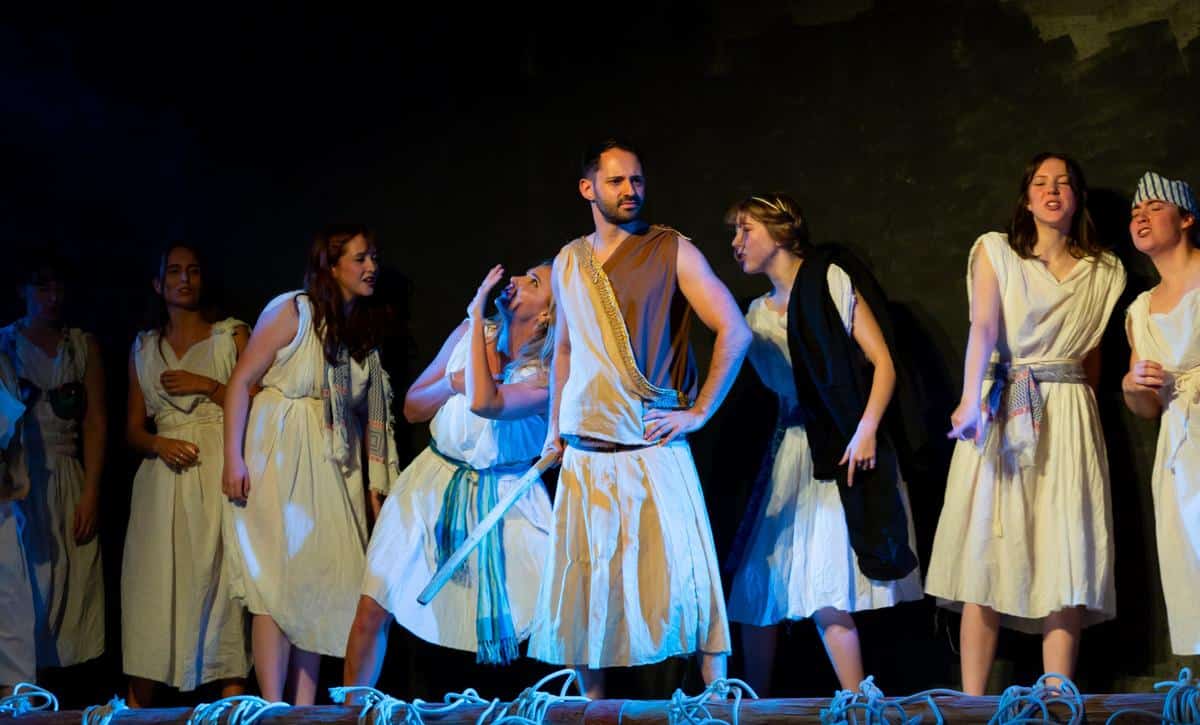
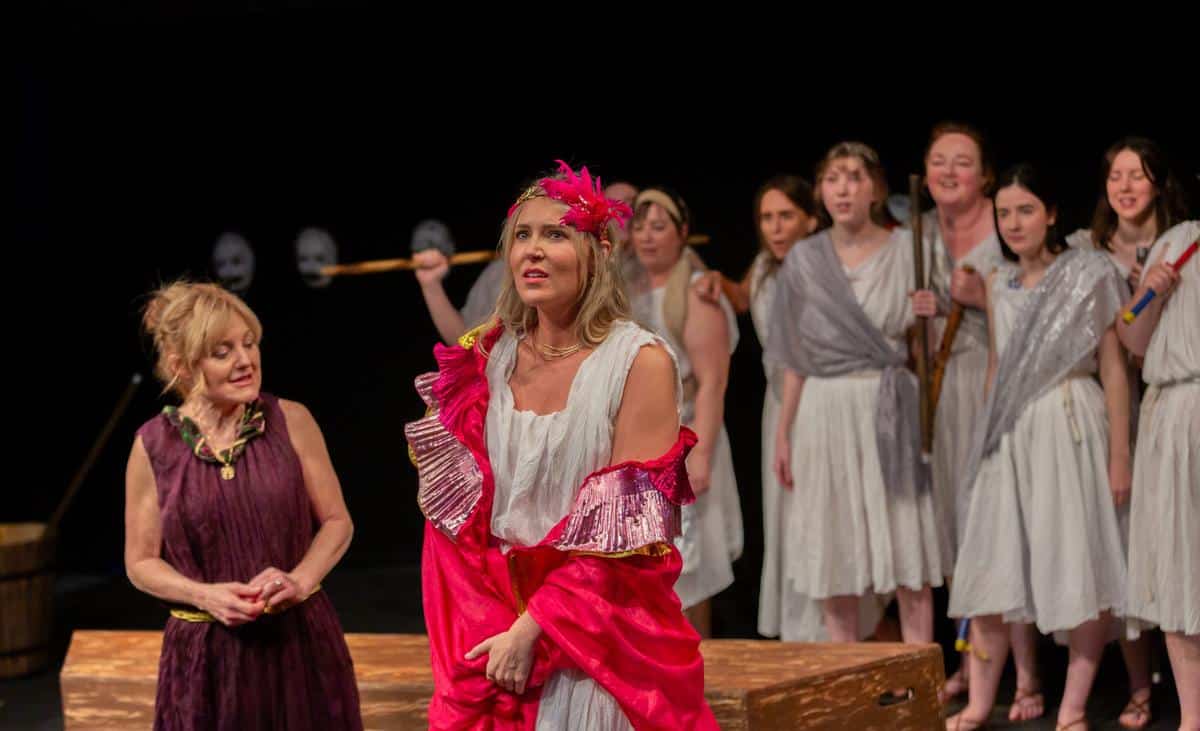
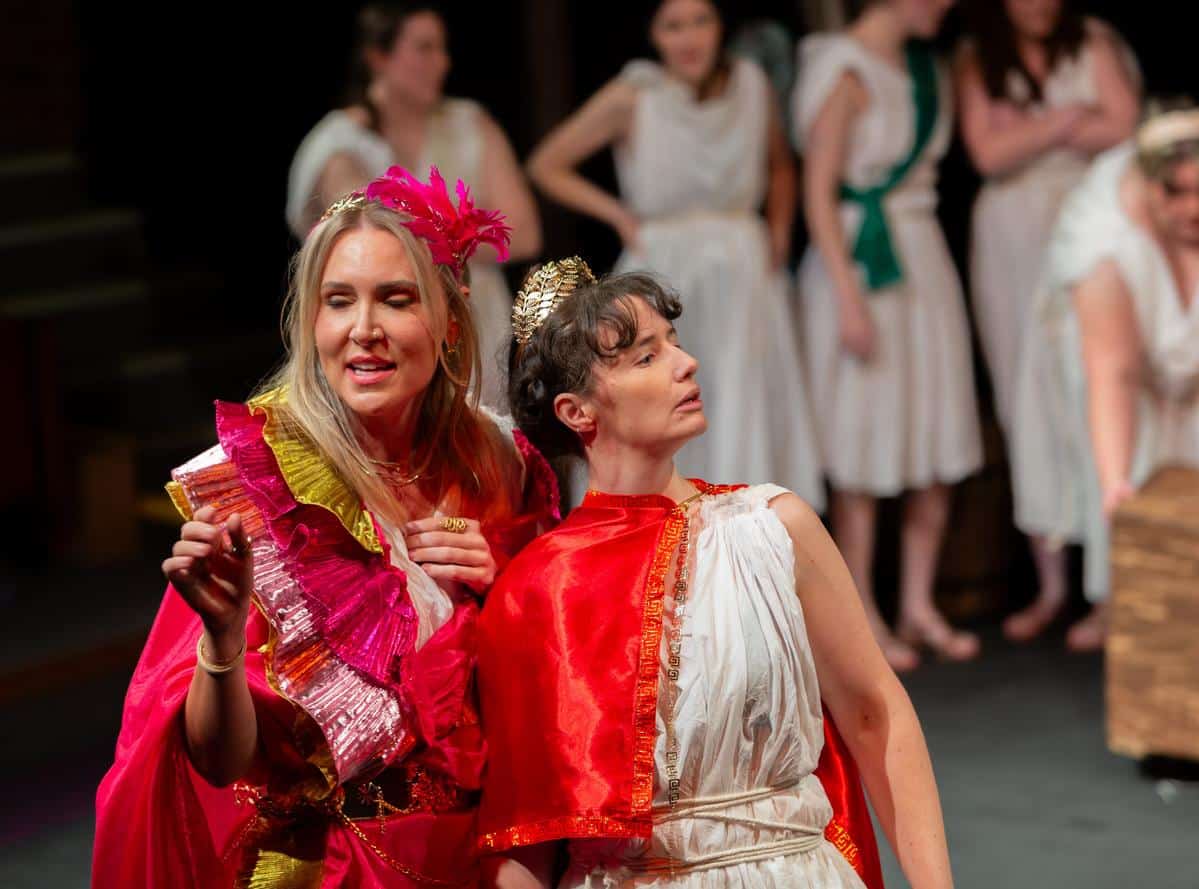
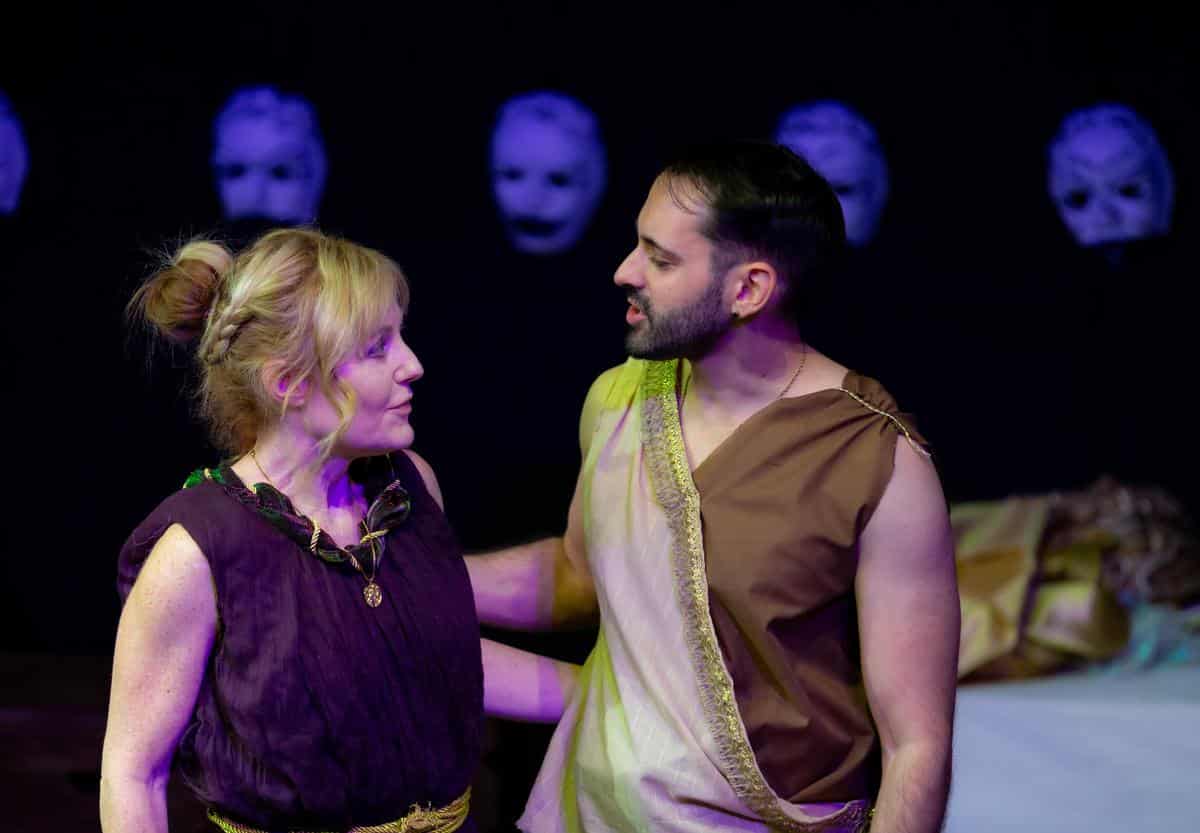
The University of Adelaide Theatre Guild has taken on the mammoth task of bringing this story to life and, overall, the cast worked cohesively and were clearly committed to making the production a success. The Twelve Maids choral work was a welcome interlude as they executed Kristin Stefanoff’s original music beautifully, especially when considering their primary job was as dramatic performers. Costuming was effective and better utilised in the second half when the maids’ roles as both male and female characters were distinguished by the wearing of masks.

The moving of a seating prop was somewhat noisy and distracting – hopefully, this will not be the case in upcoming performances. The fight scene was well-choreographed but lacked intensity, although this may develop throughout the run of the production. Direction was imaginative in its use of the intimate space that the University’s Little Theatre provides.

Jane Ford portrayed Penelope with a convincing level of believability (a massive role full of lengthy monologues that this actor performed without one stumble – bravo), Theo Papazis did a credible job of his portrayal of Odysseus, but his Australian accent broke the characterisation on occasion. The Twelve Maids were committed to their roles; however, the wearing of modern nail polish, face piercings and modern jewellery felt out of place in this production. Kudos for a standout performance for this reviewer was Fredrick Pincombe as Telemachus – this is an actor to be watched!

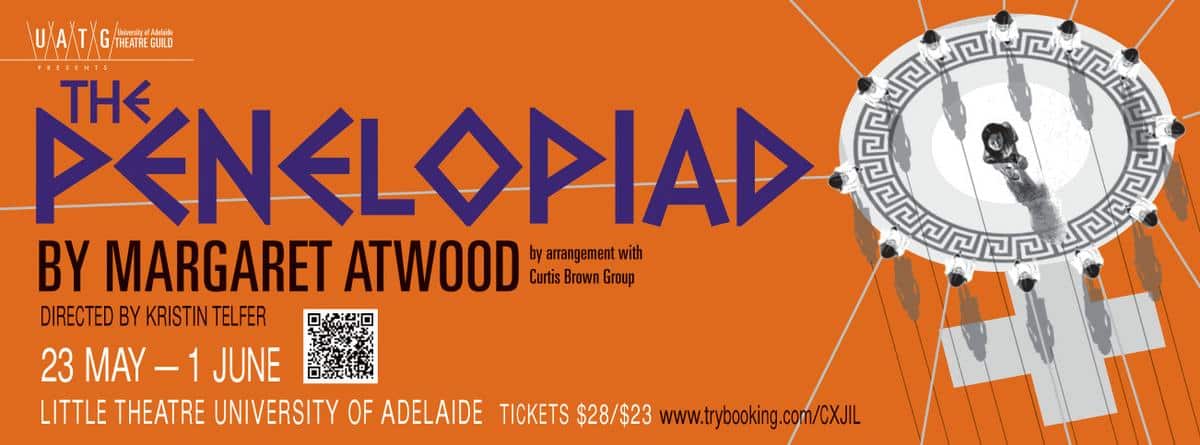
The Penelopiad runs from 23 May to 1 June 2025; remaining session dates and times are as follows:-
– Wednesday 28 May at 6:30pm (with post-show Q&A)
– Thursday 29 May at 7:30pm
– Friday 30 May at 7:30pm
– Saturday 31 May at 3pm
– Sunday 1 June at 3pm

To book tickets to The Penelopiad, please visit https://www.trybooking.com/events/landing/1324503.

Photography: Maggie Morris of The Multimedia Emporium

Spread the word on your favourite platform!

Persian Film Festival: The Great Yawn of History

The Great Yawn of History

The Great Yawn of History Rating

Click if you liked this article

The Great Yawn of History is a multi-layered debut piece written and directed by Aliyar Rasti, featuring as part of the 11th Persian Film Festival, Australia. Opening in Sydney and then touring both Melbourne and Armidale from the 24th of April to the 11th of May 2025, the program includes an official competition of feature and short film categories, which culminates in the Festival Jury presenting the Golden Gazelle Award to the best film in each section.

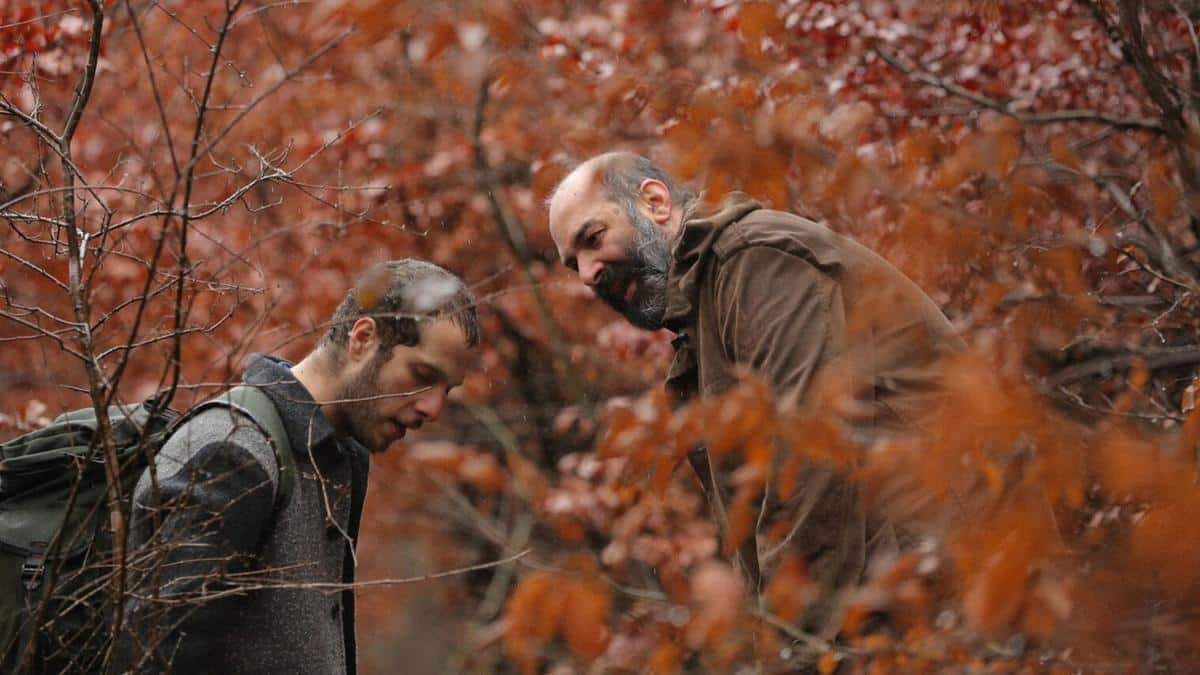
Staring Mohammed Aghebati known for When There Were Trees (2023) A Hero (2021), They (2018) and as the Director for 1001 Frames (2025), and Amirhossein Hosseini, an Iranian actor and visual artist, known for his diverse performances in cinema and theatre, The Great Yawn of History follows the journey of Beitollah (Mohammed Aghebati), a religious man who experiences constant and vivid dreams of finding gold coins at the end of a dark cave.

His religious beliefs mean that recovery of this lost treasure is haram, or more specifically, ‘sinful’, and therefore religiously forbidden in Islam. Due to this, Beitollah engages the assistance of the agnostic Shoja (Amirhossein Hosseini) to travel with him as he grapples with his ethical, moral and religious beliefs.

Throughout their journey, both actors bring different energies to the roles as they unpack the complex and specific character types – Aghebati expertly delivers an overbearing, sharp and to-the-point performance while Hosseini’s burdened posture translates into a believable portrayal of the worn-out and sceptical companion.

Iran’s staggering unemployment is also reflected in the manner in which Shoja is chosen for the task as Beitollah drops fake $100 bills on the street knowing that only a non-believer would pick up money found in this way, leading to the paradox lying at the heart of the storytelling – a contrasting moral dilemma – just the thing needed to ensure a successful and purposeful outcome.

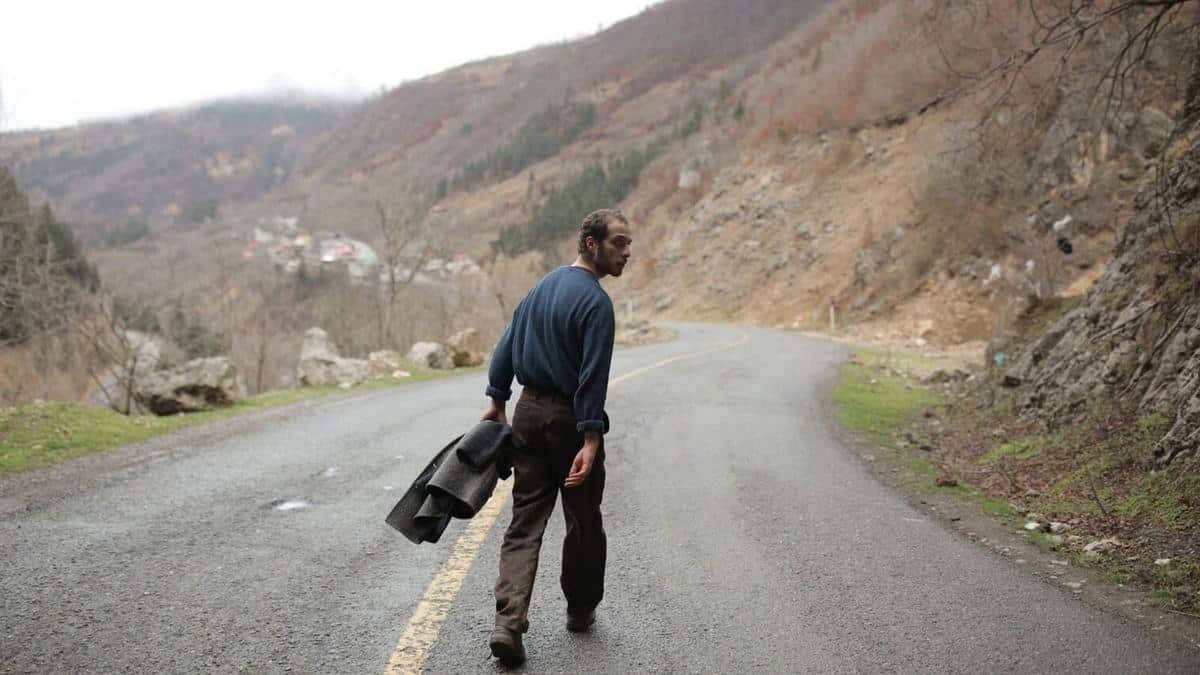
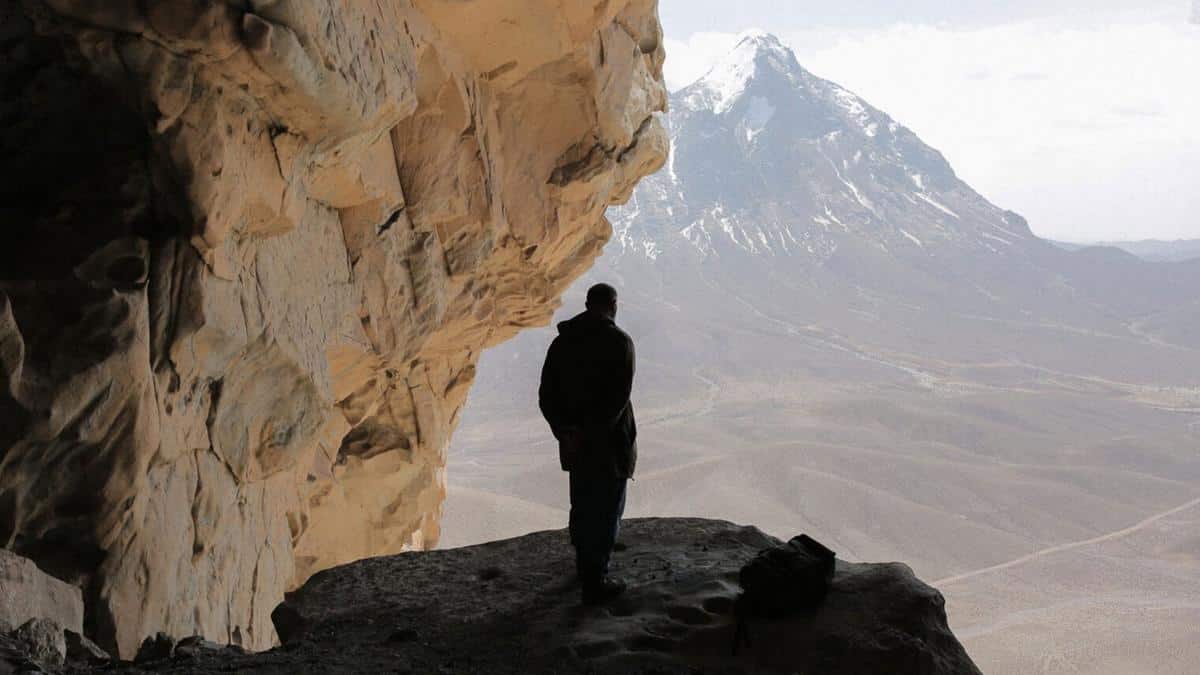
Rasti combines faith and superstition with visually engaging cinematography that effectively displays the harsh landscape of Iran, providing the viewer with insight into its reality. Some prior knowledge of the Muslim religious belief system may be advantageous for a deeper connection to this meditative journey; however, this is not a ‘must’ to be able to discern the conflict of the opposing beliefs that are portrayed in this partnership and journey.

The Great Yawn of History is a slow and steady burn full of multidimensional layers.

The Persian Film Festival will run from 24 April to 11 May 2025 in Sydney, Melbourne, and Armidale. For session details and to book tickets to this and other films, please visit https://www.persianfilmfestival.com.

Spread the word on your favourite platform!