
‘The Manosphere’ is a hot topic right now. YouTube video essays, long form news features, a new Netflix documentary series hosted by Louis Theroux, and even another recent Theatre Works show (Blackpill: Redux) delve into the depths of modern misogyny in an attempt to understand: what is happening, are men okay, and why are incels…The Way That They Are?
FEMOID. reveals a blind spot that should be obvious but is often a footnote in these conversations: misogyny maims and kills women. Almost a quarter of Australian women have experienced intimate partner violence at some point from age 15. Globally, this number balloons to a third of all women. The set of three grey blocks and a screen is bordered by various bunches of flowers, and if you look closely at them after the show, each has a nametag – each is dedicated to an Australian femicide victim. These flowers encapsulate FEMOID.’s strengths in a nutshell: it is a thoughtful, brutal and cathartic show, loaded with powerful symbolism.
The play follows three teenage girls – Rory (Roisin Wallace-Nash), Piper (Natasha Pearson) and Olive (Iris Warren, who also wrote the show) – in light-hearted school playground conversations about boys, relationships and sex. Despite their carefree and honest love for each other, we learn that a clock is counting down. We sometimes skip forward in time (or perhaps outside it?) to sombre discussions about an unnamed event, and Olive is conspicuously absent. And throughout the show, white text flashes on a screen behind them: verbatim posts from incel forums that are almost too vile to believe.

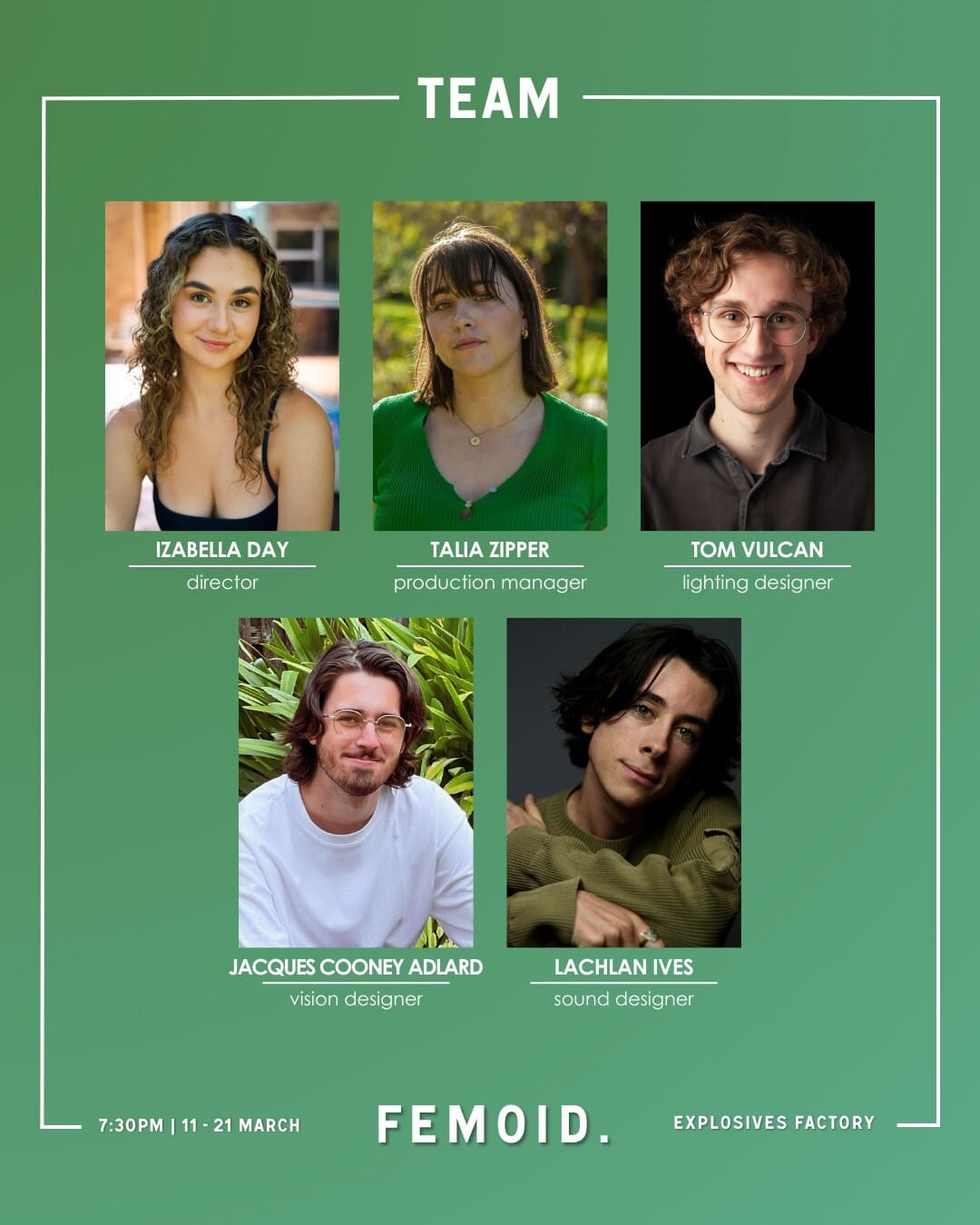
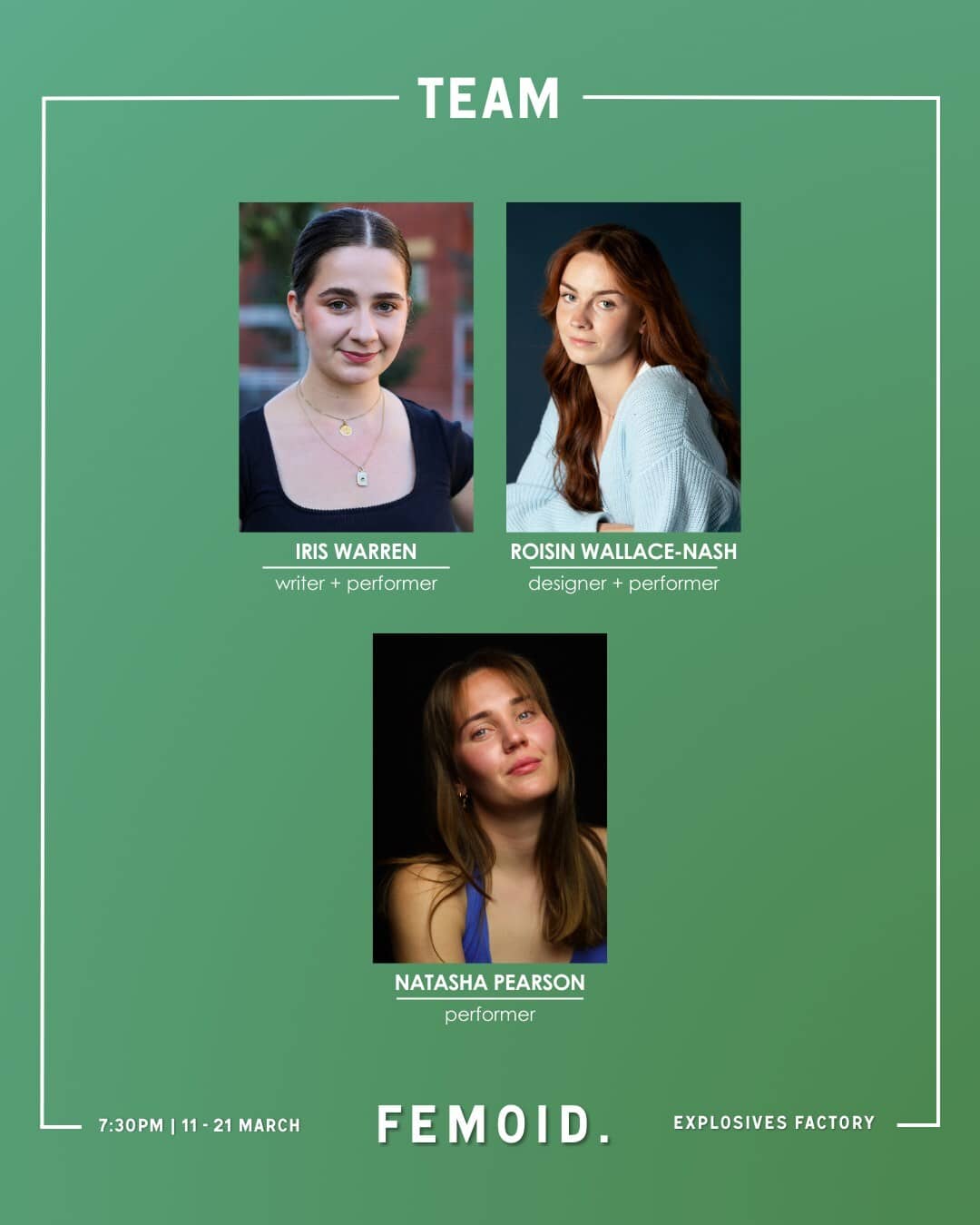
Portraying the sexual curiosity of teenage girls without objectifying or patronizing them is a tricky needle to thread, but Warren’s writing and Izabella Day’s direction pull it off perfectly. The characters’ discussions about sex are innocent yet emotionally intelligent, which makes the juxtaposition with the text behind them about ‘sluts’, ‘foids’, ‘whores’ and worse all the more chilling. The cast functions more as an ensemble than individual characters with distinct voices, but this makes sense for a show concerned with violence against women as a collective. We laugh with the girls’ naivety, not at it, and the contrast created between scenes with and without Olive never stops being jarring.
Along with a unique perspective on the manosphere, FEMOID. stands out in its attention to detail. The use of symbolism and motifs is masterful, but difficult to talk about without spoilers. I’ll only say that everything seen and said on stage feels meticulous and pointed. There are many details to ruminate on, from the name tags on the flowers (which I wouldn’t have noticed if I hadn’t read one of the venue posters) to the fact that the female main characters all have gender neutral names. The lighting was also a highlight in terms of giving a sense of place and occasionally glitching to further the constant sense of foreboding. The only snags for me were that the text projections were fuzzy and often difficult to read, and there were a few lines that felt too blunt in foreshadowing what was to come. Otherwise, the show felt as bold and precise as its subject matter called for.
There has been much speculation and information about why so many men hate women so much. The bitter irony is that this discourse often sidelines or desaturates the concrete consequences of this hatred. FEMOID. reminds us why we care and who we are fighting for. It is a very confronting and well-crafted show on every level, which will leave you with a lot of rage and a glimmer of hope.
To book tickets to Femoid, please visit https://www.theatreworks.org.au/2026/femoid.