The Comedy Of Errors

The Comedy Of Errors

The Comedy Of Errors Rating

Click if you liked this article

1

Is comedy tragedy reversed? Do we know it’s a comedy because it ends happily?

Sport for Jove’s “The Comedy of Errors” starts with an extra Shakespeare speech – the “stranger’s case” from a play called “Sir Thomas More”, making an appeal for displaced persons. A fitting prologue to the opening where the merchant, Aegeon (Nicholas Papademetriou), is sentenced to death for washing ashore in the wrong country.

Aegeon’s story told to Duke Solinus (Lani Tupu) is a beautifully demonstrated piece of theatre magic by the ensemble.

It is after this that the play becomes farcical with double the fun: two sets of twins causing confusion and mayhem throughout Ephesus.

Be prepared for some pretty violent text supported slapstick between the Dromios and the Antipholuses, or was that Antipholii?

A famous line from Hamlet: “let those that play your clowns speak no more than is set down for them” is unheeded and ‘Errors’ is all the better for it. These additions add energy and atmosphere, giving those in the audience unused to the verse a hook back into the action.


One such standout was Luciana’s (Tamara Lee Bailey) online Shakespeare workout for her followers: “please like and subscribe” integrating the modern world of selfies and influencers into the narrative.

Naomi Belet dazzles in two original songs as the directors wisely lean into the multitalented casts’ varied strengths.

The two Dromios (Gabriel Fancourt and Diego Retamales) might be in danger of stealing any other show but are surrounded by brilliant performances from the dashing Antipholus of Syracuse (Kaya Byrne) and the faithless Antipholus of Ephesus (John Panayiotis Tsakiris) to the fiery Adriana (Imogen Sage) and her Muay Thai and kickboxing sister Luciana (Tamara Lee Bailey).

Dr Pinch’s (Lani Tupu) subliminal presence throughout the play pays off in the exorcism scene. The lost lovers Aegeon (Nicholas Papademetriou) and Aemelia (Inga Romantsova) bring emotional depth amid the madcap antics.

Direction (Damien Ryan and George Banders) is well crafted.

The text is justified, a difficult task considering some Elizabethan comic references are truly dated, however imaginative settings grounds these to the present.

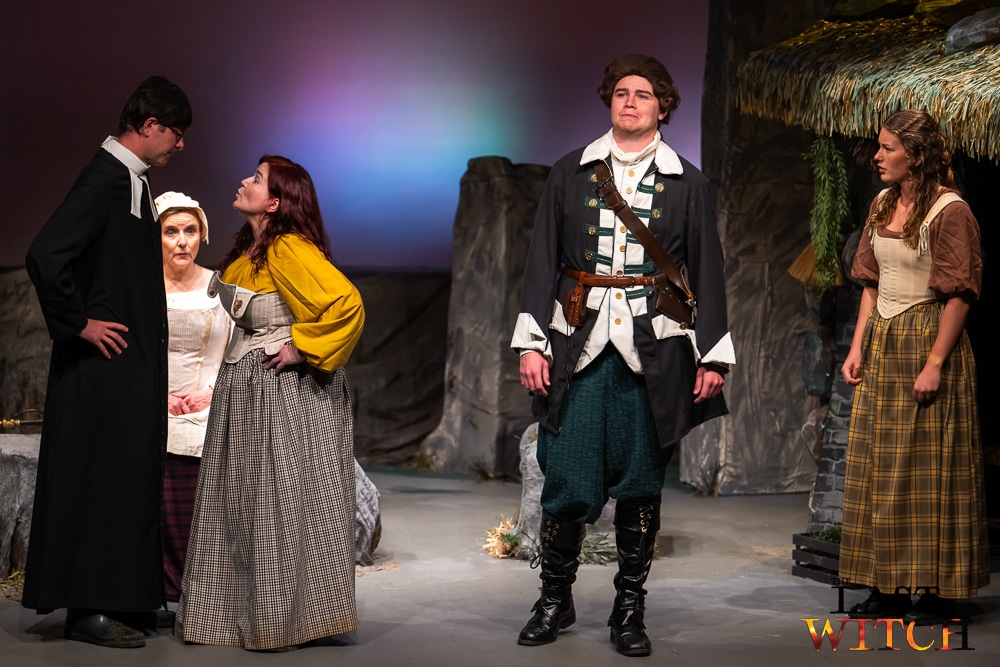
A visual treat is the dance at “The Mermaid”, with choreography (Shannon Burns), the costumes (Bernadette Ryan) luminous under lighting by Lisa Benham.

“The Comedy of Errors” is an enjoyable lark full of vibrant energy.

Unlike real life we know it is a theatrical comedy as Aegeon is forgiven his trespass by the Duke and no one dies in the end. Would that life were so forgiving.

To book tickets to The Comedy Of Errors, please visit https://www.sportforjove.com.au/the-comedy-of-errors-2025.

Spread the word on your favourite platform!

Ghosts of Christmas Past: A Chinese Christmas at KXT

A Chinese Christmas

A Chinese Christmas Rating

Click if you liked this article

Grief is no new topic for the world of theatre. One of the most fundamental human experiences, it is endlessly relatable, never faltering in its supply of new material. Of course, because grief has been explored before, it requires some level of reinvention to allow it to be interesting — A Chinese Christmas in this regard, went above and beyond. In a 70-minute, yet deceptively thorough dissection of what it truly means not to mourn someone, but miss them, Director Monica Sayers and Writer/Lead Trent Foo hold our hands through a gentle exploration of how to reconnect with something larger than ourselves in our moments of destruction.

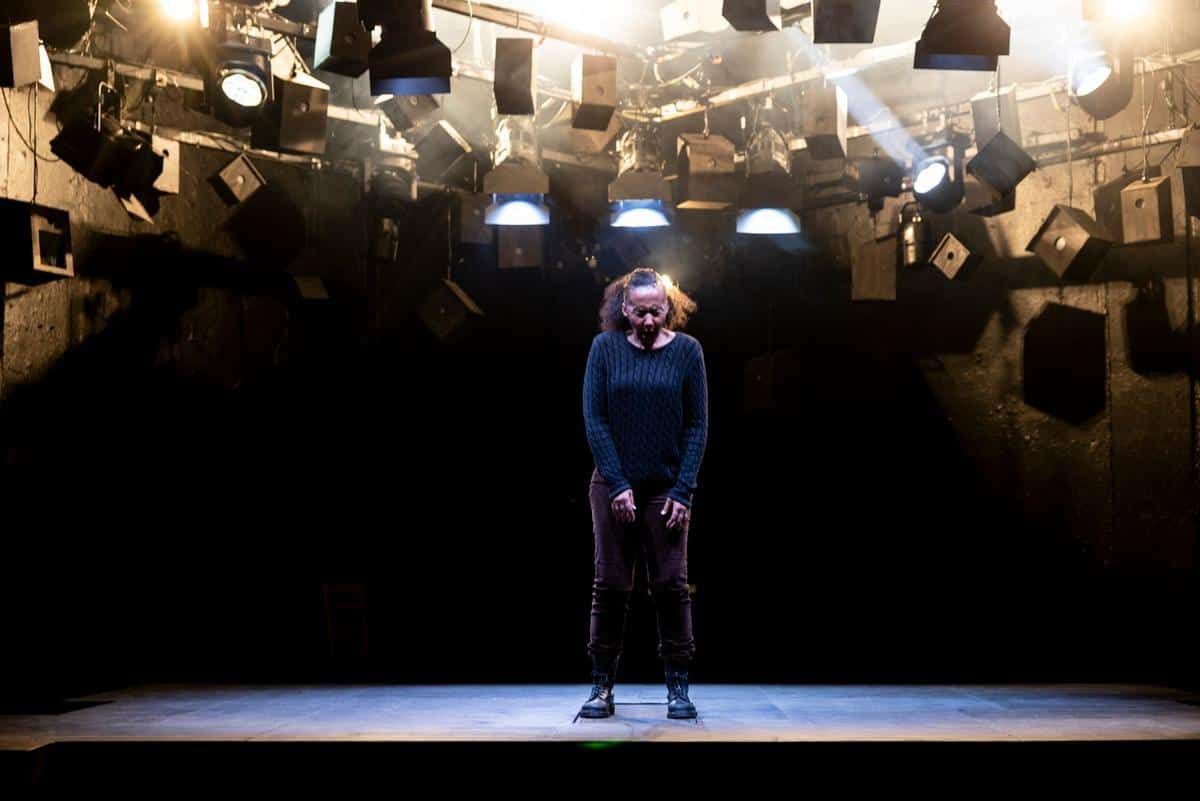
Set on the traverse stage of KXT Broadway, the audience enters into the slightly desolate warmth of an apartment. Cardboard boxes are scattered through the space, along with clutter that could or could not be entirely meaningless. Long lines of fibrous twine cut diagonal lines through the air, and natural fabrics are draped over chairs and lamps, cultivating a grounded and stylistic flair within the room. The hourglass was a particularly interesting touch, subtly elevating the stakes in a very grounded and practical way. The space is both carefully put together, in hanging lamps and the dangle of a microphone, and crucially dilapidated with the peeling wallpaper— setting the mood for our lead’s mental state. Much praise must go to Amy Lane here for her impeccable and considerate use of space. Further, her costume design for Lady Dai was also incredibly impressive, giving Jolin Jiang an almost inhuman energy with the shimmering gold over her eyes.

Production design continued to impress through lighting and sound; Jiang playing five or six instruments live through the show, which drew our attention back to the events on stage without ever becoming jarring. The use of colour and spotlighting from Cat Mai both elevated the moments of drama, and softened the piece into an almost dreamlike state when necessary. Cameron Smith’s sound design, along with Jiang as the composer seemed to almost communicate with both the moment, the emotion, and sometimes the characters themselves. Jiang’s work as a musician and composer, and also her physical work on stage, was so strong, in fact, I was almost left wishing the character she portrayed — Lady Dai — was an unspeaking role, as she created an untouchable mysticality around herself that was at times undercut by her less confident vocal work. However, I understood why the choice was made through the end reveal (which I won’t spoil). As a whole, the piece was incredibly beautiful, and production deserves many of the flowers in both matching and creating the emotional journey of the show. Between set, costume, lighting, and sound, the show moved aesthetically beyond the theatrical, settling into the cinematic.


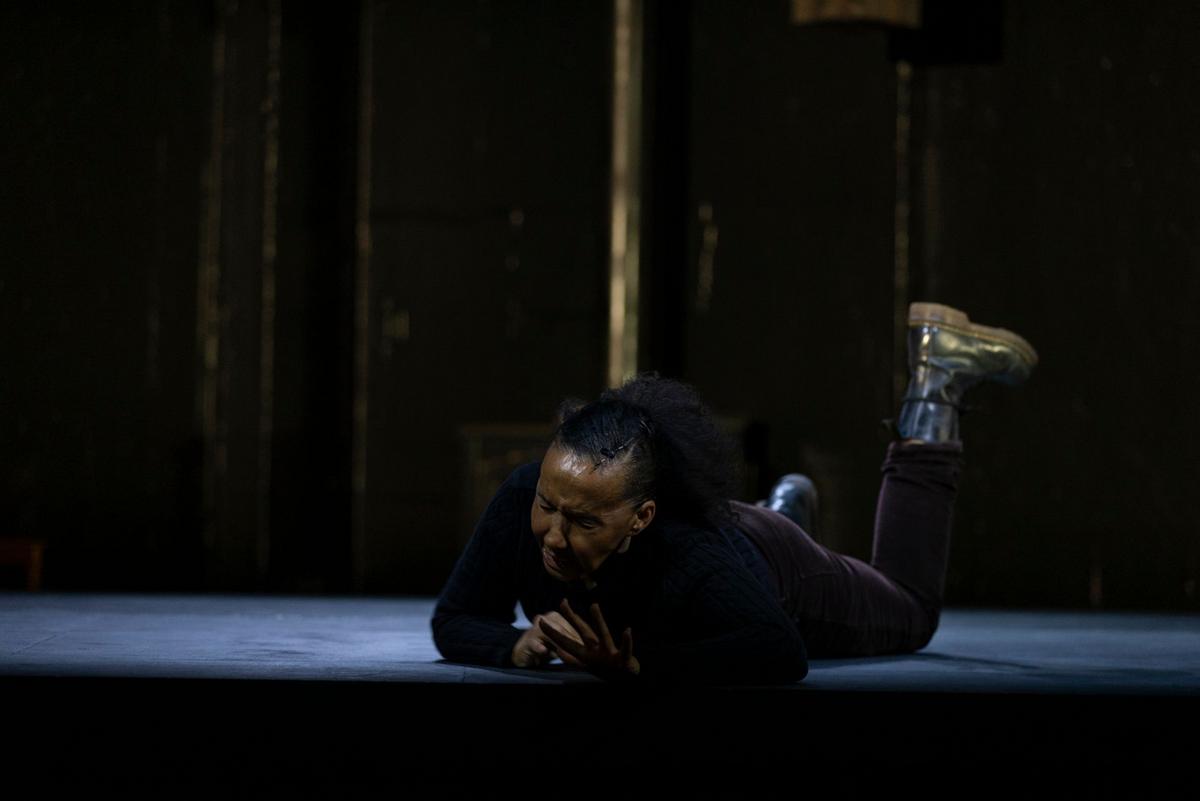
Foo, in turn, gives us a spunky, naive, and energized portrayal of Heepa — a young man trying to bring his entire extended family together for Christmas. His physical work was very strong, clean movements and confidence through stunts created great moments of comedy and underlined his intentions well. His study of stage combat is very clear in this regard. In many ways, A Chinese Christmas functioned for the most part as a one-man show, and Foo effectively utilized this style to engage with his audience. Watching impassively, we were the ancestors coming to visit — always judging, never quite as helpful as he wanted us to be. His voice was clear and strong, and carried us through the show through his excitement. However, I would’ve liked to see him relax on stage, even only about 10-20% — as his energy manifested as a tendency to struggle with connecting with the words or the emotions, performing through them instead. This, although working for moments of comedy, left moments of grief falling slightly short. His performance was the most beautiful at its moments of stillness, slowness, and simplicity, especially in times of reflection. One of my favourite moments of the night in this regard was when the lights on the makeshift Christmas tree weren’t quite turning on, and we watched a very human awkwardness and frustration come out through humour.

Tiang Lim supports the show through her portrayal as PawPaw, the matriarch of this tiny family. Lim gave us a beautifully subtle study of the way that many of our older generations simultaneously ignore their emotions, whilst being swept up and ever affected by them. Although her vocal work leaned slightly into patterns, her work was so incredibly vulnerable that those flaws were easily ignored. Her scene with Foo in the car was particularly effective, both in her wisdom and sympathy, and the recorded monologue of her letter left the crowd very much misty-eyed. PawPaw, although not being quite human herself, was easily the most complexly human character of the show.

With such a common topic, it would be easy for A Chinese Christmas to lose the attention of its audience — but this show succeeds in leaps and bounds both in its cultural accessibility, and how it uses that cultural accessibility to draw in its audience. Although some of the emotional work did lean slightly demonstrative, and some of the connective tissue between moments was a little weak, Foo and Sayers have given us a deeply earnest exploration into loss that excites without excluding. It reminds us beautifully of the ways that we are loved, even if we cannot understand how that love is communicated. All the while, it simultaneously allows for those on stage, and us in the audience, to, as a collective, reach that final stage of grief: acceptance.

To book tickets to A Chinese Christmas, please visit https://www.kingsxtheatre.com/a-chinese-christmas.

Photographer: Robert Miniter

Spread the word on your favourite platform!

Brilliantly Emotive – Born on a Thursday at Old Fitz Theatre

Born On A Thursday

Born On A Thursday Rating

Click if you liked this article

1

Every family is different and unique; there’s no such thing as a cookie-cutter ‘perfect family’. What we can hope for in our own families, are harmonious and happy relationships. Born on a Thursday is a heartrending peeling back of the tough exterior of a mother/ daughter relationship and the deep complications that can arise in a family unit. Presented by New Ghosts Theatre at the Old Fitz Theatre, and written by Australian playwright Jack Kearney, Born on a Thursday had me hanging on to every word these characters spoke.

April (Sofia Nolan), a ballerina who had been working abroad in Denmark for some time, returns home to Western Sydney to see her Mum and younger brother. Her mum Ingrid (Sharon Millerchip) greets her with open hostility. She is a tough woman and has her own reasons for freezing April out with sharply worded barbs and icy stares. It’s uncomfortable to watch, so I imagine that being on the receiving end, April feels it deeply. Millerchips’ portrayal of an overworked, stressed mother – harbouring resentment towards her daughter and ultimately revealing her own vulnerability – demonstrates her talent as a performer.

Isaac (Owen Hasluck) has a brain injury from a sporting incident. He is a young adult and highly dependent on his mum. Isaac is on the cusp of needing independence and feeling the frustration of being unable to communicate easily. The initial introduction onstage of Isaac was powerful. Hasluck portrays Issacs’ disability with heart wrenching accuracy with his mannerisms and muddled speech that manages to capture the depth of his character. Two scenes where he has a ‘meltdown’, one with his mum and the other with his sister, brought tears to my eyes and I am sure others in the audience felt the emotion too.

April’s reason for coming home is slowly disclosed over four seasons as the audience witness building feelings of guilt and responsibility. Nolan fully embodied her character, guiding the audience through her journey into her inner demons and the way to healing her raw pain.


Howard was played by James Lugton, Ingrid’s affable neighbour. His friendship to the family brought stability and the relationship is explored through his interactions with Ingrid, Isaac and April. Lugton’s portrayal of Howard was done with realistic characterisation, particularly in the tender moments, showing Howard’s heart of gold.

Although there are serious scenes in the play, there are also parts which were lighter. Ingrid’s friend Estelle (Deborah Galanos), a gregarious extroverted woman, brought humour (and wine!) to the stage and showed that our support network of best friends can be family too.

Sound designer Sam Cheng’s music, particularly when indicating the seasonal period when the months on the calendar on the wall were being flipped up, added to the thoughtful ponderance of change. Costume designer Rita Naidu and set designer Soham Apte grounded the characters to the time period of 1998 – 1999, with a kitchen straight out of the late 90’s – I even think I owned a stove and tea towels exactly like the ones that were on set! The set was impressive by having a tap with running water. Being an avid tea lover, I certainly appreciated the cuppa always being offered between characters, and especially Howard’s turning of the teapot ritual before he poured out the tea. The working stove where April made pancakes added the perfect 4D experience and the smell of freshly made pancakes wafting out to the audience was divine! It showed that during these simple rituals of everyday life, big conversations can happen during these times.

Director Lucy Clements has brought together a cohesive team that successfully treads the fine balance that’s needed when presenting a play dealing with mental health illness, domestic violence and traumatic brain injury. Born on a Thursday is a raw and impactful play that explores family, the true priorities in life, and the need to be seen and loved for who you truly are—both by yourself and by those who care for you. I highly recommend it to gain a glimpse into the lives of ordinary people with layered lives. Book your ticket and watch Born on a Thursday in one of Sydney’s most tiny and intimate theatres – the Old Fitz!

Season run: 28 November – 21 December 2025
Run Time: 2 hours 25 minutes with a 15 minute interval
Theatre: Old Fitz Theatre 129 Dowling Street Woolloomooloo
Tickets: www.oldfitztheatre.com.au/born-on-a-thursday

To book tickets to Born On A Thursday, please visit https://www.oldfitztheatre.com.au/born-on-a-thursday.

Photographer: Phil Erbacher

Spread the word on your favourite platform!

Dial M for Murder – A Killer Thriller at the Ensemble Theatre

Dial M for Murder

Dial M for Murder Rating

Click if you liked this article

Where can you find yourself as an observer to a murder, a diabolical plot and the twists and turns of an inverted mystery? Onstage at the Ensemble Theatre’s Australian premiere of Dial M for Murder! Jeffrey Hatcher’s adaptation of Frederick Knott’s 1952 stage thriller masterfully explores classic motives for murder—fear, jealousy, revenge and greed—through a script that continuously kept me guessing about how the story would ultimately unfold.

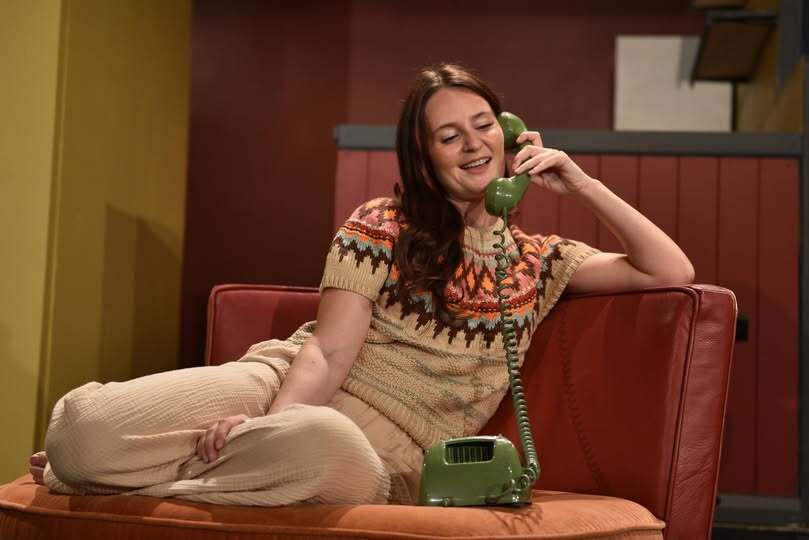
Set in the 1950’s, two women reunite in London after an absence of time. Set and costume designer Nick Fry added small details which enhanced this period. There’s a rotary dial phone sitting on a wooden stand and art deco furniture in the loungeroom. Sitting together on the couch, a stylishly dressed Margot (Anna Samson) asks Maxine (Madeleine Jones) “How would you murder me?” Maxine begins to casually list, in alphabetical order, several ways that she could kill her. This was an intriguing start to the play, and we learn that Maxine is a writer of murder thriller novels. One of Hatcher’s changes to the original script features Maxine as a female (originally a male), giving a modern update to the story with these two characters being secret lovers in a lesbian relationship, even though Margot was married.

The cleverness of Hatcher’s script is hidden in the breadcrumbs of clues he leaves along the way. In this opening conversation, certain details are hinted at that the audience might not immediately notice but will later have an “aha” moment upon reflection. There is one method mentioned by Maxine highlighted in the characters’ conversation, and it is indeed used in a future scene which appears to throw some suspicion on Maxine.


There are many layers in Dial M for Murder, which could have gotten sticky if not for the wonderful way the director Mark Kilmurry kept the play at a suspenseful pace. Margot’s husband Tony Wendice (Garth Holcombe) wants his wife dead, Captain Lesgate (David Soncin) and Maxine find themselves involved in this situation and Inspector Hubbard (Kenneth Moraleda) is driven to discover the truth. Everyone finds themselves in a tangled web of misinformation and intrigue. As a ‘whodunnit’ mystery murder it is inverted because the audience knows exactly what happened and ‘who did it’ right from the beginning. Then we experience how the detective figures it out. Kenneth as the Inspector reminded me of Columbo and his almost bumbling way of cloaking what he was thinking to appear not so intelligent, until he lays out the crime and you realise how brilliantly logical his mind worked.

Anna Samson brought depth into her character Margot, showing her character’s vulnerability. Her stillness in the aftermath of a tragedy showed reality bleeding into her consciousness and it was powerful. Kudos to Madeleine Jones for Maxine’s broad New York accent.

Garth Holcombe was simply outstanding as Tony! Standing tall dressed impeccably in a dark suit, he appeared as an upper-class suave gentleman. However, it wasn’t long before the audience saw the real Tony; a smug, sneaky, and malicious man intent on carrying out ‘the perfect crime’ to kill his wife. It wasn’t so much in his dialogue, but in the quiet, small, almost imperceptible movements he made – such as a twitch of his mouth or a shift of his eyes that Garth performed which screamed loudly of Tony’s duplicitous and arrogant nature.

Madeleine Picard’s music and sound design during the play’s tense moments was atmospheric and evocative, reminiscent of the suspense found in a Hitchcock film. Combined with Matt Cox’s lighting design, especially during the storm where flashes of lightning dramatically illuminated the characters’ struggle in the life-and-death situation, the effect was truly exceptional.

Scattered throughout the play were some funny lines which were delivered perfectly by the cast to create some pockets of dark humour. Dial M for Murder was a tightly produced, fast paced play which was entertaining and had the audience at the edge of their seats. Although this is a ‘you-know-who-dunnit’ murder thriller, it’s one that keeps you guessing with numerous surprising twists and unexpected developments until the very satisfying conclusion. Don’t miss it!

Dial M for Murder is playing at the Ensemble Theatre. 78 McDougall St, Kirribilli
Season run: 28 Nov 2025 – 11 Jan 2026
Time: 2 hours 20 minutes, including interval
Tickets: www.ensemble.com.au/shows/dial-m-for-murder

To book tickets to Dial M for Murder, please visit https://www.ensemble.com.au/shows/dial-m-for-murder/.

Spread the word on your favourite platform!