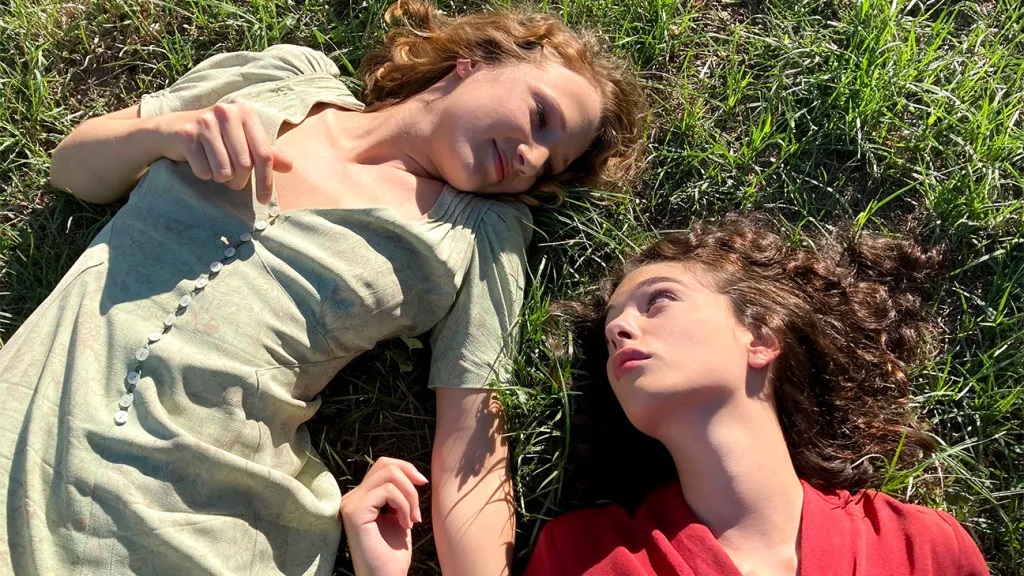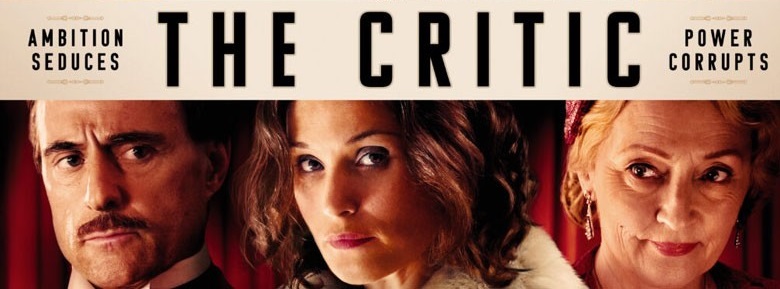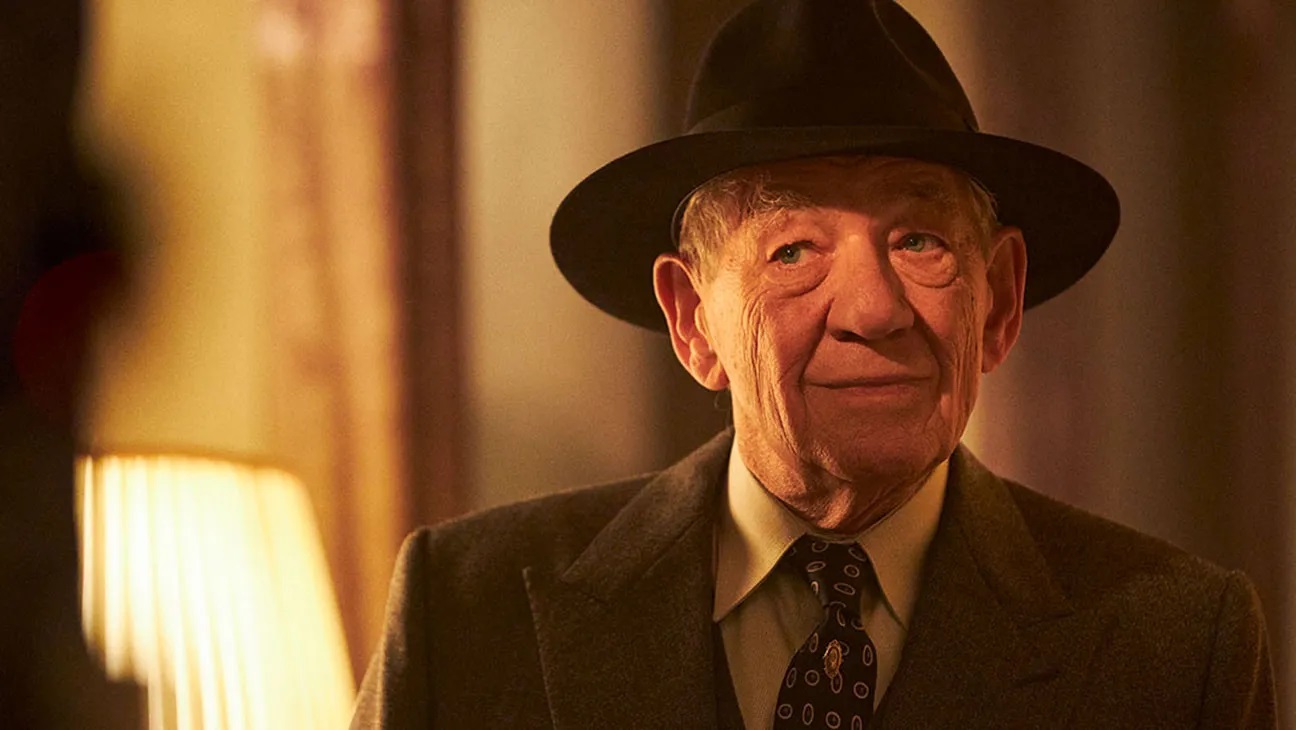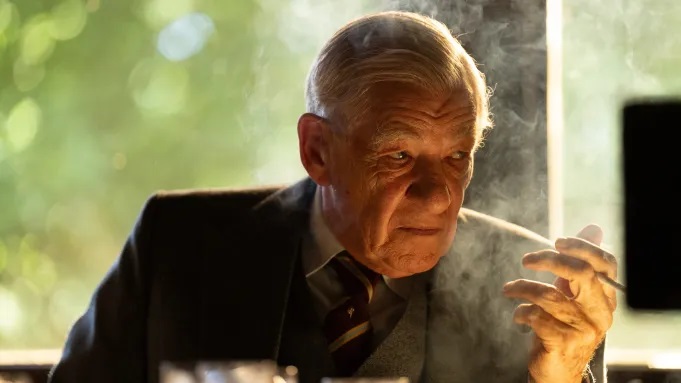
Behind a cloud of cigarette smoke and in a drunken haze appears Sir Ian McKellan (Lord of the Rings), playing the despicable Jimmy Erskine in The Critic (2024). In this film, there is the mention of ‘more beauty, less beast’, which McKellan solemnly denies and goes full beast mode.
This character was cruel, conniving, and calculating. His acting made me really detest him, as by design, and often kept my attention caught. But outside of this stunning display of mental brutality?
Well, with a stellar cast including Gemma Arterton, Ben Barnes, Mark Strong and Alfred Ennoch, I had high expectations, especially with Barnes and Strong being two of my favourite actors. And please be assured, it is not the acting that lets this film down as the talent is clearly plentiful.
But alas, this film does seem tonally confusing. One moment I was laughing at the wit and banter that Erskine dishes out, and in other parts, it felt like yet another plot twist that didn’t quite have the same effect as the one prior to it. This film deals with theatre and manipulation, bringing a beautiful pre-show to the Me Too movement as well as touching on love and betrayal, however it falters slightly on the delivery.
There was also a hint of historically accurate homophobia which (as a queer person myself) really excited me in the trailer. And whilst this does make an appearance, it feels like another theme (or even gimmick) shoved into the jack in a box that is this film. And it will inevitably leave the audience a little unsure when it explodes.
This film did exceed in its costumes and sets, all of which felt rich and lived in. The score and included music seemed to head in a different direction to the story, but as stand alone pieces, they are beautifully composed to reflect the time and socio-economic status that revolves around these characters. I do really want to commend the use of silence too, especially in hard hitting moments. The cinematography felt really inclusive, effortlessly showcasing the scenes and sets that had been curated and drawing you into this world.
Given this film supposedly had multiple re-shoots and rewrites, I would have thought some of the story would be smoother. But it felt clunky. And the audience in the theatre reflected this, with members not quite being sure on when to laugh and when to stay quiet, myself included.
All in all, go for the loaded and talented cast, stay for the stunning sets and music, and then duck out early, because you can probably guess what happens once it gets up to a certain point.
Please check your local cinema directory for session details.
In Anand Tucker’s The Critic, an impressive British cast leads the audience through an enjoyable, if underwhelming, artistic thriller.
Ian McKellen plays the titular role of drama theatre critic Jimmy Erskine. As a critic at The Daily Chronicle in 1930s London, Erskine lives a lavish lifestyle as a “prince on a pauper’s salary”. He spends his days lapping up champagne at his exclusive gentleman’s club and his evenings viciously tearing apart the London theatre scene in a manner that earned him the nickname Beast.
When the previous laissez-faire owner of the Chronicle unexpectedly passes away, control of the newspaper and his title as Viscount is handed over to his modernising son (Mark Strong). Erskine will resort to great and terrible lengths to ensure that his position and status are kept, even going so far as to form a twisted alliance with Nina Land (Gemma Arterton). The ambitious, if flighty, theatre actress who has long suffered the keen bite of Erskine’s scathing theatre reviews.
McKellen obviously has a great deal of fun with this juicy role. Within the comical and searing character, he combines a dash-it-all attitude with genuinely villainous actions. Alongside this, McKellen employs expertly delivered and shrewdly constructed witty turns of phrase and caddy takedowns. It is a joy to watch him flex on screen.
Despite this intriguing and complicated character presented, it’s surprising that the film chooses not to follow him alone. Instead, the film shifts focus to the wider cast, a veritable who’s who of British independent cinema. Featuring rounded performances from Mark Strong, Ben Barnes, Leslie Manville, Gemma Arterton and Alfred Enoch, The Critic makes use of this strong supporting cast. Manville is granted quite a few memorable one-liners to make up for her shockingly little screentime, but the real stand-out performances come from Arterton and Strong.
Strong makes use of his well-recognised stoic visage, leading the viewer to assume more nefarious motivations from the Viscount, concealing a truly vulnerable character underneath. His performance elicits genuine sympathy and pity from the audience.
Arterton is simply given the most to do as the earnest ageing actress looking for immortality on the stage. Struggling to match her talent with her ambition, she jumps through many emotional turns through her twisted partnership with McKellen’s Erskine.
Credit must be given to the lighting and production design. Often in period pieces, the colour palette can be drab, or sepia-toned to reflect the past. Thankfully in this film, the production design leans into the Art Deco style of the period, marrying beautifully constructed sets with wonderfully original real locations. Often the screen is overcome with jewel tone lighting of deep ambers or sorrowful blues.
Despite beautifully constructed shots, a few genuinely funny lines and sympathetic character beats, this thriller never quite realises its full potential. The comedic moments are not present or consistent enough to define the story. While the thriller elements are not shocking or intriguing enough to mark it as a true edge of your seat thriller.
The most interesting character beats are often left underdeveloped in service of simply moving on to another plot point, without properly examining interesting threads in the interpersonal relationships.
The film misses out on an opportunity to live up to its namesake, to explore the rich relationship between the critic and the criticised. The dynamic between McKellen’s critic and Arterton’s actress is the most compelling relationship presented on screen, and worthy of further inspection. The film does not take that extra leap and instead remains focused on unveiling the thriller at hand, to mixed results.
Please check your local cinema directory for session details.
Ghostlight is a heartwarming film that blends comedy and drama through its exploration of grief and healing. This film is an excellent look into how a family may come together (or not) after an unexpected tragedy.
Directed by Kerry O’Sullivan and Alex Thompson, Ghostlight tells the story of Dan (Keith Kupferer), a construction worker who finds solace and purpose in a local theatre’s production of “Romeo and Juliet” after drifting apart from his wife Sharon (Tara Mallen) and daughter Daisy (Katherine Mallen Kupferer) due to a personal tragedy.
The film’s strength lies in its authentic portrayal of a family grappling with loss. What helps to achieve this authentic portrayal is that the three main characters are a family in real life. Kupferer delivers a standout performance as Dan, who provides a heart-wrenching and uplifting journey of a construction worker dealing with the loss of a Shakespearean actor. The supporting cast, including Dolly De Leon as Rita, adds to the story, making the characters’ struggles and triumphs feel real and relatable.
Another strong strength of Ghostlight is its storytelling and the character development of the family. The storytelling kept the pace of the film going as you watch these characters grieve and grow together to become the tight-knit family they once appeared to be.
There are only minor quibbles in the film as Dan struggles to overcome his own grief and blame. The narrative is beautifully put together and evokes genuine emotion. Some of the most memorable shots happen during the theatre scenes.
Ghostlight is not just a film about grief; it’s about the healing journey and how you can find companionship and comfort in the most unlikely of places. The community theatre setting provides a perfect backdrop for the characters to confront their pain. The film depicts the unpredictability of life and how creativity can help deal with any obstacles.
Without giving too much away there were two scenes that struck much emotion; the first being Dans breakthrough about the personal tragedy and the performance of Romeo and Juliet. Overall, Ghostlight is a touching film that will stay with you long after the credits roll. The great storytelling and powerful performances make this a standout film worth the watch.
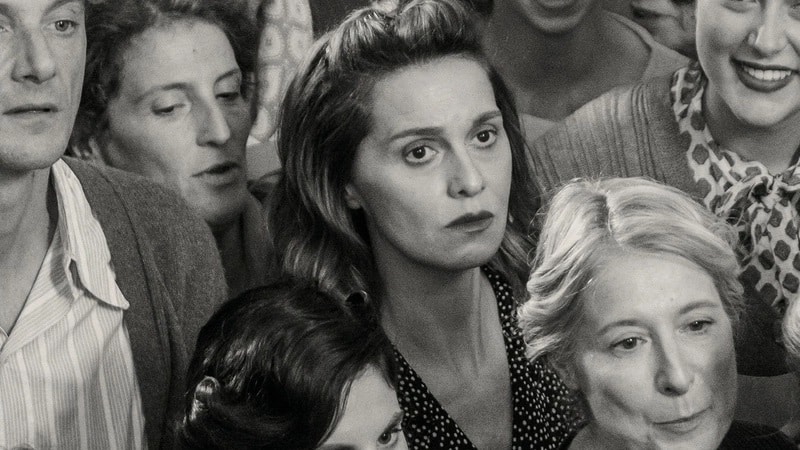
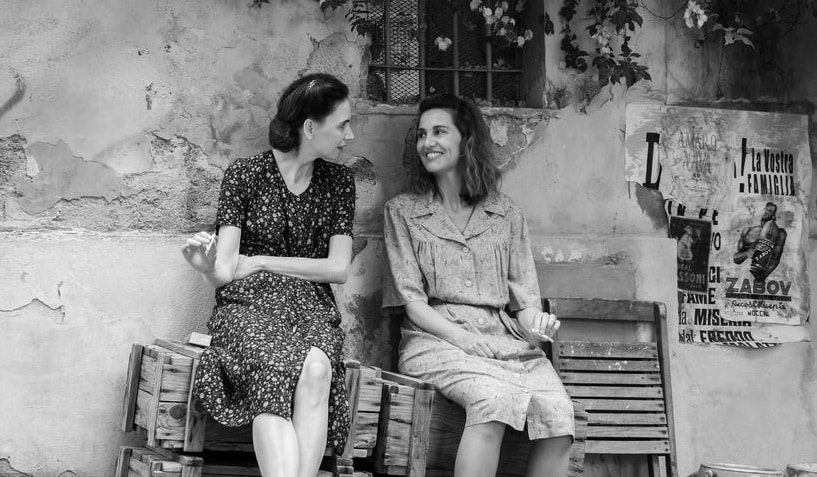
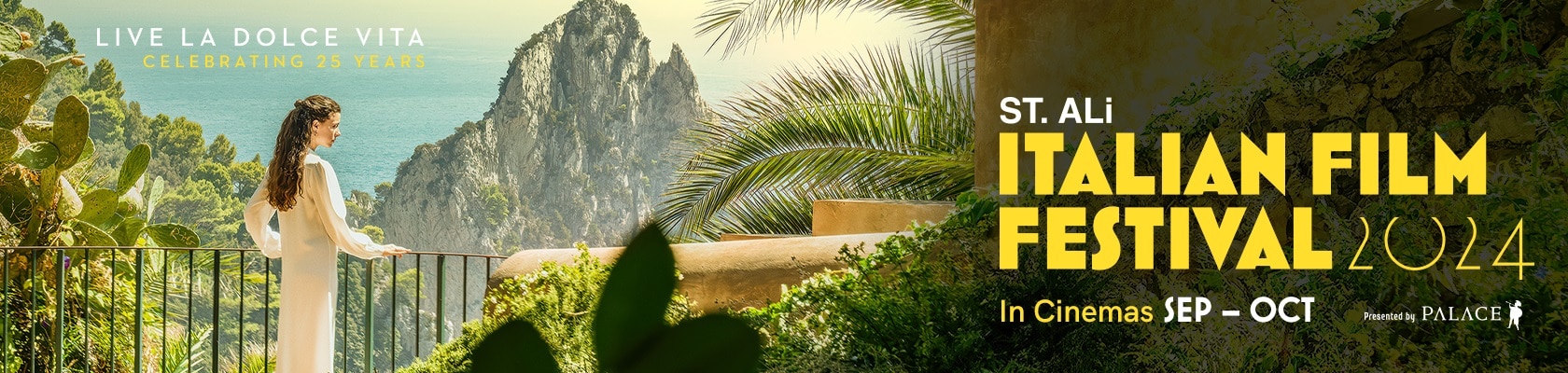
Trust emerges as a standout film for this year’s St ALi’s Italian Film Festival, running nationwide at Palace Cinemas from September 18 to October 23. It invites viewers into an intricate psychological drama where love and fear dance together in a narrative that is as gripping as it is thought-provoking. Directed by the award-winning Daniele Luchetti and based on Domenico Starnone’s novel Confidenza, the film delivers an exploration of human emotion that lingers long after the credits roll.
The central figure in Trust is Pietro (Elio Germano), a well-respected teacher beloved by his students and admired by his peers. His reputation, built on his progressive pedagogical philosophy that affection trumps fear to inspire students, casts him as a pillar of his community. This idea of the “pedagogy of affection” becomes a thematic thread throughout the film, highlighting Pietro’s compassionate and encouraging nature. He’s the antithesis of the authoritarian teacher, choosing love over the fear of failure to guide his students toward their best selves. This progressive approach resonates with audiences, especially considering its relevance in the 1980s and ’90s when the film was set.
But a darker truth lies beneath Pietro’s moral righteousness and public adoration. His life takes an unexpected turn when he rekindles a relationship with a former student, Teresa (Federica Rosellini), one of the brightest minds he ever taught. After they meet again, Teresa confronts Pietro with a profound and unsettling declaration—she has always known about his affection for her, an affection he can no longer deny. Though the two begin a relationship, their dynamic becomes fraught with complexity and tension.
What starts as a seemingly genuine romance soon unravels into an obsessive and destructive bond. Teresa becomes aware of Pietro’s most closely guarded secret, a revelation that binds them together in a way that is almost stronger than love—through fear. The power of this secret is so immense that it threatens to undo the very foundation of their relationship, raising a central question that permeates the entire film: Is love more powerful than fear, or do these two emotions inevitably co-exist in a relationship built on vulnerability?
Luchetti masterfully plays with these concepts of love, fear, and honesty throughout the film. His direction ensures that the audience is never too comfortable, always wondering whether the bond between Pietro and Teresa is driven by genuine affection or by the terror of having their deepest fears exposed. The result is an exploration of how once-shared secrets can become weapons, altering the course of a relationship forever.
While Trust succeeds in exploring these weighty themes, there are moments when the film falters. Certain scenes feel unnecessarily drawn out, adding little to the overall narrative and making the film feel longer than its runtime suggests. As a thriller, Trust sometimes lacks the tension necessary to keep audiences on the edge of their seats, leaving a few key moments feeling flat. These pacing issues could have been addressed with tighter editing, which might have sharpened the film’s focus.
Despite these minor flaws, the performances are nothing short of extraordinary. Elio Germano delivers a nuanced portrayal of Pietro, a man whose inner turmoil is constantly simmering beneath his calm exterior. His ability to convey vulnerability and authority makes his character a fascinating study in contradiction. Federica Rosellini is equally impressive as Teresa, her performance embodying a mixture of longing, manipulation, and pain. Together, they create a volatile and captivating dynamic that anchors the film.
The supporting cast, including Vittoria Puccini as Nadia and Pilar Fogliati as Emma, adds further layers of complexity to the story. Isabella Ferrari’s portrayal of Tilde provides a sense of groundedness amidst the chaos of Pietro and Teresa’s relationship. Each performance enriches the film, allowing the audience to explore different facets of Trust, fear, and human interaction.
Ivan Casalgrandi’s cinematography elevates the emotional tone of the film. His use of shadows, light, and shots peering through windows door creates an atmosphere of quiet tension, echoing the characters’ internal battles. The set and costume designs also reflect the 1980s and ’90s setting, giving the film an authentic feel without distracting from the central narrative.
One of the standout aspects of Trust is Thom Yorke’s haunting score. Known for his ability to craft music that evokes deep emotion, Yorke’s contribution here is no different. His atmospheric soundscapes underscore the tension and emotional weight of the film, drawing the audience deeper into the story without overwhelming the performances. The themes of Trust are universal and timeless, making the film deeply relatable for audiences of all backgrounds. At its core, the film asks whether honesty, when laid bare, can strengthen or destroy a relationship. Can love survive when fear takes hold, or does fear inevitably erode Trust? These are the questions Luchetti leaves audiences grappling with, and their unresolvable nature is what makes Trust such an impactful film.
As the premiere film of the St ALi’s Italian Film Festival, Trust sets the tone for a fantastic lineup of Italian cinema. It challenges viewers to think deeply about the nature of human relationships, leaving them with more questions than answers, which is often the hallmark of a truly great film. Despite a few pacing issues, Trust succeeds as an emotionally resonant and visually arresting exploration of love, fear, and the secrets we hide from each other—and ourselves.
Film Review: Trust (2024) Directed by Daniele Luchetti Starring: Elio Germano, Federica Rosellini, Vittoria Puccini, Pilar Fogliati, and Isabella Ferrari Based on the novel Confidenza by Domenico Starnone Original music by Thom Yorke